❌

Normal view

Ubuntu Upstreams Patches to Bring Flutter Apps to RISC-V

24 November 2025 at 03:51

ESWIN EBC77 RISC-V single board computerCanonical's engineers have submitted pull requests to add RISC-V support to Google's Flutter toolkit, which Ubuntu uses to built many of its desktop apps.

You're reading Ubuntu Upstreams Patches to Bring Flutter Apps to RISC-V, a blog post from OMG! Ubuntu. Do not reproduce elsewhere without permission.

DistroWatch Weekly, Issue 1149

24 November 2025 at 09:02
The DistroWatch news feed is brought to you by TUXEDO COMPUTERS. This week in DistroWatch Weekly:
Review: MX Linux 25
News: systemd experiments with musl libc support, Debian Libre Live publishes media for Trixie, Xubuntu reviews website hack
Questions and answers: Why are video drivers special?
Released last week: Finnix 251, Aurora 43, Proxmox 9.1 "Virtual Environment"
Torrent corner: KDE neon, Proxmox
Opinion poll:....

Waydroid 1.6.0 added Forwarding Android Notifications to Linux Desktop Support

By:Ji m
23 November 2025 at 21:50

Waydroid, the software for running Android OS and Android apps on Linux Desktop, released new 1.6.0 version few days ago.

As you may know, Waydroid is a free open-source Python written application that uses a container-based approach to boot a full Android system (LineageOS by default) on regular Linux system.

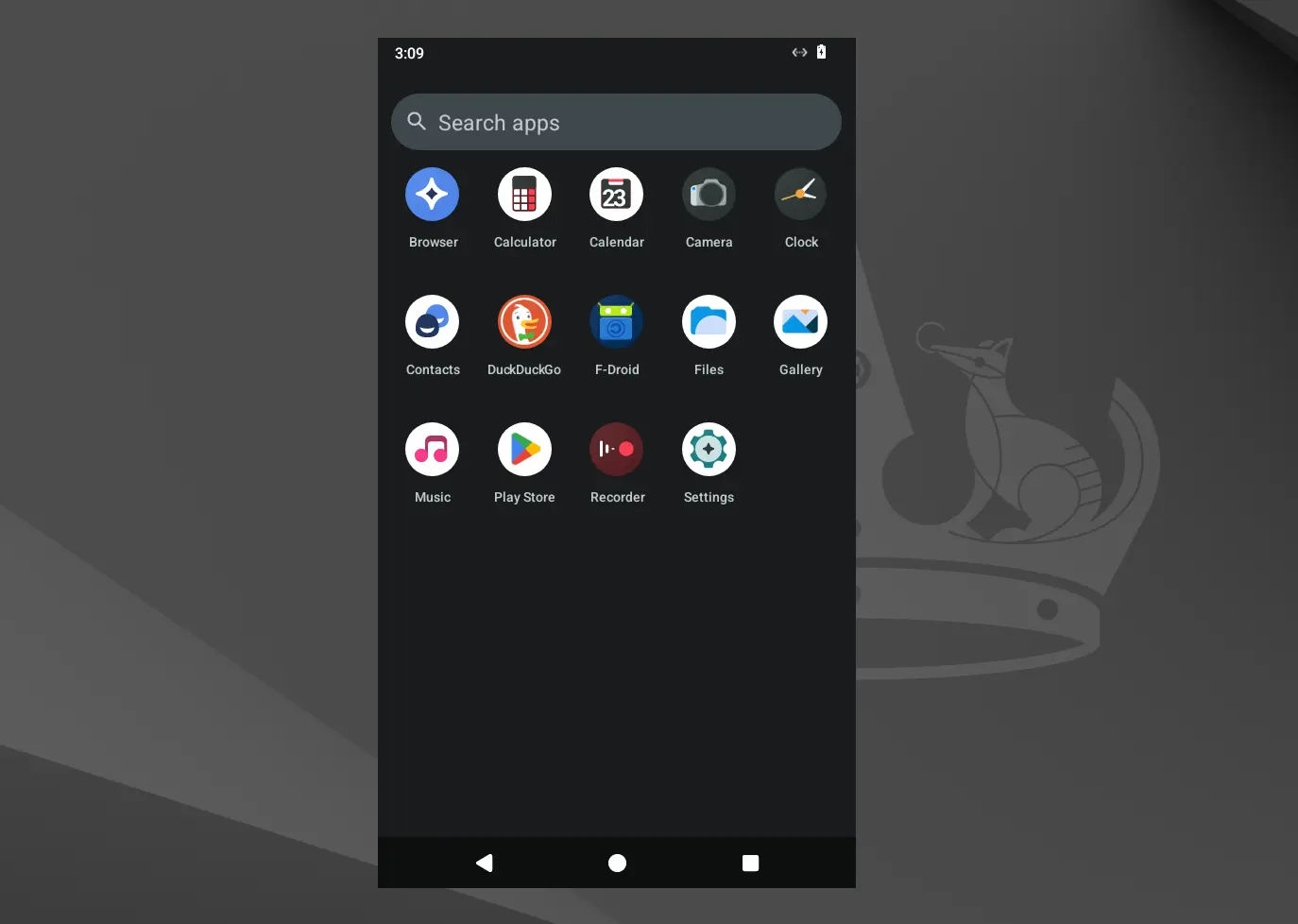
The new Waydroid release now hide the system apps (e.g., Files, Contacts, Calculator, Music, and Camera) by default, as your Linux desktop may have apps with same names, to avoid duplicate app names in your Linux Desktop’s application launcher.

However, the manually installed Android apps are still visible, and user may edit the corresponding .desktop files under .local/share/applications directory and add NoDisplay=true option to hide them.

And, for those who want to hide all Android app icons from Desktop’s app launcher, then run the command below will do the trick for all current apps.

for file in $HOME/.local/share/applications/waydroid.*.desktop; do desktop-file-edit --set-key=NoDisplay --set-value=true $file; done

According to the release note, Waydroid 1.6.0 now will always show the main launcher after enabling multi-windows mode. And, it shows β€œStop Waydroid” and β€œInitialize Waydroid” options when you right-clicking on main app icon, which can be useful to restart session or switch Android OS type to either minimal or with Google Services/Gapps.

Since the release, ADB will no longer auto-connect on session start. To install apps from Linux host, transfer files, debugging, or run shell commands, user needs to first run waydroid adb connect command manually to connect ADB, and provide authorization on the Android side.

This version also introduced new notification manager, allowing to forward Android notifications to DBUS.

It however requires updating the Android system image to a compatible version, and needs python-gbinder >= 1.3.0 or it will crash when receiving a notification with a picture. And, in my test with default LineageOS image, the feature seems not working!

The release also include new waydroid bugreport command to gather logs. It’s useful for reporting bugs, as you may reproduce your problem while running the command and send the log as bug report.

Other changes include

  • Rotate and trim waydroid.log file at 5MB.
  • Add new waydroid command with no arguments, as alias for waydroid show-full-ui.
  • And other miscellaneous improvements.

How to Install Waydroid

Waydroid has been made into Fedora and Arch etc Linux repositories. And, it provides an official apt repository contains native .deb packages for Ubuntu 22.04, 24.04, 25.10, Debian 12, 13 and Unstable.

And, I’ve written about how to install and setup Waydroid in Ubuntu, though it’s still at the last v1.5.4 at the moment of writing.

Calibre 8.15 Open-Source E-Book Manager Improves the Comments Editor

21 November 2025 at 13:00

Calibre 8.15

Calibre 8.15 open-source e-book management software is now available for download with various new features and bug fixes. Here's what's new!

The post Calibre 8.15 Open-Source E-Book Manager Improves the Comments Editor appeared first on 9to5Linux - do not reproduce this article without permission. This RSS feed is intended for readers, not scrapers.

Raspberry Pi 500+ Works as Standalone Keyboard (Well, Kinda)

22 November 2025 at 07:12

Can the Raspberry Pi 500+ work as a standalone Bluetooth keyboard? Yes, using the open-source btferret project – but not without limitations, as I report.

You're reading Raspberry Pi 500+ Works as Standalone Keyboard (Well, Kinda), a blog post from OMG! Ubuntu. Do not reproduce elsewhere without permission.

RustDesk 1.4.4 Released with Edge Scrolling Support

By:Ji m
21 November 2025 at 21:03

RustDesk, the free open-source remote desktop application, release new 1.4.4 version few days ago.

The new release of this Teamviewer or AnyDesk alternative app introduced edge scrolling support, when your app window is smaller than the remote screen size.

Previously, it scrolls automatically when you move cursor around the screen. While, the β€œScrollbar” mode is available for choice when you want to manually move the bottom or right scrollbar to move around.

In the new release, a new β€œScrollEdge” mode is added. With it enabled, you may move cursor to the window edge to move the screen. And, a scroll-bar is available to adjust the edge thickness.

For Linux with Wayland (e.g., Ubuntu 22.04+ and Fedora Workstation), it added support sharing multiple monitor screens since last 1.4.3. In the new release, it improved this feature by supporting multiple scaled monitors with Gnome or KDE Wayland.

RustDesk 1.4.4 also introduced new β€œAsk for note at the end of connection” option in the General settings page.

With it enabled, it will display a popup dialog where user can enter a note, when disconnects either actively or passively. See this page for more about the feature.

The new version also improve Apple devices support. It now shows proxy settings on iOS, and allows to manage transferred files through Files or iTunes app. And, it updated hwcodec that fixed H265 encoding support on Intel chip Mac computers.

Other changes in the 1.4.4 release include:

  • Allow flipping sort order in mobile app’s file transfer
  • File transfer auto start on reconnect
  • Load custom installed CA root on mobile
  • UI costomization for Sciter version
  • Insecure TLS option
  • Fix cursor icon capture for the Linux Flatpak package.
  • Better TLS compatibility on all platforms

Get RustDesk 1.4.4

The official release note, as well as the installer packages for Windows, Linux, macOS, iOS, and Android, are available in its Github releases via the link below:

For Linux, the β€œAssets” section provides more packages, e.g., pkg.tar.zst for Arch, .rpm for Fedora/SUSE/RHEL, non-install .appimage, and .flatpak for most Linux that runs in sandbox environment.

If you don’t know which OS type (X86_64, aarch64, or archv7) to choose, open terminal and run uname -m or dpkg --print-architecture command to tell.

And for those who are new to this application, simply install it in both remote and local machines, then type the remote ID to connect, though remember to start the service first in hamburger menu.

It by default uses the public server to initialize the connection, then send data peer-to-peer after connection is established. While, you may see the official docs for setting up self-hosting server.

HPLIP 3.25.8 Released with Few Dozen More Printers Support

By:Ji m
21 November 2025 at 18:49

HPLIP, the free open-source Linux driver for HP inkjet and laser based printers, released new 3.25.8 version few days ago.

This is the third release in 2025, which features a few dozen new printer devices support but NO installer update for the most recent Linux Distributions support.

According to the official release note, HPLIP 3.25.8 added following printers support:

  • HP LaserJet Enterprise Flow MFP 8601z
  • HP LaserJet Enterprise 5501
  • HP LaserJet Enterprise MFP 5601dn
  • HP LaserJet Enterprise 6500dn
  • HP LaserJet Enterprise 5501n
  • HP LaserJet Enterprise MFP 5601
  • HP LaserJet Enterprise 6500
  • HP LaserJet Enterprise 5502dn
  • HP LaserJet Enterprise MFP 5602dn
  • HP LaserJet Enterprise 6500n
  • HP LaserJet Enterprise 5502
  • HP LaserJet Enterprise MFP 5602f
  • HP LaserJet Enterprise 6501dn
  • HP LaserJet Enterprise X50452dn
  • HP LaserJet Enterprise Flow MFP 5602zfw
  • HP LaserJet Enterprise 6501
  • HP LaserJet Enterprise X50452
  • HP LaserJet Enterprise MFP 5602
  • HP LaserJet Enterprise X60257dn
  • HP LaserJet Enterprise MFP X53052dn
  • HP LaserJet Enterprise Flow MFP X530
  • HP LaserJet Enterprise X60257
  • HP LaserJet Enterprise MFP X53052
  • HP LaserJet Enterprise X60357dn
  • HP LaserJet Enterprise X60357
  • HP LaserJet Enterprise MFP 6600dn
  • HP LaserJet Enterprise Flow MFP 6600zfw
  • HP LaserJet Enterprise MFP 6600
  • HP LaserJet Enterprise Flow MFP 6600zfsw
  • HP LaserJet Enterprise MFP X62757dn
  • HP LaserJet Enterprise Flow MFP X62757zs
  • HP LaserJet Enterprise MFP X62757
  • DEX D50452dn
  • DEX MFP D53052dn

Sadly, the official installer so far supports Distros up to following versions:

  • Ubuntu24.04
  • Fedora 40
  • Debian 12
  • RHEL 9.1
  • Linux Mint 22
  • SUSE Linux 15.5
  • Zorin 17.1
  • and more.

Meaning for Ubuntu 25.04, 25.10, Debian 13, Fedora 43 etc, you need to manually build the driver from source.

How to Install HPLIP 3.25.8

The official installer β€œhplip-3.25.8.run” is available to download in sourceforge.net via the link below:

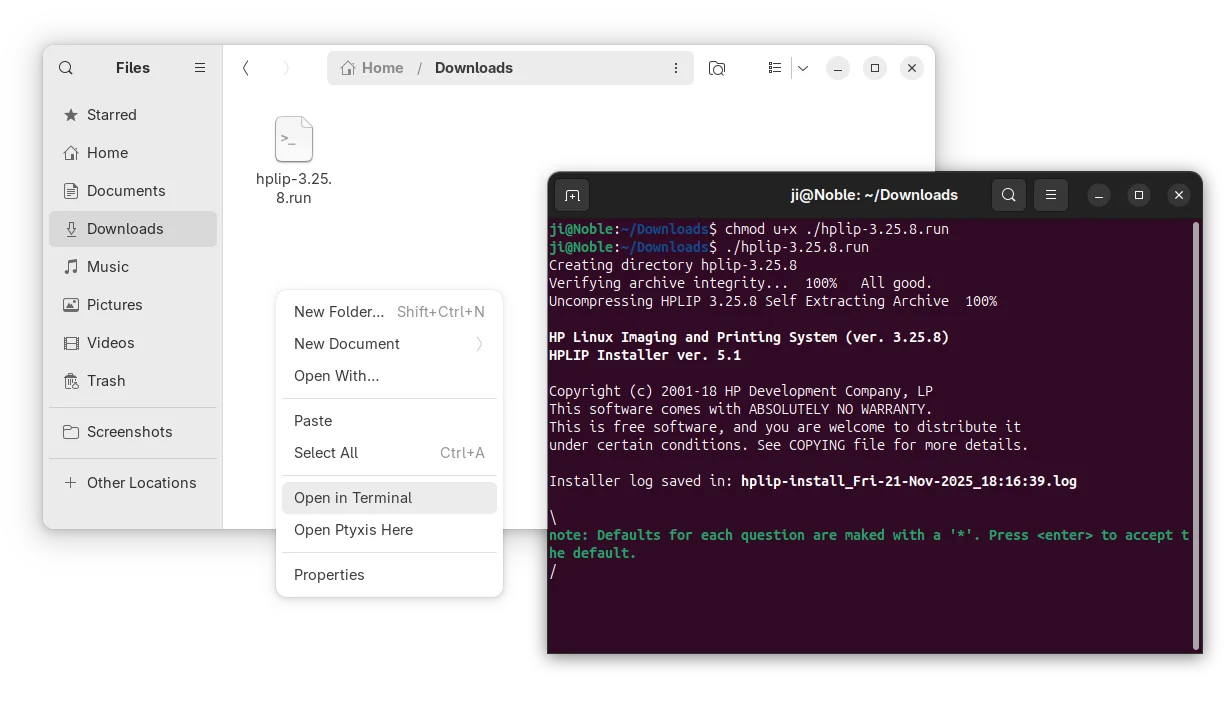
After downloaded the installer, open the Downloads folder in terminal, and finally run the 2 commands below one by one:

  • Add executable permission:
    chmod u+x ./hplip-3.25.8.run
  • Start the installer and follow terminal output to install HPLIP:
    ./hplip-3.25.8.run

For non-supported Linux Distributions, either grab the source form the link above, or, open the extracted folder (the command above automatically generate the source folder) in terminal, then compile by yourself.

Wine 10.19 Released: Game Changing Support for Windows Reparse Points on Linux

Wine 10.19 Released: Game Changing Support for Windows Reparse Points on Linux

Introduction

If you use Linux and occasionally run Windows applications, whether via native Wine or through gaming layers like Proton, you’ll appreciate what just dropped in Wine 10.19. Released November 14 2025, this version brings a major enhancement: official support for Windows reparse points,Β a filesystem feature many Windows apps rely on, and a host of other compatibility upgrades.

In simpler terms: Wine now understands more of the Windows filesystem semantics, which means fewer workarounds, better application compatibility, and smoother experiences for many games and tools previously finicky under Linux.

What Are Reparse Points & Why They Matter

Understanding Reparse Points

On Windows, a reparse point is a filesystem object (file or directory) that carries additional data, often used for symbolic links, junctions, mount points, or other redirection features. When an application opens or queries a file, the OS may check the reparse tag to determine special behavior (for example β€œredirect this file open to this other path”).

Because many Windows apps, installers, games, DRM systems, file-managers, use reparse points for features like directory redirection, path abstractions, or filesystem overlays, lacking full support for them in Wine means those apps often misbehave.

What Wine 10.19 Adds

With Wine 10.19, support for these reparse point mechanisms has been implemented in key filesystem APIs: for example NtQueryDirectoryFile, GetFileInfo, file attribute tags, and DeleteFile/RemoveDirectory for reparse objects.

This means that in Wine 10.19:

  • Windows apps that create or manage symbolic links, directory junctions or mount-point style re-parsing will now function correctly in many more cases.

  • Installers or frameworks that rely on β€œwhen opening path X, redirect to path Y” will work with less tinkering.

  • Games or utilities that check for reparse tags or use directory redirections will have fewer β€œstuck” behaviors or missing files.

In effect, this is a step toward closer to native behavior for Windows file-system semantics under Linux.

Other Key Highlights in Wine 10.19

Beyond reparse points, the release brings several notable improvements:

  • Expanded support for WinRT exceptions (Windows Runtime error handling) meaning better compatibility for Universal Windows Platform (UWP) apps and newer Windows-based frameworks.

  • Refactoring of β€œCommon Controls” (COMCTL32) following the version 5 vs version 6 split, which helps GUI applications that rely on older controls or expect mixed versions.

❌