Reading view

Pendiri Cardano Charles Hoskinson ajukan Midnight sebagai layer privasi untuk Bitcoin dan XRP

Charles Hoskinson sedang mempromosikan usaha terbarunya, Midnight Protocol, sebagai sesuatu yang lebih dari sekadar sidechain untuk Cardano.

Pendiri Cardano tersebut memposisikan platform berfokus privasi ini sebagai lapisan infrastruktur bersama yang bisa memperluas privasi terprogram ke jaringan blockchain pesaing, termasuk Bitcoin dan XRP Ledger.

Hoskinson Bergerak Lebih Jauh dari Cardano dengan Inisiatif Privasi Lintas Chain

Pada 27 Desember, melalui sebuah postingan di X, Hoskinson menjelaskan bahwa arsitektur zero-knowledge proof dari Midnight bisa meningkatkan kemampuan ekosistem pesaing, bukan menggantikannya.

Ia menyampaikan bahwa integrasi Midnight dengan XRP Ledger akan memungkinkan jaringan tersebut menantang sistem perbankan tradisional dengan menghadirkan decentralized finance privat dan patuh regulasi. Ia juga menambahkan bahwa Midnight membawa fitur privasi terprogram yang belum ada di Bitcoin saat ini.

Hoskinson pun menggambarkan Midnight sebagai katalis untuk Cardano sendiri. Ia menyebutkan bahwa protokol ini dapat membantu meningkatkan jumlah pengguna aktif bulanan dan total value locked Cardano, karena memperluas kegunaan ekosistem ini di luar chain aslinya.

“Midnight makes what it touches better. Adding Midnight to XRP DeFi is going to blow the legacy banks out of the water. Adding Midnight to Bitcoin gives the world Satoshi imagined possible. Adding Midnight to Cardano supercharges our DeFi ecosystem and will 10x the MAUs, Transactions, and TVL as we are first to market with private DeFi at scale,” klaimnya.

Selain interoperabilitas, Hoskinson juga menyoroti besarnya peluang tokenisasi aset dunia nyata. Ia menjelaskan pasar Real-World Assets yang diperkirakan bernilai US$10 triliun akan sangat diuntungkan dengan desain privasi yang dihadirkan Midnight.

Dalam konteks itu, ia mengkritik perusahaan keuangan tradisional yang masih saja bermitra dengan Canton Network, sebuah blockchain permissioned, dengan menyatakan bahwa solusi separuh-separuh tidak cukup untuk kebutuhan adopsi institusional.

“There are no half measures or half technologies. You need an end-to-end strategy, great partners, and great communities,” terang Hoskinson .

Strategi ini menjadi perubahan arah bagi Hoskinson, yang sebelumnya selalu fokus membangun di ekosistem Cardano saja.

Dengan mempromosikan Midnight sebagai lapisan privasi yang bisa meningkatkan blockchain layer-1 lainnya, Hoskinson berusaha menjangkau likuiditas dan basis pengguna di luar jaringan Cardano yang sudah ada.

Perubahan strategi ini juga bertepatan dengan meningkatnya minat spekulatif pada native token Midnight, yaitu NIGHT.

Data dari CoinGecko menunjukkan bahwa aset ini baru-baru ini melampaui Bitcoin dan Ethereum dalam volume pencarian di daftar tren platform tersebut.

namun, token ini diperdagangkan dengan volatilitas tinggi sejak diluncurkan awal bulan ini. Berdasarkan data BeInCrypto, harga token ini turun lebih dari 80% menjadi US$0,08 pada saat artikel ini diterbitkan.

  •  

Cardano Founder Charles Hoskinson Pitches Midnight as a Privacy Layer for Bitcoin and XRP

Charles Hoskinson is pitching his latest venture, Midnight Protocol, as more than a sidechain for Cardano.

Instead, the Cardano founder is positioning the privacy-focused platform as a shared infrastructure layer that could extend programmable privacy to rival blockchain networks, including Bitcoin and the XRP Ledger.

Hoskinson Moves Beyond Cardano With a Cross-Chain Privacy Play

In a December 27 post on X, Hoskinson argued that Midnight’s zero-knowledge proof architecture could enhance the capabilities of competing ecosystems rather than displace them.

He said that integrating Midnight with the XRP Ledger would allow the network to challenge legacy banking systems by enabling private, compliant decentralized finance. He extended the argument to Bitcoin, saying Midnight offers programmable privacy features that Bitcoin currently lacks.

Hoskinson also framed Midnight as a catalyst for Cardano itself. He suggested that the protocol could help lift Cardano’s monthly active users and total value locked by broadening the ecosystem’s utility beyond its native chain.

“Midnight makes what it touches better. Adding Midnight to XRP DeFi is going to blow the legacy banks out of the water. Adding Midnight to Bitcoin gives the world Satoshi imagined possible. Adding Midnight to Cardano supercharges our DeFi ecosystem and will 10x the MAUs, Transactions, and TVL as we are first to market with private DeFi at scale,” he claimed.

Beyond interoperability, Hoskinson pointed to the scale of the opportunity in real-world asset tokenization. He said the estimated $10 trillion market for Real-World Assets would benefit significantly from Midnight’s privacy-preserving design.

In that context, he criticized traditional finance firms for continuing to partner with the Canton Network, a permissioned blockchain, arguing that partial solutions fall short of what institutional adoption requires.

“There are no half measures or half technologies. You need an end-to-end strategy, great partners, and great communities,” Hoskinson said.

This strategy marks a shift for Hoskinson, who has historically focused on building within the Cardano ecosystem.

By promoting Midnight as a privacy layer that enhances other Layer-1 blockchains, Hoskinson is seeking to access liquidity and user bases beyond Cardano’s existing network.

That pivot has coincided with growing speculative interest in Midnight’s native token, NIGHT.

Data from CoinGecko showed that the asset recently surpassed Bitcoin and Ethereum in search volume on the platform’s trending list.

However, the token has traded with high volatility since its launch earlier this month. According to BeInCrypto data, the token’s price has dropped by more than 80% to $0.08 as of press time.

The post Cardano Founder Charles Hoskinson Pitches Midnight as a Privacy Layer for Bitcoin and XRP appeared first on BeInCrypto.

  •  

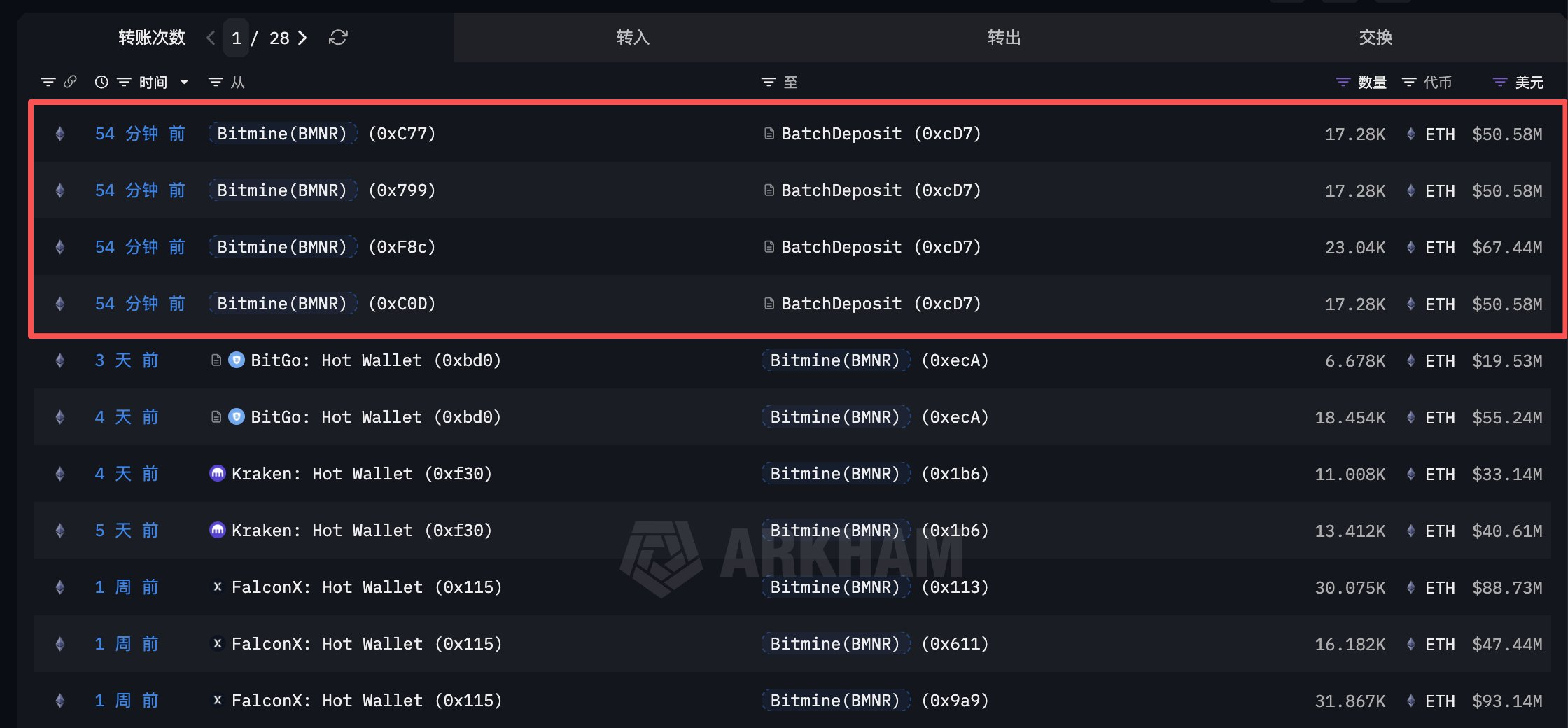
BitMine Mulai Staking Kepemilikan Ethereum Senilai US$12 Miliar

BitMine, pemegang Ethereum korporasi terbesar, mulai melakukan staking sebagian dari treasury ETH senilai US$12 miliar miliknya.

Pada 27 Desember, analis on-chain Ember CN melaporkan bahwa perusahaan tersebut telah menyetor sekitar 74.880 ETH, dengan perkiraan nilai sekitar US$219 juta, ke dalam kontrak staking Ethereum.

Kenapa BitMine melakukan staking pada kepemilikannya?

Langkah ini sebenarnya hanya sebagian kecil dari total kepemilikan BitMine sekitar 4,07 juta ETH, yang saat ini bernilai hampir US$12 miliar.

Meski begitu, ini menandai perubahan signifikan dalam cara perusahaan tersebut akan mengelola neraca keuangannya.

BitMine's Ethereum Staking
Staking Ethereum BitMine | Sumber: Ember CN

Jika perusahaan melakukan staking seluruh treasury pada estimasi annual percentage yield (APY) saat ini sebesar 3,12%, mereka akan menghasilkan sekitar 126.800 ETH setiap tahun. Dengan harga saat ini, hasilnya setara dengan pendapatan US$371 juta per tahun.

Struktur seperti ini nantinya akan membuat BitMine menjadi Public Crypto Vehicle penghasil yield yang terhubung langsung dengan consensus layer Ethereum. Itu berarti, valuasinya tidak lagi bergantung terutama pada pergerakan harga ETH secara langsung.

Tujuan dan Risiko Staking ETH

namun, strategi ini juga membawa risiko finansial serta operasional baru bagi perusahaan.

Tidak seperti Bitcoin yang disimpan di cold storage dan bisa langsung dilikuidasi saat kondisi pasar tertekan, Ether yang di-staking terikat oleh mekanisme penarikan yang diatur di level protokol.

Validator yang keluar dari jaringan harus melewati antrean keluar, yang bisa menunda akses ke modal selama periode volatilitas yang tinggi.

Jika terjadi krisis likuiditas, penundaan itu bisa membuat BitMine terkena fluktuasi harga, yang mungkin bisa dihindari jika treasury tidak di-staking.

Kondisi ini menyoroti perbedaan mendasar antara sekadar memegang Ethereum sebagai aset pasif dan mempergunakannya sebagai modal produktif di jaringan.

Meski begitu, BitMine punya target jangka panjang untuk mengakumulasi dan staking 5% dari total suplai Ethereum.

Demi mendukung rencana tersebut, perusahaan sedang mengembangkan platform staking sendiri, yaitu Made in America Validator Network (MAVAN), yang dijadwalkan akan diluncurkan pada awal 2026.

“We continue to make progress on our staking solution known as The Made in America Validator Network (MAVAN). This will be the ‘best-in-class’ solution offering secure staking infrastructure and will be deployed in early calendar 2026,” ujar ketua BitMine, Thomas Lee dalam pernyataannya.

Di sisi lain, para pengkritik berpendapat bahwa mengonsolidasikan kepemilikan Ether sebesar ini di bawah satu framework validator berbasis AS menimbulkan risiko sentralisasi. Mereka menilai struktur tersebut bisa melemahkan jaringan yang seharusnya netral dan terdistribusi secara global.

Saat ini, BitMine mengendalikan sekitar 3,36% dari total suplai ETH, sehingga MAVAN kemungkinan bisa mendapatkan tekanan untuk mematuhi sanksi dari US Office of Foreign Assets Control (OFAC) di masa mendatang.

Akibatnya, perusahaan bisa saja menolak untuk memvalidasi blok yang berisi transaksi yang terkait alamat yang telah dikenakan sanksi.

  •  

BitMine Begins Staking Its $12 Billion Ethereum Holdings

BitMine, the largest corporate holder of Ethereum, has begun staking part of its $12 billion ETH treasury.

On December 27, on-chain analyst Ember CN reported that the firm deposited approximately 74,880 ETH, valued at about $219 million, into Ethereum staking contracts.

Why is BitMine Staking Its Holdings?

The move represents only a small slice of BitMine’s total holdings of roughly 4.07 million ETH, currently valued near $12 billion.

Still, it signals a meaningful shift in how the company intends to manage its balance sheet.

BitMine's Ethereum Staking
BitMine Ethereum Staking. Source: Ember CN

If the company were to stake its entire treasury at the current estimated annual percentage yield (APY) of 3.12%, it would generate approximately 126,800 ETH annually. At current prices, this equates to $371 million in yearly revenue.

Such a structure would effectively recast BitMine as a yield-bearing vehicle tied to Ethereum’s consensus layer. This means its valuation would no longer hinge primarily on the asset’s directional price movements.

ETH Staking Goals and Risks

However, the strategy introduces new financial and operational risks for the company.

Unlike Bitcoin held in cold storage, which can be liquidated immediately in stressed market conditions, staked Ether is constrained by protocol-level withdrawal mechanics.

Validators exiting the network must pass through an exit queue, which can delay access to capital during periods of heightened volatility.

In a liquidity crunch, that delay could leave BitMine exposed to price swings that a non-staking treasury might otherwise avoid.

This tradeoff underscores a structural difference between holding Ethereum as a passive asset and deploying it as productive capital within the network.

Still, BitMine has a long-term goal of acquiring and staking 5% of Ethereum’s total supply.

To support that vision, the firm is developing a proprietary staking platform, the Made in America Validator Network (MAVAN), scheduled for deployment in early 2026.

“We continue to make progress on our staking solution known as The Made in America Validator Network (MAVAN). This will be the ‘best-in-class’ solution offering secure staking infrastructure and will be deployed in early calendar 2026,” BitMine chair Thomas Lee said.

Meanwhile, critics argue that consolidating such a large share of Ether under a single US-domiciled validator framework introduces centralization risks. They say the structure could undermine a network designed to be neutral and globally distributed.

With BitMine currently controlling about 3.36% of the total ETH supply, MAVAN could, in theory, face pressure to comply with the US Office of Foreign Assets Control (OFAC) sanctions.

As a result, the firm could refuse to validate blocks containing transactions linked to sanctioned addresses.

The post BitMine Begins Staking Its $12 Billion Ethereum Holdings appeared first on BeInCrypto.

  •  

CEO Coinbase Sebut Bank pada Akhirnya Akan Menuntut Stablecoin yang Memberikan Bunga

CEO Coinbase, Brian Armstrong, memprediksi bahwa bank-bank di AS akan membalikkan sikapnya terhadap regulasi stablecoin dan akhirnya akan melobi Kongres agar mengizinkan pembayaran bunga pada aset digital tersebut.

Prediksi Armstrong, yang ia unggah 27 Desember di X, berlawanan dengan upaya sektor perbankan saat ini yang ingin menghilangkan fitur pemberi imbal hasil dari GENIUS Act.

Armstrong prediksi bank akan ubah kebijakan larangan bunga stablecoin

Armstrong menilai, para pemberi pinjaman sekarang sedang melindungi dana simpanan berbiaya rendah, tapi nantinya mereka akan terpaksa mengadopsi teknologi ini agar tetap bisa bersaing dalam menarik modal.

“My prediction is the banks will actually flip and be lobbying FOR the ability to pay interest and yield on stablecoins in a few years,” Armstrong wrote.

Prediksi ini mengubah cara pandang terhadap pertarungan regulasi di balik GENIUS Act. Armstrong membingkainya sebagai pertarungan antara perlindungan keuntungan lama dengan perkembangan pasar yang tidak bisa dihindari.

GENIUS Act yang resmi berlaku pada Juli 2025, melarang penerbit stablecoin seperti Circle dan Tether membayar bunga langsung kepada para holder.

Tapi, aturan ini tetap mengizinkan perantara—seperti exchange—menyalurkan imbal hasil dari cadangan aset Treasury kepada pengguna.

Karena kebijakan ini, pelobi perbankan saat ini meminta legislator untuk membuka kembali undang-undang itu dan menutup celah yang ada.

Mereka berargumen, sekarang platform non-bank bisa menawarkan imbal hasil Treasury yang hampir bebas risiko sekitar 4% sampai 5% untuk aset kas yang likuid. Dalam situasi seperti itu, bank komersial kesulitan bersaing jika tidak menaikkan tingkat bunga simpanan dan itu akan menekan margin bunga bersih mereka.

Tapi, Armstrong menyebutkan bahwa upaya mengubah undang-undang yang sudah berlaku adalah “garis merah” bagi industri aset kripto.

Exactly – I’m actually impressed the banks can lobby for this with a straight face and not get kicked out of senator’s offices. It takes some serious mental gymnastics.

We won’t let anyone reopen GENIUS. Red line issue for us. And will keep advocating for our customers and the… https://t.co/6EfF2oBn5A

— Brian Armstrong (@brian_armstrong) December 26, 2025

Ia juga mengkritik sikap lobi perbankan dengan menyebutnya sebagai “mental gymnastics.” Armstrong menyoroti kontradiksi dengan alasan kekhawatiran keamanan sementara tetap mempertahankan model bisnis yang membayar bunga di bawah rata-rata pasar kepada para nasabahnya.

CEO Coinbase turut menyebut besaran dana lobi yang dikeluarkan oleh grup dagang perbankan saat ini sebagai “100% wasted effort.”

Perlu dicatat bahwa koalisi dari 125 perusahaan aset kripto, termasuk Coinbase, belum lama ini mengirimkan surat ke Komite Perbankan Senat yang menolak adanya revisi. Mereka berpendapat bahwa membuka ulang undang-undang tersebut justru akan mengurangi kepastian regulasi.

Pendapat Armstrong ini menunjukkan bahwa nantinya bank akan kehilangan kemampuan untuk menahan dana simpanan dengan bunga nyaris nol. Sebagai gantinya, bank akan menerbitkan token dolar mereka sendiri agar langsung bisa mengambil keuntungan dari selisih imbal hasil tersebut.

Sampai perubahan itu betul-betul terjadi, Coinbase dan sejumlah perusahaan lain berniat mempertahankan aturan yang berlaku sekarang, sehingga mereka tetap bisa menjadi “interface” dengan imbal hasil tinggi untuk para pemegang dolar.

  •  

Coinbase CEO Says Banks Will Eventually Demand Interest-Paying Stablecoins

Coinbase CEO Brian Armstrong predicts US banks will reverse their stance on stablecoin regulation and eventually lobby Congress to permit interest payments on these digital assets.

Armstrong’s forecast, posted December 27 on X, contradicts the banking sector’s current efforts to strip yield-generating features from the GENIUS Act.

Armstrong Predicts Banks Will Reverse Course on Stablecoin Interest Bans

He argued that lenders are currently protecting low-cost deposits but will be forced to adopt the technology to compete for capital.

“My prediction is the banks will actually flip and be lobbying FOR the ability to pay interest and yield on stablecoins in a few years,” Armstrong wrote.

The prediction reframes the current legislative battle over the GENIUS Act as more than a regulatory dispute. It presents the fight as a collision between legacy profit protection and inevitable market evolution.

The GENIUS Act, signed in July 2025, prohibits stablecoin issuers such as Circle and Tether from paying interest directly to holders.

However, it permits intermediaries—such as exchanges—to pass yield from the underlying Treasury reserves to users.

Due to this, banking lobbyists are petitioning lawmakers to reopen the legislation and close this loophole.

They argue that non-bank platforms can now offer near risk-free Treasury yields of roughly 4% to 5% on liquid cash equivalents. In that environment, commercial banks struggle to compete without raising deposit rates and compressing their net interest margins.

However, Armstrong characterized attempts to amend enacted law as a “red line” for the crypto industry.

Exactly – I’m actually impressed the banks can lobby for this with a straight face and not get kicked out of senator’s offices. It takes some serious mental gymnastics.

We won’t let anyone reopen GENIUS. Red line issue for us. And will keep advocating for our customers and the… https://t.co/6EfF2oBn5A

— Brian Armstrong (@brian_armstrong) December 26, 2025

He criticized the banking lobby’s approach as “mental gymnastics.” He pointed to the contradiction of citing safety concerns while defending a business model built on paying depositors below-market rates.

The Coinbase CEO also described the current lobbying spend by banking trade groups as “100% wasted effort.”

Notably, a coalition of 125 crypto companies, including Coinbase, recently submitted a letter to the Senate Banking Committee opposing any revisions. The group argued that reopening the bill would undermine regulatory certainty.

Armstrong’s position implies that banks will eventually lose the ability to hold deposits at near-zero rates. Instead, they would issue their own tokenized dollars to capture the yield spread directly.

Until that pivot occurs, Coinbase and its peers intend to defend the existing framework that allows them to serve as the high-yield interface for dollar holders.

The post Coinbase CEO Says Banks Will Eventually Demand Interest-Paying Stablecoins appeared first on BeInCrypto.

  •  

Ripple manfaatkan raksasa perbankan Jepang untuk dorong aktivitas XRP Ledger

Ripple Labs makin memperkuat kehadirannya di Jepang, dengan memanfaatkan hubungan lama bersama institusi keuangan tradisional di negara tersebut. Strategi ini bertujuan untuk meningkatkan adopsi dan minat pada XRP Ledger (XRPL).

Minggu ini, Asia Web3 Alliance Japan dan Web3 Salon meluncurkan Japan Financial Infrastructure Innovation Program. Inisiatif ini dirancang untuk mendukung startup Jepang yang mengembangkan solusi keuangan digital generasi berikutnya yang sesuai regulasi di atas XRP Ledger.

Strategi Ripple di Jepang Uji Apakah Institusi Bisa Angkat XRP

Program ini mulai menerima aplikasi pada 19 Desember dan menawarkan hibah senilai US$10.000 untuk setiap startup. Fokusnya hanya pada tiga bidang bernilai tinggi, yaitu stablecoin, tokenisasi aset dunia nyata, dan infrastruktur kredit.

Jepang memberikan peluang luar biasa untuk inovasi blockchain, didukung oleh kerangka regulasi yang visioner dan talenta yang melimpah. Program ini menunjukkan komitmen Ripple untuk membangun ekosistem yang dinamis di mana startup dapat memanfaatkan kecepatan, biaya rendah, dan keandalan XRP Ledger guna menciptakan manfaat nyata dan mentransformasi infrastruktur keuangan,” ujar Christina Chan, Senior Director of Developer Growth di RippleX, dalam keterangan resminya.

Analis melihat program ini sebagai jalur biaya rendah untuk menemukan kandidat penerima dana dari pool modal Ripple yang jauh lebih besar, termasuk dana XRP senilai 1 miliar yang diperuntukkan bagi pengembang di Jepang dan Korea.

Program ini telah mendapatkan dukungan dari daftar pemain institusi besar, termasuk Mizuho Bank, SMBC Nikko Securities, dan Securitize Japan.

@AWAJ_official and @Web3Salon, with support from #JETRO and @RippleXrpie, are proud to announce the Japan Financial Infrastructure Innovation Program (JFIIP) 🇯🇵 during the Japan Fintech Week

🗓 Dec 19, 2025 – Jan 18, 2026
👉 Apply here: https://t.co/kW1uq9uu6P#FinTech #XRPL pic.twitter.com/5cBox776PD

— Asia Web3 Alliance Japan (AWAJ) (@AWAJ_official) December 24, 2025

Meski inisiatif ini didukung oleh korporasi ternama, peluncurannya terjadi di saat yang cukup genting bagi jaringan. Sementara Ripple menggaungkan adopsi institusional, penggunaan nyata XRPL justru memperlihatkan tren kontraksi.

Berdasarkan data dari DefiLlama, Total Value Locked (TVL) di XRPL anjlok dalam beberapa bulan terakhir. TVL turun dari US$120 juta pada puncaknya di bulan Juli menjadi sekitar US$62 juta pada saat berita ini ditulis.

Koreksi hampir 50% ini mengindikasikan bahwa modal sedang keluar dari protokol DeFi di jaringan meskipun kemitraan dengan korporasi semakin meluas.

Di sisi lain, penurunan pasar kripto yang lebih luas sepertinya juga berkontribusi pada penurunan tersebut, karena harga Bitcoin turun 30% dari puncaknya di bulan Oktober yang lebih dari US$126.000.

Selain itu, dorongan ke tokenisasi aset juga menghadapi persaingan sengit. Menurut Rwa.xyz, saat ini XRPL menempati peringkat sembilan secara global untuk aset yang ditokenisasi, dengan nilai sekitar US$213 juta.

Meskipun jumlah tersebut cukup besar, XRPL masih jauh tertinggal dari jaringan seperti Ethereum dan pesaing baru lain yang sudah menguasai sebagian besar pasar RWA.

Dengan mempertimbangkan hal ini, program JFIIP bukan sekadar akselerator startup. Dengan menyatu dalam infrastruktur perbankan Jepang, Ripple berharap bisa membangun ekosistem kuat yang tahan terhadap volatilitas spekulatif pasar kripto secara keseluruhan.

  •  

Ripple Leverages Japanese Banking Giants to Drive XRP Ledger Activity

Ripple Labs is doubling down on its presence in Japan, drawing on longstanding relationships with the country’s traditional financial institutions. The strategy is aimed at increasing adoption and interest in the XRP Ledger (XRPL).

This week, Asia Web3 Alliance Japan and Web3 Salon launched the Japan Financial Infrastructure Innovation Program. The initiative is designed to support Japanese startups developing next-generation, compliant digital financial solutions on the XRP Ledger.

Ripple’s Japan Strategy Tests Whether Institutions Can Lift XRP

The program opened applications on December 19 and is offering a $10,000 grant per startup. It is narrowly focused on three high-value verticals, including stablecoins, real-world asset tokenization, and credit infrastructure.

Japan offers an overwhelming opportunity for blockchain innovation, supported by a forward-thinking regulatory framework and deep talent pool. This program represents Ripple’s commitment to fostering a vibrant ecosystem where startups can leverage the speed, low cost, and reliability of the XRP Ledger to create real-world benefits and transform financial infrastructure,” Christina Chan, Senior Director of Developer Growth at RippleX, said.

Analysts view it as a low-cost funnel for identifying candidates for Ripple’s significantly larger capital pool, including the 1 billion XRP fund dedicated to developers in Japan and Korea.

The program has secured backing from a formidable roster of establishment players, including Mizuho Bank, SMBC Nikko Securities, and Securitize Japan.

@AWAJ_official and @Web3Salon, with support from #JETRO and @RippleXrpie, are proud to announce the Japan Financial Infrastructure Innovation Program (JFIIP) 🇯🇵 during the Japan Fintech Week

🗓 Dec 19, 2025 – Jan 18, 2026
👉 Apply here: https://t.co/kW1uq9uu6P#FinTech #XRPL pic.twitter.com/5cBox776PD

— Asia Web3 Alliance Japan (AWAJ) (@AWAJ_official) December 24, 2025

Despite the initiative’s high-profile corporate backing, it comes at a precarious moment for the network. While Ripple touts institutional adoption, the underlying usage of the XRPL tells a conflicting story of contraction.

According to data from DefiLlama, the Total Value Locked (TVL) on the XRPL has plummeted in recent months. The TVL has fallen from a July high of $120 million to roughly $62 million as of press time.

This nearly 50% drawdown suggests that capital is exiting the network’s DeFi protocols even as corporate partnerships expand.

Meanwhile, the broader crypto market downturn likely contributed to the drawdown, as Bitcoin has fallen 30% from its October high of more than $126,000.

Furthermore, the push into asset tokenization faces stiff competition. According to Rwa.xyz, XRPL currently ranks ninth globally in tokenized assets, with approximately $213 million in assets.

While substantial, this lags significantly behind networks like Ethereum and newer competitors that have captured the lion’s share of the RWA market.

Considering this, the JFIIP program is more than a startup accelerator. By entrenching itself in Japan’s banking infrastructure, Ripple hopes to create a sticky ecosystem that is immune to the speculative volatility of the broader crypto market.

The post Ripple Leverages Japanese Banking Giants to Drive XRP Ledger Activity appeared first on BeInCrypto.

  •  

MicroStrategy’s Saylor Signals Imminent Bitcoin Buy Amid MSTR Stock YTD Decline

Michael Saylor is signaling another aggressive Bitcoin accumulation for Strategy (formerly MicroStrategy).

This signals that the firm is down on its high-stakes treasury strategy even as its MSTR stock falters.

Why Saylor is Teasing a New Bitcoin Buy for Strategy

On December 21, Saylor posted a cryptic image to X captioned “Green Dots ₿eget Orange Dots,” referencing the company’s “SaylorTracker” portfolio visualization.

Green Dots ₿eget Orange Dots. pic.twitter.com/aLdvPe4YuG

— Michael Saylor (@saylor) December 21, 2025

The post continues a year-long pattern Saylor has used to hint at a new BTC purchase. Notably, such a weekend teaser is usually followed by a Monday morning SEC filing confirming a significant acquisition.

Meanwhile, a new purchase would add to an already staggering hoard.

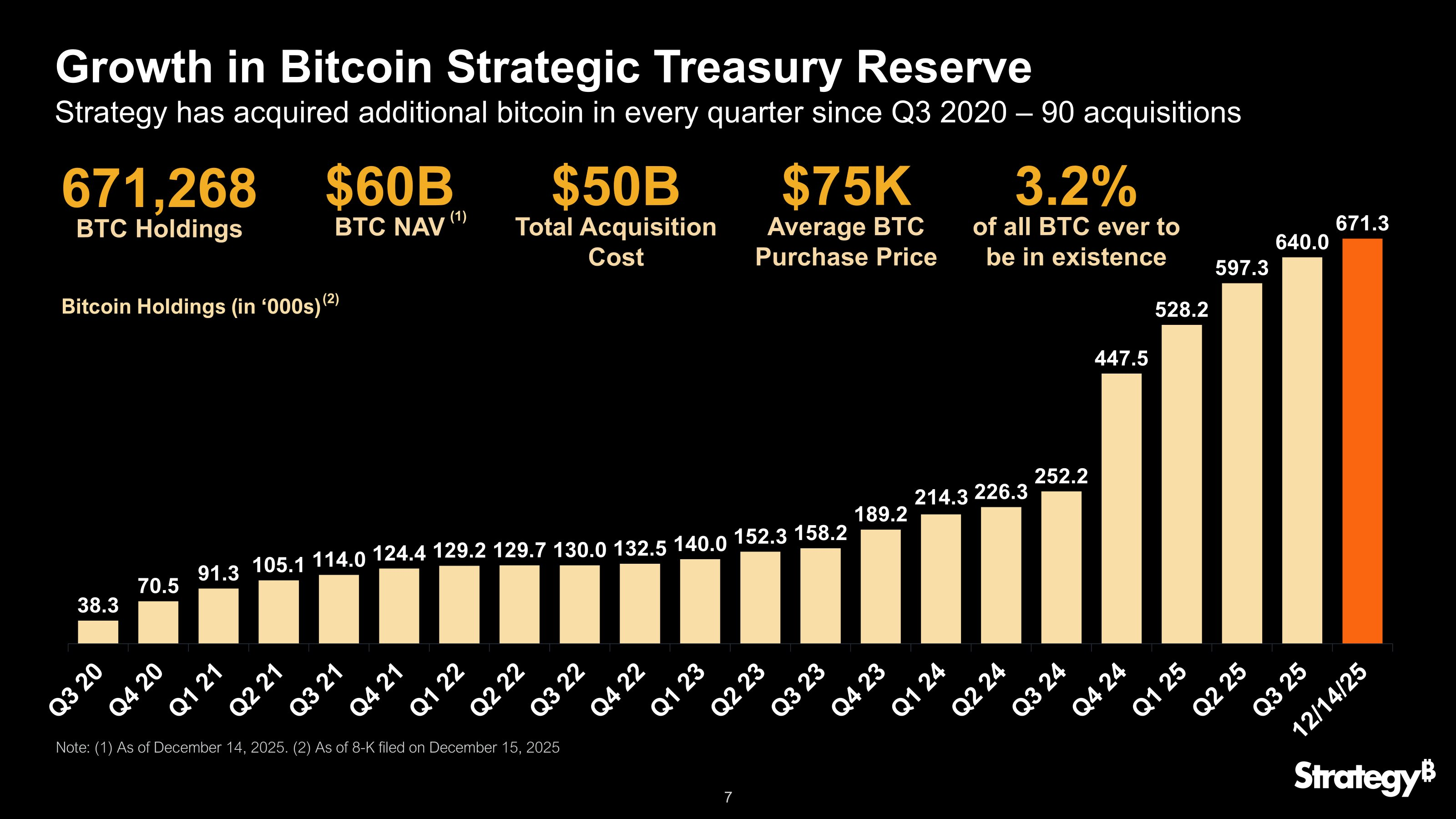
As of press time, Strategy held 671,268 BTC—valued at roughly $50.3 billion—representing 3.2% of the total Bitcoin supply.

Strategy’s Bitcoin Holdings. Source: Strategy

However, the market has punished the stock in 2025. MSTR shares have collapsed 43% year-to-date to trade around $165, mirroring Bitcoin’s 30% retreat from its October peak of $126,000.

While the company touts a “BTC Yield” of 24.9%—a proprietary metric measuring the accretion of Bitcoin per share—institutional investors are increasingly focused on the looming external risks rather than internal yield metrics.

However, the most immediate threat to Saylor’s strategy is not Bitcoin’s price, but a potential regulatory reclassification.

MSCI is considering removing Strategy Inc. from its global indices during its February review. The index provider has flagged concerns that the firm now functions more like an investment vehicle than an operating company.

Market analysts have pointed out that the financial implications of such a move are severe.

JPMorgan estimates that an exclusion would trigger approximately $11.6 billion in forced selling as passive ETFs and index-tracking funds liquidate their MSTR positions.

This mechanical selling pressure could decouple the stock from its Bitcoin holdings, creating a liquidity spiral.

In response, Strategy has launched a vigorous defense.

The firm called the MSCI proposal “arbitrary, discriminatory, and unworkable,” arguing that it unfairly targets digital asset companies while ignoring other holding-heavy conglomerates.

“The proposal improperly injects policy considerations into indexing. The proposal conflicts with U.S. policy and would stifle innovation,” it argued.

So, Saylor’s potential new purchase serves a dual purpose: it lowers the company’s average cost basis during a market correction, but more importantly, it signals to the market that despite the MSCI threat and the stock’s poor performance, the “all-in” strategy remains unchanged.

The post MicroStrategy’s Saylor Signals Imminent Bitcoin Buy Amid MSTR Stock YTD Decline appeared first on BeInCrypto.

  •  

BlackRock’s IBIT Defies Bitcoin Slump to Beat Gold in 2025 ETF Flows

BlackRock iShares Bitcoin Trust (IBIT) is set to close 2025 as a top-tier force in the US financial landscape. The fund achieved a rare feat in asset management by raising billions of dollars while losing money for its investors.

Data compiled by Bloomberg Intelligence confirms that IBIT secured the sixth spot on the US ETF leaderboard by net inflows.

Institutional ‘Dip Buying’ Drives $25 Billion into IBIT Despite Negative Returns

The fund attracted $25.4 billion in fresh capital throughout the year, outpacing traditional heavyweights such as the Invesco QQQ Trust and the SPDR Gold Trust (GLD).

This capital flood occurred despite a stark divergence in asset performance.

$IBIT is the only ETF on the 2025 Flow Leaderboard with a negative return for the year. CT's knee-jerk reaction is to whine about the return but the real takeaway is that is was 6th place DESPITE the negative return (Boomers putting on a HODL clinic). Even took in more than $GLDpic.twitter.com/68uq3HFRuO

— Eric Balchunas (@EricBalchunas) December 19, 2025

While gold surged nearly 65% in 2025—driven by central bank buying and geopolitical hedging—IBIT posted a year-to-date loss of 9.59%.

The fund’s performance suffered as Bitcoin retreated approximately 30% from its October record high of $126,173, trading near $88,000.

Typically, negative returns trigger capital flight.

However, IBIT’s ability to attract $25 billion during a correction signals a fundamental shift in investor behavior. It shows that institutional allocators are systematically buying the dip rather than panic-selling volatility.

Considering this, Bloomberg Senior ETF Analyst Eric Balchunas characterized the inflows as a definitive bullish signal for the asset’s long-term trajectory.

“IBIT is the only ETF on the 2025 Flow Leaderboard with a negative return for the year,” Balchunas stated.

Meanwhile, James Thorne, Chief Market Strategist at Wellington-Altus, argues that these flows validate the “financialization” of Bitcoin.

According to him, the digital asset now behaves less like a speculative tech stock and more like a mature macro commodity.

“Watching how Bitcoin now trades, the market microstructure and narrative management increasingly resemble the way gold behaved for decades under heavy institutional influence, with price action reflecting not just fundamental demand, but also positioning, product design, and the preferences of large financial intermediaries,” he added.

For the broader market, BlackRock IBIT’s 2025 performance proves that the Bitcoin ETF is not a fad. It has successfully entrenched itself in institutional portfolios, flipping gold as the preferred “alternative” allocation even when the precious metal vastly outperforms on price.

As the year ends with Bitcoin trading at a discount to its highs, the smart money is betting that the infrastructure BlackRock built will drive the next leg up.

The post BlackRock’s IBIT Defies Bitcoin Slump to Beat Gold in 2025 ETF Flows appeared first on BeInCrypto.

  •  

Tether Hiring Push Reveals Plans for AI-Integrated Self-Custodial Crypto Wallet

Tether is pushing beyond its role as a backend stablecoin issuer and moving directly to the end user.

On December 20, Paolo Ardoino, the firm’s CEO, disclosed that he was hiring a Lead Software Engineer to build a self-custodial mobile wallet that integrates the company’s massive liquidity with its nascent artificial intelligence division.

Tether’s Planned Mobile Crypto Wallet

The recruitment posting offers the most specific look yet at Tether’s consumer strategy.

Ardoino envisions a “100% self-custodial” mobile application designed to serve as a fortress for a strict asset basket.

Unlike general-purpose wallets that support thousands of speculative tokens, Tether’s product will support only four assets. These include Bitcoin (BTC) via the Lightning Network, Tether (USDT), the gold-pegged XAUT, and USAT, the firm’s new US-compliant stablecoin.

Imagine a wallet that supports only BTC (also via LN), USDT, USAT, XAUT.
And will have local private AI integration via QVAC. https://t.co/BCyqjob1Sh

— Paolo Ardoino 🤖 (@paoloardoino) December 20, 2025

This restricted asset list signals a clear strategic intent. Tether is building a “hard money” payment rail, ignoring the broader decentralized finance (DeFi) casino in favor of pure payments and store-of-value assets.

Meanwhile, the announcement confirms the wallet will be powered by two proprietary technologies, including the Wallet Development Kit (WDK) and QVAC.

While WDK handles the non-custodial financial architecture, the integration of QVAC (Tether’s local AI computing platform) is the key differentiator.

Ardoino detailed a vision in which the wallet features a “local private AI integration,” allowing users to run advanced automated tasks directly on their devices.

By processing data locally with QVAC rather than routing it to the cloud, Tether aims to deliver the functionality of an AI-powered financial assistant.

The approach is designed to avoid the privacy trade-offs typically associated with Big Tech platforms.

Moreover, the move underscores Tether’s shift from an infrastructure provider to a consumer-facing tech giant. It builds on last week’s launch of PearPass, a peer-to-peer password manager designed to eliminate reliance on cloud storage.

Indeed, these product lines demonstrate that the company is aggressively verticalizing its stack.

Tether would control the wallet interface, the underlying stablecoins USDT and USAT, the security layer via PearPass, and the intelligence stack via QVAC.

This structure reduces reliance on third-party platforms and strengthens the company’s operational autonomy.

The post Tether Hiring Push Reveals Plans for AI-Integrated Self-Custodial Crypto Wallet appeared first on BeInCrypto.

  •  

Saylor dari MicroStrategy isyaratkan pembelian Bitcoin akan segera dilakukan di tengah penurunan saham MSTR sepanjang tahun

Michael Saylor menandakan aksi akumulasi Bitcoin besar-besaran lagi untuk Strategy (sebelumnya MicroStrategy).

Ini menunjukkan perusahaan tersebut tetap berpegang pada strategi treasury berisiko tinggi walau saham MSTR sedang melemah.

Kenapa Saylor Mengisyaratkan Pembelian Bitcoin Baru untuk Strategi

Pada 21 Desember, Saylor membagikan gambar misterius di X dengan keterangan “Green Dots ₿eget Orange Dots,” yang mengacu pada visualisasi portofolio “SaylorTracker” milik perusahaannya.

Green Dots ₿eget Orange Dots. pic.twitter.com/aLdvPe4YuG

— Michael Saylor (@saylor) December 21, 2025

Postingan ini melanjutkan pola selama setahun terakhir yang digunakan Saylor untuk memberi sinyal adanya pembelian BTC baru. Menariknya, biasanya teaser di akhir pekan seperti ini akan diikuti dengan pengumuman resmi ke SEC pada Senin pagi yang mengonfirmasi akuisisi besar.

Pembelian baru ini nantinya bakal menambah tumpukan yang sudah sangat besar.

Pada saat berita ini diterbitkan, Strategy memegang 671.268 BTC—senilai kurang lebih US$50,3 miliar—atau sekitar 3,2% dari total suplai Bitcoin.

Kepemilikan Bitcoin Strategy | Sumber: Strategy

tetapi pasar memberi tekanan pada sahamnya di tahun 2025. Harga saham MSTR anjlok 43% sepanjang tahun dan kini diperdagangkan di sekitar US$165, mengikuti koreksi Bitcoin 30% dari puncak US$126.000 pada Oktober.

Walau perusahaan mengklaim punya “BTC Yield” sebesar 24,9%—ukuran eksklusif tentang pertumbuhan Bitcoin per saham—investor institusi kini lebih fokus pada berbagai risiko eksternal yang membayangi dibandingkan metrik hasil internal.

tapi, ancaman paling nyata bagi strategi Saylor saat ini bukanlah harga Bitcoin, melainkan kemungkinan perubahan regulasi terhadap kategori perusahaan.

MSCI sedang mempertimbangkan untuk mengeluarkan Strategy Inc. dari indeks globalnya pada evaluasi bulan Februari. Penyedia indeks tersebut menyoroti kekhawatiran karena perusahaan itu kini lebih mirip vehicle investasi daripada perusahaan operasional.

Analis pasar menegaskan bahwa dampak keuangan dari langkah itu sangat serius.

JPMorgan memperkirakan jika Strategy benar-benar dikeluarkan, sekitar US$11,6 miliar akan terkena forced selling karena ETF pasif dan dana indeks harus melikuidasi posisi mereka di MSTR.

Tekanan jual secara mekanis ini bisa saja membuat harga saham terlepas dari nilai kepemilikan Bitcoinnya, dan berujung pada spiral likuiditas.

Untuk menanggapinya, Strategy meluncurkan pembelaan yang sangat kuat.

Perusahaan menyebut proposal MSCI itu “arbitrary, discriminatory, and unworkable,” dan menilai kebijakan ini tidak adil karena menargetkan perusahaan aset digital saja dan mengabaikan konglomerat lain yang juga dominan dalam kepemilikan.

“The proposal improperly injects policy considerations into indexing. The proposal conflicts with U.S. policy and would stifle innovation,” terang mereka.

Jadi, potensi pembelian baru dari Saylor ini punya dua tujuan: menurunkan rata-rata harga beli perusahaan selama pasar sedang terkoreksi, dan yang paling penting, memberi sinyal kepada pasar bahwa meski dihadapkan pada ancaman MSCI serta performa saham yang buruk, strategi “all-in” mereka tetap tak berubah.

  •  

IBIT BlackRock Atasi Penurunan Bitcoin dan Kalahkan Emas dalam Arus Masuk ETF 2025

BlackRock iShares Bitcoin Trust (IBIT) diprediksi akan menutup tahun 2025 sebagai kekuatan papan atas di dunia keuangan Amerika Serikat. Dana ini berhasil mencetak prestasi langka di manajemen aset dengan menghimpun dana miliaran US$ meskipun mengalami kerugian bagi investornya.

Data yang dihimpun Bloomberg Intelligence mengonfirmasi bahwa IBIT menempati posisi keenam dalam daftar exchange-traded fund (ETF) AS dengan arus masuk dana bersih terbesar.

Pembelian Dip oleh Institusi Dorong US$25 Miliar Masuk ke IBIT Meski Return Negatif

Sepanjang tahun ini, dana IBIT menarik modal segar sebesar US$25,4 miliar, mengalahkan pemain besar seperti Invesco QQQ Trust dan SPDR Gold Trust (GLD).

Banjir modal ini terjadi walaupun terjadi perbedaan besar pada performa asetnya.

$IBIT is the only ETF on the 2025 Flow Leaderboard with a negative return for the year. CT's knee-jerk reaction is to whine about the return but the real takeaway is that is was 6th place DESPITE the negative return (Boomers putting on a HODL clinic). Even took in more than $GLDpic.twitter.com/68uq3HFRuO

— Eric Balchunas (@EricBalchunas) December 19, 2025

Di sisi lain, harga emas melonjak hampir 65% di 2025 — didorong pembelian oleh bank sentral dan aksi lindung nilai geopolitik — sementara IBIT justru mencatat kerugian sebesar 9,59% secara year-to-date.

Kinerja dana ini terpukul karena Bitcoin terkoreksi sekitar 30% dari rekor tertingginya pada Oktober di US$126.173, kini diperdagangkan dekat US$88.000.

Biasanya, hasil negatif akan menyebabkan dana keluar dari produk tersebut.

namun, kemampuan IBIT menghimpun US$25 miliar saat terjadi koreksi menunjukkan adanya perubahan mendasar pada perilaku investor. Ini membuktikan bahwa pelaku institusi kini memilih membeli saat harga turun, bukan panik jual akibat volatilitas.

Menanggapi hal ini, Eric Balchunas, Senior ETF Analyst Bloomberg, menggambarkan arus masuk modal tersebut sebagai sinyal bullish dan menandakan peluang jangka panjang bagi aset ini.

“IBIT adalah satu-satunya ETF di Flow Leaderboard 2025 yang mencatatkan return negatif sepanjang tahun,” ujar Balchunas.

Di sisi lain, James Thorne, Chief Market Strategist Wellington-Altus, berpendapat bahwa arus ini menjadi bukti “financialization” Bitcoin.

Menurut dia, kini aset digital ini semakin berperilaku seperti komoditas ekonomi makro yang matang, bukan saham teknologi spekulatif.

“Melihat bagaimana Bitcoin diperdagangkan saat ini, struktur mikro pasar dan pengelolaan narasinya makin mirip dengan cara emas bergerak selama puluhan tahun di bawah pengaruh institusi besar, di mana aksi harga bukan hanya mencerminkan permintaan fundamental, tapi juga posisi, desain produk, dan preferensi perantara keuangan besar,” papar dia menambahkan.

Bagi pasar yang lebih luas, kinerja IBIT BlackRock pada 2025 membuktikan bahwa exchange-traded fund (ETF) Bitcoin bukan tren sesaat. Produk ini kini sudah kokoh dalam portofolio institusi, bahkan mulai menggantikan emas sebagai alokasi “alternatif” pilihan, meski harga logam mulia itu tahun ini masih jauh lebih unggul.

Di akhir tahun, ketika harga Bitcoin masih di bawah puncak tertingginya, investor cerdas optimistis bahwa infrastruktur yang dibangun BlackRock akan mendorong reli selanjutnya.

  •  

Tether membuka lowongan kerja, ungkap rencana dompet aset kripto self-custodial terintegrasi AI

Tether kini bergerak melampaui perannya sebagai penerbit stablecoin di belakang layar dan mulai menyasar langsung ke pengguna akhir.

Pada 20 Desember, Paolo Ardoino, CEO perusahaan tersebut, mengungkapkan bahwa dirinya sedang merekrut Lead Software Engineer untuk membangun mobile wallet self-custodial yang akan mengintegrasikan likuiditas besar milik perusahaan dengan divisi artificial intelligence yang sedang berkembang.

Rencana Dompet Crypto Mobile dari Tether

Pengumuman rekrutmen ini memberikan gambaran paling spesifik sejauh ini tentang strategi Tether untuk konsumen.

Ardoino membayangkan sebuah aplikasi mobile “100% self-custodial” yang didesain sebagai benteng untuk sejumlah aset terpilih yang ketat.

Berbeda dengan wallet umum yang mendukung ribuan token spekulatif, produk Tether hanya akan mendukung empat aset. Aset tersebut adalah Bitcoin (BTC) melalui Lightning Network, Tether (USDT), XAUT yang dipatok ke emas, serta USAT, stablecoin baru perusahaan yang sudah sesuai regulasi AS.

Imagine a wallet that supports only BTC (also via LN), USDT, USAT, XAUT.
And will have local private AI integration via QVAC. https://t.co/BCyqjob1Sh

— Paolo Ardoino 🤖 (@paoloardoino) December 20, 2025

Daftar aset yang terbatas ini menunjukkan niat strategis yang jelas. Tether sedang membangun jalur pembayaran “hard money”, mengabaikan ranah decentralized finance (DeFi) yang lebih luas demi fokus ke pembayaran murni dan aset penyimpan nilai.

Sementara itu, pengumuman ini juga memastikan wallet akan didukung oleh dua teknologi milik perusahaan, yakni Wallet Development Kit (WDK) dan QVAC.

Saat WDK menangani arsitektur keuangan non-custodial, integrasi QVAC (platform AI lokal milik Tether) menjadi pembeda utamanya.

Ardoino menjabarkan sebuah visi di mana wallet memiliki fitur “integrasi AI pribadi lokal”, sehingga pengguna bisa menjalankan tugas otomatis canggih langsung di perangkat mereka.

Dengan memproses data secara lokal lewat QVAC, bukan mengirimkannya ke cloud, Tether ingin menghadirkan kemampuan asisten keuangan berbasis AI.

Pendekatan ini dirancang agar pengguna dapat menghindari risiko privasi yang umumnya terjadi di platform Big Tech.

Selain itu, langkah ini juga menegaskan perubahan Tether dari penyedia infrastruktur menjadi raksasa teknologi yang berhadapan langsung dengan konsumen. Langkah ini melanjutkan rilis PearPass minggu lalu, yaitu pengelola password peer-to-peer yang menghilangkan kebutuhan penyimpanan cloud.

Faktanya, lini produk terbaru ini menunjukkan bahwa perusahaan sedang agresif dalam memperkuat kendali di seluruh stack layanannya.

Tether bakal mengendalikan antarmuka wallet, stablecoin USDT dan USAT sebagai fondasinya, lapisan keamanan melalui PearPass, serta tumpukan kecerdasan lewat QVAC.

Struktur seperti ini akan mengurangi ketergantungan pada platform pihak ketiga, serta memperkuat kemandirian operasional perusahaan.

  •  

Hundreds of Crypto Firms Slam US Bank’s Lobby to Prohibit Stablecoin Yields 

A coalition of more than 125 cryptocurrency companies and advocacy groups has launched a coordinated offensive against US banking lobbyists. The group includes major crypto firms such as Coinbase, Gemini, and Kraken.

The move escalates a high-stakes battle over who has the right to pay interest on stablecoin deposits.

Why Banks Are Lobbying to Tweak the GENIUS Act

The main bone of contention is that the GENIUS Act explicitly prohibits stablecoin issuers like Tether from paying dividends.

However, there is currently a loophole that allows third-party platforms, such as crypto exchanges, to pass this stablecoin yield on to users.

As a result, traditional banking groups are aggressively lobbying to close this avenue, arguing that it constitutes regulatory arbitrage.

The banking lobby contends that if unregulated fintech platforms are allowed to offer high yields on cash-equivalent tokens, it poses a systemic risk to the traditional financial architecture.

In briefings with Capitol Hill, they warned that preserving the current rules could trigger a massive capital flight. They estimated potential deposit outflows of up to $6.6 trillion from commercial banks to digital asset platforms.

Such a shift, they argue, would hollow out the capital base that banks use to underwrite mortgages and business loans. That erosion would force lenders to shrink capacity and raise borrowing costs for American households.

Crypto Coalition Fights Back

In a December 18 letter to the US Senate Committee on Banking, the crypto coalition urged lawmakers to reject attempts to expand the scope of the recently enacted GENIUS Act.

“Reopening this issue before the GENIUS Act’s implementation would weaken the certainty that defines Congressional-enacted regulatory frameworks and introduce unnecessary risk into the broader market structure effort. It would signal that even recently enacted compromises remain subject to almost immediate renegotiation, undermining the predictability that markets, consumers, and innovators rely on,” the group argued.

The crypto coalition also dismissed the banks’ concerns about stability as a protectionist effort to maintain a monopoly on low-interest deposits.

The signatories argued that banks are merely trying to protect their profit margins by preventing consumers from accessing the 4% yields currently available in the Treasury market.

“Stablecoins rewards programs enable platforms to share value directly with users, helping households benefit from higher-rate environments rather than absorbing losses to inflation,” the crypto firms argued.

The Banksters are trying to prohibit platforms like @Gemini, @coinbase, and @krakenfx from offering stablecoin rewards to you. The GENIUS Act already settled this issue with an elegant compromise — stablecoin issuers cannot offer rewards, but intermediary platforms like Gemini,… https://t.co/QpdiQfaD0X

— Tyler Winklevoss (@tyler) December 19, 2025

Tyler Winklevoss, co-founder of Gemini, also publicly slammed the banking lobby’s maneuver, characterizing it as an attempt to “relitigate a settled legislative issue.”

The post Hundreds of Crypto Firms Slam US Bank’s Lobby to Prohibit Stablecoin Yields  appeared first on BeInCrypto.

  •  

Ethereum Developers Plan ‘Glamsterdam’ and ‘Hegota’ Upgrades for 2026

Ethereum core developers have revealed plans to execute two major network upgrades in 2026, codenamed “Glamsterdam” and “Hegota.”

This decision marks the blockchain network’s continued strategic pivot toward a faster release cadence. The move is intended to establish a predictable biannual upgrade schedule and strengthen its competitive position against high-throughput rivals.

Ethereum Shifts to Biannual Upgrades to Fend Off High-Speed Rivals

The roadmap positions “Glamsterdam” for release in the first half of 2026, arriving fast on the heels of the recent “Fusaka” hard fork.

According to developers, Glamsterdam will focus on immediate scalability and efficiency fixes, primarily through gas optimizations and “Enshrined Proposer-Builder Separation” (ePBS).

This technical upgrade aims to separate the roles of block builders and block proposers at the protocol level. It reduces censorship risks and further decentralizes the network.

Meanwhile, the developers intend to finalize the full feature list for Glamsterdam immediately following the holiday break.

On the other hand, the second phase of the 2026 sprint, “Hegota,” targets the latter half of the year.

The upgrade’s name reflects its dual nature, combining the “Bogota” execution-layer update with the “Heze” consensus-layer update.

Christine Kim, a former Vice President at Galaxy Digital who now closely tracks protocol governance, noted that scoping discussions for Hegota will commence on the January 8 All Core Developers call.

These sessions will determine the fork’s “headliner” features, with a finalized scope expected by late February.

Other Planned Updates

Parallel to these structural changes, the Ethereum Foundation is aggressively reorienting its long-term research toward security hardening.

Researcher George Kadianakis confirmed that the network aims to achieve “128-bit provable security” by year-end 2026. The cryptographic standard is considered essential for institutional-grade financial applications.

“For zkEVMs, this isn’t academic. A soundness issue is not like other security issues. If an attacker can forge a proof, they can forge anything: mint tokens from nothing, rewrite state, steal funds. For an L1 zkEVM securing hundreds of billions of dollars, the security margin is not negotiable,” he stated.

The Foundation has linked this initiative to specific milestones, including a “soundcalc” integration in February and full alignment with the Glamsterdam hard fork in May.

Meanwhile, these efforts aim to remove the technical friction that currently limits Ethereum’s mass adoption.

To bridge this gap, developers are implementing a strategy to lower entry barriers and match the intuitive simplicity of mainstream consumer applications.

The post Ethereum Developers Plan ‘Glamsterdam’ and ‘Hegota’ Upgrades for 2026 appeared first on BeInCrypto.

  •  

Crypto Trader Suffers $50 million Loss Following Address Poisoning Attack

A cryptocurrency trader lost $50 million in Tether’s USDT after falling victim to a sophisticated “address poisoning” attack.

On December 20, blockchain security firm Scam Sniffer reported that the attack began after the victim sent a small $50 test transaction to his own address.

How The Address Poisoning Scheme Unfolded

Notably, traders use this standard precaution to confirm that they are sending funds to the correct address.

However, that activity alerted an automated script controlled by the attacker, which immediately generated a “spoofed” wallet address.

🚨💔 A victim lost ~$50M after copying the wrong address from contaminated transfer history. https://t.co/ur4SJ0cvN0 pic.twitter.com/6K5ftJzC1G

— Scam Sniffer | Web3 Anti-Scam (@realScamSniffer) December 20, 2025

The fake address is designed to match the intended recipient’s address at the beginning and end of the alphanumeric string. The differences appear only in the middle characters, making the fraud difficult to detect at a glance.

The attacker then sent a negligible amount of cryptocurrency from the spoofed address to the victim’s wallet.

That transaction effectively placed the fraudulent address into the victim’s recent transaction history, where many wallet interfaces display only truncated address details.

Relying on that visual shorthand, the victim copied the address from their transaction history without checking the full string. So, instead of transferring funds to a secure personal wallet, the trader sent 49,999,950 USDT directly to the attacker.

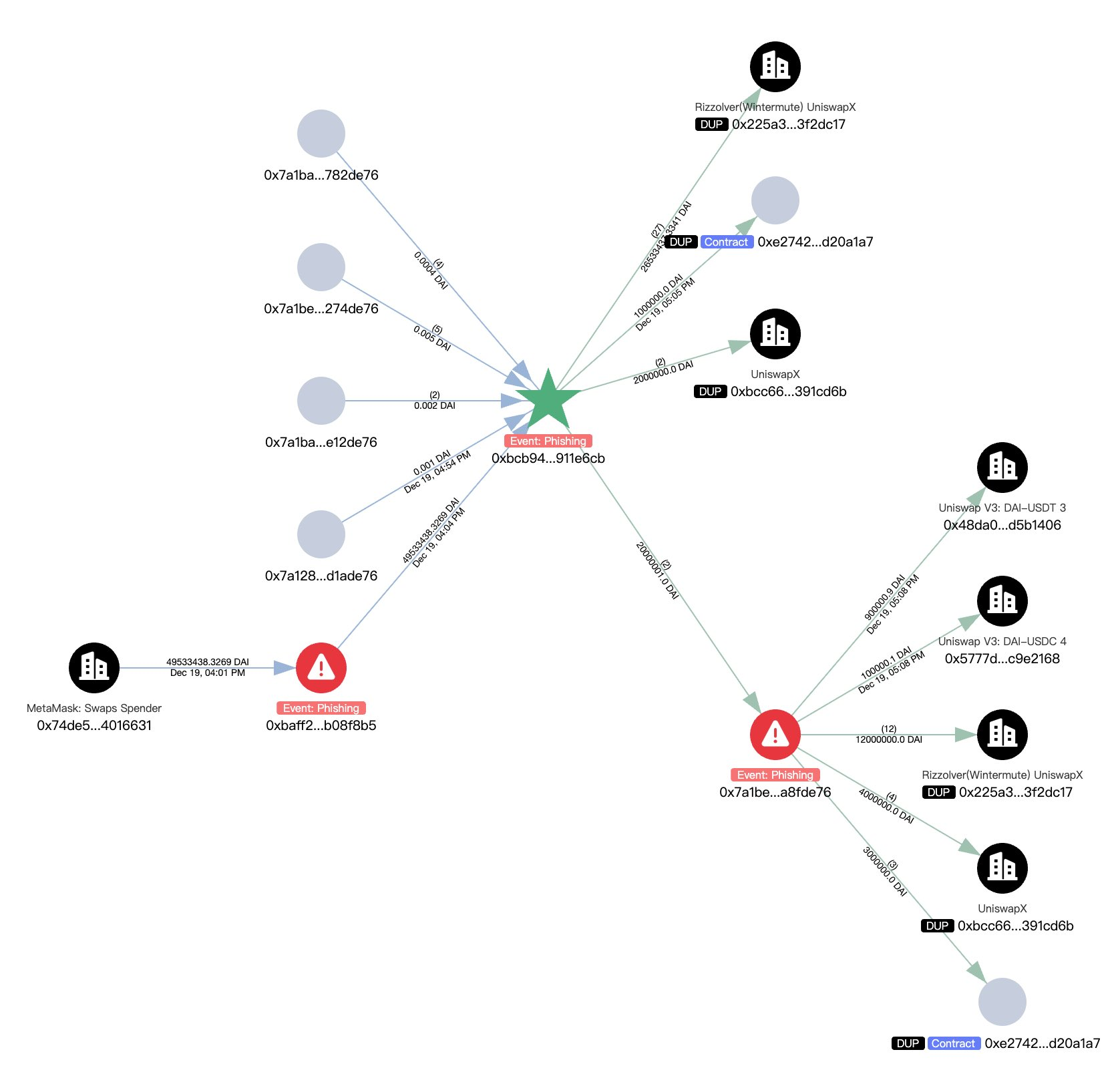
After receiving the funds, the malicious attacker quickly moved to limit the risk of asset seizure, according to on-chain records. The attacker immediately swapped the stolen USDT, which its issuer can freeze, for the DAI stablecoin using MetaMask Swap.

Attacker Moves to Obscure Transaction Trail.
Attacker Moves to Obscure Transaction Trail. Source: Slowmist

The attacker then converted the funds into roughly 16,680 ETH.

To further obscure the transaction trail, the attacker deposited the ETH into Tornado Cash. The decentralized mixing service is designed to sever the visible link between sending and receiving addresses.

Victim Offers $1 Million Bounty

In an attempt to recover the assets, the victim sent an on-chain message offering a $1 million white-hat bounty in return for 98% of the stolen funds.

“We have officially filed a criminal case. With the assistance of law enforcement, cybersecurity agencies, and multiple blockchain protocols, we have already gathered substantial and actionable intelligence regarding your activities,” the message stated.

The message warned that the victim would pursue “relentless” legal action if the attacker failed to comply within 48 hours.

“If you fail to comply: We will escalate the matter through legal and international law enforcement channels. Your identity will be uncovered and shared with the appropriate authorities. We will relentlessly pursue criminal and civil action until full justice is served. This is not a request. You are being given one final chance to avoid irreversible consequences,” the victim stated.

The incident underscores a persistent vulnerability in how digital wallets display transaction information and how attackers exploit user behavior rather than flaws in blockchain code.

Security analysts have repeatedly warned that wallet providers’ practice of abbreviating long address strings for usability and design reasons creates a persistent risk.

If this problem is not solved, attackers are likely to continue exploiting users’ tendency to verify only the first and last few characters of an address.

The post Crypto Trader Suffers $50 million Loss Following Address Poisoning Attack appeared first on BeInCrypto.

  •  

Pro-Crypto Senator Cynthia Lummis Won’t Run for Re-Election

Senator Cynthia Lummis, the US Senate’s most prominent cryptocurrency advocate, announced on December 19 that she will not seek reelection in 2026.

The decision sets a definitive deadline on her legislative agenda, creating a two-year sprint to enshrine digital asset regulations before she leaves office in January 2027.

Lummis’ Impending Retirement Adds Pressure to Codify Crypto Laws

Lummis cited the “exhausting” pace of recent sessions as the primary driver for her exit. “I am a devout legislator, but I feel like a sprinter in a marathon,” she wrote, admitting she lacks the energy reserves for another six-year term.

Thank you, Wyoming! Serving our state has been the honor of my life. – Cynthia Lummis pic.twitter.com/FoRTlHaHxI

— Cynthia Lummis 🦬 (@CynthiaMLummis) December 19, 2025

Her impending departure adds immediate urgency to the crypto legislative calendar.

Lummis has been a major player behind several pivotal crypto bills, including the crypto market structure bill and the US National Bitcoin Strategic Reserve (SBR). Her efforts also stood against the SEC’s “regulation by enforcement” approach under Gensler.

While the Trump administration has reversed several anti-crypto measures and advanced pro-crypto goals through executive action, Sen. Lummis has welcomed those steps.

She has consistently argued, however, that durable progress requires legislative codification rather than policy set by executive order alone.

So, her final term will focus on bridging the gap between temporary executive orders and permanent congressional law to protect the industry from future political reversals.

“I look forward to throwing all my energy into bringing important legislation to [Trump’s] desk in 2026 and into retaining commonsense Republican control of the US Senate,” Lummis said.

Meanwhile, the announcement triggered immediate accolades from industry heavyweights. Some argued that her exit would leave a crypto leadership vacuum in Washington.

Collin McCune, Head of Government Affairs at a16z, highlighted her national impact and noted her role in advancing crypto legislation.

“Senator Lummis fought for Wyoming every day for many years. Beyond that, her leadership created space for innovators and builders across the country. Crypto would not be where it is today without her fight in the Congress,” he added.

Arjun Sethi, co-CEO of crypto exchange Kraken, offered a detailed retrospective on Lummis’s legacy, crediting her with making Wyoming the first jurisdiction to take a “technically informed approach” to digital assets.

Sethi praised Lummis for championing frameworks that aligned with “technical reality” rather than legacy assumptions. He said the approach helped create operating certainty across markets, from Bitcoin to emerging “memetic assets.”

“Senator Lummis advocacy for Bitcoin and digital assets has been grounded, patient, and long term. Not performative. Not reactive. Focused on competitiveness, resilience, and ensuring the United States remains a place where open systems can be built and operated responsibly,” Sethi said.

The post Pro-Crypto Senator Cynthia Lummis Won’t Run for Re-Election appeared first on BeInCrypto.

  •  

Ratusan Perusahaan Aset Kripto Kecam Lobi Bank AS untuk Melarang Imbal Hasil Stablecoin

Sebuah koalisi yang terdiri dari lebih dari 125 perusahaan aset kripto dan kelompok advokasi telah meluncurkan serangan terkoordinasi terhadap pelobi perbankan AS. Grup ini mencakup perusahaan kripto besar seperti Coinbase, Gemini, dan Kraken.

Langkah ini meningkatkan pertarungan besar mengenai siapa yang berhak untuk membayar bunga atas simpanan stablecoin.

Mengapa bank berupaya melobi agar GENIUS Act diubah

Permasalahan utama adalah GENIUS Act secara tegas melarang penerbit stablecoin seperti Tether untuk membayar dividen.

namun, saat ini ada celah yang memungkinkan platform pihak ketiga, seperti exchange aset kripto, untuk menyalurkan hasil dari stablecoin ini kepada pengguna.

Akibatnya, kelompok perbankan tradisional secara agresif melobi untuk menutup jalan ini, karena mereka menyatakan bahwa hal ini adalah arbitrase regulasi.

Lobi perbankan berpendapat jika platform fintech yang tidak teregulasi diizinkan menawarkan hasil tinggi pada token setara kas, maka hal tersebut bisa menimbulkan risiko sistemik bagi arsitektur keuangan tradisional.

Di dalam pemaparan bersama Capitol Hill, mereka memperingatkan bahwa mempertahankan aturan saat ini dapat memicu arus keluar modal besar-besaran. Mereka memperkirakan potensi arus keluar simpanan hingga US$6,6 triliun dari bank komersial ke platform aset digital.

Pergeseran sebesar itu, ujar mereka, akan mengikis basis modal yang digunakan bank untuk mendukung kredit hipotek dan pinjaman bisnis. Akibatnya, bank harus mengurangi penyaluran kredit dan menaikkan biaya pinjaman bagi rumah tangga Amerika.

Koalisi Crypto Melawan Balik

Pada surat tertanggal 18 Desember kepada Komite Perbankan Senat AS, koalisi kripto mendesak para legislator untuk menolak upaya memperluas cakupan GENIUS Act yang baru disahkan.

“Membuka kembali isu ini sebelum GENIUS Act diimplementasi akan melemahkan kepastian yang menjadi ciri kerangka regulasi hasil keputusan Kongres dan membawa risiko tidak perlu terhadap upaya penguatan struktur pasar secara luas. Ini juga akan mengisyaratkan bahwa kompromi yang baru saja disahkan pun tetap bisa segera dinegosiasi ulang, sehingga mencederai prediktabilitas yang diandalkan pasar, konsumen, dan inovator,” terang koalisi tersebut.

Koalisi kripto juga menepis kekhawatiran bank soal stabilitas dan menilainya hanya sebagai upaya protektif agar tetap memonopoli simpanan berbunga rendah.

Para penandatangan surat itu menjelaskan bahwa bank hanya ingin melindungi margin keuntungan mereka dengan mencegah konsumen mengakses imbal hasil 4% yang sekarang tersedia di pasar Treasury.

“Program rewards stablecoin memungkinkan platform berbagi nilai langsung kepada pengguna, sehingga rumah tangga bisa menikmati manfaat dari lingkungan suku bunga tinggi alih-alih menanggung kerugian akibat inflasi,” papar perusahaan kripto tersebut.

The Banksters are trying to prohibit platforms like @Gemini, @coinbase, and @krakenfx from offering stablecoin rewards to you. The GENIUS Act already settled this issue with an elegant compromise — stablecoin issuers cannot offer rewards, but intermediary platforms like Gemini,… https://t.co/QpdiQfaD0X

— Tyler Winklevoss (@tyler) December 19, 2025

Tyler Winklevoss, co-founder Gemini, juga secara terbuka mengkritisi manuver lobi bank dengan menyebutnya sebagai upaya untuk “memperdebatkan kembali isu legislatif yang sudah selesai.”

  •  

Pengembang Ethereum Rencanakan Upgrade ‘Glamsterdam’ dan ‘Hegota’ untuk 2026

Para pengembang inti Ethereum telah mengungkapkan rencana untuk melakukan dua upgrade besar jaringan pada tahun 2026, dengan kode nama “Glamsterdam” dan “Hegota”.

Keputusan ini menandai langkah strategis berkelanjutan jaringan blockchain tersebut untuk mempercepat jadwal perilisan upgrade. Langkah ini bertujuan agar ada jadwal upgrade dua kali setahun secara teratur dan membuat posisi Ethereum lebih kompetitif melawan sejumlah rival berkapasitas transaksi tinggi.

Ethereum lakukan upgrade dua kali setahun agar bisa bersaing dengan rival berkecepatan tinggi

Roadmap menargetkan “Glamsterdam” akan dirilis pada paruh pertama 2026, tidak lama setelah hard fork “Fusaka” yang baru-baru ini terjadi.

Menurut para pengembang, Glamsterdam akan berfokus pada perbaikan skalabilitas dan efisiensi secara langsung, terutama lewat optimasi gas dan penerapan “Enshrined Proposer-Builder Separation” (ePBS).

Upgrade teknis ini bertujuan memisahkan peran builder blok dan proposer blok di tingkat protokol. Hal ini mengurangi risiko sensor dan makin mendesentralisasikan jaringan.

Sementara itu, para pengembang juga berencana untuk segera merampungkan daftar fitur penuh Glamsterdam setelah libur akhir tahun.

Di sisi lain, tahap kedua dari sprint 2026, yaitu “Hegota”, menyasar paruh kedua tahun tersebut.

Nama upgrade ini mencerminkan dua gabungan pembaruan, yaitu pembaruan layer eksekusi “Bogota” dengan pembaruan layer konsensus “Heze”.

Christine Kim, mantan Wakil Presiden di Galaxy Digital yang kini aktif memantau tata kelola protokol, menuturkan bahwa diskusi lingkup pembaruan Hegota akan dimulai pada panggilan All Core Developers tanggal 8 Januari.

Sesi-sesi ini akan menentukan fitur utama dari hard fork tersebut, dengan lingkup resmi yang diperkirakan rampung di akhir Februari.

Update Lain yang Sudah Direncanakan

Bersamaan dengan perubahan struktural ini, Ethereum Foundation secara agresif tengah mengarahkan ulang riset jangka panjangnya demi memperkuat keamanan jaringan.

Peneliti George Kadianakis mengonfirmasi bahwa tujuan jaringan ini ingin mencapai “keamanan terbukti 128-bit” di akhir tahun 2026. Standar kriptografi tersebut dianggap sangat penting untuk aplikasi finansial tingkat institusi.

“For zkEVMs, this isn’t academic. A soundness issue is not like other security issues. If an attacker can forge a proof, they can forge anything: mint tokens from nothing, rewrite state, steal funds. For an L1 zkEVM securing hundreds of billions of dollars, the security margin is not negotiable,” ucapnya .

Foundation tersebut mengaitkan inisiatif ini dengan sejumlah target khusus, termasuk integrasi “soundcalc” di bulan Februari lalu sinkronisasi penuh dengan hard fork Glamsterdam di bulan Mei.

Upaya ini bertujuan untuk menghilangkan hambatan teknis yang saat ini masih membatasi adopsi massal Ethereum.

Untuk menjembatani hal ini, para pengembang pun menerapkan strategi guna menurunkan hambatan masuk dan menyesuaikan kemudahan aplikasi Ethereum layaknya aplikasi konsumen arus utama.

  •  
❌