Reading view

Canton’s CC Token Jumps on Christmas Eve as Institutions Drive the Privacy Narrative

Canton’s CC token emerged as the top gainer in the crypto market on Christmas Eve, rising more than 25% in 24 hours despite thin holiday liquidity and broadly bearish sentiment. The rally pushed CC ahead of major assets and privacy coins.

The move was not driven by retail hype or seasonal speculation. Instead, it reflected a growing institutional narrative around real-world asset (RWA) tokenization and regulatory clarity—two themes that have gained traction into year-end.
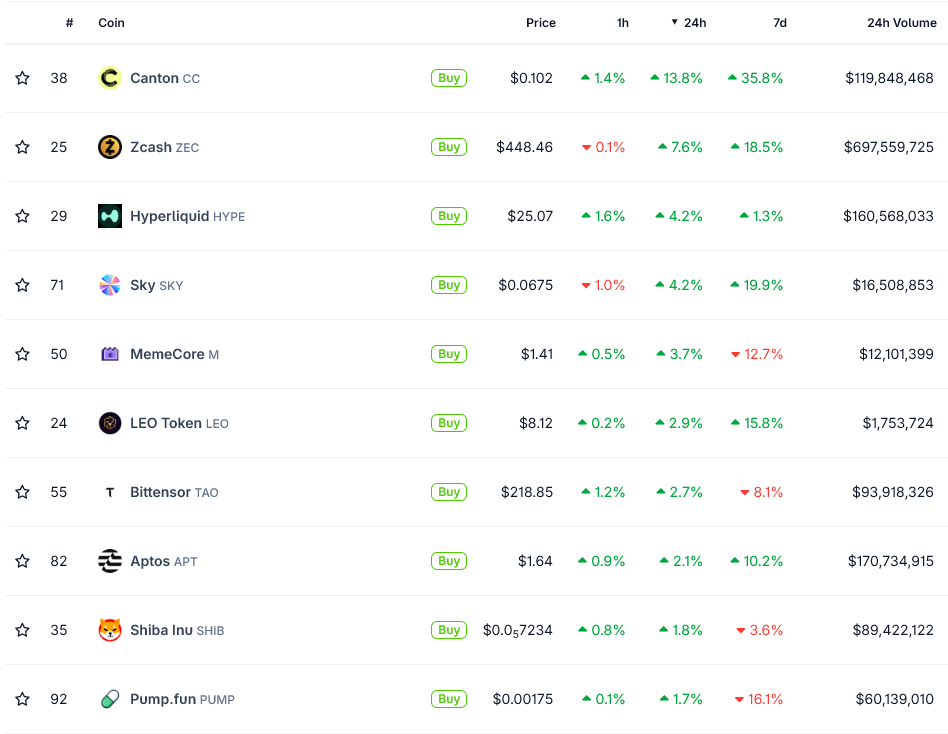
Top Gainers in the Crypto Market on Christmas Eve 2025. Source: CoinGecko

Institutional Tokenization Fuels Canton Token Rally

At the center of the rally is Canton Network, a privacy-enabled Layer-1 blockchain designed specifically for regulated financial institutions. 

Unlike public DeFi chains, Canton allows institutions to transact on-chain while keeping sensitive data private. This is a key requirement for banks, clearing houses, and asset managers.

Canton’s utility token, CC, is used for transaction fees, network security, and validator incentives. Its value is tied less to retail activity and more to institutional usage

That’s why price moves are highly sensitive to infrastructure-level developments.

Momentum accelerated after DTCC (Depository Trust & Clearing Corporation) confirmed progress on tokenizing DTC-custodied US Treasury securities on the Canton Network. 

Minting and using U.S. Treasuries on Canton is coming in 2026, enabling tokenized USTs to be exchanged in near-real-time with stablecoins and other digital assets – all with the privacy and controls regulated markets demand.

A major unlock for global collateral mobility to… pic.twitter.com/XnvdprRq7X

— Canton Network (@CantonNetwork) December 17, 2025

The initiative follows a regulatory green light from the US SEC, which issued a non-action letter allowing DTCC to proceed with live tokenization infrastructure.

That development marked one of the clearest regulatory endorsements yet for on-chain Treasuries. 

As a result, markets began repricing Canton as core infrastructure rather than a speculative blockchain project.

Earlier in December, Canton also deepened its RWA stack through a partnership with RedStone, which became its primary oracle provider. 

The integration enables real-time, compliant price feeds for tokenized assets, bridging institutional markets with DeFi without compromising privacy.

Together, these developments position Canton as a settlement layer for trillions of dollars in traditional financial assets. 

Industry estimates place more than $300 billion in daily transaction volume already flowing through applications built on the network.
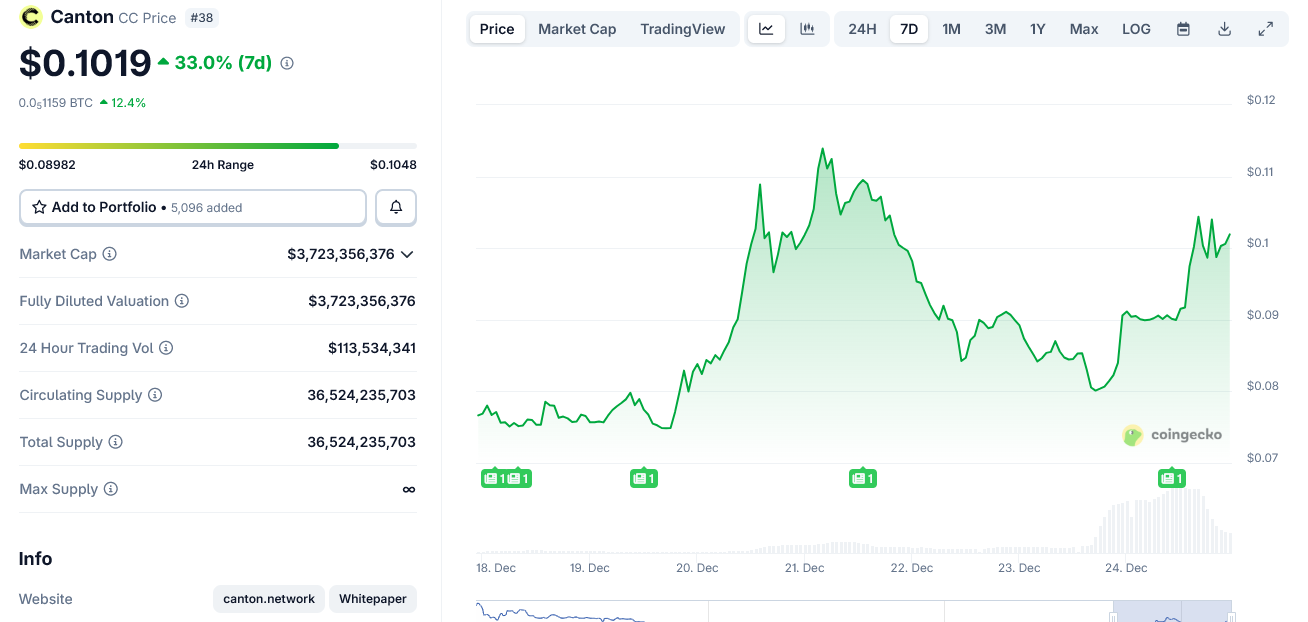
Canton CC Token Weekly Price Chart. Source: CoinGecko

Importantly, the rally came during a low-liquidity holiday session. That context amplified the move but also highlighted where capital is concentrating ahead of 2026: compliant tokenization infrastructure.

While broader crypto markets remain cautious, CC’s performance underscored a growing divergence. 

I’ve come to realize $CC is useless. Also it seems to be inflationary with never ending supply.

Is what I’m hearing often in comments. Let’s clarify.@CantonNetwork has implemented something called BME (Burn-Mint-Equilibrium).

1) Equilibrium in Practice:
• Annual target:… https://t.co/kMAuMCAh7q

— Heslin Kim (@HeslinKim) December 24, 2025

Investors are increasingly differentiating between speculative tokens and protocols tied directly to regulated financial adoption.

On Christmas Eve, Canton sat firmly in the latter camp—and the market reacted accordingly.

The post Canton’s CC Token Jumps on Christmas Eve as Institutions Drive the Privacy Narrative appeared first on BeInCrypto.

  •  

Americans Want Crypto for Christmas—Even as Inflation Squeezes Budgets

Americans are feeling the pressure of higher living costs, but they are not stepping away from crypto. 

A new holiday spending survey from Visa Inc. shows a growing appetite for digital assets as gifts, even as inflation continues to limit disposable income and keep consumers cautious. The contrast highlights a deeper shift in how households adapt when money feels tight.

Inflation Is Cooling, but Budgets Still Feel Tight

Inflation has eased from its post-pandemic peak, but prices remain elevated across essentials such as housing, food, insurance, and utilities. 

Wages have broadly kept pace with inflation, preventing a sharp drop in purchasing power. Still, the margin is thin. 

After covering necessities, many households have less flexibility for investing or discretionary spending than they did before 2022.

US energy inflation is accelerating:

CPI energy prices jumped +4.2% YoY in November, the fastest pace since February 2023.

This marks the 2nd-consecutive acceleration, following a +2.8% YoY increase in September.

The surge was driven by fuel oil, electricity, and utility gas… pic.twitter.com/nXS30Km6fI

— The Kobeissi Letter (@KobeissiLetter) December 23, 2025

This environment has not stopped spending outright. Instead, it has changed behavior. Consumers shop earlier, compare prices more aggressively, and rely on technology to stretch each dollar further. 

Financial confidence remains fragile, but economic participation continues. That caution shows up clearly in how people spend—and what they choose to buy.

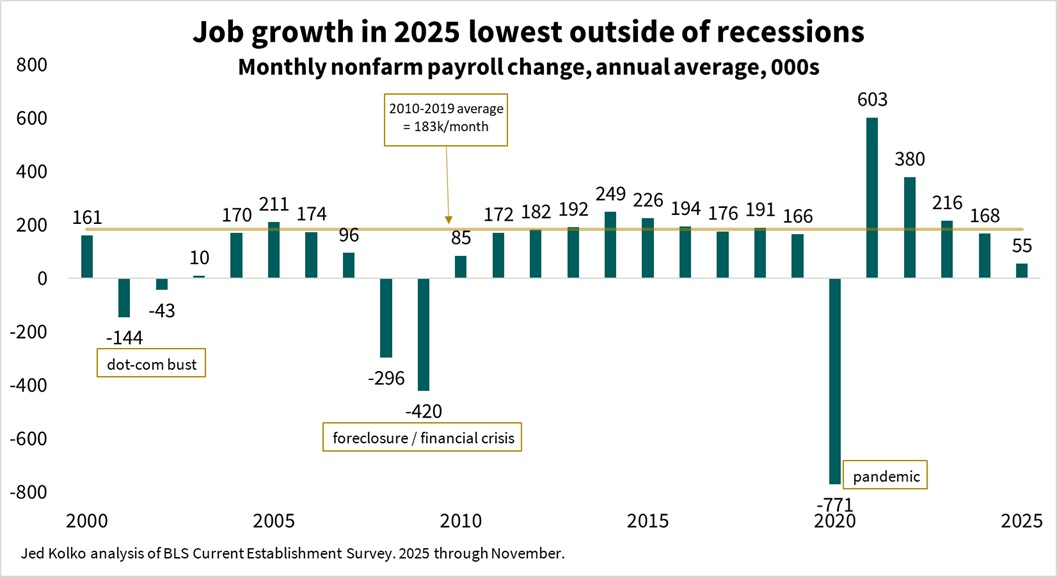
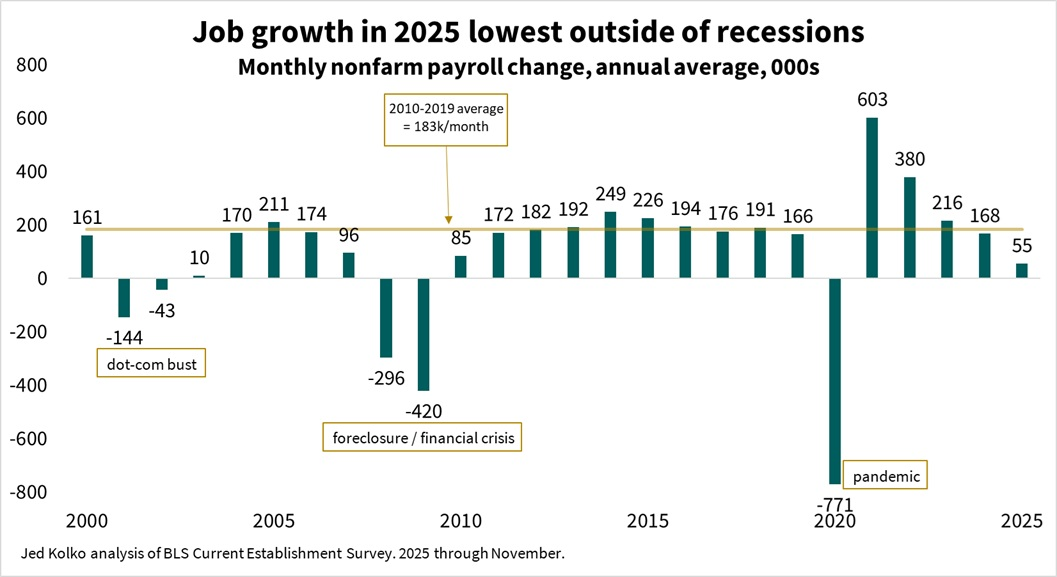
US Job Growth Over the Years. Source: X/Jed Kolko

Crypto Emerges as a “Lean Budget” Gift

Visa’s December survey reveals that 28% of Americans would be excited to receive crypto as a holiday or Christmas gift, a figure that jumps to 45% among Gen Z

The appeal is not about luxury. It reflects a preference for assets that feel flexible, digital-first, and potentially long-term in value.

At the same time, 47% of US shoppers reported using AI tools to assist with holiday purchases, primarily to find gift ideas and compare prices. This signals a consumer mindset focused on optimization rather than excess.

Could crypto replace holiday cash? More than one-in-four US adults, and nearly half of Gen-Z adults, say they would be excited to receive cryptocurrency as a gift, according to a survey from Visa and Morning Consult https://t.co/xhU2SfJpch pic.twitter.com/RUtS7aKSMP

— Reuters (@Reuters) December 5, 2025

Younger shoppers lead the shift. Gen Z respondents show higher adoption of crypto payments, digital wallets, biometric authentication, and cross-border shopping than any other age group. 

For them, crypto fits naturally into a broader digital financial identity.

The data suggests crypto gifting is not crowding out essentials. Instead, it replaces traditional discretionary items at a time when consumers remain selective.

What This Says About the US Economy

The combination of easing inflation and persistent budget pressure points to a cautious but stable economy. 

Americans are not retreating, but they are adapting. Spending continues, yet it leans toward tools and assets that promise efficiency, optionality, or future upside.

Crypto’s growing acceptance as a gift—despite tighter disposable income—signals cultural normalization rather than speculative exuberance. 

It also helps explain why digital assets continue to attract interest even during periods of economic restraint.

For markets, the message is clear. Inflation may be cooling, but confidence has not fully returned. 

In that gap, technology and alternative assets are filling a role that traditional consumption no longer does.

Americans may feel stretched, but they are still betting—carefully—on the future.

The post Americans Want Crypto for Christmas—Even as Inflation Squeezes Budgets appeared first on BeInCrypto.

  •  

Indian Authorities Bust Multi-State Crypto Scam Running for 10 Years

India’s Enforcement Directorate (ED) has carried out coordinated raids at 21 locations across Karnataka, Maharashtra, and Delhi as part of a widening probe into a large-scale crypto scam that allegedly operated for nearly a decade.

The searches were conducted on December 18 under the Prevention of Money Laundering Act (PMLA). It targeted residential and office premises linked to 4th Bloc Consultants and its associates. 

India’s Largest Crypto Bust Yet?

Authorities say the group ran fake crypto investment platforms that duped both Indian and foreign investors by promising unusually high returns.

According to the ED, the case originated from a police FIR and intelligence inputs from the Karnataka State Police. 

Investigators allege the accused created professional-looking websites that closely mimicked legitimate global crypto trading platforms, complete with dashboards, account balances, and transaction histories.

BREAKING: 🇮🇳 ED raids 21 locations across Karnataka, Maharashtra and Delhi in a major crypto investment fraud case.

• Movable and immovable properties in India and abroad identified

• Multiple crypto wallet addresses identified

• Investigation ongoing pic.twitter.com/WoDyxfO7A1

— Crypto India (@CryptooIndia) December 23, 2025

However, these platforms were largely a façade. Officials say there was little or no real trading activity. 

Instead, the crypto scammers recycled investors’ funds in a structure resembling a classic Ponzi or multi-level marketing scheme.

To build credibility, the operators allegedly misused photographs of well-known crypto commentators and public figures without consent. 

Early investors were paid small returns to gain trust. Later, they were encouraged to invest larger sums and recruit new participants through referral bonuses.

As the scheme expanded, promoters relied heavily on social media platforms. This included Facebook, Instagram, WhatsApp, and Telegram to attract victims. 

The ED believes the network targeted investors in India and overseas.

Investigators say the proceeds of crime were laundered through a complex web of crypto wallets, undisclosed foreign bank accounts, shell companies, and hawala channels. 

Scammers also moved the funds via peer-to-peer crypto transfers before being converted into cash or parked in bank accounts.

During the raids, the ED identified several crypto wallet addresses allegedly controlled by the accused, along with movable and immovable assets acquired in India and abroad using illicit funds.

Authorities also flagged multiple foreign entities used to conceal the money trail.

Notably, officials believe the operation dates back to at least 2015. The scammers evolved over time to evade detection as scrutiny of crypto markets increased.

The investigation remains ongoing.

The post Indian Authorities Bust Multi-State Crypto Scam Running for 10 Years appeared first on BeInCrypto.

  •  

Jim Cramer Turns Fully Bearish on Bitcoin and Traders are Watching Closely

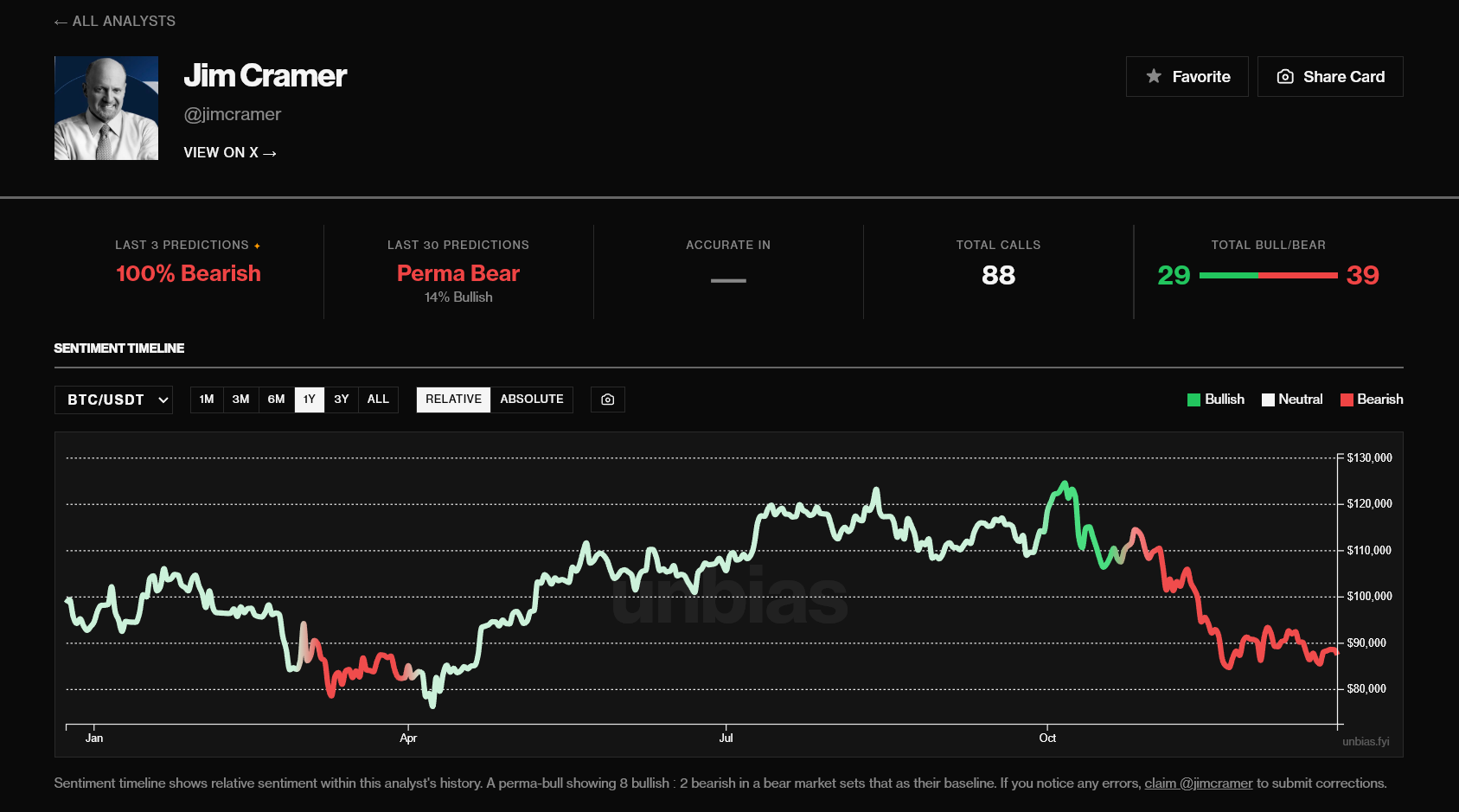
Jim Cramer’s latest Bitcoin stance has flipped to 100% bearish, according to sentiment-tracking data from Unbias. 

The shift immediately caught the attention of crypto traders, not because Cramer commands Bitcoin’s direction, but because his calls have become an informal sentiment indicator inside the market.

Inverse Cramer Narrative In Full Flow?

Data shows that Cramer’s last three Bitcoin predictions were all bearish, pushing his near-term outlook into what Unbias categorizes as “perma-bear” territory. 

Jim Cramer Bitcoin Prediction. Source: Unbias

Historically, such moments tend to spark discussion across crypto social channels, where Cramer’s commentary often triggers the well-known “Inverse Cramer” narrative.

This latest turn comes as Bitcoin trades in the mid-$80,000 range.

Since the October 10 crash, price action has remained choppy and defensive. 

Analysts broadly describe the market as range-bound, with resistance near $90,000–$93,000 and structural support closer to $81,000–$85,000

The failure to reclaim higher levels before year-end has weighed on short-term sentiment.

All Signs Point to a Bitcoin Bear Market?

Market indicators reinforce that cautious tone. The Crypto Fear & Greed Index recently slipped into Extreme Fear, reflecting risk aversion rather than panic buying. 

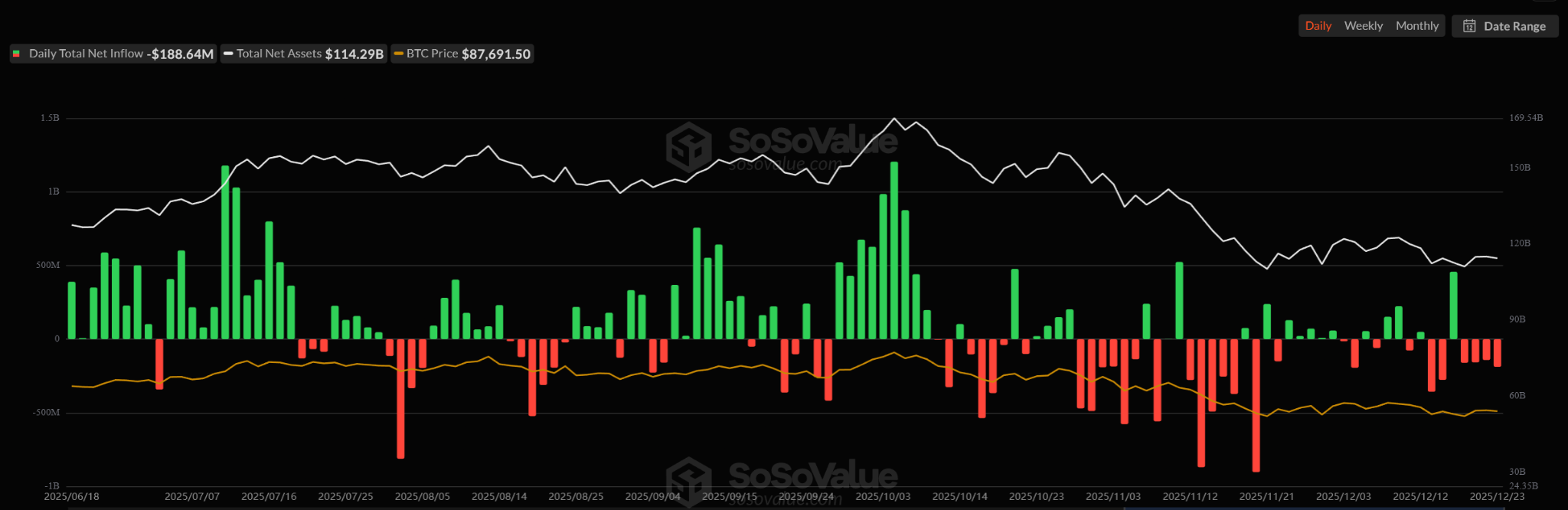
At the same time, spot Bitcoin ETFs recorded consecutive daily outflows into the Christmas week, signaling reduced institutional appetite as investors lock in profits and rebalance portfolios ahead of year-end.

US Bitcoin ETFs Continue to Bleed. Source: SoSoValue

Against that backdrop, Cramer’s bearish shift fits the prevailing mood — but it also explains why his views remain so visible in Bitcoin circles. 

As the long-time host of Mad Money, Jim Cramer has become a cultural reference point for crypto traders. 

His emphatic, short-term calls often clash with Bitcoin’s cycle-driven nature, turning his commentary into a meme-driven contrarian signal rather than conventional analysis.

BREAKING: Jim Cramer is 100% bearish on Bitcoin.

Merry Christmas 🎄 pic.twitter.com/qDr2Yx2U8X

— Ki Young Ju (@ki_young_ju) December 24, 2025

That dynamic has persisted through multiple market cycles. When Cramer grows confident in one direction, crypto traders often treat it as a sentiment extreme rather than a forecast.

Looking ahead to the New Year’s week, analysts expect thin liquidity and heightened volatility. Bitcoin’s direction may hinge on whether ETF flows stabilize and whether price can reclaim the $90,000 level after options-related positioning clears. 

Until then, Cramer’s 100% bearish read may say less about Bitcoin’s fundamentals — and more about how cautious the market feels heading into 2026.

The post Jim Cramer Turns Fully Bearish on Bitcoin and Traders are Watching Closely appeared first on BeInCrypto.

  •  

Why Silver Could Outperform Gold and Bitcoin in 2026

Silver emerged as one of the strongest-performing major assets in 2025, sharply outperforming both gold and Bitcoin. 

The rally was not driven by speculation alone. Instead, it reflected a rare convergence of macroeconomic shifts, industrial demand, and geopolitical pressure that could extend into 2026.

Silver’s 2025 Performance in Context

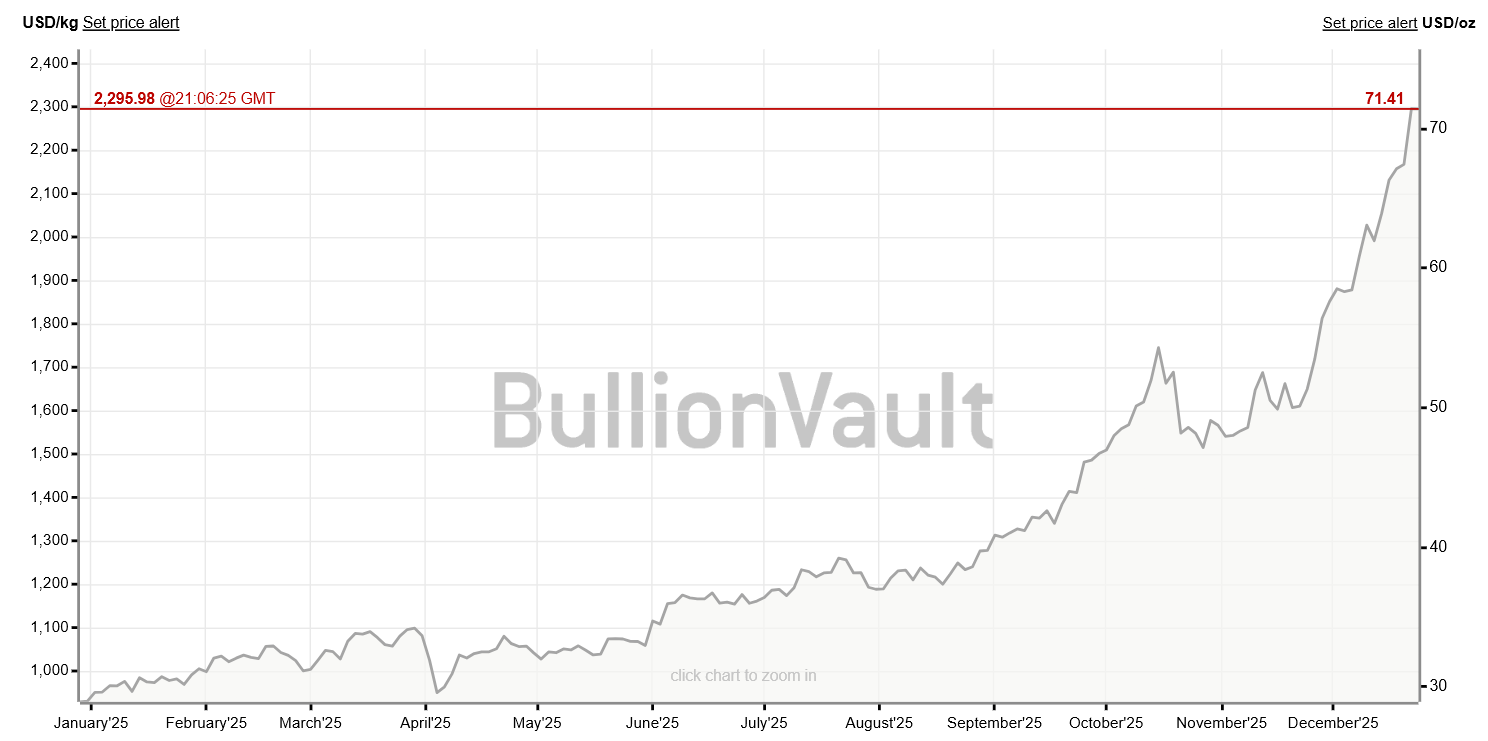
By late December 2025, silver traded near $71 per ounce, up more than 120% year-to-date. Gold rose roughly 60% over the same period, while Bitcoin ended the year slightly lower after a volatile run that peaked in October.

Silver price entered 2025 near $29 per ounce and climbed steadily through the year. Gains accelerated in the second half as supply deficits widened and industrial demand surprised to the upside.

Silver Price Chart In 2025. Source: BullionVault

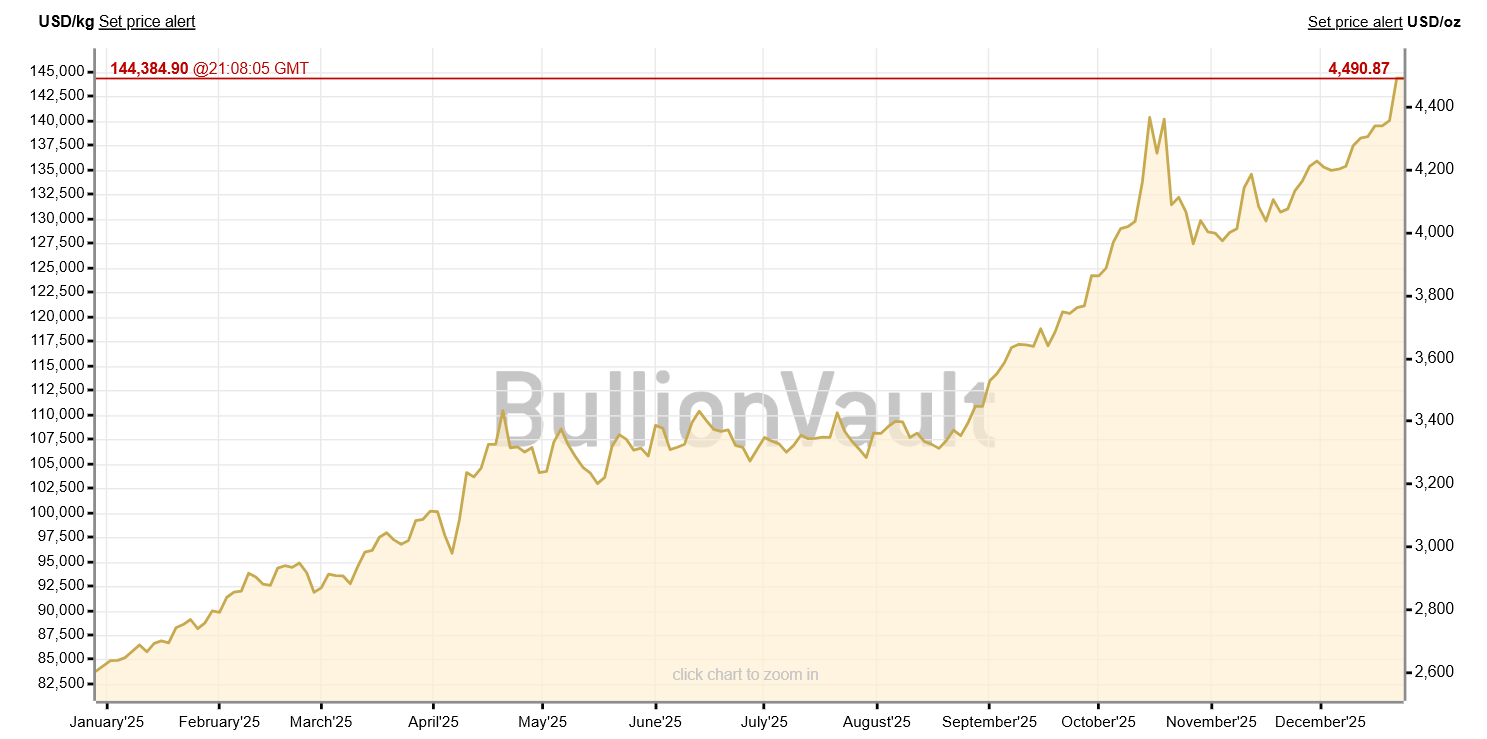
Gold also rallied strongly, moving from roughly $2,800 to above $4,400 per ounce, supported by falling real yields and central-bank demand. 

However, silver outpaced gold by a wide margin, consistent with its historical tendency to amplify precious-metal cycles.

Gold Price Chart In 2025. Source: BullionVault

Bitcoin followed a different path. It surged to a record near $126,000 in early October before reversing sharply, ending December near $87,000

Unlike metals, Bitcoin failed to hold safe-haven inflows during late-year risk-off moves.

Macro Conditions Favored Hard Assets

Several macroeconomic forces supported silver in 2025. Most importantly, global monetary policy shifted toward easing. The US Federal Reserve delivered multiple rate cuts by year-end, pushing real yields lower and weakening the dollar.

At the same time, inflation concerns remained unresolved. That combination historically favors tangible assets, particularly those with monetary and industrial value.

Unlike gold, silver benefits directly from economic expansion. In 2025, that dual role proved decisive.

This is a 50-Yr chart of Silver futures
The red arrow marks my 1st trade in Silver
The $50 level rejected Silver in 1981 and 2011
The price has now sliced above $50
Corrections should find support in the low $50s
Upside targets exist at $87 and eventually $200-plus$SI_F pic.twitter.com/sz076mdeP1

— Peter Brandt (@PeterLBrandt) December 13, 2025

Industrial Demand Became the Core Driver

Silver’s rally was increasingly anchored in physical demand rather than investment flows. Industrial usage accounts for roughly half of total silver consumption, and that share continues to grow.

The energy transition played a central role. Solar power remained the single largest source of new demand, while electrification across transport and infrastructure added further pressure to already tight supply.

Global silver markets recorded a fifth consecutive annual deficit in 2025. Supply struggled to respond, as most silver production comes as a byproduct of base-metal mining rather than primary silver projects.

Most of silver demand is industrial and those users don't care if the price is 5x, because silver is only a small part of their products.

Industrial demand (mainly solar) continues to rise.

Also retail demand in Asia is now INCREASING along with rising prices.

— GoldSilver HQ (@GoldSilverHQ) December 23, 2025

Electric Vehicles Added Structural Demand

Electric vehicles significantly increased silver consumption in 2025. Each EV uses 25 to 50 grams of silver, roughly 70% more than an internal-combustion vehicle.

With global EV sales rising at double-digit rates, automotive silver demand climbed into the tens of millions of ounces annually. 

Charging infrastructure amplified the trend. High-power fast chargers use kilograms of silver in power electronics and connectors.

Unlike cyclical investment demand, EV-related silver consumption is structural. Production growth directly translates into sustained physical offtake.

Silver $71 today.
Just the beginning.
I completed a detailed analysis of Samsung's new battery technology. Production begins in 2027. (Confirmed by Samsung.) Approximately 1 kg of silver will be needed per EV. And Samsung's silver-carbon batteries will also be widely used across…

— HealthRanger (@HealthRanger) December 23, 2025

Defense Spending Quietly Tightened Supply

Military demand became a less visible but increasingly important factor. Modern weapons systems rely heavily on silver for guidance electronics, radar, secure communications, and drones.

A single cruise missile can contain hundreds of ounces of silver, all of which is destroyed upon use. That makes defense demand non-recyclable.

Global military spending reached record highs in 2024 and continued rising in 2025 amid wars in Ukraine and the Middle East

Europe, the United States, and Asia all expanded procurement of advanced munitions, quietly absorbing physical silver.

Geopolitical Shocks Reinforced the Trend

Geopolitical tensions further strengthened silver’s case. Prolonged conflicts increased defense stockpiling, while trade fragmentation raised concerns about supply security for critical materials.

Unlike gold, silver sits at the intersection of national security and industrial policy. Several governments moved to classify silver as a strategic material, reflecting its role in both civilian and military technologies.

This dynamic created a rare feedback loop: geopolitical risk boosted both safe-haven investment demand and real industrial consumption.

The rise in the price of gold and silver from 2001 through 2008 was a sign of a major Fed policy error and a harbinger of the 2008 financial crisis. The current rally that began in 2024 is signaling a bigger policy error that will have even more profound consequences for the U.S.

— Peter Schiff (@PeterSchiff) December 22, 2025

Why 2026 Could Extend the Outperformance

Looking ahead, most of the drivers that powered silver price in 2025 remain in place. EV adoption continues to accelerate. Grid expansion and renewable investment remain policy priorities. Defense budgets show no signs of retreat.

At the same time, silver supply remains constrained. New mining projects face long lead times, and recycling cannot offset growing industrial losses from military use.

Gold may continue to perform well if real yields stay low. Bitcoin may recover if risk appetite improves. But neither combines monetary protection with direct exposure to global electrification and defense spending.

That combination explains why many analysts see silver as uniquely positioned for 2026.

Looks like silver is going to be a shocker for most. While a significant group of investors is still in denial and do not realize that we are in a new realities constantly waiting for a pullback, silver keeps pushing higher and higher. My immediate target is $75 – 80. Let's wait… pic.twitter.com/ni35W0lIwd

— Rashad Hajiyev (@hajiyev_rashad) December 22, 2025

Silver’s 2025 rally was not a one-off speculative spike. It reflected deep structural changes in how the global economy consumes the metal.

If current trends persist, silver’s dual role as a monetary hedge and industrial necessity could allow it to outperform both gold and Bitcoin again in 2026.

The post Why Silver Could Outperform Gold and Bitcoin in 2026 appeared first on BeInCrypto.
  •  

Russia Plans New Crypto Regulation for 2026

The Central Bank of Russia unveiled a long-awaited conceptual framework to regulate crypto trading on December 23, marking a decisive shift from ad-hoc restrictions toward a structured, licensed market.

Under the proposal, cryptocurrencies and stablecoins will be legally recognized as currency values that can be bought and sold. However, they remain prohibited as a means of payment inside Russia. 

What the New Framework Introduces

The central bank submitted its legislative proposals to the Government of Russia for review.

The announcement marks the largest effort yet to bring crypto activity under formal financial supervision, while maintaining strict controls on retail risk and capital flows.

The proposal establishes a two-tier investor model, separating retail and professional participants.

Non-qualified investors will be allowed to purchase only the most liquid cryptocurrencies, as defined in future legislation. 

Access will require passing a mandatory risk-knowledge test, and purchases will be capped at 300,000 rubles per year.

Qualified investors will face fewer restrictions. They will be permitted to buy any cryptocurrency except anonymous tokens whose smart contracts conceal transaction data. 

Volume limits will not apply, although risk-awareness testing remains mandatory.

The central bank emphasized that cryptocurrencies remain high-risk instruments, citing volatility, lack of sovereign backing, and sanctions exposure.

Russia is leading Europe in crypto use, over $376B moved in a year, says Chainalysis.

While others talk about regulation, Russians are actually using crypto for real needs; trading, saving, and moving money fast.

Quiet adoption, big numbers. pic.twitter.com/2XcmYx8ioB

— Tom Tucker (@WhatzTheTicker) October 16, 2025

How This Differs From Russia’s Current Stance

Until now, Russia’s crypto policy has been fragmented. Ownership and trading were legal in practice but lacked a clear regulatory pathway. 

Retail access operated in a gray zone, intermediaries faced uncertainty, and enforcement relied on informal restrictions rather than explicit market rules.

The new concept formalizes what was previously tolerated, while sharply narrowing how retail investors can participate. 

It also confirms that Russia will regulate crypto activity through existing financial infrastructure, allowing exchanges, brokers, and trust managers to operate using their current licenses. Additional requirements will apply to crypto-specific depositaries and exchange services.

The framework also clarifies cross-border rules. Russian residents will be allowed to buy crypto abroad using foreign accounts and transfer crypto overseas through Russian intermediaries, provided they notify tax authorities.

Timeline and Enforcement

The central bank plans to finalize the legislative base by July 1, 2026. From July 1, 2027, illegal crypto intermediation will trigger liability comparable to penalties for illegal banking activity.

This phased approach gives market participants time to align with licensing, disclosure, and compliance requirements.

How Russia’s Approach Compares Globally

AreaRussia (BoR Concept)EU (MiCA)United States
Legal statusInvestment asset (“currency value”), not paymentRegulated crypto marketFragmented federal & state oversight
Retail accessAllowed with testing and strict capsAllowed via disclosure regimeBroad, no federal caps
IntermediariesExisting licenses + added crypto rulesMandatory CASP licensingMulti-agency framework
StablecoinsTradable, payment banHeavily regulatedFederal stablecoin law in place
EnforcementPhased, starts 2027Already activeOngoing agency enforcement

Overall, Russia is not liberalizing crypto in the Western sense. 

Instead, it is moving crypto out of the gray market, tightening supervision, limiting retail exposure, and positioning regulated crypto trading as an extension of its traditional financial system.

The post Russia Plans New Crypto Regulation for 2026 appeared first on BeInCrypto.

  •  

Chinese Groups Have Transformed Telegram into the Dark Web of Crypto Scams

Chinese-language networks operating on Telegram have become the backbone of the world’s largest illicit crypto economy. 

These groups have surpassed the dark web in fusing scams, AI-driven deception, and money laundering into a single, industrial system.

Telegram Markets Now Dwarf Historical Dark Web Giants

The scale is unprecedented. Elliptic data shows Huione Guarantee, later rebranded as Haowang Guarantee, processed $27 billion between 2021 and 2025. 

That figure exceeds every major dark web market in history.

Over recent years, we've supplied @okx with crypto threat intelligence via multiple channels, and their compliance progress is notable.

Data shows a significant decrease in risky USDT deposits from Huione&Tudou Guarantee.

We will continue monitoring this. @star_okx pic.twitter.com/f7zHpzra8j

— Bitrace (@Bitrace_team) October 15, 2025

After Telegram banned Huione in May, activity migrated. Two markets now dominate:

  • Tudou Guarantee: roughly $1.1 billion per month
  • Xinbi Guarantee: roughly $850 million per month

Combined monthly volume now surpasses what AlphaBay processed over its entire lifetime.

Why Telegram Replaced the Dark Web

Telegram offers public channels, escrow-like systems, and instant global reach. Users need no Tor browser or technical knowledge.

Markets recreate classic darknet features:

  • Vendor reputation systems
  • Escrow and dispute resolution
  • Stablecoin settlement
  • Rapid rebranding after bans

In practice, Telegram has become a “dark web without friction.”

Be careful ⚠️⚠️⚠️

a FAKE telegram channel is trying to scam Smardex holders

There is NO V3 migration,
DO NOT FALL FOR SUCH SCAM

the official updates can ONLY be received through their website https://t.co/Ghz45GSSnI, their X: @SmarDex and their official TG (its link is in… pic.twitter.com/cESr07yx4e

— Crypto Feras  (@CryptoFeras) November 5, 2025

Crypto Scam Markets Feed a Global Fraud Industry

These markets do not sell drugs or weapons at scale, but they sell scam infrastructure.

The primary customer base is the pig-butchering scam industry. These long-term romance and investment scams generate roughly $10 billion annually from US victims alone, according to federal data.

Operations are concentrated in Southeast Asia. Many rely on trafficked labor held in scam compounds.

Telegram markets provide:

  • Money-laundering services
  • Fake investment platforms
  • Stolen identities
  • Telecom and social-engineering tools

The scam economy and the markets grow together.

AI Face-Swap Tools Supercharge Fraud

A key accelerant is artificial intelligence. Chinese-language Telegram groups actively sell:

  • Real-time face-swap software
  • Voice-cloning tools
  • Deepfake identity kits

These tools allow scammers to impersonate real people on video calls. They dramatically increase trust and conversion rates.

Threat analysts describe this as the industrialization of social engineering. Scams now operate with assembly-line efficiency.

Look at this, what appears to be a SCAM site that is fully AI generated.

What is the government doing to stop these? Nothing at all?

All that talent going toward scamming new crypto users… on Twitter, Telegram, etc.

www_youtube_com/@cryptotopstories <– SCAM!!!… pic.twitter.com/HG1w0Lkx3e

— Jae Kwon – "godfather of proof-of-stake" (@jaekwon) November 22, 2025

USDT Is the Financial Backbone

Nearly all transactions settle in Tether (USDT). Unlike decentralized cryptocurrencies, USDT can be frozen. That capability exists but is rarely used at scale.

As a result, the most centralized stablecoin underpins the largest illicit crypto markets ever recorded. This dependency concentrates risk across scams, money laundering, and cross-border fraud.

Telegram has removed major markets before. Each time, replacements emerged within weeks.

Ownership stakes shift between markets. Liquidity follows instantly.

Elliptic tracks roughly 30 Chinese-language Telegram markets today. Together, they move tens of billions of dollars annually, mostly through crypto. 

Enforcement pressure remains fragmented and inconsistent.

Overall, this is no longer a niche cybercrime story.

Public messaging platforms now host global illicit finance at scale. Language-based networks matter more than geography; tools are reshaping fraud economics.

The result is a criminal ecosystem larger than anything the dark web ever produced. And it operates in plain sight.

Without a coordinated platform, stablecoin, and law-enforcement action, this system will keep growing.

The post Chinese Groups Have Transformed Telegram into the Dark Web of Crypto Scams appeared first on BeInCrypto.

  •  

US GDP Surprise Signals Trouble for Altcoins, Not Bitcoin

The latest US GDP report delivered a strong economic signal—but for crypto markets, especially altcoins, it may be bad news.

Data released on December 23 showed the US economy growing faster than expected in Q3, reinforcing the idea that monetary conditions may stay tighter for longer. While Bitcoin remains relatively resilient, broader crypto markets are flashing warning signs.

US GDP Growth Beats Expectations

The US economy expanded at an annualized rate of 4.3% in Q3, well above the market forecast of 3.3% and higher than the previous 3.8% reading.

The year of the tariff is powering America’s economy as real GDP accelerated to a 4.3% annualized rate and exports rose to an 8.8% SAAR in the third quarter.

This is just the beginning of new era of economic prosperity thanks to President Trump’s trade program unlocking new… pic.twitter.com/kWeBtxQ7aN

— United States Trade Representative (@USTradeRep) December 23, 2025

At the same time, core PCE inflation rose to 2.9%, up from 2.6%, remaining sticky above the Federal Reserve’s 2% target.

Also, Real personal consumption expenditures jumped 3.5%, far exceeding expectations of 2.7%.

In simple terms, Americans are still spending aggressively, and inflation pressures have not cooled enough for policymakers to declare victory.

Why Strong Growth Is a Problem for Crypto

Stronger-than-expected growth reduces the urgency for interest-rate cuts.

Combined with recent CPI data and still-elevated inflation expectations from the University of Michigan survey, the GDP report strengthens the case for higher-for-longer rates in 2026.

For risk assets like crypto, that matters because:

  • Higher rates increase the return on cash and bonds.
  • Liquidity becomes more selective.
  • Speculative assets struggle to attract new capital.

This environment historically pressures altcoins more than Bitcoin.

The US economy has now been in an expansion for 65 months with annualized real GDP growth of 4.3% over that time.
The average expansion length since 1949: 67 months.
Longest: 128 months.
Shortest: 12 months. pic.twitter.com/QE6WnhhMA5

— Charlie Bilello (@charliebilello) December 23, 2025

Bitcoin Holds Better Than Altcoins

Market reaction following the GDP release reflected this dynamic.

Bitcoin remained relatively stable near $87,800, down modestly on the day but still holding key structural levels. Its market cap stayed above $1.75 trillion, showing limited panic selling.

Altcoins, however, underperformed sharply:

  • Ethereum fell over 3% on the day.
  • Solana, Cardano, and Dogecoin dropped between 3%–6%.
  • Mid-cap and small-cap tokens saw deeper losses with weaker recoveries.

This divergence highlights Bitcoin’s role as a liquidity sink during macro uncertainty.

Crypto MACD Confirms Bearish Breadth

Momentum indicators reinforce the concern.

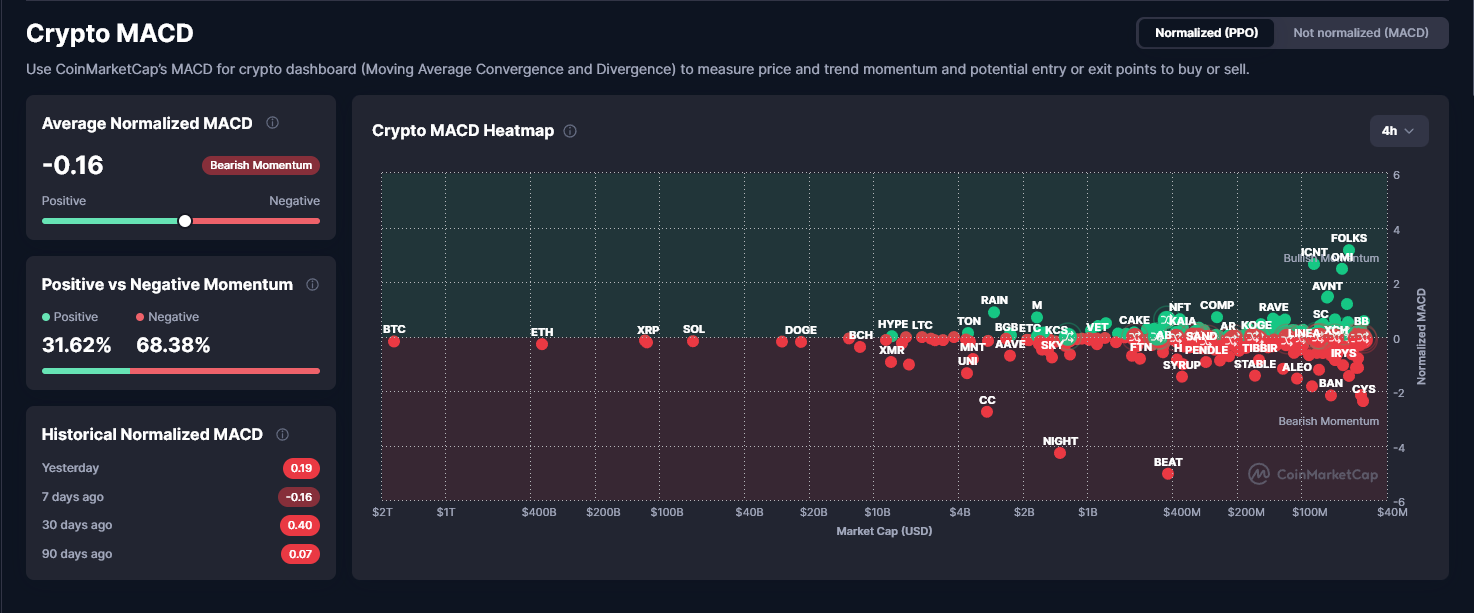
According to CoinMarketCap’s normalized MACD, 68% of tracked crypto assets are now in negative momentum. The average market MACD sits at –0.16, firmly in bearish territory.

Most assets below the $10 billion market-cap range remain deeply negative.

When momentum weakens across the market, capital tends to retreat toward fewer, more liquid assets—again favoring Bitcoin over altcoins.

Average Crypto MACD. Source: CoinMarketCap

Why Altcoins Are More Exposed

Altcoins rely heavily on cheap liquidity, retail inflows, and risk-on sentiment. Strong GDP growth combined with persistent inflation reduces all three.

With US consumers still spending but facing higher costs, disposable income for speculative investment may shrink in early 2026. 

Institutions, meanwhile, remain cautious amid Bank of Japan risks and global rate uncertainty. That combination creates a difficult environment for altcoins to sustain rallies.

What This Means For Crypto Markets Going Into 2026

The GDP report does not signal an immediate crypto crash. However, it raises the probability of prolonged consolidation or downside pressure, particularly outside Bitcoin.

If macro conditions remain unchanged:

  • Bitcoin may continue to range rather than collapse.
  • Altcoins could face extended drawdowns.
  • Market leadership may narrow further.

Overall, strong US economic data is no longer bullish—it is a liquidity warning.

The post US GDP Surprise Signals Trouble for Altcoins, Not Bitcoin appeared first on BeInCrypto.

  •  

SEC Finalizes Civil Judgments Against Key FTX and Alameda Executives

The SEC has finalized civil settlements against three former senior executives at FTX and Alameda Research. 

This judgment formally closes a major chapter in the regulator’s case tied to the collapse of the crypto exchange.

Sam Bankman-Fried’s Associates Receive a Decade of Ban

In a statement released on December 18, the SEC said it has filed proposed final consent judgments against Caroline Ellison, former CEO of Alameda Research, Gary Wang, former chief technology officer of FTX, and Nishad Singh, former co-lead engineer at FTX. 

The judgments are subject to court approval.

ICYMI – Caroline Ellison was "quietly moved" from federal prison to "community confinement," after serving 11 months of her two year sentence, with online prison records listing an early release for Feb 2026 — BI pic.twitter.com/5HCAK5mQD2

— Disclose.tv (@disclosetv) December 18, 2025

The SEC confirms that FTX raised more than $1.8 billion from investors by portraying itself as a safe trading platform with strong protections for customer assets. 

Investors were also told that Alameda Research operated like any other customer on the exchange. But those claims were false.

In reality, FTX secretly gave Alameda special privileges. The trading firm was exempted from risk controls and granted a virtually unlimited line of credit backed by FTX customer deposits

This allowed Caroline Ellison to borrow and lose billions without facing liquidation.

The regulator alleges that Wang and Singh built the software code that enabled customer funds to be diverted from FTX to Alameda. 

Ellison, who ran Alameda, then used those funds for trading, venture investments, and loans to executives, including Sam Bankman-Fried, Wang, and Singh.

Ryan Salame tweets his court filing that his plea was based upon no federal charges against Michelle Bond

All FTX insiders – Caroline Ellison, Gary Wang, Nishad Singh, Daniel Friedberg, Sam Trabucco etc

Should have got 10-20 years prison

Other creditors feel the same way pic.twitter.com/ooZ9ILFPSD

— Sunil (FTX Creditor Champion) (@sunil_trades) August 26, 2025

Without admitting or denying the allegations, all three executives agreed to permanent injunctions barring them from violating key antifraud provisions of US securities law. They also accepted additional restrictions on their future professional roles.

Ellison consented to a 10-year ban from serving as an officer or director of a public company. 

Wang and Singh each agreed to 8-year bans as officers and directors

All three are also subject to 5-year conduct-based injunctions, allowing the SEC to act quickly if they reenter securities-related activities improperly.

Current Punishment Status as of December 2025

As of December 2025, Caroline Ellison has been moved to home confinement. Her release is expected in early 2026. 

Gary Wang, FTX’s former CTO and co-founder, received a criminal sentence of time served after cooperating extensively with federal prosecutors. He is currently on supervised release.

Nishad Singh, the former co-lead engineer at FTX, also received a time-served criminal sentence and remains on supervised release. 

The post SEC Finalizes Civil Judgments Against Key FTX and Alameda Executives appeared first on BeInCrypto.
  •  

Cooling Inflation, Weak Confidence: What the Michigan Consumer Data Means for Bitcoin

Fresh US economic data is sending a clear but nuanced signal to markets. Inflation pressures are easing, but consumers remain under strain. 

For Bitcoin and the broader crypto market, that mix points to improving macro conditions, tempered by near-term volatility.

Why Inflation Expectations Matter More Than Sentiment

US consumer sentiment edged up to 52.9 in December, slightly higher than November but still nearly 30% lower than a year ago, according to the University of Michigan. 

At the same time, inflation expectations continued to fall. Short-term expectations dropped to 4.2%, while long-term expectations eased to 3.2%.

The University of Michigan consumer sentiment index came in worse than expected at 52.9 in December. pic.twitter.com/yQ79MOBt5R

— Yahoo Finance (@YahooFinance) December 19, 2025

For markets, those inflation expectations matter more than confidence levels.

Consumer sentiment measures how people feel about their finances and the economy. Inflation expectations measure what they think prices will do next. Central banks care far more about the latter.

Falling short- and long-term inflation expectations suggest households believe price pressures are easing and will stay contained. 

That supports the Federal Reserve’s goal of cooling inflation without keeping policy restrictive for too long.

This data follows November’s CPI report, which showed inflation cooling faster than expected. Together, the two reports reinforce the same message: inflation is losing momentum.

Who do you believe:

A. University of Michigan consumer confidence below COVID April 2020 and Lehman September 2008 levels.

B. CPI inflation data, skewed by bogus OER? pic.twitter.com/FFEWj0I7OE

— Lawrence McDonald (@Convertbond) December 19, 2025

What This Means for Interest Rates and Liquidity

Lower inflation expectations reduce the need for high interest rates. Markets tend to respond by pricing in earlier or deeper rate cuts, even if economic growth remains slow.

For risk assets, including crypto, this matters because:

  • Lower rates reduce returns on cash and bonds
  • Real yields tend to fall
  • Financial conditions gradually loosen

Bitcoin has historically responded more to liquidity conditions than to consumer confidence or economic growth.

Why Weak Confidence Does Not Hurt Crypto as Much

Low consumer confidence reflects cost-of-living pressures, not collapsing demand. People still feel stretched, but they are less worried about prices rising sharply from here.

Crypto markets do not rely on consumer spending in the same way equities do. Instead, they react to:

  • Interest rate expectations
  • Dollar strength
  • Global liquidity

That makes falling inflation expectations supportive for Bitcoin, even when confidence remains weak.

Why Volatility Is Likely to Continue

This environment favors risk assets over time, but not in a straight line.

Weak confidence means growth remains fragile. That keeps markets sensitive to data releases, positioning, and short-term flows. As seen after the CPI report, even bullish macro data can trigger sharp reversals when leverage is high.

For Bitcoin, that typically results in:

  • Strong reactions to macro news
  • Choppy price action
  • Rallies driven by liquidity rather than conviction

Looking Ahead to January 2026

Taken together, the data points to a constructive macro backdrop for crypto heading into early 2026. Inflation pressures are easing, policy constraints are loosening, and liquidity conditions are improving.

At the same time, weak confidence explains why markets remain volatile and prone to sudden selloffs.

The key takeaway is simple: macro conditions are improving for Bitcoin, but price action will continue to be shaped by flows, leverage, and timing rather than optimism alone.

The post Cooling Inflation, Weak Confidence: What the Michigan Consumer Data Means for Bitcoin appeared first on BeInCrypto.

  •  

Did Arthur Hayes Just Sell $1.5 Million in Ethereum?

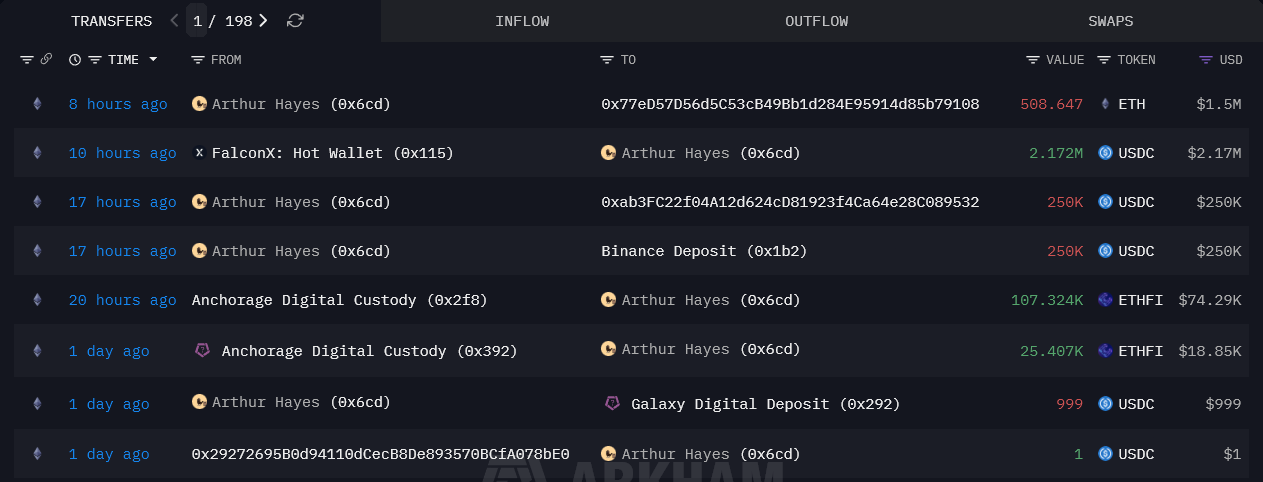
Arthur Hayes has moved 508.647 ETH, worth roughly $1.5 million, to Galaxy Digital, sparking fresh speculation that the crypto veteran may be trimming exposure.

The move is surprising because recently Hayes delivered one of his strongest bullish theses on Ethereum.

Arthur Hayes Ethereum Sell Speculation

On-chain data shows the transfer originated from a wallet linked to Hayes and landed at a Galaxy Digital deposit address. 

Transfers to institutional desks do not always signal an immediate sale. But such movements are commonly associated with liquidity provisioning or over-the-counter execution.

Arthur Hayes Sent 508 ETH To Galaxy Digital. Source: Arkham

The transaction comes as Ethereum trades just below the psychologically important $3,000 level, following a volatile December marked by ETF outflows and derivatives repositioning.

Despite the move, Hayes still controls more than 4,500 ETH.

So, any selling would represent portfolio management rather than a full exit.

The timing is notable. Only days earlier, Hayes laid out a detailed case for Ethereum’s institutional future, arguing that large financial players have finally accepted the limits of private blockchains.

“You can’t have a private blockchain. You must have a public blockchain for security and real usage.”

Hayes framed stablecoins as the catalyst that makes Ethereum legible to traditional finance. He predicted that banks would increasingly build Web3 infrastructure on Ethereum rather than bespoke ledgers.

“You’re going to see large banks start doing crypto and Web3 using a public blockchain. I think the public blockchain will be Ethereum.”

He acknowledged that privacy remains a sticking point for institutional adoption but argued that the issue will be addressed at the application or Layer-2 level, with Ethereum continuing to anchor security.

“They might build an L2 that has some sort of privacy features… but the substrate, the security layer, is still Ethereum.”

However, market conditions remain mixed. Ethereum has struggled to regain sustained momentum above $3,000 as spot ETH ETFs recorded notable outflows in mid-December, while implied volatility in derivatives markets has compressed. This reflects caution rather than panic. 

At the protocol level, activity continues to migrate toward rollups, keeping transaction costs low but limiting fee capture on Ethereum’s base layer.

Hayes also struck a pragmatic tone on valuation expectations, offering a long-term target rather than a near-term prediction.

“If ETH gets to $20,000, that’s about 50 Ethereum to make a million… by the end of the cycle, by the next presidential election.”

For now, Hayes’ on-chain activity suggests tactical positioning, not a reversal of conviction. His thesis remains intact: Ethereum wins if stablecoins and institutional on-chain finance scale. 

The market, however, may still be waiting for that narrative to fully materialize.

The post Did Arthur Hayes Just Sell $1.5 Million in Ethereum? appeared first on BeInCrypto.

  •  

US Crypto CLARITY Act Set for Senate Markup in January

David Sacks, the White House’s AI and crypto czar, said the Digital Asset Market Clarity Act (CLARITY Act) will enter the US Senate markup stage in January, marking a critical step toward final passage.

Sacks said Senate Banking Committee Chair Tim Scott and Senate Agriculture Committee Chair John Boozman have confirmed the timeline, setting the stage for formal review and amendments before a full Senate vote.

We had a great call today with Chairmen @SenatorTimScott and @JohnBoozman who confirmed that a markup for Clarity is coming in January. Thanks to their leadership, as well as @RepFrenchHill and @CongressmanGT in the House, we are closer than ever to passing the landmark crypto…

— David Sacks (@davidsacks47) December 18, 2025

What Happens in January

The update signals growing momentum behind the bill after the House advanced it earlier in 2025. 

If the Senate process stays on schedule, lawmakers could finalize a reconciled version later in the year. This will position the CLARITY Act as the central market-structure law for US crypto markets.

During markup, Senate committees will review the House-passed text line by line. Lawmakers will propose amendments, debate policy trade-offs, and vote on changes before sending a revised bill to the Senate floor. 

The process will involve both the Banking Committee, which oversees securities regulation, and the Agriculture Committee, which supervises the Commodity Futures Trading Commission (CFTC).

🚨 The $CLARITY Act — the U.S. $crypto market structure bill — has been delayed until 2026 as Senate action stalls. This means federal regulatory clarity for digital #assets won’t happen this year, keeping the industry in limbo 📉

No law = more uncertainty
More delay = more… pic.twitter.com/gpuUTMQGUU

— COACHTY (@TheRealTRTalks) December 18, 2025

The goal is to resolve long-standing jurisdictional disputes between the SEC and the CFTC and to strengthen guardrails for spot crypto markets. 

Committee leaders have indicated they want a bill that can attract bipartisan support and avoid reopening enforcement-heavy approaches.

Likely Amendment Focus for the CLARITY Act

Amendments are expected to concentrate on three areas. 

First, asset classification, including tighter criteria for determining when a token qualifies as a digital commodity versus a security. 

Also, investor and consumer protections, such as disclosures, custody standards, and conflict-of-interest rules for exchanges and brokers. 

Lastly, implementation timelines, including how quickly platforms must register and how agencies coordinate supervision during the transition.

Senators may also refine preemption language to limit overlapping state rules without weakening state enforcement authority.

After years of talk, the CLARITY Act now has a real path forward.

The White House and key Senators have finally agreed to move the bill, and they’ve put an actual date on it.

January 2026 is when the Senate plans to formally debate it, amend it, and try to push it toward… https://t.co/Uq9BIOQGLx pic.twitter.com/251ij1zE5i

— Milk Road (@MilkRoad) December 18, 2025

How will the CLARITY Act Change US Crypto Markets in 2026?

If enacted, the CLARITY Act would reshape the US crypto market in 2026. It would place spot digital commodity markets under CFTC oversight, end years of regulatory ambiguity, and create a federal registration regime for exchanges, brokers, and dealers. 

For the industry, this would reduce legal uncertainty, support institutional participation, and shift compliance from courtroom battles to rule-based supervision.

For regulators, the law would replace fragmented enforcement with clearer mandates. 

Most importantly, for the market, it would mark the United States’ first comprehensive framework for crypto trading. This would potentially restore competitiveness with jurisdictions that already offer regulatory clarity.

The post US Crypto CLARITY Act Set for Senate Markup in January appeared first on BeInCrypto.
  •  

US Inflation Cooled, So Why Did Bitcoin and Stocks Sell Off?

US inflation delivered its biggest downside surprise in months. Yet instead of a sustained rally, both Bitcoin and US equities sold off sharply during US trading hours. 

The price action puzzled many traders, but the charts point to a familiar explanation rooted in market structure, positioning, and liquidity rather than macro fundamentals.

What Happened After the US CPI Release

Headline CPI slowed to 2.7% year over year in November, well below the 3.1% forecast. Core CPI also undershot expectations at 2.6%. 

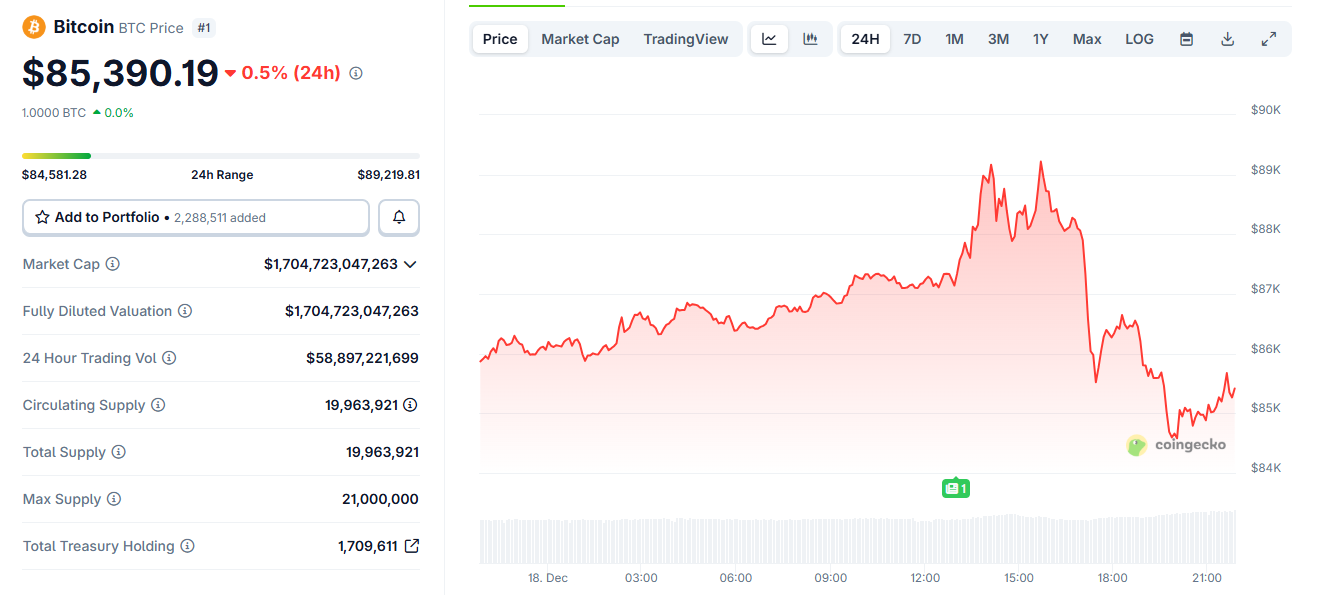
On paper, this was one of the most risk-positive inflation prints of 2025. Markets initially reacted as expected. Bitcoin jumped toward the $89,000 area, while the S&P 500 spiked higher shortly after the data hit.

That rally did not last.

Bitcoin Price Briefly Rallies and Dumps After US CPI Data. Source: CoinGecko

Within roughly 30 minutes of the CPI print, Bitcoin reversed sharply. After tagging intraday highs near $89,200, BTC sold off aggressively, sliding toward the $85,000 area. 

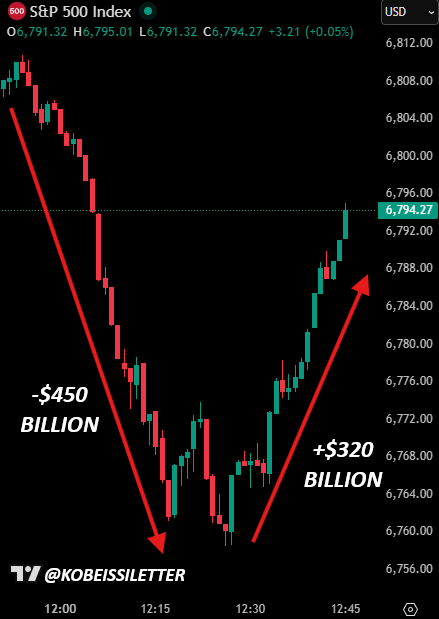
The S&P 500 followed a similar path, with sharp intraday swings that erased much of the initial CPI-driven gains before stabilizing.

S&P 500 Sharply Drops and then Spikes After US CPI. Source: X/Kobeissi Letter

This synchronized reversal across crypto and equities matters. It signals that the move was not asset-specific or sentiment-driven. It was structural.

Bitcoin Taker Sell Volume Tells the Story

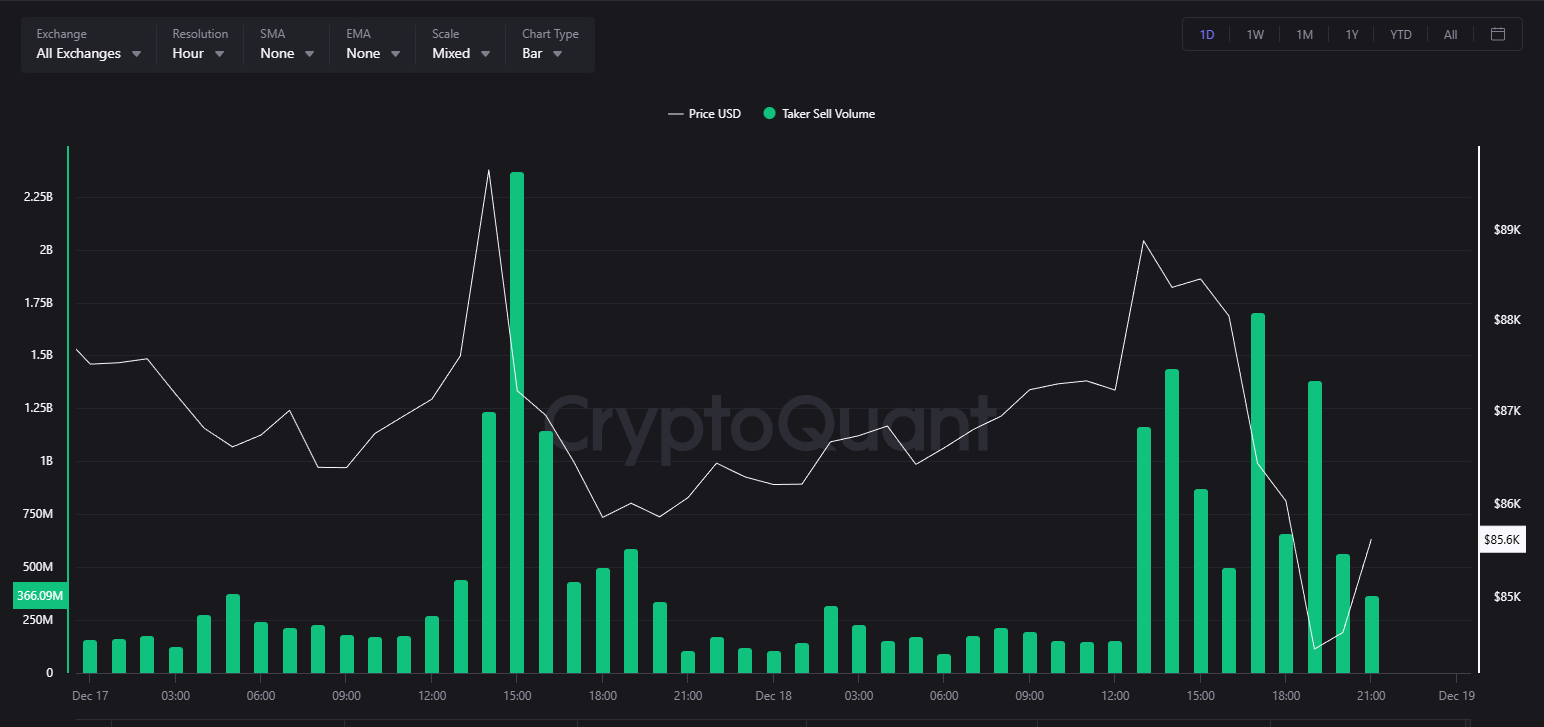
The clearest clue comes from Bitcoin’s taker sell volume data.

On the intraday chart, large spikes in taker sell volume appeared precisely as Bitcoin broke lower. Taker sells reflect market orders hitting the bid — aggressive selling, not passive profit-taking. 

These spikes clustered during US market hours and coincided with the fastest part of the decline.

Bitcoin Taker Volume Across All Exchanges On December 18. Source: CryptoQuant

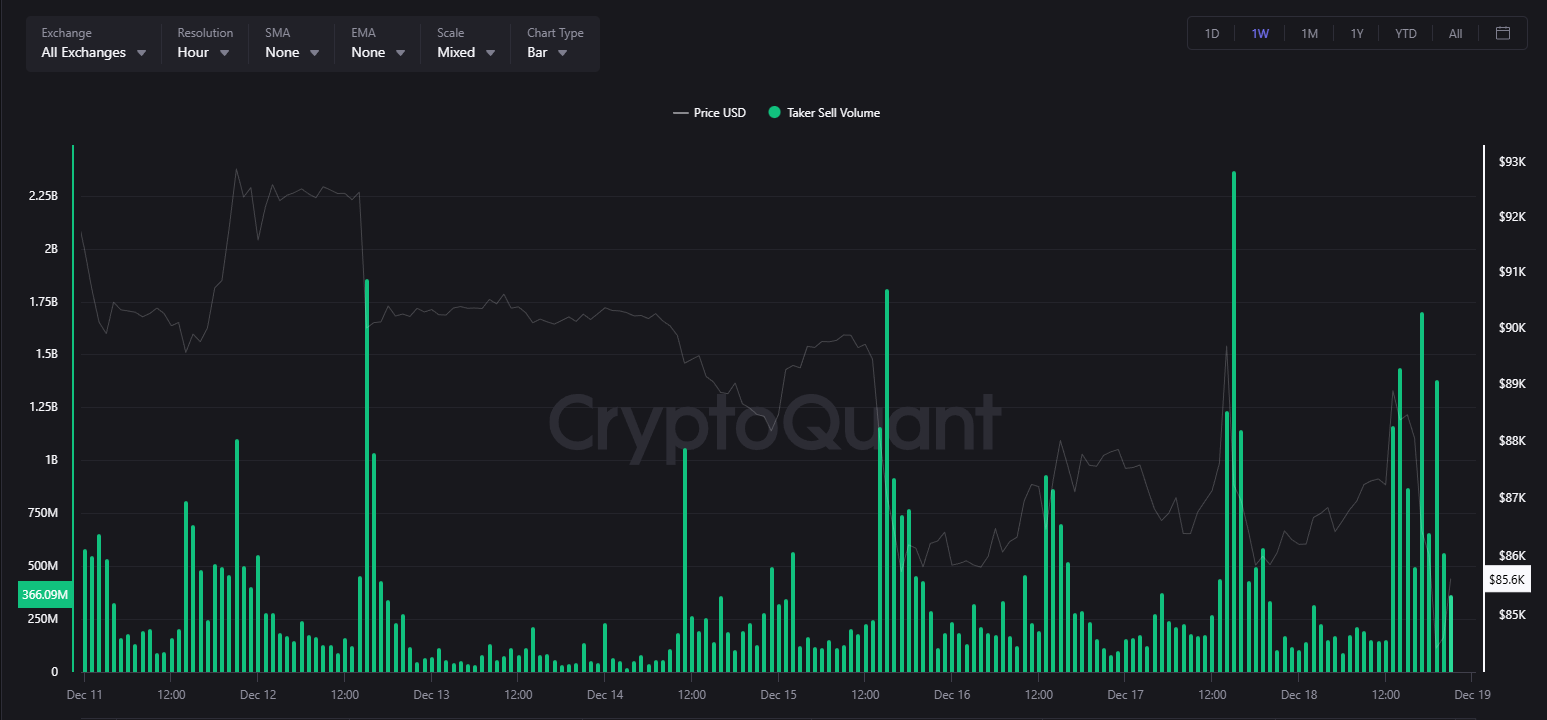
The weekly view reinforces this pattern. Similar sell-side bursts appeared multiple times over the past week, often during high-liquidity windows, suggesting repeated episodes of forced or systematic selling rather than isolated retail exits.

This behavior is consistent with liquidation cascades, volatility-targeting strategies, and algorithmic de-risking — all of which accelerate once price starts moving against leveraged positions.

Bitcoin Taker Volume Across All Exchanges Over the Past Week. Source: CryptoQuant

Why ‘Good News’ Became the Trigger

The CPI report did not cause the selloff because it was bad. It caused volatility because it was good.

Softer inflation briefly increased liquidity and tightened spreads. That environment allows large players to execute size efficiently. 

Bitcoin’s initial spike likely ran into a dense zone of resting orders, stop losses, and short-term leverage. Once upside momentum stalled, price reversed, triggering long liquidations and stop-outs.

As liquidations hit, forced market selling amplified the move. This is why the decline accelerated rather than unfolded gradually.

The S&P 500’s intraday whipsaw shows a similar dynamic. Rapid downside and recovery patterns during macro releases often reflect dealer hedging, options gamma effects, and systematic flows adjusting risk in real time.

🚨 This is insane level of manipulation.

8:30 a.m.

CPI came in lower than expected.

– On the bullish CPI news, Bitcoin pumped $2217, from $87,260 to $89,477 in just 60 minutes.
– $70B added to the crypto market.
– $94 million worth of shorts liquidated.

10:00 a.m.

The… pic.twitter.com/FmJqLDKbBw

— Bull Theory (@BullTheoryio) December 18, 2025

Does This Look Like Manipulation?

The charts do not prove manipulation. But they show patterns commonly associated with stop-runs and liquidity extraction:

  • Fast moves into obvious technical levels
  • Reversals immediately after liquidity improves
  • Large bursts of aggressive selling during breakdowns
  • Tight alignment with US trading hours

These behaviors are typical in highly leveraged markets. The most likely drivers are not individuals, but large funds, market makers, and systematic strategies operating across futures, options, and spot markets. Their goal is not narrative control, but execution efficiency and risk management.

In crypto, where leverage remains high and liquidity thins quickly outside key windows, these flows can look extreme.

🚨 THEY ARE MANIPULATING BITCOIN AGAIN AND I HAVE EVIDENCE!!!

Bitcoin dumped $4000 in minutes…

and almost no one actually understands what just took place.

It’s the same group of players manipulating the price… AGAIN.

Stop looking at charts, YOU NEED TO CHECK THE OUTFLOWS.… pic.twitter.com/ymU4kXdWvb

— NoLimit (@NoLimitGains) December 18, 2025

What This Means Going Forward

The selloff does not invalidate the CPI signal. Inflation genuinely cooled, and that remains supportive for risk assets over time. What the market experienced was a short-term positioning reset, not a macro reversal.

In the near term, traders will watch whether Bitcoin can stabilize above recent support and whether sell-side pressure fades as liquidations clear. 

If taker sell volume subsides and price holds, the CPI data may still assert itself over the coming sessions.

The post US Inflation Cooled, So Why Did Bitcoin and Stocks Sell Off? appeared first on BeInCrypto.
  •  

Fasttoken Rallies Nearly 200% Despite Bearish Crypto Market

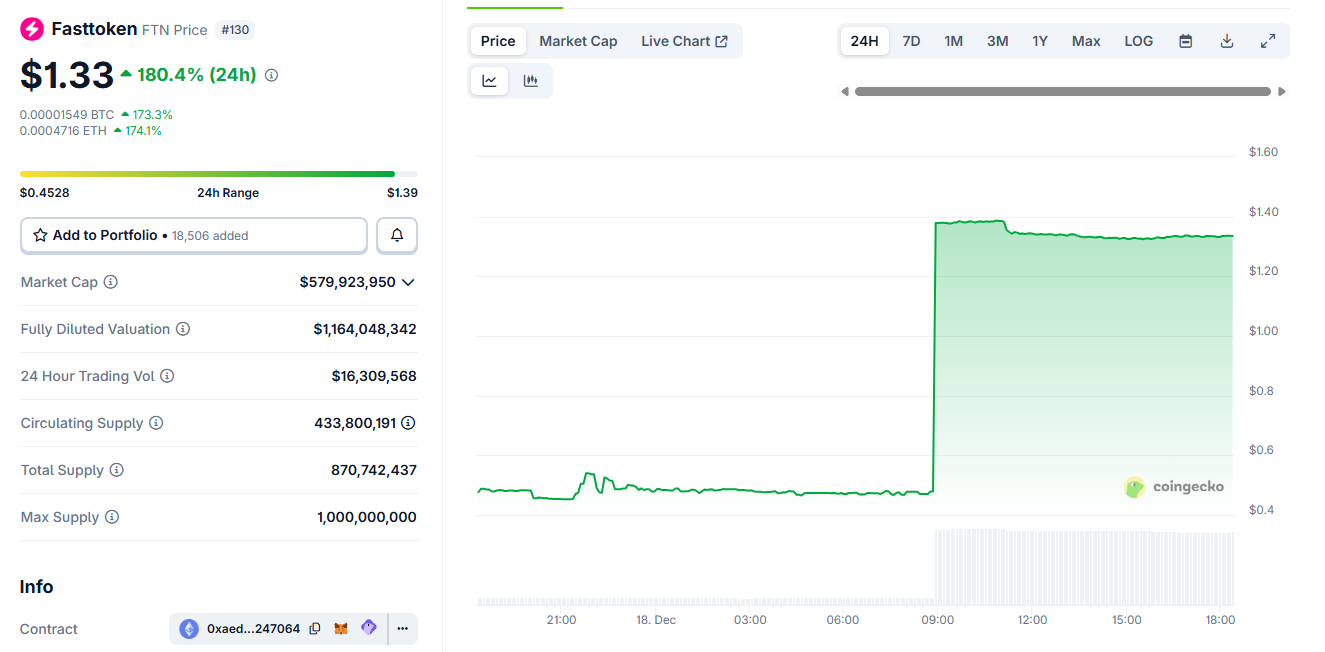
Fasttoken (FTN), the native token of the Fastex ecosystem, surged nearly 200% on December 18, sharply outperforming the broader crypto market, which remained largely in the red.

FTN jumped from around $0.37 to above $1.30 within 24 hours, making it one of the day’s top-performing cryptocurrencies. The rally occurred without any major announcement, pointing to a technical and sentiment-driven move rather than a fundamental revaluation.

Fasttoken Rallies Over 180% on December 18. Source: CoinGecko

What Is Fasttoken (FTN)?

Fasttoken is the utility token of the Fastex ecosystem, developed by SoftConstruct. It powers the Bahamut blockchain, an EVM-compatible Layer-1 network that uses a Proof-of-Stake and Activity (PoSA) consensus model.

FTN is used for transaction fees and staking on Bahamut, payments via Fastex Pay, trading on the Fastex exchange, and NFTs, gaming, and other Web3 applications within the ecosystem

SoftConstruct, Fastex’s parent company, operates across payments, gaming, and IT infrastructure, giving FTN exposure beyond a single product line.

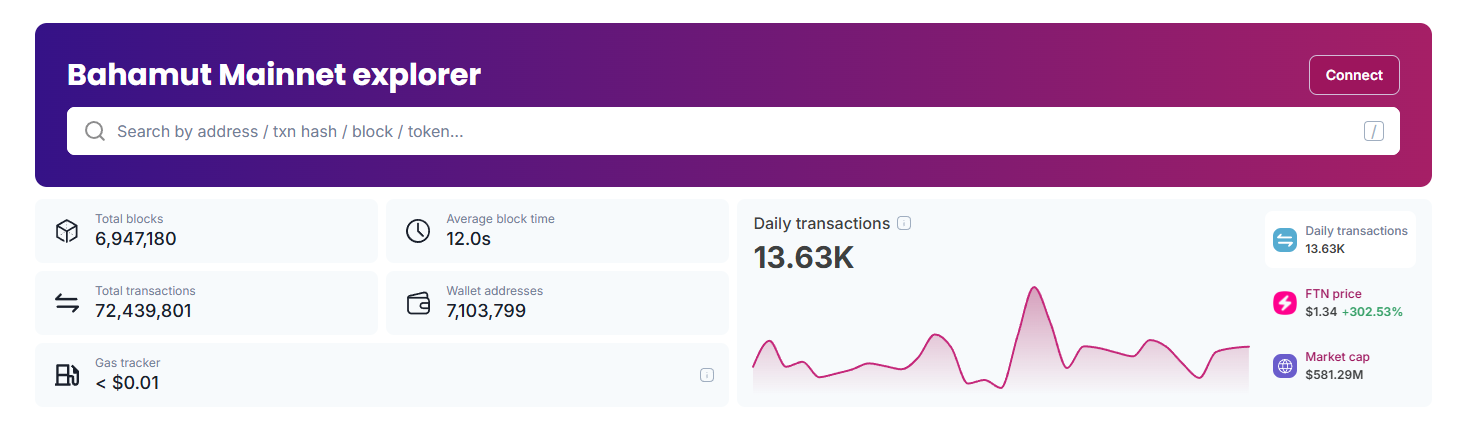
Bahamut Blockchain Stats. Source: FTN Scan

A Difficult 2025 for FTN

The sharp rally follows a brutal decline throughout 2025.

Earlier this year, FTN traded above $2.00, but steadily sold off as:

  • Large token unlocks entered circulation
  • Risk-off sentiment dominated altcoins
  • Exchanges issued warnings, including MEXC’s “Special Treatment” label

By mid-December, FTN had lost over 90% of its value, briefly touching all-time lows between $0.25 and $0.37. Many traders had written the token off.

Why is Fasttoken Rallying Today?

There was no single catalyst behind FTN’s sudden surge. Instead, several factors likely combined to trigger the move.

FTN’s prolonged sell-off created deeply oversold conditions. As the token hit all-time lows, buyers stepped in looking for a short-term recovery play. In thin markets, even moderate buying can lead to outsized price moves.

Fasttoken $FTN is up 216% in the last 24 Hours 😲

For those unaware

-> $FTN is the native crypto of Bahamut, a public EVM-compatible L1 Blockchain
-> The project is developed by SoftConstruct and is part of the Fastex Ecosystem
-> This token painted an upward only chart from… pic.twitter.com/g1QsH0FP0f

— Web3 AjaX 🦅🔥 (@Web3AjaX) December 18, 2025

Earlier this month, concerns emerged after MEXC flagged FTN for potential risk monitoring. By mid-December, no delisting followed. That relief appears to have encouraged traders who were previously sidelined.

FTN trades on a limited number of venues, with liquidity concentrated on a few exchanges. Low liquidity often magnifies volatility, allowing prices to rise rapidly once momentum builds.

The rally also coincided with renewed discussion around Fastex’s broader infrastructure, including Bahamut, Fastex Pay, NFTs, and gaming integrations. While none of these developments were new, they provided narrative support as price momentum accelerated.

✨ Fasttoken ( $FTN ) is flashing some serious warning signs right now.

The chart may look stable on the surface, but the underlying data tells a different story. Liquidity is extremely thin, with only around $3M in total 24h volume across all chains. That’s nowhere near enough… https://t.co/utfR6yfjHz

— Kryptotalker (@kryptotalker) November 20, 2025

No Major Announcement, High Volatility Remains

Despite the sharp gains, there was no official update, partnership, or protocol change announced on December 18. That suggests the rally was driven primarily by technical rebound, market psychology, and short-term speculation.

Most notably, Fasttoken’s X (formerly Twitter) account has been inactive since late-September. 

Fasttoken’s Last X Post Was in September

Analysts caution that such rebounds after steep declines can be volatile. FTN still faces future token unlocks and must show sustained usage growth to support higher valuations.

For now, Fasttoken’s surge stands out as one of the most dramatic moves in an otherwise cautious crypto market—but its durability remains uncertain.

The post Fasttoken Rallies Nearly 200% Despite Bearish Crypto Market appeared first on BeInCrypto.
  •  

US Inflation Cools Sharply in November, CPI Misses Forecasts

US inflation slowed more than expected in November, delivering a clear downside surprise that could reshape near-term market and Federal Reserve expectations. According to fresh data released on December 18, the headline Consumer Price Index (CPI) rose 2.7% year over year, well below market expectations of 3.1%.

Meanwhile, core CPI, which excludes food and energy, increased 2.6% year over year, also missing forecasts of 3.0%. The data marks a notable deceleration in price pressures and signals that disinflation momentum has strengthened heading into the end of 2025.

Is This Bullish For Crypto Markets?

The softer-than-expected print reinforces the view that inflation is cooling faster than policymakers and markets anticipated just weeks ago. Core inflation, closely watched by the Federal Reserve, now sits well below 3%—a level last seen before inflation reaccelerated earlier this year.

This print weakens the case for prolonged restrictive monetary policy and strengthens expectations that the Fed may turn more accommodative sooner than previously priced in.

Markets are likely to interpret the data as rate-cut supportive, particularly for early 2026. Lower inflation reduces pressure on real yields and the US dollar—two key headwinds for risk assets in recent months.

Risk markets, including equities and crypto, were already positioned cautiously ahead of the release, suggesting room for sharp repricing as traders digest the data.

Bitcoin and the broader crypto market entered the CPI release in consolidation mode, with traders bracing for volatility. A downside inflation surprise typically acts as a macro tailwind for crypto, as easing inflation expectations improve liquidity conditions and risk appetite.

Short-term price action will now depend on how quickly markets reprice Fed policy expectations and whether follow-through buying emerges after the initial reaction.

What comes next? Attention will shift to:

  • Updated Fed rate-cut probabilities
  • US Treasury yield reactions
  • Dollar strength or weakness
  • Risk-asset follow-through into year-end

For now, November’s CPI report delivers a clear message: inflation cooled faster than expected, and markets will need to adjust quickly.

The post US Inflation Cools Sharply in November, CPI Misses Forecasts appeared first on BeInCrypto.
  •  

Tether’s USDT Payment Stats Show the Real State of Crypto Adoption in 2025

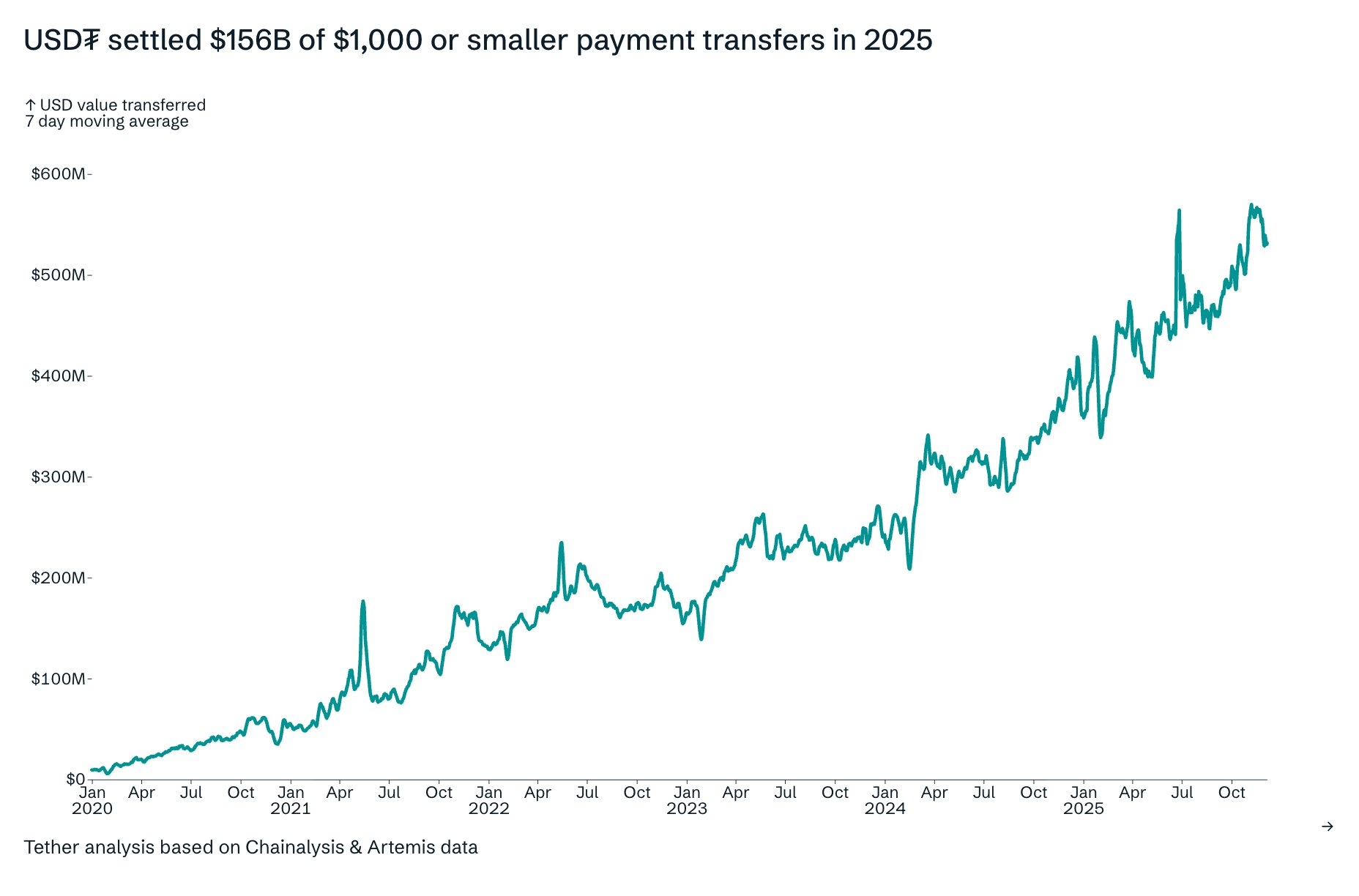
Tether’s USDT processed $156 billion in payments of $1,000 or less in 2025, according to figures shared today by CEO Paolo Ardoino, based on Chainalysis and Artemis data. 

The number highlights a side of crypto adoption often missed by price charts and ETF flows – everyday transactional use.

USDT is Being Used as a Substitute for Banks and Cash

Small-value transfers now represent a meaningful share of USDT activity. The data shows steady growth since 2020, with acceleration through 2024 and into 2025, as average daily volumes for sub-$1,000 transfers climbed above $500 million. 

This points to USDT functioning less as a trading instrument and more as a digital payments rail.

USDT Payments Data Shared By Tether CEO. Source: X/Paolo Ardoino

The significance lies in who uses stablecoins and how. Transfers under $1,000 typically reflect remittances, payroll, retail payments, savings movement, and peer-to-peer transfers, especially in emerging markets. 

Unlike large exchange flows, these transactions tend to be non-speculative and recurring. 

In practical terms, USDT is increasingly acting as a substitute for cash and bank wires in regions where access to dollars is limited or expensive.

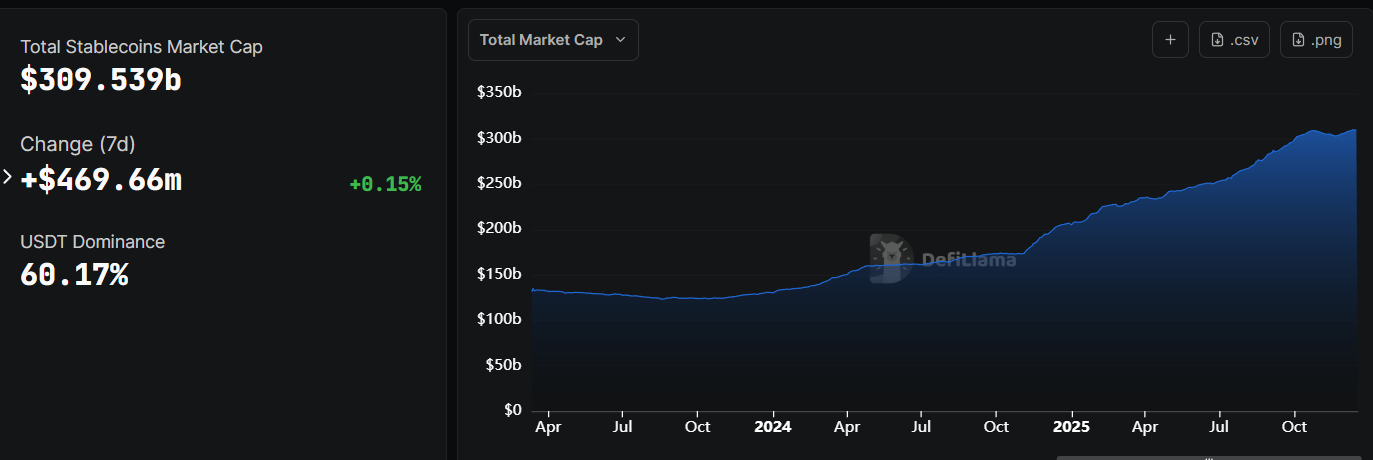
This trend aligns with USDT’s broader trajectory in 2025. Circulating supply reached new highs during the year, reflecting demand for dollar liquidity beyond crypto trading. 

At the same time, regulatory developments reshaped where and how USDT circulates. 

In the US, the GENIUS Act clarified the legal framework for payment stablecoins, reinforcing institutional confidence in compliant dollar-backed tokens. 

In Europe, MiCA introduced stricter licensing rules, shifting some regulated platform activity away from USDT but not slowing global on-chain usage.

Stablecoins Market Cap In 2025. Source: DeFilLama

Tether has also expanded its infrastructure footprint. Recent investments in Lightning-based payment rails signal an effort to push USDT into faster, lower-cost settlement networks. 

Regional partnerships in Africa and the Middle East further indicate a focus on payments and financial access, not just exchange liquidity.

Taken together, the $156 billion figure reframes the crypto adoption debate. While market cycles drive headlines, stablecoins continue to scale quietly as financial plumbing. 

The growth in small USDT payments suggests that, in 2025, crypto adoption is less about speculation and more about utility, resilience, and global dollar access. This shift may prove more durable than any bull market.

The post Tether’s USDT Payment Stats Show the Real State of Crypto Adoption in 2025 appeared first on BeInCrypto.

  •  

Bitcoin Added And Lost Nearly $100 Billion In Hours, What Just Happened?

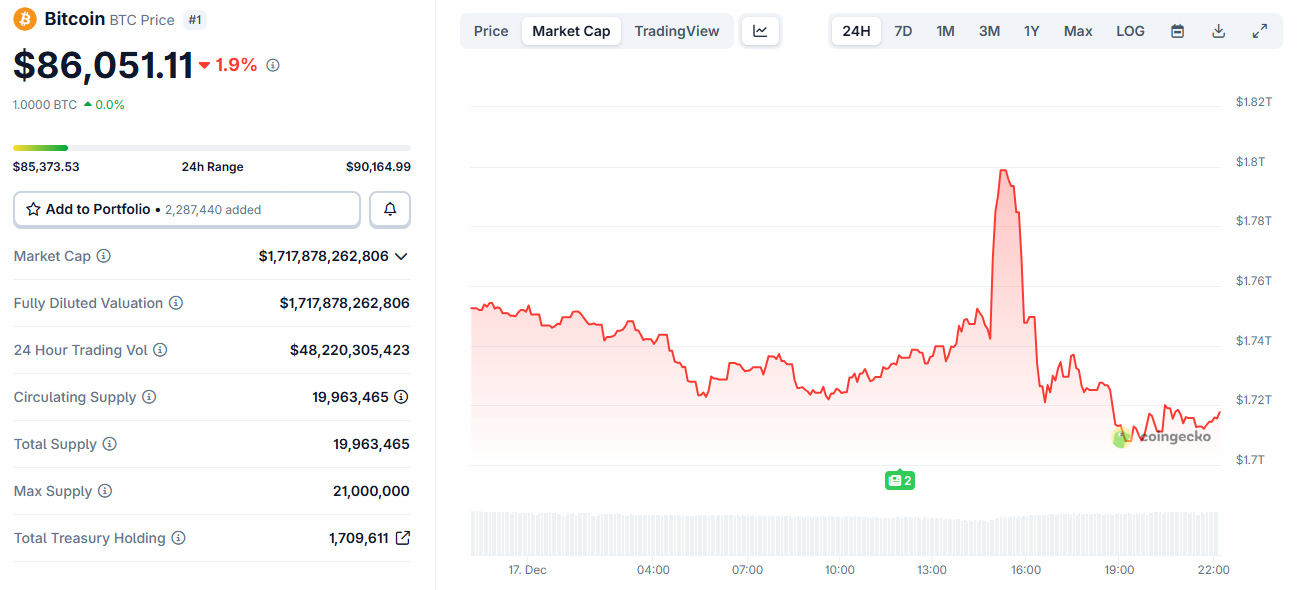
Bitcoin experienced an extreme bout of volatility on December 17, surging more than $3,000 in under an hour before reversing sharply and falling back toward $86,000.

The violent swing did not follow any major news. Instead, market data shows the move was driven by leverage, positioning, and fragile liquidity conditions.

A Short Squeeze Pushed Bitcoin Higher

The initial rally began as Bitcoin pushed toward the $90,000 level, a major psychological and technical resistance zone.

Bitcoin Price Wild Swing on December 17. Source: CoinGecko

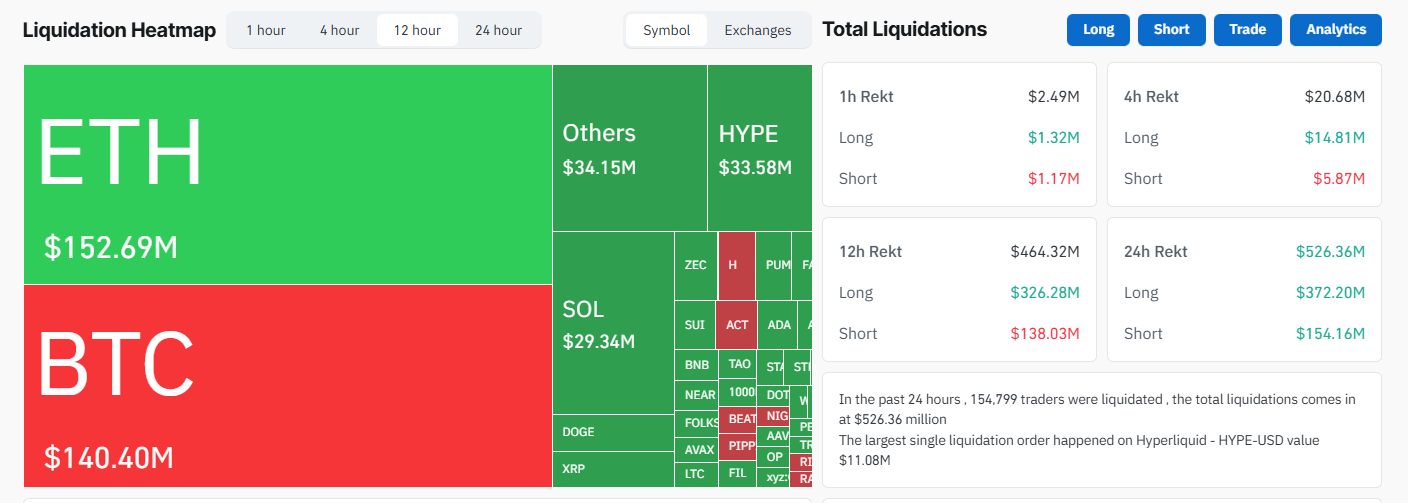
Liquidation data shows a dense cluster of leveraged short positions positioned above that level. When price moved higher, those shorts were forced to close. That process requires buying Bitcoin, which pushed prices up even faster.

Roughly $120 million in short positions were liquidated during the spike. This created a classic short squeeze, where forced buying accelerates the move beyond what normal spot demand would justify.

Crypto Market Liquidations On December 17. Source: Coinglass

At this stage, the move looked strong. But the structure underneath it was weak.

The Rally Flipped Into A Long Liquidation Cascade

As Bitcoin briefly reclaimed $90,000, new traders entered the market chasing momentum.

Many of those traders opened leveraged long positions, betting the breakout would hold. However, the rally lacked sustained spot buying and quickly stalled.

When the price began to fall, those long positions became vulnerable. Once key support levels broke, exchanges automatically liquidated those positions. More than $200 million in long liquidations followed, overwhelming the market.

Whoever is left

We need to know what happened on October 10

It's VERY apparent that the market broke that day and nothing has been the same since

We haven't seen Bitcoin or Alts trade like this since 2018

We need answers pic.twitter.com/jXe7jwd7RA

— EllioTrades (@elliotrades) December 17, 2025

This second wave explains why the drop was faster and deeper than the initial rise. 

Within hours, Bitcoin had fallen back toward $86,000, erasing most of the gains.

Positioning Data Shows A Fragile Market Setup

Trader positioning data from Binance and OKX helps explain why the move was so violent.

On Binance, the number of top trader accounts leaning long rose sharply ahead of the spike. However, position-size data showed less conviction, suggesting many traders were long but not heavily sized.

Bitcoin Long/Short Ratio on Binance Futures. Source: Coinglass

On OKX, position-based ratios shifted aggressively after the volatility. That suggests larger traders repositioned quickly, either buying the dip or adjusting hedges as liquidations played out.

This combination — crowded positioning, mixed conviction, and heavy leverage — creates a market that can move violently in both directions with little warning.

Bitcoin Long/Short Ratio on OKX. Source: Coinglass

Did Market Makers Or Whales Manipulate The Move?

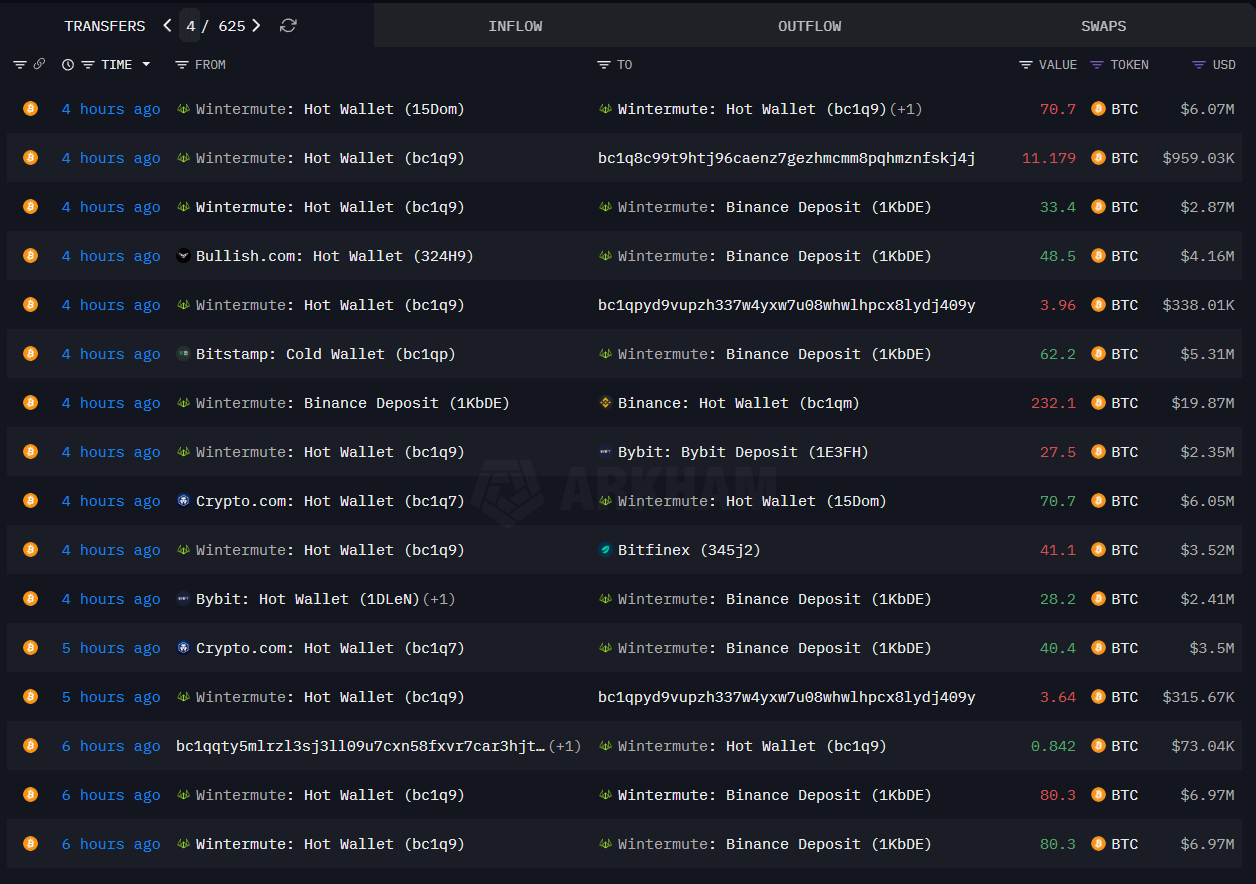
On-chain data showed market makers such as Wintermute moving Bitcoin between exchanges during the volatility. Those transfers coincided with the price swings but do not prove manipulation.

Market makers routinely rebalance inventory during periods of stress. Deposits to exchanges can indicate hedging, margin management, or liquidity provision, not necessarily selling to crash prices.

Importantly, the entire move can be explained by known market mechanics: liquidation clusters, leverage, and thin order books. There is no clear evidence of coordinated manipulation.

Wintermute Heavily Repositioning Bitcoin Across Centralized Exchanges. Source: Arkham

What This Means For Bitcoin Going Forward

This episode highlights a key risk in today’s Bitcoin market.

Leverage remains elevated. Liquidity thins quickly during fast moves. When price approaches key levels, forced liquidations can dominate price action.

Bitcoin’s fundamentals did not change during those hours. The swing reflected market structure fragility, not a shift in long-term value.

🚨 BITCOIN IS BEING MANIPULATED, AND I HAVE SOLID PROOF!!!

Everyone’s talking about how Bitcoin went up $3,000 and then down $4,000 in minutes.

Everyone’s posting about it…

but nobody seems to understand what actually happened.

You need to look at the flows, not the chart.… pic.twitter.com/IHCXtx3sUF

— NoLimit (@NoLimitGains) December 17, 2025

Until leverage resets and positioning becomes healthier, similar sharp moves remain possible. In this case, Bitcoin did not rally and crash because of news.

It moved because leverage turned price against itself.

The post Bitcoin Added And Lost Nearly $100 Billion In Hours, What Just Happened? appeared first on BeInCrypto.
  •  

FTX Scandal Figure Caroline Ellison Leaves Prison: Was Justice Too Lenient?

Caroline Ellison, the former CEO of Alameda Research and a central figure in the FTX scandal, is no longer behind bars. 

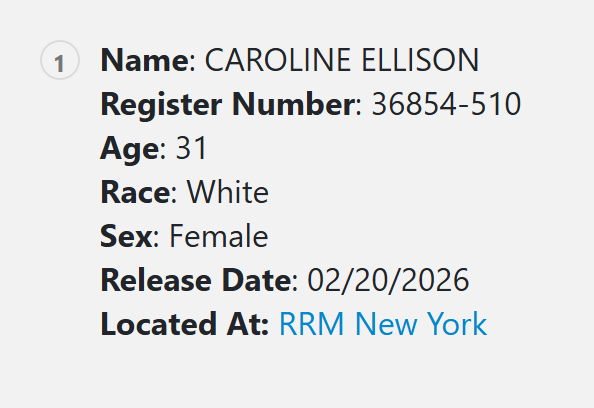
US Bureau of Prisons records show Ellison has been transferred from federal prison to Residential Reentry Management (RRM) in New York. This marks a shift from incarceration to community confinement.

What RRM Status Actually Means

According to the Bureau of Prisons inmate locator, Ellison remains in federal custody with a projected release date of February 20, 2026. However, her current status confirms she is no longer housed in a correctional facility.

RRM — short for Residential Reentry Management — oversees the final phase of a federal sentence. Individuals under RRM may be placed in a halfway house or home confinement, rather than a prison. 

BOP Inmate Location. Source: Federal Bureau of Prisons

While still under Bureau of Prisons supervision, inmates face fewer physical restrictions and may be permitted to work, maintain limited social contact, and prepare for reintegration.

Unlike prison, RRM placements involve no cells, no guards, and significantly more autonomy, though strict monitoring and movement limits remain in place. 

Ellison’s transfer signals she has entered the reentry phase of her sentence, not that she has been released.

Ellison’s Role in the FTX Collapse

Ellison pleaded guilty in 2022 to multiple federal fraud charges tied to the misuse of FTX customer funds

As CEO of Alameda Research, the trading arm closely tied to FTX, she admitted to executing trades and financial maneuvers that relied on billions in customer deposits.

However, prosecutors and the court drew a clear distinction between Ellison’s role and that of FTX founder Sam Bankman-Fried, who designed the systems that enabled the fraud. Ellison did not control FTX’s exchange infrastructure, customer custody mechanisms, or governance.

Today, SBF's lawyer asked him about his relationship with Caroline Ellison and why it ended. SBF responded by mentioning she wanted more than the time and energy he could give:

"Historically, I haven't been great at … romantic relationships" pic.twitter.com/w19csqFgPr

— Zack Guzmán ♻️ (@zGuz) October 27, 2023

Her cooperation proved decisive. Ellison became the government’s key witness, offering extensive testimony that helped secure Bankman-Fried’s conviction. In 2024, a federal judge sentenced her to two years in prison, citing her cooperation, early guilty plea, and subordinate role.

A Stark Contrast With Do Kwon

Ellison’s move out of prison comes as Terraform Labs co-founder Do Kwon begins serving a 15-year US federal sentence for fraud linked to the collapse of the TerraUSD stablecoin. 

Prosecutors argued Kwon knowingly misled investors about the stability of Terra’s algorithmic peg, triggering losses estimated at over $40 billion.

4:04 pm- they've back.
Judge Engelmayer: 5 years is entire off the table. Even 12 years might be unreasonable & here is why. The fraud you pled guilty to cost victims more than $40 billion. Even in SDNY, it's eye popping. There is a 25 year cap, so not life

— Inner City Press (@innercitypress) December 11, 2025

Unlike Ellison, Kwon was a founder, public promoter, and architect of the system at the center of the collapse. The sentencing disparity reflects how courts differentiate between system designers and operators.

Too Lenient Or Legally Consistent?

Ellison’s transition to community confinement is legally routine, but politically charged. To critics, it reinforces perceptions of uneven accountability in crypto scandals. 

To prosecutors, it reflects established sentencing principles: cooperation, reduced authority, and acceptance of responsibility.

For now, Ellison remains under federal supervision. But her exit from prison, even if temporary, has reopened a familiar question — who truly pays the price when crypto empires collapse?

The post FTX Scandal Figure Caroline Ellison Leaves Prison: Was Justice Too Lenient? appeared first on BeInCrypto.
  •  

Why Americans May Have Less Money For Crypto In 2026

US economic data is flashing early warning signs for risk assets and crypto. The latest labor figures suggest household income growth may weaken heading into 2026.

That trend could reduce retail investment flows, especially into volatile assets like crypto. In the short term, this creates a demand problem rather than a structural crisis.

US Labor Data Signals Slower Disposable Income Growth

The latest Nonfarm Payrolls report showed modest job creation alongside a rising unemployment rate. Wage growth also slowed, pointing to weaker income momentum for households.

Nonfarm payrolls -105k in October … +64k in November pic.twitter.com/tJcn8RSu9m

— Kevin Gordon (@KevRGordon) December 16, 2025

Disposable income matters for crypto adoption. Retail investors typically allocate surplus cash, not leverage, to risk assets.

When wages stagnate and job security weakens, households cut discretionary spending first. Speculative investments often fall into that category.

US Job Growth Over the Years. Source: X/Jed Kolko

Retail Investors Are Most Exposed And Altcoins Could Feel It First

Retail participation plays a larger role in altcoin markets than in Bitcoin. Smaller tokens rely heavily on discretionary retail capital chasing higher returns.

Bitcoin, by contrast, attracts institutional flows, ETFs, and long-term holders. That gives it deeper liquidity and stronger downside buffers.

If Americans have less money to invest, altcoins tend to suffer first. Liquidity dries up faster, and price declines can persist longer.

Retail investors may also be forced to exit positions to cover expenses. That selling pressure weighs more heavily on smaller-cap tokens.

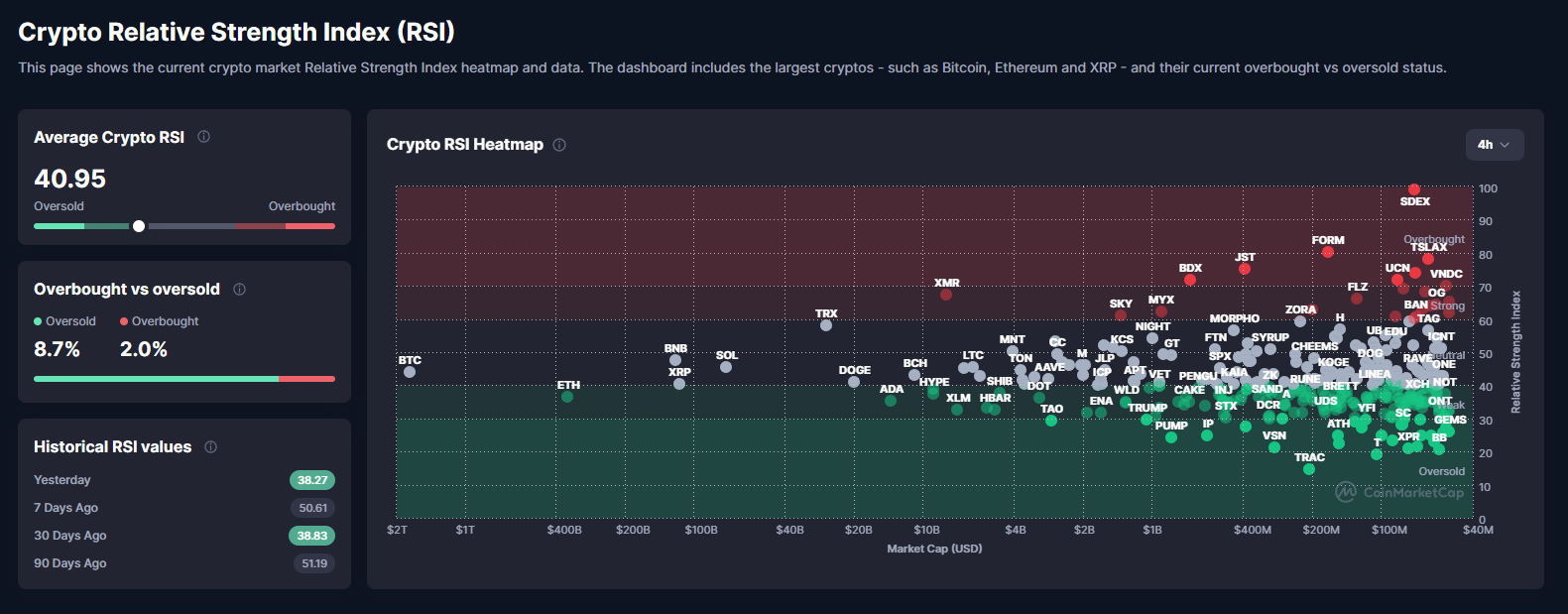
Average Crypto RSI Remains Near Oversold Levels. Source: CoinMarketCap

Lower Income Does Not Mean Lower Prices, But It Changes The Driver

Asset prices can still rise even when incomes weaken. That typically happens when monetary policy becomes more supportive.

A cooling labor market gives the Federal Reserve room to cut rates. Lower rates can boost asset prices through liquidity rather than household demand.

For crypto, that distinction matters. Rallies driven by liquidity are more fragile and sensitive to macro shocks.

Institutions Face Their Own Headwinds From Japan

Retail weakness is only part of the picture. Institutional investors are also becoming more cautious.

The Bank of Japan’s potential rate hikes threaten global liquidity conditions. They risk unwinding the yen carry trade that has supported risk assets for years.

Bank of Japan is set to hike interest rates by 25bps on December 19

The last 3 times BoJ hiked rates, Bitcoin dumped by over 20%

March 2024 → -27%
July 2024 → -30%
January 2025 → -31%

We already saw a 7% dump last week as investors tried to front-run the dump.

However,… pic.twitter.com/ex77EzHBMh

— Lark Davis (@LarkDavis) December 15, 2025

When borrowing costs rise in Japan, institutions often reduce exposure globally. Crypto, equities, and credit all feel the impact.

The main risk is not collapse, but thin demand. Retail investors may step back due to weaker income growth. Institutions may pause as global liquidity tightens.

Altcoins remain the most vulnerable in this environment. Bitcoin is better positioned to absorb the slowdown.

For now, crypto markets appear to be transitioning. From retail-driven momentum to macro-driven caution.

That shift could define the early months of 2026.

The post Why Americans May Have Less Money For Crypto In 2026 appeared first on BeInCrypto.

  •  

Why the Bank of Japan Is So Critical for Bitcoin

Bitcoin traders often focus on the US Federal Reserve. However, the Bank of Japan (BoJ) can be just as important for crypto markets.

That’s because Japan plays a unique role in global liquidity. When that liquidity tightens, Bitcoin often drops hard.

The ‘Cheap Yen’ is Bitcoin’s Hidden Liquidity Engine

For decades, Japan maintained near-zero or negative interest rates. That made the yen one of the cheapest currencies in the world to borrow.

This gave rise to the yen carry trade.

The 🇯🇵 Bank of Japan is about to do a rate hike on Friday the 19th, creating massive fear surrounding the Yen carry trade.

Bitcoin dumped hard the last time they hiked rates:

But why is this exactly? Let’s break it down 👇

What is the Yen Carry Trade?

For decades, the Yen has… pic.twitter.com/YjxzOctjnx

— Mister Crypto (@misterrcrypto) December 14, 2025

Large institutions — including hedge funds, banks, asset managers, and proprietary trading desks — borrow yen through Japanese banks, FX swap markets, and short-term funding channels.

They then convert that yen into dollars or euros. The capital flows into higher-yielding assets.

Those assets include equities, credit, emerging markets, and increasingly, crypto. Bitcoin benefits when this funding stays cheap and abundant.

Bitcoin is especially attractive because it trades 24/7 and offers high volatility. For leveraged funds, it becomes a liquid way to express risk-on positioning.

A BoJ rate hike disrupts that system.

🚨 JAPAN WILL CRASH BITCOIN IN 5 DAYS!!!

People are seriously underestimating what Japan is about to do to Bitcoin.

The Bank of Japan is expected to raise rates again on Dec 19.

That might not sound like a big deal… until you remember one thing:

Japan is the largest holder… pic.twitter.com/0a9Aimfn88

— NoLimit (@NoLimitGains) December 14, 2025

Why a Small BoJ Rate Hike Can Have an Outsized Impact

On paper, the expected BoJ move looks modest.

Markets are pricing a hike of roughly 25 basis points, taking Japan’s policy rate toward 0.75%. That is still far below US or European rates.

But the size of the hike is not the real issue.

Japan spent decades anchored near zero. Even a small increase represents a structural shift in funding conditions.

More importantly, it changes expectations.

If markets believe Japan is entering a multi-step tightening cycle, traders do not wait. They cut exposure early.

That anticipation alone can trigger selling across global risk assets. Bitcoin feels the impact quickly because it trades continuously and reacts faster than stocks or bonds.

How the BoJ Tightening Can Trigger Bitcoin Liquidations

Bitcoin’s sharpest drops rarely come from spot selling alone. They come from leverage.

A hawkish BoJ move can strengthen the yen and lift global yields. That pressures risk assets simultaneously.

Bitcoin then falls through key technical levels. That matters because crypto markets rely heavily on perpetual futures and margin.

As price drops, leveraged long positions hit liquidation thresholds. Exchanges automatically sell collateral to cover losses.

Bank of Japan is set to hike interest rates by 25bps on December 19

The last 3 times BoJ hiked rates, Bitcoin dumped by over 20%

March 2024 → -27%
July 2024 → -30%
January 2025 → -31%

We already saw a 7% dump last week as investors tried to front-run the dump.

However,… pic.twitter.com/ex77EzHBMh

— Lark Davis (@LarkDavis) December 15, 2025

That forced selling pushes Bitcoin lower again. It triggers more liquidations in a cascading loop.

This is why macro events can look like crypto-specific crashes. The initial shock comes from rates and FX.

The second wave comes from crypto’s leverage structure.

What Traders Watch Around BoJ Decisions

BoJ risk builds before the announcement. Traders watch for early warning signs:

  • Yen strength, which signals carry trades are unwinding
  • Rising bond yields, which tighten financial conditions
  • Falling funding rates or open interest, which show leverage exiting
  • Key Bitcoin support breaks, which can trigger liquidations

The tone of BoJ guidance also matters. A hike with dovish messaging can calm markets.

A hawkish signal can extend selling pressure.

In short, the Bank of Japan matters because it controls a major source of global liquidity. When that liquidity tightens, Bitcoin often pays the price first.

The post Why the Bank of Japan Is So Critical for Bitcoin appeared first on BeInCrypto.

  •  
❌