Reading view

Best AI Certifications to Boost Your Career in 2026

Artificial intelligence is creating more opportunities than ever, with new roles appearing across every industry. But breaking into these positions can be difficult when most employers want candidates with proven experience.

Here's what many people don't realize: getting certified provides a clear path forward, even if you're starting from scratch.

AI-related job postings on LinkedIn grew 17% over the last two years. Companies are scrambling to hire people who understand these technologies. Even if you're not building models yourself, understanding AI makes you more valuable in your current role.


The AI Certification Challenge

The challenge is figuring out which AI certification is best for your goals.

Some certifications focus on business strategy while others dive deep into building machine learning models. Many fall somewhere in between. The best AI certifications depend entirely on where you're starting and where you want to go.

This guide breaks down 11 certifications that can genuinely advance your career. We'll cover costs, time commitments, and what you'll actually learn. More importantly, we'll help you figure out which one fits your situation.

In this guide, we'll cover:

  • Career Switcher Certifications
  • Developer Certifications
  • Machine Learning Engineering Certifications
  • Generative AI Certifications
  • Non-Technical Professional Certifications
  • Certification Comparison Table
  • How to Choose the Right Certification

Let's find the right certification for you.


How to Choose the Right AI Certification

Before diving into specific certifications, let's talk about what actually matters when choosing one.

Match Your Current Experience Level

Be honest about where you're starting. Some certifications assume you already know programming, while others start from zero.

If you've never coded before, jumping straight into an advanced machine learning certification will frustrate you. Start with beginner-friendly options that teach foundations first.

If you’re already working as a developer or data analyst, you can skip the basics and go for intermediate or advanced certifications.

Consider Your Career Goals

Different certifications lead to different opportunities.

  • Want to switch careers into artificial intelligence? Look for comprehensive programs that teach both theory and practical skills.
  • Already in tech and want to add AI skills? Shorter, focused certifications work better.
  • Leading AI projects but not building models yourself? Business-focused certifications make more sense than technical ones.

Think About Time and Money

Certifications range from free to over \$800, and time commitments vary from 10 hours to several months.

Be realistic about what makes sense for you. A certification that takes 200 hours might be perfect for your career, but if you can only study 5 hours per week, that's 40 weeks of commitment. Can you sustain that?

Sometimes a shorter certification that you'll actually finish beats a comprehensive one you'll abandon halfway through.

Verify Industry Recognition

Not all certifications carry the same weight with employers.

Certifications from established organizations like AWS, Google Cloud, Microsoft, and IBM typically get recognized. So do programs from respected institutions and instructors like Andrew Ng's DeepLearning.AI courses.

Check job postings in your target field, and take note of which certifications employers actually mention.


Best AI Certifications for Career Switchers

Starting from scratch? These certifications help you build foundations without requiring prior experience.

1. Google AI Essentials

Google AI Essentials

This is the fastest way to understand AI basics. Google AI Essentials teaches you what artificial intelligence can actually do and how to use it productively in your work.

  • Cost: \$49 per month on Coursera (7-day free trial)
  • Time: Under 10 hours total
  • What you'll learn: How generative AI works, writing effective prompts, using AI tools responsibly, and spotting opportunities to apply AI in your work.

    The course is completely non-technical, so no coding is required. You'll practice with tools like Gemini and learn through real-world scenarios.

  • Best for: Anyone curious about AI who wants to understand it quickly. Perfect if you're in marketing, HR, operations, or any non-technical role.
  • Why it works: Google designed this for busy professionals, so you can finish in a weekend if you're motivated. The certificate from Google adds credibility to your resume.

2. Microsoft Certified: Azure AI Fundamentals (AI-900)

Microsoft Certified - Azure AI Fundamentals (AI-900)

Want something with more technical depth but still beginner-friendly? The Azure AI Fundamentals certification gives you a solid overview of AI and machine learning concepts.

  • Cost: \$99 (exam fee)
  • Time: 30 to 40 hours of preparation
  • What you'll learn: Core AI concepts, machine learning fundamentals, computer vision, natural language processing, and how Azure's AI services work.

    This certification requires passing an exam. Microsoft offers free training materials through their Learn platform, and you can also find prep courses on Coursera and other platforms.

  • Best for: People who want a recognized certification that proves they understand AI concepts. Good for career switchers who want credibility fast.
  • Worth knowing: Unlike most foundational certifications, this one expires after one year. Microsoft offers a free renewal exam to keep it current.
  • If you're building foundational skills in data science and machine learning, Dataquest's Data Scientist career path can help you prepare. You'll learn the programming and statistics that make certifications like this easier to tackle.

3. IBM AI Engineering Professional Certificate

IBM AI Engineering Professional Certificate

Ready for something more comprehensive? The IBM AI Engineering Professional Certificate teaches you to actually build AI systems from scratch.

  • Cost: About \$49 per month on Coursera (roughly \$196 to \$294 for 4 to 6 months)
  • Time: 4 to 6 months at a moderate pace
  • What you'll learn: Machine learning techniques, deep learning with frameworks like TensorFlow and PyTorch, computer vision, natural language processing, and how to deploy AI models.

    This program includes hands-on projects, so you'll build real systems instead of just watching videos. By the end, you'll have a portfolio showing you can create AI applications.

  • Best for: Career switchers who want to become AI engineers or machine learning engineers. Also good for software developers adding AI skills.
  • Recently updated: IBM refreshed this program in March 2025 with new generative AI content, so you're learning current, relevant skills.

Best AI Certification for Developers

4. AWS Certified AI Practitioner (AIF-C01)

AWS Certified AI Practitioner (AIF-C01)

Already know your way around code? The AWS Certified AI Practitioner helps developers understand AI services and when to use them.

  • Cost: \$100 (exam fee)
  • Time: 40 to 60 hours of preparation
  • What you'll learn: AI and machine learning fundamentals, generative AI concepts, AWS AI services like Bedrock and SageMaker, and how to choose the right tools for different problems.

    This is AWS's newest AI certification, launched in August 2024. It focuses on practical knowledge, so you're learning to use AI services rather than building them from scratch.

  • Best for: Software developers, cloud engineers, and technical professionals who work with AWS. Also valuable for product managers and technical consultants.
  • Why developers like it: It bridges business and technical knowledge. You'll understand enough to have intelligent conversations with data scientists while knowing how to implement solutions.

Best AI Certifications for Machine Learning Engineers

Want to build, train, and deploy machine learning models? These certifications teach you the skills companies actually need.

5. Machine Learning Specialization (DeepLearning.AI + Stanford)

Machine Learning Specialization (DeepLearning.AI + Stanford)

Andrew Ng's Machine Learning Specialization is the gold standard for learning ML fundamentals. Over 4.8 million people have taken his courses.

  • Cost: About \$49 per month on Coursera (roughly \$147 for 3 months)
  • Time: 3 months at 5 hours per week
  • What you'll learn: Supervised learning (regression and classification), neural networks, decision trees, recommender systems, and best practices for machine learning projects.

    Ng teaches with visual intuition first, then shows you the code, then explains the math. This approach helps concepts stick better than traditional courses.

  • Best for: Anyone wanting to understand machine learning deeply. Perfect whether you're a complete beginner or have some experience but want to fill gaps.
  • Why it's special: Ng explains complex ideas simply and shows you how professionals actually approach ML problems. You'll learn patterns you'll use throughout your career.

    If you want to practice these concepts hands-on, Dataquest's Machine Learning path lets you work with real datasets and build projects as you learn. It's a practical complement to theoretical courses.

6. Deep Learning Specialization (DeepLearning.AI)

Deep Learning Specialization (DeepLearning.AI)

After mastering ML basics, the Deep Learning Specialization teaches you to build neural networks that power modern AI.

  • Cost: About \$49 per month on Coursera (roughly \$245 for 5 months)
  • Time: 5 months with five separate courses
  • What you'll learn: Neural networks and deep learning fundamentals, convolutional neural networks for images, sequence models for text and time series, and strategies to improve model performance.

    This specialization includes hands-on programming assignments where you'll implement algorithms from scratch before using frameworks. This deeper understanding helps when things go wrong in real projects.

  • Best for: People who want to work on cutting-edge AI applications. Necessary for computer vision, natural language processing, and speech recognition roles.
  • Real-world value: Many employers specifically look for deep learning skills, and this specialization appears on countless job descriptions for ML engineer positions.

7. Google Cloud Professional Machine Learning Engineer

Google Cloud Professional Machine Learning Engineer

The Google Cloud Professional ML Engineer certification proves you can build production ML systems at scale.

  • Cost: \$200 (exam fee)
  • Time: 100 to 150 hours of preparation recommended
  • Prerequisites: Google recommends 3 plus years of industry experience including at least 1 year with Google Cloud.
  • What you'll learn: Designing machine learning solutions on Google Cloud, data engineering with BigQuery and Dataflow, training and tuning models with Vertex AI, and deploying production ML systems.

    This is an advanced certification where the exam tests your ability to solve real problems using Google Cloud's tools. You need hands-on experience to pass.

  • Best for: ML engineers, data scientists, and AI specialists who work with Google Cloud Platform. Particularly valuable if your company uses GCP.
  • Career impact: This certification demonstrates you can handle enterprise-scale machine learning projects. It often leads to senior positions and consulting opportunities.

8. AWS Certified Machine Learning Specialty (MLS-C01)

AWS Certified Machine Learning Specialty (MLS-C01)

Want to prove you're an expert with AWS's ML tools? The AWS Machine Learning Specialty certification is one of the most respected credentials in the field.

  • Cost: \$300 (exam fee)
  • Time: 150 to 200 hours of preparation
  • Prerequisites: AWS recommends at least 2 years of hands-on experience with machine learning workloads on AWS.
  • What you'll learn: Data engineering for ML, exploratory data analysis, modeling techniques, and implementing machine learning solutions with SageMaker and other AWS services.

    The exam covers four domains: data engineering accounts for 20%, exploratory data analysis is 24%, modeling gets 36%, and ML implementation and operations make up the remaining 20%.

  • Best for: Experienced ML practitioners who work with AWS. This proves you know how to architect, build, and deploy ML systems at scale.
  • Worth knowing: This is one of the hardest AWS certifications, and people often fail on their first attempt. But passing it carries significant weight with employers.

Best AI Certification for Generative AI

9. IBM Generative AI Engineering Professional Certificate

IBM Generative AI Engineering Professional Certificate

Generative AI is exploding right now. The IBM Generative AI Engineering Professional Certificate teaches you to build applications with large language models.

  • Cost: About \$49 per month on Coursera (roughly \$294 for 6 months)
  • Time: 6 months
  • What you'll learn: Prompt engineering, working with LLMs like GPT and LLaMA, building NLP applications, using frameworks like LangChain and RAG, and deploying generative AI solutions.

    This program is brand new as of 2025 and covers the latest techniques for working with foundation models. You'll learn how to fine-tune models and build AI agents.

  • Best for: Developers, data scientists, and machine learning engineers who want to specialize in generative AI. Also good for anyone wanting to enter this high-growth area.
  • Market context: The generative AI market is expected to grow 46% annually through 2030, and companies are hiring rapidly for these skills.

    If you're looking to build foundational skills in generative AI before tackling this certification, Dataquest's Generative AI Fundamentals path teaches you the core concepts through hands-on Python projects. You'll learn prompt engineering, working with LLM APIs, and building practical applications.


Best AI Certifications for Non-Technical Professionals

Not everyone needs to build AI systems, but understanding artificial intelligence helps you make better decisions and lead more effectively.

10. AI for Everyone (DeepLearning.AI)

AI for Everyone (DeepLearning.AI)

Andrew Ng created AI for Everyone specifically for business professionals, managers, and anyone in a non-technical role.

  • Cost: Free to audit, \$49 for a certificate
  • Time: 6 to 10 hours
  • What you'll learn: What AI can and cannot do, how to spot opportunities for artificial intelligence in your organization, working effectively with AI teams, and building an AI strategy.

    No math and no coding required, just clear explanations of how AI works and how it affects business.

  • Best for: Executives, managers, product managers, marketers, and anyone who works with AI teams but doesn't build AI themselves.
  • Why it matters: Understanding AI helps you ask better questions, make smarter decisions, and communicate effectively with technical teams.

11. PMI Certified Professional in Managing AI (PMI-CPMAI)

PMI Certified Professional in Managing AI (PMI-CPMAI)

Leading AI projects requires different skills than traditional IT projects. The PMI-CPMAI certification teaches you how to manage them successfully.

  • Cost: \$500 to \$800 plus (exam and prep course bundled)
  • Time: About 30 hours for core curriculum
  • What you'll learn: AI project methodology across six phases, data preparation and management, model development and testing, governance and ethics, and operationalizing AI responsibly.

    PMI officially launched this certification in 2025 after acquiring Cognilytica. It's the first major project management certification specifically for artificial intelligence.

  • Best for: Project managers, program managers, product owners, scrum masters, and anyone leading AI initiatives.
  • Special benefits: The prep course earns you 21 PDUs toward other PMI certifications. That covers over a third of what you need for PMP renewal.
  • Worth knowing: Unlike most certifications, this one currently doesn't expire. No renewal fees or continuing education required.

AI Certification Comparison Table

Certification Cost Time Level Best For
Google AI Essentials \$49/month Under 10 hours Beginner All roles, quick AI overview
Azure AI Fundamentals (AI-900) \$99 30-40 hours Beginner Career switchers, IT professionals
IBM AI Engineering \$196-294 4-6 months Intermediate Aspiring ML engineers
AWS AI Practitioner (AIF-C01) \$100 40-60 hours Foundational Developers, cloud engineers
Machine Learning Specialization \$147 3 months Beginner-Intermediate Anyone learning ML fundamentals
Deep Learning Specialization \$245 5 months Intermediate ML engineers, data scientists
Google Cloud Professional ML Engineer \$200 100-150 hours Advanced Experienced ML engineers on GCP
AWS ML Specialty (MLS-C01) \$300 150-200 hours Advanced Experienced ML practitioners on AWS
IBM Generative AI Engineering \$294 6 months Intermediate Gen AI specialists, developers
AI for Everyone Free-\$49 6-10 hours Beginner Business professionals, managers
PMI-CPMAI \$500-800+ 30+ hours Intermediate Project managers, AI leaders

When You Don't Need a Certification

Let's be honest about this. Certifications aren't always necessary.

If you already have strong experience building AI systems, a portfolio of real projects might matter more than certificates. Many employers care more about what you can do than what credentials you hold.

Certifications work best when you're:

  • Breaking into a new field and need credibility
  • Filling specific knowledge gaps
  • Working at companies that value formal credentials
  • Trying to stand out in a competitive job market

They work less well when you're:

  • Already established in AI with years of experience
  • At a company that promotes based on projects, not credentials
  • Learning just for personal interest

Consider your situation carefully. Sometimes spending 100 hours building a portfolio project helps your career more than studying for an exam.


What Happens After Getting Certified

You passed the exam. Great! But, now what?

Update Your Professional Profiles

Add your certification to LinkedIn and your resume. If it comes with a digital badge, show that too.

But don't just list it. Mention specific skills you gained that relate to jobs you want. This helps employers understand why it matters.

Build on What You Learned

A certification gives you the basics, but you grow the most when you use those skills in real situations. Try building a small project that uses what you learned.

You can also join an open-source project or write about your experience. Showing both a certification and real work makes you stand out to employers.

Consider Your Next Step

Many professionals stack certifications strategically. For example:

  • Start with Azure AI Fundamentals, then add the Machine Learning Specialization
  • Complete Machine Learning Specialization, then Deep Learning Specialization, then an AWS or Google Cloud certification
  • Get IBM AI Engineering, then specialize with IBM Generative AI Engineering

Each certification builds on previous knowledge. Building skills in the right order helps you learn faster and avoid gaps in your knowledge.

Maintain Your Certification

Some certifications expire while others require continuing education.

Check renewal requirements before your certification expires. Most providers offer renewal paths that are easier than taking the original exam.


Making Your Decision

You've seen 11 different certifications, and each serves different goals.

Here's how to choose:

The best AI certification is the one you'll actually complete. Choose based on your current skills, available time, and career goals.

Artificial intelligence skills are becoming more valuable every year, and that trend isn't slowing down. But credentials alone won't get you hired. You need to develop these skills through hands-on practice and real application. Choosing the right certification and committing to it is a solid first step. Pick one that matches your goals and start building your expertise today.

  •  

18 Best Data Science Bootcamps in 2026 – Price, Curriculum, Reviews

Data science is exploding right now. Jobs in this field are expected to grow by 34% in the next ten years, which is much faster than most other careers.

But learning data science can feel overwhelming. You need to know Python, statistics, machine learning, how to make charts, and how to solve problems with data.

Benefits of Bootcamps

Bootcamps make it easier by breaking data science into clear, hands-on steps. You work on real projects, get guidance from mentors who are actually in the field, and build a portfolio that shows what you can do.

Whether you want a new job, sharpen your skills, or just explore data science, a bootcamp is a great way to get started. Many students go on to roles as data analysts or junior data scientists.

In this guide, we break down the 18 best data science bootcamps for 2026. We look at the price, what you’ll learn, how the programs are run, and what students think so you can pick the one that works best for you.

What You Will Learn in a Data Science Bootcamp

Data science bootcamps teach you the skills you need to work with data in the real world. You will learn to collect, clean, analyze, and visualize data, build models, and present your findings clearly.

By the end of a bootcamp, you will have hands-on experience and projects you can include in your portfolio.

Here is a quick overview of what you usually learn:

Topic What you'll learn
Programming fundamentals Python or R basics, plus key libraries like NumPy, Pandas, and Matplotlib.
Data cleaning & wrangling Handling missing data, outliers, and formatting issues for reliable results.
Data visualization Creating charts and dashboards using Tableau, Power BI, or Seaborn.
Statistics & probability Regression, distributions, and hypothesis testing for data-driven insights.
Machine learning Building predictive models using scikit-learn, TensorFlow, or PyTorch.
SQL & databases Extracting and managing data with SQL queries and relational databases.
Big data & cloud tools Working with large datasets using Spark, AWS, or Google Cloud.
Data storytelling Presenting insights clearly through reports, visuals, and communication skills.
Capstone projects Real-world projects that build your portfolio and show practical experience.

Bootcamp vs Course vs Fellowship vs Degree

There are many ways to learn data science. Each path works better for different goals, schedules, and budgets. Here’s how they compare.

Feature Bootcamp Online Course Fellowship University Degree
Overview Short, structured programs designed to teach practical, job-ready skills fast. They focus on real projects, mentorship, and career support. Flexible and affordable, ideal for learning at your own pace. They're great for testing interest or focusing on specific skills. Combine mentorship and applied projects, often with funding or partnerships. They're selective and suited for those with some technical background. Provide deep theoretical and technical foundations. They're the most recognized option but also the most time- and cost-intensive.
Duration 3–9 months A few weeks to several months 3–12 months 2–4 years
Cost \$3,000–\$18,000 Free–\$2,000 Often free or funded \$25,000–\$80,000+
Format Fast-paced, project-based format Self-paced, topic-focused learning Research or industry-based projects Academic and theory-heavy structure
Key Features Includes portfolio building and resume guidance Covers tools like Python, SQL, and machine learning Provides professional mentorship and networking Includes math, statistics, and computer science fundamentals
Best For Career changers or professionals seeking a quick transition Beginners or those upskilling part-time Advanced learners or graduates gaining experience Students pursuing academic or research-focused careers

Top Data Science Bootcamps

Data science bootcamps help you learn the skills needed for a job in data science. Each program differs in price, length, and style. This list will show the best ones, what you will learn, and who they’re good for.
1. Dataquest

Dataquest

Price: Free to start; paid plans available for full access (\$49 monthly and \$588 annual).

Duration: ~11 months (recommended pace: 5 hrs/week).

Format: Online, self-paced.

Rating: 4.79/5

Key Features:

  • Beginner-friendly, no coding experience required
  • 38 courses and 26 guided projects
  • Hands-on, code-in-browser learning
  • Portfolio-based certification

If you like learning by doing, Dataquest’s Data Scientist in Python Certificate Program is a great choice. Everything happens in your browser. You write Python code, get instant feedback, and work on hands-on projects using tools like pandas and Matplotlib.

While Dataquest isn’t a traditional bootcamp, it’s just as effective. The program follows a clear path that teaches you Python, data cleaning, visualization, SQL, and machine learning.

You’ll start from scratch and move step by step into more advanced topics like building models and analyzing real data. Its hands-on projects help you apply what you learn, build a strong portfolio, and get ready for data science roles.

Pros Cons
✅ Affordable compared to full bootcamps ❌ No live mentorship or one-on-one support
✅ Flexible, self-paced structure ❌ Limited career guidance
✅ Strong hands-on learning with real projects ❌ Requires high self-discipline to stay consistent
✅ Beginner-friendly and well-structured
✅ Covers core tools like Python, SQL, and machine learning

“I used Dataquest since 2019 and I doubled my income in 4 years and became a Data Scientist. That’s pretty cool!” - Leo Motta - Verified by LinkedIn

“I liked the interactive environment on Dataquest. The material was clear and well organized. I spent more time practicing than watching videos and it made me want to keep learning.” - Jessica Ko, Machine Learning Engineer at Twitter

2. BrainStation

BrainStation

Price: Around \$16,500 (varies by location and financing options)

Duration: 6 months (part-time, designed for working professionals).

Format: Available online and on-site in New York, Miami, Toronto, Vancouver, and London. Part-time with evening and weekend classes.

Rating: 4.66/5

Key Features:

  • Flexible evening and weekend schedule
  • Hands-on projects based on real company data
  • Focus on Python, SQL, Tableau, and AI tools
  • Career coaching and portfolio support
  • Active global alumni network

BrainStation’s Data Science Bootcamp lets you learn part-time while keeping your full-time job. You work with real data and tools like Python, SQL, Tableau, scikit-learn, TensorFlow, and AWS.

Students build industry projects and take part in “industry sprint” challenges with real companies. The curriculum covers data analysis, data visualization, big data, machine learning, and generative AI.

From the start, students get one-on-one career support. This includes help with resumes, interviews, and portfolios. Many graduates now work at top companies like Meta, Deloitte, and Shopify.

Pros Cons
✅ Instructors with strong industry experience ❌ Expensive compared to similar online bootcamps
✅ Flexible schedule for working professionals ❌ Fast-paced, can be challenging to keep up
✅ Practical, project-based learning with real company data ❌ Some topics are covered briefly without much depth
✅ 1-on-1 career support with resume and interview prep ❌ Career support is not always highly personalized
✅ Modern curriculum including AI, ML, and big data ❌ Requires strong time management and prior technical comfort

“Having now worked as a data scientist in industry for a few months, I can really appreciate how well the course content was aligned with the skills required on the job.” - Joseph Myers

“BrainStation was definitely helpful for my career, because it enabled me to get jobs that I would not have been competitive for before. “ - Samit Watve, Principal Bioinformatics Scientist at Roche
3. NYC Data Science Academy

NYC Data Science Academy

Price: \$17,600 (third-party financing available via Ascent and Climb Credit)

Duration: In-person (New York), remote live, or online. Full-time (12–16 weeks) and part-time (24 weeks) options available.

Format: In-person (New York) or online (live and self-paced).

Rating: 4.86/5

Key Features:

  • Taught by industry experts
  • Prework and entry assessment
  • Financing options available
  • Learn R and Python
  • Company capstone projects
  • Lifetime alumni network access

NYC Data Science Academy offers one of the most detailed and technical programs in data science. The Data Science with Machine Learning Bootcamp teaches both Python and R, giving students a strong base in programming.

It covers data analytics, machine learning, big data, and deep learning with tools like TensorFlow, Keras, scikit-learn, and SpaCy. Students complete 400 hours of training, four projects, and a capstone with New York City companies. These projects give them real experience and help build strong portfolios.

The bootcamp also includes prework in programming, statistics, and calculus. Career support is ongoing, with resume help, mock interviews, and alumni networking. Many graduates now work in top tech and finance companies.

Pros Cons
✅ Teaches both Python and R ❌ Expensive compared to similar programs
✅ Instructors with real-world experience (many PhD-level) ❌ Fast-paced and demanding workload
✅ Includes real company projects and capstone ❌ Requires some technical background to keep up
✅ Strong career services and lifelong alumni access ❌ Limited in-person location (New York only)
✅ Offers financing and scholarships ❌ Admission process can be competitive

"The opportunity to network was incredible. You are beginning your data science career having forged strong bonds with 35 other incredibly intelligent and inspiring people who go to work at great companies." - David Steinmetz, Machine Learning Data Engineer at Capital One

“My journey with NYC Data Science Academy began in 2018 when I enrolled in their Data Science and Machine Learning bootcamp. As a Biology PhD looking to transition into Data Science, this bootcamp became a pivotal moment in my career. Within two months of completing the program, I received offers from two different groups at JPMorgan Chase.” - Elsa Amores Vera

4. Le Wagon

Le Wagon

Price: From €7,900 (online full-time course; pricing varies by location).

Duration: 9 weeks (full-time) or 24 weeks (part-time).

Format: Online or in-person (on 28+ campuses worldwide).

Rating: 4.95/5

Key Features:

  • Offers both Data Science & AI and Data Analytics tracks
  • Includes AI-first Python coding and GenAI modules
  • 28+ global campuses plus online flexibility
  • University partnerships for degree-accredited pathways
  • Option to combine with MSc or MBA programs
  • Career coaching in multiple countries

Le Wagon’s Data Science & AI Bootcamp is one of the top-rated programs in the world. It focuses on hands-on projects and has a strong career network.

Students learn Python, SQL, machine learning, deep learning, and AI engineering using tools like TensorFlow and Keras.

In 2025, new modules on LLMs, RAGs, and reinforcement learning were added to keep up with current AI trends. Before starting, students complete a 30-hour prep course to review key skills. After graduation, they get career support for job searches and portfolio building.

The program is best for learners who already know some programming and math and want to move into data science or AI roles. Graduates often find jobs at companies like IBM, Meta, ASOS, and Capgemini.

Pros Cons
✅ Supportive, high-energy community that keeps you motivated ❌ Intense schedule, expect full commitment and long hours
✅ Real-world projects that make a solid portfolio ❌ Some students felt post-bootcamp job help was inconsistent
✅ Global network and active alumni events in major cities ❌ Not beginner-friendly, assumes coding and math basics
✅ Teaches both data science and new GenAI topics like LLMs and RAGs ❌ A few found it pricey for a short program
✅ University tie-ins for MSc or MBA pathways ❌ Curriculum depth can vary depending on campus

“Looking back, applying for the Le Wagon data science bootcamp after finishing my master at the London School of Economics was one of the best decisions. Especially coming from a non-technical background it is incredible to learn about that many, super relevant data science topics within such a short period of time.” - Ann-Sophie Gernandt

“The bootcamp exceeded my expectations by not only equipping me with essential technical skills and introducing me to a wide range of Python libraries I was eager to master, but also by strengthening crucial soft skills that I've come to understand are equally vital when entering this field.” - Son Ma

5. Springboard

Springboard

Price: \$9,900 (upfront with discount). Other options include monthly, deferred, or financed plans.

Duration: ~6 months part-time (20–25 hrs/week).

Format: 100% online, self-paced with 1:1 mentorship and career coaching.

Rating: 4.6/5

Key Features:

  • Partnered with DataCamp for practical SQL projects
  • Optional beginner track (Foundations to Core)
  • Real mentors from top tech companies
  • Verified outcomes and transparent reports
  • Ongoing career support after graduation

Springboard’s Data Science Bootcamp is one of the most flexible online programs. It’s a great choice for professionals who want to study while working full-time. The program is fully online and combines project-based learning with 1:1 mentorship. In six months, students complete 28 small projects, three major capstones, and a final advanced project.

The curriculum includes Python, data wrangling, machine learning, storytelling with data, and AI for data professionals. Students practice with SQL, Jupyter, scikit-learn, and TensorFlow.

A key feature of this bootcamp is its Money-Back Guarantee. If graduates meet all course and job search requirements but don’t find a qualifying job, they may receive a full refund. On average, graduates see a salary increase of over \$25K, with most finding jobs within 12 months.

Pros Cons
✅ Strong mentorship and career support ❌ Expensive compared to similar online programs
✅ Flexible schedule, learn at your own pace ❌ Still demanding, requires strong time management
✅ Money-back guarantee adds confidence ❌ Job-guarantee conditions can be strict
✅ Includes practical projects and real portfolio work ❌ Prior coding and stats knowledge recommended
✅ Transparent outcomes and solid job placement rates ❌ Less sense of community than in-person programs

“Springboard's approach helped me get projects under my belt, build a solid foundation, and create a portfolio that I could show off to employers.” - Lou Zhang, Director of Data Science at Machine Metrics

“I signed up for Springboard's Data Science program and it was definitely the best career-related decision I've made in many years.” - Michael Garber
6. Data Science Dojo

Data Science Dojo

Price: Around \$3,999, according to Course Report. (eligible for tuition benefits and reimbursement through The University of New Mexico).

Duration: Self-paced.

Format: Online, self-paced (no live or part-time cohorts currently available).

Rating: 4.91/5

Key Features:

  • Verified certificate from the University of New Mexico
  • Eligible for employer reimbursement or license renewal
  • Teaches in both R and Python
  • 12,000+ alumni and 2,500+ partner companies
  • Option to join an active data science community and alumni network

Data Science Dojo’s Data Science Bootcamp is an intensive program that teaches the full data science process. Students learn data wrangling, visualization, predictive modeling, and deployment using both R and Python.

The curriculum also includes text analytics, recommender systems, and machine learning. Graduates earn a verified certificate from The University of New Mexico Continuing Education. Employers recognize this certificate for reimbursement and license renewal.

The bootcamp attracts people from both technical and non-technical backgrounds. It’s now available online and self-paced, with an estimated 16-week duration, according to Course Report.

Pros Cons
✅ Teaches both R and Python ❌ Very fast-paced and intense
✅ Strong, experienced instructors ❌ Limited job placement support
✅ Focuses on real-world, practical skills ❌ Not ideal for complete beginners
✅ Verified certificate from the University of New Mexico ❌ No live or part-time options currently available
✅ High student satisfaction (4.9/5 average rating) ❌ Short duration means less depth in advanced topics

“What I enjoyed most about the Data Science Dojo bootcamp was the enthusiasm for data science from the instructors.” Eldon Prince, Senior Principal Data Scientist at DELL

“Great training that covers most of the important aspects and methods used in data science.I really enjoyed real-life examples and engaging discussions. Instructors are great and the teaching methods are excellent.” - Agnieszka Bachleda-Baca

7. General Assembly

General Assembly

Price: \$16,450 total, or \$10,000 with the pay-in-full discount. Flexible installment and loan options are also available.

Duration: 12 weeks (full-time).

Format: Online live (remote) or in-person at select campuses.

Rating: 4.31/5

Key Features:

  • Live, instructor-led sessions with practical projects
  • Updated lessons on AI, ML, and data tools
  • Capstone project solving a real-world problem
  • Personalized career guidance and job search support
  • Access to GA’s global alumni and hiring network

General Assembly’s Data Science Bootcamp is a 12-week course focused on practical, technical skills. Students learn Python, data analysis, statistics, and machine learning with tools like NumPy, Pandas, scikit-learn, and TensorFlow.

The program also covers neural networks, natural language processing, and generative AI. In the capstone, students practice the entire data workflow, from problem definition to final presentation. Instructors give guidance and feedback at every stage.

Students also receive career support, including help with interviews and job preparation. Graduates earn a certificate and join General Assembly’s global network of data professionals.

Pros Cons
✅ Hands-on learning with real data projects ❌ Fast-paced, can be hard to keep up
✅ Supportive instructors and teaching staff ❌ Expensive compared to similar programs
✅ Good mix of Python, ML, and AI topics ❌ Some lessons feel surface-level
✅ Career support with resume and interview help ❌ Job outcomes depend heavily on student effort
✅ Strong global alumni and employer network ❌ Not ideal for those without basic coding or math skills

“The instructors in my data science class remain close colleagues, and the same for students. Not only that, but GA is a fantastic ecosystem of tech. I’ve made friends and gotten jobs from meeting people at events held at GA.” - Kevin Coyle GA grad, Data Scientist at Capgemini

“My experience with GA has been nothing but awesome. My instructor has a solid background in Math and Statistics, he is able to explain abstract concepts in a simple and easy-to-understand manner.” - Andy Chan
8. Flatiron School

Flatiron School

Price: \$17,500 (discounts available, sometimes as low as \$9,900). Payment options include upfront payment, monthly plans, or traditional loans.

Duration: 15 weeks full-time or 45 weeks part-time.

Format: Online (live and self-paced options).

Rating: 4.46/5

Key Features:

  • Focused, beginner-accessible curriculum
  • Emphasis on Python, SQL, and data modeling
  • Real projects integrated into each module
  • Small cohort sizes and active instructor support
  • Career coaching and access to employer network

Flatiron School’s Data Science Bootcamp is a structured program that focuses on practical learning.

Students begin with Python, data analysis, and visualization using Pandas and Seaborn. Later, they learn SQL, statistics, and machine learning. The course includes small projects and ends with a capstone that ties everything together.

Students get help from instructors and career coaches throughout the program. They also join group sessions and discussion channels for extra support.

By the end, graduates have a portfolio. It shows they can clean data, find patterns, and build predictive models using real datasets.

Pros Cons
✅ Strong focus on hands-on projects and portfolio building ❌ Fast-paced and demanding schedule
✅ Supportive instructors and responsive staff ❌ Expensive compared to other online programs
✅ Solid career services and post-graduation coaching ❌ Some lessons can feel basic or repetitive
✅ Good pre-work that prepares beginners ❌ Can be challenging for students with no prior coding background
✅ Active online community and peer support ❌ Job outcomes vary based on individual effort and location

“It’s crazy for me to think about where I am now from where I started. I’ve gained many new skills and made many valuable connections on this ongoing journey. It may be a little cliche, but it is that hard work pays off.” - Zachary Greenberg, Musician who became a data scientist

“I had a fantastic experience at Flatiron that ended up in me receiving two job offers two days apart, a month after my graduation!” - Fernando

9. 4Geeks Academy

4Geeks Academy

Price: From around €200/month (varies by country and plan). Upfront payment discount and scholarships available.

Duration: 16 weeks (part-time, 3 classes per week).

Format: Online or in-person across multiple global campuses (US, Canada, Europe, and LATAM).

Rating: 4.85/5

Key Features:

  • AI-powered feedback and personalized support
  • Available in English or Spanish worldwide
  • Industry-recognized certificate
  • Lifetime career services

4Geeks Academy’s Data Science and Machine Learning with AI Bootcamp teaches practical data and AI skills through hands-on projects.

Students start with Python basics and move into data collection, cleaning, and modeling using Pandas and scikit-learn. They later explore machine learning and AI, working with algorithms like decision trees, K-Nearest Neighbors, and neural networks in TensorFlow.

The course focuses on real-world uses such as fraud detection and natural language processing. It also covers how to maintain production-ready AI systems.

The program ends with a final project where students build and deploy their own AI model. This helps them show their full workflow skills, from data handling to deployment.

Students receive unlimited mentorship, AI-based feedback, and career coaching that continues after graduation.

Pros Cons
✅ Unlimited 1:1 mentorship and career coaching for life ❌ Some students say support quality varies by campus or mentor
✅ AI-powered learning assistant gives instant feedback ❌ Not all assignments use the AI tool effectively yet
✅ Flexible global access with English and Spanish cohorts ❌ Time zone differences can make live sessions harder for remote learners
✅ Small class sizes (usually under 12 students) ❌ Limited networking opportunities outside class cohorts
✅ Job guarantee available (get hired in 9 months or refund) ❌ Guarantee conditions require completing every career step exactly

“My experience with 4Geeks has been truly transformative. From day one, the team was committed to providing me with the support and tools I needed to achieve my professional goals.” - Pablo Garcia del Moral

“From the very beginning, it was a next-level experience because the bootcamp's standard is very high, and you start programming right from the start, which helped me decide to join the academy. The diverse projects focused on real-life problems have provided me with the practical level needed for the industry.” - Fidel Enrique Vera
10. Turing College

Turing College

Price: \$25,000 (includes a new laptop; \$1,200 deposit required to reserve a spot).

Duration: 8–12 months, flexible pace (15+ hours/week).

Format: Online, live mentorship, and peer reviews.

Rating: 4.94/5

Key Features:

  • Final project based on a real business problem
  • Smart learning platform that adjusts to your pace
  • Direct referrals to hiring partners after endorsement
  • Mentors from top tech companies
  • Scholarships for top EU applicants

Turing College’s Data Science & AI program is a flexible, project-based course. It’s built for learners who want real technical experience.

Students start with Python, data wrangling, and statistical inference. Then they move on to supervised and unsupervised machine learning using scikit-learn, XGBoost, and PyTorch.

The program focuses on solving real business problems such as predictive modeling, text analysis, and computer vision.

The final capstone mimics a client project and includes data cleaning, model building, and presentation. The self-paced format lets students study about 15 hours a week. They also get regular feedback from mentors and peers.

Graduates build strong technical foundations through the adaptive learning platform and one-on-one mentorship. They finish with an industry-ready portfolio that shows their data science and AI skills.

Pros Cons
✅ Unique peer-review system that mimics real workplace feedback ❌ Fast pace can be tough for beginners without prior coding experience
✅ Real business-focused projects instead of academic exercises ❌ Requires strong self-management to stay on track
✅ Adaptive learning platform that adjusts content and pace ❌ Job placement not guaranteed despite high employment rate
✅ Self-paced sprint model with structured feedback cycles ❌ Fully online setup limits live team collaboration

“Turing College changed my life forever! Studying at Turing College was one of the best things that happened to me.” - Linda Oranya, Data scientist at Metasite Data Insights

“A fantastic experience with a well-structured teaching model. You receive quality learning materials, participate in weekly meetings, and engage in mutual feedback—both giving and receiving evaluations. The more you participate, the more you grow—learning as much from others as you contribute yourself. Great people and a truly collaborative environment.” - Armin Rocas
11. TripleTen

TripleTen

Price: From \$8,505 upfront with discounts (standard listed price around \$12,150). Installment plans from ~\$339/month and “learn now, pay later” financing are also available.

Duration: 9 months, part-time (around 20 hours per week).

Format: Online, flexible part-time.

Rating: 4.84/5

Key Features:

  • Real-company externships
  • Curriculum updated every 2 weeks
  • Hands-on AI tools (Python, TensorFlow, PyTorch)
  • 15 projects plus a capstone
  • Beginner-friendly, no STEM background needed
  • Job guarantee (conditions apply)
  • 1:1 tutor support from industry experts

TripleTen’s AI & Machine Learning Bootcamp is a nine-month, part-time program.

It teaches Python, statistics, and machine learning basics. Students then learn neural networks, NLP, computer vision, and large language models. They work with tools like NumPy, Pandas, scikit-learn, PyTorch, TensorFlow, SQL, and basic MLOps for deployment.

The course is split into modules with regular projects and code reviews. Students complete 15 portfolio projects, including a final capstone. They can also join externships with partner companies to gain more experience.

TripleTen provides career support throughout the program. It also offers a job guarantee for students who finish the course and meet all job search requirements.

Pros Cons
✅ Regular 1-on-1 tutoring and responsive coaches ❌ Pace is fast, can be tough with little prior experience
✅ Structured program with 15 portfolio-building projects ❌ Results depend heavily on effort and local job market
✅ Open to beginners (no STEM background required) ❌ Support quality and scheduling can vary by tutor or time zone

“Being able to talk with professionals quickly became my favorite part of the learning. Once you do that over and over again, it becomes more of a two-way communication.” - Rachelle Perez - Data Engineer at Spotify

“This bootcamp has been challenging in the best way! The material is extremely thorough, from data cleaning to implementing machine learning models, and there are many wonderful, responsive tutors to help along the way.” - Shoba Santosh
12. Colaberry

Colaberry

Price: \$4,000 for full Data Science Bootcamp (or \$1,500 per individual module).

Duration: 24 weeks total (three 8-week courses).

Format: Fully online, instructor-led with project-based learning.

Rating: 4.76/5

Key Features:

  • Live, small-group classes with instructors from the industry
  • Real projects in every module, using current data tools
  • Job Readiness Program with interview and resume coaching
  • Evening and weekend sessions for working learners
  • Open to beginners familiar with basic coding concepts

Colaberry’s Data Science Bootcamp is a fully online, part-time program. It builds practical skills in Python, data analysis, and machine learning.

The course runs in three eight-week modules, covering data handling, visualization, model training, and evaluation. Students work with NumPy, Pandas, Matplotlib, and scikit-learn while applying their skills to guided projects and real datasets.

After finishing the core modules, students can join the Job Readiness Program. It includes portfolio building, interview preparation, and one-on-one mentoring.

The program provides a structured path to master technical foundations and career skills. It helps students move into data science and AI roles with confidence.

“The training was well structured, it is more practical and Project-based. The instructor made an incredible effort to help us and also there are organized support team that assist with anything we need.” - Kalkidan Bezabeh

“The instructors were excellent and friendly. I learned a lot and made some new friends. The training and certification have been helpful. I plan to enroll in more courses with colaberry.” - Micah Repke
13. allWomen

allWomen

Price: €2,600 upfront or €2,900 in five installments (employer sponsorship available for Spain-based students).

Duration: 12 weeks (120 hours total).

Format: Live-online, part-time (3 live sessions per week).

Rating: 4.85/5

Key Features:

  • English-taught, led by women in AI and data science
  • Includes AI ethics and generative AI modules
  • Open to non-technical learners
  • Final project built on AWS and presented at Demo Day
  • Supportive, mentor-led learning environment

The allWomen Artificial Intelligence Bootcamp is a 12-week, part-time program. It teaches AI and data science through live online classes.

Students learn Python, data analysis, machine learning, NLP, and generative AI. Most lessons are project-based, with a mix of guided practice and independent study. The mix of self-study and live sessions makes it easy to fit the program around work or school.

Students complete several projects, including a final AI tool built and deployed on AWS. The course also covers AI ethics and responsible model use.

This program is designed for women who want a structured start in AI and data science. It’s ideal for beginners who are new to coding and prefer small, supportive classes with instructor guidance.

Pros Cons
✅ Supportive, women-only environment that feels safe for beginners ❌ Limited job placement support once the course ends
✅ Instructors actively working in AI, bringing current industry examples ❌ Fast pace can be tough without prior coding experience
✅ Real projects and Demo Day make it easier to show practical work ❌ Some modules feel short, especially for advanced topics
✅ Focus on AI ethics and responsible model use, not just coding ❌ Smaller alumni network compared to global bootcamps
✅ Classes fully in English with diverse, international students ❌ Most networking events happen locally in Spain
✅ Encourages confidence and collaboration over competition ❌ Requires self-study time outside live sessions to keep up

“I became a student of the AI Bootcamp and it turned out to be a great decision for me. Everyday, I learned something new from the instructors, from knowledge to patience. Their guidance was invaluable for me." - Divya Tyagi, Embedded and Robotics Engineer

“I enjoyed every minute of this bootcamp (May-July 2021 edition), the content fulfilled my expectations and I had a great time with the rest of my colleagues.” - Blanca
14. Clarusway

Clarusway

Price: \$13,800 (discounts for upfront payment; financing and installment options available).

Duration: 7.5 months (32 weeks, part-time).

Format: Live-online, interactive classes.

Rating: 4.92/5

Key Features:

  • Combines data analytics and AI in one program
  • Includes modules on prompt engineering and ChatGPT-style tools
  • Built-in LMS with lessons, projects, and mentoring
  • Two capstone projects for real-world experience
  • Career support with resume reviews and mock interviews

Clarusway’s Data Analytics & Artificial Intelligence Bootcamp is a structured, part-time program. It teaches data analysis, machine learning, and AI from the ground up.

Students start with Python, statistics, and data visualization, then continue to machine learning, deep learning, and prompt engineering.

The course is open to beginners and includes over 350 hours of lessons, labs, and projects. Students learn through Clarusway’s interactive LMS, where all lessons, exercises, and career tools are in one place.

The program focuses on hands-on learning with multiple projects and two capstones before graduation.

It’s designed for learners who want a clear, step-by-step path into data analytics or AI. Students get live instruction and mentorship throughout the course.

Pros Cons
✅ Experienced instructors and mentors who offer strong guidance ❌ Fast-paced program that can be overwhelming for beginners
✅ Hands-on learning with real projects and capstones ❌ Job placement isn't guaranteed and depends on student effort
✅ Supportive environment for career changers with no tech background ❌ Some reviews mention inconsistent session quality
✅ Comprehensive coverage of data analytics, AI, and prompt engineering ❌ Heavy workload if balancing the bootcamp with a full-time job
✅ Career coaching with resume reviews and interview prep ❌ Some course materials occasionally need updates

“I think it was a very successful bootcamp. Focusing on hands-on work and group work contributed a lot. Instructors and mentors were highly motivated. Their contributions to career management were invaluable.” - Ömer Çiftci

“They really do their job consciously and offer a quality education method. Instructors and mentors are all very dedicated to their work. Their aim is to give students a good career and they are very successful at this.” - Ridvan Kahraman
15. Ironhack

Ironhack

Price: €8,000.

Duration: 9 weeks full-time or 24 weeks part-time.

Format: Online (live, instructor-led) and on-site at select campuses in Europe and the US.

Rating: 4.78/5

Key Features:

  • 24/7 AI tutor with instant feedback
  • Modules on computer vision and NLP
  • Optional prework for math and coding basics
  • Global network of mentors and alumni

Ironhack’s Remote Data Science & Machine Learning Bootcamp is an intensive, online program. It teaches data analytics and AI through a mix of live classes and guided practice.

Students start with Python, statistics, and probability. Later, they learn machine learning, data modeling, and advanced topics like computer vision, NLP, and MLOps.

Throughout the program, students complete several projects using real datasets. And they’ll build a public GitHub portfolio to show their work.

The bootcamp also offers up to a year of career support, including resume feedback, mock interviews, and networking events.

With a flexible schedule and AI-assisted tools, this bootcamp is great for beginners who want a hands-on way to start a career in data science and AI.

Pros Cons
✅ Supportive, knowledgeable instructors ❌ Fast-paced and time-intensive
✅ Strong focus on real projects and applied skills ❌ Job placement depends heavily on student effort
✅ Flexible format (online or on-site in multiple cities) ❌ Some course materials reported as outdated by past students
✅ Global alumni network for connections and mentorship ❌ Remote learners may face time zone challenges
✅ Beginner-friendly with optional prework ❌ Can feel overwhelming without prior coding or math background

“I've decided to start coding and learning data science when I no longer was happy being a journalist. In 3 months, i've learned more than i could expect: it was truly life changing! I've got a new job in just two months after finishing my bootcamp and couldn't be happier!” - Estefania Mesquiat lunardi Serio

“I started the bootcamp with little to no experience related to the field and finished it ready to work. This materialized as a job in only ten days after completing the Career Week, where they prepared me for the job hunt.” - Alfonso Muñoz Alonso
16. WBS CODING SCHOOL

WBS CODING SCHOOL

Price: €9,900 full-time / €7,000 part-time, or free with Bildungsgutschein.

Duration: 17 weeks full-time.

Format: Online (live, instructor-led) or on-site in Berlin.

Rating: 4.84/5

Key Features:

  • Covers Python, SQL, Tableau, ML, and Generative AI
  • Includes a 3-week final project with real data
  • 1-year career support after graduation
  • PCEP certification option for graduates
  • AI assistant (NOVA) + recorded sessions for review

WBS CODING SCHOOL’s Data Science Bootcamp is a 17-week, full-time program that combines live classes with hands-on projects.

Students begin with Python, SQL, and Tableau, then move on to machine learning, A/B testing, and cloud tools like Google Cloud Platform.

The program also includes a short module on Generative AI and LLMs, where students build a simple chatbot to apply their skills. The next part of the course focuses on applying everything in practical settings.

Students work on smaller projects before the final capstone, where they solve a real business problem from start to finish.

Graduates earn a PCEP certification and get career support for 12 months after completion. The school provides coaching, resume help, and access to hiring partners. These services help students move smoothly into data science careers after the bootcamp.

Pros Cons
✅ Covers modern topics like Generative AI and LLMs ❌ Fast-paced, challenging for total beginners
✅ Includes PCEP certification for Python skills ❌ Mandatory live attendance limits flexibility
✅ AI assistant (NOVA) gives quick support and feedback ❌ Some reports of uneven teaching quality
✅ Backed by WBS Training Group with strong EU reputation ❌ Job outcomes depend heavily on student initiative

“Attending the WBS Bootcamp has been one of the most transformative experiences of my educational journey. Without a doubt, it is one of the best schools I have ever been part of. The range of skills and practical knowledge I’ve gained in such a short period is something I could never have acquired on my own.” - Racheal Odiri Awolope

“I recently completed the full-time data science bootcamp at WBS Coding School. Without any 2nd thought I rate the experience from admission till course completion the best one.” - Anish Shiralkar

17. DataScientest

DataScientest

Price: €7,190 (Bildungsgutschein covers full tuition for eligible students).

Duration: 14 weeks full-time or 11.5 months part-time.

Format: Hybrid – online learning platform with live masterclasses (English or French cohorts).

Rating: 4.69/5

Key Features:

  • Certified by Paris 1 Panthéon-Sorbonne University
  • Includes AWS Cloud Practitioner certification
  • Hands-on 120-hour final project
  • Covers MLOps, Deep Learning, and Reinforcement Learning
  • 98% completion rate and 95% success rate

DataScientest’s Data Scientist Course focuses on hands-on learning led by working data professionals.

Students begin with Python, data analysis, and visualization. Later, they study machine learning, deep learning, and MLOps. The program combines online lessons with live masterclasses.

Learners use TensorFlow, PySpark, and Docker to understand how real projects work. Students apply what they learn through practical exercises and a 120-hour final project. This project involves solving a real data problem from start to finish.

Graduates earn certifications from Paris 1 Panthéon-Sorbonne University and AWS. With mentorship and career guidance, the course offers a clear, flexible way to build strong data science skills.

Pros Cons
✅ Clear structure with live masterclasses and online modules ❌ Can feel rushed for learners new to coding
✅ Strong mentor and tutor support throughout ❌ Not as interactive as fully live bootcamps
✅ Practical exercises built around real business problems ❌ Limited community reach beyond Europe
✅ AWS and Sorbonne-backed certification adds credibility ❌ Some lessons rely heavily on self-learning outside sessions

“I found the training very interesting. The content is very rich and accessible. The 75% autonomy format is particularly beneficial. By being mentored and 'pushed' to pass certifications to reach specific milestones, it maintains a pace.” - Adrien M., Data Scientist at Siderlog Conseil

“The DataScientest Bootcamp was very well designed — clear in structure, focused on real-world applications, and full of practical exercises. Each topic built naturally on the previous one, from Python to Machine Learning and deployment.” - Julia

18. Imperial College London x HyperionDev

Imperial College London x HyperionDev

Price: \$6,900 (discounted upfront) or \$10,235 with monthly installments.

Duration: 3–6 months (full-time or part-time).

Format: Online, live feedback and mentorship.

Rating: 4.46/5

Key Features:

  • Quality-assured by Imperial College London
  • Real-time code reviews and mentor feedback
  • Beginner-friendly with guided Python projects
  • Optional NLP and AI modules
  • Short, career-focused format with flexible pacing

The Imperial College London Data Science Bootcamp is delivered with HyperionDev. It combines university-level training with flexible online learning.

Students learn Python, data analysis, probability, statistics, and machine learning. They use tools like NumPy, pandas, scikit-learn, and Matplotlib.

The course also includes several projects plus optional NLP and AI applications. These help students build a practical portfolio.

The bootcamp is open to beginners with no coding experience. Students get daily code reviews, feedback, and mentoring for steady support. Graduates earn a certificate from Imperial College London. They also receive career help for 90 days after finishing the course.

The bootcamp has clear pricing, flexible pacing, and a trusted academic partner. It provides a short, structured path into data science and analytics.

Pros Cons
✅ Backed and quality-assured by Imperial College London ❌ Some students mention mentor response times could be faster
✅ Flexible full-time and part-time study options ❌ Certificate is issued by HyperionDev, not directly by Imperial
✅ Includes real-time code review and 1:1 feedback ❌ Support experience can vary between learners
✅ Suitable for beginners, no coding experience needed ❌ Smaller peer community than larger global bootcamps
✅ Offers structured learning with Python, ML, and NLP ❌ Career outcomes data mostly self-reported

"The course offers an abundance of superior and high-quality practical coding skills, unlike many other conventional courses. Additionally, the flexibility of the course is extremely convenient as it enables me to work at a time that is favourable and well-suited for me as I am employed full-time.” - Nabeel Moosajee

“I could not rate this course highly enough. As someone with a Master's degree yet minimal coding experience, this bootcamp equipped me with the perfect tools to make a jump in my career towards data-driven management consulting. From Python to Tableau, this course covers the fundamentals of what should be in the data scientist's toolbox. The support was fantastic, and the curriculum was challenging to say the least!” - Sedeshtra Pillay

Wrapping Up

Data science bootcamps give you a clear path to learning. You get to practice real projects, work with mentors, and build a portfolio to show your skills.

When choosing a bootcamp, think about your goals, the type of support you want, and how you like to learn. Some programs are fast and hands-on, while others have bigger communities and more resources.

No matter which bootcamp you pick, the most important thing is to start learning and building your skills. Every project you complete brings you closer to a new job or new opportunities in data science.

FAQs

Do I need a background in coding or math to join?

Most data science bootcamps are open to beginners. You don’t need a computer science degree or advanced math skills, but knowing a little can help.

Simple Python commands, basic high school statistics, or Excel skills can make the first few weeks easier. Many bootcamps also offer optional prep courses to cover these basics before classes start.

How long does it take to finish a data science bootcamp?

Most bootcamps take between 3 and 9 months to finish, depending on your schedule.

Full-time programs usually take 3 to 4 months, while part-time or self-paced ones can take up to a year.

How fast you finish also depends on how many projects you do and how much hands-on practice the course includes.

Are online data science bootcamps worth it?

They can be! Bootcamps teach hands-on skills like coding, analyzing data, and building real projects. Some even offer job guarantees or let you pay only after you get a job, which makes them less risky.

They can help you get an entry-level data job faster than a traditional degree. But they are not cheap and having a certificate does not automatically get you hired. Employers also look at experience and your projects.

If you want, you can also learn similar skills at your own pace with programs like Dataquest.

What jobs can you get after a data science bootcamp?

After a bootcamp, many people work as data analysts, junior data scientists, or machine learning engineers. Some move into data engineering or business intelligence roles.

The type of job you get also depends on your background and what you focus on in the bootcamp, like data visualization, big data, or AI.

What’s the average salary after a data science bootcamp?

Salaries can vary depending on where you live and your experience. Many graduates make between \$75,000 and \$110,000 per year in their first data job.

If you already have experience in tech or analytics, you might earn even more. Some bootcamps offer career support or partner with companies, which can help you find a higher-paying job faster.

What is a Data Science Bootcamp?

A data science bootcamp is a fast, focused way to learn the skills needed for a career in data science. These programs usually last a few months and teach you tools like Python, SQL, machine learning, and data visualization.

Instead of just reading or watching lessons, you learn by doing. You work on real datasets, clean and analyze data, and build models to solve real problems. This hands-on approach helps you create a portfolio you can show to employers.

Many bootcamps also help with your job search. They offer mentorship, resume tips, interview practice, and guidance on how to land your first data science role. The goal is to give you the practical skills and experience to start working as a data analyst, junior data scientist, or other entry-level data science positions.
  •  

How to Learn Python (Step-By-Step) in 2025

When I first tried to learn Python, I spent months memorizing rules, staring at errors, and questioning whether coding was even right for me. Almost every beginner hits this wall.

Thankfully, there’s a better way to learn Python. This guide condenses everything I’ve learned over the past decade (the shortcuts, mistakes, and proven methods) into a simple, step-by-step approach.

I know it works because I’ve been where you are. I started with a history degree and zero coding experience. Ten years later, I’m a machine learning engineer, a data science consultant, and the founder of Dataquest.

Let’s get started.

The Problem With Most Learning Resources

Most Python courses are broken. They make you memorize rules and syntax for weeks before you ever get to build anything interesting.

I know because I went through it myself. I had to sit through boring lectures, read books that would put me to sleep, and follow exercises that felt pointless. All I wanted to do was jump straight into the fun parts. Things like building websites, experimenting with AI, or analyzing data.

No matter how hard I tried, Python felt like an alien language. That’s why so many beginners give up before seeing results.

But there’s a more effective approach that keeps you motivated and gets results faster.

A Better Way

Think of learning Python like learning a spoken language. You don’t start by memorizing every rule. Instead, you begin speaking, celebrate small wins, and learn as you go.

The best advice I can give is to learn the basics, then immediately dive into a project that excites you. That is where real learning happens. For example, you could build a tool, design a simple app, or explore a creative idea. Suddenly, what once felt confusing and frustrating now becomes fun and motivating.

This is exactly how we built Dataquest. Our Python courses get you coding fast, with less memorization and more doing. You’ll start writing Python code in a matter of minutes.

Now, I’ve distilled this approach into five simple steps. Follow them, and you will learn Python faster, enjoy the process, and build projects you can be proud of.

How to Learn Python from Scratch in 2025

Step 1: Identify What Motivates You

Learning Python is much easier when you’re excited about what you’re building. Motivation turns long hours into enjoyable progress.

I remember struggling to stay awake while memorizing basic syntax as a beginner. But when I started a project I actually cared about, I could code for hours without noticing the time.

The key takeaway? Focus on what excites you. Pick one or two areas of Python that spark your curiosity and dive in.

Here are some broad areas where Python shines. Think about which ones interest you most:

  1. Data Science and Machine Learning
  2. Mobile Apps
  3. Websites
  4. Video Games
  5. Hardware / Sensors / Robots
  6. Data Processing and Analysis
  7. Automating Work Tasks
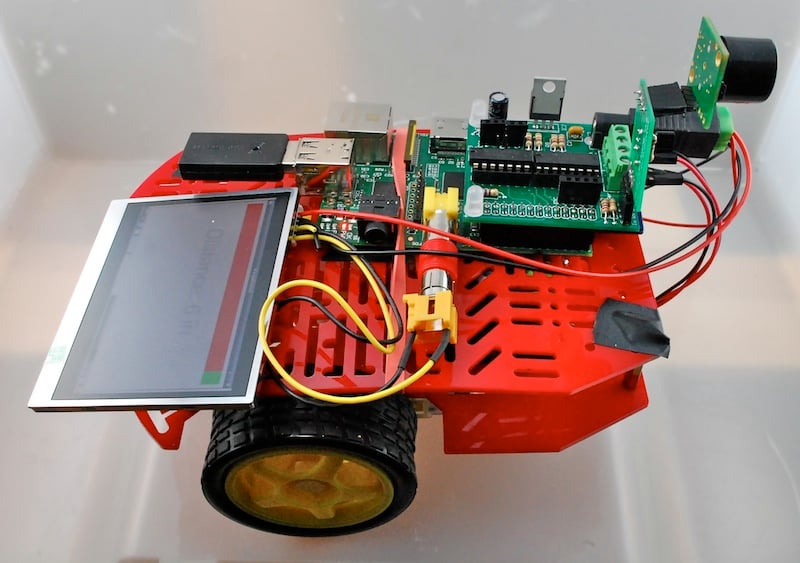
You can build this robot after you learn some Python.
Yes, you can make robots like this one using the Python programming language! This one is from the Raspberry Pi Cookbook.

Step 2: Learn Just Enough Python to Start Building

Begin with the essential Python syntax. Learn just enough to get started, then move on. A couple of weeks is usually enough, no more than a month.

Most beginners spend too much time here and get frustrated. This is why many people quit.

Here are some great resources to learn the basics without getting stuck:

Most people pick up the rest naturally as they work on projects they enjoy. Focus on the basics, then let your projects teach you the rest. You’ll be surprised how much you learn just by doing.

Want to skip the trial-and-error and learn from hands-on projects? Browse our Python learning paths designed for beginners who want to build real skills fast.

Step 3: Start Doing Structured Projects

Once you’ve learned the basic syntax, start doing Python projects. Using what you’ve learned right away helps you remember it.

It’s better to begin with structured or guided projects until you feel comfortable enough to create your own.

Guided Projects

Here are some fun examples from Dataquest. Which one excites you?

Structured Project Resources

You don’t need to start in a specific place. Let your interests guide you.

Are you interested in general data science or machine learning? Do you want to build something specific, like an app or website?

Here are some recommended resources for inspiration, organized by category:

1. Data Science and Machine Learning
  • Dataquest — Learn Python and data science through interactive exercises. Analyze a variety of engaging datasets, from CIA documents and NBA player stats to X-ray images. Progress to building advanced algorithms, including neural networks, decision trees, and computer vision models.
  • Scikit-learn Documentation — Scikit-learn is the main Python machine learning library. It has some great documentation and tutorials.
  • CS109A — This is a Harvard class that teaches Python for data science. They have some of their projects and other materials online.
2. Mobile Apps
  • Kivy Guide — Kivy is a tool that lets you make mobile apps with Python. They have a guide for getting started.
  • BeeWare — Create native mobile and desktop applications in Python. The BeeWare project provides tools for building beautiful apps for any platform.
3. Websites
  • Bottle Tutorial — Bottle is another web framework for Python. Here’s a guide for getting started with it.
  • How To Tango With Django — A guide to using Django, a complex Python web framework.
4. Video Games
  • Pygame Tutorials — Here’s a list of tutorials for Pygame, a popular Python library for making games.
  • Making Games with Pygame — A book that teaches you how to make games using Python.
  • Invent Your Own Computer Games with Python — A book that walks you through how to make several games using Python.
  • Example of a game that can be built using Python
    An example of a game you can make with Pygame. This is Barbie Seahorse Adventures 1.0, by Phil Hassey.
5. Hardware / Sensors / Robots
6. Data Processing and Analysis
  • Pandas Getting Started Guide — An excellent resource to learn the basics of pandas, one of the most popular Python libraries for data manipulation and analysis.
  • NumPy Tutorials — Learn how to work with arrays and perform numerical operations efficiently with this core Python library for scientific computing.
  • Guide to NumPy, pandas, and Data Visualization — Dataquest’s free comprehensive collection of tutorials, practice problems, cheat sheets, and projects to build foundational skills in data analysis and visualization.
7. Automating Work Tasks

Projects are where most real learning happens. They challenge you, keep you motivated, and help you build skills you can show to employers. Once you’ve done a few structured projects, you’ll be ready to start your own projects.

Step 4: Work on Your Own Projects

Once you’ve done a few structured projects, it’s time to take it further. Working on your own projects is the fastest way to learn Python.

Start small. It’s better to finish a small project than get stuck on a huge one.

A helpful statement to remember: progress comes from consistency, not perfection.

Finding Project Ideas

It can feel tricky to come up with ideas. Here are some ways to find interesting projects:

  1. Extend the projects you were working on before and add more functionality.
  2. Check out our list of Python projects for beginners.
  3. Go to Python meetups in your area and find people working on interesting projects.
  4. Find guides on contributing to open source or explore trending Python repositories for inspiration.
  5. See if any local nonprofits are looking for volunteer developers. You can explore opportunities on platforms like Catchafire or Volunteer HQ.
  6. Extend or adapt projects other people have made. Explore interesting repositories on Awesome Open Source.
  7. Browse through other people’s blog posts to find interesting project ideas. Start with Python posts on DEV Community.
  8. Think of tools that would make your everyday life easier. Then, build them.

Independent Python Project Ideas

1. Data Science and Machine Learning

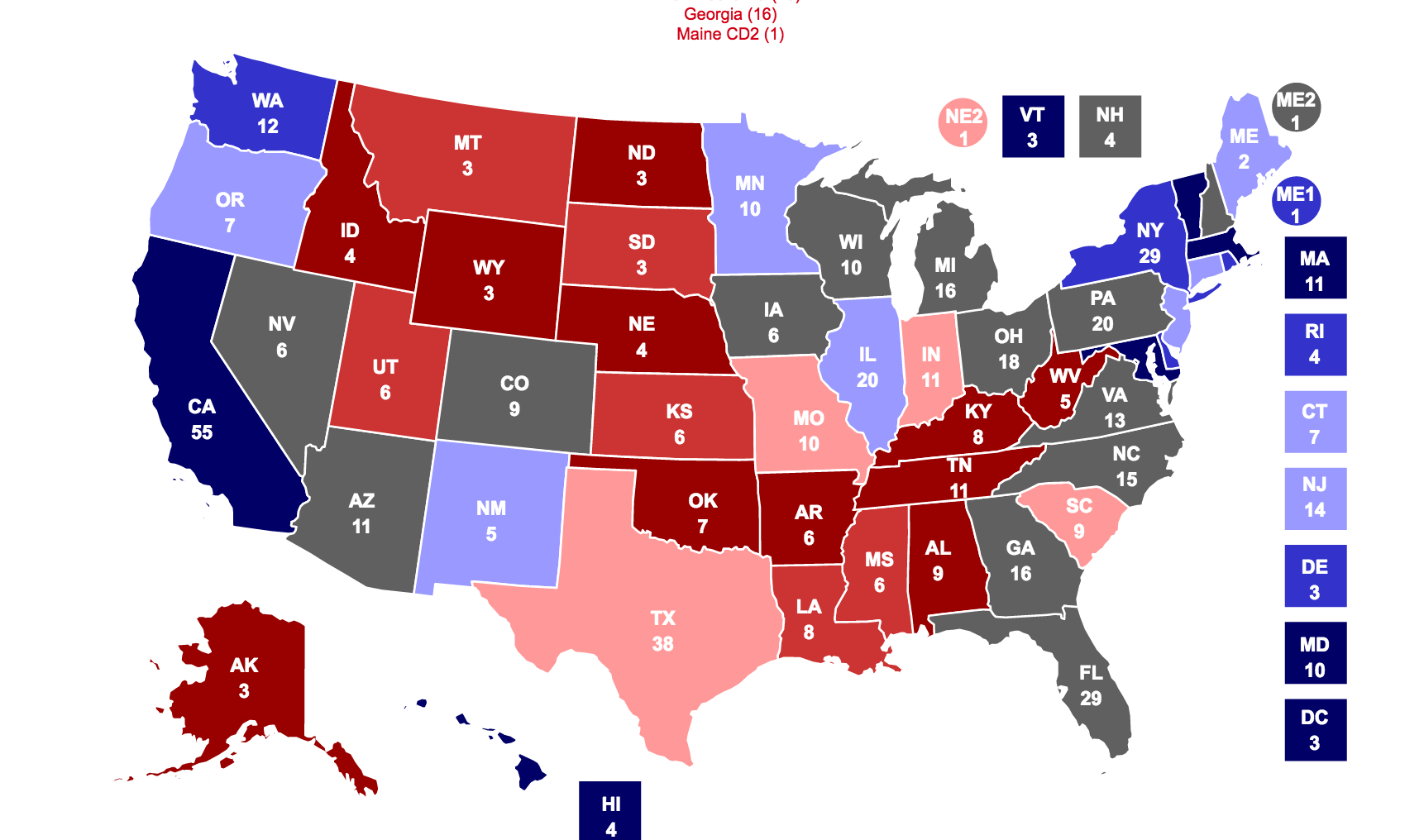
  • A map that visualizes election polling by state
  • An algorithm that predicts the local weather
  • A tool that predicts the stock market
  • An algorithm that automatically summarizes news articles
Example of a map that can be built using Python
Try making a more interactive version of this map from RealClear Polling.

2. Mobile Apps

  • An app to track how far you walk every day
  • An app that sends you weather notifications
  • A real-time, location-based chat

3. Website Projects

  • A site that helps you plan your weekly meals
  • A site that allows users to review video games
  • A note-taking platform

4. Python Game Projects

  • A location-based mobile game, in which you capture territory
  • A game in which you solve puzzles through programming

5. Hardware / Sensors / Robots Projects

  • Sensors that monitor your house remotely
  • A smarter alarm clock
  • A self-driving robot that detects obstacles

6. Data Processing and Analysis Projects

  • A tool to clean and preprocess messy CSV files for analysis
  • An analysis of movie trends, such as box office performance over decades
  • An interactive visualization of wildlife migration patterns by region

7. Work Automation Projects

  • A script to automate data entry
  • A tool to scrape data from the web

The key is to pick one project and start. Don’t wait for the perfect idea.

My first independent project was adapting an automated essay-scoring algorithm from R to Python. It wasn’t pretty, but finishing it gave me confidence and momentum.

Getting Unstuck

Running into problems and getting stuck is part of the learning process. Don’t get discouraged. Here are some resources to help:

  • StackOverflow — A community question and answer site where people discuss programming issues. You can find Python-specific questions here.
  • Google — The most commonly used tool of any experienced programmer. Very useful when trying to resolve errors. Here’s an example.
  • Official Python Documentation — A good place to find reference material on Python.
  • Use an AI-Powered Coding Assistant — AI assistants save time by helping you troubleshoot tricky code without scouring the web for solutions. Claude Code has become a popular coding assistant.

Step 5: Keep Working on Harder Projects

As you succeed with independent projects, start tackling harder and bigger projects. Learning Python is a process, and momentum is key.

Once you feel confident with your current projects, find new ones that push your skills further. Keep experimenting and learning. This is how growth happens.

Your Python Learning Roadmap

Learning Python is a journey. By breaking it into stages, you can progress from a complete beginner to a job-ready Python developer without feeling overwhelmed. Here’s a practical roadmap you can follow:

Weeks 1–2: Learn Python Basics

Start by understanding Python’s core syntax and fundamentals. At this stage, it’s less about building complex projects and more about getting comfortable with the language.

During these first weeks, focus on:

  • Understanding Python syntax, variables, and data types
  • Learning basic control flow: loops, conditionals, and functions
  • Practicing small scripts that automate simple tasks, like a calculator or a weekly budget tracker
  • Using beginner-friendly resources like tutorials, interactive courses, and cheat sheets

By the end of this stage, you should feel confident writing small programs and understanding Python code you read online.

Weeks 3–6: Complete 2–3 Guided Projects

Now that you know the basics, it’s time to apply them. Guided projects help you see how Python works in real scenarios, reinforcing concepts through practice.

Try projects such as:

  • A simple web scraper that collects information from a website
  • A text-based game like “Guess the Word”
  • A small data analysis project using a dataset of interest

Along the way:

  • Track your code using version control like Git
  • Focus on understanding why your code works, not just copying solutions
  • Use tutorials or examples from Dataquest to guide your learning

By completing these projects, you’ll gain confidence in building functional programs and using Python in practical ways.

Months 2–3: Build Independent Projects

Once you’ve mastered guided projects, start designing your own. Independent projects are where real growth happens because they require problem-solving, creativity, and research.

Ideas to get started:

  • A personal website or portfolio
  • A small automation tool to save time at work or school
  • A data visualization project using public datasets

Tips for success:

  • Start small. Finishing a project is more important than making it perfect
  • Research solutions online and debug your code independently
  • Begin building a portfolio to showcase your work

By the end of this stage, you’ll have projects you can show to employers or share online.

Months 4–6: Specialize in Your Chosen Field

With a few projects under your belt, it’s time to focus on the area you’re most interested in. Specialization allows you to deepen your skills and prepare for professional work.

Steps to follow:

  • Identify your focus: data science, web development, AI, automation, or something else
  • Learn relevant libraries and frameworks in depth (e.g., Pandas for data, Django for web, TensorFlow for AI)
  • Tackle more complex projects that push your problem-solving abilities

At this stage, your portfolio should start reflecting your specialization and show a clear progression in your skills.

Month 6 and Beyond: Apply Your Skills Professionally

Now it’s time to put your skills to work. Whether you’re aiming for a full-time job, freelancing, or contributing to open-source projects, your experience matters.

Focus on:

  • Polishing your portfolio and sharing it on GitHub, a personal website, or LinkedIn
  • Applying for jobs, internships, or freelance opportunities
  • Continuing to learn through open-source projects, advanced tutorials, or specialized certifications
  • Experimenting and building new projects to challenge yourself

Remember: Python is a lifelong skill. Momentum comes from consistency, curiosity, and practice. Even seasoned developers are always learning.

The Best Way to Learn Python in 2025

Wondering what the best way to learn Python is? The truth is, it depends on your learning style. However, there are proven approaches that make the process faster, more effective, and way more enjoyable.

Whether you learn best by following tutorials, referencing cheat sheets, reading books, or joining immersive bootcamps, there’s a resource that will help you stay motivated and actually retain what you learn. Below, we’ve curated the top resources to guide you from complete beginner to confident Python programmer.

Online Courses

Most online Python courses rely heavily on video lectures. While these can be informative, they’re often boring and don’t give you enough practice. Dataquest takes a completely different approach.

With our courses, you start coding from day one. Instead of passively watching someone else write code, you learn by doing in an interactive environment that gives instant feedback. Lessons are designed around projects, so you’re applying concepts immediately and building a portfolio as you go.

Top Python Courses

The key difference? With Dataquest, you’re not just watching. You’re building, experimenting, and learning in context.

Tutorials

If you like learning at your own pace, our Python tutorials are perfect. They cover everything from writing functions and loops to using essential libraries like Pandas, NumPy, and Matplotlib. Plus, you’ll find tutorials for automating tasks, analyzing data, and solving real-world problems.

Top Python Tutorials

Cheat Sheets

Even the best coders need quick references. Our Python cheat sheet is perfect for keeping the essentials at your fingertips:

  • Common syntax and commands
  • Data structures and methods
  • Useful libraries and shortcuts

Think of it as your personal Python guide while coding. You can also download it as a PDF to have a handy reference anytime, even offline.

Books

Books are great if you prefer in-depth explanations and examples you can work through at your own pace.

Top Python Books

Bootcamps

For those who want a fully immersive experience, Python bootcamps can accelerate your learning.

Top Python Bootcamps

  • General Assembly – Data science bootcamp with hands-on Python projects.
  • Le Wagon – Full-stack bootcamp with strong Python and data science focus.
  • Flatiron School – Intensive programs with real-world projects and career support.
  • Springboard – Mentor-guided bootcamps with Python and data science tracks, some with job guarantees.
  • Coding Dojo – Multi-language bootcamp including Python, ideal for practical skill-building.

Mix and match these resources depending on your learning style. By combining hands-on courses, tutorials, cheat sheets, books, and bootcamps, you’ll have everything you need to go from complete beginner to confident Python programmer without getting bored along the way.

9 Learning Tips for Python Beginners

Learning Python from scratch can feel overwhelming at first, but a few practical strategies can make the process smoother and more enjoyable. Here are some tips to help you stay consistent, motivated, and effective as you learn:

1. Practice Consistently

Consistency beats cramming. Even dedicating 30–60 minutes a day to coding will reinforce your understanding faster than occasional marathon sessions. Daily practice helps concepts stick and makes coding feel natural over time.

2. Build Projects Early

Don’t wait until you “know everything.” Start building small projects from the beginning. Even simple programs, like a calculator or a to-do list app, teach you more than memorizing syntax ever will. Projects also keep learning fun and tangible.

3. Break Problems Into Smaller Steps

Large problems can feel intimidating. Break them into manageable steps and tackle them one at a time. This approach helps you stay focused and reduces the feeling of being stuck.

4. Experiment and Make Mistakes

Mistakes are part of learning. Try changing code, testing new ideas, and intentionally breaking programs to see what happens. Each error is a lesson in disguise and helps you understand Python more deeply.

5. Read Code from Others

Explore [open-source projects](https://pypi.org/), tutorials, and sample code. Seeing how others structure programs, solve problems, and write functions gives you new perspectives and improves your coding style.

6. Take Notes

Writing down key concepts, tips, and tricks helps reinforce learning. Notes can be a quick reference when you’re stuck, and they also provide a record of your progress over time.

7. Use Interactive Learning

Interactive platforms and exercises help you learn by doing, not just by reading. Immediate feedback on your code helps you understand mistakes and internalize solutions faster.

8. Set Small, Achievable Goals

Set realistic goals for each session or week. Completing these small milestones gives a sense of accomplishment and keeps motivation high.

9. Review and Reflect

Regularly review your past projects and exercises. Reflecting on what you’ve learned helps solidify knowledge and shows how far you’ve come, which is especially motivating for beginners.

7 Common Beginner Mistakes in Python

Learning Python is exciting, but beginners often stumble on the same issues. Knowing these common mistakes ahead of time can save you frustration and keep your progress steady.

Mistake Description Solution
1. Overthinking Code Beginners often try to write complex solutions right away. Break tasks into smaller steps and tackle them one at a time.
2. Ignoring Errors Errors are not failures—they're learning opportunities. Skipping them slows progress. Read error messages carefully, Google them, or ask in forums like StackOverflow. Debugging teaches you how Python really works.
3. Memorizing Without Doing Memorizing syntax alone doesn't help. Python is learned by coding. Immediately apply what you learn in small scripts or mini-projects.
4. Not Using Version Control Beginners often don't track their code changes, making it hard to experiment or recover from mistakes. Start using Git early. Even basic GitHub workflows help you organize code and showcase projects.
5. Jumping Between Too Many Resources Switching between multiple tutorials, courses, or books can be overwhelming. Pick one structured learning path first, and stick with it until you've built a solid foundation.
6. Avoiding Challenges Sticking only to easy exercises slows growth. Tackle projects slightly above your comfort level to learn faster and gain confidence.
7. Neglecting Python Best Practices Messy, unorganized code is harder to debug and expand. Follow simple practices early: meaningful variable names, consistent indentation, and writing functions for repetitive tasks.

Why Learning Python is Worth It

Python isn’t just another programming language. It’s one of the most versatile and beginner-friendly languages out there. Learning Python can open doors to countless opportunities, whether you want to advance your career, work on interesting projects, or just build useful tools for yourself.

Here’s why Python is so valuable:

Python Can Be Used Almost Anywhere

Python’s versatility makes it a tool for many different fields. Some examples include:

  • Data and Analytics – Python is a go-to for analyzing, visualizing, and making sense of data using libraries like Pandas, NumPy, and Matplotlib.
  • Web Development – Build websites and web apps with frameworks like Django or Flask.
  • Automation and Productivity – Python can automate repetitive tasks, helping you save time at work or on personal projects.
  • Game Development – Create simple games or interactive experiences with libraries like Pygame or Tkinter.
  • Machine Learning and AI – Python is a favorite for AI and ML projects, thanks to libraries like TensorFlow, PyTorch, and Scikit-learn.

Python Boosts Career Opportunities

Python is one of the most widely used programming languages across industries, which means learning it can significantly enhance your career prospects. Companies in tech, finance, healthcare, research, media, and even government rely on Python to build applications, analyze data, automate workflows, and power AI systems.

Knowing Python makes you more marketable and opens doors to a variety of exciting, high-demand roles, including:

  • Data Scientist – Analyze data, build predictive models, and help businesses make data-driven decisions
  • Data Analyst – Clean, process, and visualize data to uncover insights and trends
  • Machine Learning Engineer – Build and deploy AI and machine learning models
  • Software Engineer / Developer – Develop applications, websites, and backend systems
  • Web Developer – Use Python frameworks like Django and Flask to build scalable web applications
  • Automation Engineer / Scripting Specialist – Automate repetitive tasks and optimize workflows
  • Business Analyst – Combine business knowledge with Python skills to improve decision-making
  • DevOps Engineer – Use Python for automation, system monitoring, and deployment tasks
  • Game Developer – Create games and interactive experiences using libraries like Pygame
  • Data Engineer – Build pipelines and infrastructure to manage and process large datasets
  • AI Researcher – Develop experimental models and algorithms for cutting-edge AI projects
  • Quantitative Analyst (Quant) – Use Python to analyze financial markets and develop trading strategies

Even outside technical roles, Python gives you a huge advantage. Automate tasks, analyze data, or build internal tools, and you’ll stand out in almost any job.

Learning Python isn’t just about a language; it’s about gaining a versatile, in-demand, and future-proof skill set.

Python Makes Learning Other Skills Easier

Python’s readability and simplicity make it easier to pick up other programming languages later. It also helps you understand core programming concepts that transfer to any technology or framework.

In short, learning Python gives you tools to solve problems, explore your interests, and grow your career. No matter what field you’re in.

Final Thoughts

Python is always evolving. No one fully masters it. That means you will always be learning and improving.

Six months from now, your early code may look rough. That is a sign you are on the right track.

If you like learning on your own, you can start now. If you want more guidance, our courses are designed to help you learn fast and stay motivated. You will write code within minutes and complete real projects in hours.

If your goal is to build a career as a business analyst, data analyst, data engineer, or data scientist, our career paths are designed to get you there. With structured lessons, hands-on projects, and a focus on real-world skills, you can go from complete beginner to job-ready in a matter of months.

Now it is your turn. Take the first step!

FAQs

Is Python still popular in 2025?

Yes. Python is the most popular programming language, and its popularity has never been higher. As of October 2025, it ranks #1 on the TIOBE Programming Community index:

Top ten programming languages as of October 2025 according to TIOBE

Even with the rise of AI tools changing how people code, Python remains one of the most useful programming languages in the world. Many AI tools and apps are built with Python, and it’s widely used for machine learning, data analysis, web development, and automation.

Python has also become a “glue language” for AI projects. Developers use it to test ideas, build quick prototypes, and connect different systems. Companies continue to hire Python developers, and it’s still one of the easiest languages for beginners to learn.

Even with all the new AI trends, Python isn’t going away. It’s actually become even more important and in-demand than ever.

How long does it take to learn Python?

If you want a quick answer: you can learn the basics of Python in just a few weeks.

But if you want to get a job as a programmer or data scientist, it usually takes about 4 to 12 months to learn enough to be job-ready. (This is based on what students in our Python for Data Science career path have experienced.)

Of course, the exact time depends on your background and how much time you can dedicate to studying. The good news is that it may take less time than you think, especially if you follow an effective learning plan.

Can I use LLMs to learn Python?

Yes! LLMs can be helpful tools for learning Python. You can use it to get explanations of concepts, understand error messages, and even generate small code examples. It gives quick answers and instant feedback while you practice.

However, LLMs work best when used alongside a structured learning path or course. This way, you have a clear roadmap and know which topics to focus on next. Combining an LLM with hands-on coding practice will help you learn faster and remember more.

Is Python hard to learn?

Python is considered one of the easiest programming languages for beginners. Its syntax is clean and easy to read (almost like reading English) which makes it simple to write and understand code.

That said, learning any programming language takes time and practice. Some concepts, like object-oriented programming or working with data libraries, can be tricky at first. The good news is that with regular practice, tutorials, and small projects, most learners find Python easier than they expected and very rewarding.

Can I teach myself Python?

Yes, you can! Many people successfully teach themselves Python using online resources. The key is to stay consistent, practice regularly, and work on small projects to apply what you’ve learned.

While there are many tutorials and videos online, following a structured platform like Dataquest makes learning much easier. Dataquest guides you step-by-step, gives hands-on coding exercises, and tracks your progress so you always know what to learn next.

  •