Reading view

Mining Pools as One-Stop Shops: How ViaBTC Is Redefining the Miner Experience

For much of Bitcoin’s history, mining pools served a single, narrow purpose: aggregating hashpower and distributing block rewards. Miners were expected to manage everything else on their own—wallets, exchanges, liquidity, risk management, and operational financing—often across fragmented platforms with inconsistent security standards.

That model is rapidly becoming obsolete.

As mining margins tighten, competition intensifies, and institutional-grade professionalism becomes the norm, miners increasingly demand integrated ecosystems rather than isolated services. In response, forward-thinking mining pools are evolving into comprehensive financial hubs—one-stop shops that streamline operations while expanding growth opportunities.

At the forefront of this evolution is ViaBTC, whose diversified business model demonstrates how mining pools can become strategic partners rather than simple service providers.


Beyond Hashrate: The Rise of Integrated Mining Ecosystems

Modern miners face a complex operational landscape. Profitability is no longer determined solely by hardware efficiency and electricity costs. Instead, success depends on liquidity management, capital access, asset security, and the ability to respond quickly to market conditions.

This reality has driven a shift toward vertically integrated mining platforms—ecosystems that allow miners to operate, manage, and grow their holdings without constantly juggling assets between third-party services.

ViaBTC has embraced this shift by building a tightly integrated suite of tools that addresses the full lifecycle of a miner’s activity—from block rewards to balance sheet management.


Built-In Wallets: Security and Simplicity by Design

At the foundation of ViaBTC’s ecosystem is its secure, built-in wallet infrastructure, allowing miners to receive, store, and manage mining rewards directly within the platform.

This integration offers several critical advantages:

  • Reduced counterparty risk by minimizing external transfers
  • Faster access to funds, without reliance on third-party wallets
  • Unified account management, simplifying bookkeeping and oversight

For both individual miners and large-scale operations, consolidating assets under a single, security-focused platform reduces operational friction while improving transparency.


Automatic Coin Conversion: Flexibility Without Complexity

Mining rewards do not always align with a miner’s preferred asset exposure. Whether managing volatility, covering operating expenses, or reallocating into long-term holdings, conversion flexibility is essential.

ViaBTC’s automatic coin conversion functionality enables miners to seamlessly convert rewards into alternative cryptocurrencies without manual intervention. This allows miners to:

  • Hedge against short-term volatility
  • Align payouts with operational or treasury needs
  • Reduce time spent managing trades across multiple platforms

By embedding this capability directly into the mining workflow, ViaBTC removes unnecessary steps while empowering miners with greater financial control.


Collateral-Pledged Loans: Unlocking Capital Without Selling Coins

One of the most powerful features of ViaBTC’s diversified model is its collateral-pledged loan program—a solution that directly addresses a long-standing miner dilemma: accessing liquidity without sacrificing long-term upside.

Instead of selling mined assets during unfavorable market conditions, miners can use their cryptocurrency holdings as collateral to secure loans. This enables them to:

  • Fund hardware upgrades or facility expansion
  • Cover electricity and operational expenses
  • Navigate temporary market downturns without forced liquidation

By preserving asset exposure while unlocking capital, collateral-backed lending transforms mining rewards into productive financial instruments rather than static balances.


Exchange Access via CoinEx: From Mining to Markets

Through its partnership with CoinEx, ViaBTC extends its ecosystem beyond mining into full market participation. This integration gives miners direct access to a robust cryptocurrency exchange, enabling:

  • Efficient trading and liquidity access
  • Portfolio diversification from a familiar interface
  • Reduced reliance on external exchanges and asset transfers

The result is a seamless transition from block rewards to broader market strategies—without leaving the ViaBTC ecosystem.


Convenience, Security, & Growth—Unified

What distinguishes ViaBTC’s approach is not merely the presence of individual features, but the cohesive integration of those features into a single platform. Each component—wallets, conversions, loans, and exchange access—reinforces the others.

This unified design delivers three core benefits:

  1. Convenience – Fewer platforms, fewer logins, fewer points of failure
  2. Security – Reduced asset movement and consolidated safeguards
  3. Growth – Tools that enable strategic expansion, not just daily payouts

In an industry where operational efficiency can determine survival, these advantages are increasingly decisive.


The Future of Mining Pools Is Financial Infrastructure

As cryptocurrency mining continues to mature, the role of mining pools will continue to expand. The most successful platforms will not be those offering the lowest fees alone, but those providing holistic financial infrastructure tailored to miners’ real-world needs.

ViaBTC’s evolution into a one-stop mining ecosystem reflects this future—one where miners are empowered not only to earn, but to manage, leverage, and grow their digital assets with confidence.

For miners navigating an increasingly complex landscape, that transformation may be the most valuable reward of all.

The post Mining Pools as One-Stop Shops: How ViaBTC Is Redefining the Miner Experience appeared first on BeInCrypto.

  •  

XRP Asset Efficiency Upgrade: Exploring Alternative Participation Models with PEPPER Mining

XRP is more than just a cryptocurrency—it’s a crucial infrastructure permeating the digital economy and the global financial system.

Whether it’s cross-border payments, corporate payments, loyalty programs, or institutional financing, XRP is constantly transforming the way money flows globally. Despite price fluctuations, XRP’s core strengths remain consistent: speed, efficiency, stability, and regulatory compliance.

Unlike Bitcoin (BTC) and Ethereum (ETH), which rely on expensive mining hardware to maintain network security, XRP uses the Ripple consensus protocol (RPCA), allowing the network to operate without cryptocurrency mining.

This makes XRP not only more energy-efficient and environmentally friendly but also more sustainable in the long run.

But a question arises: Since XRP doesn’t support mining, will its holders lose the opportunity for passive income?

PEPPER Mining offers a completely new solution.

As an AI-driven, internationally regulated, and environmentally friendly cloud mining platform, PEPPER Mining provides intelligent passive income solutions for users worldwide, including XRP investors.

Users can participate in mining mainstream tokens such as Bitcoin (BTC), Ethereum Classic (ETC), and Dogecoin (DOGE) using cloud computing power without any hardware investment or building their own mining infrastructure. Earnings are settled daily in USD.

PEPPER Mining’s data centers are located in North America, Europe, and Iceland, operating entirely on solar, wind, and hydropower, achieving truly low-carbon and environmentally friendly mining.

Why should XRP holders explore cloud mining platforms like PEPPER?

This model allows users to explore additional ways to engage with digital assets beyond simple holding.

While waiting for the XRP price to recover, you can explore cloud mining as an alternative participation model rather than limiting their interaction to asset holding alone.

  • Dual Earning Engine
  • On one hand, you continue to hold XRP as part of their broader digital asset portfolio..
  • On the other hand, cloud mining introduces an additional layer of platform interaction with predefined operational parameters.
  • Secure, Transparent, and Regulated Solution

The platform is regulated by UK financial regulators and uses SSL encryption and a cold asset storage system to ensure professional-grade security.

Three Steps to Accessing Cloud Mining Services

① Register an Account

Visit the official website and register an account using your email address. New users receive an $18 bonus and can immediately try cloud mining for free.

② Select a mining contract (BTC, ETH, DOGE, etc.)

Common contract examples:

Contract NameInvestment AmountDaily ReturnsTotal Returns Net Profit
Whatsminer M30S$100$3$106$6
AvalonMiner A1246$500$6.75$540.50$40.50
Antminer S19K Pro$1,300$18.20$1,518.40$218.40
Bitcoin Miner S21 Pro$5,000$75$6,500$1,500
Bitcoin Miner S21 XP$10,000$170$15,950$5,950

③ Automatic Bonus Accumulation

Daily earnings are calculated automatically. Withdrawals are possible once your account balance reaches $100. Initial funds will be fully refunded upon contract expiration.

Key Platform Advantages:

  • Global Regulation: Overseen by UK regulators; multi-level encryption and cold storage.
  • Zero Barrier to Entry: No technical knowledge or hardware required.
  • Green Mining: Over 50 data centers, 100% renewable energy.
  • High-End Hardware: Top brands such as Bitmain, WhatsMiner, and Avalon.
  • Transparent Fees: Profits accumulate in real time.
  • 24/7 Support: Professional team available 24/7.

Whether you are a long-time XRP supporter or new to the cryptocurrency world, now is the perfect time to explore additional participation models within the broader digital asset ecosystem.

By mining with PEPPER, you can not only preserve the long-term value of XRP but also earn stable, environmentally friendly, and intelligent passive income, even during periods of market volatility.

Official website: https://www.peppermining.com

The post XRP Asset Efficiency Upgrade: Exploring Alternative Participation Models with PEPPER Mining appeared first on BeInCrypto.

  •  

As Verifiable Compute Bottlenecks Grow, Cysic Mainnet Launches Into a Broader Infrastructure Shift

In the race to scale blockchain and decentralize AI, one barrier continues to surface: compute. Whether it’s the rising cost of zero-knowledge (ZK) proof generation or the opaque infrastructure behind AI inference, developers are increasingly bottlenecked by centralized, expensive, and often inaccessible compute power.

One protocol trying to end this bottleneck is Cysic, a decentralized compute marketplace built to provide ZK proofs and verified AI inference. It officially launched its mainnet alpha today, with over 260,000 nodes already onboarded and integrations with Scroll, Succinct, and NetworkNoya ecosystems. With such early success, the team characterizes this shift as the emerging ‘ComputeFi‘ era, in which computation becomes a verifiable, on-chain resource where computation itself becomes a verifiable, onchain resource.

The development comes at a time of significant transformation in both the blockchain and AI sectors. Ethereum’s shift toward ZK-native architectures, the rise of modular stacks, and the proliferation of AI agents have all contributed to a surge in demand for decentralized compute. Projects like zkSync, which recently surged 150% on the back of the new ZK infrastructure and privacy integrations, show how investors and developer interest is converging around verifiable computation as a foundational layer, not just a feature. 

Recent trends such as the emergence of Proof-of-AI, decentralized GPU markets, and compute tokenization mark a larger shift toward verifiable, programmable infrastructure layers. With outages like AWS’s recent downtime highlighting the fragility of centralized backends, builders are increasingly seeking more resilient and transparent alternatives.

Why Compute Has Become a Core Infrastructure Concern

Blockchain scaling and AI integration are both rapidly increasing compute demand, but traditional infrastructure struggles to meet the unique needs of decentralized systems:

  • ZK Proof Generation: Zero‑knowledge proofs are central to many scaling strategies, enabling privacy and validation without exposing underlying data. But generating these proofs requires significant specialized compute, often handled by a handful of centralized providers — an arrangement that limits decentralization and can inflate costs.
  • AI Verification: As AI models are integrated into onchain workflows and autonomous agents, there’s a growing need not just for compute output, but verifiable results that can be audited or proven to follow specified logic. Traditional cloud APIs deliver performance but lack native verifiability when tied to blockchain logic.

These pressures reflect a broader shift in how developers think about infrastructure: it’s no longer enough to just execute compute as applications increasingly demand cryptographic assurances about how that compute was performed.

Cysic’s Role in the New Compute Economy

Cysic’s mainnet goes live as verifiable compute moves from theoretical promise to ecosystem necessity. Rather than relying on centralized servers or opaque APIs, the network distributes ZK proving and AI inference tasks across a global node base, from consumer GPUs to custom ASIC hardware, forming a marketplace for provable computation.

Ahead of mainnet, the protocol processed over 10 million ZK proofs, onboarded 260,000+ nodes, and attracted 1.4 million wallets through test phases. It now integrates with projects like Scroll, Succinct, and Polygon CDK, signaling real adoption rather than speculative hype.

The network aims to provide scalable, verifiable compute at lower cost. In AI contexts, partners like NetworkNoya report over 70% speed boosts and 91% cost reductions using Cysic’s infrastructure. In ZK environments, teams like Succinct and Scroll have used its prover networks to improve efficiency on live workloads.

The project positions its approach as an effort to make compute more provable, decentralized, and programmable.

Decentralized Compute Is an Ecosystem Trend, Not an Isolated Sprint

Cysic’s launch is one piece of a larger pattern in Web3 and decentralized systems. While projects vary in approach, the underlying challenge they tackle is consistent: reducing dependency on centralized compute providers and enabling more trustable, accessible infrastructure.

For example:

  • Decentralized AI compute networks like NodeGoAI are exploring ways to monetize idle hardware for AI tasks in distributed environments.
  • Decentralized resource networks captured by the DePIN movement aim to incentivize compute sharing at scale — a theme that has come into sharper focus following disruptions like the AWS outage that affected parts of Web3 infrastructure.
  • Broader discussions of decentralized AI infrastructure signal that trust, verification, and auditability are now core concerns, not niche research topics. 

These ecosystem signals suggest that decentralized compute isn’t a one‑off idea but a structural response to real world limitations in how compute is provisioned, priced, and trusted.

The Road Ahead: ZK, AI, and Beyond

While Ethereum rollups are a natural entry point, Cysic’s ambitions extend far beyond the blockchain scalability narrative. The network is already being used to support verifiable AI inference — a capability that enables smart contracts and autonomous agents to verify that an output came from a specific, authorized model. This use case is particularly relevant as AI-generated content proliferates and demands stronger provenance guarantees.

Cysic is also targeting workloads in scientific computing, including genomics and climate simulations, where reproducibility and transparency are critical. In parallel, the network supports a class of dual-purpose devices like the DogeBox1, which can toggle between mining and zero-knowledge proving based on real-time market conditions, allowing infrastructure owners to dynamically optimize for yield.

Together, these use cases point to a broader shift: computation is no longer just infrastructure. It’s becoming programmable, verifiable, and liquid, now the backbone of what Cysic coins the ComputeFi economy.

The post As Verifiable Compute Bottlenecks Grow, Cysic Mainnet Launches Into a Broader Infrastructure Shift appeared first on BeInCrypto.

  •  

Yi He to Women: “No One Goes Easy on You in Business”

Yi He, who was named Binance co-CEO on Wednesday, offered blunt advice for women navigating the corporate world: drop the soft-skill crutches and build undeniable expertise.

Speaking to reporters in Dubai just hours after her appointment was announced at Binance Blockchain Week, Yi He reflected on what it takes for women to succeed in male-dominated industries.

Professional Excellence Over Gender Advantages

Her message cut against conventional wisdom about leveraging “feminine” strengths—and resonated with a career that took her from a rural village in Sichuan province to the top of the world’s largest crypto exchange.

“The biggest barrier for women isn’t which industry they’re in—it’s the mental ceiling they set for themselves,” Yi He said.

She cautioned against over-relying on perceived gender advantages such as communication skills or likability.

“When you lean on these soft skills, people respect your charm rather than your expertise. That ultimately undermines your professional credibility.”

Her message was unequivocal: in business competition, being female earns no leniency.

“It’s white knife in, red knife out,” she said, using a Chinese idiom for brutal competition. “Nobody slows down because you’re a woman. If anything, the attacks can be harsher.”

The key, she emphasized, is to become the absolute best in your field—whether in marketing, growth, or content—so that colleagues and competitors alike respect your professional capability above all else.

A Consistent Message on Female Leadership

Yi He’s remarks echo views she has expressed before. In a 2023 interview, she urged women to “forget your gender” and focus instead on becoming good business leaders. “Don’t focus on the fact that you’re a woman in a man’s world,” she said. “Never set a limit on yourself.”

Later that year, in another interview, she attributed the underrepresentation of women in leadership to societal expectations that discourage them from pursuing top positions. “Many women do not speak out or pursue leadership positions because they were not encouraged to do so by their families, schools, or friends,” she said at the time.

何一谈女性职业发展:商业竞争中从无“性别让步”可言

2025 年 12 月 3 日,币安联合创始人何一成为新的币安联席 CEO 后,在迪拜举办的 2025 币安区块链周上接受媒体群访,接受 Blockbeats… pic.twitter.com/1utwcYc7tz

— 吴说区块链 (@wublockchain12) December 5, 2025

Her advice then, as now, centered on seizing opportunities proactively. “Women in tech or other new industries can be bolder and take more risks,” she noted. “They will never know what they can do unless they jump into it.”

Dual Leadership for Binance’s Next Chapter

Yi He’s appointment as co-CEO was announced by Richard Teng during his keynote at Binance Blockchain Week, where the co-CEOs outlined an ambitious roadmap for the exchange. The dual leadership structure pairs Yi He’s product innovation expertise with Teng’s background in regulated financial markets.

Teng called her promotion “a natural progression,” highlighting her role in shaping Binance’s user-first culture since its 2017 founding. The exchange now approaches 300 million users and has set a target of one billion.

When asked about the potential influence of the founder and her partner in a long-term relationship, Changpeng Zhao, Yi He drew a clear line:

“My personal life is independent from my professional life. My achievements and capabilities as cofounder are often overlooked with my personal life in question. Binance has nearly 300 million users who trust us for upholding our core values—looking after their interests, protections, and 1:1 backing for every user asset.”

The exchange now approaches 300 million users and has set a long-term target of one billion. Teng said Binance aims to become a “Super App” bridging centralized and decentralized finance. The company is also deepening partnerships with major institutions, including BlackRock and Franklin Templeton. On the compliance front, Binance blocked nearly $7 billion in potential scams in 2025. It continues to pursue regulatory approvals worldwide.

The post Yi He to Women: “No One Goes Easy on You in Business” appeared first on BeInCrypto.

  •  

Gas Sponsorship Is A Missing Piece to Unlock Frictionless Crypto Adoption

For years, the crypto industry has said the right things about onboarding the next billion users. We’ve talked about scalability, security, decentralization, and user sovereignty (and yes, these all matter). But ask any everyday person why they stopped mid-way through a crypto transaction, and you’ll hear the same frustrating story: “It wouldn’t let me complete the transaction because I didn’t have enough gas.”

This issue may sound trivial to crypto veterans, but for mainstream users, it’s one of the biggest and most confusing roadblocks. You might already own the token you want to trade. You might be trying to send funds to a friend. Yet the system halts everything because you don’t hold the native gas token – e.g. BNB, SOL, ETH, or others – even when you have more than enough value in your wallet to cover the action you’re trying to take.

In any other consumer product category, this kind of UX failure would be unacceptable. Imagine your banking app refusing a payment because you don’t happen to have the right currency or “fee token” in your account. This is what turns users away from apps.

This is the gap Gas Sponsorship closes.

The Most Invisible Barrier in Web3

In Web3, gas fees aren’t just a cost, they’re a cognitive burden.

Users must:

  • Understand what gas fees are
  • Know which token each blockchain uses for gas
  • Keep small amounts of each token in reserve
  • Top up the right chain at the right time
  • Hope they don’t run out mid-transaction

This is not how mainstream technology works. It’s not how it should work.

At Trust Wallet, we’ve long believed that self-custody doesn’t have to mean complexity. So on November 12, we announced a new feature called Gas Sponsorship, which automatically covers the gas fees for token transactions (swaps, and transfers coming soon) on supported blockchains. First starting with BNB Chain and Solana, and expanding soon to Ethereum and other major networks.

If a user initiates a transaction without sufficient gas, Trust Wallet steps in and pays it instantly.

No failed transaction. No top-up. No frustration.

Already, Trust Wallet has sponsored over $100+ million ****in swap volumes; a milestone** that demonstrates both the scale of this problem and how quickly users embrace a smoother experience.

This is one of the most meaningful UX improvements self-custody has seen in years.

Frictionless UX Is What Brings the Next Billion Users

We often talk about the need for better infrastructure, better interoperability, better regulation. But what consumers care about is simple: Does this product just work?

Crypto wallets have evolved dramatically. They now support hundreds of blockchains, tens of millions of assets, native swaps, staking, NFTs, and dApps all inside a mobile interface. But none of that matters if the first transaction a new user attempts fails due to an obscure gas fee requirement.

Gas Sponsorship transforms that experience:

  • No more keeping multiple native tokens on hand
  • No more guessing whether you have enough gas
  • No more failed swaps or stuck transactions
  • No more “crypto is too complicated” moments

When we remove friction, we remove doubt.

When we remove doubt, we unlock participation.

This is what “frictionless crypto” looks like in practice.

A Step Toward Mainstream Self-Custody

For Trust Wallet, this feature reflects a deeper goal: making self-custody feel as simple and empowering as any mainstream financial app.

Today, we support over 100 blockchains, more than 10 million assets, and have surpassed 220 million downloads globally. But numbers alone don’t build trust, experience does. That’s why we’ve invested heavily in making crypto be and feel effortless. Every feature that removes friction is another step toward broad, safe, user-driven adoption.

Gas Sponsorship is not the final step of course, but it’s a foundational one.

We envision a future where:

  • Users interact with Web3 without thinking about gas, slippage, or cross-chain routing
  • Wallets abstract away blockchain complexity
  • Self-custody is as intuitive as online banking
  • Billions can participate in global finance with no gatekeepers

This isn’t about hiding Web3’s mechanics. It’s about letting users succeed without needing a technical manual.

Why This Matters Now

The next wave of crypto adoption will not be driven by speculation, it will be driven by usability.

As we continuously move into a world of RWAs, cross-chain applications, AI agents, and programmable money, user experience becomes the make-or-break factor. A frictionless wallet experience will be the entry point for each of these innovations.

Gas Sponsorship moves the industry closer to Web2-level smoothness while preserving Web3-level autonomy. It proves that self-custody and simplicity are not mutually exclusive, they are essential partners.

And as we continue expanding Gas Sponsorship to more chains and more transaction types, we hope the industry follows suit.

The Bottom Line

Crypto doesn’t need to reinvent UX standards. It needs to meet them. The next billion users will arrive because we finally made crypto intuitive.

Gas Sponsorship is a major leap forward in doing exactly that; and with over $100 million in swap volumes sponsored, the impact is real, measurable, and just getting started.

Frictionless crypto isn’t a slogan. It’s a roadmap.

And this is just the beginning.

By Nick DiSisto, Business Development Associate at Trust Wallet

At Trust Wallet, Nick leads strategic initiatives and ecosystem partnerships that are central to the platform’s growth and user experience. His work spans key areas such as DeFi integrations, fiat on/off-ramps, MEV mitigation, and core infrastructure partnerships — all aimed at making crypto more accessible, secure, and scalable for millions of users globally. He collaborates cross-functionally with product, security, engineering, and marketing teams to drive innovation at the intersection of user experience and blockchain technology. With a focus on turning code into real-world utility, Nick is helping shape the future of self-custody wallets as financial powerhouses.

The post Gas Sponsorship Is A Missing Piece to Unlock Frictionless Crypto Adoption appeared first on BeInCrypto.

  •  

Aqua, The First Shared Liquidity and the Next Leap in DeFi: A Conversation with 1inch Co-founder Sergej Kunz

DeFi has spent years optimizing AMM curves, fee models and routing logic, yet one fundamental issue has remained largely untouched: most liquidity in automated market makers does not actually work. The majority of capital deposited into pools sits unused, fragmented across dozens of pairs and protocols. At Devconnect Buenos Aires, 1inch unveiled Aqua, a protocol designed to challenge that limitation directly.

Instead of locking assets into separate pools, Aqua enables a single wallet balance to support multiple strategies simultaneously. It introduces a shared-liquidity architecture that could reshape how capital efficiency and yield generation function across the ecosystem. With developers, researchers and protocol builders gathered in Buenos Aires, the timing was deliberate.

In this interview, we speak with Sergej Kunz, co-founder of 1inch, about what Aqua is, how it works, and why it represents one of the most significant shifts in liquidity design since 1inch introduced aggregation in 2019.

Why did you choose Devconnect Buenos Aires as the moment to introduce Aqua?

Sergej Kunz:
Devconnect gathers a technical audience that understands what goes into building and securing a protocol. Aqua needs exactly that level of scrutiny. Presenting it here allows us to talk directly to developers, researchers, and security experts who can challenge the model, test it and eventually build on it.

The choice makes sense. Aqua isn’t a marketing product ; it’s infrastructure, and Devconnect is one of the few events where infrastructure launches truly land with the right crowd.

For readers who haven’t followed the announcement closely: what is Aqua? And why this approach?

Sergej Kunz:
Aqua addresses a core problem in DeFi: around 80 to 90 percent of capital sitting in liquidity pools isn’t actually working. It’s there to support the AMM curve, but it does not actively generate value. With Aqua, users don’t have to lock assets in separate pools. Assets stay in the wallet and can support multiple strategies at the same time. Think of it as a virtual DEX engine running inside your wallet, while remaining fully self-custodial.

In other words, Aqua changes the assumption that liquidity must be fragmented across dozens of pools. It lets one balance behave like several without compromising security.

So how does that translate into higher capital efficiency?

Sergej Kunz:
With traditional AMMs, if you want to support several trading pairs, you divide your liquidity into multiple buckets. That reduces utilization. With Aqua, the full amount of an asset can work across multiple AIMM strategies in parallel. The result is higher liquidity depth and significantly higher yield. Our backtests show returns increasing five times or more, and shared liquidity can push that effect up to fifteen times compared to legacy AMMs.

This is where Aqua becomes more than a conceptual improvement: it directly affects LP earnings.

Who is Aqua intended for at this stage?

Sergej Kunz:
Right now, this release is for developers, security experts and researchers. They’re the ones who will probe the protocol. When the production version goes live, it will target liquidity providers who want higher yield with less fragmentation.

What was the reaction like at Devconnect?

Sergej Kunz:
The community here is extremely engaged. Many developers visited the booth wanting to understand how one liquidity position can operate across several strategies. Even very technical attendees were surprised this approach hadn’t been implemented before. Their feedback already helped us sharpen how we explain Aqua ahead of my upcoming talk.

The engagement shows that shared liquidity is still unfamiliar territory but also that the demand for a more efficient model is clear.

Is there anything comparable to Aqua in today’s market?

Sergej Kunz:
No. This is a new architectural model in DeFi. In 2019, 1inch solved fragmentation for takers with aggregation. Aqua solves fragmentation for makers, the liquidity providers. Some projects explored similar ideas, but no one delivered a working shared-liquidity system with such simple integration. Developers can use it with just a few lines of code.

What should the ecosystem expect from 1inch going into 2026?

Sergej Kunz:
This year was intense. We introduced Solana support for intent-based swaps, rolled out cross-chain capabilities and rebranded to reflect our shift toward serving not only Web3 but also traditional companies. We believe every future business will rely on Web3 infrastructure the same way every modern business relies on the internet. Aqua’s full production release is planned for the end of this year or early next year, along with an interface and third-party builders already preparing integrations. And yes, there are additional protocols in the pipeline.

What is your key takeaway from Devconnect this year?

Sergej Kunz:
Many teams believe they compete with each other, but in reality we build different pieces of the same infrastructure. Several developers approached us concerned that Aqua might disrupt their work. My message to everyone is that we are all partners. If we focus on solving foundational problems, the ecosystem becomes easier to use for traditional industries as well.

Conclusion

Aqua marks a meaningful shift in how DeFi thinks about liquidity design. For years, protocols have competed on curve optimizations, fees and routing mechanisms while quietly accepting that most liquidity sits inactive. By introducing a shared-liquidity architecture that allows one balance to serve multiple strategies, 1inch is pushing the conversation toward a more efficient and more composable future.

The timing is notable. As the industry moves deeper into intent-based execution, cross-chain liquidity and institutional-grade infrastructure, the need for capital to work harder and not just sit untouched becomes increasingly clear. Aqua fits directly into that transition. It gives developers a new primitive to build on and gives liquidity providers a model that aligns yield with actual utilization instead of fragmentation.

Whether Aqua becomes a new standard will depend on how fast the ecosystem adopts it, how builders integrate it and how the production version performs once live. But one thing is certain: introducing a protocol that rewrites the assumptions of AMM liquidity at the end of 2025 sets the tone for a very different 2026. If 1inch delivers on the roadmap Sergej outlines, Aqua could influence not just individual protocols but the underlying architecture of DeFi itself.

The post Aqua, The First Shared Liquidity and the Next Leap in DeFi: A Conversation with 1inch Co-founder Sergej Kunz appeared first on BeInCrypto.

  •  

Landscape of Prediction Markets: Centralization vs. Permissionless Protocols

Prediction markets, once niche experiments, have evolved into significant financial instruments. These platforms, where participants trade on the outcomes of future events, have attracted significant attention due to their demonstrated ability to be more accurate than traditional polls and commentators, particularly concerning critical political and economic results. Their rise is further fueled by the desire for individuals to leverage their knowledge for profit and a broader cultural obsession with real-time data and future outcomes, leading to hundreds of millions, and sometimes billions, of dollars flowing through these markets weekly.

The industry’s success has validated a multi-billion dollar demand. The current environment is primarily shaped by a duopoly, Kalshi and Polymarket. These two platforms, while seemingly in direct competition, represent two different approaches to the same market. Kalshi is positioned as a regulated exchange, while Polymarket is the leading decentralized, crypto-native marketplace. A new contender, Rain, has recently emerged, built with a distinctly different, permissionless architecture aimed at addressing the structural limitations of the incumbents.

This comparison examines these three notable platforms, Kalshi, Polymarket, and Rain, focusing on four core areas: scalability and liquidity, outcome resolution and trust, user experience and accessibility, and the fundamental tension between decentralization and centralization.

The Central Constraint: Market Creation Liquidity

While the prediction market industry often focuses on metrics like trading volume and active users, the true barrier to massive growth is a structural bottleneck known as “Market-Creation Liquidity”. This refers to the speed, cost, and accessibility for any user to create a new, tradable market. The current dominant models Kalshi and Polymarket operate under a “publisher” model, acting as gatekeepers, which limits their ability to fully scale.

Kalshi: The Regulatory Bottleneck

Kalshi’s market position is defined by its compliance-first approach. As a centralized, US-based platform, it is fully regulated by the CFTC as a Designated Contract Market. This regulatory clarity grants it access to traditional financial institutions, institutional hedgers, and fiat-based retail users who prioritize certainty.

However, this regulatory framework imposes a “Regulatory Bottleneck”. The process for listing new market types is a protracted legal function, not merely an engineering one, because its model is fundamentally permissioned by regulators. A notable example is the CFTC’s initial denial of Kalshi’s proposal for election-based contracts, deeming them “gaming,” which led to an expensive lawsuit against its own regulator to eventually list the markets.

As a result, Kalshi is structurally limited to listing a small number of high-volume, mass-market events, the “head” of the demand curve. Its focus is restricted to markets lucrative enough to justify the immense legal and lobbying costs, such as major sports or economic data. The platform’s growth is demonstrably throttled by the pace of the court system, as it navigates ongoing legal battles over its sports contracts in various U.S. states. Its Market-Creation Liquidity is near-zero, as it is permissioned by law.

Polymarket: The Human Bottleneck

Polymarket, representing the decentralized ethos, is the world’s largest crypto-native prediction market. It is known for on-chain transparency, self-custody of funds, and generating massive volume on political, cultural, and crypto events.

Despite its decentralized branding and on-chain mechanics, Polymarket is architecturally a “permissioned service,” not a fully permissionless protocol. Its official documentation confirms that markets are created by its internal team with community input, revealing a “Human Bottleneck”. Its success hinges on its editorial judgment, operating more like a media company.

This model is inherently unscalable; scaling the number of markets requires a proportionate scaling of its curation staff. While impressive volume (38,270 new markets in a peak month) is generated by a centralized team, it is a statistical fraction of the potential of a truly user-generated, permissionless system. Polymarket’s Market-Creation Liquidity is considered low and curated, as it is permissioned by a team.

Rain: The Permissionless Platform Approach

Rain, built with scalability in mind via an automated market-maker (AMM) design and cross-chain primitives , is a newer protocol designed explicitly to solve the “Market-Creation Liquidity Crisis”. Its architecture represents a shift from a “publisher” to a true “platform” model.

Rain’s defining feature is the permissionless primitive: any user can create a market. This aims to capture the “Long Tail of Probability,” a concept where the aggregate value of millions of niche, low-demand products rivals the value of a few “hits”. While incumbents battle over the “head” (e.g., presidential elections, major sports), Rain targets the near-infinite universe of niche events that matter to specific communities or businesses, such as project deadlines, GitHub issues, or internal DAO votes. The platform’s value is intended to be derived from the aggregate trading volume of millions of niche markets that are impossible to create on incumbent platforms.

This architecture also introduces two distinct market types: Public Markets (visible to all) and Private Markets (requiring a code to enter). This Private Market capability is positioned as a new product category, transforming prediction markets into an active, corporate coordination tool. For example, a CEO could create a private, financially-backed incentive market for an engineering team’s product shipment deadline, a B2B market that Kalshi and Polymarket are unable to service.

Trust and Outcome Resolution

Outcome resolution, the mechanism for determining a real-world result, is the most critical trust variable for prediction markets.

Centralized Adjudication (Kalshi)

Kalshi relies on traditional, centralized adjudication, consistent with exchange rules and regulatory oversight. Its internal team, bound by CFTC rules, acts as the “centralized arbiter” or oracle. This approach offers clarity, speed, and legal recourse for users.

The primary risk, however, is a catastrophic “single point of failure”. Power over the final say rests with the operator and its regulatory counterparties. This is not merely a technical risk but an existential political one, as the platform’s authority is delegated by the CFTC and could be revoked by a new political administration or court ruling, potentially freezing capital. For institutional users, this trade-off is often acceptable, but for others, it raises fears of centralized entity abuse. Furthermore, this human-in-the-loop model reinforces the platform’s constraints and is unscalable for the “long tail” of markets.

Decentralized Oracles (Polymarket)

Polymarket leverages blockchain transparency, decentralized oracles, and dispute protocols to make outcomes auditable. Its core resolution mechanism relies on UMA’s Optimistic Oracle, a “trust-by-default” model where an answer is proposed and assumed true unless disputed. This system reduces opacity but requires robust oracle design and has been vulnerable to manipulation in low-liquidity scenarios.

A high-profile incident exposed a vulnerability where an attacker with a large holding of $UMA tokens successfully manipulated a governance vote to force a factually incorrect outcome. This incident revealed a conflict of interest where token-holders (voters) can also be market participants (bettors). In response, UMA’s transition to a new model involves abandoning permissionless resolution and creating a “whitelist of experienced proposers,” effectively re-centralizing the resolution mechanism. This move trades the governance attack vector for a new centralization and collusion risk.

The AI-Augmented Hybrid (Rain)

Rain’s model aims to marry transparency with speed by removing human gatekeepers. Its pitch for fair outcomes leverages AI for added transparency while maintaining decentralization. The system concentrates on automated, on-chain resolution augmented by algorithmic oracles, a consensus system of several AI models.

Rain’s multi-stage hybrid system is designed for both scalability and security.

  • Initial Resolution. For Public Markets, the creator or the AI Oracle can be chosen as the initial resolver. The AI Oracle is designed for low-cost, impartial, data-driven results. For Private Markets, the creator resolves the outcome (e.g., the CEO resolving their internal company market).
  • Dispute Mechanism. Following the initial resolution, a “Dispute Window” opens. Any participant can file a dispute by posting collateral, an economic stake that prevents abuse. An AI judge then investigates the dispute and can change the resolution. If the losing side escalates the dispute further, it is checked by “decentralized human oracles” for a final, binding decision.

This architecture provides a scalable, automated way to resolve the millions of public “long tail” markets via the AI oracle. The dispute system acts as an economically-incentivized backstop, similar to an optimistic system but with a robust, decentralized human backstop, rather than a token-vote that has been shown to be gameable.

Conclusion

The prediction market industry has been validated by the “Old Guard” of Kalshi and Polymarket, proving a multi-billion dollar demand while simultaneously exposing their structural ceilings. They function as services and publishers, constrained by legal and human gatekeepers, respectively. The 1000x growth opportunity in this sector will not be found in fighting over the same few “head” markets. Instead, it will be found in the permissionless innovation of the “Long Tail of Probability”. The real value lies not in forecasting the one presidential election, but in forecasting the ten million project deadlines, supply chain arrivals, and community votes that form the undiscovered “long tail” of our economy. Capturing this future requires a protocol built on three pillars: permissionless creation, scalable resolution via mechanisms like AI-augmented oracles, and long-tail-native features such as private markets. The evolution of this space marks a transition beyond being just another trading venue, it is the platformization of prediction itself.

The post Landscape of Prediction Markets: Centralization vs. Permissionless Protocols appeared first on BeInCrypto.

  •  

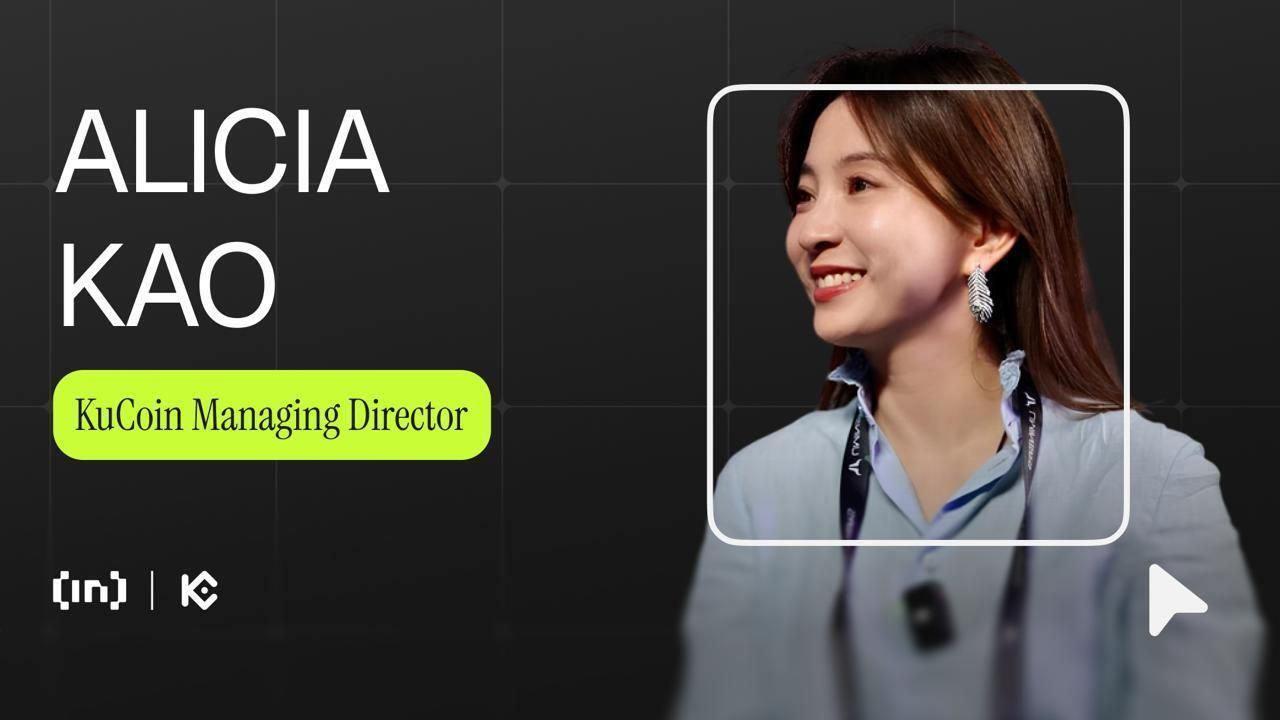
In Conversation with KuCoin’s Alicia Kao: Why Trust Is the True Currency of Crypto’s Next Chapter

When the market tumbled a few weeks ago, exchanges faced a familiar test: how well could they protect users in an industry built on volatility? For KuCoin Managing Director Alicia Kao, that tension defines her daily work. She describes the exchange’s mission as being both a gateway for innovation and a gatekeeper for trust. These are two roles that rarely align easily.

In a conversation with BeInCrypto, Kao discussed how KuCoin balances innovation with protection, adapts to tighter regulations, and upgrades its technology to serve both institutional and retail users.

Becoming “The Exchange You Can Trust” in an Institutional Era

KuCoin has built its identity as The People’s Exchange, serving millions of retail traders worldwide. Recently, it introduced a new brand slogan, “Trust First. Trade Next.” along with the message “The Exchange You Can Trust.” 

As institutions are entering the market in growing numbers, the refreshed branding reflects KuCoin’s broader ambition to strengthen credibility and expand its reach across different user segments. However, for Kao, that shift doesn’t mean abandoning the users who made KuCoin what it is.

“We don’t prefer institutions or retail. Both are important for us,” she said.

Retail traders tend to prefer one-click simplicity, relying on AI bots and clear interfaces. Institutional desks have very different needs. They prioritize execution speed, customized metrics, and access to deeper trading engines.

She explained, “For institutions, it’s about product features that fit their behavior. For retail, we focus on education, helping users become more professional in trading.”

Although achieving that balance is never simple, Kao said that the company aims to maintain a balanced platform, serving both groups effectively.

To support institutions without shifting away from its retail foundation, KuCoin has introduced features that strengthen both trust and efficiency. One example is its Off-Exchange Settlement (OES) framework. It was developed with strategic partners to let institutions keep their assets in third-party custody. At the same time, they can access KuCoin’s liquidity across spot, margin, options, and futures markets. 

The company is also expanding into real-world asset (RWA) tokenization. This initiative connects traditional finance with blockchain infrastructure and creates new opportunities for institutional investors.

As KuCoin works to meet the needs of both institutional and retail users, the company is also refining the technology that supports them, including artificial intelligence. While AI has been around for some time, Kao believes that the environment today is stronger. Companies now have better metrics, more data, and more mature models to work with.

“We’ve been launching our trading bot for a couple of years. But now, we are able to re-architect our trading bot with AI because we have more data and information, and we have more mature models to help us shape the trading bot,” she stated.

Kao also observed that users’ focus has shifted. Many are interested in earning from their assets rather than just trading.

“As long as we can offer different options to let users earn more of their crypto assets, then I think it’s all about earning,” she added.

Guarding the Altcoin Haven

Few exchanges have KuCoin’s reputation for token variety. It’s often called an altcoin haven, but Kao recognizes that the environment is changing.

Kao mentioned that KuCoin continues to update its policies for listing new coins because the environment changes quickly. She believes the exchange’s advantage lies in maintaining a clear internal compliance structure, which is not always the case for local platforms.

She pointed to markets where regulators maintain strict rules on listings. KuCoin works directly with authorities to ensure that every listed asset complies with these frameworks.

“For now, we remain highly selective and continue to uphold a rigorous due diligence process for listings,” Kao affirmed. “Our goal is to build a diverse and innovation-driven product ecosystem that showcases emerging blockchain projects and delivers meaningful value to users.”

Meanwhile, KuCoin’s infrastructure and cybersecurity divisions are building what Kao calls the foundation of trust. Their focus includes solid trading architecture, a custody system that minimizes vulnerabilities, and proactive measures against scams.

Kao emphasized that KuCoin’s listing strategy is shaped by close collaboration between the product, cybersecurity, and risk management teams. She said this approach reflects the company’s commitment to balancing innovation with responsibility. 

“Our product team is dedicated to ensuring users can access a comprehensive range of quality assets within our ecosystem, while our risk team upholds the highest standards of security and compliance. This synergy allows us to drive growth responsibly while maintaining user trust and market integrity,” she added.

Furthermore, KuCoin has set a new industry benchmark by attaining four internationally recognized certifications. Among them are CCSS for cryptocurrency asset protection, SOC 2 Type II for operational controls, ISO 27001:2022 for information security management, and ISO 27701:2025 for privacy protection. 

The company also conducts continuous monitoring and proactive detection measures to combat phishing attempts and impersonation scams across social media, reinforcing its commitment to user safety and platform integrity.

That measured approach, defined by technical rigor combined with cautious openness, reflects how Kao sees the role of a centralized exchange in 2025. The goal is to welcome new ideas while keeping users protected from unnecessary risk. 

“We continue to embrace the innovation part. We work with some of the on-chain products providers to let our users subscribe or purchase some of the staking products or some structured products easier. We are very selective of our partners. We make sure that they are with good reputations and they’re running their company properly,” she stated. “At the same time, we remain highly selective in our partnerships, working only with reputable and well-managed institutions to ensure both reliability and long-term user trust.”

The post In Conversation with KuCoin’s Alicia Kao: Why Trust Is the True Currency of Crypto’s Next Chapter appeared first on BeInCrypto.

  •