Reading view

Why 2025 Became the Year Crypto Stopped Chasing Hype

In 2025, the most influential narratives in crypto shifted away from hype toward utility and systems delivering measurable, real-world impact. The year marked a transition to production-ready systems that enhance the global movement and settlement of value.

Experts from SynFutures, Brickken, and Cake Wallet said that stablecoins, privacy, tokenized assets, and applied AI shaped adoption through genuine demand rather than speculation.

The Year Crypto Became Infrastructure

In many ways, 2025 was an exceptional year. It marked the first time crypto reached this level of institutional integration, with users often interacting with crypto rails without consciously engaging with “crypto” as a product.

While the sector remained shaped by volatility, only a few crypto narratives stood out for their practical utility. By contrast, those driven primarily by hype and sensationalism faded quickly.

In conversations with BeInCrypto, industry representatives offered a consistent assessment: narratives grounded in integration and execution endured, while novelty-driven stories steadily lost relevance.

Despite a wide range of narratives, stablecoins consistently emerged as the most frequently cited theme.

Stablecoins Became Crypto’s Core Use Case

Stablecoins have helped bridge the gap between risk-tolerant crypto participants and more cautious users seeking limited exposure to an industry long associated with volatility.

By maintaining a peg to assets such as the US dollar or gold, stablecoins positioned themselves as a more reliable alternative to other types of digital assets. Their borderless nature also gave them particular appeal over fiat currency.

Our 2026 Infra Year Ahead Report is out now!

Stablecoins have become the most important infrastructure story in crypto.

Every fintech wave promised to fix payments but just layered better UX on the same infrastructure. Revolut and Nubank delivered better experiences while… pic.twitter.com/zEhC6sndmv

— Delphi Digital (@Delphi_Digital) December 17, 2025

Regulatory milestones, including the passage of the GENIUS Act, further strengthened confidence in stablecoins, allowing their utility and infrastructure efficiency to stand on their own merits.

“Stablecoins solved a very concrete, everyday problem: moving and settling money efficiently across borders without relying on slow, fragmented, and expensive banking rails,” said Brickken CEO Edwin Mata. “For users, they provided access to digital dollars and euros in jurisdictions where banking access is limited, costly, or unreliable,” he added. 

The impact was concrete, not theoretical, as Stripe and Visa integrated stablecoins into settlement and treasury operations. At the same time, Circle enabled businesses to use USDC as working capital rather than as a speculative asset.

As stablecoins matured into dependable settlement tools, they enabled the expansion of tokenized real-world assets (RWAs).

Tokenization Advanced Beyond Pilot Programs

According to SynFutures CEO Rachel Lin, RWAs managed to bridge the gap between traditional finance and crypto. However, the way this was achieved wasn’t comprehensive. 

The success of RWAs was actually much more selective than previously anticipated. 

“Tokenized treasuries, funds, and yield products showed real traction because they offered tangible benefits: better settlement, composability, and broader access,” Lin told BeInCrypto, adding, “However, 2025 also clarified that RWAs only work when legal clarity, liquidity, and credible issuers are in place. The narrative moved from experimentation to execution, but it’s still early.”

The evidence spoke for itself, with large banks and asset managers relying on tokenization to improve efficiency. Earlier this week, JPMorgan launched a tokenized money market fund on Ethereum, marking a move beyond internal testing or pilot programs. 

Meanwhile, asset managers such as BlackRock expanded tokenized fund offerings, and banks integrated stablecoins into treasury and settlement workflows.

Another narrative that drew widespread attention across industries, particularly within the crypto sector, was artificial intelligence (AI).

Where AI Delivered Measurable Value

Early AI hype centered on fears that autonomous agents would replace human decision-making, a narrative that quickly lost momentum. 

What endured was a more practical focus on how AI could enhance the user experience by helping individuals understand exposure and manage risk.

“AI added real value where it reduced cognitive and operational complexity—particularly in trading interfaces, risk controls, and decision support. Products that used AI to help users understand exposure, automate execution within guardrails, or avoid costly mistakes delivered tangible improvements,” Lin explained.

The rise of AI agents also generated significant attention, though expectations became more measured over the year. 

Their success depended less on autonomy and more on trust, auditability, and user-defined limits. Use cases such as liquidity management, automated strategy execution, and treasury optimization demonstrated potential when clear guardrails were in place.

Yet, as AI became more deeply embedded in crypto products, it also sharpened long-standing concerns around data exposure.

This convergence pushed privacy from a niche concern into a central narrative of 2025.

Why Privacy Could No Longer Wait

Privacy emerged as one of the most consequential crypto narratives of the year, driven by growing awareness of how financial systems expose user information and behavior. 

spent last night deep in the a16z state of crypto 2025 report…

and wow, privacy is quietly becoming the next trillion-dollar narrative

> google searches for “crypto privacy” and “financial privacy” are up 10x since january
> total flows through railgun passed $200M
> zcash’s… https://t.co/zv36Kcgi10 pic.twitter.com/T8p3EsR9Hn

— Pix🔎 (@PixOnChain) October 24, 2025

As a result, long-standing concerns around data visibility moved to the forefront. In parallel, privacy, once treated as a niche preference, increasingly appeared as a structural requirement.

“One of the biggest narrative shifts in the industry to date happened this year, where people woke up to the need (and market demand) for simple, approachable privacy for their money,” Seth for Privacy, Vice President of Cake Wallet, told BeInCrypto.

Rising usage of Monero, increased global media attention on Zcash, and a broader shift toward privacy features across stablecoin and Layer 2 networks reinforced this pivot. 

“All of that solves one of the biggest painpoints of crypto for users – how do I retain privacy that I have today in the financial system or with cash, with the decentralization and power of crypto?” Seth added. 

The rise of privacy solutions, alongside other successful narratives of the past year, reinforced that crypto adoption increasingly hinges exclusively on utility. 

As crypto continues to mature, success may be defined not by how loudly it announces itself, but by how reliably it works.

The post Why 2025 Became the Year Crypto Stopped Chasing Hype appeared first on BeInCrypto.

  •  

Mengapa Tahun 2025 Jadi Momen Aset Kripto Berhenti Mengejar Hype

Pada tahun 2025, narasi paling berpengaruh dalam dunia aset kripto bergeser dari sekadar hype ke arah utilitas dan sistem yang memberikan dampak nyata yang terukur di dunia. Tahun ini menandai peralihan menuju sistem siap-produksi yang meningkatkan pergerakan dan penyelesaian nilai secara global.

Para ahli dari SynFutures, Brickken, dan Cake Wallet menyampaikan bahwa stablecoin, privasi, aset tokenisasi, dan penerapan AI membentuk adopsi aset kripto karena permintaan yang nyata, bukan semata-mata spekulasi.

Tahun Saat Aset Kripto Menjadi Infrastruktur

Di banyak aspek, tahun 2025 menjadi tahun yang luar biasa. Untuk pertama kalinya, aset kripto mencapai tingkat integrasi institusional ini, dengan pengguna sering berinteraksi lewat infrastruktur kripto tanpa sadar bahwa mereka memakai produk “crypto”.

Sektor ini memang masih diwarnai volatilitas, tapi hanya beberapa narasi aset kripto yang benar-benar menonjol karena kegunaan praktisnya. Sebaliknya, narasi yang utamanya dibentuk oleh hype dan sensasi cepat meredup.

Dalam diskusi bersama BeInCrypto, para perwakilan industri sepakat: narasi yang berbasis integrasi dan realisasi bertahan, sedangkan kisah yang hanya mengedepankan kebaruan perlahan-lahan kehilangan relevansinya.

Walau ada beragam narasi, stablecoin selalu muncul sebagai tema yang paling sering disebutkan.

Stablecoin jadi kegunaan utama aset kripto

Stablecoin membantu menjembatani kesenjangan antara pelaku kripto yang berani mengambil risiko dan pengguna yang lebih berhati-hati serta ingin eksposur terbatas pada industri yang selama ini lekat dengan citra volatilitas.

Dengan menjaga nilai (peg) terhadap aset seperti dolar AS atau emas, stablecoin menempatkan diri sebagai alternatif yang lebih bisa diandalkan dibandingkan jenis aset digital lain. Sifatnya yang lintas batas juga membuatnya lebih menarik daripada mata uang fiat.

Our 2026 Infra Year Ahead Report is out now!

Stablecoins have become the most important infrastructure story in crypto.

Every fintech wave promised to fix payments but just layered better UX on the same infrastructure. Revolut and Nubank delivered better experiences while… pic.twitter.com/zEhC6sndmv

— Delphi Digital (@Delphi_Digital) December 17, 2025

Pencapaian regulasi, termasuk disahkannya GENIUS Act, semakin memperkuat kepercayaan pada stablecoin, sehingga kegunaan dan efisiensi infrastrukturnya bisa berbicara dengan sendirinya.

“Stablecoin memecahkan masalah konkrit sehari-hari: memindahkan dan menyelesaikan uang secara efisien lintas negara tanpa bergantung pada sistem perbankan yang lambat, terfragmentasi, dan mahal,” ujar CEO Brickken, Edwin Mata. “Bagi pengguna, stablecoin memberikan akses ke dolar dan euro digital di yurisdiksi yang akses perbankannya terbatas, mahal, atau tidak dapat diandalkan,” tambahnya.

Dampaknya benar-benar nyata, bukan sekadar teori, karena Stripe dan Visa mengintegrasikan stablecoin ke dalam operasi penyelesaian dan treasury mereka. Di saat yang sama, Circle memungkinkan bisnis memakai USDC sebagai modal kerja, bukan sebagai aset spekulatif.

Karena stablecoin makin matang sebagai alat settlement yang andal, hal ini mendorong ekspansi aset dunia nyata (RWA) yang ditokenisasi.

Tokenisasi Sudah Berkembang Melebihi Program Percontohan

Menurut CEO SynFutures, Rachel Lin, RWA berhasil menjembatani dunia keuangan tradisional dengan kripto. tapi, pencapaiannya bukanlah sesuatu yang menyeluruh.

Keberhasilan RWA ternyata jauh lebih selektif dibandingkan dugaan banyak orang sebelumnya.

“Treasury, dana, dan produk hasil tokenisasi mengalami pertumbuhan nyata karena memberikan manfaat yang jelas: settlement yang lebih baik, dapat digabungkan (composability), dan akses lebih luas,” tutur Lin pada BeInCrypto, seraya menambahkan, “Namun, tahun 2025 juga menegaskan bahwa RWA hanya bisa berjalan jika ada kejelasan hukum, likuiditas, dan penerbit yang kredibel. Narasinya bergeser dari eksperimen ke eksekusi, tetapi ini masih tahap awal.”

Buktinya terlihat jelas, bank besar dan manajer aset memanfaatkan tokenisasi untuk meningkatkan efisiensi. Baru minggu ini, JPMorgan meluncurkan dana pasar uang berbasis tokenisasi di Ethereum, sehingga mereka melangkah lebih jauh dari sekadar uji coba internal atau program pilot.

Sementara itu, manajer aset seperti BlackRock memperluas penawaran dana tokenisasi, dan bank mengintegrasikan stablecoin dalam workflow treasury serta settlement.

Narasi lain yang menarik perhatian lintas industri, terutama di sektor kripto, adalah kecerdasan buatan (AI).

Di Mana AI Memberikan Nilai yang Terukur

Pada awalnya, hype AI berfokus pada ketakutan bahwa agen otonom akan menggantikan keputusan manusia, tapi narasi semacam ini dengan cepat kehilangan momentum.

Yang bertahan adalah fokus praktis pada bagaimana AI bisa meningkatkan pengalaman pengguna misalnya membantu individu memahami risiko dan mengelola eksposur.

“AI memberikan nilai nyata di mana ia bisa mengurangi kerumitan kognitif dan operasional—khususnya dalam antarmuka trading, pengendalian risiko, dan dukungan pengambilan keputusan. Produk yang memanfaatkan AI untuk membantu pengguna memahami eksposur, mengotomasi eksekusi dengan batasan, atau menghindari kesalahan mahal berhasil membawa peningkatan yang nyata,” papar Lin.

Kemunculan AI agent juga menarik banyak perhatian, tapi ekspektasi pada tahun ini menjadi lebih realistis.

Keberhasilan mereka lebih bergantung pada kepercayaan, auditabilitas, dan batasan yang diatur pengguna, ketimbang soal otonomi. Berbagai kasus penggunaan seperti manajemen likuiditas, eksekusi strategi otomatis, dan optimalisasi treasury menunjukkan potensi saat ada guardrail yang jelas.

Namun, bersamaan dengan semakin dalamnya integrasi AI dalam produk kripto, kekhawatiran lama soal paparan data pun makin terasa nyata.

Kondisi ini mendorong isu privasi keluar dari area khusus ke pusat perhatian narasi aset kripto di tahun 2025.

Mengapa Privasi Tidak Bisa Lagi Menunggu

Privasi menjadi salah satu narasi paling penting dalam dunia kripto tahun ini, didorong oleh semakin besarnya kesadaran tentang bagaimana sistem keuangan memaparkan data dan perilaku pengguna.

spent last night deep in the a16z state of crypto 2025 report…

and wow, privacy is quietly becoming the next trillion-dollar narrative

> google searches for “crypto privacy” and “financial privacy” are up 10x since january
> total flows through railgun passed $200M
> zcash’s… https://t.co/zv36Kcgi10 pic.twitter.com/T8p3EsR9Hn

— Pix🔎 (@PixOnChain) October 24, 2025

Akibatnya, kekhawatiran lama tentang visibilitas data kini menjadi perhatian utama. Bersamaan dengan itu, privasi, yang dulu dianggap sebagai preferensi untuk segelintir orang saja, kini semakin muncul sebagai kebutuhan struktural.

“Salah satu perubahan narasi terbesar di industri ini terjadi tahun ini, ketika banyak orang sadar akan kebutuhan (dan permintaan pasar) untuk privasi yang sederhana dan mudah dijangkau bagi uang mereka,” ujar Seth for Privacy, Wakil Presiden Cake Wallet, kepada BeInCrypto.

Peningkatan penggunaan Monero, makin besarnya perhatian media global pada Zcash, serta pergeseran yang lebih luas ke fitur privasi di stablecoin dan jaringan layer-2 ikut memperkuat tren ini.

“Semua itu menjawab salah satu masalah terbesar pengguna kripto – bagaimana saya bisa mempertahankan privasi yang saya miliki di sistem keuangan saat ini atau dengan uang tunai, tapi tetap mendapatkan desentralisasi dan kekuatan kripto?” tambah Seth. 

Meningkatnya solusi privasi, bersama narasi-narasi sukses lain selama tahun lalu, menunjukkan bahwa adopsi aset kripto kini semakin bergantung pada kegunaan nyata bagi pengguna.

Ketika dunia kripto terus berkembang, keberhasilan mungkin tidak lagi diukur dari seberapa besar gaungnya, melainkan dari seberapa andal sistemnya bekerja.

  •  

Coinbase Ventures-Backed Stablecoin Bank Triggers Terra UST-Style Fears

Kontigo is gaining traction by promoting a stablecoin-first banking model as a global alternative to traditional financial services.

At the same time, its rapid rise has prompted skepticism within the crypto community. The model has raised questions over whether it can scale sustainably without repeating the missteps that have defined past industry failures.

Kontigo’s Rapid Rise Draws Attention

A new bank building its entire identity around stablecoins is rapidly climbing the ranks of the financial services industry.

Kontigo positions itself as a stable-currency platform offering self-custodial wallet services that allow users to store value in Bitcoin and spend in local stablecoins, with all transactions recorded on the blockchain.

On Tuesday, Kontigo CEO Jesus Castillo announced that the company had raised $20 million in a seed funding round to pursue its ambition of building the world’s largest bank. 

We just raised a $20M seed round to build the largest bank in the world.

Kontigo crossed $30M in annual revenue, $1B in payment volume, and 1M users in under 12 months, with a team of six engineers and one designer.

We are the fastest-growing stablecoin neobank in the world.… pic.twitter.com/pOmQ6gSy2H

— Jesus A. Castillo F. (@jecastillof) December 16, 2025

Castillo also described Kontigo as the fastest-growing stablecoin neobank globally. He said the platform allows individuals and businesses to earn a 10% yield on digital dollars, use a stablecoin-linked card with Bitcoin cashback, and invest in tokenized US stocks, among other features.

The leadership team says Kontigo aims to expand access to basic financial services to nearly 5 billion people worldwide. Prominent institutional investors, including Base and Coinbase Ventures, back the company.

Despite gaining significant traction almost immediately, Kontigo has also faced skepticism. Some observers questioned whether it represents a familiar crypto narrative, one that has previously generated catastrophic consequences for the broader market.

No-KYC Access Triggers Warning Signs

Among the various benefits Kontigo has highlighted, the company has emphasized that users from anywhere in the world can open an account and begin transacting in USDC or USDT without having to comply with Know Your Customer (KYC) requirements.

While this approach may appear less bureaucratic on the surface, it quickly raised concerns among users and industry observers. 

KYC rules are designed to protect financial institutions from bad actors. They require identity verification and confirmation of customer legitimacy.

Without such safeguards, both financial platforms and users face increased exposure to risks of fraud, money laundering, and terrorist financing.

Within the crypto industry, the absence of KYC standards has previously proven harmful for users relying on unprotected platforms.

A multinational stablecoin operation
Promising a fixed above-market yield
And access to tokenized stocks
With no KYC

Where have I seen all this before? pic.twitter.com/YAKiPpWH9B

— Zack Guzmán ♻️ (@zGuz) December 17, 2025

Last week, Terraform Labs co-founder Do Kwon was sentenced to 15 years in prison for orchestrating a $40 billion cryptocurrency fraud. Terra’s ecosystem operated without meaningful KYC controls, enabling vast sums of capital to enter the system anonymously and at scale.

When confidence in its algorithmic stablecoin unraveled, that absence of oversight intensified the run on the network, limited transparency around fund flows, and amplified losses for millions of users. The case underscored how the lack of basic safeguards can transform rapid expansion into systemic collapse.

The absence of KYC standards is not the only factor that has raised concerns about Kontigo’s mission.

Yield Promises Test User Confidence

Castillo clarified at one point that the 10% yield on USDC holdings comes from lending through DeFi protocol Morpho, exposure to US Treasury bills, and custody or yield-related services via Coinbase. 

Yet, critics said the numbers did not add up, raising concerns over the credibility of Kontigo’s advertised promises. Yields from these sources typically range between 3% and 7% annually, even when combined under current market conditions. 

be @kontigo_app a new Fintech

offer 10% yield on USDC

when asked where does it comes from lie saying is lending in Morpho + Tbills + Coinbase

math ain't mathing as those APRs are 5-7% short of 10%

Ignore people who point this shortage

any comments @jecastillof ? https://t.co/xegvZiODrg pic.twitter.com/blSKZLN7g7

— Cisco | CryptoAlert (@CiscoCANFT) December 17, 2025

Skeptics questioned how Kontigo can sustainably offer a 10% return. They pointed to the possibility of undisclosed risk, leverage, or opaque strategies.

Meanwhile, another user reported that a USDC transfer had not been credited to their wallet several hours after its initiation. 

For platforms that position themselves as banks or payment infrastructure, even short delays in fund availability can erode user confidence. Reliability and timely settlement are foundational expectations, regardless of transaction size.

As Kontigo scales, its long-term credibility will depend less on growth claims than on execution and earned user trust.

In a sector shaped by past failures, the company now faces mounting pressure to show that rapid expansion can be sustained without repeating the mistakes that have defined earlier crypto collapses.

The post Coinbase Ventures-Backed Stablecoin Bank Triggers Terra UST-Style Fears appeared first on BeInCrypto.

  •  

Will Hut 8’s AI Pivot Reverse Its Stock Slump for Good?

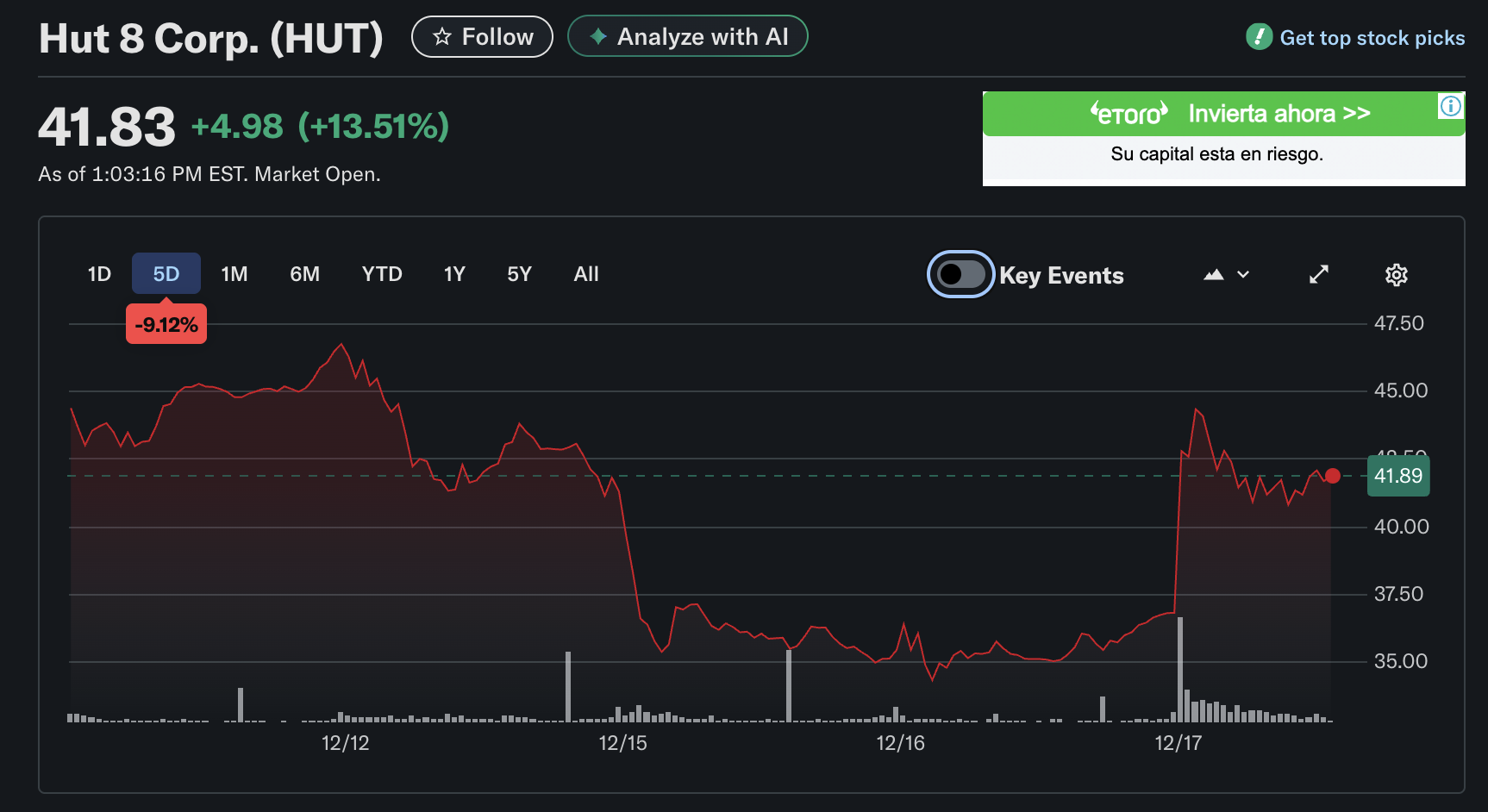
Bitcoin mining company Hut 8 announced on Wednesday an AI data center lease valued at $7 billion with cloud infrastructure provider Fluidstack. The move reinforced a growing trend among crypto miners to pivot toward AI infrastructure.

Following the announcement, Hut 8 shares surged, snapping a prolonged period of volatile stock performance and reflecting renewed investor interest.

Inside Hut 8’s Landmark AI Lease

The agreement covers 245 megawatts of AI computing capacity at Hut 8’s River Bend campus in Louisiana under a 15-year base lease.

It includes three optional five-year extensions, which could lift the total contract value to approximately $17.7 billion over its full term. The deal also gives infrastructure provider Fluidstack priority rights to lease up to an additional 1,000 megawatts as the campus expands.

At first glance, this $HUT deal looks like one of the strongest AI/HPC colocation deals disclosed so far:

🟠 ~$28–29M contract value per MW (high end of the peer set)
🟠 ~$1.85M guided NOI per MW-yr (peers typically disclosed ARR, not NOI)
🟠 15-yr base term + guidance to ~85%… https://t.co/eMa2Qoqnn7 pic.twitter.com/TgSPIR1rJ0

— matthew sigel, recovering CFA (@matthew_sigel) December 17, 2025

Beyond the initial lease, the agreement forms part of a broader collaboration between Hut 8 and AI developer Anthropic that could eventually scale to as much as 2.3 gigawatts of capacity.

Alphabet-owned Google is providing a financial backstop for the initial lease term, highlighting major cloud providers’ urgency to secure long-term power for energy-intensive AI workloads.

Hut 8 expects the project to generate roughly $6.9 billion in net operating income over the initial lease period.

Investors responded positively, with Hut 8 shares jumping about 20% in pre-market trading following the announcement. 

The move highlights the company’s efforts to stabilize its business, reflecting a broader trend among Bitcoin miners to pivot toward AI computing as a path to long-term relevance.

Bitcoin Mining Faces a Structural Reset

Throughout the year, Bitcoin mining has become a structurally more challenging business. Rising network difficulty, periodic surges in hash rate, higher energy costs, and the post-halving environment have steadily compressed margins.

As a result, many publicly listed miners that remained pure-play Bitcoin operators have struggled to deliver consistent earnings or a clear growth narrative. In response, an increasing number have moved to diversify their operations beyond mining alone.

Hit 8 5-Day Price Performance. Source: Yahoo Finance.

At the same time, the rapid expansion of artificial intelligence has driven a sharp increase in demand for computing power. Because Bitcoin miners already control large-scale power access and industrial infrastructure, shifting toward AI data centers has emerged as a practical and increasingly necessary strategy.

Hut 8 has recognized this broader backdrop, particularly as its shares have struggled to find stability in recent weeks amid heightened volatility in Bitcoin prices.

The post Will Hut 8’s AI Pivot Reverse Its Stock Slump for Good? appeared first on BeInCrypto.

  •  

Bank Stablecoin Didukung Coinbase Ventures Picu Kekhawatiran seperti Terra UST

Kontigo semakin populer dengan mengedepankan model perbankan stablecoin-first sebagai alternatif global untuk layanan keuangan tradisional.

Di sisi lain, kenaikan pesat Kontigo juga memunculkan keraguan di komunitas aset kripto. Banyak pihak mempertanyakan apakah model ini bisa berkembang secara berkelanjutan tanpa mengulangi kesalahan yang pernah terjadi di industri ini sebelumnya.

Kenaikan Pesat Kontigo Menarik Perhatian

Sebuah bank baru yang membangun identitas sepenuhnya berdasarkan stablecoin sedang cepat menanjak di industri layanan keuangan.

Kontigo memposisikan diri sebagai platform mata uang stabil yang menawarkan layanan wallet self-custodial. Pengguna bisa menyimpan nilai dalam Bitcoin dan membelanjakannya dalam stablecoin lokal, dengan semua transaksi tercatat di blockchain.

Pada hari Selasa, CEO Kontigo Jesus Castillo mengumumkan bahwa perusahaan telah memperoleh pendanaan awal sebesar US$20 juta untuk mengejar ambisi menjadi bank terbesar di dunia.

We just raised a $20M seed round to build the largest bank in the world.

Kontigo crossed $30M in annual revenue, $1B in payment volume, and 1M users in under 12 months, with a team of six engineers and one designer.

We are the fastest-growing stablecoin neobank in the world.… pic.twitter.com/pOmQ6gSy2H

— Jesus A. Castillo F. (@jecastillof) December 16, 2025

Castillo juga menyebut Kontigo sebagai stablecoin neobank dengan pertumbuhan tercepat di dunia. Ia terang, platform ini memungkinkan individu dan bisnis memperoleh imbal hasil 10% pada digital dollar, menggunakan kartu yang terhubung ke stablecoin dengan cashback dalam Bitcoin, dan berinvestasi di saham AS yang sudah ditokenisasi, serta fitur lainnya.

Tim kepemimpinan mengatakan bahwa Kontigo bertujuan memperluas akses layanan keuangan dasar untuk hampir 5 miliar orang di dunia. Investor institusi ternama, termasuk Base dan Coinbase Ventures, juga mendukung perusahaan ini.

Meskipun cepat meraih perhatian, Kontigo juga tak luput dari sikap skeptis. Sejumlah pengamat menanyakan apakah ini hanya narasi aset kripto yang sudah sering berujung dampak buruk besar untuk pasar secara keseluruhan.

Akses tanpa KYC Picu Tanda Peringatan

Salah satu manfaat yang ditekankan Kontigo ialah pengguna dari mana saja di dunia bisa membuka akun serta mulai bertransaksi dalam USDC atau USDT tanpa harus memenuhi syarat Know Your Customer (KYC).

Langkah ini memang terlihat kurang birokratis di permukaan, tapi langsung membuat banyak pengguna dan pengamat industri merasa khawatir.

Aturan KYC dibuat untuk melindungi lembaga keuangan dari pihak-pihak jahat. Regulasi ini mengharuskan verifikasi identitas dan konfirmasi keabsahan nasabah.

Tanpa perlindungan semacam itu, baik platform keuangan maupun pengguna akan lebih rentan terhadap risiko penipuan, pencucian uang, dan pendanaan terorisme.

Di dunia aset kripto, ketiadaan standar KYC sebelumnya telah merugikan pengguna yang mengandalkan platform tanpa perlindungan.

A multinational stablecoin operation
Promising a fixed above-market yield
And access to tokenized stocks
With no KYC

Where have I seen all this before? pic.twitter.com/YAKiPpWH9B

— Zack Guzmán ♻️ (@zGuz) December 17, 2025

Pekan lalu, co-founder Terraform Labs Do Kwon divonis 15 tahun penjara karena kasus penipuan aset kripto senilai US$40 miliar. Ekosistem Terra berjalan tanpa kontrol KYC yang berarti, sehingga dana dalam jumlah sangat besar bisa masuk ke sistem secara anonim dan masif.

Saat kepercayaan terhadap algorithmic stablecoin-nya runtuh, kurangnya pengawasan memperburuk aksi rush, membatasi transparansi arus dana, dan memperbesar kerugian jutaan pengguna. Kasus ini menyoroti, minimnya perlindungan dasar bisa mengubah pertumbuhan cepat menjadi kolaps sistemik.

Ketiadaan standar KYC bukan satu-satunya alasan yang memunculkan kekhawatiran terkait misi Kontigo.

Janji Yield Uji Kepercayaan Pengguna

Castillo pernah menjelaskan bahwa imbal hasil 10% dari kepemilikan USDC berasal dari hasil lending melalui DeFi protocol Morpho, eksposur ke surat utang negara AS, serta layanan kustodian atau terkait imbal hasil lewat Coinbase.

Tapi, para kritikus menilai, angka tersebut tidak masuk akal dan menimbulkan pertanyaan terkait kredibilitas janji Kontigo. Imbal hasil dari sumber itu biasanya hanya berkisar antara 3% sampai 7% per tahun, bahkan jika digabungkan dalam kondisi pasar saat ini.

be @kontigo_app a new Fintech

offer 10% yield on USDC

when asked where does it comes from lie saying is lending in Morpho + Tbills + Coinbase

math ain't mathing as those APRs are 5-7% short of 10%

Ignore people who point this shortage

any comments @jecastillof ? https://t.co/xegvZiODrg pic.twitter.com/blSKZLN7g7

— Cisco | CryptoAlert (@CiscoCANFT) December 17, 2025

Pihak skeptis mempertanyakan bagaimana Kontigo bisa memberikan retur 10% secara berkelanjutan. Mereka menunjukkan kemungkinan adanya risiko yang tidak diungkapkan, penggunaan leverage, atau strategi yang tidak transparan.

Sementara itu, seorang pengguna lain melaporkan transfer USDC yang tidak masuk ke wallet mereka walaupun sudah beberapa jam sejak transaksi dilakukan.

Pada platform yang mengklaim diri sebagai infrastruktur bank atau pembayaran, keterlambatan dana walau sesaat saja bisa menurunkan kepercayaan pengguna. Keandalan dan proses penyelesaian tepat waktu adalah harapan utama, apa pun besarnya transaksi.

Saat Kontigo tumbuh, kredibilitas jangka panjang mereka akan lebih tergantung pada eksekusi dan kepercayaan yang dibangun, bukan hanya klaim pertumbuhan.

Di sektor yang penuh cerita kegagalan masa lalu, perusahaan ini kini berada di bawah tekanan untuk membuktikan bahwa ekspansi pesat dapat berjalan tanpa mengulang kesalahan yang pernah mengguncang industri aset kripto.

  •  

Akankah Peralihan AI Hut 8 Milik Keluarga Trump Membalikkan Penurunan Sahamnya Secara Permanen?

Perusahaan Bitcoin miner, Hut 8, mengumumkan pada hari Rabu perjanjian sewa data center AI senilai US$7 miliar dengan penyedia infrastruktur cloud, Fluidstack. Langkah ini semakin memperkuat tren yang berkembang di mana para Bitcoin miner mulai beralih ke infrastruktur AI.

Setelah pengumuman tersebut, saham Hut 8 langsung melonjak, mengakhiri periode panjang performa saham yang volatil, serta mencerminkan minat baru dari para investor.

Di Balik Sewa AI Bersejarah Hut 8

Kesepakatan ini mencakup kapasitas komputasi AI sebesar 245 megawatt di kampus River Bend milik Hut 8 di Louisiana, dengan masa sewa dasar selama 15 tahun.

Perjanjian ini juga mencakup tiga opsi perpanjangan masing-masing selama lima tahun, sehingga nilai total kontrak bisa meningkat hingga sekitar US$17,7 miliar selama masa berlaku penuh. Selain itu, penyedia infrastruktur Fluidstack memperoleh hak prioritas untuk menyewa hingga 1.000 megawatt tambahan seiring dengan ekspansi kampus tersebut.

At first glance, this $HUT deal looks like one of the strongest AI/HPC colocation deals disclosed so far:

🟠 ~$28–29M contract value per MW (high end of the peer set)
🟠 ~$1.85M guided NOI per MW-yr (peers typically disclosed ARR, not NOI)
🟠 15-yr base term + guidance to ~85%… https://t.co/eMa2Qoqnn7 pic.twitter.com/TgSPIR1rJ0

— matthew sigel, recovering CFA (@matthew_sigel) December 17, 2025

Selain dari sewa awal, perjanjian ini menjadi bagian dari kolaborasi yang lebih luas antara Hut 8 dan pengembang AI Anthropic yang nantinya bisa berkembang hingga kapasitas 2,3 gigawatt.

Google yang dimiliki oleh Alphabet memberikan jaminan keuangan untuk masa sewa awal ini, mempertegas urgensi dari penyedia cloud besar dalam mengamankan pasokan energi jangka panjang untuk kebutuhan AI yang boros energi.

Hut 8 memperkirakan proyek ini akan menghasilkan pendapatan operasi bersih sekitar US$6,9 miliar selama masa sewa awal.

Para investor merespons secara positif, dengan saham Hut 8 melesat sekitar 20% dalam perdagangan pre-market setelah pengumuman tersebut.

Langkah ini menyoroti upaya perusahaan untuk menstabilkan bisnisnya, sekaligus mencerminkan tren yang lebih luas di kalangan Bitcoin miner yang mulai beralih ke komputasi AI demi menjaga relevansi jangka panjang mereka.

Bitcoin miner Menghadapi Reset Struktural

Sepanjang tahun ini, Bitcoin mining menjadi bisnis yang semakin menantang secara struktural. Naiknya tingkat kesulitan jaringan, lonjakan hash rate secara berkala, biaya energi yang makin tinggi, serta lingkungan pasca-halving terus menekan margin keuntungan.

Akibatnya, banyak miner yang terdaftar di bursa dan tetap menjadi operator murni Bitcoin kesulitan untuk memberikan pendapatan yang konsisten atau narasi pertumbuhan yang jelas. Oleh karena itu, semakin banyak dari mereka yang mulai mendiversifikasi operasi ke bidang lain, tidak hanya fokus pada mining saja.

Hit 8 5-Day Price Performance. Source: Yahoo Finance.
Performa Harga Hut 8 dalam 5 Hari | Sumber: Yahoo Finance.

Pada saat yang sama, pertumbuhan pesat artificial intelligence mendorong lonjakan permintaan atas daya komputasi. Karena Bitcoin miner sudah mengendalikan akses listrik skala besar dan infrastruktur industri, beralih ke data center AI menjadi strategi yang praktis dan semakin diperlukan.

Hut 8 menyadari latar belakang yang lebih luas ini, apalagi sahamnya sempat sulit mencapai stabilitas dalam beberapa minggu terakhir akibat volatilitas harga Bitcoin yang meningkat.

  •  

Aussie Hero Meme Coin Rallies Community Support After Sydney Terrorist Attack

A meme coin called HERO has gained traction over the past few days, created in honor of a man who helped disarm one of two attackers during a deadly assault at a Hanukkah celebration in Sydney, Australia, over the weekend.

The token briefly reached a market capitalization of $1.7 million. The team behind the initiative says the project will donate all creator fees to support the victims of the attack.

HERO Launched to Support Bondi Victims

A grassroots initiative has gathered momentum following the terrorist attack at Bondi Beach on Sunday, which left 15 people dead and at least 42 others injured.

An individual known as DefiANT on X launched the HERO meme coin in honor of Ahmed al-Ahmed, a 43-year-old fruit shop owner who managed to disarm one of the attackers during the incident.

the whole world is talking about the heroic act of Ahmed.

meanwhile, we have established ourselves as the only true $hero coin by donating $20k in creator rewards so far, with much more to come.

we had our first space in which people shared their experiences, expressed…

— DefiAnt™ (build/acc) (@defi_tm) December 15, 2025

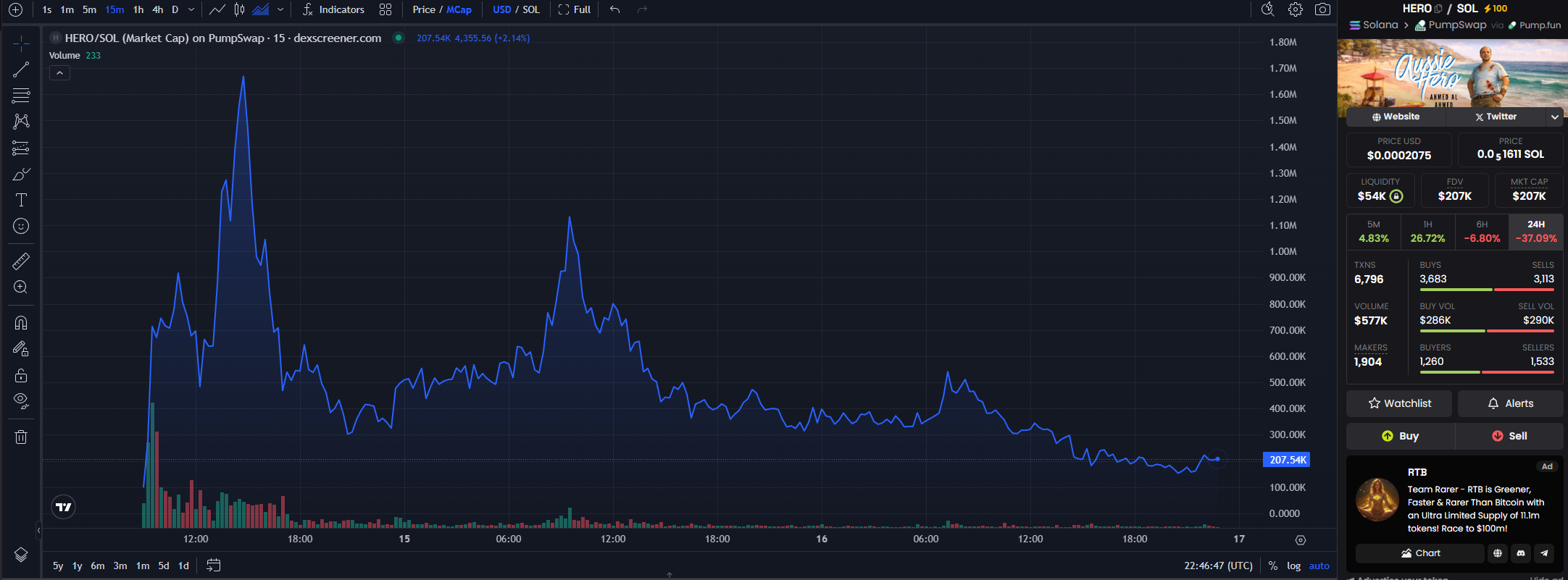
According to DexScreener, HERO runs on Solana and currently has a market capitalization of $180,000. The meme coin was created via Pump.Fun and reached a peak of nearly $1.7 million in market cap. Although the meme coin was launched on the same day as the attack, the original developer rugged the project and later abandoned it.

Since then, the community has taken over stewardship of the token, with DefiANT emerging as the primary driving force. It has since evolved into a fully community-led initiative, with all proceeds dedicated to supporting the victims.

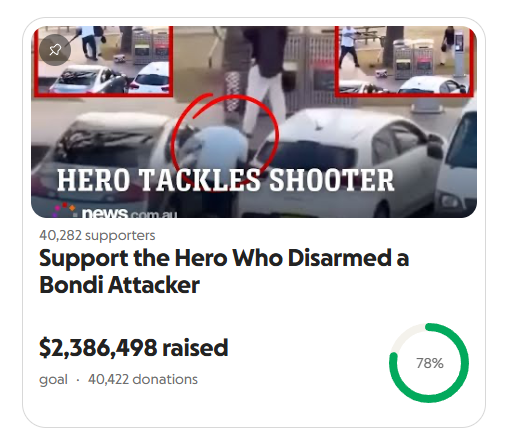
GoFundMe Page Created By the Meme Coin Community

Fundraising Campaign Surpasses $2.3 Million Mark

Alongside the token, the team launched a parallel GoFundMe campaign to raise funds for those affected by the attack.

According to the fundraising page, nearly 40,000 contributors have collectively raised over $2.3 million. The campaign has set a target of $3.1 million.

HERO Meme Coin Price Chart. Source: DexScreener

The official HERO website states that donations will be distributed to victims in multiple tranches. DefiANT also confirmed on social media that 47,000 Australian dollars have already been donated to individuals impacted by the attack

The post Aussie Hero Meme Coin Rallies Community Support After Sydney Terrorist Attack appeared first on BeInCrypto.

  •  

Why China’s Recent Mining Crackdown Triggered Bitcoin’s Latest Sell-Off

As Bitcoin’s price continues to trend lower, China’s renewed crackdown on domestic mining activity may help explain the sudden downturn.

In Xinjiang province, an estimated 400,000 miners were forced to shut down operations and go offline. The abrupt disruption cut off revenue streams, pushing some operators to sell Bitcoin holdings to cover operating costs or finance relocation efforts.

Mining Disruptions Add Pressure to Bitcoin’s Decline

In a recent social media post, former Canaan chairman Jack Kong said that China’s computing power fell by roughly 100 exahashes per second (EH/s) within 24 hours. He noted that the decline, estimated at around 8%, followed the shutdown of hundreds of thousands of mining machines.

Bitcoin Hash Rate Falls by Most Since 2024 Halving

Ex-Chairman of $CAN says 400k BTC mining machines shut off in China https://t.co/4RQ0O2esh3 pic.twitter.com/q5OopJq10M

— matthew sigel, recovering CFA (@matthew_sigel) December 15, 2025

The news emerged shortly before Bitcoin slid to $86,000 on Tuesday, breaking below the $90,000 level it had managed to hold over the past week.

Some analysts view the timing as more than coincidental, pointing to a correlation between the mining shutdowns and the price decline

They note that abrupt and stringent measures often force miners to take immediate actions, which can amplify short-term market pressure.

Miner Shutdowns Trigger Liquidity Stress And Selling

According to Bitcoin analyst NoLimit, when miners are forced offline, a chain reaction typically follows. 

This includes an immediate loss of revenue, an urgent need for liquidity to cover operating expenses or relocation costs, and, in some cases, the forced sale of Bitcoin holdings.

These dynamics can spill directly into the broader crypto market. When roughly 8% of Bitcoin’s computing power is suddenly taken offline, uncertainty rises, adding short-term stress to Bitcoin’s price.

🚨 BITCOIN IS CRASHING AND THIS IS THE REASON WHY!!!

Bitcoin is down today for a very simple reason, and almost nobody is explaining it properly.

It’s coming straight from China, and the timing matters.

That’s right, china’s crashing bitcoin, AGAIN.

Here’s what’s happening:… pic.twitter.com/RV3k9JzA0T

— NoLimit (@NoLimitGains) December 15, 2025

“That creates real sell pressure, not the other way around,” NoLimit explained. 

Timing magnified the impact. China’s mining sector had only recently re-established itself as a major contributor to global hashrate.

A Mining Comeback Meets Abrupt Regulatory Pressure

Less than a month ago, China regained its position as the world’s third-largest Bitcoin mining hub. According to the Hashrate Index, the country accounted for roughly 14% of global hashrate by October.

Despite the formal mining ban imposed in 2021, underground activity has continued to expand across the country.

Analysts point to access to low-cost power and surplus electricity in certain regions as key drivers behind the resurgence.

Against this backdrop, this week’s crackdown caught miners off guard. With regulations suddenly tightened and Bitcoin’s hashrate falling, miner revenues quickly became a central concern.

These pressures were compounded by Bitcoin’s roughly 30% decline from its October peak and persistently low transaction fees, pushing miner revenues to recent lows.

Given that mining underpins the security and operation of the Bitcoin network, the recent price pullback appears consistent with the broader disruption, though its full impact may unfold over time.

The post Why China’s Recent Mining Crackdown Triggered Bitcoin’s Latest Sell-Off appeared first on BeInCrypto.

  •  

Bitcoin’s First Full-Year Split From Stocks in Over a Decade

Bitcoin has broken from its long-standing correlation with equities, marking its first full-year divergence from stocks in over a decade.

The shift highlights a growing disconnect between crypto and traditional markets, raising questions about Bitcoin’s role in the current cycle.

A Historic Market Decoupling

Bitcoin and stocks have historically moved in tandem. However, that relationship appears to have fractured.

According to Bloomberg data, the S&P 500 has climbed more than 16% this year while Bitcoin is down 3%, marking the first such split since 2014.

BREAKING: Bitcoin is headed for its first full-year split from stocks in over a decade, marking the first time since 2014 equities rallied while crypto fell. pic.twitter.com/Ns25xJ2KV2

— Short Squeez (@shortsqueeznews) December 7, 2025

Such a clean break is unusual even by crypto standards, prompting renewed scrutiny of Bitcoin’s role within global markets. The divergence challenges expectations that regulatory optimism and institutional participation would automatically translate into sustained performance.

It is especially striking given the broader environment, where artificial intelligence stocks are soaring, capital spending is accelerating, and investors are pouring back into equities. At the same time, traditional defensive assets are attracting attention, suggesting investors are reallocating rather than broadly embracing risk.

Crypto-specific pressures, including forced liquidations and a sharp decline in retail participation, have materially exacerbated Bitcoin’s underperformance. Billions of unwound positions have amplified downside moves, turning what began as a correction into an industry retreat.

As these signals accumulate, market sentiment has weakened, sparking debate over whether this represents a routine correction or a more significant structural change.

Normal Pullback Or Something More?

Bitcoin has long behaved as a momentum-driven asset, but the breakdown in sustained upside suggests that leadership within risk markets has shifted elsewhere.

Inflows into Bitcoin ETFs have slowed, prominent endorsements have grown quieter, and key technical indicators are flashing renewed weakness.

Price action reflects that cooling confidence. Bitcoin has struggled to regain momentum since its October peak near $126,000 and is now hovering closer to $90,000, reinforcing the sense that this divergence is being driven by fading conviction rather than short-term volatility alone.

Despite the current divergence, longer time horizons complicate the narrative. 

On a multi-year basis, Bitcoin continues to outperform equities, suggesting the recent split may reflect earlier excess gains unwinding rather than a decisive break in trend. 

From that perspective, underperformance could still align with a normal pullback within a broader bull-market cycle, despite calendar-year contrasts.

The post Bitcoin’s First Full-Year Split From Stocks in Over a Decade appeared first on BeInCrypto.
  •  

OCC Approves Five Crypto Trust Banks as ‘Debanking’ Claims Face Scrutiny

The OCC today conditionally approved five digital asset-oriented companies for national trust bank charters, signaling a measured but tangible expansion of crypto firms into the federal banking system.

The decision challenges claims from parts of the banking industry that crypto cannot comply with regulatory standards. However, it also complicates the sector’s own narrative of a coordinated effort to cut it off from financial services.

The Five Firms Behind Approval

Alongside Ripple National Trust Bank, the Office of the Comptroller of the Currency (OCC) conditionally approved four additional digital asset-focused institutions, signaling a broader regulatory move rather than an isolated exception.

In addition to Ripple, the OCC approved a de novo trust bank application for First National Digital Currency Bank and authorized Circle, BitGo, Fidelity Digital Assets, and Paxos to convert from state charters.

🚨 JUST IN: The OCC just approved conditional national trust bank charters: Ripple. Paxos. BitGo. Fidelity Digital Assets. Circle.

A national trust charter means federal supervision, 50-state reach, and the credibility to custody assets for ETFs, treasuries, and institutions… pic.twitter.com/DWQyX6jKsm

— Simon Taylor (@sytaylor) December 12, 2025

All five approvals remain conditional, requiring each institution to meet specific operational, governance, and compliance standards before final authorization.

“New entrants into the federal banking sector are good for consumers, the banking industry and the economy,” said OCC Comptroller Jonathan Gould in a press release. “They provide access to new products, services and sources of credit to consumers, and ensure a dynamic, competitive and diverse banking system.”

The unifying factor across these firms is their business model and regulatory positioning within the financial system.

None of them intends to operate as a full-service commercial bank offering deposits or traditional lending products. Instead, they focus on custody, settlement, and digital asset infrastructure designed primarily for institutional clients.

For established players like Fidelity and Paxos, a national charter provides a single federal supervisor and nationwide authority. That shift replaces fragmented state-level oversight, simplifying regulatory engagement for institutional-scale operations.

For newer entrants such as Ripple National Trust Bank and First National Digital Currency Bank, the approvals open federal access without consumer banking exposure.

Taken together, the approvals suggest the OCC is not blocking crypto firms, but refining which models gain entry.

The Debanking Dispute Explained

The debate over crypto “debanking” has intensified over recent years, often framed as a standoff between regulators, banks, and digital asset firms.

Crypto industry leaders have repeatedly argued that banks, encouraged by regulators, systematically restricted access to basic financial services. This narrative gained traction under the label “Operation Choke Point 2.0,” drawing comparisons to past regulatory crackdowns closely attributed to former SEC Chair Gary Gensler.

Banks and regulators pushed back, arguing they made decisions based on risk management, compliance, and reputational concerns rather than ideology.

Those tensions resurfaced on Wednesday, when the OCC released preliminary findings from its review of alleged debanking by the largest US banks.

Debanking Was Real, But Limited

In its December 10 review, the OCC concluded that between 2020 and 2023, the nation’s largest banks engaged in debanking practices. 

The agency said banks made inappropriate distinctions among lawful businesses, restricting access or imposing heightened reviews driven by reputational concerns.

The OCC is committed to ending efforts that weaponize finance. Read the OCC’s preliminary findings from its supervisory review of debanking activities at the nine largest national banks. https://t.co/pFMi7Rt8kh pic.twitter.com/XWfbCheo91

— OCC (@USOCC) December 10, 2025

Digital asset activities were explicitly listed among the affected sectors, alongside firearms, energy, adult entertainment, and payday lending. 

However, the OCC’s framing is narrower than the industry’s “Operation Choke Point 2.0” rhetoric. The report focuses on bank-created policies and escalation processes, not a centralized directive ordering banks to cut off crypto firms. 

 That distinction matters for how this newly unfolding debate is interpreted.

Much of the period under review overlaps with the 2022–2023 crypto downturn and its spillover into banking. 

The review was released under Gould, who was appointed earlier this year by President Donald Trump. Gould framed the findings as part of an effort to limit “weaponized” finance and reputational-risk-driven exclusions.

Against that backdrop, the OCC’s conditional approvals for five crypto-oriented trust banks complicate claims of ongoing systemic exclusion. 

Even as banks and trade groups warn of regulatory asymmetry, the approvals indicate that federal access is expanding for compliance-focused trust bank models.

The post OCC Approves Five Crypto Trust Banks as ‘Debanking’ Claims Face Scrutiny appeared first on BeInCrypto.
  •  

Is Ripple Becoming a Bank Good or Bad for XRP?

Ripple has received conditional approval for a federal banking license, which could potentially enable its operation under US banking regulations. If granted, the license would allow Ripple to operate as a federally regulated financial institution under US banking law.

The approval strengthens Ripple’s position in cross-border payments and digital asset settlement infrastructure across regulated financial markets. However, the development may not result in an immediate or substantial impact on XRP’s market price.

OCC Opens Federal Charter Path

The Office of the Comptroller of the Currency (OCC) has opened a pathway for Ripple to charter Ripple National Trust Bank.

To receive full approval, Ripple must still meet specific OCC regulatory and operational requirements before licensing is finalized.

HUGE news! @Ripple just received conditional approval from the @USOCC to charter Ripple National Trust Bank. This is a massive step forward – first for $RLUSD, setting the highest standard for stablecoin compliance with both federal (OCC) & state (NYDFS) oversight.

To the…

— Brad Garlinghouse (@bgarlinghouse) December 12, 2025

Even if approved, Ripple would not operate like traditional banks such as Bank of America or JPMorgan Chase. Trust banks are legally restricted from accepting public deposits or offering conventional lending products, such as consumer loans.

Instead, a Ripple National Trust Bank would focus primarily on custody, settlement, and digital asset management services. That distinction matters.

A national trust bank:

  • Can provide custody, fiduciary, and settlement services
  • Can hold assets on behalf of clients
  • Is federally supervised by the OCC
  • Cannot take retail deposits or issue loans
  • Does not get FDIC insurance

So Ripple is becoming a regulated financial infrastructure provider.

Despite limitations, the approval represents a meaningful regulatory milestone for the company’s long-term operational strategy. Unlike state money transmitter licenses, which limit operations geographically, a federal charter enables nationwide regulatory coverage.

Such approval may influence broader market sentiment, but its primary significance lies in infrastructure development and long-term institutional adoption, rather than short-term speculative demand for XRP.

CEO Brad Garlinghouse acknowledged the decision publicly, framing it as a response to long-standing resistance from traditional banking industry lobbyists toward crypto-native firms entering federally regulated financial markets.

The post Is Ripple Becoming a Bank Good or Bad for XRP? appeared first on BeInCrypto.

  •  

Russia Revives Blacklisted Crypto Empire Garantex to Outrun Sanctions

Sanctioned Russian exchange Garantex is quietly moving funds again, according to an on-chain payout architecture uncovered by blockchain analytics firm Global Ledger. 

The forensic evidence confirmed that Russian actors have rebuilt a functioning payout system despite law enforcement efforts.

Garantex Quietly Moves Millions

A new investigation by Global Ledger reveals that Garantex, a Russian crypto exchange previously hit by Western sanctions and a server seizure, is still managing to move large sums of money. 

Researchers have uncovered new Garantex-linked wallets on Bitcoin and Ethereum that, together, hold more than $34 million in cryptocurrency. At least $25 million has already been paid out to former users. These movements confirm that the operation is active despite international pressure to shut it down.

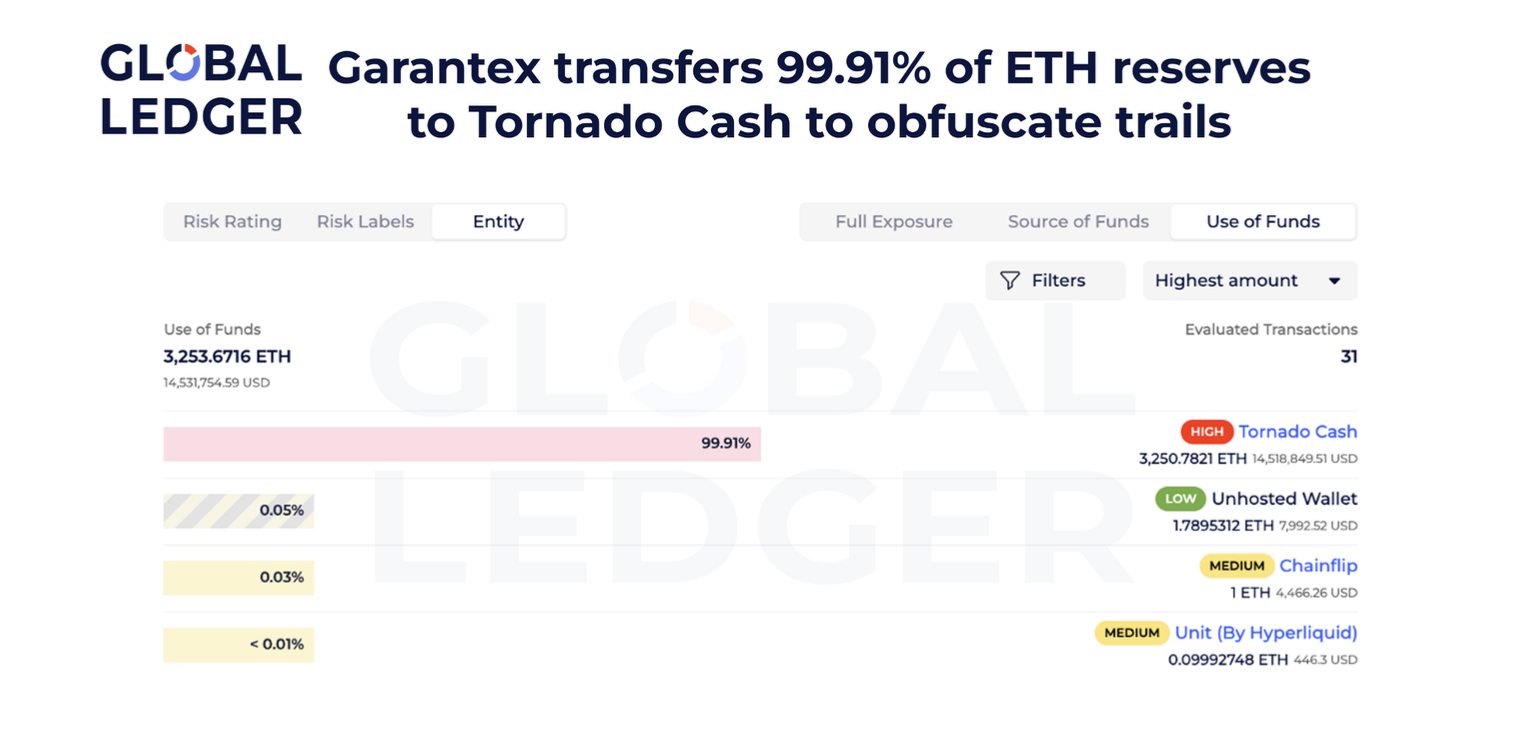
Global Ledger explained that Garantex is operating a payout system designed to conceal the flow of money. The exchange shifts its reserves into mixing services such as Tornado Cash, which scramble the funds to obscure their origin. 

Garantex uses Tornado Cash to obscure money movement. Source: Global Ledger.

The money is then routed through a series of cross-chain tools. These facilitate the transfer of assets between networks, including Ethereum, Optimism, and Arbitrum. These transfers eventually end up in aggregation wallets, and from there, the funds are distributed to individual payout wallets.

The investigation also found that most Ethereum reserves remain untouched. More than 88% of the ETH linked to Garantex remains in reserve, indicating that only the initial phase of payouts has commenced.

The findings in the Global Ledger report are situated within a broader transformation within Russia’s financial system.

How Russia Uses A7A5 to Keep Trade Alive

Russia has made a remarkable shift in its approach to digital assets. 

In early 2022, the Russian Central Bank proposed a blanket ban on cryptocurrencies, describing them as a threat to financial stability. By 2024, the country had reversed its position and began using crypto to support trade under sanctions.

President Vladimir Putin has also personally backed a new payment network called A7. 

A7 launched a rouble-backed stablecoin named A7A5 at the start of 2025. This token enables the flow of money in and out of the conventional financial system, and according to Chainalysis, it has already supported more than $87 billion in trading activity.

Russian companies utilize A7A5 to convert rubles into USDT. This allows Russian firms to continue making cross-border payments even when banks refuse to process transfers linked to Russia.

While Russia works to build a financial system that no longer depends on Western channels, the Global Ledger findings add a critical new layer by showing that Garantex has not disappeared. 

Instead, it has adapted its operations and continues to move money through structures that mirror newer state-backed systems.

Taken together, the evidence shows how states are developing new crypto-based payment systems that circumvent country-specific sanctions and erode traditional forms of external pressure.

The post Russia Revives Blacklisted Crypto Empire Garantex to Outrun Sanctions appeared first on BeInCrypto.
  •  

Twenty One Capital Goes Live on the NYSE – Now What?

Twenty One Capital has made its debut on the New York Stock Exchange (NYSE), entering the public markets with a substantial Bitcoin treasury and a similarly large spotlight. 

Its stock slid sharply on day one, raising a clear question for investors and the industry: what comes next for a company built around Bitcoin during a market downturn?

A Bitcoin Giant’s Wall Street Debut

Trading under the ticker XXI, the company enters the market with more than 43,500 Bitcoin on its balance sheet. 

That holding, worth about $3.9 billion, makes Twenty One Capital one of the largest corporate holders of the asset. Jack Mallers, who co-founded the firm, framed the listing as a bid to give Bitcoin a defined place in traditional markets. He argued that investors deserve access to a company built entirely on Bitcoin’s monetary logic.

Hello, world. $XXI pic.twitter.com/SFoLLwGnCd

— Twenty One (@twentyone) December 9, 2025

Bitcoin is honest money. That’s why people choose it, and that’s why we built Twenty One on top of it,” Mallers said in a press release. “Listing on the NYSE is about giving Bitcoin the place it deserves in global markets and giving investors the best of Bitcoin: its strength as a reserve and the upside of a business built on it.”

This is not a fringe effort. Tether, Bitfinex, SoftBank, and Cantor Equity Partners sit behind XXI, giving the company a level of institutional weight rarely seen in Bitcoin-native launches. 

Cantor Equity Partners itself comes from a high-profile lineage: it was formed as a public acquisition vehicle backed by Cantor Fitzgerald, the investment firm led by Brandon Lutnick, son of US Commerce Secretary Howard Lutnick. That connection adds another layer of institutional pedigree to XXI’s entry into public markets.

Yet the first trading session was rough, with shares falling more than 24%. The reaction indicates caution, with investors likely wanting to see how XXI plans to operate beyond its headline treasury.

DATs Struggle as Bitcoin Slides

Twenty One Capital’s stock exchange debut arrives at a time of renewed pressure in crypto markets. 

Bitcoin has fallen by roughly 30% from its October peak, and related equities have weakened in tandem. 

Meanwhile, digital asset treasuries (DATs) have been particularly hard-hit, as their valuations often fluctuate in tandem with their reserves. Analysts now stress that DATs must prove they offer more than exposure to Bitcoin. The generous mNAV premiums of earlier quarters have faded, and investors are demanding clearer business models.

1/ I see a lot of bad analysis of DATs, or digital asset treasury companies. Specifically, I see a lot of bad takes on whether they should trade at, above, or below the value of the assets they hold (their so-called “mNAV”).

Here's how I approach it.

— Matt Hougan (@Matt_Hougan) November 23, 2025

Against this backdrop, XXI faces a challenging environment for a new listing. It must demonstrate its ability to navigate volatility and build operations that can withstand Bitcoin’s fluctuations.

Growth Plans Await Market Validation

Mallers and his team have said the company aims to grow far beyond simple accumulation

XXI has stated that it plans to develop Bitcoin-based lending tools and capital markets products.

It also aims to create educational and media initiatives to promote broader Bitcoin adoption.

These remain early-stage intentions rather than launched business lines, reflecting the company’s ambition to build a broader ecosystem rather than remain a static treasury.

Whether investors will welcome that approach remains uncertain. 

Some see XXI as a future industry heavyweight, backed by deep institutional networks. Others note the weak crypto market and broader investor caution toward merger-driven listings. 

The debut is a milestone, but the next phase will depend on proven results rather than vision.

The post Twenty One Capital Goes Live on the NYSE – Now What? appeared first on BeInCrypto.
  •  

November Might Have Killed NFTs For Good

Last month marked the weakest period for NFT sales in 2025, with the market cap shedding hundreds of millions of dollars.

The latest figures reinforce the ongoing decline in demand for these assets, which once surged to record highs before entering a prolonged reversal after the 2022 crypto winter.

NFT Sales Sink to New Lows

November’s slump was steep. Total non-fungible token (NFT) sales fell to $320 million, nearly halving from October’s $629 million, according to CryptoSlam. That places monthly activity back near September’s $312 million, erasing what little momentum the sector had regained earlier in the fall. 

According to CoinMarketCap, the weakness has already carried into December, where the first seven days generated just $62 million in sales, marking the slowest weekly performance of the year.

NFTs are soo downbad right now.

Market cap dropped from $6.6B to $3.5B and volume is down about 65 percent.

OpenSea’s most hyped token even got pushed to Q1 2026.

Most holders aren’t down because of price. They’re down because nobody is buying.

The healthiest reboot this… pic.twitter.com/YTrWoK3UKv

— Salem☠️ (@web3_Salem) December 3, 2025

The broader valuation picture reflects the same downward pressure. CoinGecko data shows the market cap of NFT marketplaces has fallen to $253 million, its lowest level on record, as prices continue to decline across even the most established collections.

This downturn is not an isolated event but the continuation of a broader, years-long contraction that has reshaped the NFT landscape since its explosive rise in the early 2020s.

From Hype Cycle to Hard Reset

NFTs first entered mainstream awareness in 2020, when early art sales and experimental drops attracted niche communities.

By 2021, the market had become a full cultural phenomenon. Trading volumes on platforms like OpenSea soon surged to billions each month.

Collections like CryptoPunks and Bored Ape Yacht Club turned into status symbols. They drew celebrities, global brands, and institutional investors. The momentum lasted into early 2022, when NFT activity hit record highs.

The peak did not last. As the broader crypto market weakened in mid-2022, NFT trading volumes contracted fast.

Liquidity dried up. Speculative capital pulled back, and floor prices across major collections fell sharply. Wash trading scandals hurt trust, and oversaturation added pressure. Thousands of low-effort collections competed for limited attention.

By late 2022, monthly volumes had decreased by more than 90% from their peak. Over the next two years, the market continued to normalize.

Some utility-driven NFTs, such as gaming assets and loyalty tokens, held steady pockets of activity. But legacy profile-picture collections lost relevance. Marketplaces fought for users with aggressive incentives, often boosting volume without creating real profit.

By 2025, the sector had shifted into a quieter role. It now operates as a niche segment within the broader digital asset market.

The post November Might Have Killed NFTs For Good appeared first on BeInCrypto.

  •  

Maryland Man’s Fraud Conviction Highlights North Korea’s Rising Crypto Threat

A Maryland man was sentenced to prison this week for helping IT workers linked to North Korea infiltrate US companies.

This incident fits into a wider pattern in 2025, where insider access and rising crypto theft are becoming key features of North Korea’s cyber strategy. 

US Jobs Opened to North Koreans

The Justice Department announced on Thursday the sentencing of Minh Phuong Ngoc Vong, an American citizen convicted of conspiracy to commit wire fraud. Prosecutors proved that Vong used false credentials to secure remote software development jobs for North Korean nationals at 13 American companies.

According to public documents, Vong allowed a foreign operator to use his logins, devices, and identity documents to perform the work remotely. The man, who operated from China, is believed to be from North Korea.

One job created a particular risk when a Virginia technology firm hired Vong for work on a Federal Aviation Administration contract in 2023. 

Maryland Man Sentenced for Conspiracy to Commit Wire Fraud https://t.co/avJWBhOWVi

— National Security Division, U.S. Dept of Justice (@DOJNatSec) December 4, 2025

The role required US citizenship and granted him a government-issued personal identity verification card. Vong installed remote-access tools on the company laptop. The move allowed the North Korean man to complete the work from abroad inconspicuously.

The company paid Vong more than $28,000, and he sent part of those earnings to his overseas partners. Court filings show he collected over $970,000 across all companies, with most of the work performed by North Korean-linked operatives. Several firms also subcontracted with him for US government agencies, further expanding the exposure.

Vong was sentenced to 15 months in federal prison, followed by three years of supervised release.

The case comes as North Korea intensifies its global cyber operations

Record Year for North Korean Hacks

In October, blockchain analytics firm Elliptic reported that North Korea-linked hackers had stolen over $2 billion in cryptocurrency in 2025. This figure represents the highest annual total ever recorded. 

The overall amount attributed to the regime now surpasses $6 billion. These proceeds are widely believed to support nuclear and missile development.

This year’s surge stemmed from several major incidents, including the $1.46 billion Bybit breach, as well as attacks on LND.fi, WOO X, and Seedify. Analysts have also connected more than 30 other hacks to North Korean groups.

Most breaches in 2025 began with social engineering rather than technical flaws. Hackers relied on impersonation, phishing, and fabricated support outreach to gain wallet access. The trend highlights a growing focus on human weaknesses over code vulnerabilities.

Taken together, these trends suggest a coordinated approach, with North Korea combining insider infiltration with advanced cryptocurrency theft to expand both its income and operational footprint.

The post Maryland Man’s Fraud Conviction Highlights North Korea’s Rising Crypto Threat appeared first on BeInCrypto.

  •  

What Does the Market Structure Bill ‘CLARITY Act’ Need to Pass in 2026?

With 2026 on the horizon, uncertainty is mounting over whether the crypto market structure bill will sail through early in the year or become mired in a political fight that pushes its passage further down the calendar.

Key unresolved issues continue to slow momentum, including how the bill should address stablecoin yield, conflict-of-interest language, and the treatment of decentralized finance under federal law.

Path to Senate Vote Uncertain

The CLARITY Act cleared the House in July with broad bipartisan support, marking the strongest move yet toward a federal digital asset framework.

The bill now awaits action in the Senate, where the Banking and Agriculture committees are advancing parallel versions of a market-structure framework. The Senate’s split jurisdiction adds complexity, with the Banking Committee overseeing securities, while the Agriculture Committee handles commodities.

Both committees have now published discussion drafts, but a unified package has yet to emerge. Lawmakers still need to reconcile differences before either committee can send a combined bill to the Senate floor.

One major technical dispute involves how the legislation should treat yield-bearing stablecoins.

Banks Push Broader Yield Restrictions

The GENIUS Act, passed earlier this year, bars permitted stablecoin issuers from paying holders any form of interest or yield. 

However, the restriction is narrowly written. It applies only to direct payments from payment-stablecoin issuers and does not explicitly cover reward programs, third-party yield, or other digital asset structures.

The banks demanded the exclusion for yield-bearing stablecoins in the GENIUS Act. Now they're upset that the language they asked for doesn't screw over stablecoin holders hard enough.

Sorry you guys did a bad job negotiating your regulatory moat. Try lobbying better next time! https://t.co/3BbjUxmZlm

— Jake Chervinsky (@jchervinsky) August 13, 2025

Banking groups argue these gaps could allow workarounds and are urging lawmakers to expand the prohibition in upcoming market structure legislation. They want a broader rule that covers all forms of yield associated with stablecoins. 

Several senators appear open to that approach, giving the issue significant weight in negotiations. Any expansion would influence how stablecoins compete with traditional bank deposits, which remains a central concern for the banking lobby.

Meanwhile, lawmakers remain divided over how the broader framework should address potential conflicts of interest.

Concerns Over Political Influence Intensify

The involvement of US President Donald Trump and his family members in crypto-related projects has prompted renewed scrutiny of potential ethical concerns. 

Some lawmakers, such as Senator Elizabeth Warren, argue that new conflict-of-interest language is necessary to ensure that political figures and their relatives are prohibited from engaging in activities that could raise questions about their influence over digital asset policy.

Such measures would help insulate the legislation from perceptions of political interference.

However, the proposed language does not appear in the House-passed CLARITY Act, nor was it included in earlier Senate drafts. Its absence has become a point of debate, and the disagreement is contributing to ongoing hesitation.

Meanwhile, questions remain regarding how the bill should address decentralized finance (DeFi).

DeFi Oversight Remains Unresolved

The market structure bill is designed for centralized intermediaries, including exchanges, brokers, and custodial platforms. Yet the rapid rise of DeFi introduces questions the Senate has not fully resolved.

First Ken Griffin screwed over Constitution DAO

Now he's coming for DeFi, asking the SEC to treat software developers of decentralized protocols like centralized intermediaries

Bet Citadel has been lobbying behind closed doors on this for years

Okay thats all pretty bad, but… pic.twitter.com/ExoNhbhadu

— Hayden Adams 🦄 (@haydenzadams) December 4, 2025

Current drafts primarily focus on custodial activity. However, some traditional financial institutions are advocating for broader definitions that would classify developers, validators, and other non-custodial actors as regulated intermediaries.

Such an approach would significantly expand federal oversight and reshape the legal environment for open-source development.

Until lawmakers define that boundary, the bill is unlikely to advance. The DeFi question remains one of the key factors shaping when the market structure bill may finally move forward in 2026.

The post What Does the Market Structure Bill ‘CLARITY Act’ Need to Pass in 2026? appeared first on BeInCrypto.
  •  

Michael Saylor Faces Backlash Over Private Jet Purchase Amid MicroStrategy Slide

Michael Saylor is once again at the center of Crypto Twitter’s scrutiny after new regulatory filings revealed that Strategy (formerly MicroStrategy) recently spent $27 million on a deposit for a corporate aircraft.

The disclosure has fueled a wave of criticism from users who argue that the purchase reflects misplaced priorities during a period of sharp volatility for both Bitcoin and Strategy’s stock.

Shareholders Question Strategy’s Spending Priorities

According to MicroStrategy’s Form 10Q filed on November 3, the company’s net cash used in investing activities rose sharply year-over-year. 

The filing revealed that for the nine months ending on September 30, Strategy made a $27 million deposit on a new corporate aircraft.

It also disclosed $19.38 billion in Bitcoin purchases funded through convertible notes, stock offerings across its STR series, and ongoing ATM programs.

Despite $MSTR being down 55% in the last year, @saylor needs a new jet.

The 10Q notes two major cash uses of cash in their investing activities

– $15.4B used to purchase BTC

– $27M “deposit on a new corporate jet”

I bet it’s gonna be a nice jet and painted orange. #MSTR pic.twitter.com/wxIpqdPwQu

— Novacula Occami (@OccamiCrypto) December 2, 2025

Although companies often use corporate funds for executive travel, critics argued that the context is especially important for Strategy. 

The firm no longer resembles a traditional product-driven software company. Instead, it functions as a vehicle tied to Bitcoin’s volatile price movements. 

With MSTR down about 30% over the past month, some investors questioned whether a multimillion-dollar aircraft aligns with its stated Bitcoin-first strategy.

Investor Confidence Tested

Crypto Twitter reacted sharply, arguing that shareholder capital should focus on increasing the firm’s Bitcoin position rather than expanding executive privileges. 

Users expressed frustration that the jet deposit came alongside billions in financing tied directly to new equity issuances. Others suggested the timing of the purchase undermined confidence in the company’s alignment with its retail investor base.

Strategy supporters countered that corporate aircraft are common for firms with global operations and high-volume executive travel requirements. They also noted that the $27 million deposit represents a small fraction of the capital committed to Bitcoin accumulation during the same nine-month period. 

Ok you named companies that actually have real product and services, and extremely profitable.

Michael Saylor and Strategy are on the verge of bankruptcy, facing major losses from BTC, and about to be forced to sell.

Maybe use your brain for once instead of relying on AI.

— Jacob King (@JacobKinge) December 3, 2025

Still, the dispute reflects a broader disagreement over how a Bitcoin-focused public company should balance its operational needs with public optics.

As Bitcoin continues to fluctuate, the episode highlighted how closely Saylor’s decisions are tied to market sentiment, especially during periods of heightened volatility. 

The debate also revealed how investor expectations shift when a company positions itself almost entirely around a single macro-sensitive asset. 

The post Michael Saylor Faces Backlash Over Private Jet Purchase Amid MicroStrategy Slide appeared first on BeInCrypto.
  •  

Why the Latest Binance Lawsuit Is More Dangerous Than Any Regulator

A lawsuit against Binance is testing the extent to which crypto platforms can be held liable for real-world harm. Filed by families of victims of the October 2023 attacks against Israel, it arrives amid continued backlash over the recent presidential pardon of founder Changpeng Zhao (CZ).

More than a new legal headache, the lawsuit is being watched as a potential blueprint for a shift from regulatory fines to high-stakes private liability tied to terrorism financing.

Terror Financing Claims Hit Binance

The case, brought by more than 70 families in a US federal court last week, accuses Binance of knowingly enabling transactions for Hamas, Hezbollah, Iran’s Islamic Revolutionary Guard Corps, and other US-designated terrorist groups.

The plaintiffs, mostly relatives of those killed or injured in the October 7 attacks, argue Binance was not merely exploited. They say the platform structurally enabled terrorist financing at scale.

“For years, Defendants knowingly, willfully, and systematically assisted Hamas… and other terrorist groups to transfer and conceal the equivalent of hundreds of millions of US dollars through the Binance platform in support of their terrorist activities. This assistance directly and materially contributed to the October 7 Attacks and to subsequent terrorist attacks,” read the complaint.

Earlier government investigations have focused on Binance’s anti-money laundering failures. However, this lawsuit reframes the narrative, arguing that CZ’s stewardship of the platform has systemically contributed to real-world violence. 

The lawsuit also arrives at a consequential moment for the company.

Last month, US President Donald Trump granted Binance founder CZ a pardon after Binance participated in a multibillion-dollar deal tied to a crypto venture linked to the Trump family. 

The move cleared CZ’s criminal record and could allow him to take on a more direct role at the company.

Just posted: the pardon that Trump issued to @cz_binance on Tuesday.

It wipes away CZ's conviction for failing to maintain an effective anti-money laundering program, which prosecutors said allowed Hamas, Al Qaeda & ISIS to move money using @binance. https://t.co/ptbRCzxhd3 pic.twitter.com/1B9tKnZG6P

— Kenneth P. Vogel (@kenvogel) October 25, 2025

The case also arises two years after Binance’s 2023 settlement with US authorities, which included a $4.3 billion penalty. The company admitted to violating the Bank Secrecy Act and US sanctions laws. CZ pleaded guilty, stepped down as CEO, and served a four-month prison sentence.

While CZ’s pardon suggested Binance was in the clear, the lawsuit shows neither he nor the company is insulated from civil liability.

Despite Criminal Leniency, Civil Claims Intensify

The families’ lawsuit builds on facts already established by US criminal enforcement, giving the plaintiffs a strong legal foundation.

Because Binance has already admitted to sweeping violations of the Bank Secrecy Act and US sanctions laws, the burden of proof is significantly lower. The families argue Binance embedded these flaws in its core operations, not in isolated compliance failures.

Rather than leaning on broad allegations, the complaint reportedly names specific wallets, laundering intermediaries, and transaction flows tied to designated terrorist groups. 

In its structure, the case closely mirrors the way federal prosecutors assemble complex criminal indictments. The difference is that this same evidentiary framework is now being deployed by private plaintiffs under US anti-terrorism statutes.

Those laws allow victims of terrorism to pursue civil damages against entities accused of providing material support, even indirectly. This legal pathway transforms Binance’s past regulatory violations into the foundation of a potentially massive civil liability case.

For years, crypto enforcement followed a cycle: regulators investigated, companies paid fines, executives stepped aside, and markets moved on. Civil litigation tied directly to terrorism financing breaks that rhythm. 

Unlike regulatory settlements, which cap financial exposure and close legal chapters, terror-related civil cases can involve multiplied damages and years of continuing risk.

A New Enforcement Class?

For the crypto industry, the implications extend far beyond one exchange or one courtroom. If the case survives early dismissal and proceeds to discovery, it could lead to new scrutiny of how centralized platforms monitor, flag, and freeze high-risk activity. 

More significantly, a win for the families could establish that private plaintiffs—not just regulators—now pose one of the most serious financial threats to crypto businesses. 

In that scenario, compliance failures would no longer result in fines alone. They would become long-tail liabilities that follow platforms for years to come.

The post Why the Latest Binance Lawsuit Is More Dangerous Than Any Regulator appeared first on BeInCrypto.

  •  

Could Tokenized Gold Become the Next Standard in Stablecoins?

Tokenized gold is gaining momentum as geopolitical uncertainty and rising gold prices weaken trust in fiat-backed assets. Major institutions and sovereign actors are launching or expanding gold-backed tokens. 

This shift suggests tokenized gold may soon move beyond its niche role amd become a credible next-generation, stable, and globally usable digital value.

A Five-Year Flight to Safety

The turbulence of the past few months has reinforced the role of gold as a safe-haven asset. It was only two months ago that the metal’s price hit a record, surpassing $4,000 per ounce. 

This isn’t only a recent phenomenon. Between 2020 and 2025, the price of gold more than doubled, reflecting a wider flight to safety as global markets confronted a pandemic, inflation, wars, sanctions, and persistent geopolitical tensions. 

The price of gold over the past five years. Source: Gold Price.

At the same time, advances in blockchain technology have transformed the use of gold. Tokenization, instant settlement, and 24/7 global liquidity now make a traditionally static asset far more flexible in digital form.

Several developments show how quickly the trend is gaining traction across both crypto and traditional finance.

Institutional Gold Tokens on the Rise

Last month, Swiss metals giant MKS PAMP, one of the world’s largest gold refiners and a major supplier of precious metals to global markets, relaunched DGLD, a gold-backed token designed for institutional investors.

In the crypto space, Tether Gold (XAUt) continues to see steady growth. Pax Gold (PAXG), launched by New York–regulated blockchain firm Paxos, is also expanding. Together, their market caps now exceed $3 billion, making them the most widely used gold-backed digital assets available to the public.

What if "Digital Gold" is really tokenized gold?

$1b to $3b YTD with trillions to go. pic.twitter.com/cJQF7RYkDA

— Emperor Osmo 🐂 🎯 (@Flowslikeosmo) November 28, 2025

Traditional banking players are also testing the waters. HSBC, one of the largest multinational banks and a major custodian of physical gold through its London vaults, is experimenting with its own gold token for clients.

While these digital gold products are still relatively small compared to the market value of gold exchange-traded funds (ETFs), their expansion signals a growing confidence that blockchain-based gold is becoming a credible financial instrument.

In fact, the movement is not even limited to the private sector. 

In November, Kyrgyzstan launched USDKG, the first gold-backed stablecoin pegged to the US dollar. Backed by the country’s national gold reserves, it offers a sanction-resistant tool for cross-border payments and trade. Kyrgyzstan’s approach could also encourage other, larger nations to follow suit. 

Still, some challenges remain. 

Regulators Stay Wary

Gold-backed tokens still have no clear industry standard, which makes it harder for users to compare their reliability. 

Transparency also varies. Some issuers publish regular third-party audits, while others offer limited details about their vaults or redemption processes. Regulations differ widely across countries, adding another layer of uncertainty for consumers and businesses. 

These gaps explain why many governments remain cautious. 

Officials worry that freely circulating gold-backed assets could weaken confidence in national currencies and complicate monetary policy. They also fear that digital gold could facilitate the movement of money outside traditional banking controls.

Even so, momentum is unmistakable. 

If clearer rules and rising geopolitical pressures push the industry forward, tokenized gold could move from the margins to become a core pillar of stable, globally usable digital money.

The post Could Tokenized Gold Become the Next Standard in Stablecoins? appeared first on BeInCrypto.
  •  

Are Israel and China Threatening the US Stablecoin Plan?

Two major economies are tightening control over digital currencies just as the US pushes to cement its leadership in the stablecoin sector. Israel is accelerating its digital shekel plans while China continues to expand the digital yuan. 

These moves signal a broader global shift toward sovereign digital money that could challenge the reach and influence of US dollar–based stablecoins.

Israel Tightens Rules, Advances Digital Shekel

Stablecoins have become a central pillar of the digital asset market, moving well beyond their early role as a trading convenience. 

The sector now processes more than $2 trillion in monthly volume and holds a market cap above $310 billion, almost all of it in dollars. That growth has prompted private companies to assume a leading role in operating key components of global payment infrastructure.

Stablecoin market capitalization exceeds $310 billion. Source: CoinGecko.

As their influence expands, governments are stepping back in. Many are introducing new rules aimed at limiting the reach of USD-linked tokens.

During a recent conference in Tel Aviv, Bank of Israel Governor Amir Yaron stated that the country is preparing to implement much stricter oversight of stablecoins, citing growing concerns over the sector’s concentration.

With most activity dominated by Tether and Circle, he warned that any issue with their reserves or backing could spill into the wider financial system. 

Yaron also noted that stablecoins are now so embedded in global money flows that they can no longer be treated as a niche market, adding that the sector’s scale already rivals that of a mid-tier international bank.

Alongside these warnings, Israel is also accelerating its digital shekel initiative, its proposed central bank digital currency

The Bank of Israel recently published a detailed design document outlining user journeys, technical architecture, and key policy considerations. Officials say the project aims to strengthen the country’s payment infrastructure and reduce reliance on private digital assets.

As Israel builds its regulatory and technological framework, China is taking a far more forceful path.

Beijing Shuts Out Stablecoin Influence

China’s central bank has doubled down on its broad crypto ban, working with different government bodies to target stablecoin activity and close remaining loopholes.  Officials say digital assets fuel money laundering and capital flight, and they stress that these tokens carry no legal currency status.

The crackdown is also unfolding alongside the rapid growth of the digital yuan

According to Ledger Insights, the People’s Bank of China recently reported that e-CNY transaction volumes nearly doubled in the past 14 months, reaching $2 trillion by September. 

Pilot programs are now operational across major cities, public-sector payment systems, and select commercial routes. This push is embedding the state-issued currency deeper into daily financial activity.

🇨🇳 People's Bank of China announces full integration of its digital cross-border system with ten ASEAN countries and six Middle Eastern countries

This will significantly increase global trade through digital yuan. Many experts believe that figures of up to 38% will be achieved,… pic.twitter.com/bagM1owks8

— Lord Bebo (@MyLordBebo) November 14, 2025

By walling off stablecoins and accelerating the digital yuan, China aims to cut dependence on foreign currency rails, especially those tied to the US dollar. The strategy also helps preserve tight control over data, capital flows, and payment infrastructure.

Together with Israel’s more measured but still sovereignty-driven approach, China’s escalation highlights a clear global shift. 

Major economies are no longer willing to let USD stablecoins define the future of payments. Many are now building or enforcing their own digital systems and challenging the US’s ambitions for stablecoin dominance.

The post Are Israel and China Threatening the US Stablecoin Plan? appeared first on BeInCrypto.

  •