Reading view

Bagaimana Tren Investasi VC Kripto di Pasar Bearish?

Venture capital adalah darah kehidupan di dunia startup Web3 dan aset kripto. Para pengusaha perlu mengumpulkan dana untuk proyek agar bisa merekrut orang-orang berbakat, membayar biaya operasional, dan melakukan pemasaran demi menumbuhkan bisnis. 

VC tentu saja senang melakukan investasi ini, sebab mereka juga mendapatkan bagian dari keuntungan jangka panjang—jika memang keuntungan itu benar-benar ada. Sebagian besar startup gagal, dan bisnis ini sangat bergantung pada lahirnya unicorn untuk mendorong pertumbuhan dana ventura. 

Pasar aset kripto memiliki keunikan tersendiri, karena banyak startup juga meluncurkan token sebagai bagian utama. Namun, performa pasar aset digital sendiri akhir-akhir ini kurang begitu baik. 

Sejak Oktober, saat harga per 1 BTC mencatat rekor US$126.000, aset oranye ini telah turun 25%

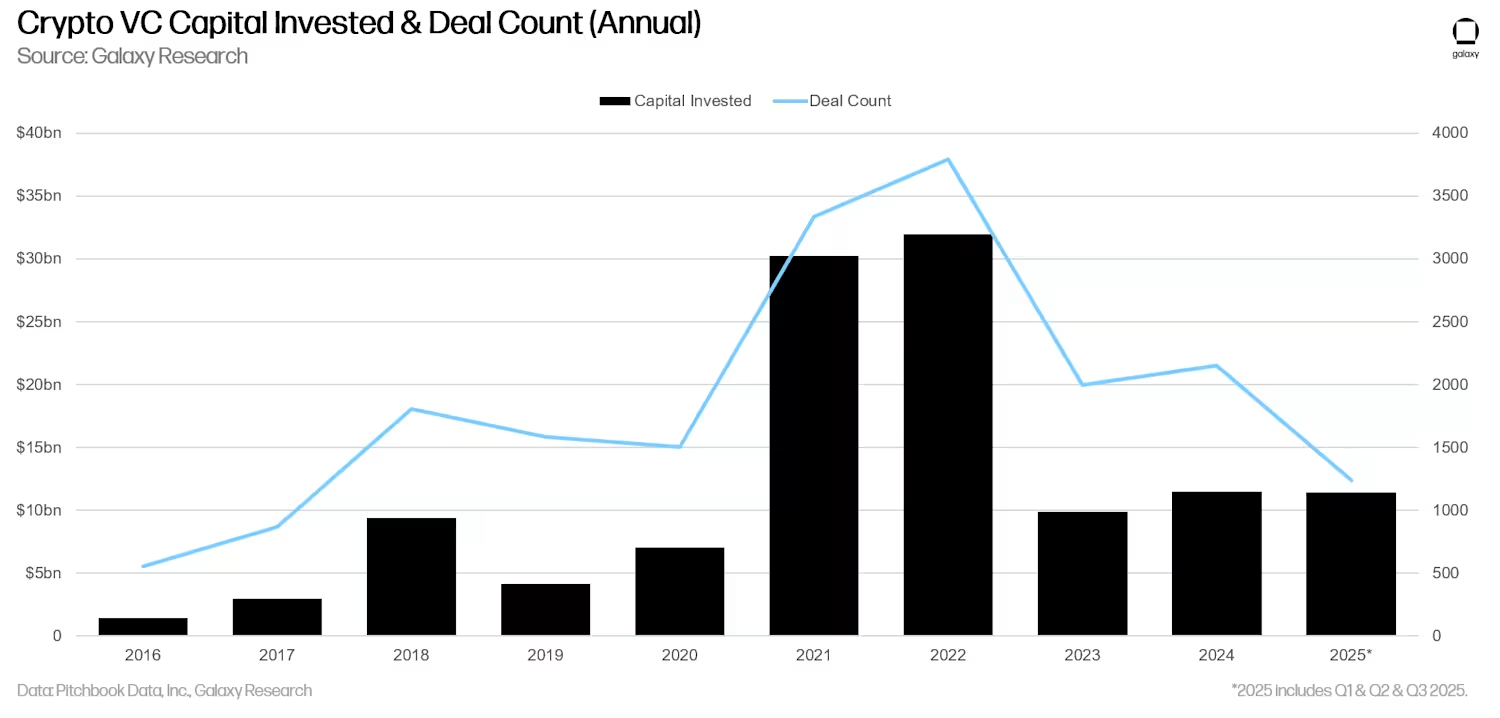
Investasi VC Kripto Selama 10 Tahun Terakhir | Sumber: Galaxy Research

Harga kripto sangat mempengaruhi pasar VC, dan dinamika pengumpulan dana untuk startup pun jelas sudah berubah. Lalu, bagaimana gambaran keadaan saat ini? 

“Siklus pasar bisa memengaruhi sentimen investasi dan dapat memperlambat atau mempercepat proses penutupan kesepakatan,” terang Stefan Deiss, CEO Hashgraph Group, yang fokus pada investasi VC di ekosistem Hedera.

Ekspektasi Lebih Rendah dari Venture Capital

Salah satu hal pertama yang terjadi ketika tren kripto bergerak menurun adalah valuasi startup ikut turun. 

Mungkin kesannya tidak berhubungan langsung, tapi konsep “hot rounds” atau ronde pendanaan untuk startup yang sedang populer jadi menurun, dan VC tidak terlalu tertarik lagi dengan valuasi selangit, tutur Artem Gordadze, investor malaikat di NEAR Foundation serta penasihat di akselerator startup Techstars.

“Saat Bitcoin diperdagangkan pada level tinggi, misalnya saat dianggap di posisi US$100.000, valuasi startup juga ikut tinggi,” ucap Gordadze. “Ini memunculkan dinamika yang menantang: VC mesti membenarkan valuasi awal berdasarkan potensi harga masa depan yang harus benar-benar tercapai dalam jangka waktu investasinya demi menghasilkan imbal hasil yang layak.”
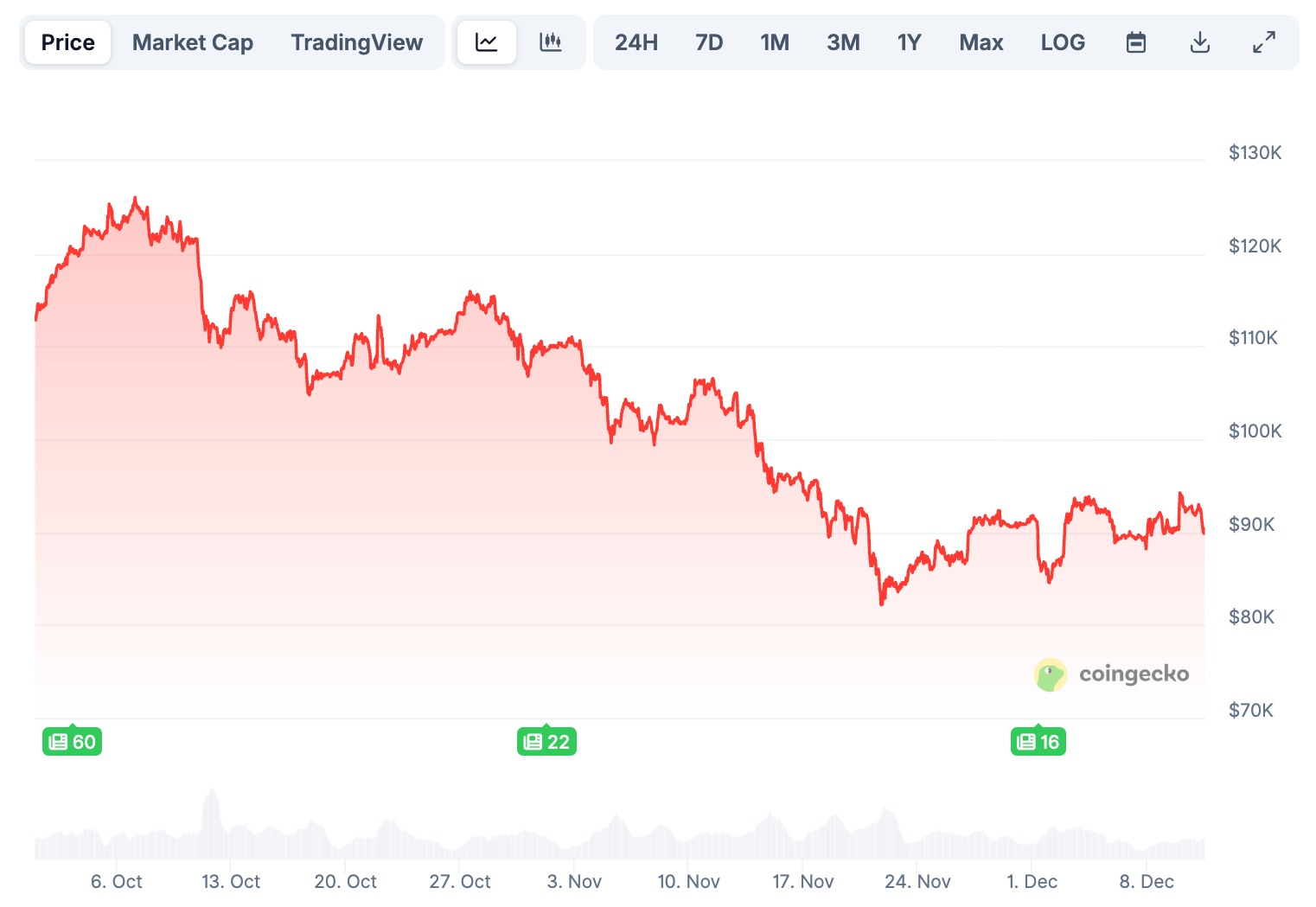
Harga Bitcoin sejak awal Q4 pada 1 Oktober | Sumber: CoinGecko

Teori bahwa harga Bitcoin selalu naik sepertinya bukan sesuatu yang dipercaya para investor VC. Karena investasi VC memang cenderung jangka panjang, mereka sudah mengalami banyak siklus, terutama bersama Bitcoin. 

Selain itu, banyak VC biasanya menyebut bulan November dan Desember sebagai “bulan write-off”. Maksudnya, mereka tidak terlalu berharap banyak kerjaan di kuartal keempat dan musim liburan, sehingga lebih memilih mulai berinvestasi lagi setelah tahun baru. 

Pandangan Pragmatis

Dilihat dari sudut pandang “helikopter”, khususnya di sektor kripto, trennya adalah pengeluaran tetap ada namun volumenya lebih kecil. 

Sebagai contoh: Polymarket, platform prediksi, berhasil mengumpulkan US$1 miliar, sedangkan Kraken meraih pendanaan sebesar US$800 juta pada kuartal ini. 

Pada kuartal ketiga, total pendanaan mencapai US$4,59 miliar, tapi setengahnya hanya terkonsentrasi pada tujuh kesepakatan, papar Alex Thorne, kepala riset di Galaxy. 
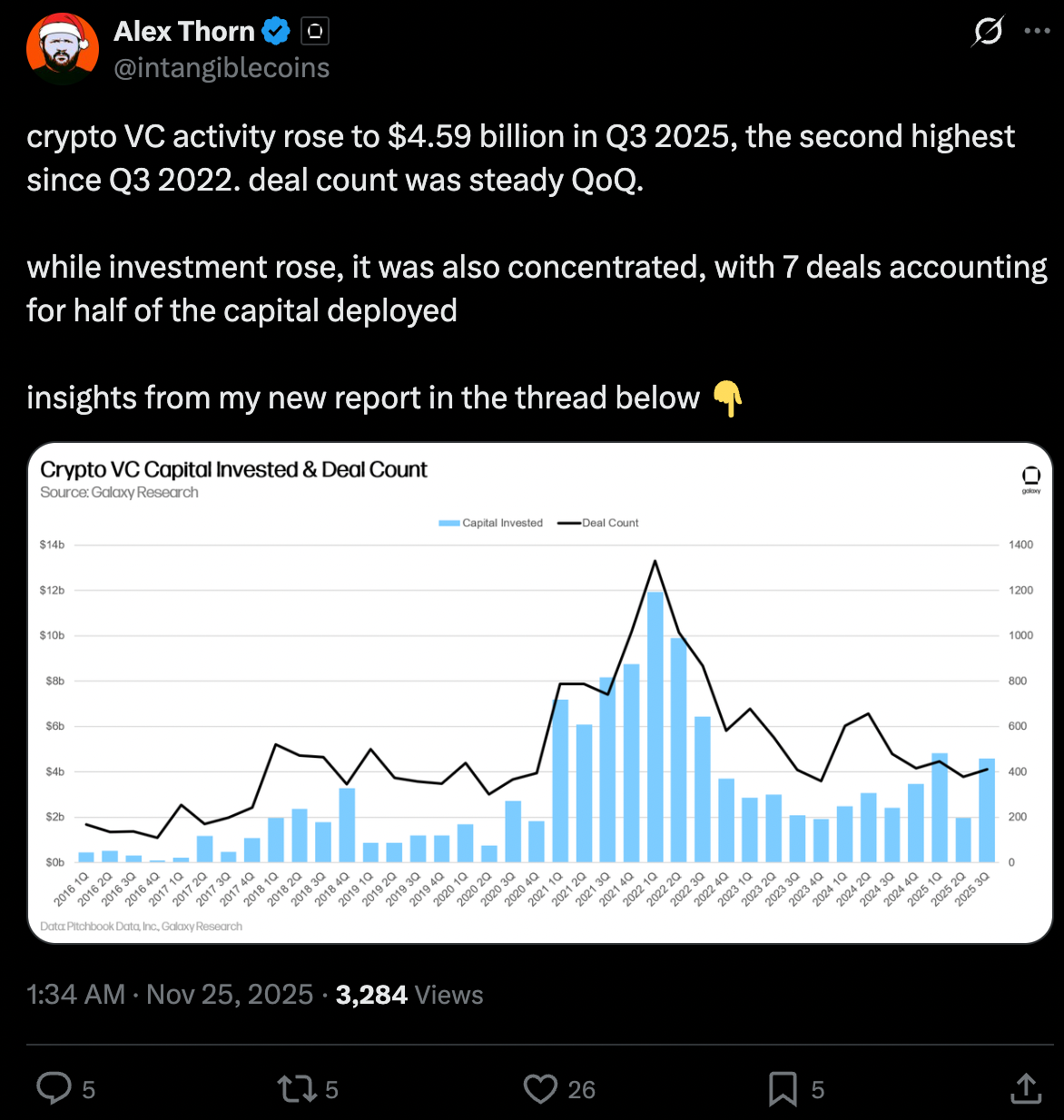
Uang masih mengalir: Q3 2025 jadi yang tertinggi kedua sejak Q1 2022 | Sumber: X

“Saat pasar turun, yang paling diperhatikan bukan lagi pergerakan harga tapi lebih pada ketahanan dalam pelaksanaan dan produk sebagai indikator utama,” ujar Deiss dari Hashgraph Group. “Kondisi downtrend justru mendorong investor untuk lebih fokus pada fundamental daripada momentum jangka pendek.”

Momentum jangka pendek itu memang seringkali hanya sekadar hype. Dan banyak proyek besar yang mendapat dukungan VC dan melakukan TGE ternyata performanya kurang baik tahun ini. Beberapa di antaranya adalah PUMP (turun lebih dari 50% selama 2025) dan Berachain (turun 91% semenjak diluncurkan Februari lalu). 

“Volatilitas tinggi dan valuasi di tahap awal yang masih tidak pasti menyebabkan pergeseran strategi distribusi modal yang cukup besar. Para investor kini lebih memilih strategi dengan siklus likuiditas lebih cepat dan kontrol harga lebih baik,” papar Gordadze. 

Lock-up dan Likuiditas

Salah satu aspek paling unik dari industri aset kripto adalah token generation event, atau TGE.

Pengganti ICO di masa lalu, Coinbase sekarang memfasilitasi TGE setelah mengakuisisi platform investor Echo seharga US$375 juta.

Monad menjadi proyek pertama yang meluncur di sana dan mengumpulkan dana US$296 juta, serta pasti akan ada proyek lain menyusul. 

Namun, setelah sebuah token meluncur, ada beberapa metrik yang khas di dunia kripto dan wajib investor ventura pantau dengan cermat. 

Salah satunya adalah lock-up, di mana saat TGE, tidak semua token langsung beredar di pasar; ada periode di mana aset-aset ini disimpan terlebih dahulu. Tujuannya agar mendorong partisipasi jaringan, mulai dari anggota tim, airdrop komunitas, hingga upaya foundation. 

Lalu, ada juga fully diluted value, atau FDV – yaitu jumlah total token dikali harga token – pada dasarnya seperti market cap semua token, meskipun belum semuanya unlocked. 

Dan ketika pasar bergerak liar, sungguh sulit memprediksi potensi exit token bagi VC sehingga ini bisa menjadi dilema.

Belakangan ini, Arthur Hayes dari Maelstrom Capital mengungkapkan kekecewaannya soal lock-up, terutama yang berkaitan dengan Monad. Sebagai seorang trader, Hayes jelas tidak suka jenis token yang likuiditasnya rendah ini. 
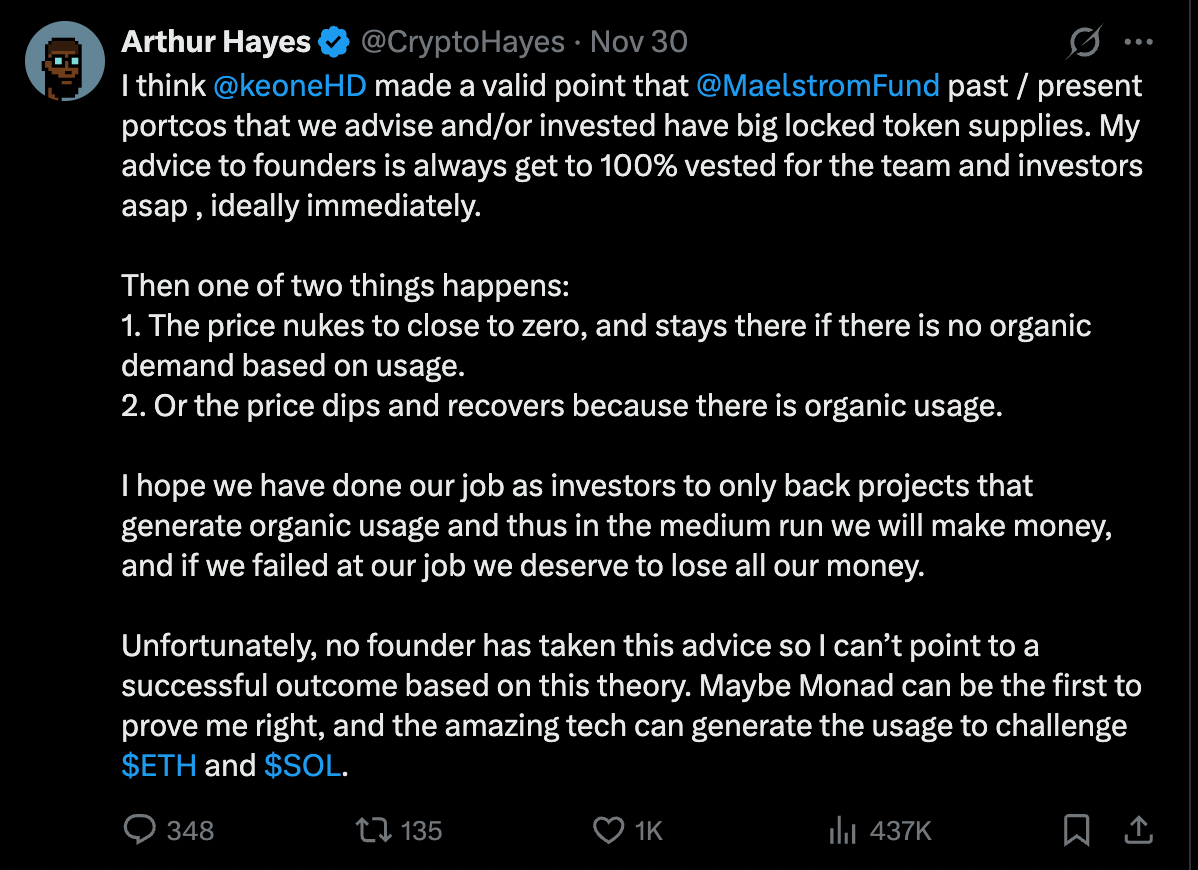
Arthur Hayes menandai Keone Hon dari Monad soal lock-up | Sumber: X

“Given the average token or equity vesting/lock-up period of 12 to 48 months, VCs must model the market’s likely condition when these lock-ups end,” ujar Gordadze, mentor Techstars. “The entry price must be strategically set to ensure a profitable exit, making long-term market forecasts crucial for deal finalization.

Masa Depan Investasi VC Aset Kripto di 2026 dan Seterusnya

Mengenai prediksi pasar, para VC memang suka membahas masa depan. Untuk dunia kripto, bila melihat kebijakan regulator AS yang lebih ramah di 2025, sepertinya tahun depan bisa jauh lebih positif. Apa itu cuma investor yang sedang berharap? 

Mungkin. Tapi para VC biasanya memang selalu optimistis. Optimisme, pada akhirnya, memang selalu jadi pemenang. 

“Tahun 2026 nampaknya akan menjadi fase utilitas nyata – DeFi bakal bangkit dengan momentum dan kedewasaan lebih baik, sementara stablecoin akan jadi background,” terang Deiss. Stablecoin memang mendapat sorotan tahun ini, walaupun pada dasarnya menjadi infrastruktur membosankan yang akan menopang, misalnya, Polymarket berikutnya yang memakai USDC di Polygon sebagai koin serta chain utama. 

“Kini setelah stablecoin benar-benar masuk arus utama dan bank mulai berlomba masuk, level selanjutnya adalah layanan untuk pengguna yang dipacu oleh aset-aset ini di balik layar,” papar Gordadze.

Area pertumbuhan paling signifikan kemungkinan besar ada di persimpangan AI/Blockchain dan RWA/Blockchain, karena di situlah peluang dampak dunia nyata serta pendapatan institusi paling besar tercipta.”

  •  

How is Crypto VC Investment Trending in a Bearish Market?

Venture capital is the lifeblood of the startup world in Web3 and crypto. Entrepreneurs need to raise money for projects in order to hire talented people, pay operating costs, and perform marketing for scaling a business. 

VCs, of course, are more than happy to do this, as they get a chunk of the long-term payoff – if there ever is one, of course. Most startups fail, and the business is highly predicated on unicorns to drive venture funds. 

The crypto market is unique, to be sure, with cryptocurrencies also playing a role as many startups launch tokens. However, the digital asset market hasn’t been performing as well. 

Since October, when the price per 1 BTC hit an eye-watering $126,000 record level, the orange asset is in the red by 25%

Crypto VC Investments Over the Past 10 Years. Source: Galaxy Research

Crypto prices impact the VC market, and dynamics have certainly changed for startups to raise money. What’s the outlook looking like overall right now? 

“Market cycles may influence investment sentiment and can slow or accelerate the pace of closing deals,” noted Stefan Deiss, CEO of Hashgraph Group, focused on VC in the Hedera ecosystem.

Lowered Expectations From Venture Capital

One of the first things that happens when crypto trends to a downward cycle is that startup valuations go lower. 

It may not seem directly related, but the concept of the “hot rounds” for fashionable startups cool off, and VCs don’t really go for sky-high valuations so much, noted Artem Gordadze, an angel investor in NEAR Foundation and advisor at startup accelerator Techstars.

“When Bitcoin is trading at high levels, like the perceived $100k level, startup valuations are commensurately high,” Gordadze said. “This creates a challenging dynamic: VCs must justify the entry valuation based on a potential future price that must materialize within the investment horizon to generate acceptable returns.”

Bitcoin’s price since the start of Q4 on October 1. Source: CoinGecko

It seems the theory that Bitcoin always goes up is not one venture capitalists are attuned to. Because of long time horizons for VC investments, they have seen many cycles, especially with Bitcoin. 

In addition, many VCs often call November and December “write-off” months. This means they don’t expect to do too much work during the fourth quarter and the holiday season, preferring to start investing anew after the calendar turns to another year. 

The Pragmatic View

The view of venture from 10,000 feet up, as it pertains to the crypto sector specifically, is one of spending, but less volume. 

Case in point: Prediction market Polymarket closed $1 billion, while Kraken took in $800m in funding this quarter. 

In the third quarter, the total amount of funding was $4.59 billion, but half of that was concentrated on just seven deals, according to Alex Thorne, head of research for Galaxy. 

The cash is flowing: 2025 Q3 was the second-highest since 2022 Q1. Source: X

“Market downturns sharpen the focus because you stop seeing price action as a signal but rather resilience in execution and product as the main indicators that count,” said Hashgraph Group’s Deiss. “Downturns push investors to focus more on fundamentals rather than short-term momentum.”

That short-term momentum may often be more hype than anything else. And many big venture-backed projects doing a TGE have not performed very well this year. This includes PUMP (down over 50% in 2025) and Berachain (a 91% drop since its February launch). 

“High volatility and uncertain early-stage valuations are driving a significant shift in capital deployment, favoring strategies with shorter liquidity cycles and better pricing control,” added Gordadze. 

The Lock-Up and the Liquidity

One of the most distinctive aspects of the cryptocurrency industry is the token generation event, or TGE.

The successor to ICOs of days past, Coinbase is now facilitating TGEs after its $375 million purchase of investor platform Echo.

Monad was the first project to launch there, raising $296m, and there’s surely more to come. 

However, once a token launches, there are a few metrics that are unique to crypto that venture investors must closely monitor. 

One is the lock-up, whereby, at TGE, not all tokens are circulating in the market yet; there is a period of holding these assets back. This is designed to better incentivize a network’s participants, from team members to community airdrops and foundation efforts. 

Then there’s fully diluted value, or FDV – this is the total number of tokens times the price – basically a market cap for all tokens, even if they haven’t been unlocked yet. 

And when markets gyrate, it’s really hard to forecast any potential exits of tokens for VCs, which can be a conundrum.

Recently, Arthur Hayes of Maelstrom Capital went on a rant about lock-ups, specifically related to Monad. As a trader, Hayes clearly doesn’t like the illiquidity of these types of tokens. 

Arthur Hayes tagging Monad’s Keone Hon about lock-ups. Source: X

“Given the average token or equity vesting/lock-up period of 12 to 48 months, VCs must model the market’s likely condition when these lock-ups end,” said Gordadze, the Techstars mentor. “The entry price must be strategically set to ensure a profitable exit, making long-term market forecasts crucial for deal finalization.

The Future of Crypto VC Investment in 2026 and Beyond

On the subject of market forecasts, VCs surely love to talk about the future. And for crypto, it seems, given favorable US regulatory actions in 2025, that next year could be much better. Is that just investor hopium? 

Maybe. But rose colored (or green) glasses are always the default mode for VCs. Optimism, of course, always wins. 

“2026 is shaping up as a year defined by real utility – DeFi will make a strong comeback with enhanced momentum and maturity and the stablecoin moment becomes background,” noted  Deiss. Stablecoins certainly had a moment this year, although they are the boring infrastructure that’s going to power, say, the next Polymarket, which uses USDC on Polygon as its main coin and chain. 

“Now that stablecoins are finally going mainstream and banks are rushing to get in, the next level will be services for users that are powered by these assets behind the scenes,” noted Gordadze.

The most significant growth areas will likely reside in the intersection of AI/Blockchain and RWA/Blockchain, as these represent the greatest opportunities for real-world impact and institutional revenue generation.”

The post How is Crypto VC Investment Trending in a Bearish Market? appeared first on BeInCrypto.

  •  

Could Bittensor Ever Be as Successful as Bitcoin?

Bitcoin is now, almost paradoxically to its original ethos, being adopted by Wall Street. Bittensor is a new finger to “the man” of centralization. It’s a sizzling hot narrative. With the rise of AI, concerns have arisen about the tech’s concentration and centralization. 

Bittensor, and its cryptocurrency, TAO, aims to decentralize AI services.  Despite losing nearly 53% in 2025, some believe Bittensor is a next-generation Bitcoin for the AI age. But how realistic is this optimism?

The Premise and Promise of Bittensor

The network just completed a reward halving on December 15, reducing its supply of minted coins. The problem is, many have heard this narrative before. 

With the first Bittensor halving complete, I can’t help but recall Bitcoin’s first halving, which I was fortunate enough to witness.  History doesn’t repeat, but the rhymes are unmistakable; both the parallels and differences between the two are striking:

Same: A Decentralized…

— Greg Schvey (@GSchvey) December 15, 2025

Plenty of cryptocurrencies have claimed to be “the next Bitcoin” – because there’s money to be made with that story. 

However, there could be some real value for Bittensor over the long run – though it has hurdles to overcome, as any sort of ambitious crypto project like this would.

The tale of Bittensor is not unlike Bitcoin: There are powerful incumbents, and a new network can take on and even upend this world order.

For years, influencers rehashed an often similar, anthemic phrase of “long Bitcoin, short the banks”. Notwithstanding that now Bitcoin is embedded in Wall Street banks and publicly traded DAT stocks, this narrative worked well. 

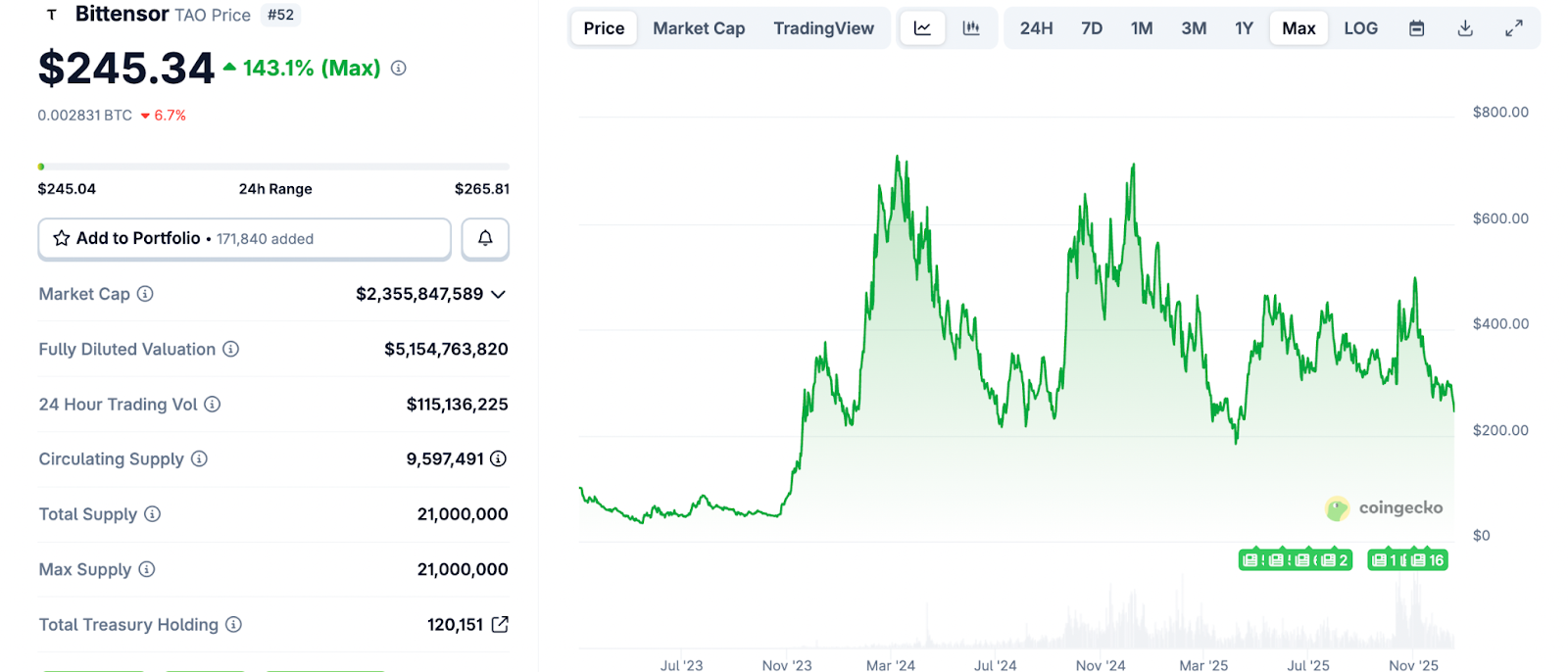
Bittensor’s price history since exchange listing in 2023. Source: CoinGecko

A premise is that AI companies such as OpenAI, Anthropic, and Deepseek have become too big and frightening, and people need to be concerned about their rise.


Decentralizing artificial intelligence workloads and replacing proof-of-work puzzles with actual real-use AI is Bittensor’s basic gist. 

“Bitcoin proved that cryptographic incentives could coordinate a global network of hardware to secure a ledger,” Evan Malanga, an executive at Yuma, one of the largest backers of the Bittensor platform, told BeInCrypto. “Bittensor takes that same mechanism and redirects the compute power toward something that has direct benefits in today’s world: Training and running AI models, applications, and infrastructure.”

Another Bitcoin? Really?

It’s important to note that Yuma is a subsidiary of Digital Currency Group (DCG), whose firm was one of the earliest backers of various cryptocurrencies, including Bitcoin, Zcash, and Decentraland. 

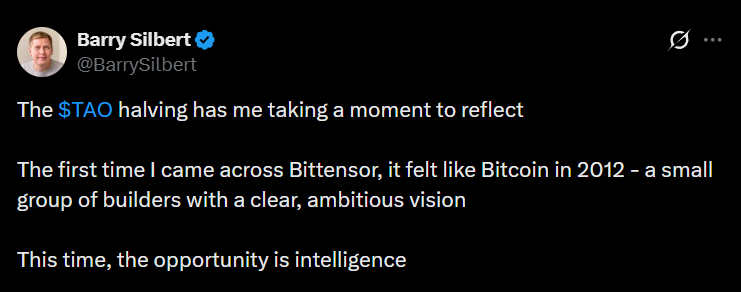
It was also an early investor in Coinbase, Circle, and Chainalysis. DCG’s CEO, Barry Silbert, is clearly on board with Bittensor – which for some could be considered a positive signal. 

Barry Silbert, who started crypto investing in 2012, is on board the TAO train. Source: X

Bittensor does have some Bitcoin-like characteristics. There are only 21 million units of TAO, clearly a nod to BTC. Bittensor also has halvings, which in December reduced its rewards from 7,200 TAO to 3,600 per day. 

Instead of the energy-intensive proof-of-work riddles Bitcoin uses, Bittensor uses something called proof-of-intelligence, where nodes must perform tasks to prove their capability in handling AI workloads. The better a node’s task output quality, the higher the chance it can receive rewards in TAO. 

Nodes that are allowed on the Bittensor network are then assigned a subnet, of which there are currently 128. These subnets have different AI-related specialties. 

“Each subnet is like a specialized marketplace for a specific type of AI service – some focus on image generation, others on language models,” said Arrash Yasavolian, the cofounder of Taoshi, which runs a financial intelligence subnet. 

Centralization Versus Decentralization

Concerns about AI often center on a few companies having concentrated power. Concentration in any industry typically means higher prices and poorer services for customers – sometimes both at the same time. 

Bittensor aims to make AI more of a global good with its decentralization characteristics, like having independent node operators power the subnets for its artificial intelligence capabilities. 

“AI is redefining every industry,” said Ken Jon Miyachi, CEO of BitMind, which runs a subnet focused on deepfake detections on Bittensor. ”Bitcoin revolutionized the store of value, but Bittensor is revolutionizing entire economic systems by making intelligence a global commodity.”

But how decentralized is this network? On July 10, 2024, the Bittensor network was halted amidst an $8 million hack that drained wallets. The chain was put into a “safe mode” that produced blocks without any transaction capabilities. 

“There are legitimate centralization concerns today,” noted Taoshi’s Yasavolian. “The OpenTensor foundation is the sole party responsible for validating blocks. The top 10 largest subnet validators comprise about 67% of total network stake weight.”

Some might argue that Bittensor’s security risks and ability to shut down the network are antithetical to decentralization. Proponents of the network say that full decentralization will come later, becoming “credibly neutral” the same way Bitcoin is supposed to be for store-of-value purposes. 

“Bittensor’s long-term strategic goal is to become a credibly neutral AI development tool. It’s progressive decentralization, similar to how Ethereum evolved,” Yasavolian added. 

The AI Alarm

One way to increase the decentralization of Bittensor and to hear more voices of dissent is via subnet operators. These groups are spending time and money to invest in the network, and they, like Yasavolian, voice their opinions. 

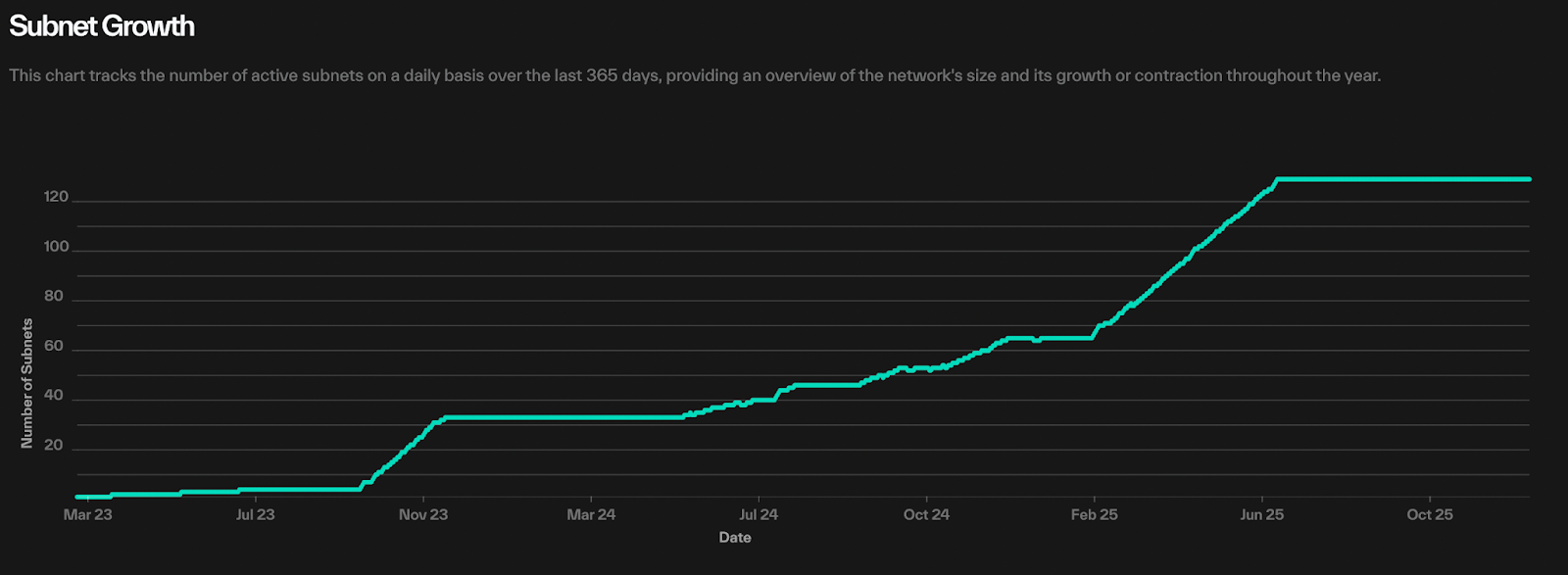
And subnet growth has been strong. Since the start of 2025, the number of subnets has increased 97%, from 65 to 128. 

Sergey Khusnetdinov, Director of AI at Gain Ventures, sees the subnet community as critically important to Bittensor’s success. 

“The result is a meritocratic, self-improving ecosystem where useful intelligence doesn’t come from one lab or one corporation but emerges organically from a worldwide, permissionless community.”

Chart of Bittensor subnet growth since March 2023. Source: Taostats

Centralized AI companies are valued quite ridiculously these days – OpenAI has a $500 billion valuation, Anthropic is at $350 billion. China-based Deepseek is rumored to have a $150 billion. With that in mind, what would be the value of a powerful AI network like Bittensor? 

Miyachi, the BitMind CEO who runs a deepfake detection subnet, bullishly believes the Bittensor network could someday excel over that of Bitcoin. 

“Value produced by the Bittensor ecosystem could surpass Bitcoin’s in the long run,” he told BeInCrypto. 

This could ultimately depend on how people perceive centralized AI systems over time, or whether anyone is concerned. But Bitcoin’s had huge runs as people reacted to economic instability and centralization failures such as a global pandemic, bank runs, and fiat currency debasement.  

Maybe soon, influencers might be saying, “long Bittensor, short centralized AI.” But who knows? Sometimes the future can be even stranger than AI could predict. 

The post Could Bittensor Ever Be as Successful as Bitcoin? appeared first on BeInCrypto.

  •  

Bisakah Bittensor Menjadi Sukses Seperti Bitcoin?

Bitcoin sekarang, hampir secara paradoks dengan prinsip awalnya, justru diadopsi oleh Wall Street. Bittensor muncul sebagai cara baru ‘melawan’ sentralisasi. Ini adalah narasi yang saat ini sedang panas. Seiring berkembangnya AI, muncul juga kekhawatiran mengenai konsentrasi dan sentralisasi teknologi tersebut.

Bittensor dan aset kriptonya, TAO, bertujuan untuk mendesentralisasikan layanan AI. Meskipun TAO kehilangan hampir 53% pada 2025, beberapa orang percaya bahwa Bittensor adalah Bitcoin generasi baru untuk era AI. Tapi, seberapa realistis optimisme seperti ini?

Premis dan Janji dari Bittensor

Jaringan ini baru saja menyelesaikan halving reward pada 15 Desember, yang mengurangi suplai koin baru. Masalahnya, banyak orang sudah pernah mendengar narasi seperti ini sebelumnya.

With the first Bittensor halving complete, I can’t help but recall Bitcoin’s first halving, which I was fortunate enough to witness.  History doesn’t repeat, but the rhymes are unmistakable; both the parallels and differences between the two are striking:

Same: A Decentralized…

— Greg Schvey (@GSchvey) December 15, 2025

Banyak aset kripto sudah mengklaim menjadi “Bitcoin berikutnya” – karena cerita ini memang bisa menghasilkan banyak uang.

Walaupun demikian, Bittensor memang bisa memiliki nilai nyata dalam jangka panjang – hanya saja ada tantangan besar yang harus dihadapi, seperti halnya proyek kripto ambisius lain.

Kisah Bittensor tidak jauh berbeda dari Bitcoin: Ada para pemain kuat yang telah lama berkuasa, tapi jaringan baru bisa muncul dan bahkan membalik tatanan dunia tersebut.

Selama bertahun-tahun, para influencer terus mengulang slogan yang hampir sama, yaitu “long Bitcoin, short the banks”. Meski sekarang Bitcoin ada di bank-bank Wall Street dan saham DAT sudah diperdagangkan di bursa publik, narasi ini memang berhasil menarik perhatian.

Riwayat harga Bittensor sejak listing di exchange pada 2023. Sumber: CoinGecko

Intinya, perusahaan AI seperti OpenAI, Anthropic, dan Deepseek sudah menjadi terlalu besar dan menakutkan, sehingga orang-orang mulai waspada dengan pertumbuhan mereka.


Mendesentralisasikan pekerjaan kecerdasan buatan dan menggantikan teka-teki proof-of-work konvensional dengan AI yang benar-benar memiliki fungsi nyata – itulah inti dari Bittensor.

“Bitcoin membuktikan bahwa insentif kriptografi bisa mengkoordinasikan jaringan perangkat keras global untuk mengamankan sebuah ledger,” Evan Malanga, eksekutif di Yuma, salah satu pendukung terbesar platform Bittensor, kepada BeInCrypto. “Bittensor menggunakan mekanisme yang sama dan mengalihkan daya komputasi ke hal yang punya manfaat langsung di dunia saat ini: Melatih dan menjalankan model, aplikasi, dan infrastruktur AI.”

Bitcoin Lain? Serius?

Penting untuk diketahui bahwa Yuma adalah anak perusahaan Digital Currency Group (DCG), perusahaan yang termasuk pendukung awal berbagai aset kripto seperti Bitcoin, Zcash, dan Decentraland.

DCG juga termasuk investor awal di Coinbase, Circle, dan Chainalysis. CEO DCG, Barry Silbert, jelas mendukung Bittensor – bagi sebagian orang, ini menjadi sinyal positif.

Barry Silbert, yang mulai berinvestasi di aset kripto sejak 2012, ikut bergabung dalam perjalanan TAO. Sumber: X

Bittensor memang punya sejumlah karakteristik seperti Bitcoin. Jumlah TAO yang tersedia cuma 21 juta, jelas-jelas meniru jumlah BTC. Bittensor juga punya mekanisme halving, yang terakhir bulan Desember lalu menurunkan reward dari 7.200 TAO menjadi 3.600 TAO per hari.

Bukan memakai teka-teki proof-of-work yang boros energi seperti Bitcoin, Bittensor menggunakan mekanisme proof-of-intelligence, dimana node harus menyelesaikan tugas untuk membuktikan mereka mampu menangani tugas AI. Semakin baik kualitas keluaran tugas sebuah node, semakin besar peluang mendapatkan reward TAO.

Node yang diizinkan masuk jaringan Bittensor lalu mendapatkan assigned subnet, yang saat ini ada 128 buah. Setiap subnet memiliki spesialisasi terkait bidang AI yang berbeda-beda.

“Setiap subnet seperti marketplace khusus untuk satu jenis layanan AI – ada yang fokus ke pembuatan gambar, ada juga yang untuk model bahasa,” ujar Arrash Yasavolian, co-founder Taoshi, penyedia subnet intelijen keuangan. 

Sentralisasi vs Desentralisasi

Kekhawatiran soal AI biasanya muncul karena hanya segelintir perusahaan saja yang memiliki kekuasaan besar. Konsentrasi di satu industri biasanya menyebabkan harga jadi mahal dan layanan buruk untuk pelanggan – kadang terjadi dua-duanya sekaligus.

Bittensor ingin membuat AI menjadi lebih bermanfaat secara global dengan karakteristik desentralisasi—misalnya dengan melibatkan operator node independen untuk menggerakkan subnet/subjaringan AI.

“AI sedang mendefinisikan ulang seluruh industri,” terang Ken Jon Miyachi, CEO BitMind, yang menjalankan subnet khusus deteksi deepfake di Bittensor. “Bitcoin merevolusi penyimpan nilai, tapi Bittensor merevolusi sistem ekonomi dengan membuat kecerdasan jadi komoditas global.”

Tapi seberapa terdesentralisasi sebenarnya jaringan ini? Pada 10 Juli 2024, jaringan Bittensor dihentikan setelah terjadi peretasan senilai US$8 juta yang menguras wallet. Chain ini kemudian masuk ke “safe mode” yang hanya memproduksi blok tanpa kemampuan transaksi apa pun.

“Ada kekhawatiran soal sentralisasi yang sah saat ini,” tutur Yasavolian dari Taoshi. “Yayasan OpenTensor adalah satu-satunya pihak yang bertanggung jawab untuk validasi blok. Sepuluh validator subnet terbesar menguasai sekitar 67% total bobot stake jaringan.”

Beberapa orang mungkin beranggapan bahwa risiko keamanan Bittensor dan kemampuannya untuk mematikan jaringan justru bertolak belakang dengan prinsip desentralisasi. Para pendukung jaringan ini mengatakan bahwa desentralisasi penuh akan tercapai nanti, sehingga menjadi “credibly neutral” seperti tujuan Bitcoin sebagai penyimpan nilai.

“Tujuan strategis jangka panjang Bittensor adalah menjadi alat pengembangan AI yang benar-benar netral. Desentralisasinya bertahap, mirip dengan perkembangan Ethereum,” tambah Yasavolian.

Alarm AI

Salah satu cara meningkatkan desentralisasi di Bittensor dan mendengarkan lebih banyak suara berbeda adalah lewat operator subnet. Kelompok-kelompok ini menginvestasikan waktu dan uang mereka ke jaringan, dan mereka, seperti Yasavolian, juga turut menyampaikan pendapat.

Pertumbuhan subnet pun sangat kuat. Sejak awal 2025, jumlah subnet naik 97%, dari 65 menjadi 128.

Sergey Khusnetdinov, Direktur AI di Gain Ventures, menilai komunitas subnet ini sangat penting bagi keberhasilan Bittensor.

“Hasilnya adalah ekosistem meritokrasi yang terus berkembang, di mana kecerdasan yang berguna tidak hanya muncul dari satu laboratorium atau perusahaan, tapi hadir secara organik dari komunitas global yang bersifat permissionless.”

Grafik pertumbuhan subnet Bittensor sejak Maret 2023 | Sumber: Taostats

Perusahaan AI yang terpusat saat ini memiliki valuasi sangat tinggi – OpenAI bernilai US$500 miliar, Anthropic senilai US$350 miliar. Deepseek dari Cina kabarnya juga memiliki valuasi US$150 miliar. Dengan fakta tersebut, berapa nilai jaringan AI seperti Bittensor yang sangat kuat?

Miyachi, CEO BitMind yang mengelola subnet deteksi deepfake, menilai jaringan Bittensor bisa saja mengungguli Bitcoin di masa depan.

“Nilai yang dihasilkan ekosistem Bittensor bisa melebihi Bitcoin dalam jangka panjang,” ucapnya kepada BeInCrypto.

Hal ini sangat bergantung pada bagaimana orang memandang sistem AI terpusat seiring waktu, atau apakah mereka merasa perlu khawatir. Tapi Bitcoin sendiri sudah mengalami lonjakan besar setiap kali masyarakat menghadapi ketidakstabilan ekonomi atau kegagalan sentralisasi seperti pandemi global, rush di bank, dan debasement mata uang fiat.

Mungkin tidak lama lagi, para influencer akan berkata, “long Bittensor, short centralized AI.” Tapi siapa yang bisa menebak? Kadang masa depan bahkan bisa lebih aneh daripada apa yang bisa diprediksi AI.

  •  

XRP Naik 330% Sejak Pemilihan Trump, Namun Apa Sebenarnya Kegunaannya?

Di dunia kripto, mungkin menjadi yang awal benar-benar bisa membuahkan hasil. Hal ini sepertinya benar bagi Ripple Labs, perusahaan blockchain yang berbasis di San Francisco yang sekarang bernilai lebih dari US$40 miliar.

Dan setelah bertahun-tahun berbenturan dengan SEC, perusahaan ini mengalami cuaca regulasi yang lebih baik dengan Trump memimpin. Sejak pemilihan presiden AS, harga XRP, altcoin yang diluncurkan Ripple sejak 2012, tetap di atas titik US$2 yang belum pernah terlihat sejak reli blockchain tahun 2017.

Tapi, apakah ada penggunaan sebenarnya untuk XRP?

Koridor Pembayaran XRP

Hedy Wang, CEO dari penyedia likuiditas kripto Block Street, mengatakan pijakan Ripple di Amerika mungkin akan tumbuh sekarang, namun sudah mendapat daya tarik di bagian lain dunia juga.

Di AS, pengaruhnya lebih terbatas karena seluruh saga SEC, jadi minat lebih condong ke ritel dan tempat di luar negeri,” ujar Wang kepada BeInCrypto. “Secara historis, Anda melihat jejak XRP yang baik di Jepang, bagian dari Asia Timur, dan beberapa koridor pengiriman uang seperti Filipina atau Amerika Latin melalui mitra-mitra.”

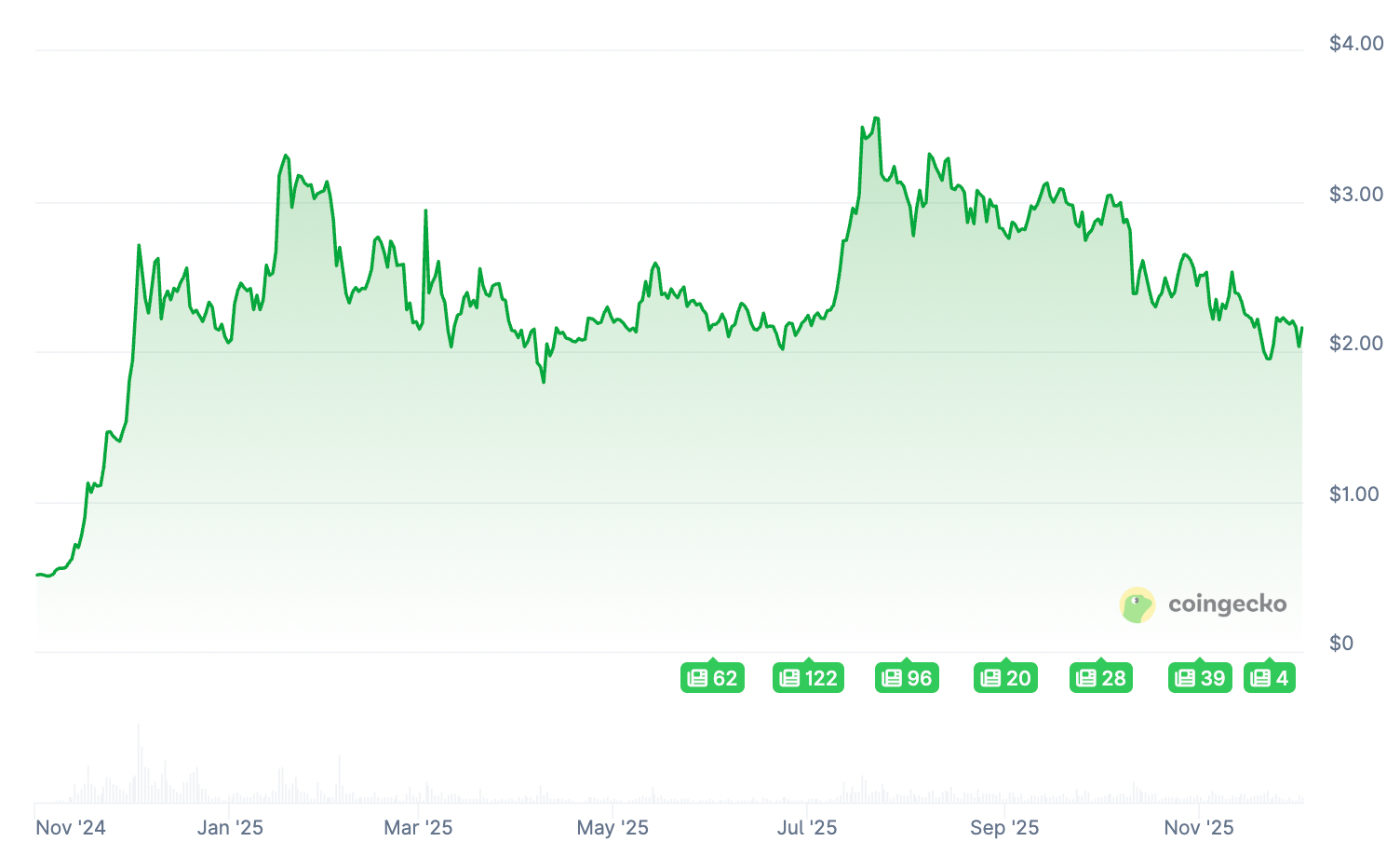
Yang tak bisa dipungkiri adalah investor telah mengumpulkan XRP sepanjang tahun lalu. Sejak Trump terpilih pada November 2024, harga XRP telah naik dari US$0,50 menjadi US$2,15, peningkatan sebesar 330%.

Kinerja harga XRP sejak November 2024. Sumber: CoinGecko

“Bitcoin dipandang sebagai ’emas digital’, Ethereum dikenal untuk smart contract,” terang akuntan publik bersertifikat Gregory Monaco, yang menjalankan firma CPA dengan namanya sendiri. “XRP mendapat nilainya dari pembayaran lintas batas.”

Monaco menyoroti 300 mitra keuangan Ripple di 45 negara dan US$15 miliar dalam pembayaran lintas batas tahunan sebagai indikator utama kegunaannya.

Maka, mungkin saja sebuah perusahaan di balik mata uang kripto, seperti Ripple, bisa berinvestasi tenaga kerja dan usaha nyata untuk mencapai koridor pembayaran penting.

“Jika Ripple terus menumpuk lisensi dan integrasi bank/fintech, XRP dapat bertahan sebagai jaringan keuangan khusus,” tambah Wang dari Block Street.

Lintas Batas Tidak Begitu Sederhana

Istilah “pembayaran lintas batas” mungkin terdengar seperti jargon perusahaan. Tapi tanyakan pada siapa pun yang pernah mengirim uang dari satu negara ke negara lain, dan jelas ini adalah proses yang bermasalah. Bisa jadi lambat. Bisa jadi mahal.

Selain itu, pertukaran mata uang diperlukan. Mata uang kripto seperti XRP tanpa batas, global, dan murah. Ada nilai dalam mengurangi ketergantungan TradFi pada sistem pembayaran biasa.

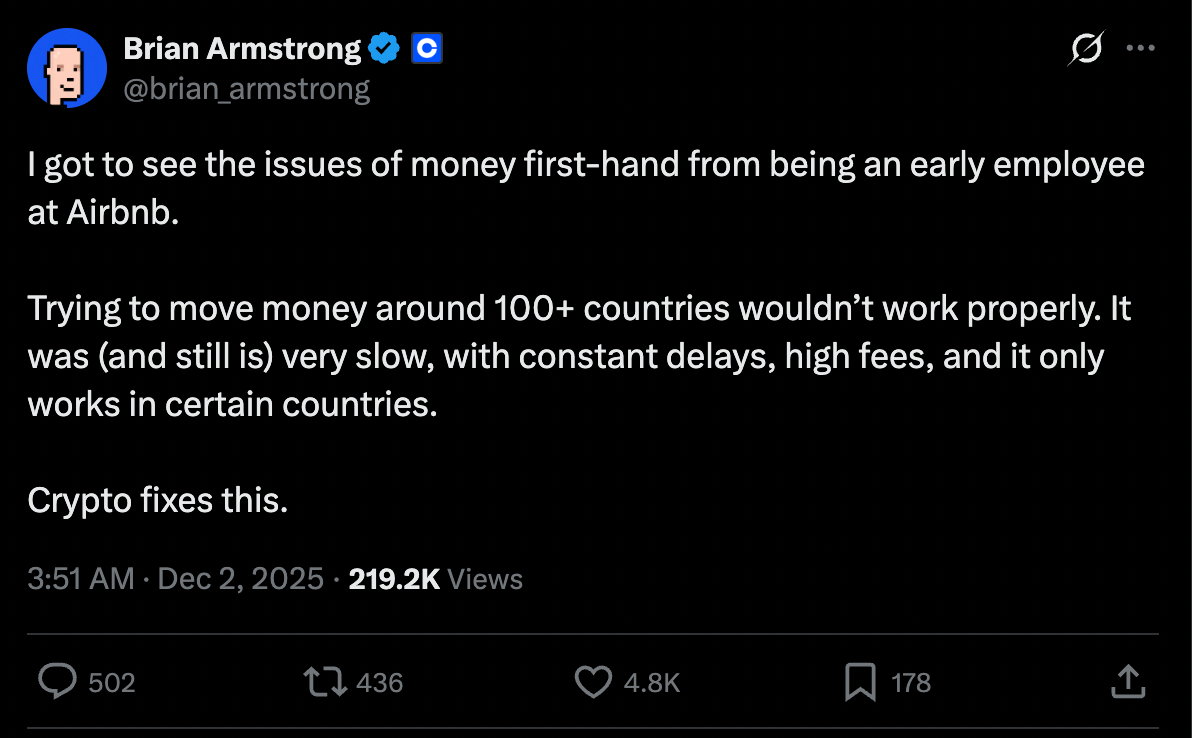
Bekerja di Airbnb membantu Armstrong dari Coinbase memahami pembayaran lintas batas. Sumber: X

Meski begitu, ‘harapan’ saja tidak serta-merta berarti bahwa valuasi XRP sangat terkait dengan penggunaan pembayarannya, papar Paul Holmes, seorang peneliti di BrokerListings.

“XRP masih sangat bersifat spekulatif,” ucap Holmes kepada BeInCrypto. “Dengan kripto sebagai keseluruhan, valuasi tidak didukung oleh alirannya sendiri, jadi ini adalah fungsi dari produksi likuiditas dan realokasi dari penyimpanan nilai lainnya.”

Mungkin saja investor kripto dan OG whale hanya mengumpulkan lebih banyak XRP karena Ripple Labs, sebagai kontributor terbesar mata uang kripto tersebut, nampaknya adalah perusahaan kripto yang berkinerja cukup baik.

Aliran masuk modal US$500 juta baru-baru ini ke Ripple dari Fortress Investment Group dan Citadel Securities dengan valuasi US$40 miliar jelas mencerminkan hal tersebut.

XRP sebagai Katalis ETF

Baru-baru ini, CoinShares yang berbasis di Inggris menarik diri dari meluncurkan produk XRP ETF di AS, yang mungkin akan meningkatkan permintaan dari investor yang bertahan di pasar publik.

“CoinShares mungkin mundur karena SEC tidak memberikan kejelasan regulasi bahwa XRP siap untuk ETF,” ujar Holmes dari BrokerListings.

Penting untuk diingat bahwa CoinShares juga memutuskan untuk tidak meluncurkan ETF di Solana atau Litecoin, jadi bukan hanya XRP yang diragukan mereka untuk meluncurkan produk yang didukung kripto ini.

“XRP sudah digunakan untuk memindahkan nilai antar mata uang, stablecoin, dan lintas aset keuangan yang ditokenisasi dalam jaringan,” ujar Raquel Amanda, Senior Communications Lead untuk Ripple. “Seiring ekosistem tumbuh, kebutuhan akan penyelesaian cepat dan netral meningkat, dan kami melihat XRP secara alami terus mengisi peran tersebut.” 

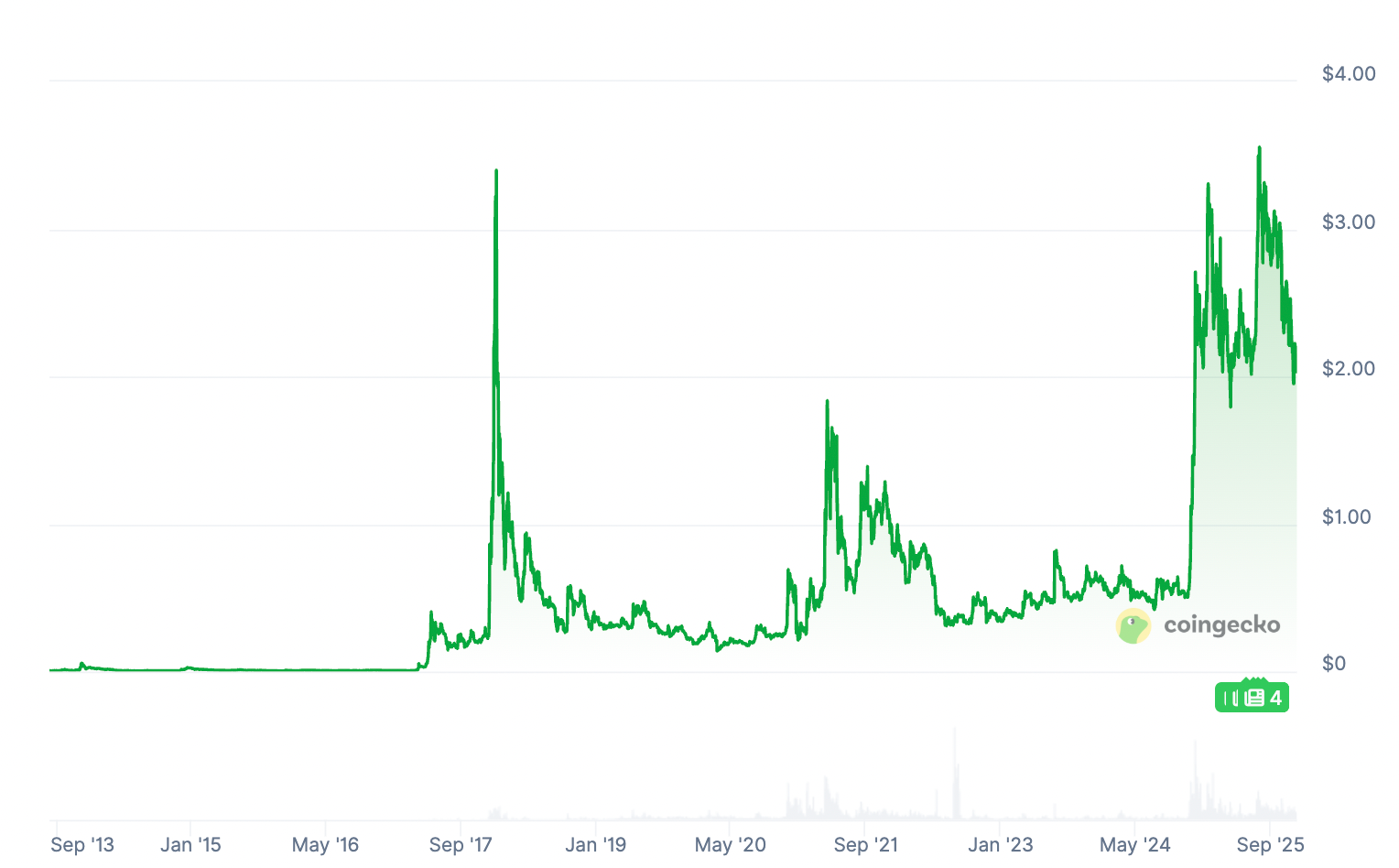
Data dari CoinGecko menunjukkan harga XRP naik lebih dari 36.000% sejak pertama kali diperdagangkan di exchange mulai 3 Agustus 2013. 

Data performa harga sepanjang masa untuk aset kripto XRP. Sumber: CoinGecko

Ironisnya, aset spekulatif yang digunakan untuk pembayaran tidak luput dari perhatian Homes dari BrokerListings. 

“Aktivitas on-chain menunjukkan ada 50-55 juta transaksi XRP per bulan, dan sebagian besar adalah pembayaran,” tutur dia. “Di saat yang sama, XRP masih digunakan sebagai aset spekulatif bagi banyak orang daripada utilitas, dan tidak bisa diharapkan sebagai penyimpan nilai yang andal.”

A Rip to the Moon?

Walaupun mungkin membingungkan menggunakan aset volatil seperti XRP sebagai jalur pembayaran, penting untuk diingat banyak aset kripto seperti XRP sangat bisa dibagi-bagi dan cepat. 

XRP pada dasarnya adalah ‘uang yang dapat diprogram.’ Kode bisa diterapkan untuk menggunakan XRP dalam jumlah yang dibutuhkan berdasarkan harga perdagangan saat ini. 

Dan untuk pembayaran institusi tingkat tinggi, yang mana XRP digunakan, tidak masalah bagaimana tampilan belakangnya asalkan uang sampai di tujuannya. 

Meski stablecoin mungkin populer untuk penggunaan dan perdagangan konsumen, XRP berfungsi sebagai semacam penggerak uang logistik bagi perusahaan yang perlu mentransfer nilai secara global. 

Ini menjelaskan mengapa, menurut CPA Monaco, 58% aktivitas pada jaringan berasal dari hanya sepuluh wallet. 

Penggunaan tersebut, selain dari pertarungan Ripple Labs yang kini telah selesai dengan SEC, tampaknya menjadi alasan untuk narasi optimistis. 

Di awal tahun 2024, jaringan memiliki lebih dari 5 juta wallet XRP.  Setelah kemenangan Trump, pada 13 November 2024, aplikasi brokerage Robinhood kembali mendaftarkan XRP di aplikasinya. 

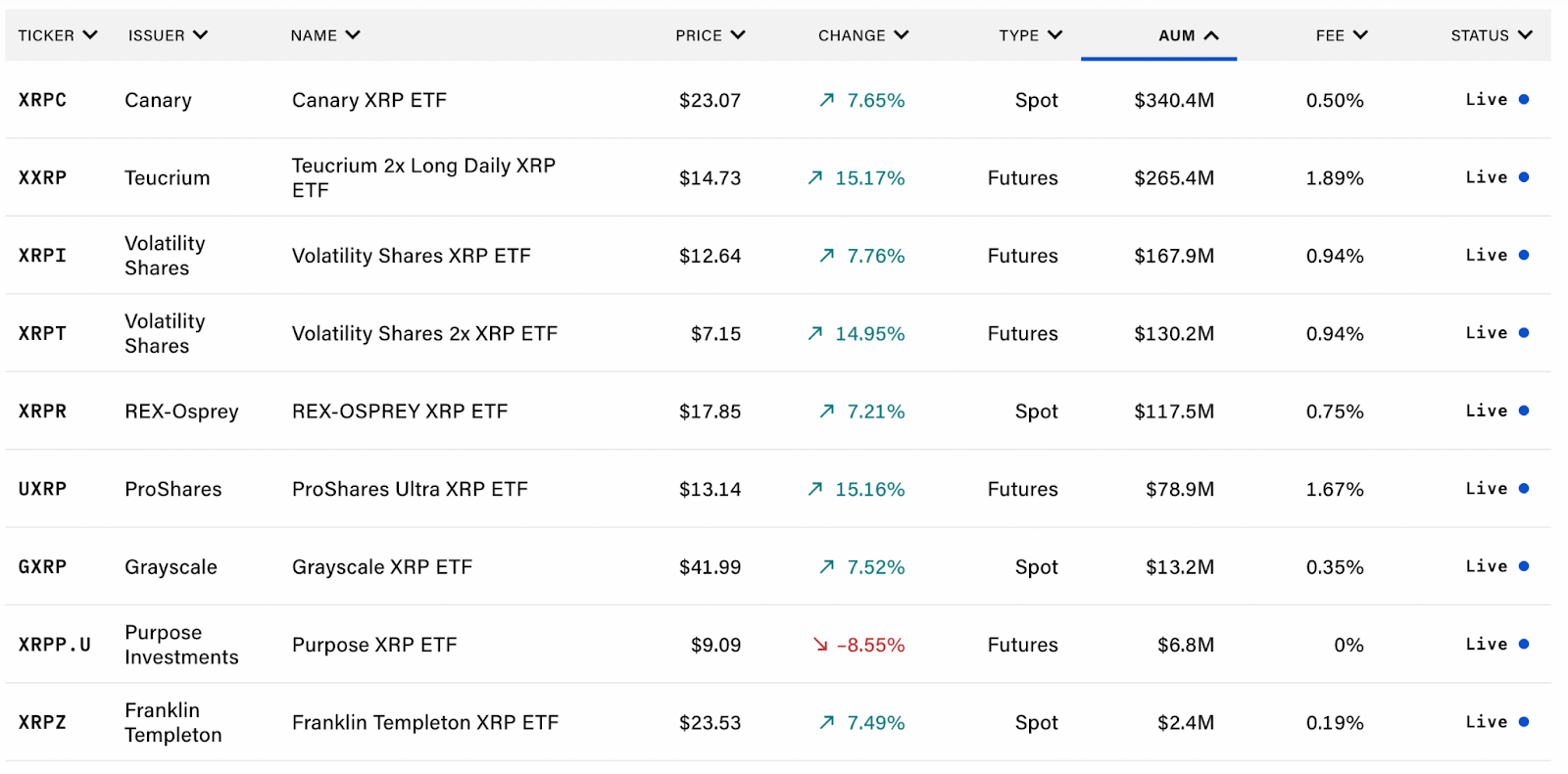
Daftar produk ETF XRP yang sudah diperdagangkan di pasar publik.

Pada Mei 2025, Ripple Labs setuju untuk membayar US$50 juta sebagai penyelesaian sengketa dengan SEC, mengakhiri perdebatan panjang yang kemungkinan menahan XRP beberapa waktu. 

Dan XRP tidak perlu ETF dari CoinShares, karena sudah ada sembilan produk yang aktif di pasar dengan total Aset yang Dikelola (AUM) sebesar US$1,1 miliar. 

Jadi ya, pasukan XRP, sebutan bagi investor bersemangat dalam jaringan ini, melihat banyak alasan untuk optimistis di masa depan dan jauh lebih sedikit risiko ke bawah – lebih dari sebelumnya. 

  •  

XRP is Up 330% Since Trump’s Election, But What is it Really Good For?

In crypto, perhaps being early can really pay off.  This sure seems to be the case for Ripple Labs, the San Francisco-based blockchain firm that is now worth over $40 billion. 

And after years of tangling with the SEC, the company is experiencing much fairer weather in the regulatory climate with Trump in charge. Since the US presidential election, the price of XRP, the altcoin Ripple launched way back in 2012, has stayed above a $2 price point not seen since the blockchain bull run of 2017.

But is there an actual use case for XRP?

The XRP Payments Corridor

Hedy Wang, CEO of crypto liquidity provider Block Street, says Ripple’s foothold in America may grow now, but it already has traction in other parts of the world, too. 

In the US it’s been more constrained because of the whole SEC saga, so interest skewed retail and offshore venues,” Wang told BeInCrypto. “Historically you see decent XRP traction in Japan, parts of East Asia, and some remittance-heavy corridors like the Philippines or Latin America via partners.” 

What can’t be denied is that investors have been grabbing up XRP over the past year. Since Trump was elected in November 2024, the price of XRP has gone from $0.50 to $2.15, a 330% increase. 

The price performance of XRP since November 2024. Source: CoinGecko

“Bitcoin is viewed as ‘digital gold’, Ethereum is known for smart contracts,” noted certified public accountant Gregory Monaco, who runs an eponymous CPA firm. “XRP gets its value from cross-border payments.” 

Monaco pointed to Ripple’s 300 financial partners in 45 countries and $15 billion in annual cross-border payments as key indicators of its use case. 

It’s possible, then, that a company behind a cryptocurrency, like Ripple, can put in the real manpower and work to achieve an important payments corridor. 

“If Ripple keeps stacking licenses and bank/fintech integrations, XRP can survive as niche financial plumbing,” added Block Street’s Wang. 

Cross-Border Is Not So Simple

The term “cross-border payments” may sound like a lot of corporate jargon. But ask anyone who has sent money from one country to others, and it is obvious this is a problematic process. It can be slow. It can be expensive. 

Additionally, currency exchanges are required. Cryptocurrencies like XRP are borderless, global, and cheap. There’s value in reducing TradFi’s reliance on regular payment systems. 

Working at Airbnb helped Coinbase’s Armstrong understand cross-border payments. Source: X

Still, ‘hopium’ alone doesn’t necessarily mean that XRP’s valuation is that closely tied to its payments use case, noted Paul Holmes, a researcher at BrokerListings. 

“XRP is still heavily a speculative asset,” Holmes told BeInCrypto. “With crypto as a whole, the valuation isn’t supported by its own income stream, so it’s a function of liquidity production and reallocation from other stores of value.”

It may be that crypto investors and OG whales are simply accumulating more XRP because Ripple Labs, as the largest contributor to the cryptocurrency, appears to be a fairly well-performing crypto firm. 

Ripple’s recent influx of $500 million in capital from Fortress Investment Group and Citadel Securities at a $40 billion valuation certainly reflects that. 

XRP as an ETF Catalyst

Recently, UK-based CoinShares backed away from launching a US XRP ETF product, which likely would have increased demand from investors who stick to the public markets. 

“CoinShares likely walked away because the SEC isn’t giving XRP regulatory clarity that it’s ETF-ready,” said BrokerListings’ Holmes.

It’s important to keep in mind that CoinShares also decided not to launch ETFs on Solana or Litecoin either, so it’s not just XRP that there’s some hesitancy from them to launch these crypto-backed products. 

“XRP is already being used to move value between currencies, stablecoins, and across the growing set of tokenized financial assets on the network,” said Raquel Amanda, Senior Communications Lead for Ripple. “As the ecosystem grows, the need for fast and neutral settlement increases, and we see XRP naturally continuing to fill that role.” 

CoinGecko’s data pegs the price of XRP appreciating by over 36,000% since it was first listed on exchanges starting August 3, 2013. 

All-time price performance data for the XRP cryptocurrency. Source: CoinGecko

The irony of a speculative asset being used for payment isn’t lost on BrokerListings’ Homes, however. 

“On-chain activity shows that there are 50-55 million XRP transactions per month, and a majority of those are payments,” he noted. “At the same time, XRP is still used as a speculative asset for many rather than utility and can’t be expected to be a reliable store of value.”

A Rip to the Moon?

While it may seem confusing to use a volatile asset like XRP as a payment rail, it’s important to remember that many cryptocurrencies, like XRP, are highly divisible and fast. 

XRP is essentially ‘programmable money.’ Code can be implemented to use XRP in its required amounts based on its current trading price. 

And for high-end institutional payments, which is what XRP is used for, it doesn’t really matter what the back-end looks like as long as money reaches its destination. 

While stablecoins may be popular for consumer use and trading, XRP serves as a sort of logistical money mover for companies that need to transfer value globally. 

This would explain why, according to the CPA Monaco, 58% of activity on the network comes from just ten wallets. 

That use case, in addition to Ripple Labs’ now-dropped fight with SEC, is likely the reasoning for a bullish narrative. 

By early 2024, the network had over 5 million XRP wallets.  After Trump’s win, on November 13, 2024,  brokerage app Robinhood relisted XRP on its app. 

A listing of already-live XRP ETF products on the public markets.

In May 2025, Ripple Labs agreed to a $50 million satisfaction of judgment in its dispute with the SEC, ending a years-long quagmire that likely stymied XRP for some time. 

And XRP doesn’t necessarily need a CoinShares ETF, as there are already nine live products on the market with total Assets Under Management (AUM) of $1.1 billion. 

So yeah, the XRP Army, which is what fervent investors in the chain like to call themselves, sees a lot of reasons to be hopeful for the future and a lot less risk to the downside – more than ever before. 

The post XRP is Up 330% Since Trump’s Election, But What is it Really Good For? appeared first on BeInCrypto.

  •  

Apakah New York Akan Menjadi Lebih Besar atau Mati Sebagai Crypto Hub di Bawah Zohran Mamdani?

Kota New York telah membuat pilihannya untuk wali kota. Pilihan mereka jatuh pada Anggota Majelis Negara Bagian berusia 34 tahun, Zoltan Mamdani, seorang Demokrat yang sepertinya muncul entah dari mana selama musim panas untuk mengalahkan Andrew Cuomo.

Jalan Mamdani menuju kursi tertinggi di kota paling padat di Amerika datang dengan janji-janji seperti sewa terjangkau, bus gratis, dan perawatan anak universal. Pendanaan untuk semua ini diperkirakan akan berasal dari menaikkan pajak untuk orang kaya.

Lalu, apa arti semua ini untuk kripto di NYC, pusat teknologi blockchain di AS?

Wali Kota Baru Untuk Pusat Crypto NYC

Mamdani, lahir dan besar di Kampala, Uganda, pindah ke New York City bersama keluarganya pada usia tujuh tahun, dan menjadi warga negara AS pada 2018.

Sejumlah walikota NYC sebelumnya adalah imigran – lebih dari dua lusin, sebenarnya. Berjalan sebagai seorang Demokrat, Mamdani bersaing dengan mantan Gubernur Andrew Cuomo dari partainya sendiri dalam pemilihan ini.

Secara keseluruhan, Mamdani berakhir dengan setengah dari total suara, dengan Cuomo memperoleh sekitar 40%.

Starting at 1% in the polls, @ZohranKMamdani pulled off one of the great political upsets in modern American history.

Yes. We CAN create a government that represents working people and not the 1%.

I look forward to working with Zohran as he builds a city that works for all. pic.twitter.com/dHUP6Yo5xv

— Bernie Sanders (@BernieSanders) November 5, 2025

Janji kebijakan Cuomo tidak menawarkan daya tarik seperti yang dilakukan Mamdani dengan menargetkan orang-orang yang terasa ditinggalkan.

“NYC sudah memposisikan dirinya sebagai pusat inovasi aset digital dan blockchain,” terang Hedy Wang, CEO penyedia likuiditas kripto Block Street. “Di bawah pemerintahan baru yang bersemangat untuk mengubah kebijakan ekonomi, Mamdani mungkin mendorong pertumbuhan fintech yang lebih inklusif, mendukung perusahaan kecil dan startup daripada hanya pemain besar.”

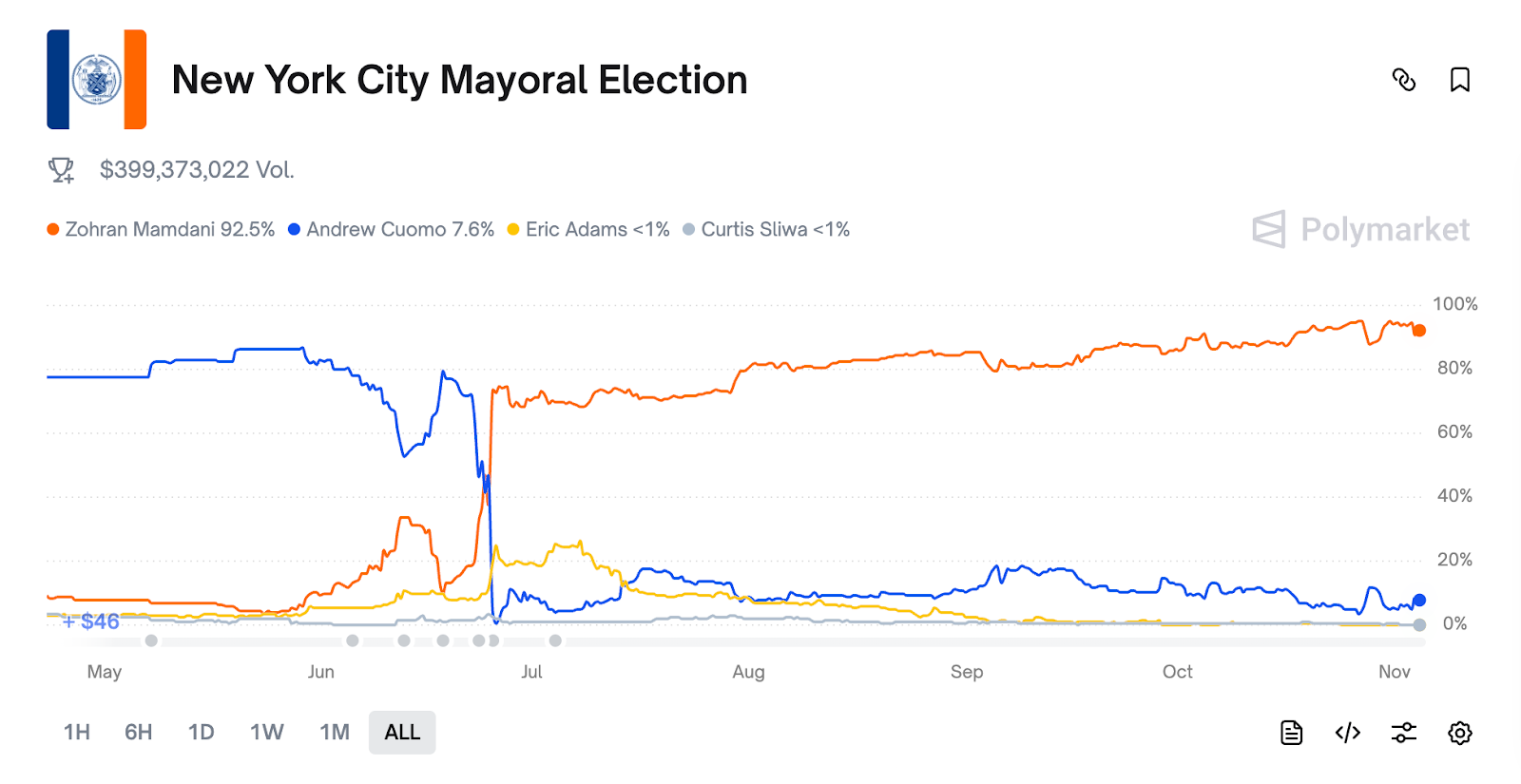
Grafik pasar prediksi balapan wali kota Kota New York. Sumber: Polymarket

Pada hari pemilihan, Mamdani memiliki peluang 92% untuk memenangkan pemilihan wali kota NYC dengan lebih dari US$400 juta dalam volume yang ditempatkan di Polymarket.

Juga, peluang pasar prediksi memberi para pemain industri kripto waktu untuk mempersiapkan hasil ini, papar Art Malkov, penasihat startup web3 untuk Techstars yang berbasis di NYC.

“Kadang-kadang ‘diprediksi menang’ berarti ‘waktunya menyiapkan buku panduan kepatuhan itu,” Malkov berkata kepada BeInCrypto. “Mari kita katakan saja komunitas kripto mungkin ingin menikmati iklim regulasi ini selama masih berlangsung.”

Tidak Ada Arah Crypto untuk Zohran Mamdani?

Mamdani tidak pernah berbicara sama sekali tentang kripto, lebih memilih untuk tetap fokus pada kebijakan sosialis yang populer untuk menarik pemilih agar berubah di New York.

Taktik ini berhasil.

“Dia tidak memiliki platform kripto yang eksplisit,” jelas Benjamin Siegel, Kepala Produk untuk protokol DeFi Octant. “Jika dia membuat NYC sedikit lebih buruk untuk kripto tetapi lebih baik untuk banyak warga New York yang tertinggal oleh meningkatnya biaya hidup, inflasi, dan masalah ekonomi mendesak lainnya, itu adalah perdagangan yang sangat saya terima dengan senang hati.”

Persyaratan lisensi yang paling terkenal dan membebani di New York untuk perusahaan kripto, BitLicense, sebenarnya dikelola oleh Departemen Layanan Keuangan negara bagian.

Jadi, ancaman paling langsung yang bisa ditimbulkan Mandani terhadap kripto adalah pajak yang lebih tinggi. Ini bisa menyebabkan eksodus keluar dari kota oleh para inovator kaya yang mencari biaya lebih rendah.

Mamdani secara terbuka berbicara tentang menaikkan pajak korporat kota dari 7,25% menjadi 11,5%.

Penduduk NYC yang lebih baru tampaknya tidak peduli tentang ancaman pajak yang lebih tinggi. Mayoritas warga dengan masa tinggal lima hingga sepuluh tahun di kota ini memilih Mamdani.

  •