
Reading view

Why $12 Trillion Charles Schwab Crypto Entry Could Threaten US Crypto Exchanges

Charles Schwab’s plan to launch spot crypto trading in 2026 is shaping up as one of the most consequential moves from a major US brokerage. 

The firm, which oversees more than $12 trillion in client assets, intends to offer Bitcoin and Ethereum trading across its platforms after internal testing and a limited pilot phase.

Charles Schwab Will Bring Mainstream Investors To Crypto

Schwab’s entry marks a shift in how traditional brokers approach digital assets. The company already offers indirect exposure through crypto-thematic ETFs, but spot trading brings cryptocurrencies into the same environment as stocks, bonds, and retirement accounts. 

This could change how mainstream investors access crypto.

Charles Schwab CEO on crypto…

“It’s a topic that’s of high engagement.”

Schwab clients own *20%* of all crypto exchange traded products.

Visits to Schwab crypto site ↑ 90% in last year.

Schwab operates one of largest brokerages in US.

Hope you’re paying attention. pic.twitter.com/XR10TRR6NK

— Nate Geraci (@NateGeraci) October 18, 2025

The announcement also highlights a strategic push to consolidate investor activity. Millions of Schwab customers currently hold traditional assets and use external exchanges for crypto. 

Bringing those functions under one account reduces friction and strengthens Schwab’s footprint across asset classes.

Meanwhile, another US financial giant, Vanguard also announced its expansion into crypto last week.

Just when they finish dumping the crypto market…

Charles Schwab, Vanguard & Bank of America all magically launch crypto trading for their clients in the same week.

What an absolutely wild, totally random coincidence 😂📉🚀 pic.twitter.com/iLk30R3j6a

— Austin Hilton (@austinahilton) December 3, 2025

A New Competitive Threat

Schwab’s move introduces a structural challenge for US crypto exchanges. The brokerage is known for zero-commission stock and ETF trading. 

If it extends the same low-fee approach to crypto, it undercuts the core revenue model of companies like Coinbase and Kraken.

The new Grayscale spot Chainlink ETF did really solid volume on Day one of $13m and looks like it could see same again today (way more than it ever traded as a trust). Also $41m in first day flows. Another insta-hit from the crypto world, only dud so far was Doge but it's still… pic.twitter.com/wlCemHxkQP

— Eric Balchunas (@EricBalchunas) December 3, 2025

Crypto exchanges rely heavily on trading fees. Coinbase’s retail fees often exceed 1%, and even advanced platforms charge up to 0.60%. 

Schwab can afford to price well below that because it generates revenue from multiple channels, including interest income, advisory services, and order execution. Crypto exchanges do not have the same diversification.

Moreover, Schwab offers a regulatory environment that exchanges cannot match. Client assets sit within long-standing SEC and FDIC oversight frameworks. 

This level of institutional trust appeals to many retail and older investors who remain wary of specialized crypto platforms.

ETFs Make Pricing Pressure Harder

The fee pressure intensifies because investors can already trade Bitcoin ETFs for free on Schwab and other brokerages. 

These ETFs also have extremely tight spreads, often around 1–2 basis points. For Schwab to justify direct crypto trading, it must offer low fees that compete with near-free ETF execution.

Direct ownership still has an advantage because it avoids ETF expense ratios. However, that benefit matters only if trading costs remain low. This dynamic pushes Schwab toward aggressive pricing and, by extension, forces exchanges to respond.

A New Phase for US Crypto Markets

Schwab’s entry reflects how traditional finance is encroaching on digital asset territory. It places price, trust, and product-access pressure on crypto-native firms at a time when markets are already shifting toward regulated structures.

The full impact depends on Schwab’s final fee model and custody design. 

Yet early signs point to significant competitive pressure ahead, especially for exchanges depending on retail trading spreads.

The post Why $12 Trillion Charles Schwab Crypto Entry Could Threaten US Crypto Exchanges appeared first on BeInCrypto.

  •  

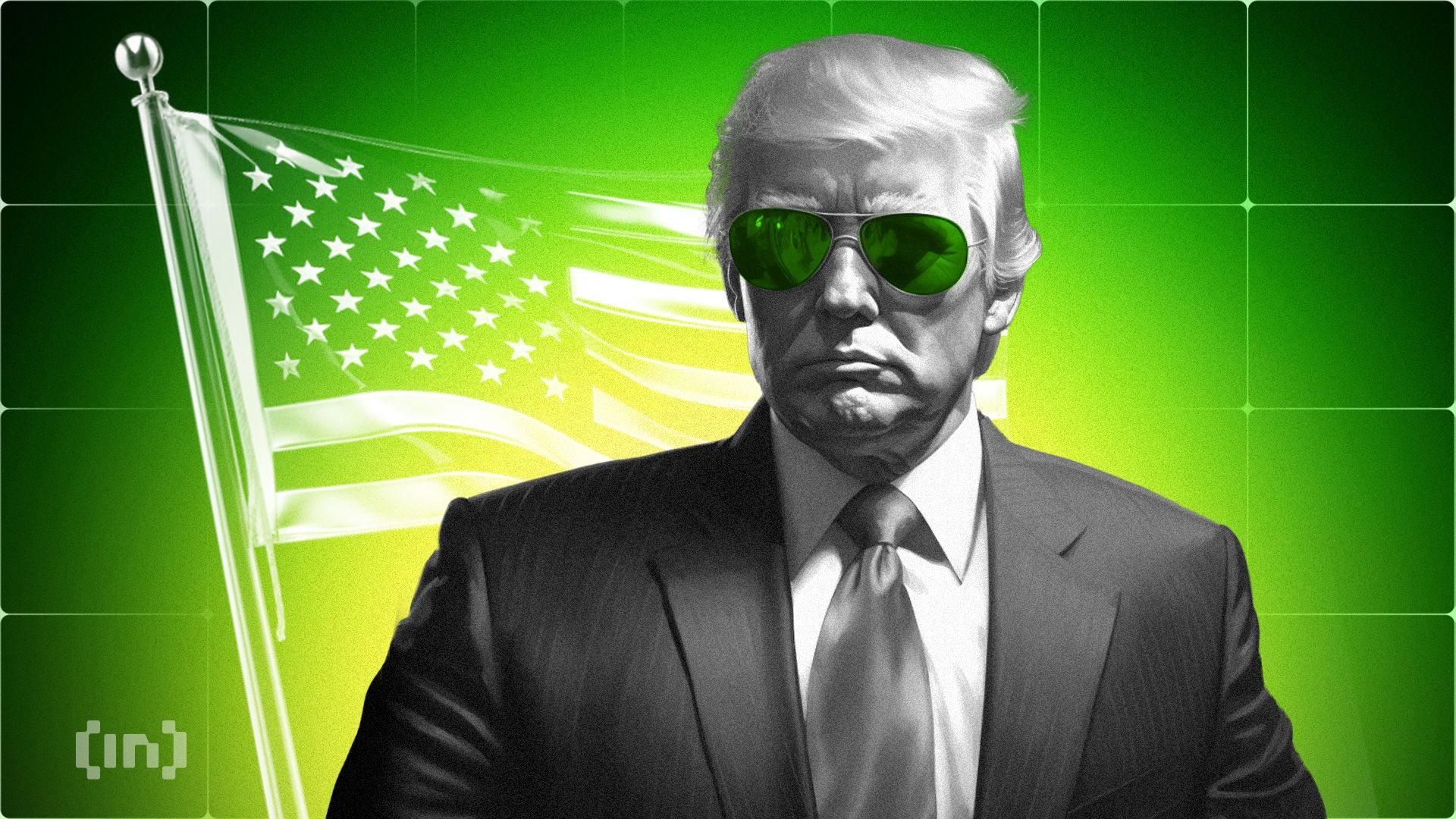
House Report Alleges Trump Administration Tied US Policy to $11.6 Billion Crypto Empire

A congressional report alleges that the Trump administration generated over $800 million from cryptocurrency ventures in early 2025.

The report claims total Trump family crypto holdings climbed to $11.6 billion, alleging that foreign actors and state-linked entities invested in family projects in exchange for policy favors.

Crypto Ventures and Foreign Investment

On November 25, 2025, House Judiciary Committee Democrats released these findings. They allege that President Trump used his position to increase his family’s crypto interests while reducing enforcement and halting federal investigations into the industry.

The report from Rep. Jamie Raskin describes the Trump family’s accumulation of billions through crypto schemes driven by foreign investments and regulatory changes.

Trump family projects included World Liberty Financial (WLF), the WLFI governance token, the USD1 stablecoin, and the TRUMP meme coin. These ventures attracted substantial investments from foreign nationals and entities linked to foreign governments.

Allegedly:

  • The WLFI token sale raised $550 million in March 2025,
  • The USD1 stablecoin reached a $2.7 billion market cap.
  • TRUMP meme coin brought in $350 million in trading fees and reached a peak price of $75 before a sharp decline.

World Liberty Financial was co-founded by Eric Trump, Donald Trump Jr., and Barron Trump, along with business partners Zach and Andrew Witkoff, according to documents from the House Financial Services Committee.

Foreign investors included Justin Sun, founder of Tron, who invested $30 million in late 2024 and later expanded his stake to $75 million, becoming the largest shareholder.

We are thrilled to invest $30 million in World Liberty Financial @worldlibertyfi as its largest investor. The U.S. is becoming the blockchain hub, and Bitcoin owes it to @realDonaldTrump! TRON is committed to making America great again and leading innovation. Let's go! pic.twitter.com/cISTsVYP1f

— H.E. Justin Sun 👨‍🚀 🌞 (@justinsuntron) November 25, 2024

Other major investors, allegedly connected to Chinese state-backed entities and the UAE royal family, were Guren Bobby Zhou, Aqua 1, MGX, and DWF Labs.

The investigation identified Chinese state-owned CNPC and UAE entities, including those linked to Sheikh Tahnoon, as key contributors to Trump’s ventures.

The report outlines a pay-for-access scheme involving the TRUMP meme coin dinner contest, which raised $148 million.

Top buyers were given access to White House meetings and golf courses, with several winners being foreign nationals. In addition, Trump Media & Technology Group revealed a $2.5 billion bitcoin treasury, deepening the family’s ties to cryptocurrency holdings.

Regulatory Rollbacks and Enforcement Actions

The Trump administration enacted major regulatory shifts on digital assets. In January 2025, President Trump repealed Executive Order 14178, a major Biden-era policy.

By March, a Strategic Crypto Reserve was created, marking a significant change in how the federal government approached cryptocurrency.

In April 2025, the Department of Justice disbanded the National Cryptocurrency Enforcement Team (NCET). Deputy Attorney General Todd Blanche issued an official memorandum ordering the immediate dissolution of this specialized unit.

This act ended “regulation by prosecution” in crypto enforcement. The Computer Crime and Intellectual Property Section remained in operation, but the dedicated enforcement team was eliminated.

Lawsuits and enforcement actions by the SEC and DOJ targeting major crypto firms with political connections were halted. Benefiting companies included Coinbase, Gemini, Robinhood, Ripple, Crypto.com, Uniswap, Yuga Labs, and Kraken.

In February 2025, the SEC ruled that meme coins are not securities, ending oversight for these digital assets.

The administration also pardoned individuals with ties to Trump crypto projects. Changpeng Zhao (CZ), the founder of Binance, received a presidential pardon after starting business relationships with the Trump family companies.

According to the report, these pardons and sanctions rollbacks directly benefited supporters of Trump ventures.

Constitutional and Legal Concerns

Congressional investigators warn that the situation exposes deep flaws in US anti-corruption, campaign finance, and conflict-of-interest laws.

The report questions whether the Foreign Emoluments Clause, which bars federal officials from taking gifts or payments from foreign governments without congressional approval, was violated.

Lawmakers argue that existing laws cannot adequately prevent conflicts of interest and foreign influence in the crypto sector.

The sequence of policy changes and business initiatives raised alarm among investigators. World Liberty Financial announced the USD1 stablecoin just after Trump endorsed the GENIUS Act, a major piece of stablecoin legislation expedited through Congress in 2025.

The full staff report includes a timeline showing policy rollbacks, access, and investment events.

The investigation relied on reporting from TradFi and crypto outlets to verify reported numbers and policy actions.

It documents how prior opposition to crypto shifted to active industry support as money entered campaign and family business channels during and after the 2024 campaign.

Possible second order effects from Trump's win:

• BTC becomes a US strategic reserve asset
• New regulatory regime will make it much easier for tokens to capture value from their protocols
• Token classification framework could shift from "most tokens are securities" to… pic.twitter.com/Yar5Lk1yuG

— Aylo (@alpha_pls) November 6, 2024

House Judiciary Committee Democrats called for urgent congressional reforms, citing an unprecedented scale of self-enrichment and foreign influence through cryptocurrency.

The report stresses national security, legal, and ethical risks caused by foreign and corporate money bypassing anti-corruption protections.

It remains unclear if these allegations will result in new laws or further investigations as political debates continue.

The post House Report Alleges Trump Administration Tied US Policy to $11.6 Billion Crypto Empire appeared first on BeInCrypto.

  •