Reading view

Why $12 Trillion Charles Schwab Crypto Entry Could Threaten US Crypto Exchanges

Charles Schwab’s plan to launch spot crypto trading in 2026 is shaping up as one of the most consequential moves from a major US brokerage. 

The firm, which oversees more than $12 trillion in client assets, intends to offer Bitcoin and Ethereum trading across its platforms after internal testing and a limited pilot phase.

Charles Schwab Will Bring Mainstream Investors To Crypto

Schwab’s entry marks a shift in how traditional brokers approach digital assets. The company already offers indirect exposure through crypto-thematic ETFs, but spot trading brings cryptocurrencies into the same environment as stocks, bonds, and retirement accounts. 

This could change how mainstream investors access crypto.

Charles Schwab CEO on crypto…

“It’s a topic that’s of high engagement.”

Schwab clients own *20%* of all crypto exchange traded products.

Visits to Schwab crypto site ↑ 90% in last year.

Schwab operates one of largest brokerages in US.

Hope you’re paying attention. pic.twitter.com/XR10TRR6NK

— Nate Geraci (@NateGeraci) October 18, 2025

The announcement also highlights a strategic push to consolidate investor activity. Millions of Schwab customers currently hold traditional assets and use external exchanges for crypto. 

Bringing those functions under one account reduces friction and strengthens Schwab’s footprint across asset classes.

Meanwhile, another US financial giant, Vanguard also announced its expansion into crypto last week.

Just when they finish dumping the crypto market…

Charles Schwab, Vanguard & Bank of America all magically launch crypto trading for their clients in the same week.

What an absolutely wild, totally random coincidence 😂📉🚀 pic.twitter.com/iLk30R3j6a

— Austin Hilton (@austinahilton) December 3, 2025

A New Competitive Threat

Schwab’s move introduces a structural challenge for US crypto exchanges. The brokerage is known for zero-commission stock and ETF trading. 

If it extends the same low-fee approach to crypto, it undercuts the core revenue model of companies like Coinbase and Kraken.

The new Grayscale spot Chainlink ETF did really solid volume on Day one of $13m and looks like it could see same again today (way more than it ever traded as a trust). Also $41m in first day flows. Another insta-hit from the crypto world, only dud so far was Doge but it's still… pic.twitter.com/wlCemHxkQP

— Eric Balchunas (@EricBalchunas) December 3, 2025

Crypto exchanges rely heavily on trading fees. Coinbase’s retail fees often exceed 1%, and even advanced platforms charge up to 0.60%. 

Schwab can afford to price well below that because it generates revenue from multiple channels, including interest income, advisory services, and order execution. Crypto exchanges do not have the same diversification.

Moreover, Schwab offers a regulatory environment that exchanges cannot match. Client assets sit within long-standing SEC and FDIC oversight frameworks. 

This level of institutional trust appeals to many retail and older investors who remain wary of specialized crypto platforms.

ETFs Make Pricing Pressure Harder

The fee pressure intensifies because investors can already trade Bitcoin ETFs for free on Schwab and other brokerages. 

These ETFs also have extremely tight spreads, often around 1–2 basis points. For Schwab to justify direct crypto trading, it must offer low fees that compete with near-free ETF execution.

Direct ownership still has an advantage because it avoids ETF expense ratios. However, that benefit matters only if trading costs remain low. This dynamic pushes Schwab toward aggressive pricing and, by extension, forces exchanges to respond.

A New Phase for US Crypto Markets

Schwab’s entry reflects how traditional finance is encroaching on digital asset territory. It places price, trust, and product-access pressure on crypto-native firms at a time when markets are already shifting toward regulated structures.

The full impact depends on Schwab’s final fee model and custody design. 

Yet early signs point to significant competitive pressure ahead, especially for exchanges depending on retail trading spreads.

The post Why $12 Trillion Charles Schwab Crypto Entry Could Threaten US Crypto Exchanges appeared first on BeInCrypto.

  •  

Phemex Launches $6 Million, Multi-Venue Festival to Celebrate Its 6th Anniversary

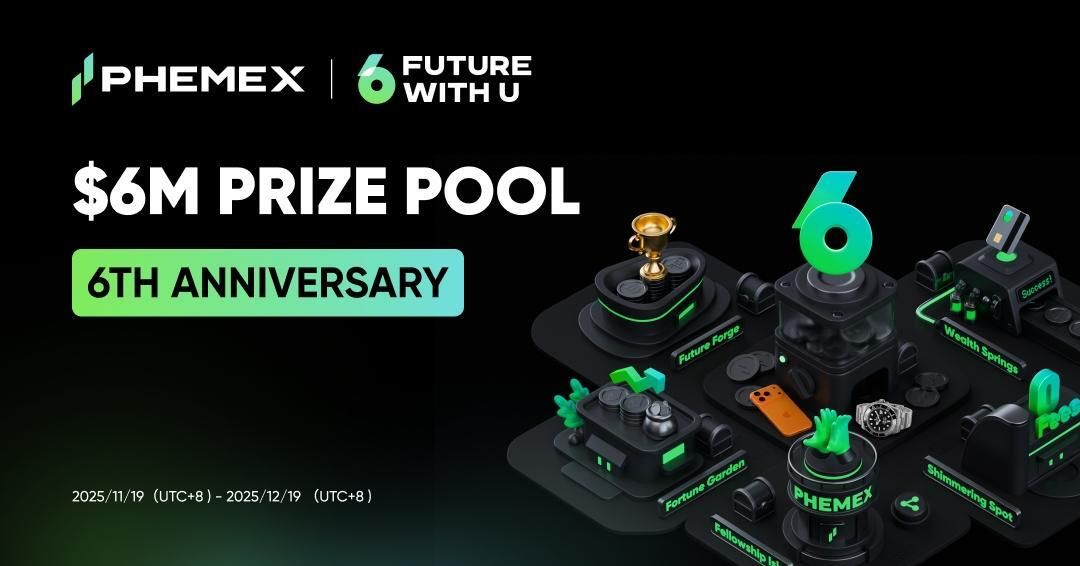
Phemex, a user-first crypto exchange, announces a month-long anniversary campaign featuring $6 million in rewards, running from November 19 to December 19, 2025. The celebration follows a milestone year in which the platform expanded from 6 million to over 10 million users and completed a full rebrand, underscoring its growth into a diversified crypto trading ecosystem.

The campaign spans five core venues, each offering tailored rewards for different trading behaviors. Prizes range from Rolex watches and iPhone 17 Pro Max devices to broad-based reward pools distributed across everyday trading activities.

On Spot, users gain access to 0-fee trading and Candy Drop token rewards. Futures participants can enter a trading competition, open lucky boxes, and compete for premium prizes. In Earn, users can explore flexible and fixed products with competitive APYs. Fiat users benefit from zero-fee card deposits throughout the period, while Referral missions provide additional bonuses for community-driven participation.

Federico Variola, CEO of Phemex, commented: “Our platform now serves traders with distinct habits and goals, so our anniversary campaign is designed in the same way—multiple venues, real utility, and rewards that match how people actually use Phemex. It reflects the broader strategy behind our ecosystem expansion.”

As Phemex enters its seventh year, the exchange will continue rolling out seasonal events, trading festivals, product upgrades, and global community programs. The 6th anniversary campaign marks only the beginning of a broader series of initiatives designed to strengthen user connection while making the platform more interactive, rewarding, and fun. More updates and celebrations will be announced throughout the season.

About Phemex

Founded in 2019, Phemex is a user-first crypto exchange trusted by over 10 million traders worldwide. The platform offers spot and derivatives trading, copy trading, and wealth management products designed to prioritize user experience, transparency, and innovation. With a forward-thinking approach and a commitment to user empowerment, Phemex delivers reliable tools, inclusive access, and evolving opportunities for traders at every level to grow and succeed.

For more information, please visit: https://phemex.com/

The post Phemex Launches $6 Million, Multi-Venue Festival to Celebrate Its 6th Anniversary appeared first on BeInCrypto.

  •  

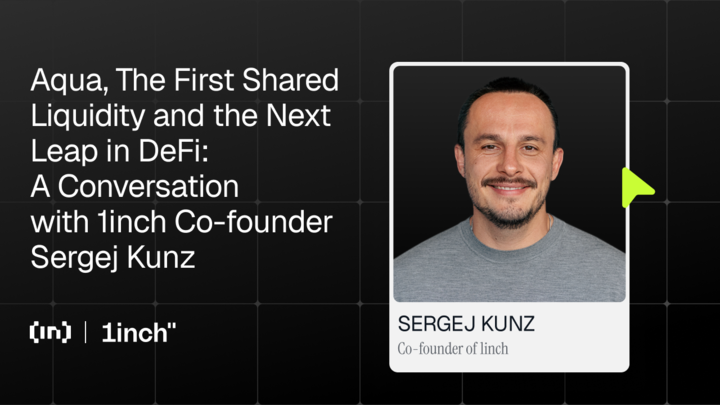
Aqua, The First Shared Liquidity and the Next Leap in DeFi: A Conversation with 1inch Co-founder Sergej Kunz

DeFi has spent years optimizing AMM curves, fee models and routing logic, yet one fundamental issue has remained largely untouched: most liquidity in automated market makers does not actually work. The majority of capital deposited into pools sits unused, fragmented across dozens of pairs and protocols. At Devconnect Buenos Aires, 1inch unveiled Aqua, a protocol designed to challenge that limitation directly.

Instead of locking assets into separate pools, Aqua enables a single wallet balance to support multiple strategies simultaneously. It introduces a shared-liquidity architecture that could reshape how capital efficiency and yield generation function across the ecosystem. With developers, researchers and protocol builders gathered in Buenos Aires, the timing was deliberate.

In this interview, we speak with Sergej Kunz, co-founder of 1inch, about what Aqua is, how it works, and why it represents one of the most significant shifts in liquidity design since 1inch introduced aggregation in 2019.

Why did you choose Devconnect Buenos Aires as the moment to introduce Aqua?

Sergej Kunz:
Devconnect gathers a technical audience that understands what goes into building and securing a protocol. Aqua needs exactly that level of scrutiny. Presenting it here allows us to talk directly to developers, researchers, and security experts who can challenge the model, test it and eventually build on it.

The choice makes sense. Aqua isn’t a marketing product ; it’s infrastructure, and Devconnect is one of the few events where infrastructure launches truly land with the right crowd.

For readers who haven’t followed the announcement closely: what is Aqua? And why this approach?

Sergej Kunz:
Aqua addresses a core problem in DeFi: around 80 to 90 percent of capital sitting in liquidity pools isn’t actually working. It’s there to support the AMM curve, but it does not actively generate value. With Aqua, users don’t have to lock assets in separate pools. Assets stay in the wallet and can support multiple strategies at the same time. Think of it as a virtual DEX engine running inside your wallet, while remaining fully self-custodial.

In other words, Aqua changes the assumption that liquidity must be fragmented across dozens of pools. It lets one balance behave like several without compromising security.

So how does that translate into higher capital efficiency?

Sergej Kunz:
With traditional AMMs, if you want to support several trading pairs, you divide your liquidity into multiple buckets. That reduces utilization. With Aqua, the full amount of an asset can work across multiple AIMM strategies in parallel. The result is higher liquidity depth and significantly higher yield. Our backtests show returns increasing five times or more, and shared liquidity can push that effect up to fifteen times compared to legacy AMMs.

This is where Aqua becomes more than a conceptual improvement: it directly affects LP earnings.

Who is Aqua intended for at this stage?

Sergej Kunz:
Right now, this release is for developers, security experts and researchers. They’re the ones who will probe the protocol. When the production version goes live, it will target liquidity providers who want higher yield with less fragmentation.

What was the reaction like at Devconnect?

Sergej Kunz:
The community here is extremely engaged. Many developers visited the booth wanting to understand how one liquidity position can operate across several strategies. Even very technical attendees were surprised this approach hadn’t been implemented before. Their feedback already helped us sharpen how we explain Aqua ahead of my upcoming talk.

The engagement shows that shared liquidity is still unfamiliar territory but also that the demand for a more efficient model is clear.

Is there anything comparable to Aqua in today’s market?

Sergej Kunz:
No. This is a new architectural model in DeFi. In 2019, 1inch solved fragmentation for takers with aggregation. Aqua solves fragmentation for makers, the liquidity providers. Some projects explored similar ideas, but no one delivered a working shared-liquidity system with such simple integration. Developers can use it with just a few lines of code.

What should the ecosystem expect from 1inch going into 2026?

Sergej Kunz:
This year was intense. We introduced Solana support for intent-based swaps, rolled out cross-chain capabilities and rebranded to reflect our shift toward serving not only Web3 but also traditional companies. We believe every future business will rely on Web3 infrastructure the same way every modern business relies on the internet. Aqua’s full production release is planned for the end of this year or early next year, along with an interface and third-party builders already preparing integrations. And yes, there are additional protocols in the pipeline.

What is your key takeaway from Devconnect this year?

Sergej Kunz:
Many teams believe they compete with each other, but in reality we build different pieces of the same infrastructure. Several developers approached us concerned that Aqua might disrupt their work. My message to everyone is that we are all partners. If we focus on solving foundational problems, the ecosystem becomes easier to use for traditional industries as well.

Conclusion

Aqua marks a meaningful shift in how DeFi thinks about liquidity design. For years, protocols have competed on curve optimizations, fees and routing mechanisms while quietly accepting that most liquidity sits inactive. By introducing a shared-liquidity architecture that allows one balance to serve multiple strategies, 1inch is pushing the conversation toward a more efficient and more composable future.

The timing is notable. As the industry moves deeper into intent-based execution, cross-chain liquidity and institutional-grade infrastructure, the need for capital to work harder and not just sit untouched becomes increasingly clear. Aqua fits directly into that transition. It gives developers a new primitive to build on and gives liquidity providers a model that aligns yield with actual utilization instead of fragmentation.

Whether Aqua becomes a new standard will depend on how fast the ecosystem adopts it, how builders integrate it and how the production version performs once live. But one thing is certain: introducing a protocol that rewrites the assumptions of AMM liquidity at the end of 2025 sets the tone for a very different 2026. If 1inch delivers on the roadmap Sergej outlines, Aqua could influence not just individual protocols but the underlying architecture of DeFi itself.

The post Aqua, The First Shared Liquidity and the Next Leap in DeFi: A Conversation with 1inch Co-founder Sergej Kunz appeared first on BeInCrypto.

  •  

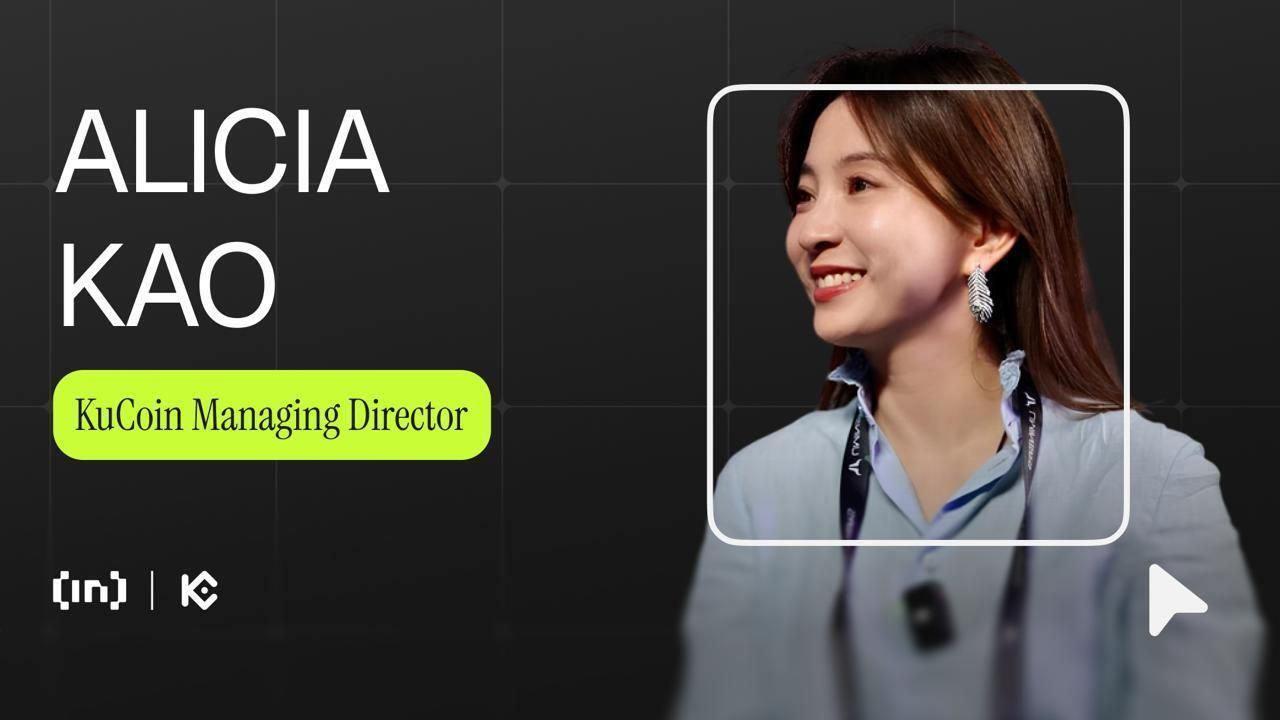
In Conversation with KuCoin’s Alicia Kao: Why Trust Is the True Currency of Crypto’s Next Chapter

When the market tumbled a few weeks ago, exchanges faced a familiar test: how well could they protect users in an industry built on volatility? For KuCoin Managing Director Alicia Kao, that tension defines her daily work. She describes the exchange’s mission as being both a gateway for innovation and a gatekeeper for trust. These are two roles that rarely align easily.

In a conversation with BeInCrypto, Kao discussed how KuCoin balances innovation with protection, adapts to tighter regulations, and upgrades its technology to serve both institutional and retail users.

Becoming “The Exchange You Can Trust” in an Institutional Era

KuCoin has built its identity as The People’s Exchange, serving millions of retail traders worldwide. Recently, it introduced a new brand slogan, “Trust First. Trade Next.” along with the message “The Exchange You Can Trust.” 

As institutions are entering the market in growing numbers, the refreshed branding reflects KuCoin’s broader ambition to strengthen credibility and expand its reach across different user segments. However, for Kao, that shift doesn’t mean abandoning the users who made KuCoin what it is.

“We don’t prefer institutions or retail. Both are important for us,” she said.

Retail traders tend to prefer one-click simplicity, relying on AI bots and clear interfaces. Institutional desks have very different needs. They prioritize execution speed, customized metrics, and access to deeper trading engines.

She explained, “For institutions, it’s about product features that fit their behavior. For retail, we focus on education, helping users become more professional in trading.”

Although achieving that balance is never simple, Kao said that the company aims to maintain a balanced platform, serving both groups effectively.

To support institutions without shifting away from its retail foundation, KuCoin has introduced features that strengthen both trust and efficiency. One example is its Off-Exchange Settlement (OES) framework. It was developed with strategic partners to let institutions keep their assets in third-party custody. At the same time, they can access KuCoin’s liquidity across spot, margin, options, and futures markets. 

The company is also expanding into real-world asset (RWA) tokenization. This initiative connects traditional finance with blockchain infrastructure and creates new opportunities for institutional investors.

As KuCoin works to meet the needs of both institutional and retail users, the company is also refining the technology that supports them, including artificial intelligence. While AI has been around for some time, Kao believes that the environment today is stronger. Companies now have better metrics, more data, and more mature models to work with.

“We’ve been launching our trading bot for a couple of years. But now, we are able to re-architect our trading bot with AI because we have more data and information, and we have more mature models to help us shape the trading bot,” she stated.

Kao also observed that users’ focus has shifted. Many are interested in earning from their assets rather than just trading.

“As long as we can offer different options to let users earn more of their crypto assets, then I think it’s all about earning,” she added.

Guarding the Altcoin Haven

Few exchanges have KuCoin’s reputation for token variety. It’s often called an altcoin haven, but Kao recognizes that the environment is changing.

Kao mentioned that KuCoin continues to update its policies for listing new coins because the environment changes quickly. She believes the exchange’s advantage lies in maintaining a clear internal compliance structure, which is not always the case for local platforms.

She pointed to markets where regulators maintain strict rules on listings. KuCoin works directly with authorities to ensure that every listed asset complies with these frameworks.

“For now, we remain highly selective and continue to uphold a rigorous due diligence process for listings,” Kao affirmed. “Our goal is to build a diverse and innovation-driven product ecosystem that showcases emerging blockchain projects and delivers meaningful value to users.”

Meanwhile, KuCoin’s infrastructure and cybersecurity divisions are building what Kao calls the foundation of trust. Their focus includes solid trading architecture, a custody system that minimizes vulnerabilities, and proactive measures against scams.

Kao emphasized that KuCoin’s listing strategy is shaped by close collaboration between the product, cybersecurity, and risk management teams. She said this approach reflects the company’s commitment to balancing innovation with responsibility. 

“Our product team is dedicated to ensuring users can access a comprehensive range of quality assets within our ecosystem, while our risk team upholds the highest standards of security and compliance. This synergy allows us to drive growth responsibly while maintaining user trust and market integrity,” she added.

Furthermore, KuCoin has set a new industry benchmark by attaining four internationally recognized certifications. Among them are CCSS for cryptocurrency asset protection, SOC 2 Type II for operational controls, ISO 27001:2022 for information security management, and ISO 27701:2025 for privacy protection. 

The company also conducts continuous monitoring and proactive detection measures to combat phishing attempts and impersonation scams across social media, reinforcing its commitment to user safety and platform integrity.

That measured approach, defined by technical rigor combined with cautious openness, reflects how Kao sees the role of a centralized exchange in 2025. The goal is to welcome new ideas while keeping users protected from unnecessary risk. 

“We continue to embrace the innovation part. We work with some of the on-chain products providers to let our users subscribe or purchase some of the staking products or some structured products easier. We are very selective of our partners. We make sure that they are with good reputations and they’re running their company properly,” she stated. “At the same time, we remain highly selective in our partnerships, working only with reputable and well-managed institutions to ensure both reliability and long-term user trust.”

The post In Conversation with KuCoin’s Alicia Kao: Why Trust Is the True Currency of Crypto’s Next Chapter appeared first on BeInCrypto.

  •  

Future With U: Phemex Celebrates Its 6th Anniversary With 66% User Growth And Shared Vision

Phemex, a user-first crypto exchange, celebrates its 6th anniversary with the campaign theme “Future With U”. The milestone follows a defining year of transformation—from a full-scale rebrand to record-breaking user growth and strengthened platform security—symbolizing Phemex’s evolution into a forward-looking, resilient, and human-centered brand.

2025: A year of resilience and growth

The year 2025 was pivotal for Phemex. In response to shifting market conditions and internal operational challenges, the exchange conducted a comprehensive system overhaul to strengthen its technical and security foundation. Upgrades included multi-layer wallet protection, AI-driven monitoring, and enhanced disaster recovery mechanisms—all implemented while maintaining 99.999% uptime.

This renewed infrastructure laid the groundwork for strong business performance. Global user numbers surged by 66%, spot trading volume more than doubled with a 122% increase, and futures trading rose 26% year-on-year. These achievements reflect Phemex’s ability to convert resilience into growth, reinforcing its position as one of the most trusted and efficient exchanges in the industry.

Rebranding for the future: “For you. For tomorrow.”

This anniversary also follows Phemex’s comprehensive rebrand. The rebrand defined what Phemex stands for—an efficient, transparent, and forward-thinking platform that empowers users through smarter financial freedom. The refreshed identity, visual language, and storytelling approach connect the brand more deeply with traders worldwide.

“Future with U”: A campaign about shared progress

The anniversary campaign celebrates six years of co-creation between Phemex and its community. It highlights how user feedback has continuously shaped the platform’s innovation—from multi-asset trading to on-chain earning tools—and looks ahead to new initiatives that will make digital finance even more efficient and inclusive.

2026: Building forward, together

As Phemex moves into 2026, the exchange remains steadfast in strengthening the foundation of its infrastructure. The coming year will see continued investment in security innovation. Phemex will further enhance overall user experience, system scalability and reliability, ensuring peak performance and near-zero downtime even amid surging global trading activity.

Beyond infrastructure, Phemex aims to expand its ecosystem through product innovation and brand development. In 2026, the company will refine its core offerings—spot, futures, copy trading, and earn—while integrating more on-chain tools and cross-asset management features. At the brand level, Phemex will continue strengthening its presence through localized campaigns, educational content, and community engagement, bringing its user-first philosophy to markets worldwide.

Federico Variola, CEO of Phemex, commented: “Our journey this year reaffirmed a core principle: true resilience is engineered, not inherited. We made a strategic decision to treat every challenge as a catalyst. This internal transformation, mirrored by our external rebrand, was the bedrock upon which we achieved record growth. Our ‘Future With U’ is not just a theme—it’s our operational blueprint, signifying that our greatest innovations will continue to emerge from solving real user problems with institutional-grade reliability.”

Looking ahead: The story continues

Six years in, Phemex stands at a new starting line. The rebrand and anniversary together signal more than milestones—they mark the beginning of a broader movement toward a more inclusive, intelligent, and human crypto future. With upcoming campaigns and celebrations throughout the season, Phemex invites its global community to join in shaping what comes next.

About Phemex

Founded in 2019, Phemex is a user-first crypto exchange trusted by over 10 million traders worldwide. The platform offers spot and derivatives trading, copy trading, and wealth management products designed to prioritize user experience, transparency, and innovation. With a forward-thinking approach and a commitment to user empowerment, Phemex delivers reliable tools, inclusive access, and evolving opportunities for traders at every level to grow and succeed.

For media inquiries, please contact: [email protected] more information, please visit: https://phemex.com/

The post Future With U: Phemex Celebrates Its 6th Anniversary With 66% User Growth And Shared Vision appeared first on BeInCrypto.

  •