Reading view

Saham Miner Naik 20% setelah Dorongan AI Senilai US$50B dari Amazon Tingkatkan Permintaan Daya

Saham crypto mining melonjak hingga 20% dipimpin oleh BitMine dan Cipher Mining, setelah Amazon mengungkapkan rencana untuk berinvestasi hingga US$50 miliar dalam infrastruktur AI untuk lembaga pemerintah AS.

Perubahan ini muncul ketika Bitcoin miner menghadapi penurunan profitabilitas setelah peristiwa halving 2024. Sementara itu, permintaan kapasitas komputasi AI melambung tinggi. Raksasa teknologi kini melihat infrastruktur daya miner yang sudah mapan sebagai kunci untuk pertumbuhan pusat data yang cepat.

Saham Mining Bukukan Keuntungan Double-Digit Karena Fokus Beralih ke Infrastruktur

Sektor crypto mining melihat reli luas pada hari Senin, mencatatkan kenaikan 13,84% di sektor ini menurut data SoSoValue. BitMine melesat hampir 20%, sementara Cipher Mining naik lebih dari 18%.

Reli ini terjadi setelah pengumuman Amazon tentang investasi sebesar hingga US$50 miliar dalam infrastruktur AI untuk lembaga pemerintah AS. Rencana ini akan menambah 1,3 gigawatt di beberapa pusat data, dengan pembangunan dijadwalkan untuk 2026. Lembaga pemerintah akan mendapatkan akses ke alat AWS, Claude AI dari Anthropic, chip Nvidia, dan chip Trainium yang dikembangkan oleh Amazon.

Amazon juga mengumumkan investasi US$15 miliar di Northern Indiana untuk kampus pusat data baru, mendukung 1.100 pekerjaan berkeahlian tinggi dan 2,4 gigawatt kapasitas data. Ekspansi ini menyoroti skala infrastruktur yang diperlukan untuk beban kerja AI.

Meta juga meningkatkan upayanya dalam infrastruktur AI, mencari persetujuan federal untuk berdagang listrik bersama Microsoft untuk pasokan energi jangka panjang. Kampus Meta di Louisiana sendiri diperkirakan memerlukan tiga pembangkit listrik berbahan bakar gas baru.

Bitcoin Miner Berevolusi Menjadi Pemain Kuat AI

Kenaikan saham yang signifikan mengungkapkan bagaimana bitcoin miner mengubah operasional mereka. Penurunan keuntungan setelah halving Bitcoin pada April 2024 mendorong miner mencari sumber pendapatan baru. Pengembang pusat data AI, yang kini menghadapi kekurangan listrik, melihat fasilitas terintegrasi grid milik miner sebagai mitra strategis.

IREN, sebelumnya dikenal sebagai Iris Energy, menandatangani kesepakatan pusat data senilai US$9,7 miliar dengan Microsoft, memberikan raksasa teknologi tersebut akses awal ke GPU Nvidia. Saham IREN melonjak 580% tahun ini sejak rebranding-nya. Miner lain menunjukkan kinerja kuat: Riot Platforms naik 100%, TeraWulf 160%, dan Cipher Mining 360%.

Kapasitas daya gabungan sebesar 14 gigawatt di antara miner AS telah menjadi kunci bagi perusahaan teknologi yang mencari skala cepat. Kebijakan AS yang menguntungkan, termasuk pembatasan ekspor Nvidia ke Cina, memberi miner lokal keunggulan kompetitif. Sebaliknya, miner Cina menghadapi lebih banyak regulasi dan hambatan impor.

Para pengembang pusat data AI kini menargetkan bitcoin miner. Tim-tim ini mendekati operasi mining yang sudah menjalankan situs dengan kapasitas tinggi dan terintegrasi grid. Lokasi seperti Childress, Texas, telah menjadi pusat besar untuk infrastruktur data dan mining yang terintegrasi.

Pemimpin Teknologi Percepat Investasi Infrastruktur

Perusahaan teknologi global mengumpulkan sekitar US$100 miliar dalam penawaran obligasi untuk mendukung kapabilitas AI dan cloud baru. Amazon, Microsoft, Google, Oracle, dan Meta bisa menghabiskan US$400 miliar tahun ini untuk investasi AI dan pusat data. Menurut Deutsche Bank, total investasi terkait AI bisa mencapai US$4 triliun pada 2030.

Langkah ini menandai perubahan dari cadangan kas ke pembiayaan utang. Meta meluncurkan penjualan obligasi terbesarnya, total US$30 miliar, untuk infrastruktur AI. Amazon mengeluarkan obligasi AS senilai US$15 miliar, yang pertama dalam tiga tahun, menarik permintaan sebesar US$80 miliar. Amazon memegang utang sebesar US$69,29 miliar dan kas US$66,92 miliar.

Alphabet mengeluarkan obligasi AS senilai US$17,5 miliar dan obligasi Eropa sebesar €6,5 miliar, sehingga total utangnya mencapai US$48,78 miliar. Peminjaman agresif ini mencerminkan kebutuhan modal besar untuk infrastruktur AI.

Kebutuhan energi untuk menjalankan AI, namun, melampaui ekspansi grid. Dengan lambatnya pengembangan grid, perusahaan teknologi memperoleh sumber energi langsung. Apple sudah mendapatkan persetujuan federal untuk berdagang listrik grosir, mencerminkan tren perusahaan teknologi yang mengelola energi mereka sendiri untuk infrastruktur AI.

Penyatuan infrastruktur crypto mining dengan permintaan komputasi AI menandakan pergeseran strategis besar bagi kedua sektor. Ketika bitcoin miner beralih ke komputasi AI, kapasitas daya bawaan dan situs siap-grid memungkinkan raksasa teknologi untuk menerapkan dengan cepat dan bersaing dalam lanskap AI yang berkembang pesat.

  •  

XRP Naik 9% saat Franklin Templeton dan Grayscale Luncurkan ETF Spot

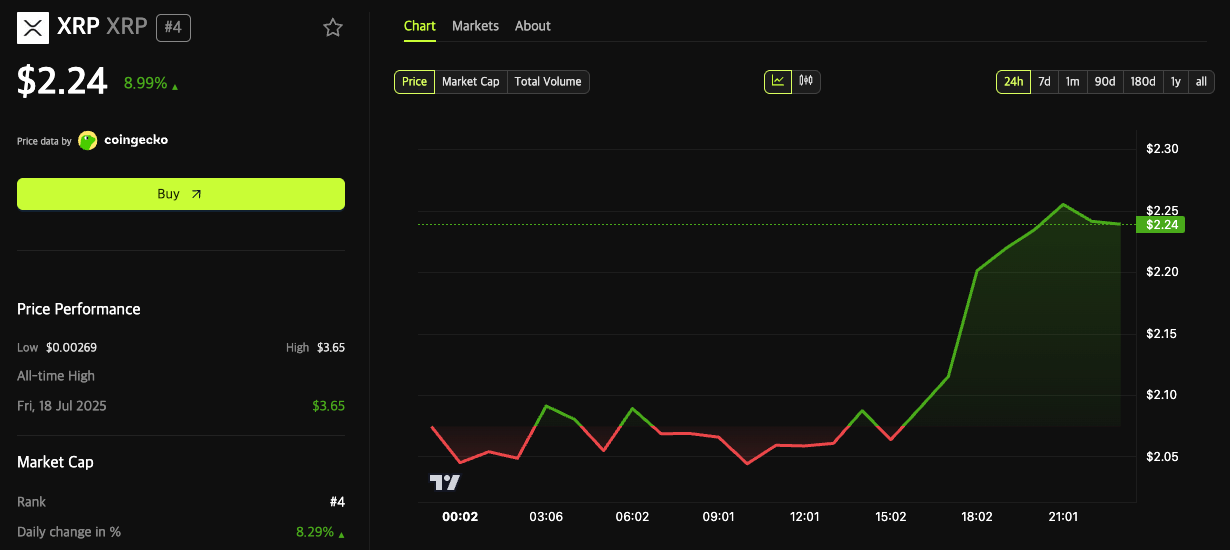
XRP melonjak lebih dari 9% menjadi US$2,27 setelah Franklin Templeton dan Grayscale meluncurkan exchange-traded fund (ETF) XRP spot mereka pada hari Senin. Manajer aset senilai US$1,69 triliun ini bergabung dengan Bitwise, Grayscale, dan Canary Capital dalam menawarkan produk investasi XRP yang teratur, yang menyebut XRP sebagai “fondasi” untuk infrastruktur penyelesaian global.

Gelombang peluncuran ETF ini menandai titik balik bagi XRP. Setelah ketidakpastian regulasi menghilang dengan penyelesaian SEC Ripple di awal tahun 2025, minat institusional meningkat pesat.

Gelombang Peluncuran ETF Institusional Menandakan Kedewasaan Pasar

Franklin Templeton memperkenalkan Franklin XRP ETF (XRPZ) di NYSE Arca, menawarkan eksposur XRP yang teratur melalui grantor trust. Dana ini melacak CME CF XRP-Dollar Reference Rate dan menggunakan Coinbase Custody sebagai kustodian, dengan BNY Mellon sebagai administrator. Menurut pengumuman Franklin Templeton, ETF ini memungkinkan investor untuk mengikuti kinerja XRP secara transparan, tanpa perlu membeli mata uang kripto tersebut secara langsung.

“XRPZ menawarkan cara yang nyaman dan teratur bagi investor untuk mengakses aset digital yang memainkan peran penting dalam infrastruktur penyelesaian global,” ujar David Mann, direktur produk ETF dan pasar modal di Franklin Templeton.

Grayscale juga telah meluncurkan ETF XRP Trust (GXRP) mereka dengan periode pengantar tanpa biaya, menyoroti posisi pasar kuat XRP.

Introducing Grayscale XRP Trust ETF (Ticker: $GXRP), now trading with 0% fees¹ from Grayscale, the world's largest crypto-focused asset manager².

Gain exposure to $XRP, the world’s 3rd largest digital asset³, driving innovation in global payments. Available in your brokerage… pic.twitter.com/rAzGrm0M6P

— Grayscale (@Grayscale) November 24, 2025

Bitwise, yang meluncurkan ETF XRP mereka seminggu sebelumnya, melaporkan arus masuk awal sebesar US$100 juta. Kelompok peluncuran ETF menandakan bahwa manajer aset sudah siap menghadapi kejelasan regulasi yang datang dari SEC pada tahun 2025.

Resolusi Regulasi Membuka Jalan untuk Masuknya Wall Street

Penyelesaian US$125 juta Ripple dengan Securities and Exchange Commission pada Mei 2025 mengakhiri ketidakpastian selama bertahun-tahun. Pernyataan SEC mengkonfirmasi bahwa Ripple menyelesaikan semua klaim tanpa mengakui kesalahan, membayar US$50 juta langsung ke agensi, dan sisanya dilepaskan dari escrow. Penyelesaian ini memberikan kepastian yang dibutuhkan institusi keuangan besar untuk mengejar ETF spot.

Partisipasi Franklin Templeton patut dicatat karena ukuran mereka, memberikan kredibilitas pada cerita XRP sebagai utilitas pembayaran. Investor kini dapat mengakses XRP melalui produk yang diatur oleh kustodian terkenal dan dengan transparansi yang jelas.

Sumber: BeInCrypto

Namun, prospektus memperingatkan bahwa risiko tetap ada, termasuk volatilitas XRP, diversifikasi terbatas, dan ketidakpastian regulasi di luar negeri. ETF ini hanya memegang XRP dan uang tunai, membuatnya tidak cocok sebagai investasi mandiri.

Keunggulan Teknis XRP Menarik Minat Institusi

XRP berjalan di atas decentralized XRP Ledger (XRPL), yang dirancang untuk penyelesaian pembayaran cepat. Dokumentasi XRPL menyoroti transaksi yang hampir instan dengan biaya rendah dan mencatat bahwa lebih dari 3,3 miliar transfer telah diproses di jaringan tersebut.

Sistem konsensus XRPL dikatakan efisien energi, menyelesaikan transaksi dalam tiga hingga lima detik. Fitur-fitur ini menarik bagi institusi yang mencari alternatif untuk SWIFT dan sistem tradisional lintas batas.

Prospektus Franklin Templeton dan Grayscale Research sama-sama menekankan kegunaan XRP sebagai jembatan mata uang dan untuk transfer yang efisien dan skalabel. Dengan karakteristik ini, XRP membedakan dirinya dari mata uang kripto seperti Bitcoin, yang lebih banyak berfungsi sebagai penyimpan nilai.

Reli saat ini bertepatan dengan peningkatan open interest dalam futures XRP, menunjukkan keterlibatan yang meningkat dari trader institusional dan ritel serta mengindikasikan aktivitas pasar yang berkelanjutan.

Dimensi Geopolitik dan Spekulasi Eksposur Cina

Beberapa analis percaya XRP dapat memainkan peran dalam koridor pembayaran lintas batas baru, termasuk di Asia, Timur Tengah, dan Afrika. Black Swan Capitalist berpendapat bahwa Cina memiliki eksposur tidak langsung terhadap XRP melalui BRICS New Development Bank dan fintech Jepang terkemuka SBI Holdings. Namun, adopsi langsung masih dibatasi oleh kebijakan Cina.

China already has indirect exposure to XRP through the BRICS New Development Bank, SBI, and the cross-border payment corridors linking Asia, the Middle East, and Africa. The rails don’t stop at the Great Wall, despite what some on Twitter might think.

— Black Swan Capitalist (@VersanAljarrah) November 21, 2025

Rekomendasi dari dewan bisnis BRICS pada April 2025 mendesak dukungan untuk penyelesaian digital lintas batas — tema yang sejalan dengan desain inti XRP, meskipun tidak ada penyebutan eksplisit tentang mata uang kripto tersebut. Rekomendasi tersebut menyoroti kebutuhan yang semakin meningkat untuk sistem pembayaran digital yang efisien.

Bank Sentral Eropa juga sedang mengkaji infrastruktur pembayaran lintas batas. Proyek Nexus dibahas dalam sebuah pidato April 2025 tentang menghubungkan sistem pembayaran di Asia dan Eropa. Tren ini mencerminkan relevansi global dari kasus penggunaan XRP Ledger.

  •  

Strategy Fails to Join the S&P 500 Once Again

SanDisk Corp. will join the S&P 500 on Friday, November 28, 2024, replacing Interpublic Group of Companies Inc., according to S&P Dow Jones Indices. After the announcement on Monday, shares of the computer storage maker surged by more than 9% in after-hours trading.

This milestone signals SanDisk’s rapid rise, while Strategy (formerly MicroStrategy) faces another setback, remaining excluded from the S&P 500 despite holding more than 640,000 Bitcoin.

SanDisk’s Rapid Ascent to the S&P 500

SanDisk’s move from the S&P SmallCap 600 to the S&P 500 reflects its strong market performance over the past few months. Driven by demand from artificial intelligence applications, the company’s market capitalization has reached approximately $33 billion. This surpassed typical small-cap index thresholds, making the switch to the S&P 500 a logical step.

The announcement arrived just before the Thanksgiving holiday trading session, highlighting the urgency of the rebalancing. The replacement is occurring outside the usual quarterly rebalance, suggesting strong market momentum. The stock closed up 13.33% on the day of the announcement before the after-hours surge.

Joining the S&P 500 usually attracts significant passive inflows, as index-tracking funds buy shares to maintain their weightings. This change boosts SanDisk’s institutional investment appeal and liquidity. It also raises the company’s profile among investors focused on large-cap equities in the index.

SanDisk’s rise is fueled by optimism around AI infrastructure. As businesses use more advanced machine learning models, storage solutions are increasingly critical—driving investor enthusiasm and boosting SanDisk’s valuation over the past year.

Strategy’s Continued S&P 500 Challenge

While SanDisk celebrates, Strategy remains on the outside looking in, even after meeting several technical requirements. The company, led by executive chairman Michael Saylor, holds 640,808 BTC, valued at around $72.3 billion, making it the world’s largest corporate holder of Bitcoin. However, this asset concentration is seen as a liability by index decision makers.

Strategy was not included in the S&P 500’s September reshuffle, which selected Robinhood, AppLovin, and Emcor. Analysts put the company’s chances of inclusion in December at 70% following strong Q3 results. The firm reported $3.8 billion in Q3 earnings, showing profitability tied to Bitcoin’s price movements.

Yet, earnings volatility remains the main hurdle. Strategy’s results fluctuate each quarter with Bitcoin’s price, creating inconsistency with S&P 500 requirements. For instance, Q2 2024 delivered $10 billion in revenue and $14 billion in unrealized gains, while Q1 saw a $4.2 billion loss. The index requires four straight quarters of positive earnings—a threshold that has eluded Strategy due to its Bitcoin-heavy approach.

S&P Dow Jones Indices gave Strategy a ‘B-‘ credit rating, citing high Bitcoin exposure, low USD liquidity, and a narrow business model. These contribute to traditional finance skepticism about digital asset treasury companies. The rating shows the committee sees Bitcoin-based volatility as incompatible with the stability expected in S&P 500 members.

Even if Strategy meets the criteria for market capitalization and liquidity, the committee also considers business model diversity, financial stability, and sector representation. While some advocate for evolving index methodologies to include innovative treasury approaches, traditionalists insist on consistent, proven earnings, especially for benchmarks like the S&P 500.

Traditional Finance Meets Digital Asset Reality

The paths of SanDisk and Strategy highlight a broader divide between traditional finance and digital asset business models. Some crypto-exposed companies like Robinhood have entered the S&P 500, yet Strategy’s concentrated Bitcoin position poses unique challenges. The company’s stock is down 35% from its July high of $434, reflecting disappointment over exclusion and credit rating concerns.

Nasdaq’s scrutiny of digital asset treasury firms adds further obstacles for Strategy. As industry analysis notes, traditional finance’s skepticism extends beyond earnings volatility to concerns about long-term business models and regulatory compliance. This unease endures, even as Strategy has occasionally outperformed both Bitcoin and the S&P 500, as Saylor has highlighted.

On the other hand, MSCI’s recent consultation that Strategy could be removed from its key equity indices has sharpened investor focus on whether similar pressure might eventually extend to the S&P 500. While the company’s inclusion in MSCI USA and MSCI World has long funneled billions in passive capital into the stock, analysts now argue that its increasingly bitcoin-centric profile may no longer fit traditional index methodologies.

This has raised questions in the broader market about whether the valuation premium tied to expected index stability is at risk — and whether Strategy’s future index eligibility, including any long-shot hopes of S&P 500 admission, could be further complicated by the growing scrutiny.

The post Strategy Fails to Join the S&P 500 Once Again appeared first on BeInCrypto.

  •  

Mining Stocks Jump 20% as Amazon’s $50B AI Push Boosts Demand for Power

Crypto mining stocks jumped as much as 20% led by BitMine and Cipher Mining, after Amazon unveiled plans to invest up to $50 billion in AI infrastructure for U.S. government agencies.

This shift comes as Bitcoin miners face declining profitability following the 2024 halving event. Meanwhile, demand for AI compute capacity is soaring. Tech giants now view miners’ established power infrastructure as key to rapid data center growth.

Mining Stocks Post Double-Digit Gains as Focus Shifts to Infrastructure

The crypto mining sector saw a broad rally on Monday, notching a 13.84% sector-wide gain according to SoSoValue data. BitMine soared nearly 20%, while Cipher Mining rose more than 18%.

The rally followed Amazon’s announcement of an investment of up to $50 billion in AI infrastructure for US government agencies. The plan will add 1.3 gigawatts across multiple data centers, with construction set for 2026. Agencies will gain access to AWS tools, Anthropic’s Claude AI, Nvidia chips, and Trainium chips developed by Amazon.

Amazon also announced a $15 billion investment in Northern Indiana for new data center campuses, supporting 1,100 high-skilled jobs and 2.4 gigawatts of data capacity. This expansion underscores the scale of infrastructure required for AI workloads.

Meta has intensified its AI infrastructure efforts, seeking federal approval to trade electricity alongside Microsoft for long-term energy supply. Meta’s Louisiana campus alone is expected to require three new gas-fired plants.

Bitcoin Miners Evolve Into AI Power Players

The substantial stock gains reveal how bitcoin miners are transforming operations. Declining profits after Bitcoin’s April 2024 halving prompted miners to seek new revenue streams. AI data center developers, who now face electricity shortages, see miners’ grid-integrated facilities as strategic partners.

IREN, formerly Iris Energy, signed a $9.7 billion data center deal with Microsoft, granting the tech giant early access to Nvidia GPUs. IREN’s stock has shot up 580% this year since its rebrand. Other miners showed strong performance: Riot Platforms gained 100%, TeraWulf 160%, and Cipher Mining 360%.

The combined 14 gigawatts of power capacity among US miners has become key for tech firms seeking rapid scale. Favorable US policies, including Nvidia export restrictions to China, give domestic miners a competitive edge. In contrast, Chinese miners face more regulation and import barriers.

AI data center developers are now targeting bitcoin miners. These teams are approaching mining operations already running high-capacity, grid-integrated sites. Locations like Childress, Texas, have become major hubs for combined data and mining infrastructure.

Tech Leaders Accelerate Infrastructure Investments

Global tech firms are raising around $100 billion in bond offerings to fuel new AI and cloud capabilities. Amazon, Microsoft, Google, Oracle, and Meta could spend $400 billion this year on AI and data center investments. According to Deutsche Bank, total AI-related investment could reach $4 trillion by 2030.

The move signifies a shift from cash reserves to debt financing. Meta has launched its largest-ever bond sale, totaling $30 billion, for AI infrastructure. Amazon issued a $15 billion US bond, its first in three years, attracting $80 billion in demand. Amazon holds $69.29 billion in debt and $66.92 billion in cash.

Alphabet issued a $17.5 billion US bond and a €6.5 billion European bond, bringing its total debt to $48.78 billion. The aggressive borrowing reflects the immense capital needs for AI infrastructure.

The need for energy to power AI, however, surpasses grid expansion. With slow grid development, tech companies are securing direct energy sources. Apple already has federal approval to trade electricity wholesale, reflecting a trend of tech firms managing their own energy for AI infrastructure.

The merging of crypto mining infrastructure with AI compute demand signals a major strategic shift for both sectors. As bitcoin miners pivot to AI compute, their built-in power capacity and grid-ready sites enable tech giants to deploy quickly and compete in the fast-evolving AI landscape.

The post Mining Stocks Jump 20% as Amazon’s $50B AI Push Boosts Demand for Power appeared first on BeInCrypto.

  •  

XRP Jumps 9% as Franklin Templeton and Grayscale Launch Spot ETFs

XRP jumped more than 9% to $2.27 after Franklin Templeton and Grayscale launched their spot XRP ETF on Monday. The $1.69 trillion asset manager joined Bitwise, Grayscale, and Canary Capital in offering regulated XRP investment products, calling XRP “foundational” for global settlement infrastructure.

This wave of ETF launches marks a turning point for XRP. After regulatory uncertainty faded with Ripple’s SEC settlement earlier in 2025, institutional interest is surging.

Wave of Institutional ETF Launches Signals Market Maturity

Franklin Templeton debuted the Franklin XRP ETF (XRPZ) on NYSE Arca, offering regulated XRP exposure through a grantor trust. The fund tracks the CME CF XRP-Dollar Reference Rate and uses Coinbase Custody as custodian, with BNY Mellon as administrator. According to Franklin Templeton’s announcement, the ETF allows investors to follow XRP’s performance transparently, without buying the cryptocurrency directly.

“XRPZ offers investors a convenient and regulated way to access a digital asset that plays a critical role in the global settlement infrastructure,” stated David Mann, director of ETF products and capital markets at Franklin Templeton.

Grayscale has also launched its XRP Trust ETF (GXRP) with a zero-fee introductory period, highlighting XRP’s strong market position.

Introducing Grayscale XRP Trust ETF (Ticker: $GXRP), now trading with 0% fees¹ from Grayscale, the world's largest crypto-focused asset manager².

Gain exposure to $XRP, the world’s 3rd largest digital asset³, driving innovation in global payments. Available in your brokerage… pic.twitter.com/rAzGrm0M6P

— Grayscale (@Grayscale) November 24, 2025

Bitwise, which launched its XRP ETF a week earlier, reported $100 million in initial inflows. The clustering of ETF launches signals that asset managers were prepared for regulatory clarity, which arrived from the SEC in 2025.

Regulatory Resolution Paves Way for Wall Street Entry

Ripple’s $125 million settlement with the Securities and Exchange Commission in May 2025 ended years of uncertainty. SEC statements confirm that Ripple resolved all claims without admitting wrongdoing, paid $50 million directly to the agency, and had the rest released from escrow. This resolution gave large financial institutions the assurance needed to pursue spot ETFs.

Franklin Templeton’s participation is notable for its size, lending credibility to XRP’s story as a payment utility. Investors can now access XRP through regulated products managed by well-known custodians and with clear transparency.

Source: BeInCrypto

Still, prospectuses caution that risks remain, including XRP’s volatility, limited diversification, and regulatory uncertainty abroad. The ETF holds only XRP and cash, making it unsuitable as a standalone investment.

XRP’s Technical Advantages Drive Institutional Interest

XRP runs on the decentralized XRP Ledger (XRPL), designed for rapid payment settlement. XRPL documentation highlights near-instant, low-fee transactions and notes that over 3.3 billion transfers have been processed on the network.

XRPL’s consensus system is said to be energy efficient, settling transactions in three to five seconds. These features attract institutions seeking alternatives to SWIFT and traditional cross-border systems.

Franklin Templeton’s prospectus and Grayscale Research both stress XRP’s usefulness as a currency bridge and for efficient, scalable transfers. With these characteristics, XRP sets itself apart from cryptocurrencies like Bitcoin, which mainly serve as a store of value.

The current rally coincides with rising open interest in XRP futures, pointing to growing involvement from institutional and retail traders and suggesting sustained market activity.

Geopolitical Dimensions and China Exposure Speculation

Some analysts believe XRP could play a role in new cross-border payment corridors, including those in Asia, the Middle East, and Africa. Black Swan Capitalist has argued that China has indirect exposure to XRP through the BRICS New Development Bank and leading Japanese fintech SBI Holdings. However, direct adoption remains limited by Chinese policies.

China already has indirect exposure to XRP through the BRICS New Development Bank, SBI, and the cross-border payment corridors linking Asia, the Middle East, and Africa. The rails don’t stop at the Great Wall, despite what some on Twitter might think.

— Black Swan Capitalist (@VersanAljarrah) November 21, 2025

BRICS business council recommendations from April 2025 urged support for cross-border digital settlements — a theme in line with XRP’s core design, despite no explicit mention of the cryptocurrency. The recommendations highlight a growing need for efficient digital payment systems.

The European Central Bank is also examining cross-border payment infrastructure. Project Nexus was discussed during an April 2025 speech about linking payment systems in Asia and Europe. These trends echo the global relevance of the XRP Ledger’s use cases.

The post XRP Jumps 9% as Franklin Templeton and Grayscale Launch Spot ETFs appeared first on BeInCrypto.

  •  

Upbit Operator to Announce Merger with Korean Tech Giant Naver This Week

South Korea’s top payment platform and largest cryptocurrency exchange are set to merge, with board approvals expected on Wednesday and a public announcement planned for the next day.

This agreement will combine Naver Financial and Dunamu, the operator of Upbit, to form a powerful player that bridges traditional finance and digital assets in one of Asia’s largest economies.

Merger Timeline and Structure

The boards of both companies plan to meet on November 26 to approve the merger. After that, a joint announcement is expected on November 27. According to local media reports, top executives will attend a press conference at Naver’s campus.

The transaction will involve a complete stock exchange, making Dunamu a wholly owned subsidiary of Naver Financial. Current estimates value Naver Financial at about KRW 5 trillion and Dunamu at KRW 15 trillion. This difference suggests a 1:3 share exchange ratio.

Dunamu’s shareholders will exchange their stakes for shares in Naver Financial, and its principal holders are likely to take nearly 30% of the combined company. At the same time, Naver’s stake will decline from 69% to 17%, but operational control is expected to stay with Naver, one of South Korea’s top tech giants.

To comply with the country’s fair trade laws, Dunamu may assign over half of its voting rights to Naver. This step intends to address market concentration concerns while preserving the strategic advantages of the deal.

Strategic Outlook for the Combined Entity

This merger unites two complementary leaders in South Korea’s financial sector. Naver Financial runs the country’s most popular payment platform with strong ties to Naver’s e-commerce, search, and communication services. Dunamu dominates cryptocurrency trading through Upbit, processing billions in daily trading volume and serving millions of users.

The combined company seeks to create a comprehensive financial ecosystem that erases boundaries between traditional payments and digital assets. Their leaders expect to stress plans to compete with global tech giants. This strategy highlights the need for Korean fintech firms to scale and remain competitive beyond their home market.

Naver’s large user base and strong technology platform could accelerate the adoption of crypto among mainstream consumers. In return, Dunamu’s blockchain experience and regulatory know-how may boost Naver Financial’s edge in new financial technologies.

Regulatory Review and Future Impact

The proposed merger is under scrutiny by regulators. South Korea’s Financial Supervisory Service and Fair Trade Commission must both review the deal. The FSS will assess financial risk, especially the impact of combining a licensed payment platform with a virtual asset exchange. Regulators have long separated these sectors to prevent systemic risk.

Shareholder protection is another primary concern. With Naver’s stake falling below 20%, questions arise about governance and minority rights. Regulators will likely examine whether the agreement protects existing investors in both firms.

Competition authorities face a complex decision. While executives claim the merger is needed to compete globally, the Fair Trade Commission must determine whether it unfairly concentrates control over South Korea’s payment network and its largest cryptocurrency exchange. The review will focus on possible effects on market competition and consumer choice.

Approval will take months. Both companies must show that the merger’s benefits outweigh any risks to financial stability or fair competition. The decision could set a precedent for how traditional finance and digital assets may merge in South Korea and across Asia in the future.

The post Upbit Operator to Announce Merger with Korean Tech Giant Naver This Week appeared first on BeInCrypto.

  •  

Operator Upbit akan Umumkan Merger dengan Raksasa Teknologi Korea Naver Minggu Ini

Platform pembayaran teratas dan exchange aset kripto terbesar di Korea Selatan akan bergabung, dengan persetujuan direksi diharapkan terjadi pada hari Rabu, dan pengumuman publik direncanakan untuk hari berikutnya.

Kesepakatan ini akan menggabungkan Naver Financial dan Dunamu, operator Upbit, untuk membentuk pemain kuat yang menghubungkan keuangan tradisional dan aset digital di salah satu ekonomi terbesar di Asia.

Timeline dan Struktur Merger

Dewan dari kedua perusahaan berencana bertemu pada 26 November untuk menyetujui merger ini. Setelah itu, pengumuman bersama diharapkan pada 27 November. Menurut laporan media lokal, eksekutif puncak akan menghadiri konferensi pers di kampus Naver.

Transaksi ini akan melibatkan pertukaran saham lengkap, menjadikan Dunamu sebagai anak perusahaan yang sepenuhnya dimiliki Naver Financial. Estimasi saat ini menilai Naver Financial sekitar KRW 5 triliun dan Dunamu sekitar KRW 15 triliun. Perbedaan ini menunjukkan rasio pertukaran saham 1:3.

Pemegang saham Dunamu akan menukar saham mereka dengan saham di Naver Financial, dan pemegang utamanya kemungkinan akan mengambil hampir 30% dari perusahaan gabungan. Sementara itu, kepemilikan Naver akan menurun dari 69% menjadi 17%, namun kontrol operasional diperkirakan tetap dengan Naver, salah satu raksasa teknologi di Korea Selatan.

Untuk mematuhi hukum perdagangan adil negara, Dunamu mungkin akan menyerahkan lebih dari setengah hak suaranya kepada Naver. Langkah ini dimaksudkan untuk menangani kekhawatiran konsentrasi pasar sambil mempertahankan keunggulan strategis dari kesepakatan ini.

Pandangan Strategis untuk Entitas Gabungan

Merger ini menyatukan dua pemimpin yang saling melengkapi dalam sektor keuangan Korea Selatan. Naver Financial menjalankan platform pembayaran paling populer di negara ini dengan hubungan erat dengan layanan e-commerce, pencarian, dan komunikasi Naver. Dunamu mendominasi perdagangan aset kripto melalui Upbit, memproses miliaran volume perdagangan harian dan melayani jutaan pengguna.

Perusahaan gabungan ini bertujuan untuk menciptakan ekosistem keuangan yang komprehensif yang menghapus batas antara pembayaran tradisional dan aset digital. Para pemimpin mereka diharapkan menekankan rencana untuk bersaing dengan raksasa teknologi global. Strategi ini menyoroti perlunya perusahaan fintech Korea untuk berkembang dan tetap kompetitif di luar pasar domestik mereka.

Basis pengguna besar Naver dan platform teknologi yang kuat dapat mempercepat adopsi kripto di kalangan konsumen utama. Sebagai balasannya, pengalaman blockchain dan pengetahuan regulasi Dunamu dapat meningkatkan keunggulan Naver Financial dalam teknologi keuangan baru.

Tinjauan Regulasi dan Dampak Masa Depan

Merger yang diusulkan ini sedang diperiksa oleh regulator. Layanan Pengawasan Keuangan Korea Selatan dan Komisi Perdagangan Adil harus meninjau kesepakatan ini. FSS akan mengevaluasi risiko finansial, terutama dampak dari menggabungkan platform pembayaran berlisensi dengan sebuah exchange aset virtual. Regulator telah lama memisahkan sektor-sektor ini untuk mencegah risiko sistemik.

Otoritas persaingan menghadapi keputusan yang kompleks. Sementara eksekutif mengklaim bahwa merger diperlukan untuk bersaing secara global, Komisi Perdagangan Adil harus menentukan apakah ini secara tidak adil memusatkan kontrol atas jaringan pembayaran Korea Selatan dan exchange aset kripto terbesarnya. Tinjauan akan berfokus pada kemungkinan efek pada persaingan pasar dan pilihan konsumen.

Persetujuan akan memakan waktu berbulan-bulan. Kedua perusahaan harus menunjukkan bahwa manfaat dari merger ini melebihi risiko terhadap stabilitas finansial atau persaingan yang adil. Keputusan ini dapat membentuk preseden mengenai bagaimana keuangan tradisional dan aset digital dapat bergabung di Korea Selatan dan di seluruh Asia di masa mendatang.

  •  

DAT Firms Sell Crypto to Save Their Stocks: Is This Sustainable?

FG Nexus sold $32.7 million in Ethereum to fund share buybacks after its stock fell 94% in four months, highlighting the deepening net asset value (NAV) crisis among digital asset treasury companies.

The sale follows ETHZilla’s $40 million ETH offload in October, underlining mounting pressures throughout a sector managing over $42.7 billion in cryptocurrency assets. This wave of forced selling underscores vulnerabilities in the corporate crypto treasury model, as companies wrestle with stocks trading below the value of their underlying asset holdings.

Treasury Companies Resort to Asset Sales Amid Stock Collapse

FG Nexus disclosed selling 10,922 ETH in October to support a $200 million share buyback. The company began repurchasing shares after its stock fell steeply below NAV, a measure of per-share underlying crypto value. FG Nexus retained 40,005 ETH and $37 million in cash, with total debt rising to $11.9 million, as of Wednesday.

The firm bought back 3.4 million shares at about $3.45 each, representing 8% of its outstanding shares. Management stressed that shares were purchased at a discount to NAV, which reached $3.94 per share by mid-November. This strategy, however, required roughly $10 million in debt and a liquidation of 21% of ETH reserves compared to September levels.

FG Nexus Sold $32.7M in $ETH: Treasury Companies Are Starting to Sell

🔹 FG Nexus sold $32.7M in ETH (10922 ETH)
🔹 Now holds around 40,005 ETH
🔹 Other DAT companies are also reducing their ETH positions
🔹 $FGNX Stock down -94% in 4 months

Their stock is also down 94% in the… pic.twitter.com/A0hXYQaKk3

— Crypto Patel (@CryptoPatel) November 20, 2025

FG Nexus is one of several digital asset treasury companies pursuing crypto sales. ETHZilla announced an approximate $40 million ETH sale to facilitate stock repurchases in late October. The company bought 600,000 shares for nearly $12 million since October 24, seeking relief from a persistent 30% discount to NAV.

When a DAT company’s shares trade at a discount to the value of its crypto holdings (mNAV below 1.0), shareholders push management to realize that hidden value. The most effective way to do this is through a stock buyback, but securing the funds necessary to repurchase shares requires cash. If the company lacks sufficient cash reserves, it must sell some of its crypto assets to finance the buyback.

The mNAV of Metaplanet, a DAT company that accumulates Bitcoin, dropped to 0.99 before recovering to 1.03. Its shares have lost 70% since their June highs, signaling sector-wide stress. The use of perpetual preferred equity, which blends fixed dividends with crypto exposure, further complicates capital structures already under pressure from current market conditions.

Leveraged Structures Amplify Market Pressure

DAT companies deployed $42.7 billion in crypto during 2025, with $22.6 billion accumulated in Q3 alone. This expansion accelerated as Bitcoin rallied above $126,000 in October, fueling positive feedback loops and rising valuations. However, subsequent reversals exposed weaknesses in capital structures built on leverage and capital market access.

Treasury companies account for only 0.83% of total crypto market capitalization. Their concentration of holdings, however, amplifies their impact during downturns. Leverage via convertible notes, PIPE deals, and perpetual preferred equity increases selling pressure when prices fall or NAV discounts widen.

Market liquidity deteriorated sharply as asset prices dropped. Bitcoin’s order book depth at the 1% band fell from $20 million to $14 million—a 33% decrease that heightens price sensitivity to any selling. Analysts estimate forced treasury company sales could reach $4 billion to $6 billion if 10% to 15% of positions are liquidated, potentially surpassing November’s $2.33 billion in ETF outflows.

Systemic Risks Mount as Buying Halts

Corporate crypto buying has stalled due to waning confidence and reduced capital deployment. Companies that once offered steady demand are now selling, reversing earlier positive cycles. MicroStrategy’s stock fell 60% amid Bitcoin volatility, showing the risk of correlation between crypto prices and equity values even for companies with solid balance sheets.

Smaller treasury firms are under increased stress, especially those holding less liquid assets. Several firms exposed to Solana experienced 40% NAV drawdowns as concentrated bets deepened losses. Limited diversification and thin trading volumes in alternative cryptocurrencies add to broader sector vulnerabilities.

Oof. BitMine is down $3.7 BILLION on its massive $ETH bet.

That's the risk of being a Digital Asset Treasury (DAT) company!

Question: Will we see more firms try this, or is this a flashing red warning for corporate crypto treasuries? $ETH ETFs are looming… pic.twitter.com/emOvzQQQTD

— DrBullZeus (@DrBullZeus) November 20, 2025

Retail investors also contributed to selling by exiting positions in advance, reducing market demand as institutional holders began liquidating. In November, $4 billion in ETF outflows and reduced market-maker activity intensified volatility. These conditions resemble leverage-fueled market crashes seen in other asset classes, such as the 2008 mortgage REIT crisis.

This growing crisis challenges the resilience of the digital asset treasury model in prolonged downturns. Rigorous risk management and regulatory oversight could be necessary to prevent self-reinforcing selloffs from destabilizing the broader market. In the weeks ahead, these companies’ ability to maintain their crypto holdings without further forced liquidation will determine whether the sector survives intact or undergoes fundamental restructuring.

The post DAT Firms Sell Crypto to Save Their Stocks: Is This Sustainable? appeared first on BeInCrypto.

  •  

Why Does Asia Keep Buying Bitcoin While Americans Are Selling?

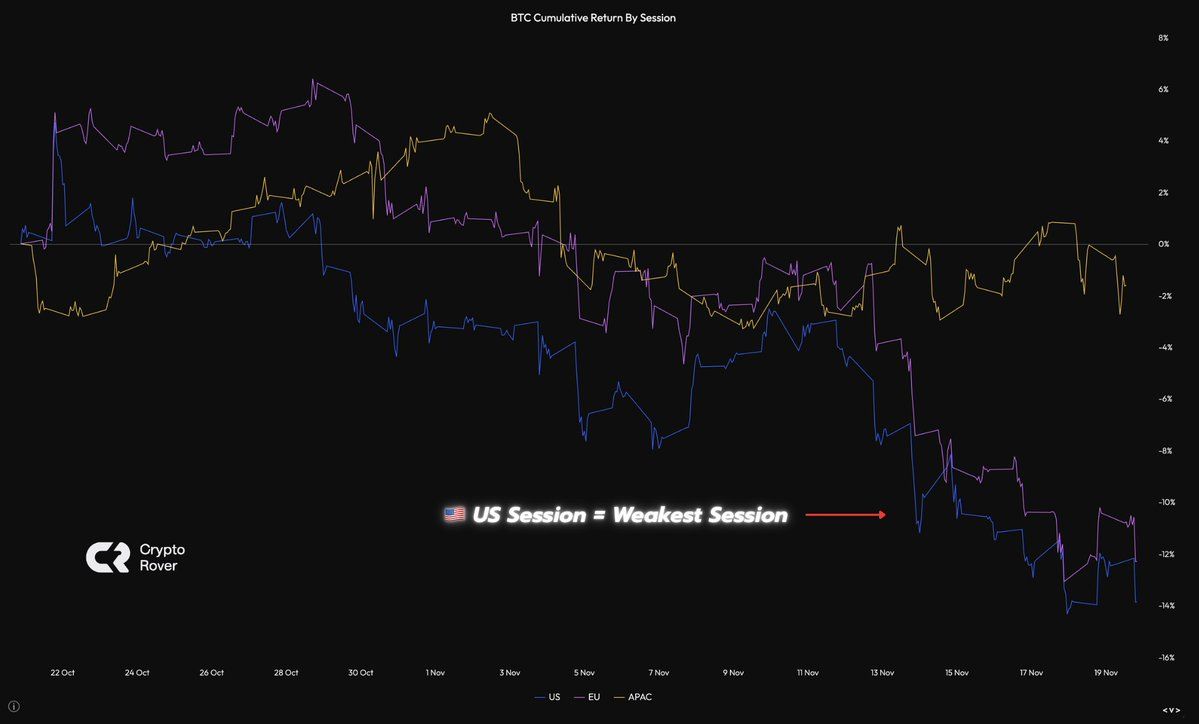
Bitcoin’s recent price decline has revealed a sharp split in trading, with US sessions driving sell-offs while Asian traders steadily buy the dip. Data shows American sessions have become the weakest period for Bitcoin prices.

This divergence highlights contrasting risk appetites and sparks debate about whether Bitcoin is experiencing a healthy correction or facing deeper structural issues.

US Trading Drives Bitcoin Sell-Offs, Asia Absorbs Supply

This week’s price activity reflects a clear trend: US trading hours show persistent losses, with European sessions experiencing smaller declines. In contrast, Asian-Pacific markets remain comparatively stable and often support price recoveries. Data snapshots underline the US trading window’s central role in recent market drops.

BTC cumulative return by session chart
Bitcoin cumulative returns by trading session show US weakness. Source: CryptoRover

An X user commented, “Every single America session consists of relentless selling for hours. Then the Asians wake up and buy it all back until the Americans wake up. Like literal clockwork”. This interplay has become a regular feature of current trading dynamics.

The split may stem from differing risk sentiment across regions. US selling is likely due to caution over macroeconomic signals, policy changes, or liquidity. By contrast, many Asian traders view dips as buying opportunities, either because of confidence in Bitcoin’s outlook or because of varied investment approaches.

Liquidity and market depth factor in, too. US trading brings high volume, so broad selling can strongly affect global price moves. When American traders favor selling, global prices drop until Asian buyers step in and restore balance.

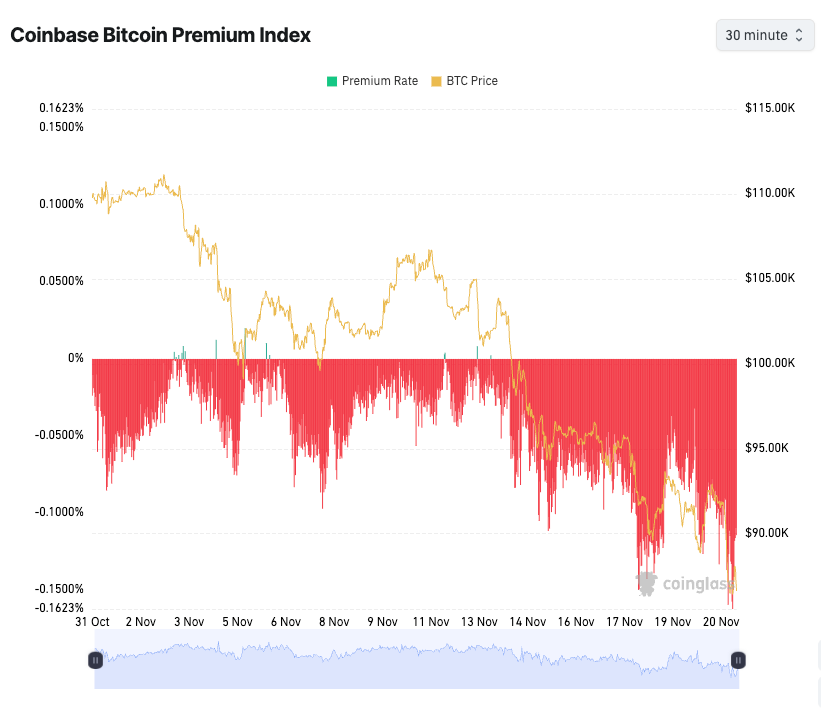
The Coinbase Premium Index, which reflects US institutional sentiment, has remained in negative territory for almost the entire month of November. Source: Coinglass

It’s also notable that retail investors are generally bearish, while whales are bullish and US institutions are bearish. The Coinbase Premium Index, which reflects US institutional sentiment, has remained in negative territory for almost the entire month of November.

Institutional Players Alter Traditional Bitcoin Cycles

On-chain analyst Ki Young Ju offers a detailed view of today’s market landscape. He notes that Bitcoin’s bull cycle technically ended earlier in 2024 after reaching $100,000. Traditional cycle theory would suggest prices drop toward $56,000 to set a new cycle low.

If you are not trading futures and only holding Bitcoin spot, this looks like a reasonable long-term accumulation zone.

To be fair, from an on-chain cycle perspective, the bull cycle technically ended earlier this year when Bitcoin touched around $100K.

In classic cycle…

— Ki Young Ju (@ki_young_ju) November 20, 2025

Such institutional absorption creates a virtual price floor, since major holders with steady conviction are unlikely to sell during downturns. Traditional models assumed most participants might capitulate in a bear phase, but strategic corporate treasuries challenge that assumption.

Yet, some warn that concentration creates fresh risks. If institutions face financial stress or change strategies, any large sale could disrupt the market. So far, however, they remain committed to holding and accumulating Bitcoin.

Experts See Healthy Correction in Ongoing Bull Market

Chris Kuiper, vice president of research at Fidelity Digital Assets, sees the recent correction in a positive light. He describes the drawdown as a standard adjustment in a larger bull market, not a sign that the cycle is over.

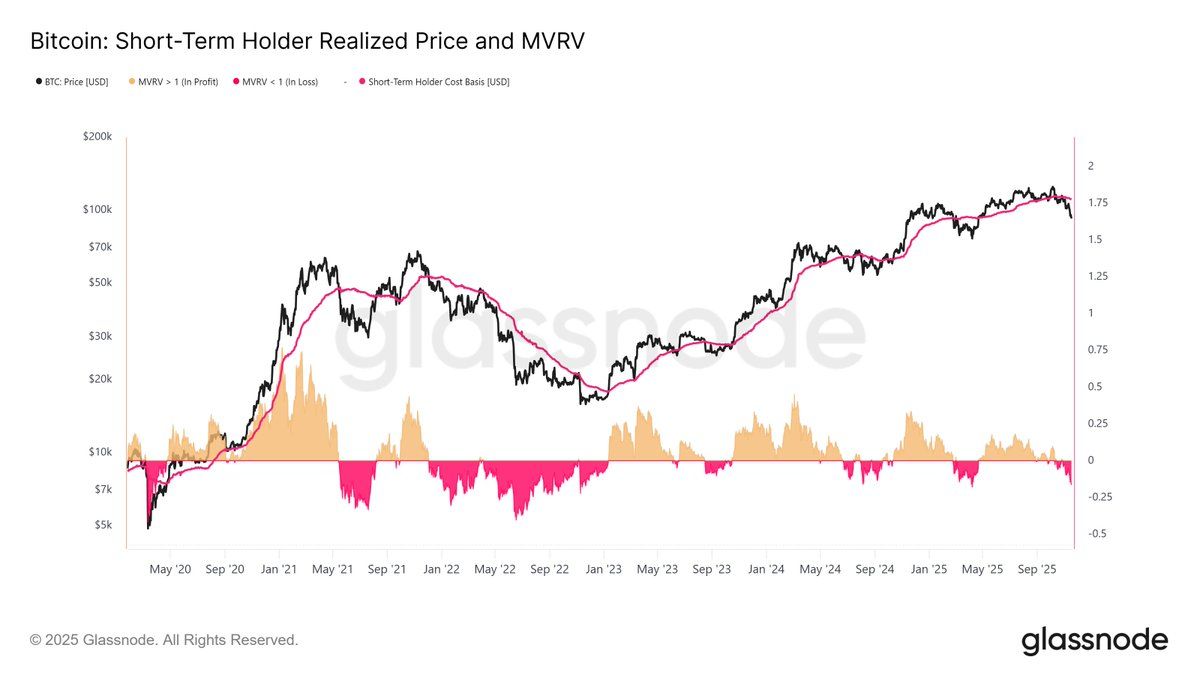
Kuiper’s analysis uses on-chain signals, such as the MVRV ratio for short-term holders. These stats indicate that the current price tests recent buyers’ conviction, echoing prior corrections that preceded further rallies. It shows that those who bought recently face unrealized losses before the market resets and trends higher.

Bitcoin short-term holder MVRV chart
Short-term holder MVRV ratio suggests a typical bull market correction. Source: Glassnode via Chris Kuiper

Lack of negative headline events supports his interpretation. No significant regulatory action, exchange failures, or macro shocks have triggered the pullback. Instead, profit-taking and leverage liquidations after Bitcoin’s rally toward $100,000 appear to be the main causes.

Is this a local bottom for #bitcoin and other digital assets?

I as well as anyone never knows for sure, but one chart I do like to use to help gauge the probabilities is the short-term holder MVRV chart along with their cost basis (first chart).

Note that if this indeed is a… pic.twitter.com/B66onRgEgl

— Chris Kuiper, CFA (@ChrisJKuiper) November 19, 2025

Traders now weigh two scenarios. The split between optimistic Asian buyers and cautious US sellers could be resolved if American sentiment improves or persists if global market structures shift further. Broader macro trends—such as government liquidity measures and regulatory changes—are likely to determine which path the market takes in the coming months.

The post Why Does Asia Keep Buying Bitcoin While Americans Are Selling? appeared first on BeInCrypto.

  •  

Perusahaan DAT Menjual Aset Kripto untuk Menyelamatkan Saham Mereka: Apakah Ini Berkelanjutan?

FG Nexus menjual Ethereum senilai US$32,7 juta untuk mendanai pembelian kembali saham setelah sahamnya jatuh 94% dalam empat bulan, menyoroti krisis nilai aset bersih (NAV) yang semakin dalam di antara perusahaan treasury aset digital.

Penjualan ini mengikuti penjualan ETH senilai US$40 juta oleh ETHZilla pada bulan Oktober, menyoroti tekanan yang meningkat di seluruh sektor yang mengelola lebih dari US$42,7 miliar dalam aset kripto. Gelombang penjualan terpaksa ini menunjukkan kerentanan dalam model treasury kripto perusahaan, saat perusahaan bergulat dengan saham yang diperdagangkan di bawah nilai aset dasar mereka.

Perusahaan Treasury Alihkan Penjualan Aset di Tengah Kejatuhan Saham

FG Nexus mengungkapkan penjualan 10.922 ETH pada bulan Oktober untuk mendukung pembelian kembali saham senilai US$200 juta. Perusahaan mulai membeli kembali saham setelah sahamnya jatuh tajam di bawah NAV, ukuran nilai aset dasar per saham kripto. FG Nexus mempertahankan 40.005 ETH dan US$37 juta dalam bentuk uang tunai, dengan total utang naik menjadi US$11,9 juta, pada hari Rabu.

Perusahaan membeli kembali 3,4 juta saham dengan harga sekitar US$3,45 per saham, mewakili 8% dari saham yang beredar. Manajemen menekankan bahwa saham dibeli dengan diskon terhadap NAV, yang mencapai US$3,94 per saham pada pertengahan November. Namun, strategi ini memerlukan sekitar US$10 juta dalam bentuk utang dan likuidasi 21% dari cadangan ETH jika dibandingkan dengan level pada bulan September.

FG Nexus Sold $32.7M in $ETH: Treasury Companies Are Starting to Sell

🔹 FG Nexus sold $32.7M in ETH (10922 ETH)
🔹 Now holds around 40,005 ETH
🔹 Other DAT companies are also reducing their ETH positions
🔹 $FGNX Stock down -94% in 4 months

Their stock is also down 94% in the… pic.twitter.com/A0hXYQaKk3

— Crypto Patel (@CryptoPatel) November 20, 2025

FG Nexus adalah salah satu dari beberapa perusahaan treasury aset digital yang mengejar penjualan kripto. ETHZilla mengumumkan penjualan ETH sekitar US$40 juta untuk memfasilitasi pembelian kembali saham pada akhir Oktober. Perusahaan membeli 600.000 saham dengan nilai hampir US$12 juta sejak 24 Oktober, mencari bantuan dari diskon 30% yang gigih terhadap NAV.

Ketika saham perusahaan DAT diperdagangkan dengan diskon terhadap nilai kepemilikan kripto mereka (mNAV di bawah 1,0), pemegang saham mendorong manajemen untuk menyadari nilai tersembunyi tersebut. Cara paling efektif untuk melakukan ini adalah melalui pembelian kembali saham, tetapi memperoleh dana yang diperlukan untuk membeli kembali saham memerlukan uang tunai. Jika perusahaan kekurangan cadangan uang tunai yang cukup, mereka harus menjual beberapa aset kripto mereka untuk membiayai pembelian kembali tersebut.

mNAV Metaplanet, perusahaan DAT yang mengumpulkan Bitcoin, turun menjadi 0,99 sebelum pulih menjadi 1,03. Sahamnya kehilangan 70% sejak puncaknya di bulan Juni, menandakan tekanan di seluruh sektor. Penggunaan ekuitas preferen abadi, yang menggabungkan dividen tetap dengan eksposur kripto, semakin mempersulit struktur modal yang sudah tertekan oleh kondisi pasar saat ini.

Struktur Leverage Memperkuat Tekanan Pasar

Perusahaan DAT menggelontorkan US$42,7 miliar dalam kripto selama 2025, dengan US$22,6 miliar terakumulasi di Q3 saja. Ekspansi ini dipercepat ketika Bitcoin reli di atas US$126.000 pada bulan Oktober, memicu lingkaran umpan balik positif dan penilaian yang meningkat. Namun, pembalikan selanjutnya mengungkapkan kelemahan dalam struktur modal yang dibangun di atas leverage dan akses pasar modal.

Perusahaan treasury hanya mewakili 0,83% dari total kapitalisasi pasar kripto. Namun, konsentrasi kepemilikan mereka memperbesar dampak selama penurunan. Leverage melalui catatan konversi, kesepakatan PIPE, dan ekuitas preferen abadi meningkatkan tekanan jual ketika harga jatuh atau diskon NAV melebar.

Likuiditas pasar menurun tajam saat harga aset turun. Kedalaman buku pesanan Bitcoin pada rentang 1% turun dari US$20 juta menjadi US$14 juta—penurunan sebesar 33% yang meningkatkan sensitivitas harga terhadap penjualan apa pun. Analis memperkirakan penjualan terpaksa oleh perusahaan treasury bisa mencapai US$4 miliar hingga US$6 miliar jika 10% hingga 15% dari posisi terlikuidasi, berpotensi melebihi aliran keluar ETF bulan November sebesar US$2,33 miliar.

Risiko Sistemik Meningkat saat Pembelian Berhenti

Pembelian kripto oleh perusahaan mandek karena menurunnya kepercayaan dan pengurangan pengeluaran modal. Perusahaan yang pernah menawarkan permintaan stabil sekarang menjual, membalikkan siklus positif sebelumnya. Saham MicroStrategy turun 60% di tengah volatilitas Bitcoin, menunjukkan risiko korelasi antara harga kripto dan nilai ekuitas bahkan untuk perusahaan dengan neraca yang solid.

Perusahaan treasury yang lebih kecil berada di bawah tekanan yang meningkat, terutama yang memegang aset kurang likuid. Beberapa perusahaan yang terpapar Solana mengalami penurunan NAV sebesar 40% saat taruhan terkonsentrasi memperdalam kerugian. Kurangnya diversifikasi dan volume perdagangan tipis dalam kripto alternatif menambah kerentanan sektor yang lebih luas.

Oof. BitMine is down $3.7 BILLION on its massive $ETH bet.

That's the risk of being a Digital Asset Treasury (DAT) company!

Question: Will we see more firms try this, or is this a flashing red warning for corporate crypto treasuries? $ETH ETFs are looming… pic.twitter.com/emOvzQQQTD

— DrBullZeus (@DrBullZeus) November 20, 2025

Investor ritel juga berkontribusi pada penjualan dengan mengurangi posisinya jauh sebelumnya, mengurangi permintaan pasar saat pemegang institusi mulai melakukan likuidasi. Pada bulan November, aliran keluar ETF senilai US$4 miliar dan aktivitas pembuat pasar yang berkurang meningkatkan volatilitas. Kondisi ini mirip dengan crash pasar yang didorong oleh leverage yang terlihat di kelas aset lain, seperti krisis REIT hipotek tahun 2008.

Krisis yang semakin bertambah ini menantang ketahanan model treasury aset digital dalam penurunan berkepanjangan. Manajemen risiko yang ketat dan pengawasan regulasi mungkin diperlukan untuk mencegah penjualan yang saling memperkuat dari mengguncang pasar yang lebih luas. Dalam beberapa minggu mendatang, kemampuan perusahaan-perusahaan ini untuk mempertahankan kepemilikan kripto mereka tanpa likuidasi paksa lebih lanjut akan menentukan apakah sektor ini bertahan utuh atau mengalami restrukturisasi mendasar.

  •  

Mengapa Asia Terus Membeli Bitcoin Sementara Orang Amerika Menjual?

Penurunan harga terbaru Bitcoin telah mengungkap perbedaan tajam dalam perdagangan, dengan sesi AS mendorong penjualan sementara trader Asia terus membeli saat harga turun. Data menunjukkan sesi Amerika telah menjadi periode terlemah untuk harga Bitcoin.

Perbedaan ini menyoroti selera risiko yang kontras dan memicu debat tentang apakah Bitcoin mengalami koreksi sehat atau menghadapi masalah struktural yang lebih dalam.

Perdagangan AS Dorong Penjualan Bitcoin, Asia Serap Pasokan

Aktivitas harga minggu ini mencerminkan tren yang jelas: jam perdagangan AS menunjukkan kerugian yang terus-menerus, dengan sesi Eropa mengalami penurunan yang lebih kecil. Sebaliknya, pasar Asia-Pasifik tetap relatif stabil dan sering mendukung pemulihan harga. Data menunjukkan jendela perdagangan AS memainkan peran sentral dalam penurunan pasar baru-baru ini.

BTC cumulative return by session chart
Pengembalian kumulatif Bitcoin berdasarkan sesi perdagangan menunjukkan kelemahan AS. Sumber: CryptoRover

Salah seorang pengguna X berkomentar, “Setiap sesi Amerika terdiri dari penjualan tanpa henti selama berjam-jam. Kemudian orang Asia bangun dan membeli semuanya kembali hingga orang Amerika bangun. Seperti jam meskipun”. Interaksi ini telah menjadi fitur reguler dari dinamika perdagangan saat ini.

Perpecahan ini mungkin berasal dari perbedaan sentimen risiko di berbagai wilayah. Penjualan AS mungkin disebabkan oleh kehati-hatian terhadap sinyal ekonomi makro, perubahan kebijakan, atau likuiditas. Sebaliknya, banyak trader Asia melihat penurunan sebagai peluang membeli, baik karena yakin terhadap prospek Bitcoin atau karena pendekatan investasi yang bervariasi.

Likuiditas dan kedalaman pasar juga berperan. Perdagangan AS membawa volume tinggi, sehingga penjualan besar dapat sangat mempengaruhi pergerakan harga global. Ketika trader Amerika lebih suka menjual, harga global turun hingga pembeli Asia masuk dan memulihkan keseimbangan.

Indeks Premium Coinbase, yang mencerminkan sentimen kelembagaan AS, tetap berada di wilayah negatif hampir sepanjang bulan November. Sumber: Coinglass

Juga patut dicatat bahwa investor ritel umumnya bearish, sementara whale bullish dan institusi AS bearish. Indeks Premium Coinbase, yang mencerminkan sentimen kelembagaan AS, tetap berada di wilayah negatif hampir sepanjang bulan November.

Pemain Institusi Ubah Siklus Tradisional Bitcoin

Analis on-chain Ki Young Ju memberikan pandangan mendetail tentang lanskap pasar saat ini. Dia mencatat bahwa siklus bull Bitcoin secara teknis berakhir lebih awal pada tahun 2024 setelah mencapai US$100.000. Teori siklus tradisional akan menyarankan harga turun menuju US$56.000 untuk menetapkan titik rendah siklus baru.

If you are not trading futures and only holding Bitcoin spot, this looks like a reasonable long-term accumulation zone.

To be fair, from an on-chain cycle perspective, the bull cycle technically ended earlier this year when Bitcoin touched around $100K.

In classic cycle…

— Ki Young Ju (@ki_young_ju) November 20, 2025

Penyerap institusional semacam itu menciptakan batas harga virtual, karena pemegang utama dengan keyakinan kuat tidak mungkin menjual selama penurunan. Model tradisional menganggap sebagian besar peserta mungkin menyerah dalam fase bearish, tapi perbendaharaan korporat strategis menantang asumsi itu.

Nampaknya, beberapa orang memperingatkan bahwa konsentrasi menciptakan risiko baru. Jika lembaga menghadapi tekanan keuangan atau mengubah strategi, setiap penjualan besar dapat mengganggu pasar. Namun, sejauh ini, mereka tetap berkomitmen untuk memegang dan mengumpulkan Bitcoin.

Pakar Melihat Koreksi Sehat dalam Reli Bull Market yang Sedang Berlangsung

Chris Kuiper, wakil presiden penelitian di Fidelity Digital Assets, melihat koreksi baru-baru ini dalam perspektif positif. Dia menggambarkan penurunan ini sebagai penyesuaian standar dalam pasar bull yang lebih besar, bukan tanda bahwa siklus telah berakhir.

Analisis Kuiper menggunakan sinyal on-chain, seperti rasio MVRV untuk holder jangka pendek. Statistik ini menunjukkan bahwa harga saat ini menguji keyakinan pembeli baru, mencerminkan koreksi sebelumnya yang mendahului reli lebih lanjut. Ini menunjukkan bahwa mereka yang baru-baru ini membeli menghadapi kerugian yang belum direalisasi sebelum pasar mengatur ulang dan tren lebih tinggi.

Bitcoin short-term holder MVRV chart
Rasio MVRV holder jangka pendek menunjukkan koreksi pasar bull yang khas. Sumber: Glassnode via Chris Kuiper

Tidak adanya peristiwa utama negatif mendukung interpretasinya. Tidak ada tindakan regulasi signifikan, kegagalan bursa, atau kejutan makro yang memicu koreksi. Sebaliknya, pengambilan keuntungan dan likuidasi leverage setelah reli Bitcoin menuju US$100.000 nampaknya menjadi penyebab utama.

Is this a local bottom for #bitcoin and other digital assets?

I as well as anyone never knows for sure, but one chart I do like to use to help gauge the probabilities is the short-term holder MVRV chart along with their cost basis (first chart).

Note that if this indeed is a… pic.twitter.com/B66onRgEgl

— Chris Kuiper, CFA (@ChrisJKuiper) November 19, 2025

Trader sekarang menimbang dua skenario. Perpecahan antara pembeli Asia yang optimistis dan penjual AS yang berhati-hati dapat teratasi jika sentimen Amerika membaik atau berlanjut jika struktur pasar global bergeser lebih jauh. Tren makro yang lebih luas—seperti langkah-langkah likuiditas pemerintah dan perubahan regulasi—kemungkinan menentukan jalur mana yang akan diambil pasar dalam beberapa bulan mendatang.

  •  

Block Announces $5B Buyback and 30% Annual Growth Goal in Bold Three-Year Strategy

Block, Inc. shares soared almost 9% on Wednesday after revealing plans to achieve $15.8 billion in gross profit by 2028 and announcing a $5 billion share repurchase, underscoring confidence in continued profitability.

The three-year outlook, launched at the 2025 Investor Day, marks a strategic shift for the Jack Dorsey-led company. Block is moving beyond its core point-of-sale operation into consumer services, artificial intelligence tools, and Bitcoin infrastructure.

Comprehensive Financial Targets Reflect Transformation

Block mapped out a roadmap targeting mid-teens percentage gross profit growth annually through 2028. The company expects adjusted operating income to rise about 30% per year, reaching $4.6 billion by 2028. Adjusted earnings per share are projected to grow by more than 30% each year, reaching $5.50 in 2028.

The event featured a rare appearance by CEO Jack Dorsey. The stock had dropped 30% earlier in 2025 due to competition in payments. However, the trading halt and subsequent announcement quickly reversed that decline.

For fiscal year 2026, Block projects gross profit rising 17% to nearly $12 billion. Adjusted operating income and earnings per share are each expected to climb by more than 30%, reaching $2.7 billion and $3.20, respectively. The new non-GAAP cash flow metric, which accounts for capital needs in lending, is forecast to get 25% of gross profit—more than $4 billion—by 2028.

Block aims to achieve the “Rule of 40” benchmark in 2026 and sustain it through 2028. This performance measure, combining revenue growth and profit margin over 40%, is a key target for software and fintech firms. Block’s official release emphasized efficiency, scale, and product innovation in its financial networks.

The expanded buyback program adds $5 billion to the $1.1 billion remaining from a previous authorization. In total, Block now has about $6.1 billion available for share repurchases, signaling confidence in cash generation.

Recent Performance Lays Out Growth Platform

Block reported mixed Q3 results, with earnings and revenue slightly missing analyst expectations. However, gross profit rose 18.3%, driven primarily by Cash App’s 24.3% increase. Square also contributed with a 9.2% gain in gross profit.

Cash App remained Block’s growth engine. Monthly active users reached 58 million, with profit per user rising 25.3%. Gross Payment Volume grew 10.9% year-over-year.

Subscription and services revenue increased 22.6%, indicating healthy recurring income streams. Bitcoin-related revenue, however, fell 19%. Despite this, Block maintains strong liquidity with ample cash reserves against manageable debt levels.

Management noted that since 2022’s investor day, gross profit has nearly doubled and adjusted EBITDA has tripled. The company now runs 26 products generating over $100 million in annual gross profit, showing healthy diversification across its portfolio.

Strategic Initiatives Broaden Block’s Reach

Block’s expansion plan includes ventures in tech and finance beyond payment processing. Its brands include Square, Cash App, Afterpay (buy-now-pay-later), TIDAL (music streaming), Bitkey (Bitcoin wallets), and Proto (Bitcoin mining products).

In October, Square launched Square Bitcoin, enabling over 4 million US merchants to accept and manage Bitcoin through existing Square systems. Merchants can accept Bitcoin at checkout, convert up to 50% of daily sales, and manage holdings on the Square Dashboard.

The Bitcoin payment program began with zero transaction fees for 1 year, starting November 10, 2025. The rollout covers all US states except New York due to regulatory limits. The 2024 pilot saw merchants accumulate 142 BTC, indicating strong interest in BNB and other cryptocurrencies among retailers.

The company is deploying artificial intelligence tools for merchants and expanding Cash App’s financial services. Management stressed technical unification and efficiency across the ecosystem. These efforts aim to reduce reliance on the core point-of-sale business, where competition from PayPal, Stripe, and traditional processors has grown.

COO and CFO Amrita Ahuja underscored Block’s focus on scale and long-term value. Leadership voiced confidence in innovation and investment as drivers of compounding growth and margin expansion through 2028.

10 years ago today we IPO’d…we’ve always been about the neighborhood. https://t.co/0Hq4e0QM2L pic.twitter.com/DQDotT0DOZ

— Block Investor Relations (@BlockIR) November 20, 2025

Over its 10-year journey since its 2015 IPO, Block has transformed from a card reader provider into a diversified fintech giant. The November 19 announcements seek to chart a clear path as the company matures in core markets and pursues growth in cryptocurrency infrastructure and AI-driven services.

The post Block Announces $5B Buyback and 30% Annual Growth Goal in Bold Three-Year Strategy appeared first on BeInCrypto.

  •  

Nvidia Posts $57B Record Revenue Pushing Bitcoin Above $91K

Nvidia surprised markets by posting fiscal third-quarter revenue of $57.01 billion, beating Wall Street estimates by almost $2 billion.

Meanwhile, Bitcoin rebounded above $91,000 after briefly dipping below $89,000, as analysts attributed much of the crypto market’s decline to growing concerns about a potential AI bubble.

Nvidia Smashes Wall Street Targets During Volatility

The chip giant reported $1.30 earnings per share and revenue of $57.01 billion for its fiscal third quarter, outperforming estimates of $1.26 EPS and $55.2 billion in revenue. Its data center business, which enables AI applications, contributed $51.2 billion—showing a sharp rise from previous periods.

CEO Jensen Huang noted ongoing strong demand for the company’s Blackwell chip architecture and cloud GPUs, reporting that products remain sold out. Nvidia’s forward guidance was also robust, with projected fiscal fourth-quarter revenue of $65 billion—beating analyst forecasts of $62 billion.

CFO Colette Kress pointed to another driver behind the firm’s results: CUDA-powered accelerators are extending hardware lifespans, boosting customer value, and solidifying Nvidia’s competitive edge in AI infrastructure. While the gaming unit drew $4.3 billion in revenue—slightly under expectations—it still delivered solid returns.

Nvidia’s market value recently surpassed $5 trillion, reinforcing its status as the world’s most valuable company. The stock has climbed 37% year-to-date and 25% over the last 12 months. Shares surged 5% following the earnings report, while chipmakers like AMD and Micron also rode the AI wave.

Bitcoin Rebounds as AI Investment Sentiment Returns

Bitcoin recovered on Thursday morning in Asia, jumping above $91,000 after testing lows below $89,000. The quick rebound implies some investors view current prices as entry opportunities despite uncertainty.

Major investors have recently shown caution toward AI stocks. Peter Thiel exited a $100 million stake in Nvidia. SoftBank sold about $5.8 billion in shares. These moves sparked debate over whether AI-driven rallies can last.

Regulators have also flagged risks. The Bank of England warned of systemic threats from widespread AI use in finance. The IMF cited bubble risks in its global stability assessments.

A Bank of America survey found 45% of fund managers see an AI bubble as the most significant market threat. Google CEO Sundar Pichai and JP Morgan’s Daniel Pinto warned of “irrationality”. Klarna’s CEO expressed concern over massive data center investments driven by AI demand.

However, Nvidia’s Q3 results revived AI investment sentiment. Nvidia defended its business model during its earnings call, while the data center’s accounting methods had been questioned. The strong results proved AI demand remains robust despite skepticism. Bitcoin prices also appeared to benefit from the renewed optimism.

Risk Correlations Deepen Across Crypto and Equities

Recent market turmoil has shown an increased correlation between cryptocurrencies and traditional risk assets. Bitcoin’s decline has mirrored declines across major stock indices such as the S&P 500, Nikkei 225, Hang Seng, and Stoxx Europe 600. Crypto-linked stocks are now more often seen as closely tied to the global risk environment.

Gold, usually considered a haven, also fell amid uncertainty. Rising US interest rates and reduced hopes for near-term Federal Reserve rate cuts have pressured both gold and cryptocurrencies. The global crypto market lost over $1 trillion in value over the last six weeks, losing a quarter of its value since October.

Technical outlooks on Bitcoin remain split. Some analysts interpret current trading as re-accumulation—long-term investors buying at lower prices. Others argue that buyer fatigue signals a possible deeper correction ahead.

Nvidia’s robust results offer some reassurance to investors amid concerns about a bubble. However, whether this can restore wider market confidence or prove to be an outlier remains uncertain as investors navigate complex signals around technology valuations and the economic outlook.

The post Nvidia Posts $57B Record Revenue Pushing Bitcoin Above $91K appeared first on BeInCrypto.

  •  

Block Umumkan Buyback US$5 Miliar dan Target Pertumbuhan Tahunan 30% dalam Strategi Tiga Tahun yang Berani

Saham Block, Inc. melonjak hampir 9% pada hari Rabu setelah mengumumkan rencana untuk mencapai profit kotor US$15,8 miliar pada tahun 2028 serta mengumumkan pembelian kembali saham senilai US$5 miliar, menandakan kepercayaan pada profitabilitas yang berkelanjutan.

Pandangan tiga tahun ini diperkenalkan pada Hari Investor 2025, menandai pergeseran strategi untuk perusahaan yang dipimpin oleh Jack Dorsey ini. Block bergerak melampaui operasi inti point-of-sale ke layanan konsumen, alat kecerdasan buatan, dan infrastruktur Bitcoin.

Target Keuangan Menyeluruh Cerminkan Transformasi

Block merancang roadmap yang menargetkan pertumbuhan laba kotor persen ganda setiap tahunnya hingga 2028. Perusahaan memperkirakan pendapatan operasional yang disesuaikan naik sekitar 30% per tahun, mencapai US$4,6 miliar pada tahun 2028. Laba per saham yang disesuaikan diproyeksikan tumbuh lebih dari 30% setiap tahunnya, mencapai US$5,50 pada tahun 2028.

Acara ini menampilkan penampilan langka dari CEO Jack Dorsey. Saham telah turun 30% pada awal tahun 2025 karena persaingan dalam pembayaran. Namun, penghentian perdagangan dan pengumuman berikutnya dengan cepat membalikkan penurunan tersebut.

Untuk tahun fiskal 2026, Block memproyeksikan laba kotor naik 17% menjadi hampir US$12 miliar. Pendapatan operasional yang disesuaikan dan laba per saham masing-masing diperkirakan naik lebih dari 30%, mencapai US$2,7 miliar dan US$3,20. Metrik arus kas non-GAAP baru, yang memperhitungkan kebutuhan modal dalam pinjaman, diprediksi mencapai 25% dari laba kotor—lebih dari US$4 miliar—pada tahun 2028.

Block bertujuan mencapai pencapaian “Rule of 40” pada 2026 dan mempertahankannya hingga 2028. Ukuran kinerja ini, menggabungkan pertumbuhan pendapatan dan margin laba lebih dari 40%, adalah target utama bagi perusahaan perangkat lunak dan fintech. Rilis resmi Block menekankan efisiensi, skala, dan inovasi produk dalam jaringan keuangannya.

Program pembelian kembali yang diperluas menambah US$5 miliar ke US$1,1 miliar yang tersisa dari otorisasi sebelumnya. Secara total, Block sekarang memiliki sekitar US$6,1 miliar untuk pembelian kembali saham, menandakan kepercayaan pada generasi kas.

Performa Terbaru Menjelaskan Platform Pertumbuhan

Block melaporkan hasil kuartal ketiga yang beragam, dengan laba dan pendapatan sedikit meleset dari ekspektasi analis. Namun, laba kotor naik 18,3%, yang didorong terutama oleh peningkatan 24,3% dari Cash App. Square juga memberikan kontribusi dengan kenaikan laba kotor 9,2%.

Cash App tetap menjadi mesin pertumbuhan Block. Pengguna aktif bulanan mencapai 58 juta, dengan laba per pengguna naik 25,3%. Volume Pembayaran Bruto tumbuh 10,9% secara tahunan.

Pendapatan berlangganan dan layanan meningkat 22,6%, menunjukkan aliran pendapatan berulang yang sehat. Namun, pendapatan terkait Bitcoin turun 19%. Meskipun demikian, Block mempertahankan likuiditas yang kuat dengan cadangan kas yang memadai terhadap tingkat utang yang dapat dikelola.

Manajemen menyebutkan bahwa sejak hari investor 2022, laba kotor hampir dua kali lipat dan EBITDA yang disesuaikan tiga kali lipat. Saat ini perusahaan mengoperasikan 26 produk yang menghasilkan lebih dari US$100 juta dalam laba kotor tahunan, menunjukkan diversifikasi yang sehat di seluruh portofolionya.

Inisiatif Strategis Meluaskan Jangkauan Block

Rencana ekspansi Block mencakup usaha dalam teknologi dan keuangan di luar pemrosesan pembayaran. Merek-mereknya termasuk Square, Cash App, Afterpay (bayar kemudia), TIDAL (streaming musik), Bitkey (Bitcoin wallet), dan Proto (produk penambangan Bitcoin).

Pada bulan Oktober, Square meluncurkan Square Bitcoin, memungkinkan lebih dari 4 juta pedagang AS untuk menerima dan mengelola Bitcoin melalui sistem Square yang ada. Pedagang dapat menerima Bitcoin saat checkout, mengonversi hingga 50% dari penjualan harian, dan mengelola aset di Dashboard Square.

Program pembayaran Bitcoin dimulai dengan biaya transaksi nol selama 1 tahun, mulai 10 November 2025. Peluncuran ini mencakup semua negara bagian AS kecuali New York karena batasan regulasi. Proyek percontohan 2024 memperlihatkan pedagang mengakumulasi 142 BTC, menunjukkan minat yang kuat terhadap BNB dan aset kripto lainnya di kalangan pengecer.

Perusahaan menerapkan alat kecerdasan buatan untuk pedagang dan memperluas layanan keuangan Cash App. Manajemen menekankan unifikasi teknis dan efisiensi di seluruh ekosistem. Upaya ini bertujuan untuk mengurangi ketergantungan pada bisnis inti point-of-sale, dengan persaingan dari PayPal, Stripe, dan pemroses tradisional yang meningkat.

COO dan CFO Amrita Ahuja menekankan fokus Block pada skala dan nilai jangka panjang. Kepemimpinan menyatakan keyakinan pada inovasi dan investasi sebagai pendorong pertumbuhan dan perluasan margin yang terus bertambah hingga 2028.

10 years ago today we IPO’d…we’ve always been about the neighborhood. https://t.co/0Hq4e0QM2L pic.twitter.com/DQDotT0DOZ

— Block Investor Relations (@BlockIR) November 20, 2025

Selama 10 tahun perjalanannya sejak IPO tahun 2015, Block telah bertransformasi dari penyedia pembaca kartu menjadi raksasa fintech terdiversifikasi. Pengumuman 19 November bertujuan untuk menyusun jalur yang jelas saat perusahaan matang di pasar inti dan mengejar pertumbuhan dalam infrastruktur cryptocurrency dan layanan berbasis AI.

  •  

Harga Bitcoin (BTC) Longsor ke US$91K; Ethereum Crash ke US$3K: Kapitulasi Final atau Baru Permulaan?

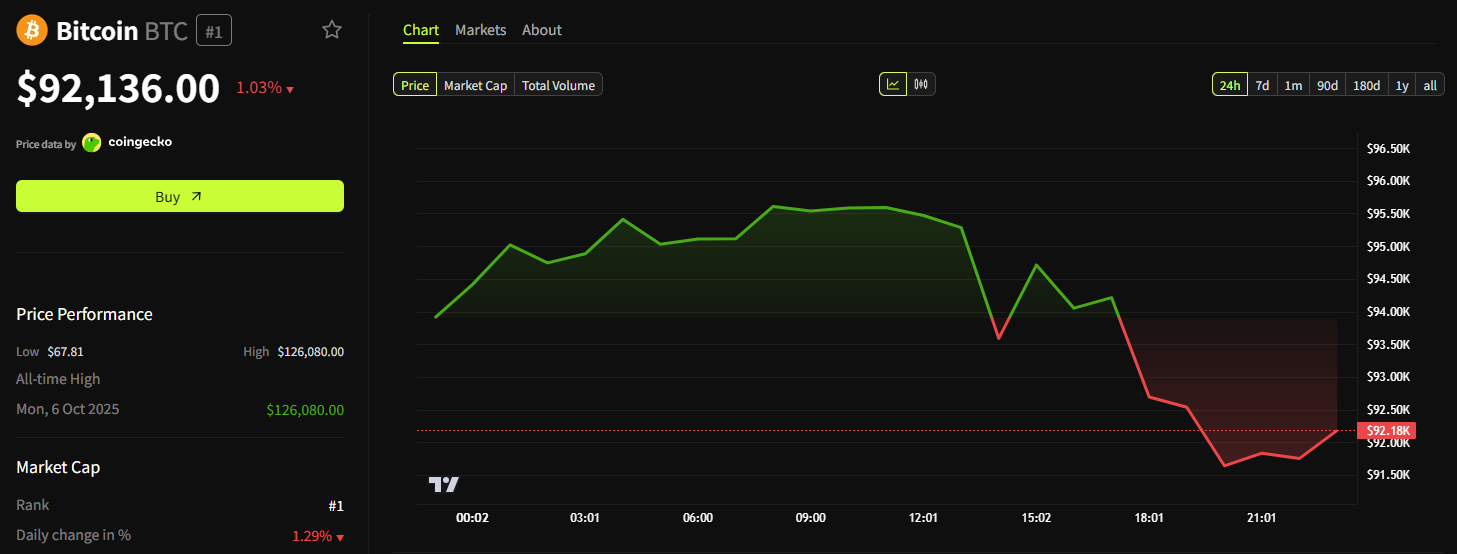
Bitcoin ambruk ke level terendah enam bulan di US$91.545 pada Selasa (18/11) pagi waktu Asia, menjebol support krusial. Ethereum juga longsor di bawah US$3.000, menegaskan kelemahan pasar secara luas.

Koreksi kripto bergerak sejalan dengan pasar tradisional, yang mengalami sesi terburuk dalam sebulan terakhir.

Ambruknya Pasar Hapus Raihan Reli

Bitcoin terkoreksi 3,21% pada 17 November, menjatuhkan nilainya hingga 27% dari all-time high (ATH) Oktober. Ethereum mencatat drop yang lebih dalam sebesar 4,22% ke US$2.978. Barisan altcoin utama juga mengalami pelemahan mingguan yang signifikan: Solana amblas 22,51%, XRP merosot 16,73%, dan Cardano turun 22,12% dalam tujuh hari terakhir.

Penurunan pun melebar ke sejumlah pasar lain. S&P 500 turun 61,70 poin ke 6.672,41, sementara Nasdaq melemah 192,51 poin ke 22.708,07. Keduanya ditutup di bawah moving average 50-hari, mengakhiri rangkaian yang belum terjadi sejak 2007 dan 1995 silam.

Bitcoin kehilangan 3,21% pada 17 November | Sumber: BeInCrypto

Dow Jones Industrial Average merosot lebih dari 550 poin jelang laporan pendapatan Nvidia. Analis teknikal menilai breakdown ini sebagai sinyal bearish jangka pendek, dengan fokus pada support di moving average 200-hari. Dana mengalir ke sektor healthcare (kesehatan) dan energi, sementara investor ritel menurunkan risiko.

CME Gap Bitcoin Resmi Tertutup usai Menggantung 7 Bulan

Satu peristiwa teknikal besar terjadi ketika Bitcoin menutup CME futures gap terakhir di sekitar US$92.000. Gap ini terbuka sejak April 2025 akibat penutupan CME pada akhir pekan sementara exchange spot tetap beroperasi. Gap harga seperti ini biasanya akan tertutup, sehingga menghilangkan tekanan teknikal meski tidak menjamin reversal alias pembalikan harga.

Crypto trader DaanCryptoTrades mengonfirmasi penutupan gap tersebut di media sosial, menegaskan bahwa risiko itu kini hilang. Meski begitu, lemahnya demand (permintaan) masih bisa memicu penurunan lanjutan. Adapun struktur teknikal tetap rapuh.

Bitcoin CME futures gap filled
Penutupan Gap Bitcoin CME dikonfirmasi | Sumber: DaanCrypto

Para trader kini berada di titik kritis. Dengan gap yang sudah tertutup, risiko jangka pendek pun berkurang, tetapi aksi harga masih lemah. Respons volatilitas dan juga likuiditas dalam sesi mendatang akan menentukan apakah Bitcoin kehilangan momentum untuk turun lebih dalam atau membentuk base.

Tekanan Makro & Ketidakpastian Pemangkasan Suku Bunga The Fed

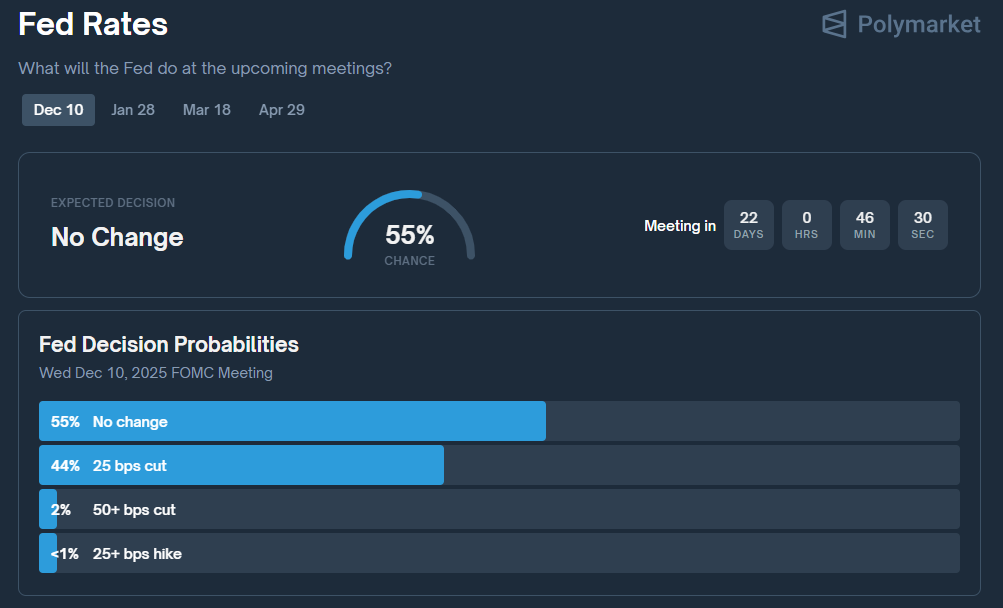
Sinyal ekonomi yang lebih luas menambah tekanan pada pasar. Empire State Manufacturing Index melonjak ke 18,7, naik 8 poin dari bulan sebelumnya. Data kuat ini menurunkan probabilitas pemangkasan suku bunga The Fed pada Desember.

Polymarket menempatkan probabilitas “no cut” di 55%, sementara data CME Group menunjukkan peluang 60% bahwa kebijakan tidak berubah.

Polymarket menempatkan peluang tanpa pemotongan di 55% | Sumber: Polymarket

Riset dari 10X Research menyebut aktivitas pembeli baru mandek sejak 10 Oktober. Nada yang lebih hawkish dari The Fed menambah tekanan. Analisis mereka memperingatkan bahwa kondisi masih rentan terhadap likuidasi lebih lanjut.

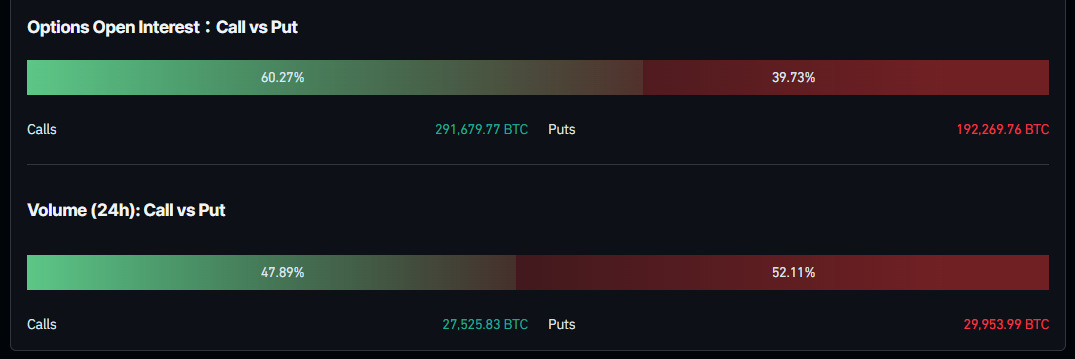
Indeks sentimen industri mendekati level terendah terbaru, mencerminkan psikologi pasar yang terguncang. Data opsi menunjukkan pergantian: volume put melampaui volume call dalam 24 jam terakhir, padahal biasanya call mendominasi. Pergeseran ini mengindikasikan trader bersiap menghadapi penurunan atau bertaruh pada downside (aksi turun).

Data opsi menyoroti perubahan: volume put melebihi volume call dalam satu hari terakhir | Sumber: Coinglass

Sinyal On-chain Mengarah ke Fase Kapitulasi

Analitik on-chain dari Glassnode dan Bitfinex menunjukkan bahwa realized loss (kerugian yang terealisasi) mulai stabil, menandakan short-term holder alias holder jangka pendek tengah memasuki mode kapitulasi. Secara historis, pasar sering kali membentuk bottom setelah gelombang penjualan dari mereka yang membeli di puncak. Namun, pemulihan jangka panjang membutuhkan akumulasi dari long-term holder.

Analis Benjamin Cowen menilai Bitcoin berpotensi menguji 200-week exponential moving average di rentang US$60.000 hingga US$70.000. Namun, ia juga mencatat peluang terjadinya relief rally terlebih dahulu. Proyeksi analis beragam, mencerminkan ketidakpastian serta potensi bounce atau pemantulan jangka pendek di tengah kerusakan teknikal yang signifikan.

While I think Bitcoin will go to the 200W SMA ($60k-$70k) in 2026, there is a high probability it will have a bounce back to the 200D SMA before going that low.

All prior cycle bear markets were confirmed by a macro lower high at the 200D SMA. pic.twitter.com/1S477LVLhf

— Benjamin Cowen (@intocryptoverse) November 17, 2025

Prediksi bearish bermunculan di media sosial. Roman Trading menyebut US$76.000 sebagai support berikutnya, dengan alasan pola teknikal yang patah serta momentum yang melemah. Meski bersifat opini individual, ini mencerminkan kekhawatiran trader terhadap potensi penurunan lanjutan.

Beberapa hari ke depan akan menentukan apakah Bitcoin dapat bertahan di atas US$90.000 atau justru tekanan jual membludak. Data ekonomi, pernyataan bank sentral, dan arus masuk institusional kemungkinan menjadi penentu arah. Untuk saat ini, risiko tetap tinggi sementara kalangan bullish dan bearish menunggu sinyal yang lebih jelas.

Bagaimana pendapat Anda tentang analisis dan prediksi harga Bitcoin, Ethereum, dan sederet altcoin papan atas ini? Yuk, sampaikan pendapat Anda di grup Telegram kami. Jangan lupa follow akun Instagram dan Twitter BeInCrypto Indonesia, agar Anda tetap update dengan informasi terkini seputar dunia kripto!

  •  

Bitcoin ETF Outflows Persist: Whales Feast and Retail Vanishes

The US Bitcoin exchange-traded funds (ETFs) keep flowing out as the crypto Fear and Greed Index dropped to 11, reflecting extreme fear.

Retail investors have stayed out of the market during this downturn, while data shows that whales are the primary buyers amid the selloff.

ETF Outflows and Retail Absence Signal Market Shift

US Bitcoin spot ETFs have experienced persistent capital flight, with holdings declining from 441,000 BTC on October 10 to about 271,000 BTC by mid-November. This marks a sharp reversal from institutional support earlier this year.

According to Farside Investors data, Bitcoin ETFs have now logged four consecutive days of outflows, extending the defensive tone that has dominated the month. Earlier in the period, redemptions peaked at well over $800 million in a single day, highlighting how sharply sentiment had soured. The latest figure shows a much smaller outflow of around $60 million, but still signals that buyers remain cautious and momentum has yet to turn.

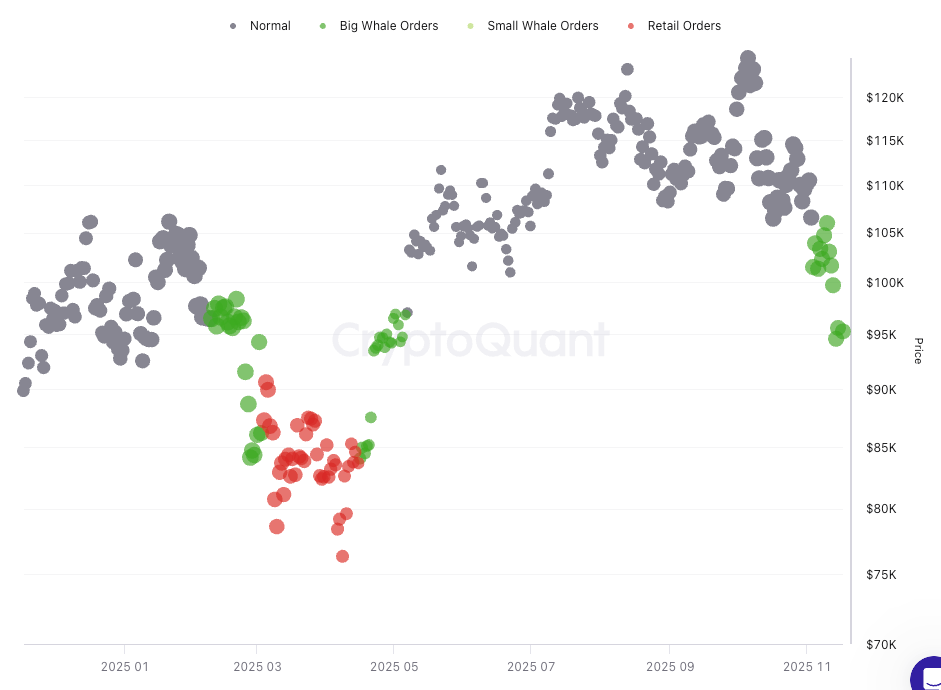
Spot average order size. Source: CryptoQuant

Spot average order size metrics show that retail traders are not returning, even as Bitcoin has dropped almost 27% from its October 6 all-time high of $126,272.76. Exchange data from Binance, Coinbase, Kraken, and OKX indicates larger order sizes, highlighting whale activity rather than small-scale retail buyers.

The Fear and Greed Index plummeted to 11, underscoring extreme market fear. Historically, such levels correlate with market bottoms, but retail investors remain cautious and reluctant to engage. In the morning hours in Asia, Bitcoin traded at somewhere between $91,000 and $92,000, down more than 3% in 24 hours and 13-14% for the week. Ethereum briefly slipped below $3,000, and Solana was at around $130, declining over 5% in 24 hours and 21% over the week.

Whale Accumulation amid Market Weakness

As retail investors sit on the sidelines, large players continue to accumulate aggressively. A whale purchased 10,275 ETH at $3,032 for $31.16 million USDT within 24 hours before November 17, based on on-chain monitoring by OnchainLens. Between November 12 and November 17, this address acquired a total of 13,612 ETH for $41.89 million USDT, at an average price of $3,077.

Whale Ethereum purchases on Nansen
Nansen transaction log showing whale’s $31.16M ETH purchase over 24 hours. Source: OnchainLens

Permanent Bitcoin holders—wallets that have never recorded outflows—are supporting what CryptoQuant describes as the largest accumulation surge in recent selloffs. Permanent holder demand rose from 159,000 BTC to 345,000 BTC, marking the biggest absorption in several cycles. This substantial accumulation occurred even as the price fell, highlighting a stark divergence between long-term and short-term market behaviors.

This divergence between whale accumulation and retail caution highlights a shift in market dynamics. However, CryptoQuant CEO Ki Young Ju notes that the current dip involves long-term holders rotating coins among themselves rather than new money entering the market. This suggests the drawdown does not mark the start of a new bear market, though current conditions may not present the classic buy-the-dip moment sought by retail.

CryptoQuant Bitcoin permanent holder demand chart
30-day permanent holder demand showing record accumulation during price selloff. Source: CryptoQuant

Structural Changes and Institutional Dynamics

This selloff differs from past crypto winters. Major financial institutions, including JPMorgan, now accept Bitcoin as collateral for loans despite its price weakness. This evolving infrastructure offers more support compared to previous bearish cycles. Deeper liquidity is available, helping to steady the market.

Technical signals remain bearish for now. Bitcoin has dropped more than 20% from its record high; recently, its 50-day moving average fell below its 200-day moving average—a “death cross.”

Macroeconomic factors add more pressure. The Federal Reserve delayed interest rate cuts, and global central banks maintain tightening. Falling Treasury liquidity creates headwinds for risk assets. Still, analysts see longer-term macro trends—such as high sovereign debt and ongoing geopolitical tensions—as supportive for Bitcoin in the future.

Mining firms are adjusting accordingly. Frank Holmes, executive chairman of HIVE Digital Technologies, emphasized that his company will continue mining and holding Bitcoin, unlike competitors who are pivoting to high-performance computing. He contends that building Tier 3 data centers for GPU work is both costly and complex, so his mine-and-hold strategy will continue despite volatility.

The post Bitcoin ETF Outflows Persist: Whales Feast and Retail Vanishes appeared first on BeInCrypto.

  •  

Outflow ETF Bitcoin Berlanjut: Whale Pesta dan Ritel Menghilang

Exchange-traded fund (ETF) Bitcoin AS di Amerika Serikat terus mengalir keluar karena Indeks Ketakutan dan Keserakahan kripto turun ke 11, mencerminkan ketakutan ekstrem.

Investor ritel menjauh dari pasar selama penurunan ini, sementara data menunjukkan bahwa whale adalah pembeli utama di tengah aksi jual.

Outflow ETF dan Ketidakhadiran Ritel Menandakan Perubahan Pasar

ETF Bitcoin spot AS mengalami pelarian modal yang terus-menerus, dengan kepemilikan menurun dari 441.000 BTC pada tanggal 10 Oktober menjadi sekitar 271.000 BTC pada pertengahan November. Ini menandai pembalikan tajam dari dukungan institusi awal tahun ini.

Menurut data Farside Investors, ETF Bitcoin kini mencatatkan empat hari berturut-turut aliran keluar, memperpanjang nada defensif yang mendominasi bulan ini. Pada periode sebelumnya, penarikan mencapai lebih dari US$800 juta dalam satu hari, menyoroti betapa tajamnya sentimen memburuk. Angka terbaru menunjukkan aliran keluar yang jauh lebih kecil sekitar US$60 juta, tapi masih menandakan bahwa pembeli tetap berhati-hati dan momentum belum berbalik.

Rata-rata ukuran pesanan spot | Sumber: CryptoQuant

Metrik ukuran pesanan rata-rata spot menunjukkan bahwa trader ritel belum kembali, meski Bitcoin telah turun hampir 27% dari rekor tertinggi 6 Oktober sebesar US$126.272,76. Data dari exchange Binance, Coinbase, Kraken, dan OKX menunjukkan ukuran pesanan yang lebih besar, menyoroti aktivitas whale daripada pembeli ritel berskala kecil.

Indeks Ketakutan dan Keserakahan jatuh ke 11, menyoroti ketakutan pasar yang ekstrem. Secara historis, level seperti ini berkorelasi dengan dasar pasar, namun investor ritel tetap berhati-hati dan enggan terlibat. Pada pagi hari di Asia, Bitcoin diperdagangkan di kisaran antara US$91.000 dan US$92.000, turun lebih dari 3% dalam 24 jam dan 13-14% untuk minggu ini. Ethereum sempat turun di bawah US$3.000, dan Solana berada di sekitar US$130, menurun lebih dari 5% dalam 24 jam dan 21% selama seminggu.

Aksi Akumulasi Whale di Tengah Lemahnya Pasar

Saat investor ritel di pinggir pasar, pemain besar terus mengumpulkan secara agresif. Seorang whale membeli 10.275 ETH dengan harga US$3.032 seharga US$31,16 juta USDT dalam 24 jam sebelum 17 November, berdasarkan pemantauan on-chain oleh OnchainLens. Antara 12 November dan 17 November, alamat ini mengakuisisi total 13.612 ETH seharga US$41,89 juta USDT, dengan harga rata-rata US$3.077.

Pembelian Ethereum oleh whale di Nansen
Log transaksi Nansen menunjukkan pembelian ETH seharga US$31,16 juta oleh whale dalam 24 jam | Sumber: OnchainLens

Permanent Bitcoin holder—wallet yang tidak pernah mencatat aliran keluar—mendukung apa yang CryptoQuant gambarkan sebagai lonjakan akumulasi terbesar dalam aksi jual baru-baru ini. Permintaan permanent holder naik dari 159.000 BTC menjadi 345.000 BTC, menandai penyerapan terbesar dalam beberapa siklus. Akumulasi signifikan ini terjadi meskipun harga turun, menyoroti perbedaan mencolok antara perilaku pasar jangka panjang dan jangka pendek.

Perbedaan ini antara akumulasi oleh whale dan kehati-hatian ritel menyoroti pergeseran dalam dinamika pasar. Namun, CEO CryptoQuant Ki Young Ju mencatat bahwa penurunan saat ini melibatkan permanent holder yang merotasi koin di antara mereka sendiri daripada uang baru masuk ke pasar. Ini menunjukkan bahwa penurunan ini tidak menandai awal dari bear market baru, meskipun kondisi saat ini mungkin tidak menawarkan momen beli yang klasik yang dicari oleh ritel.

CryptoQuant Bitcoin permanent holder demand chart
Permintaan permanent holder 30 hari menampilkan akumulasi rekor selama aksi jual harga | Sumber: CryptoQuant

Struktur Perubahan dan Dinamika Institusional

Aksi jual ini berbeda dari musim dingin kripto sebelumnya. Institusi keuangan besar, termasuk JPMorgan, sekarang menerima Bitcoin sebagai jaminan untuk pinjaman meskipun harga lemah. Infrastruktur yang berkembang ini menawarkan lebih banyak dukungan dibandingkan siklus bearish sebelumnya. Likuiditas yang lebih dalam tersedia, membantu menstabilkan pasar.

Sinyal teknikal masih bearish untuk saat ini. Bitcoin telah turun lebih dari 20% dari rekor tertinggi; baru-baru ini, rata-rata pergerakan 50 harinya jatuh di bawah rata-rata 200 harinya—sebuah “Death Cross.”

Faktor ekonomi makro menambah tekanan. The Federal Reserve menunda pemotongan suku bunga, dan bank sentral global mempertahankan pengetatan. Likuiditas Treasury yang menurun menciptakan hambatan untuk aset berisiko. Namun, analis melihat tren ekonomi makro jangka panjang—seperti utang negara yang tinggi dan ketegangan geopolitik yang berkelanjutan—sebagai dukungan bagi Bitcoin di masa depan.

Perusahaan penambangan menyesuaikan diri sesuai. Frank Holmes, ketua eksekutif HIVE Digital Technologies, menekankan bahwa perusahaannya akan terus menambang dan menyimpan Bitcoin, tidak seperti pesaing yang beralih ke komputasi berkinerja tinggi. Dia berpendapat bahwa membangun pusat data Tier 3 untuk pekerjaan GPU sangat mahal dan kompleks, jadi strategi tambang dan simpanannya akan berlanjut meskipun ada volatilitas.

  •  

End of an Era: ‘CryptoKitty Age Star’ DappRadar Shuts Down, Token Tanks 38%

DappRadar, the leading blockchain analytics platform tracking decentralized applications since 2018, will permanently shut down due to ongoing financial challenges that made continued operations unsustainable.

Founded during the CryptoKitties boom, DappRadar became essential for millions of users and thousands of developers seeking blockchain insights. The company will address matters regarding its DAO and RADAR token separately, as stated in its closure notice.

Seven-Year Journey Ends Amid Financial Pressures

The closure of DappRadar marks the end of an influential era for blockchain data analytics. Starting in 2018, DappRadar capitalized on the momentum of CryptoKitties, showcasing the versatility of blockchain applications. At its peak, it delivered analytics for hundreds of blockchains, covering key data points such as transaction volumes, trades, and user activity.

The platform became a go-to resource for developers, investors, and analysts. DappRadar aggregated real-time data across more than 50 blockchains, spanning decentralized finance, gaming, and NFTs. Its analytics empowered users to track trends and assess the performance of blockchain networks.

DappRadar shutdown announcement
DappRadar’s official shutdown announcement after seven years of operations. Source: DappRadar

Despite these successes, financial realities outpaced DappRadar’s expansion. In their official announcement, the co-founders, Skirmantas and Dragos, highlighted financial unsustainability as the key factor behind the shutdown. Their decision spotlights broader challenges for blockchain analytics platforms in 2025, amid increased market volatility and shifting user interests.

The European Central Bank reported a drop in crypto market capitalization to $2.8 trillion by March 2025, emphasizing the volatility affecting crypto businesses. Blockchain analytics services also face mounting technical hurdles, including data accessibility, scalability, and tracking the rapidly increasing number of blockchain networks.

Wind-Down Process and Token Considerations

DappRadar’s shutdown affects multiple stakeholders: users, developers dependent on its data feeds, and RADAR token holders. RADAR price plunged 38% after the company’s announcement, which clarified that DAO and token matters will be communicated separately. While specifics remain unclear, this careful approach suggests a commitment to responsible management.

The founders reiterated their dedication to transparency throughout the wind-down process. By inviting community feedback, they recognized DappRadar’s influence among millions of users seeking dependable blockchain analytics. The shutdown may prompt developers and analysts to seek alternative solutions, potentially disrupting data workflows.

DappRadar’s exit leaves a gap among analytics providers. While competitors like Chainalysis and blockchain-specific explorers remain, DappRadar was unique in offering a cross-chain view of decentralized applications and markets.

Industry Context and Future Outlook

The closure comes at a time of rapid transformation in the cryptocurrency sector. Despite the broader digital asset market exceeding $4 trillion in 2025, individual firms confronted persistent profitability concerns. Analytics companies in particular struggle with rising infrastructure costs and with generating sustainable revenue.

Research from Global Market Insights estimates the crypto trading platform market at $27 billion in 2024, with an annual growth rate of 12.6% through 2034. Notably, most of this growth centers around trading, not analytics, underscoring the revenue challenges analytics providers face. Monetization models favor trading and financial services, making sustainability difficult for analytics-driven firms.

DappRadar’s shutdown affects multiple stakeholders, including RADAR token holders. Source: Coingecko

Blockchain analytics platforms also navigate technical complexities. Issues with data quality arise from chain forks and stale blocks, while interoperability between blockchains complicates unified analytics. As a result, operational costs remain high, with few revenue offsets, especially as more free tools become available.

DappRadar’s closure raises questions about the long-term viability of multi-chain analytics platforms. Will new competitors fill this gap, or will the market fragment into smaller, niche services? Although uncertain, DappRadar’s seven-year run demonstrates both the promise and difficulty of building foundational blockchain infrastructure in a rapidly evolving market.

The post End of an Era: ‘CryptoKitty Age Star’ DappRadar Shuts Down, Token Tanks 38% appeared first on BeInCrypto.

  •  

Crypto Bloodbath: Bitcoin Loses $92K: Ethereum Slips $3K — Worst Drop in Months

Bitcoin plunged to a six-month low of $91,545 on Tuesday morning in Asia, breaching key support. Ethereum also slipped below $3,000, highlighting widespread market weakness.

The crypto downturn aligned with traditional markets, which endured their worst session in a month.

Market Plunge Erases Weeks of Gains

Bitcoin lost 3.21% on November 17, bringing its value down by 27% from its October all-time high. Ethereum posted a deeper 4.22% fall to $2,978. Major altcoins also saw sharp weekly declines. Solana tumbled 22.51%, XRP slid 16.73%, and Cardano fell 22.12% over the seven-day period.

Losses extended beyond crypto. The S&P 500 dropped 61.70 points to 6,672.41, and the Nasdaq fell 192.51 points to 22,708.07. Both closed below their 50-day moving averages, ending streaks not seen since 2007 and 1995.

Bitcoin lost 3.21% on November 17. Source: BeInCrypto

The Dow Jones Industrial Average fell by more than 550 points as investors anticipated Nvidia’s earnings. Technical analysts saw the breaks as short-term bearish, focusing on the 200-day average as support. Money moved into healthcare and energy while retail investors reduced risk.

Bitcoin CME Gap Closes After Seven-Month Overhang

A major technical event unfolded as Bitcoin filled the last large CME futures gap near $92,000. The gap, open since April 2025, resulted from the CME’s weekend closure while spot exchanges continued trading. These price gaps typically get filled, removing technical overhang, though this does not guarantee a price reversal.

Cryptocurrency trader DaanCryptoTrades confirmed the closure on social media, noting that the risk had been eliminated. Despite removing a downside target, weak demand could still lead to further declines. The technical picture remains fragile.

Bitcoin CME futures gap filled
Bitcoin CME Gap closure confirmed. Source: DaanCrypto

Traders are now at a crossroads. With the gap closed, there is less immediate risk below, but price action is still weak. Volatility and liquidity responses in upcoming sessions will determine whether Bitcoin loses momentum to slide lower or forms a base.

Macro Headwinds and Fed Rate Cut Uncertainty

Broader economic signals added to market stress. The Empire State Manufacturing Index surged to 18.7, up 8 points from the previous month. This strong result reduced the odds of a Federal Reserve rate cut in December. Market probabilities shifted: Polymarket put the chance of no cut at 55%, while CME Group data pointed to a 60% chance of an unchanged policy.

Polymarket put the chance of no cut at 55%. Source: Polymarket

Research firm 10X Research said new buyer activity stalled around October 10. The Fed’s more hawkish signals added pressure. Their analysis warned that conditions remain vulnerable to further liquidations.

The industry’s sentiment index neared recent lows, reflecting shaken market psychology. Option data highlighted a switch: put volume exceeded call volume in the last day, even as calls typically dominate. This shift signals traders bracing for more downside or betting on a drop.

Option data highlighted a switch: put volume exceeded call volume in the last day. Source: Coinglass

On-Chain Signals Point to Capitulation Phase

On-chain analytics from Glassnode and Bitfinex showed that realized losses were stabilizing, suggesting that short-term holders are capitulating. History indicates that market bottoms often follow waves of selling by those who bought at recent highs. A lasting recovery, however, requires long-term accumulation.

Analyst Benjamin Cowen suggested Bitcoin could test the 200-week exponential moving average between $60,000 and $70,000. However, he also noted that a relief rally is possible first. Analyst forecasts vary, reflecting ongoing uncertainty and the potential for a short-term bounce amid notable technical damage.

While I think Bitcoin will go to the 200W SMA ($60k-$70k) in 2026, there is a high probability it will have a bounce back to the 200D SMA before going that low.

All prior cycle bear markets were confirmed by a macro lower high at the 200D SMA. pic.twitter.com/1S477LVLhf

— Benjamin Cowen (@intocryptoverse) November 17, 2025

Bearish projections surfaced on social media. Roman Trading cited $76,000 as the next support level, citing broken patterns and weakening momentum. While these are individual opinions, they show traders are wary of more downside.

The coming days will reveal if Bitcoin can hold above $90,000 or if sellers increase pressure. Economic data, central bank remarks, and institutional flows will likely steer the direction. For now, risk remains elevated as both bulls and bears wait for clearer signals.

The post Crypto Bloodbath: Bitcoin Loses $92K: Ethereum Slips $3K — Worst Drop in Months appeared first on BeInCrypto.

  •  

Akhir dari Sebuah Era: ‘CryptoKitty Age Star’ DappRadar Tutup, Token Anjlok 38%

DappRadar, platform analitik blockchain terkemuka yang melacak aplikasi terdesentralisasi sejak tahun 2018, akan tutup secara permanen karena tantangan keuangan berkelanjutan yang membuat operasi tidak dapat dipertahankan.

Didirikan selama booming CryptoKitties, DappRadar menjadi penting bagi jutaan pengguna dan ribuan pengembang yang mencari wawasan blockchain. Perusahaan ini akan menangani masalah terkait DAO dan token RADAR secara terpisah, seperti yang dinyatakan dalam pemberitahuan penutupan mereka.

Perjalanan Tujuh Tahun Berakhir di Tengah Tekanan Finansial

Penutupan DappRadar menandai akhir dari era berpengaruh untuk analisis data blockchain. Dimulai pada tahun 2018, DappRadar memanfaatkan momentum dari CryptoKitties, menunjukkan fleksibilitas aplikasi blockchain. Pada puncaknya, mereka menyediakan analitik untuk ratusan blockchain, mencakup data penting seperti volume transaksi, perdagangan, dan aktivitas pengguna.

Platform ini menjadi sumber andalan untuk pengembang, investor, dan analis. DappRadar mengumpulkan data real-time dari lebih dari 50 blockchain, mencakup decentralized finance, gaming, dan NFT. Analisanya memungkinkan pengguna melacak tren dan menilai kinerja jaringan blockchain.

Pengumuman penutupan DappRadar
Pengumuman resmi penutupan DappRadar setelah tujuh tahun beroperasi. Sumber: DappRadar

Meski meraih kesuksesan, realitas keuangan melampaui ekspansi DappRadar. Dalam pengumuman resmi mereka, co-founder, Skirmantas dan Dragos, menekankan ketidaksinambungan finansial sebagai faktor utama di balik penutupan. Keputusan ini menyoroti tantangan luas bagi platform analitik blockchain pada tahun 2025, di tengah peningkatan volatilitas pasar dan perubahan minat pengguna.

Bank Sentral Eropa melaporkan penurunan kapitalisasi pasar kripto menjadi US$2,8 triliun pada Maret 2025, menyoroti volatilitas yang mempengaruhi bisnis kripto. Layanan analitik blockchain juga menghadapi peningkatan tantangan teknis, termasuk aksesibilitas data, skalabilitas, dan pelacakan peningkatan jumlah jaringan blockchain.

Proses Penghentian dan Pertimbangan Token

Penutupan DappRadar mempengaruhi banyak pemangku kepentingan: pengguna, pengembang yang bergantung pada data-feed-nya, dan holder token RADAR. Harga RADAR merosot 38% setelah pengumuman perusahaan yang mengklarifikasi bahwa masalah terkait DAO dan token akan dikomunikasikan secara terpisah. Walaupun rincian tetap tidak jelas, pendekatan hati-hati ini menunjukkan komitmen pada manajemen yang bertanggung jawab.

Pendiri kembali menegaskan dedikasi mereka pada transparansi sepanjang proses penutupan. Dengan mengundang umpan balik dari komunitas, mereka mengakui pengaruh DappRadar di antara jutaaan pengguna yang mencari analitik blockchain yang andal. Penutupan ini mungkin mendorong pengembang dan analis mencari solusi alternatif, yang berpotensi mengganggu alur kerja data.

Keluar DappRadar meninggalkan kekosongan di antara penyedia analitik. Meskipun pesaing seperti Chainalysis dan penjelajah blockchain khusus masih ada, DappRadar unik dalam menawarkan pandangan lintas chain tentang aplikasi terdesentralisasi dan pasar.

Konteks Industri dan Prospek Masa Depan

Penutupan datang di tengah transformasi cepat di sektor aset kripto. Meskipun pasar aset digital yang lebih luas melebihi US$4 triliun pada tahun 2025, perusahaan menghadapi kekhawatiran profitabilitas yang terus menerus. Perusahaan analitik terutama kesulitan dengan meningkatnya biaya infrastruktur dan menghasilkan pendapatan berkelanjutan.

Penelitian dari Global Market Insights memperkirakan pasar platform perdagangan kripto mencapai US$27 miliar pada 2024, dengan laju pertumbuhan tahunan 12,6% hingga 2034. Terutama, sebagian besar pertumbuhan ini terpusat pada perdagangan, bukan analitik, menyoroti tantangan pendapatan yang dihadapi penyedia analitik. Model monetisasi lebih menguntungkan perdagangan dan layanan keuangan, sehingga membuat keberlanjutan sulit untuk perusahaan yang berfokus pada analitik.

Penutupan DappRadar mempengaruhi banyak pemangku kepentingan, termasuk holder token RADAR. Sumber: Coingecko

Platform analitik blockchain juga menavigasi kompleksitas teknis. Masalah dengan kualitas data muncul dari fork chain dan blok basi, sementara interoperabilitas antara blockchain mempersulit analitik yang terpadu. Akibatnya, biaya operasional tetap tinggi, dengan sedikit penyeimbang pendapatan, terutama saat semakin banyak alat gratis tersedia.

Penutupan DappRadar menimbulkan pertanyaan tentang kelangsungan jangka panjang dari platform analitik multi-chain. Apakah pesaing baru akan mengisi kekosongan ini, atau pasar akan terpecah menjadi layanan yang lebih kecil dan khusus? Walaupun masih tidak pasti, tujuh tahun DappRadar menunjukkan baik janji dan kesulitan membangun infrastruktur blockchain yang mendasar di pasar yang berkembang pesat.
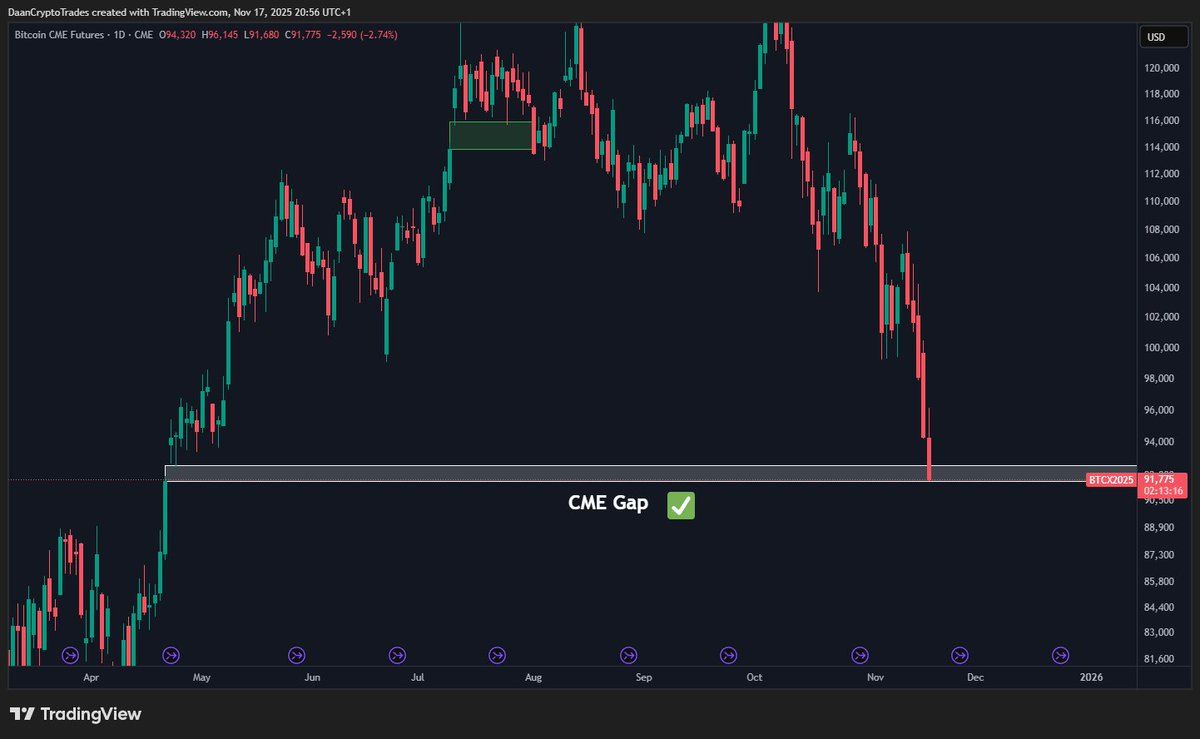
  •  
❌