
Reading view

Inflasi Melambat, Kepercayaan Lemah: Apa Arti Data Konsumen Michigan untuk Bitcoin

Data ekonomi AS terbaru memberikan sinyal yang jelas tapi juga penuh nuansa bagi pasar. Tekanan inflasi mulai mereda, namun konsumen masih merasakan beban. 

Bagi Bitcoin dan pasar aset kripto secara umum, kombinasi ini mengindikasikan kondisi ekonomi makro yang membaik, meskipun volatilitas jangka pendek masih akan membayangi.

Mengapa Ekspektasi Inflasi Lebih Penting dari Sentimen

Sentimen konsumen AS naik tipis ke 52,9 pada bulan Desember, sedikit lebih tinggi dari November namun tetap hampir 30% lebih rendah dibandingkan tahun lalu, mengutip data dari University of Michigan. 

Di saat yang sama, ekspektasi inflasi terus menurun. Ekspektasi jangka pendek turun ke angka 4,2%, sementara ekspektasi jangka panjang turun ke 3,2%.

The University of Michigan consumer sentiment index came in worse than expected at 52.9 in December. pic.twitter.com/yQ79MOBt5R

— Yahoo Finance (@YahooFinance) December 19, 2025

Bagi pasar, ekspektasi inflasi ini jauh lebih penting daripada tingkat kepercayaan diri konsumen.

Sentimen konsumen mengukur bagaimana perasaan masyarakat tentang keuangan dan ekonomi mereka. Sementara itu, ekspektasi inflasi mengukur apa yang mereka pikirkan tentang harga di masa depan. Bank sentral jauh lebih memperhatikan hal yang kedua.

Penurunan ekspektasi inflasi jangka pendek dan panjang mengindikasikan bahwa rumah tangga meyakini tekanan harga mulai mereda dan akan tetap terkendali. 

Kondisi ini mendukung tujuan The Fed untuk meredam inflasi tanpa menerapkan kebijakan yang terlalu ketat dalam jangka waktu lama.

Data ini hadir setelah laporan CPI bulan November yang memperlihatkan inflasi menurun lebih cepat dari perkiraan. Kedua laporan tersebut menegaskan pesan yang sama: inflasi mulai kehilangan momentumnya.

Who do you believe:

A. University of Michigan consumer confidence below COVID April 2020 and Lehman September 2008 levels.

B. CPI inflation data, skewed by bogus OER? pic.twitter.com/FFEWj0I7OE

— Lawrence McDonald (@Convertbond) December 19, 2025

Arti Penting untuk Suku Bunga dan Likuiditas

Ekspektasi inflasi yang menurun mengurangi kebutuhan suku bunga tinggi. Pasar cenderung bereaksi dengan memperkirakan pemangkasan suku bunga lebih awal atau lebih dalam, meskipun pertumbuhan ekonomi masih lambat.

Bagi aset berisiko, termasuk kripto, ini penting karena:

  • Suku bunga yang lebih rendah menurunkan imbal hasil dari uang tunai dan obligasi
  • Imbal hasil riil cenderung turun
  • Kondisi keuangan perlahan melonggar

Secara historis, Bitcoin lebih responsif terhadap kondisi likuiditas daripada terhadap kepercayaan konsumen maupun pertumbuhan ekonomi.

Mengapa Kepercayaan Lemah Tidak Terlalu Berdampak pada Aset Kripto

Kepercayaan konsumen yang rendah mencerminkan tekanan biaya hidup, bukan karena permintaan yang anjlok. Orang-orang masih merasa terbebani, namun mereka tidak lagi terlalu khawatir harga akan naik tajam.

Pada dasarnya, pasar aset kripto tidak bergantung pada konsumsi masyarakat secara langsung seperti saham. Sebaliknya, pasar kripto merespons:

  • Ekspektasi suku bunga
  • Kekuatan Dollar
  • Likuiditas global

Hal ini membuat ekspektasi inflasi yang menurun menjadi hal yang positif bagi Bitcoin, walaupun kepercayaan konsumen masih lemah.

Mengapa Volatilitas Nampaknya Akan Terus Berlanjut

Kondisi seperti ini memang menguntungkan aset berisiko dalam jangka panjang, meski jalurnya tidaklah mulus.

Kepercayaan diri yang lemah menandakan pertumbuhan ekonomi masih rapuh. Hal ini membuat pasar lebih sensitif terhadap rilis data, strategi pelaku pasar, dan arus modal jangka pendek. Seperti yang terlihat setelah rilis laporan CPI, bahkan data makro yang positif bisa saja memicu pembalikan harga mendadak ketika leverage sedang tinggi.

Bagi Bitcoin sendiri, situasi ini biasanya menghasilkan:

  • Reaksi kuat terhadap berita makro
  • Gerakan harga yang tidak menentu
  • Reli yang lebih banyak didorong likuiditas ketimbang keyakinan

Melihat Ke Depan ke Januari 2026

Secara keseluruhan, data ini menunjukkan latar makro yang konstruktif bagi kripto menjelang awal 2026. Tekanan inflasi mulai mereda, kebijakan mulai longgar, serta kondisi likuiditas semakin membaik.

Namun di sisi lain, kepercayaan diri yang lemah menjelaskan kenapa volatilitas pasar masih tinggi dan rentan mengalami penurunan mendadak.

Poin utamanya sederhana: kondisi makro untuk Bitcoin terus membaik, tapi pergerakan harga akan tetap ditentukan oleh arus dana, leverage, dan momentum, bukan hanya optimisme belaka.

  •  

Apakah Arthur Hayes Baru Saja Menjual Ethereum Senilai US$1,5 Juta?

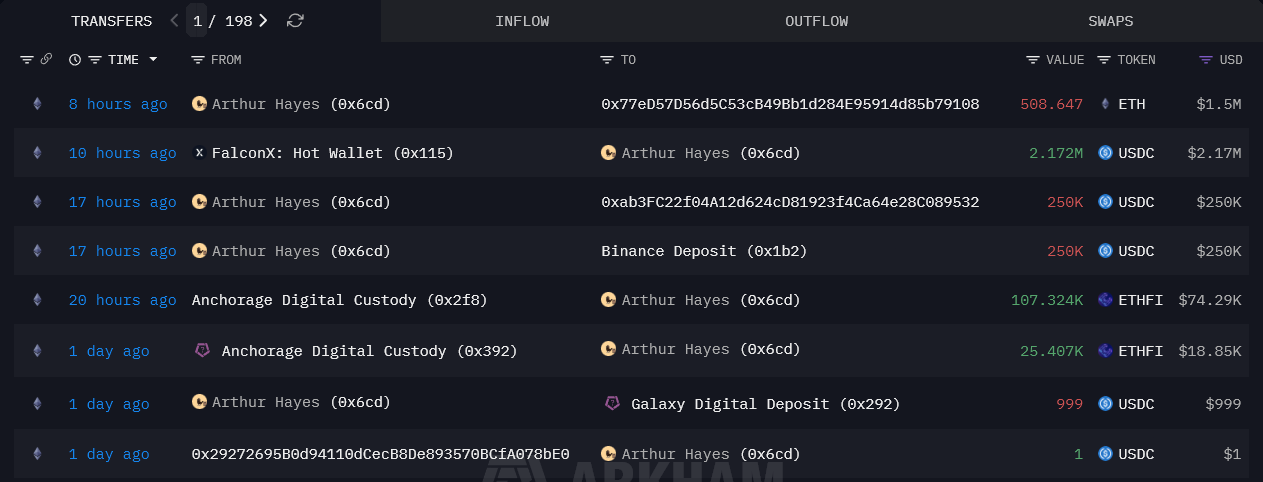
Arthur Hayes telah memindahkan 508,647 ETH, dengan nilai sekitar US$1,5 juta, ke Galaxy Digital, dan langkah ini memicu spekulasi baru bahwa veteran kripto tersebut sedang mengurangi eksposurnya.

Lewat langkah ini, banyak yang terkejut karena belakangan Hayes justru memaparkan salah satu thesis bullish terkuatnya untuk Ethereum.

Spekulasi Penjualan Ethereum oleh Arthur Hayes

Data on-chain menunjukkan transfer tersebut berasal dari wallet yang terhubung pada Hayes dan masuk ke alamat deposit Galaxy Digital. 

Transfer ke institusi tidak selalu berarti akan ada penjualan langsung. Tapi, biasanya pergerakan seperti ini berkaitan dengan penyediaan likuiditas atau proses eksekusi over-the-counter.

Arthur Hayes Kirim 508 ETH Ke Galaxy Digital | Sumber: Arkham

Transaksi ini terjadi ketika Ethereum diperdagangkan sedikit di bawah level psikologis penting US$3.000, setelah Desember yang bergejolak akibat outflow ETF dan reposisi di derivatif.

Meski begitu, Hayes masih memegang lebih dari 4.500 ETH.

Jadi, jika ada penjualan itu hanya bagian dari manajemen portofolio, bukan keluar sepenuhnya.

Waktu langkah ini juga menarik. Baru beberapa hari lalu, Hayes menyampaikan penjelasan terperinci soal masa depan institusional Ethereum, dengan meyakini bahwa pelaku keuangan besar akhirnya menerima batasan blockchain privat.

“You can’t have a private blockchain. You must have a public blockchain for security and real usage.”

Hayes menggambarkan stablecoin sebagai katalis yang membuat Ethereum dapat diterima oleh keuangan tradisional. Ia memperkirakan bahwa perbankan akan membangun lebih banyak infrastruktur Web3 di atas Ethereum, bukan melalui ledger khusus.

“You’re going to see large banks start doing crypto and Web3 using a public blockchain. I think the public blockchain will be Ethereum.”

Ia juga menyadari bahwa masalah privasi masih menjadi tantangan untuk adopsi institusi, namun menurutnya kendala ini akan terselesaikan di level aplikasi atau layer-2, dengan Ethereum tetap menjadi fondasi keamanan.

“They might build an L2 that has some sort of privacy features… but the substrate, the security layer, is still Ethereum.”

namun kondisi pasar masih campuran. Ethereum masih sulit mempertahankan reli di atas US$3.000 karena exchange-traded fund (ETF) ETH spot mencatat outflow besar pada pertengahan Desember, sementara volatilitas di pasar derivatif juga makin mengecil. Ini mengindikasikan kehati-hatian, bukan ketakutan. 

Pada level protokol, aktivitas pengguna terus berpindah ke rollup sehingga biaya transaksi tetap rendah, tapi pendapatan fee untuk core Ethereum jadi terbatas.

Hayes juga menyampaikan pandangan realistis tentang harapan valuasi, dengan memberi target jangka panjang, bukan prediksi jangka pendek.

“If ETH gets to $20,000, that’s about 50 Ethereum to make a million… by the end of the cycle, by the next presidential election.”

Saat ini, aktivitas on-chain Hayes menggambarkan posisi taktis, bukan perubahan keyakinan. Thesis dia masih kokoh: Ethereum akan unggul jika stablecoin dan keuangan institusi on-chain bisa berkembang besar. 

Namun market sepertinya masih menunggu narasi itu benar-benar terwujud sepenuhnya.

  •  

Cooling Inflation, Weak Confidence: What the Michigan Consumer Data Means for Bitcoin

Fresh US economic data is sending a clear but nuanced signal to markets. Inflation pressures are easing, but consumers remain under strain. 

For Bitcoin and the broader crypto market, that mix points to improving macro conditions, tempered by near-term volatility.

Why Inflation Expectations Matter More Than Sentiment

US consumer sentiment edged up to 52.9 in December, slightly higher than November but still nearly 30% lower than a year ago, according to the University of Michigan. 

At the same time, inflation expectations continued to fall. Short-term expectations dropped to 4.2%, while long-term expectations eased to 3.2%.

The University of Michigan consumer sentiment index came in worse than expected at 52.9 in December. pic.twitter.com/yQ79MOBt5R

— Yahoo Finance (@YahooFinance) December 19, 2025

For markets, those inflation expectations matter more than confidence levels.

Consumer sentiment measures how people feel about their finances and the economy. Inflation expectations measure what they think prices will do next. Central banks care far more about the latter.

Falling short- and long-term inflation expectations suggest households believe price pressures are easing and will stay contained. 

That supports the Federal Reserve’s goal of cooling inflation without keeping policy restrictive for too long.

This data follows November’s CPI report, which showed inflation cooling faster than expected. Together, the two reports reinforce the same message: inflation is losing momentum.

Who do you believe:

A. University of Michigan consumer confidence below COVID April 2020 and Lehman September 2008 levels.

B. CPI inflation data, skewed by bogus OER? pic.twitter.com/FFEWj0I7OE

— Lawrence McDonald (@Convertbond) December 19, 2025

What This Means for Interest Rates and Liquidity

Lower inflation expectations reduce the need for high interest rates. Markets tend to respond by pricing in earlier or deeper rate cuts, even if economic growth remains slow.

For risk assets, including crypto, this matters because:

  • Lower rates reduce returns on cash and bonds
  • Real yields tend to fall
  • Financial conditions gradually loosen

Bitcoin has historically responded more to liquidity conditions than to consumer confidence or economic growth.

Why Weak Confidence Does Not Hurt Crypto as Much

Low consumer confidence reflects cost-of-living pressures, not collapsing demand. People still feel stretched, but they are less worried about prices rising sharply from here.

Crypto markets do not rely on consumer spending in the same way equities do. Instead, they react to:

  • Interest rate expectations
  • Dollar strength
  • Global liquidity

That makes falling inflation expectations supportive for Bitcoin, even when confidence remains weak.

Why Volatility Is Likely to Continue

This environment favors risk assets over time, but not in a straight line.

Weak confidence means growth remains fragile. That keeps markets sensitive to data releases, positioning, and short-term flows. As seen after the CPI report, even bullish macro data can trigger sharp reversals when leverage is high.

For Bitcoin, that typically results in:

  • Strong reactions to macro news
  • Choppy price action
  • Rallies driven by liquidity rather than conviction

Looking Ahead to January 2026

Taken together, the data points to a constructive macro backdrop for crypto heading into early 2026. Inflation pressures are easing, policy constraints are loosening, and liquidity conditions are improving.

At the same time, weak confidence explains why markets remain volatile and prone to sudden selloffs.

The key takeaway is simple: macro conditions are improving for Bitcoin, but price action will continue to be shaped by flows, leverage, and timing rather than optimism alone.

The post Cooling Inflation, Weak Confidence: What the Michigan Consumer Data Means for Bitcoin appeared first on BeInCrypto.

  •  

Did Arthur Hayes Just Sell $1.5 Million in Ethereum?

Arthur Hayes has moved 508.647 ETH, worth roughly $1.5 million, to Galaxy Digital, sparking fresh speculation that the crypto veteran may be trimming exposure.

The move is surprising because recently Hayes delivered one of his strongest bullish theses on Ethereum.

Arthur Hayes Ethereum Sell Speculation

On-chain data shows the transfer originated from a wallet linked to Hayes and landed at a Galaxy Digital deposit address. 

Transfers to institutional desks do not always signal an immediate sale. But such movements are commonly associated with liquidity provisioning or over-the-counter execution.

Arthur Hayes Sent 508 ETH To Galaxy Digital. Source: Arkham

The transaction comes as Ethereum trades just below the psychologically important $3,000 level, following a volatile December marked by ETF outflows and derivatives repositioning.

Despite the move, Hayes still controls more than 4,500 ETH.

So, any selling would represent portfolio management rather than a full exit.

The timing is notable. Only days earlier, Hayes laid out a detailed case for Ethereum’s institutional future, arguing that large financial players have finally accepted the limits of private blockchains.

“You can’t have a private blockchain. You must have a public blockchain for security and real usage.”

Hayes framed stablecoins as the catalyst that makes Ethereum legible to traditional finance. He predicted that banks would increasingly build Web3 infrastructure on Ethereum rather than bespoke ledgers.

“You’re going to see large banks start doing crypto and Web3 using a public blockchain. I think the public blockchain will be Ethereum.”

He acknowledged that privacy remains a sticking point for institutional adoption but argued that the issue will be addressed at the application or Layer-2 level, with Ethereum continuing to anchor security.

“They might build an L2 that has some sort of privacy features… but the substrate, the security layer, is still Ethereum.”

However, market conditions remain mixed. Ethereum has struggled to regain sustained momentum above $3,000 as spot ETH ETFs recorded notable outflows in mid-December, while implied volatility in derivatives markets has compressed. This reflects caution rather than panic. 

At the protocol level, activity continues to migrate toward rollups, keeping transaction costs low but limiting fee capture on Ethereum’s base layer.

Hayes also struck a pragmatic tone on valuation expectations, offering a long-term target rather than a near-term prediction.

“If ETH gets to $20,000, that’s about 50 Ethereum to make a million… by the end of the cycle, by the next presidential election.”

For now, Hayes’ on-chain activity suggests tactical positioning, not a reversal of conviction. His thesis remains intact: Ethereum wins if stablecoins and institutional on-chain finance scale. 

The market, however, may still be waiting for that narrative to fully materialize.

The post Did Arthur Hayes Just Sell $1.5 Million in Ethereum? appeared first on BeInCrypto.

  •  
❌