Reading view

Komentar Bitcoin Peter Schiff pada Debat CZ Memiliki Kekeliruan Logis

Peter Schiff berdebat dengan CZ di Binance Blockchain Week setelah menantang legitimasi Bitcoin sebagai pembentuk nilai ekonomi nyata.

Berbicara di panggung berhadapan dengan Changpeng Zhao (CZ), Schiff berargumen bahwa Bitcoin adalah transfer kekayaan nol-sum daripada aset yang produktif.

Berikut adalah pernyataan lengkap Schiff yang disampaikan selama debat:

“Semua yang dilakukan Bitcoin adalah memfasilitasi transfer kekayaan dari orang-orang yang membeli BTC kepada orang-orang yang menjualnya. Saat Bitcoin dibuat, tidak ada kekayaan nyata. Kami memiliki sekitar 20 juta Bitcoin sekarang yang tidak kami miliki 15 tahun yang lalu. Tapi kita tidak lebih baik karena BTC itu ada. Mereka sebenarnya tidak melakukan apa-apa. Namun yang terjadi adalah beberapa orang telah menjadi kaya dengan mengorbankan orang lain. Sekarang, orang-orang yang telah kehilangan banyak uang pada Bitcoin bahkan tidak menyadari bahwa mereka telah kehilangannya, karena mereka masih memiliki BTC, dan token tersebut masih memiliki harga US$90-US$92.000, atau berapa pun harga pasar saat ini. Jadi, mereka tidak menyadari bahwa mereka telah kehilangan uang. Namun jika mereka mencoba keluar, saat itulah mereka akan menyadari bahwa itu hilang.”

“Bitcoin Memungkinkan Transfer Kekayaan Dari Pembeli ke Penjual”

Ini benar sejauh aset yang diperdagangkan bebas, seperti saham, emas, tanah, seni rupa, juga mentransfer kekayaan antar peserta tergantung pada harga masuk, harga keluar, dan kondisi pasar.

Namun, Schiff menyatakan transfer ini nol-sum. Itu tidak tepat. Jaringan Bitcoin sendiri menghasilkan utilitas, yang berbeda dari harga.

Bitcoin saat ini mendukung penyelesaian lintas batas, berfungsi sebagai penyimpan nilai yang kebal sensor, dan berperan sebagai jaminan di berbagai platform keuangan.

BINANCE FOUNDER CZ JUST DESTROYED GOLD BUG PETER SCHIFF IN 30 SECONDS

THIS IS A MUST WATCH!! pic.twitter.com/SWbTITjbXw

— Vivek Sen (@Vivek4real_) December 4, 2025

Nilai dihasilkan melalui kapabilitas, tidak hanya bentuk material. Jaringan global yang menggerakkan modal secara instan tanpa bank atau perantara adalah fungsi ekonomi baru. Itu adalah penciptaan kekayaan menurut definisinya.

Jika Bitcoin hanya mendistribusikan ulang nilai, ia tidak akan mendasari saluran pembayaran, platform kustodian, atau jalur remitansi bernilai miliaran dolar remittance rails.

Aset nol-sum tidak menarik perbendaharaan korporat, ETF institusional, atau adopsi negara-negara.

“Penambahan 20 Juta Bitcoin Tidak Menciptakan Kekayaan Nyata”

Kekayaan tidak bergantung pada substansi fisik. Kekayaan bergantung pada permintaan, utilitas, konsensus, dan kemampuan untuk melestarikan atau mentransfer nilai.

Logika Schiff bisa diterapkan secara historis pada:

  • Fiat yang diterbitkan pemerintah (dibuat dengan deklarasi, namun diterima secara global).
  • Nama domain internet (non-fisik, namun aset bernilai jutaan dolar).
  • Perangkat lunak dan infrastruktur cloud (tak berwujud, namun penting bagi PDB global).

Berdasarkan standar itu, perangkat lunak, DNS internet, model AI, dan bahkan uang fiat juga gagal memenuhi syarat sebagai kekayaan. Namun, sistem tak berwujud ini menggerakkan sebagian besar ekonomi saat ini.

Bitcoin menciptakan sesuatu yang tidak ada dalam sejarah moneter: aset pembawa yang bergerak seperti data, menyelesaikan tanpa perantara, dan dapat diverifikasi secara matematis.

Fitur tersebut sebanding dengan digitalisasi emas namun tanpa gesekan penyimpanan, transportasi, atau pengecekan.

Kekayaan diciptakan karena kemampuan baru muncul.

“Orang-Orang Hanya Tidak Tahu Mereka Kehilangan Uang Karena Harga Masih Tinggi”

Ini bergantung pada asumsi bahwa Bitcoin akan runtuh. Bisa saja — namun itu bukan fakta, melainkan proyeksi.

Jika Bitcoin tetap diminati secara global, kelangkaan dan pertumbuhan jaringan mempertahankan nilai.

Jika adopsi tumbuh lebih lanjut — seperti yang sudah terjadi di ETF, perbendaharaan korporat, dan kepemilikan negara — maka prediksi Schiff melemah.

Pandangannya menyamakan keuntungan yang belum terealisasi dengan ilusi. Namun:

  • Jika seseorang memegang Bitcoin selama 10 tahun dan kemudian menjualnya dengan harga lebih tinggi, kekayaan direalisasikan.
  • Jika Bitcoin menjadi transaksi yang meluas dan terintegrasi ke dalam infrastruktur moneter, aset tersebut berfungsi di luar spekulasi.

Tesisnya hanya berlaku jika Bitcoin gagal sebagai jaringan moneter. Dan lebih dari satu dekade pertumbuhan menunjukkan arah yang berlawanan.

Kesimpulan

Komentar Peter Schiff menarik perhatian dan memicu diskusi, namun penalarannya mengabaikan kenyataan ekonomi utama.

Bitcoin bukan semata transfer kekayaan. Bitcoin adalah jaringan moneter global yang berfungsi dengan atribut yang tidak dapat direplikasi oleh kelas aset tradisional mana pun.

Argumen bahwa ia “tidak menciptakan kekayaan” bergantung pada asumsi usang tentang darimana asal nilai.
  •  

Apa yang Sebenarnya Berubah dengan Upgrade Fusaka Ethereum

Ethereum baru saja menyelesaikan upgrade Fusaka, sebuah hard fork yang dirancang untuk mempersiapkan jaringan agar bisa digunakan dalam skala yang lebih besar dan dengan biaya lebih murah. Meskipun secara teknis di atas kertas, perubahan ini menyentuh fungsi inti Ethereum — bagaimana data disimpan, bagaimana transaksi masuk ke dalam blok, dan bagaimana Rollups seperti Arbitrum, Base, dan Optimism berinteraksi dengan main chain. 

Bagi siapa saja yang memegang ETH, upgrade ini membentuk landasan untuk biaya yang lebih rendah, efisiensi jaringan yang lebih baik, dan ekosistem jangka panjang yang lebih kuat.

Jaringan Lebih Besar dengan Ruang Lebih Luas

Perubahan terbesar terjadi pada cara Ethereum menangani data. 

Setiap transaksi, pembuatan NFT, pertukaran DeFi, atau batch Layer-2 membutuhkan ruang blok, dan hingga sekarang, ruang tersebut terbatas. Fusaka meningkatkan kapasitas Ethereum sehingga blok dapat membawa lebih banyak informasi sekaligus. 

Missed the Fusaka network upgrade?
13 Ethereum Improvement Proposals (EIPs) are now live on Mainnet.

Here’s Fusaka in 35 seconds. pic.twitter.com/DlUh1ATA55

— Ethereum (@ethereum) December 4, 2025

Ini tidak membuat chain menjadi lebih cepat secara instan, tetapi mengurangi tekanan saat permintaan meningkat, seperti selama volatilitas pasar atau peluncuran token populer. 

Sederhananya, Ethereum dapat menyerap lebih banyak aktivitas tanpa kesulitan.

Rollups Lebih Murah Melalui Kapasitas Blob yang Diperluas

Sejumlah besar dari lalu lintas Ethereum saat ini berasal dari Rollups. Jaringan ini mengelompokkan ribuan transaksi pengguna dan menyelesaikannya di Ethereum sebagai data terkompresi yang disebut “blobs.” 

Sebelum Fusaka, ruang blob dibatasi. Ketika permintaan meningkat, biaya menjadi naik. Fusaka memperluas ruang yang tersedia untuk pengajuan blob dan memperkenalkan sistem fleksibel untuk menaikkan atau menurunkan kapasitas tanpa upgrade penuh. 

Saat rollups berkembang ke area baru ini, pengguna seharusnya merasakan biaya transaksi yang lebih rendah dan aktivitas aplikasi yang lebih lancar. 

Tujuan akhirnya sederhana: lebih banyak transaksi, lebih sedikit hambatan.

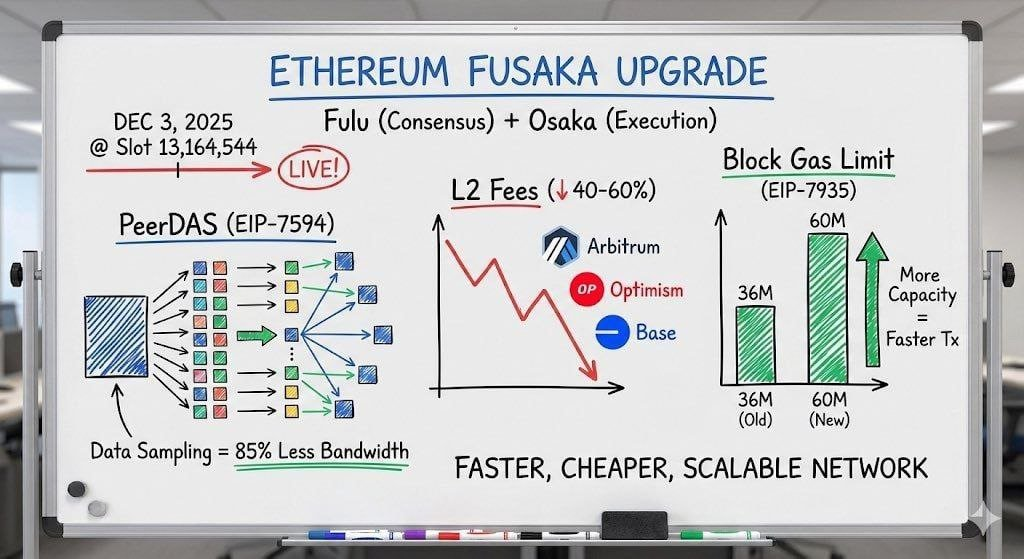
Penjelasan Upgrade Fusaka Ethereum | Sumber: X/Bull Theory

PeerDAS: Cara Mudah Verifikasi Data

Peningkatan besar lainnya adalah pada cara node Ethereum memverifikasi data. Sebelumnya, node harus mengunduh bagian besar data blok untuk memastikan tidak ada yang hilang atau tersembunyi. 

Fusaka memperkenalkan PeerDAS, sebuah sistem yang memeriksa potongan kecil data acak daripada seluruh muatan. 

Ini bekerja seperti memeriksa gudang dengan membuka beberapa kotak acak daripada memeriksa setiap kotak. 

PeerDAS in Fusaka is significant because it literally is sharding.

Ethereum is coming to consensus on blocks without requiring any single node to see more than a tiny fraction of the data. And this is robust to 51% attacks – it's client-side probabilistic verification, not… pic.twitter.com/OK81xBteER

— vitalik.eth (@VitalikButerin) December 3, 2025

Ini mengurangi kebutuhan bandwidth dan penyimpanan untuk validator dan operator node, membuatnya lebih mudah — dan lebih murah — bagi lebih banyak orang untuk menjalankan infrastruktur. 

Pangkalan validator yang lebih luas memperkuat desentralisasi, yang akhirnya memperkuat keamanan dan ketahanan Ethereum.

Kapasitas Blok yang Lebih Tinggi Berarti Lebih Banyak Throughput

Selain meningkatkan kapasitas, Fusaka juga menaikkan batas gas blok. Batas yang lebih tinggi berarti lebih banyak pekerjaan dapat masuk ke dalam setiap blok, memungkinkan lebih banyak transaksi dan panggilan smart-contract diselesaikan tanpa penundaan. 

Ini tidak meningkatkan kecepatan blok, tetapi meningkatkan throughput. Aktivitas DeFi, lelang NFT, dan perdagangan frekuensi tinggi akan memiliki lebih banyak ruang untuk bernafas pada jam sibuk.

Dukungan Wallet yang Lebih Baik dan Peningkatan UX di Masa Depan

Fusaka juga mencakup peningkatan pada kriptografi dan mesin virtual Ethereum. Upgrade ini menambahkan dukungan untuk tanda tangan P-256, yang digunakan dalam sistem autentikasi modern, termasuk yang berada di belakang login tanpa kata sandi pada smartphone dan perangkat biometrik. 

Ini membuka jalur untuk wallet masa depan yang berfungsi lebih seperti Apple Pay atau Google Passkeys daripada aplikasi berbasis frasa awal. Seiring waktu, ini dapat membuat akses Ethereum lebih mudah bagi pengguna umum.

Ethereum is about to 10x the wallet UX.

The Fusaka upgrade includes EIP-7951 – support for the signature scheme that the iPhones use to power things like Face ID.

Meaning you'll soon be able to sign transactions with your face.

Huge win for bringing normal people on-chain. pic.twitter.com/7Ad38m4Oxz

— Jarrod Watts (@jarrodwatts) November 27, 2025

Apa Arti Fusaka untuk Holder ETH

Dampak bagi holder ETH bersifat bertahap namun signifikan. Biaya pada jaringan Layer-2 seharusnya berkurang seiring peningkatan kapasitas data. Kemacetan jaringan seharusnya menjadi lebih jarang. Lebih banyak validator dapat berpartisipasi karena kebutuhan perangkat keras yang lebih rendah. 

Paling penting, Ethereum kini memiliki ruang untuk tumbuh tanpa mengorbankan keamanan atau desentralisasi. Jika adopsi meningkat, volume penyelesaian juga akan meningkat — dan demikian pula peran ETH sebagai aset yang mendayai, mengamankan, serta menyelesaikan segala sesuatu di atasnya.

$ETH is still consolidating around the $3,000 level.

Not much price action due to weekends, but next week could be interesting.

QT is ending on December 1st, Powell's speech is on December 1st, and the Fusaka upgrade is coming on December 3rd.

If Ethereum holds above the… pic.twitter.com/pxgmrOHyah

— Ted (@TedPillows) November 30, 2025

Sebuah Upgrade Fundamental, Bukan yang Mencolok

Fusaka tidak mengubah ekonomi Ethereum atau membuat ETH tiba-tiba menjadi deflasi, tetapi memperkuat fondasi yang bergantung pada permintaan masa depan. Biaya rollup yang lebih murah mengundang penggunaan. 

Lapisan dasar yang lebih skalabel mengundang pengembang. Lingkungan node yang lebih terjangkau mengundang partisipasi. Ini adalah peningkatan struktural, yang mungkin tidak berdampak besar dalam sehari namun mengubah jaringan seiring waktu.

Ethereum melebar jalan tol, memperbaiki sistem tol, dan mempermudah pengemudi baru untuk bergabung. Itulah arti sebenarnya dari Fusaka — perubahan tenang dengan bobot jangka panjang. 

Seiring jaringan layer-2 berkembang dan aplikasi bertambah banyak, dampaknya seharusnya berpindah dari diskusi teknis menjadi pengalaman pengguna, biaya transaksi, dan pada akhirnya, nilai ETH itu sendiri.

  •  

Diculik, Dibunuh, dan Dibakar untuk Token: 3 Cerita Horor Kripto yang Mengejutkan

Pada tahun 2025, beberapa kasus mengerikan menunjukkan bahwa kejahatan kripto telah melampaui layar ke jalanan. Kunci pribadi, akses wallet, dan transaksi OTC besar memicu kekerasan yang meninggalkan mayat, logam terbakar, dan saldo kosong di belakang.

Kisah-kisah ini mengguncang ruang aset digital dan mengungkapkan kenyataan mengerikan bahwa kejahatan kripto kini datang dengan senjata, gudang, dan api.

Pembunuhan Kripto di Wina: Disiksa untuk Password Wallet

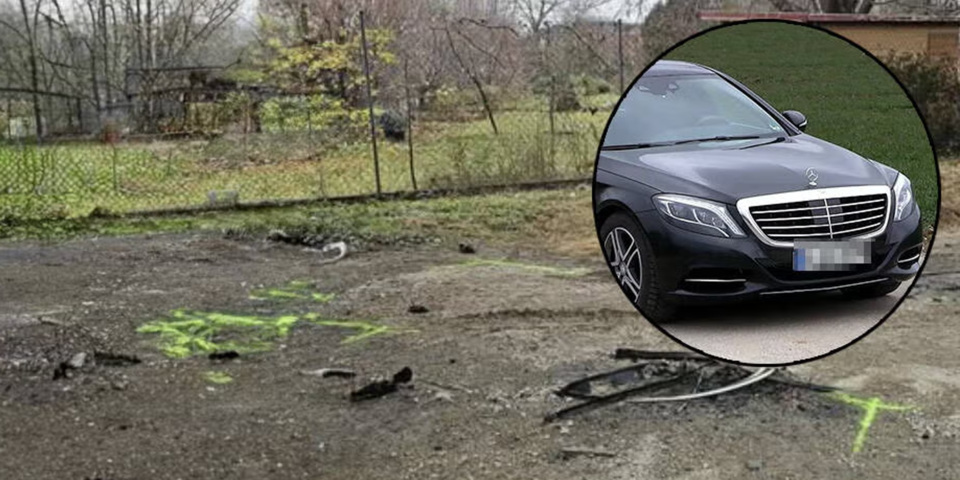
Di awal November, Vienna dikejutkan dengan sebuah Mercedes terbakar di bawah jembatan kereta. Di dalamnya ada Danylo K., berusia 21 tahun, hangus tak dapat dikenali, terkulai di kursi belakang.

Lokasi di Vienna Tempat Danylo Dibakar Hidup-hidup di Mobilnya | Sumber: OE24

Polisi menelusuri pembunuhan tersebut ke sebuah garasi hotel di Leopoldstadt. Di sana, Danylo disergap oleh sesama mahasiswa Ukraina yang baru berusia 19 tahun dan seorang kaki tangan berusia 45 tahun.

Dia dipukuli, giginya dicabut, kemudian dibawa melintasi kota. Penangkapnya menuntut akses ke wallet kriptonya. Mereka memaksanya untuk memberikan kata sandi setelah berjam-jam disiksa.

Para penyerang menguras wallet-nya dan membawa kumpulan US dolar saat tertangkap. Penyelidik kemudian menemukan kaleng bahan bakar yang meleleh di kursi belakang tempat Danylo meninggal.

Menurut laporan, korban, Danylo, tewas karena sesak napas akibat darah dan api. Kekayaannya hidup di on-chain cukup lama untuk dicuri oleh pencuri.

Tersangka melarikan diri ke Ukraina malam itu. Namun, mereka ditangkap tapi akan diadili di sana, bukan di Austria.

Penculikan Montreal: Seorang Influencer Kripto Menghilang

Tahun lalu, di Old Montreal, influencer kripto berusia 25 tahun Kevin Mirshahi ditarik ke dalam mobil yang menunggu. Tiga lainnya diculik bersamanya, kemudian dibebaskan keesokan harinya.

Mirshahi tidak pernah kembali dan tubuhnya ditemukan di taman tepi sungai empat bulan kemudian.

The Digital Gold Rush Has A Dark Side

Kevin Mirshahi, known across Montreal’s crypto scene, was found dead at Île-de-la-Visitation park on Oct. 30, months after his June abduction.

The 25-year-old’s story isn’t an isolated case – it’s the latest in a wave of crypto-targeted… pic.twitter.com/T5inBMhSJo

— 0xMarioNawfal (@RoundtableSpace) November 15, 2024

Polisi menuduh tiga orang, termasuk Darius Perry dan Nackael Hickey, dengan penahanan dan aksesori untuk pembunuhan. Seorang wanita, Joanie Lepage, menghadapi tuduhan pembunuhan tingkat pertama.

Penyelidik belum mengonfirmasi motif yang berhubungan dengan kripto. Namun, Mirshahi menjalankan grup investasi token pribadi dan memiliki eksposur publik di ruang tersebut.

Dia membangun audiens online seputar perdagangan dan kekayaan, namun seseorang menggunakan bagasi dan lakban untuk membungkamnya.

US$85.000 Disita dalam Penyergapan di Area Parkir Saat Transaksi Tunai-untuk-Kripto

Di Trinidad, terjadi kejahatan lain dengan kecepatan, pengorganisasian, dan tanpa kes empat pelarian.

Pada 29 November, seorang pria tiba di tempat parkir SuperPharm di Trincity Central Road. Dia berencana membeli cryptocurrency dengan uang tunai US$85.800, dibungkus di dalam tas hitam.

A 52-year old man in Trinidad was robbed of $86,000 when he went to buy cryptocurrency from a man in a pharmacy parking lot.

Pro tip: don't bring bags of cash to randos in a parking lot.https://t.co/aLePjXX1dB

— Jameson Lopp (@lopp) December 2, 2025

Laporan polisi mengonfirmasi dia bertemu dengan kontak perdagangan lama untuk menyelesaikan transaksi. Beberapa saat setelah menyerahkan tas, dua pria bersenjata mendekati kendaraan.

Mereka memecahkan jendela dan mengarahkan senjata ke penghuninya. Pelaku kemudian mengambil uang tunai dan kedua ponsel lalu melarikan diri dengan mobil yang menunggu.

Tidak ada kripto yang pernah dipertukarkan. Pihak berwenang menggambarkan ini sebagai perampokan terarah yang terkait dengan perdagangan kripto OTC.

Era Kekerasan Baru

Kasus-kasus ini menandai sebuah perubahan. Kekerasan kripto tidak lagi merupakan perampokan digital yang dilakukan oleh peretas di balik layar.

Ini bersifat fisik, melibatkan ruang bawah tanah, mobil, api, palu, dan teriakan nyata. Pemegang kripto kini hidup dengan kenyataan tidak nyaman bahwa kunci melindungi token, namun token tidak melindungi nyawa.

  •  

ETF XRP Perpanjang Reli ke 13 Hari, Target US$1 Miliar Kini di Depan Mata

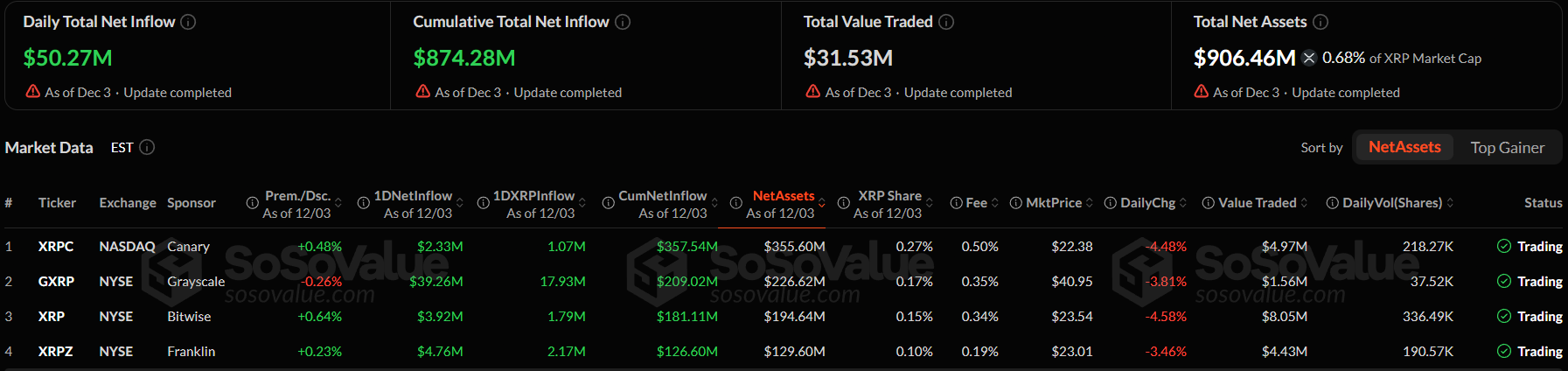
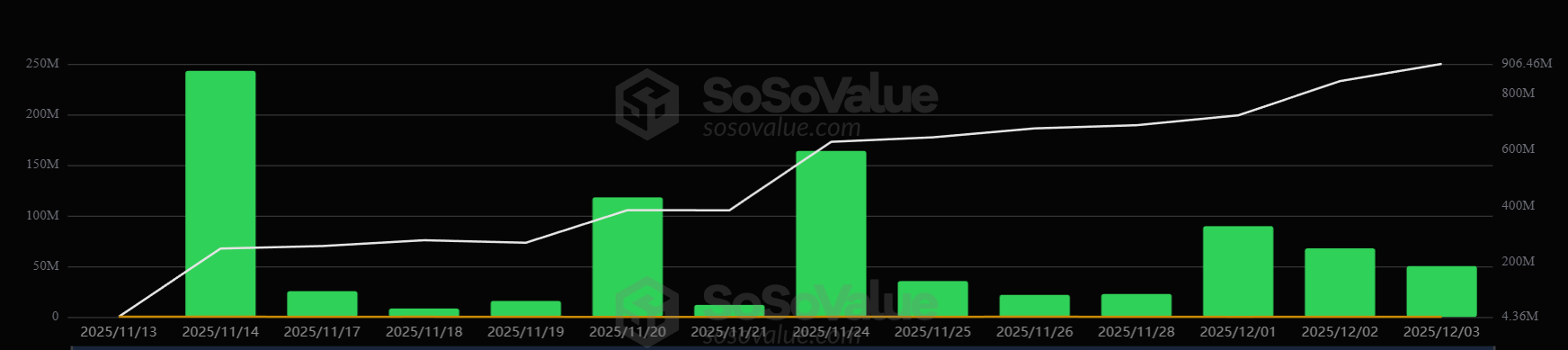
Exchange-Traded Fund (ETF) XRP spot mencatat 13 hari berturut-turut dengan arus masuk, menambahkan lagi US$50,27 juta pada 3 Desember dan membawa arus masuk kumulatif menjadi US$874,28 juta, menurut SoSoValue.

Total aset bersih sekarang mencapai US$906,46 juta, mendekati tonggak US$1 miliar secepatnya minggu ini.

Modal Baru Terus Mengalir ke Semua Penerbit

Sejak peluncuran, ETF ini hanya mencatat hari hijau, menandai salah satu kurva adopsi terkuat di antara dana aset digital yang baru terdaftar.

Semua empat dana mencatat keuntungan lagi pada sesi ini. Franklin’s XRPZ mencatat arus masuk baru sebesar US$4,76 juta.

xrp etf
Total Aset Bersih ETF XRP Spot AS. Sumber: SoSoValue

Meski ada arus masuk, harga ETF XRP ditutup lebih rendah pada hari itu seiring pasar kripto yang lebih luas melemah. Setiap dana mengalami penurunan antara 3,09% dan 3,76%, menunjukkan perbedaan antara kinerja harga dan akumulasi aset.

Tetap saja, pergerakan modal tetap positif. Pasar kini telah menambah lebih dari US$380 juta dalam arus masuk baru sejak 20 November, termasuk lonjakan besar pada 14 November, 24 November, dan 1 Desember.

US$1 Miliar Aset Kini Nampaknya Jadi Breakpoint Jangka Pendek

ETF XRP memerlukan kurang dari US$94 juta modal tambahan untuk mencapai US$1 miliar. Pada kecepatan saat ini, ambang itu bisa tercapai dalam dua hingga tiga sesi ke depan, jika pembelian terus berlanjut.

Mencapai tingkat aset US$1 miliar akan menempatkan adopsi ETF XRP dalam liga yang sama dengan arus masuk awal ETF Ethereum.

Ini juga memperkuat argumen bahwa paparan teratur terhadap aset non-Bitcoin semakin menarik perhatian institusi.

$XRP ETF DEMAND GOING PARABOLIC‼️

Every issuer flashing GREEN: Canary, Grayscale, Bitwise, Franklin.

Millions flowing in DAILY.
Smart money is positioning BEFORE the breakout💥 pic.twitter.com/JTj0UM25Fr

— XRP Update (@XrpUdate) December 4, 2025

Pertahanan arus masuk yang persisten melalui reli dan koreksi menunjukkan keyakinan yang tumbuh daripada rotasi spekulatif. Data menunjukkan investor mungkin menggunakan ETF sebagai jalur utama untuk mendapatkan eksposur XRP dibandingkan beralih masuk dan keluar dari pasar spot.

Tren naik yang berkelanjutan bisa memperketat suplai seiring waktu, terutama jika kustodian ETF terus mengakumulasi XRP lebih cepat daripada yang beredar kembali di exchange.

Saat ini, tren positif tetap aktif. Dengan 13 hari arus masuk tanpa henti dan kurang dari 10% tersisa sebelum mencapai satu miliar, semua mata tertuju pada apakah ETF XRP bisa mengakhiri minggu ini di atas nilai tersebut.

  •  

Peter Schiff’s Bitcoin Comment at CZ Debate Is Logically Flawed

Peter Schiff engaged in a debate with CZ at Binance Blockchain Week after challenging Bitcoin’s legitimacy as a generator of real economic value. 

Speaking on stage opposite Changpeng Zhao (CZ), Schiff argued that Bitcoin is a zero-sum wealth transfer rather than a productive asset.

Here is Schiff’s full statement as delivered during the debate:

“All Bitcoin does is enable a transfer of wealth from people who buy BTC to the people who sell it. When Bitcoin is created, there’s no real wealth. We have about 20 million Bitcoin now that we didn’t have 15 years ago. But we’re no better off because that BTC exists. They don’t actually do anything. But what has happened is that some people have been enriched at the expense of other people. Now, the people who have lost a lot of money in Bitcoin don’t even realize they lost it yet, because they still have the BTC, and the token still has a $90-$92,000 price, or whatever the price point is in the current market. So, they don’t realize they have lost the money. But if they try to get out, that’s when they’re gonna realize it’s lost.”

“Bitcoin Enables Transfer of Wealth From Buyers to Sellers”

This is true to the extent that any freely traded asset, such as equities, gold, land, fine art, also transfers wealth between participants depending on entry price, exit price, and market conditions.

But Schiff implies that this transfer is zero-sum. That’s inaccurate. Bitcoin’s network itself generates utility, which is distinct from price. 

Bitcoin today powers cross-border settlement, functions as a censorship-resistant store of value, and serves as collateral across financial platforms.

BINANCE FOUNDER CZ JUST DESTROYED GOLD BUG PETER SCHIFF IN 30 SECONDS

THIS IS A MUST WATCH!! pic.twitter.com/SWbTITjbXw

— Vivek Sen (@Vivek4real_) December 4, 2025

Value is generated through capability, not just material form. A global network that moves capital instantly without banks or intermediaries is a new economic function. That is wealth creation by definition.

If Bitcoin merely redistributed value, it would not underpin payment channels, custody platforms, or multi-billion-dollar remittance rails

A zero-sum asset does not attract corporate treasuries, institutional ETFs, or nation-state adoption.

“No Real Wealth Was Created by the Addition of 20 Million Bitcoin”

Wealth does not rely on physical substance. It relies on demand, utility, consensus, and the ability to preserve or transfer value.

Schiff’s logic could be applied historically to:

  • Government-issued fiat (created by declaration, yet accepted globally).
  • Internet domain names (non-physical, yet multi-million-dollar assets).
  • Software and cloud infrastructure (intangible, yet critical to global GDP).

By that standard, software, internet DNS space, AI models, and even fiat money would also fail to qualify as wealth. Yet these intangible systems power most of today’s economy.

Bitcoin created something that did not exist in monetary history: a bearer asset that moves like data, settles without intermediaries, and is mathematically verifiable. 

That feature is comparable to gold digitization but without storage, transport, or assay friction.

Wealth was created because new capabilities emerged.

“People Only Don’t Know They Lost Money Because Price is Still High”

This rests on the assumption that Bitcoin will collapse. It could — but it is not a fact, it is a projection.

If Bitcoin remains in demand globally, scarcity and network growth sustain value. 

If adoption grows further — as has occurred across ETFs, corporate treasuries, and sovereign custody — then Schiff’s prediction weakens.

His view equates unrealized gains with illusions. But:

  • If someone holds Bitcoin for 10 years and later sells at a higher price, wealth is realized.
  • If Bitcoin becomes widely transacted and integrated into the monetary infrastructure, the asset functions beyond speculation.

His thesis only holds if Bitcoin fails as a monetary network. And more than a decade of growth suggests the opposite direction.

Conclusion

Peter Schiff’s comments captured headlines and sparked discussion, but his reasoning overlooks key economic realities. 

Bitcoin is not merely a wealth transfer. It is a functioning global monetary network with attributes that no traditional asset class replicates. 

The argument that it “creates no wealth” relies on outdated assumptions about where value originates.

The post Peter Schiff’s Bitcoin Comment at CZ Debate Is Logically Flawed appeared first on BeInCrypto.

  •  

What Actually Changed with the Ethereum Fusaka Upgrade

Ethereum just completed the Fusaka upgrade, a hard fork designed to prepare the network for larger scale and cheaper use. While technical on paper, the change touches the core functions of Ethereum — how data is stored, how transactions fit into blocks, and how Rollups like Arbitrum, Base, and Optimism interact with the main chain. 

For anyone holding ETH, this upgrade forms the groundwork for lower fees, better network efficiency, and a more resilient long-term ecosystem.

A Larger Network With More Room to Breathe

The biggest change arrived in how Ethereum handles data. 

Every transaction, NFT mint, DeFi swap, or Layer-2 batch needs block space, and until now, that space was limited. Fusaka increases Ethereum’s capacity so blocks can carry more information at once. 

Missed the Fusaka network upgrade?
13 Ethereum Improvement Proposals (EIPs) are now live on Mainnet.

Here’s Fusaka in 35 seconds. pic.twitter.com/DlUh1ATA55

— Ethereum (@ethereum) December 4, 2025

This does not make the chain instantly faster, but it removes pressure when demand spikes, such as during market volatility or popular token launches. 

In simple terms, Ethereum can absorb more activity without struggling.

Cheaper Rollups Through Expanded Blob Capacity

A large portion of today’s Ethereum traffic comes from Rollups. These networks batch thousands of user transactions and settle them on Ethereum as compressed data called “blobs.” 

Before Fusaka, blob space was constrained. When demand surged, fees climbed. Fusaka expands the room available for blob submissions and introduces a flexible system for raising or lowering capacity without a full upgrade. 

As rollups scale into this new space, users should experience lower transaction costs and smoother application activity. 

The end goal is simple: more transactions, less friction.

Ethereum Fusaka Upgrade Explained. Source: X/Bull Theory

PeerDAS: A Simpler Way to Verify Data

Another major improvement is how Ethereum nodes verify data. Previously, nodes had to download large sections of block data to confirm that nothing was missing or hidden. 

Fusaka introduces PeerDAS, a system that checks small, random pieces of data rather than the entire load. 

It works like inspecting a warehouse by opening a few random boxes instead of checking every single one. 

PeerDAS in Fusaka is significant because it literally is sharding.

Ethereum is coming to consensus on blocks without requiring any single node to see more than a tiny fraction of the data. And this is robust to 51% attacks – it's client-side probabilistic verification, not… pic.twitter.com/OK81xBteER

— vitalik.eth (@VitalikButerin) December 3, 2025

This reduces bandwidth and storage requirements for validators and node operators, making it easier — and cheaper — for more people to run infrastructure. 

A wider validator base strengthens decentralization, which ultimately strengthens Ethereum’s security and resilience.

Higher Block Capacity Means More Throughput

Alongside scaling capacity, Fusaka also raises the block gas limit. A higher limit means more work can fit inside each block, allowing more transactions and smart-contract calls to settle without delay. 

It doesn’t increase block speed, but it increases throughput. DeFi activity, NFT auctions, and high-frequency trading will have more room to breathe in peak hours.

Better Wallet Support and Future UX Improvements

Fusaka also includes improvements to Ethereum’s cryptography and virtual machine. The upgrade adds support for P-256 signatures, which are used in modern authentication systems, including those behind password-less login on smartphones and biometric devices. 

This opens a path for future wallets that act more like Apple Pay or Google Passkeys rather than seed-phrase-based apps. Over time, this could make Ethereum access simpler for mainstream users.

Ethereum is about to 10x the wallet UX.

The Fusaka upgrade includes EIP-7951 – support for the signature scheme that the iPhones use to power things like Face ID.

Meaning you'll soon be able to sign transactions with your face.

Huge win for bringing normal people on-chain. pic.twitter.com/7Ad38m4Oxz

— Jarrod Watts (@jarrodwatts) November 27, 2025

What Fusaka Means for ETH Holders

The impact for ETH holders is gradual but meaningful. Fees on Layer-2 networks should ease as data capacity expands. Network congestion should become less common. More validators can participate due to lower hardware demands. 

Most importantly, Ethereum now has room to grow without sacrificing security or decentralization. If adoption increases, settlement volume grows with it — and so does ETH’s role as the asset that powers, secures, and settles everything on top.

$ETH is still consolidating around the $3,000 level.

Not much price action due to weekends, but next week could be interesting.

QT is ending on December 1st, Powell's speech is on December 1st, and the Fusaka upgrade is coming on December 3rd.

If Ethereum holds above the… pic.twitter.com/pxgmrOHyah

— Ted (@TedPillows) November 30, 2025

A Foundational Upgrade, Not a Flashy One

Fusaka does not rewrite Ethereum’s economics or make ETH suddenly deflationary, but it strengthens the foundation that future demand depends on. Cheaper rollup fees invite usage. 

A more scalable base layer invites developers. A more accessible node environment invites participation. These are structural upgrades, the kind that do little in a day but transform the network over time.

Ethereum widened the highway, improved the toll system, and made it easier for new drivers to join. That is the real meaning of Fusaka — a quiet shift with long-term weight. 

As Layer-2 networks expand and applications multiply, the effects should move from technical discussion into user experience, transaction cost, and ultimately, ETH value itself.

The post What Actually Changed with the Ethereum Fusaka Upgrade appeared first on BeInCrypto.

  •  

Kidnapped, Killed, and Burned for Tokens: 3 Shocking Crypto Horror Stories

In 2025, several gruesome cases showed that crypto crime has crossed from screens to streets. Private keys, wallet access, and large OTC deals triggered violence that left bodies, burnt metal, and empty balances behind.

These stories shook the digital assets space, and each revealed a terrifying reality that crypto crime now comes with guns, warehouses, and fire.

The Vienna Crypto Killing: Tortured for Wallet Passwords

Earlier in November, Vienna woke to a burning Mercedes under a rail bridge. Inside was 21-year-old Danylo K., charred beyond recognition, slumped on the back seat.

Vienna Site Where Danylo Was Burnt Alive in His Car. Source: OE24

Police traced the killing back to a hotel garage in Leopoldstadt. There, Danylo was ambushed by a fellow Ukrainian student, only 19 years old, and a 45-year-old accomplice.

He was beaten, teeth knocked out, then driven across the city. His captors demanded access to his crypto wallets. They forced him to give up passwords after hours of torture.

The attackers drained his wallets and carried bundles of US dollars when caught. Investigators later found a melted can of fuel on the back seat where Danylo died.

According to reports, the victim, Danylo, had suffocated on blood and fire. His wealth lived on-chain long enough for thieves to steal it.

The suspects fled to Ukraine that night. However, they were arrested but will be tried there, not in Austria.

Montreal Abduction: A Crypto Influencer Vanishes

Last year, in Old Montreal, 25-year-old crypto influencer Kevin Mirshahi was pulled into a waiting car. Three others were kidnapped with him, then freed the next day.

Mirshahi never returned, and his body surfaced in a riverside park four months later.

The Digital Gold Rush Has A Dark Side

Kevin Mirshahi, known across Montreal’s crypto scene, was found dead at Île-de-la-Visitation park on Oct. 30, months after his June abduction.

The 25-year-old’s story isn’t an isolated case – it’s the latest in a wave of crypto-targeted… pic.twitter.com/T5inBMhSJo

— 0xMarioNawfal (@RoundtableSpace) November 15, 2024

Police charged three people, including Darius Perry and Nackael Hickey, with confinement and accessory to murder. A woman, Joanie Lepage, faces first-degree murder.

Investigators have not confirmed the motive as crypto-related. But Mirshahi ran a private token investment group and held public exposure in the space.

He built an online audience around trading and wealth, and someone used a trunk and duct tape to silence it.

$85,000 Seized in a Parking-Lot Ambush During Cash-for-Crypto Deal

In Trinidad, another crime unfolded with speed, organisation, and no chance of escape.

On November 29, a man arrived at the SuperPharm car park on Trincity Central Road. He planned to buy cryptocurrency with US$85,800 in cash, bundled inside a black bag.

A 52-year old man in Trinidad was robbed of $86,000 when he went to buy cryptocurrency from a man in a pharmacy parking lot.

Pro tip: don't bring bags of cash to randos in a parking lot.https://t.co/aLePjXX1dB

— Jameson Lopp (@lopp) December 2, 2025

Police reports confirm he met a long-time trade contact to complete the transaction. Moments after handing over the bag, two armed men approached the vehicle.

They smashed the windows and pointed guns at the occupants. The criminals then took the cash and both mobile phones and fled in a waiting car.

No crypto was ever exchanged. Authorities described it as a targeted robbery linked to OTC crypto trading.

A New Violent Era

These cases mark a shift. Crypto violence is no longer a digital heist carried out by hackers behind screens.

It is physical, and involves basements, cars, flames, hammers, and real screams. Crypto holders now live with an uncomfortable truth that keys protect tokens, but tokens do not protect lives.

The post Kidnapped, Killed, and Burned for Tokens: 3 Shocking Crypto Horror Stories appeared first on BeInCrypto.

  •  

XRP ETFs Extend Streak to 13 Days, $1 Billion Target Now in Sight

XRP spot ETFs have logged 13 consecutive days of inflows, adding another $50.27 million on December 3 and bringing cumulative inflows to $874.28 million, according to SoSoValue. 

Total net assets now stand at $906.46 million, placing the category within reach of the $1 billion milestone as early as this week.

New Capital Continues to Flow Across All Issuers

Since launch, the ETFs have only recorded green days, marking one of the strongest adoption curves among newly listed digital-asset funds. 

All four funds posted gains again this session. Franklin’s XRPZ recorded $4.76 million in fresh inflows. 

xrp etf
US Spot XRP ETFs Total Net Assets. Source: SoSoValue

Despite inflows, XRP ETF prices closed lower on the day as broader crypto markets softened. Each fund declined between 3.09% and 3.76%, showing a divergence between price performance and asset accumulation.

Still, capital movement remains firmly positive. The market has now added more than $380 million in new inflows since November 20, including major surges on November 14, November 24, and December 1.

$1 Billion in Assets Is Now a Likely Near-Term Breakpoint

XRP ETFs require less than $94 million in additional capital to reach $ 1 billion. At the current pace, that threshold could be reached in two to three sessions, assuming buying continues.

Crossing the $1 billion asset level would place XRP ETF adoption in the same league as early Ethereum ETF inflows

It also strengthens the argument that regulated exposure to non-Bitcoin assets is gaining institutional traction.

$XRP ETF DEMAND GOING PARABOLIC‼️

Every issuer flashing GREEN: Canary, Grayscale, Bitwise, Franklin.

Millions flowing in DAILY.
Smart money is positioning BEFORE the breakout💥 pic.twitter.com/JTj0UM25Fr

— XRP Update (@XrpUdate) December 4, 2025

Persistent inflows through both rallies and pullbacks indicate growing conviction rather than speculative rotation. The data suggests investors may be using ETFs as their primary route for XRP exposure rather than switching in and out of spot markets.

A sustained uptrend could tighten supply over time, especially if ETF custodians continue accumulating XRP faster than it circulates back into exchanges.

For now, the streak remains active. With 13 days of uninterrupted inflows and less than 10% remaining before the billion mark, all eyes will be on whether XRP ETFs can finish the week above that mark.

The post XRP ETFs Extend Streak to 13 Days, $1 Billion Target Now in Sight appeared first on BeInCrypto.

  •  
❌