
Reading view

“Bukan Fund, Bukan Trust”: Saylor Menarik Garis saat MSCI Mempertimbangkan Nasib MicroStrategy

CEO MicroStrategy Michael Saylor menanggapi ulasan klasifikasi dari MSCI dengan menggambarkan perusahaannya sebagai bisnis operasi hybrid, bukan sebuah dana investasi.

Klarifikasi ini muncul di tengah konsultasi formal tentang bagaimana perusahaan treasury aset digital (DATs) harus diperlakukan dalam indeks ekuitas utama, sebuah keputusan yang bisa memiliki dampak besar pada MSTR.

Michael Saylor Tegaskan: “MicroStrategy Bukan Fund atau Trust” di Tengah Pengawasan MSCI

Dalam sebuah postingan detail di X (Twitter), Saylor menekankan MicroStrategy bukanlah sebuah dana, bukan trust, dan bukan perusahaan holding.

“Kami adalah perusahaan operasi yang diperdagangkan secara publik dengan bisnis perangkat lunak senilai US$500 juta dan strategi treasury unik yang menggunakan Bitcoin sebagai modal produktif,” ujar dia menjelaskan.

Pernyataan ini memposisikan MicroStrategy lebih dari sekadar holder Bitcoin, dengan Saylor mencatat bahwa dana dan trust memegang aset secara pasif.

“Perusahaan holding hanya duduk di atas investasi. Kami menciptakan, menyusun, mengeluarkan, dan mengoperasikan,” tambah Saylor, menyoroti peranan aktif perusahaan dalam keuangan digital.

Tahun ini, MicroStrategy menyelesaikan lima penawaran publik sekuritas kredit digital: STRK, STRF, STRD, STRC, dan STRE. Jumlah ini mencapai lebih dari US$7,7 miliar dalam nilai nominal.
Penawaran Publik MicroStrategy
Penawaran Publik MicroStrategy | Sumber: Situs web Strategy

Perlu dicatat, Stretch (STRC) adalah instrumen treasury yang didukung oleh Bitcoin dan menawarkan hasil USD variabel bulanan kepada investor institusional dan ritel.

Saylor menggambarkan MicroStrategy sebagai perusahaan keuangan terstruktur yang didukung oleh Bitcoin yang beroperasi di pertemuan pasar modal dan inovasi perangkat lunak.

“Tidak ada kendaraan pasif atau perusahaan holding yang bisa melakukan apa yang kami lakukan,” ucap dia, menekankan bahwa klasifikasi indeks tidak mendefinisikan perusahaan tersebut.

Mengapa Keputusan MSCI Penting

Konsultasi MSCI dapat mengklasifikasikan kembali perusahaan seperti MicroStrategy sebagai dana investasi, menjadikannya tidak memenuhi syarat untuk indeks utama seperti MSCI USA dan MSCI World.

Pengecualian ini bisa memicu miliaran dalam arus keluar pasif dan meningkatkan volatilitas pada $MSTR, yang saat ini turun sekitar 70% dari titik tertingginya.

Taruhannya melampaui MicroStrategy. Pembelaan Saylor menentang norma tradisional keuangan (TradFi), mempertanyakan apakah perusahaan operasi yang didorong oleh Bitcoin dapat mempertahankan akses ke modal pasif tanpa dilabeli sebagai dana.

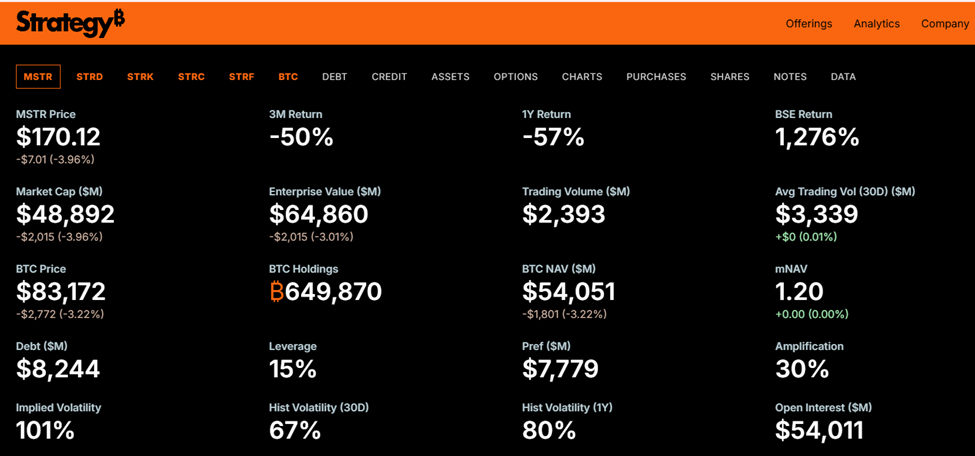
MicroStrategy memegang 649.870 Bitcoin, dengan biaya rata-rata US$74.430 per koin. Nilai perusahaannya mencapai US$66 miliar, dan perusahaan ini mengandalkan penawaran ekuitas dan utang terstruktur untuk mendanai strategi akumulasi Bitcoinnya.

Putusan MSCI, yang diharapkan keluar pada 15 Januari 2026, bisa menguji kelayakan model treasury hybrid seperti ini di pasar publik.


  •  

Apakah Ini Jarum yang Meletuskan Gelembung AI? Alasan Mengapa Burry dan Thiel Bearish terhadap Nvidia

Nvidia adalah salah satu pemenang terbesar dari ledakan AI. Hasil kuartal terakhir menunjukkan pendapatan US$57 miliar dan laba US$31,9 miliar – angka yang memecahkan rekor dalam ukuran apapun.

Akan tetapi, alih-alih merayakan, saham berayun liar: naik 5% setelah pengumuman laba, kemudian turun dalam waktu 18 jam. Investor, algoritma, dan pengamat pasar kini mengajukan pertanyaan penting: Apakah pertumbuhan AI Nvidia sekuat yang terlihat di atas kertas?

Model Pembiayaan NVIDIA Mendapat Sorotan saat Investor Ternama Bertaruh Melawannya

Tanda peringatan pertama adalah uang yang belum benar-benar dibayar. Nvidia memiliki tagihan pelanggan yang belum dibayar sebesar US$33,4 miliar, hampir dua kali lipat dari tahun lalu. Rata-rata, pelanggan membutuhkan 53 hari untuk membayar, naik dari 46 hari.

Sementara itu, perusahaan memiliki US$19,8 miliar dalam bentuk chip yang belum terjual, namun manajemen mengatakan permintaan sangat tinggi.

“Keduanya tidak bisa benar…Entah pelanggan tidak membeli atau mereka membeli tanpa uang tunai. Arus kas yang menceritakan kisah nyata,” ujar Shanaka Perera dalam sebuah unggahan.

Peringatan lain adalah kesenjangan antara laba dan kas nyata. Nvidia melaporkan laba sebesar US$19,3 miliar, namun hanya menghasilkan US$14,5 miliar dalam bentuk kas. Artinya, US$4,8 miliar dari “laba” belum benar-benar muncul di bank.

Sebagai perbandingan, pembuat chip lain seperti TSMC dan AMD hampir seluruh laba mereka dalam bentuk kas. Tingkat konversi yang lebih rendah dari Nvidia menimbulkan pertanyaan tentang seberapa nyata pertumbuhannya.

“Perusahaan chip sehat seperti TSMC dan AMD mengonversi lebih dari 95% laba ke kas. Nvidia mengonversi 75%. Itu tingkat yang mengkhawatirkan,” tambah Perera.

Hal ini semakin rumit ketika melihat bagaimana perusahaan AI saling membeli. Nvidia menjual chip ke perusahaan seperti xAI, Microsoft, OpenAI, dan Oracle. Banyak dari transaksi ini didanai oleh pinjaman atau kredit dari perusahaan yang sama, yang berarti uang yang sama dihitung berkali-kali sebagai pendapatan.

Michael Burry Memperingatkan Tentang Pendapatan dan Permintaan Nvidia

Michael Burry, investor yang terkenal karena memprediksi krisis 2008, menyebut ini sebagai “pengakuan pendapatan yang mencurigakan,” memperingatkan bahwa permintaan sebenarnya dari pengguna akhir mungkin sangat kecil.

Every company listed below has suspicious revenue recognition. The actual chart with ALL the give-and-take deals would be unreadable. The future will regard this a picture of fraud, not a flywheel. True end demand is ridiculously small. Almost all customers are funded by their… pic.twitter.com/0XyGQ8FjuE

— Cassandra Unchained (@michaeljburry) November 19, 2025

Burry juga menunjukkan bahwa pembelian kembali saham Nvidia mungkin menyembunyikan risiko lain. Sejak 2018, perusahaan telah menghabiskan US$112,5 miliar untuk pembelian kembali, namun tetap menerbitkan saham baru.

Ini efektif mengencerkan kepemilikan pemegang saham yang ada. Dia juga mempertanyakan apakah GPU lama yang menggunakan lebih banyak listrik daripada model baru, benar-benar seberharga yang diklaim perusahaan.

“Hanya karena sesuatu digunakan bukan berarti itu menguntungkan,” dia ujar.

Beberapa investor besar nampaknya sependapat. Peter Thiel dikabarkan menjual semua saham Nvidia-nya, dan SoftBank menjual senilai US$5,8 miliar.

Peter Thiel reportedly sold his entire position of 537,742 shares in Nivdia.

Why? It’s a bubble, they all know it & are cashing out.

– Nvidia ALONE = 15% of US GDP.
-OpenAi wants a govt bailout.
– US Growth is .01% when you remove AI sector. pic.twitter.com/mk3Nc6yBpk

— Maine (@TheMaineWonk) November 17, 2025

Pada saat yang sama, spekulasi yang terkait dengan AI nampaknya mempengaruhi pasar kripto. Bitcoin turun hampir 30% sejak Oktober, sebagian karena startup AI menahan US$26,8 miliar dalam bentuk Bitcoin sebagai jaminan, yang bisa dijual jika saham Nvidia jatuh lebih jauh.

Nvidia, $NVDA, CEO Jensen Huang told staff 'the whole world would've fallen apart' if Nvidia delivered a bad quarter, per BI

— unusual_whales (@unusual_whales) November 21, 2025

Tidak semua orang merasa khawatir. Pendukung mengatakan Nvidia memiliki arus kas sebesar US$23,8 miliar, pesanan besar dari perusahaan seperti Microsoft dan Meta, dan bahwa beberapa kesepakatan antar perusahaan adalah hal yang lazim dalam industri teknologi.

Namun, sebuah survei baru-baru ini oleh Bank of America menunjukkan bahwa 45% manajer dana melihat AI sebagai risiko gelembung pasar utama, sebuah kekhawatiran yang juga diungkapkan oleh regulator global, termasuk IMF dan Bank of England.

Beberapa bulan ke depan mungkin sangat penting. Analis memantau hasil kuartal keempat Nvidia pada Februari 2026, kemungkinan penurunan peringkat kredit pada Maret, dan pernyataan ulang pada April.

Bagaimana kinerja perusahaan ini bisa menentukan apakah ledakan AI berlanjut atau jika kepanikan pasar baru-baru ini menandakan awal perlambatan yang lebih luas. Bagaimanapun, cerita Nvidia kini menjadi kasus uji untuk era teknologi yang didorong oleh AI.

  •  

“Not a Fund, Not a Trust”: Saylor Draws the Line as MSCI Considers MicroStrategy’s Fate

MicroStrategy CEO Michael Saylor fired back at MSCI’s review of the company’s classification, framing his firm as a hybrid operating business, not an investment fund.

The clarification comes amid a formal consultation on how digital asset treasury companies (DATs) should be treated in flagship equity indexes, a decision that could have major market consequences for MSTR.

Michael Saylor Draws the Line: “MicroStrategy Is Not a Fund or Trust” Amid MSCI Scrutiny

In a detailed post on X (Twitter), Saylor emphasized MicroStrategy is not a fund, not a trust, and not a holding company.

“We’re a publicly traded operating company with a $500 million software business and a unique treasury strategy that uses Bitcoin as productive capital,” he articulated.

The statement positions MicroStrategy as more than a Bitcoin holder, with Saylor noting that funds and trusts hold assets passively.

“Holding companies sit on investments. We create, structure, issue, and operate,” Saylor added, highlighting the company’s active role in digital finance.

This year, MicroStrategy completed five public offerings of digital credit securities: STRK, STRF, STRD, STRC, and STRE. These total more than $7.7 billion in notional value.

MicroStrategy Public Offerings
MicroStrategy Public Offerings. Source: Strategy website

Notably, Stretch (STRC) is a Bitcoin-backed treasury instrument that offers variable monthly USD yields to both institutional and retail investors.

Saylor describes MicroStrategy as a Bitcoin-backed structured finance company that operates at the intersection of capital markets and software innovation.

“No passive vehicle or holding company could do what we’re doing,” he said, stressing that index classification does not define the company.

Why MSCI’s Decision Matters

MSCI’s consultation could reclassify firms like MicroStrategy as investment funds, making them ineligible for key indexes such as MSCI USA and MSCI World.

Exclusion could trigger billions in passive outflows and heighten volatility in $MSTR, which is already down roughly 70% from its all-time high.

The stakes extend beyond MicroStrategy. Saylor’s defense challenges traditional finance (TradFi) norms, asking whether Bitcoin-driven operating companies can maintain access to passive capital without being labeled as funds.

MicroStrategy holds 649,870 Bitcoin, with an average cost of $74,430 per coin. Its enterprise value stands at $66 billion, and the company has relied on equity and structured debt offerings to fund its Bitcoin accumulation strategy.

The MSCI ruling, expected by January 15, 2026, could test the viability of such hybrid treasury models in public markets.

The post “Not a Fund, Not a Trust”: Saylor Draws the Line as MSCI Considers MicroStrategy’s Fate appeared first on BeInCrypto.

  •  

Is This the Pin That Pops the AI Bubble? The Reason Why Burry and Thiel Are Bearish on Nvidia

Nvidia is one of the biggest winners of the AI boom. Its latest quarterly results showed $57 billion in revenue and $31.9 billion in profit, record numbers by any measure.

But instead of celebrating, the stock swung wildly: up 5% after earnings, then down again within 18 hours. Investors, algorithms, and market watchers are now asking a critical question: Is Nvidia’s AI growth as solid as it looks on paper?

NVIDIA’s Financing Model Draws Scrutiny as Big-Name Investors Bet Against It

The first warning sign is money that has not actually been paid. Nvidia has $33.4 billion in unpaid customer bills, nearly double what it had a year ago. On average, customers are taking 53 days to pay, up from 46 days.

Meanwhile, the company is sitting on $19.8 billion of unsold chips, yet management says demand is through the roof.

“Both cannot be true…Either customers aren’t buying or they’re buying without cash. The cash flow tells the real story,” said Shanaka Perera in a post.

Another red flag is the gap between profits and actual cash. Nvidia reported $19.3 billion in profit, but it generated only $14.5 billion in cash. That means $4.8 billion of its “profit” has not actually appeared in the bank.

For comparison, other chipmakers like TSMC and AMD turn almost all of their profits into cash. Nvidia’s lower rate raises questions about how much of its growth is real.

“Healthy chip companies like TSMC and AMD convert over 95% of profits to cash. Nvidia converts 75%. That’s distress level,” Perera added.

Things get even more complicated when you look at how AI companies buy from each other. Nvidia sells chips to firms like xAI, Microsoft, OpenAI, and Oracle. Many of these deals are funded by loans or credits from the same companies, meaning the same money is counted multiple times as revenue.

Michael Burry Sounds the Alarm on Nvidia’s Revenue and Demand

Michael Burry, the investor famous for predicting the 2008 crash, refers to this “suspicious revenue recognition,” warning that the actual demand from end-users may be very small.

Every company listed below has suspicious revenue recognition. The actual chart with ALL the give-and-take deals would be unreadable. The future will regard this a picture of fraud, not a flywheel. True end demand is ridiculously small. Almost all customers are funded by their… pic.twitter.com/0XyGQ8FjuE

— Cassandra Unchained (@michaeljburry) November 19, 2025

Burry also pointed out that Nvidia’s stock buybacks may be hiding another risk. Since 2018, the company has spent $112.5 billion on buybacks, while still issuing new shares.

That effectively dilutes existing shareholders. He also questioned whether older GPUs, which use far more electricity than newer models, are really as valuable as the company claims.

“Just because something is being used doesn’t mean it’s profitable,” he said.

Some big investors seem to agree. Peter Thiel reportedly sold all of his Nvidia shares, and SoftBank sold $5.8 billion worth on November 11. Michael Burry bought put options betting Nvidia would crash to $140 by March 2026.

Peter Thiel reportedly sold his entire position of 537,742 shares in Nivdia.

Why? It’s a bubble, they all know it & are cashing out.

– Nvidia ALONE = 15% of US GDP.
-OpenAi wants a govt bailout.
– US Growth is .01% when you remove AI sector. pic.twitter.com/mk3Nc6yBpk

— Maine (@TheMaineWonk) November 17, 2025

At the same time, AI-linked speculation appears to be affecting crypto markets. Bitcoin has dropped nearly 30% since October, partly because AI startups hold $26.8 billion in Bitcoin as collateral, which could be sold if Nvidia’s stock falls further.

Nvidia, $NVDA, CEO Jensen Huang told staff 'the whole world would've fallen apart' if Nvidia delivered a bad quarter, per BI

— unusual_whales (@unusual_whales) November 21, 2025

Not everyone is worried. Supporters argue that Nvidia has $23.8 billion in cash flow, huge orders from companies like Microsoft and Meta, and that some of the inter-company deals are standard in the tech industry.

Still, a recent survey by Bank of America shows that 45% of fund managers view AI as a major market bubble risk, a concern echoed by global regulators, including the IMF and Bank of England.

The next few months may be critical. Analysts are watching Nvidia’s fourth-quarter results in February 2026, possible credit downgrades in March, and any restatements in April.

How the company performs could decide whether the AI boom continues or if the recent market panic signals the start of a broader slowdown. Either way, the Nvidia story is now the test case for the AI-driven tech era.

The post Is This the Pin That Pops the AI Bubble? The Reason Why Burry and Thiel Are Bearish on Nvidia appeared first on BeInCrypto.

  •  
❌