❌

Normal view

Wine 10.19 Released: Game Changing Support for Windows Reparse Points on Linux

Wine 10.19 Released: Game Changing Support for Windows Reparse Points on Linux

Introduction

If you use Linux and occasionally run Windows applications, whether via native Wine or through gaming layers like Proton, you’ll appreciate what just dropped in Wine 10.19. Released November 14 2025, this version brings a major enhancement: official support for Windows reparse points,Β a filesystem feature many Windows apps rely on, and a host of other compatibility upgrades.

In simpler terms: Wine now understands more of the Windows filesystem semantics, which means fewer workarounds, better application compatibility, and smoother experiences for many games and tools previously finicky under Linux.

What Are Reparse Points & Why They Matter

Understanding Reparse Points

On Windows, a reparse point is a filesystem object (file or directory) that carries additional data, often used for symbolic links, junctions, mount points, or other redirection features. When an application opens or queries a file, the OS may check the reparse tag to determine special behavior (for example β€œredirect this file open to this other path”).

Because many Windows apps, installers, games, DRM systems, file-managers, use reparse points for features like directory redirection, path abstractions, or filesystem overlays, lacking full support for them in Wine means those apps often misbehave.

What Wine 10.19 Adds

With Wine 10.19, support for these reparse point mechanisms has been implemented in key filesystem APIs: for example NtQueryDirectoryFile, GetFileInfo, file attribute tags, and DeleteFile/RemoveDirectory for reparse objects.

This means that in Wine 10.19:

  • Windows apps that create or manage symbolic links, directory junctions or mount-point style re-parsing will now function correctly in many more cases.

  • Installers or frameworks that rely on β€œwhen opening path X, redirect to path Y” will work with less tinkering.

  • Games or utilities that check for reparse tags or use directory redirections will have fewer β€œstuck” behaviors or missing files.

In effect, this is a step toward closer to native behavior for Windows file-system semantics under Linux.

Other Key Highlights in Wine 10.19

Beyond reparse points, the release brings several notable improvements:

  • Expanded support for WinRT exceptions (Windows Runtime error handling) meaning better compatibility for Universal Windows Platform (UWP) apps and newer Windows-based frameworks.

  • Refactoring of β€œCommon Controls” (COMCTL32) following the version 5 vs version 6 split, which helps GUI applications that rely on older controls or expect mixed versions.
Use AirPods Pro Features on Linux with LibrePods

21 November 2025 at 07:58

Linux mascot holds AirPods Pro against a bright purple and yellow backdropLibrePods brings AirPods Pro features to Linux desktops, including active noise cancellation, transparency mode, ear detection and accurate battery levels.

You're reading Use AirPods Pro Features on Linux with LibrePods, a blog post from OMG! Ubuntu. Do not reproduce elsewhere without permission.

How to Open and Edit Apple iWork Files on Linux

The post How to Open and Edit Apple iWork Files on Linux first appeared on Tecmint: Linux Howtos, Tutorials & Guides .

Apple iWork is Apple’s suite of office applications, similar to Microsoft Office or Google Docs, consisting of three main applications

The post How to Open and Edit Apple iWork Files on Linux first appeared on Tecmint: Linux Howtos, Tutorials & Guides.

PHP 8.5 Released with Pipe Operator, URI Extension, and Clone With Functionality

21 November 2025 at 02:48

PHP 8.5

PHP 8.5 open-source scripting language is out now with URI extension, Pipe operator, and support for modifying properties while cloning. Here's what's new!

The post PHP 8.5 Released with Pipe Operator, URI Extension, and Clone With Functionality appeared first on 9to5Linux - do not reproduce this article without permission. This RSS feed is intended for readers, not scrapers.

Wireshark 4.6.1 Released with Updated Protocol Support and Various Bug Fixes

20 November 2025 at 19:55

Wireshark 4.6.1

Wireshark 4.6.1 open-source network protocol analyzer is now available to download with various bug fixes and updated protocols. Here’s what’s changed!

The post Wireshark 4.6.1 Released with Updated Protocol Support and Various Bug Fixes appeared first on 9to5Linux - do not reproduce this article without permission. This RSS feed is intended for readers, not scrapers.

GDM Settings adding Toggles for Light Mode & Fingerprint Authentication

By:Ji m
20 November 2025 at 21:14

GDM Settings, the graphical configuration tool for GNOME Login Screen, updated recently with new toggle options!

As you know, GDM Settings is a free open-source Python written settings app for GNOME’s Login/Display Manager.

With it, you may change the login screen background image, set the fonts and themes, tweak top-bar colors, disable user list, show welcome message, and configure more about the login screen.

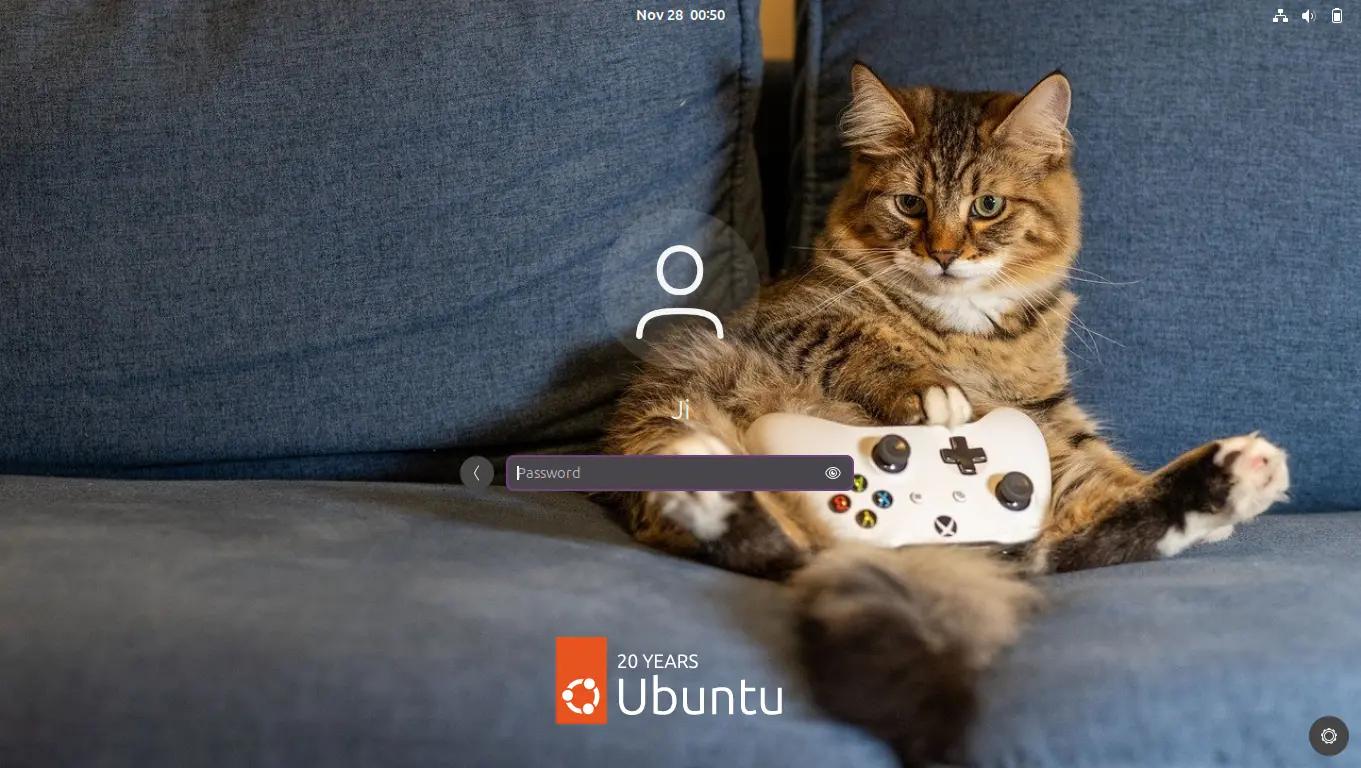
GNOME Login Screen with custom background

The latest of the app is so far at version 5.0 which was release one year ago. The development slows down however after that release.

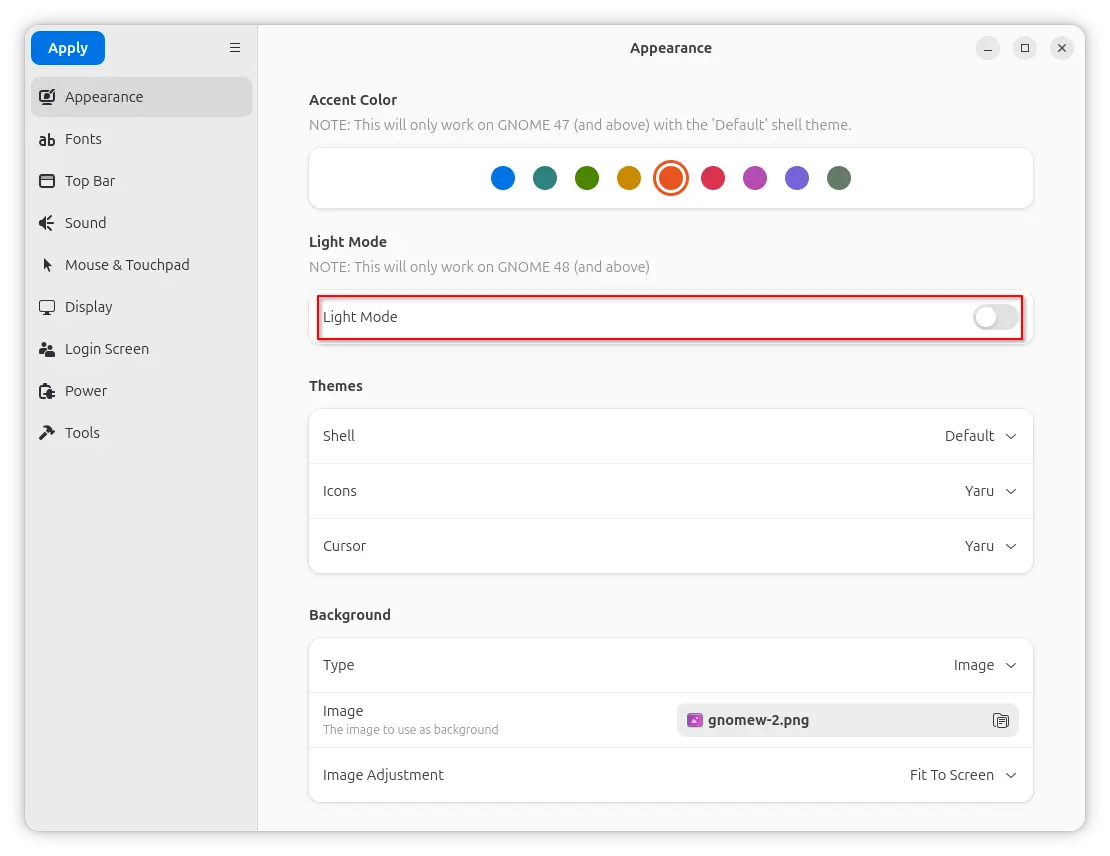
In the past 12 months, only few features were added. One is the β€œLight Mode” toggle option under Appearance tab, which works for GNOME 48 and above.

It works by setting the org/gnome/desktop/interface/color-scheme key to β€˜prefer-lightβ€˜ for GDM. Though, in vanilla Gnome both top-bar and menus are dark in either mode. And, I didn’t see anything goes light after enabled the option in my test in Ubuntu 25.10.

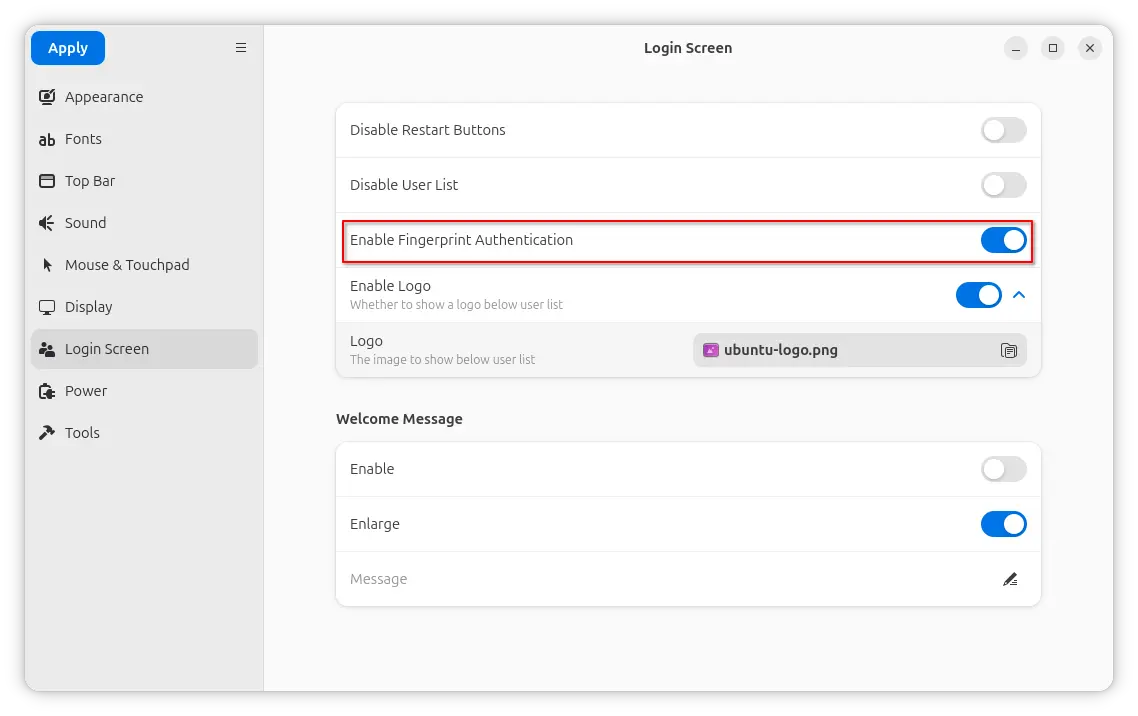
Another is a new Enable Fingerprint Authentication toggle option added to β€˜Login Screen’ page. It can be useful when you want to use fingerprint authentication for your GNOME desktop environment except the login screen, as you know log-in without password will cause unlock keyring pop-up when launching Chrome etc application though it can be skipped.

And, the function is done by setting org/gnome/login-screen/enable-fingerprint-authentication key for GDM silently in the background.

Besides that, it also updated to GNOME 49 platform for the Flatpak package. For more about the development of GDM Settings, see the commits page.

Install GDM Settings

The changes mentioned above are still in development stage. MeaningΒ you need to manually build it from source code.

NOTE: GDM Settings has the potential to break your login screen. Don’t use it on production machine!

For the 5.0 version, it’s available to install in most Linux Distributions through Flatpak package.

Just enable Flatpak support, then run the command below to install it:

flatpak install flathub io.github.realmazharhussain.GdmSettings

While, Fedora Workstation may simply search for and install it from GNOME Software, if you have 3rd party repository enabled.

GDM Settings flatpak package in Fedora GNOME Software

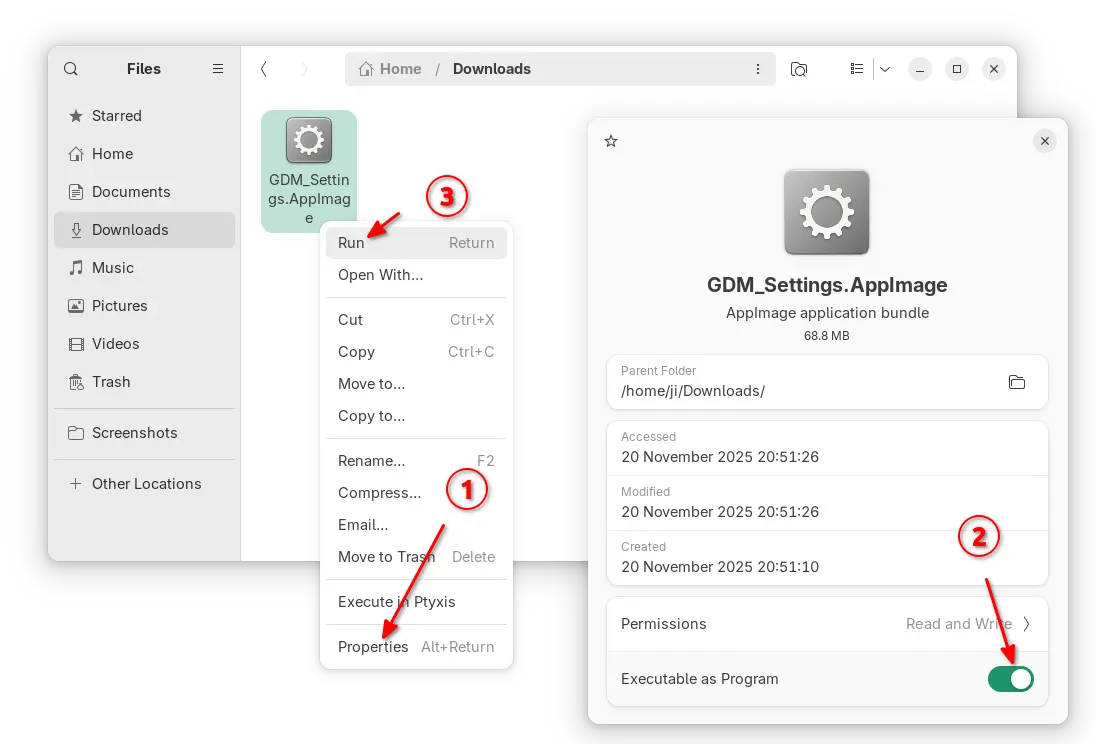
For choice, there’s also non-install AppImage available to download in the Github releases page under Assets section.

As both AppImage and Flatpak were built with most recent GNOME runtime, they may be NOT working good in old GNOME Desktops.

So, I built the app package into this unofficial PPA for Ubuntu 22.04, Ubuntu 24.04, 25.04 and 25.10.

To add the PPA and install GDM Settings, open terminal (Ctrl+Alt+T) and run commands below one by one:

sudo add-apt-repository ppa:ubuntuhandbook1/gdm-settings
sudo apt update
sudo apt install gdm-settings

Optionally, you may remove the PPA package and remove the PPA at any time by running commands:

sudo apt remove gdm-settings
sudo add-apt-repository --remove ppa:ubuntuhandbook1/gdm-settings

Slimbook and KDE Celebrate 8th Anniversary with KDE Slimbook VII Linux Laptop

20 November 2025 at 00:51

KDE Slimbook VII

KDE Slimbook VII Linux laptop launches with an AMD Ryzen AIβ€―9β€―365 CPU, integrated AMD Radeon 880M graphics, and up to 128β€―GB RAM.

The post Slimbook and KDE Celebrate 8th Anniversary with KDE Slimbook VII Linux Laptop appeared first on 9to5Linux - do not reproduce this article without permission. This RSS feed is intended for readers, not scrapers.

Blender 5.0 Open-Source 3D Graphics App Is Now Available for Download

19 November 2025 at 00:11

Blender 5.0

Blender 5.0 free and open-source 3D computer graphics software tool set is now available for download as a major update with many new features and improvements. Here's what's new!

The post Blender 5.0 Open-Source 3D Graphics App Is Now Available for Download appeared first on 9to5Linux - do not reproduce this article without permission. This RSS feed is intended for readers, not scrapers.

Debian Libre Live Images Released for Software Freedom Lovers

18 November 2025 at 23:27

Debian Libre Live Images

The Debian Libre Live Images project allows you to run and install the Debian GNU/Linux operating system without non-free software.

The post Debian Libre Live Images Released for Software Freedom Lovers appeared first on 9to5Linux - do not reproduce this article without permission. This RSS feed is intended for readers, not scrapers.

KDE Plasma 6.5.3 Improves Visual Smoothness on Multi-Monitor VRR Setups

18 November 2025 at 18:14

KDE Plasma 6.5.3

KDE Plasma 6.5.3 is now available as the third maintenance update to the KDE Plasma 6.5 desktop environment series with more bug fixes. Here's what's changed!

The post KDE Plasma 6.5.3 Improves Visual Smoothness on Multi-Monitor VRR Setups appeared first on 9to5Linux - do not reproduce this article without permission. This RSS feed is intended for readers, not scrapers.

GIMPΒ 3.2 Release Candidate Is Now Available for Download, Here’s What’s New

18 November 2025 at 16:20

GIMPΒ 3.2 Release Candidate

The Release Candidate of the GIMP 3.2 open-source image editor is now available for public testing with more new features and improvements.

The post GIMPΒ 3.2 Release Candidate Is Now Available for Download, Here’s What’s New appeared first on 9to5Linux - do not reproduce this article without permission. This RSS feed is intended for readers, not scrapers.

Blender 5.0 Released with HDR Color Space, Much Faster Material Compilation

By:Ji m
19 November 2025 at 22:26

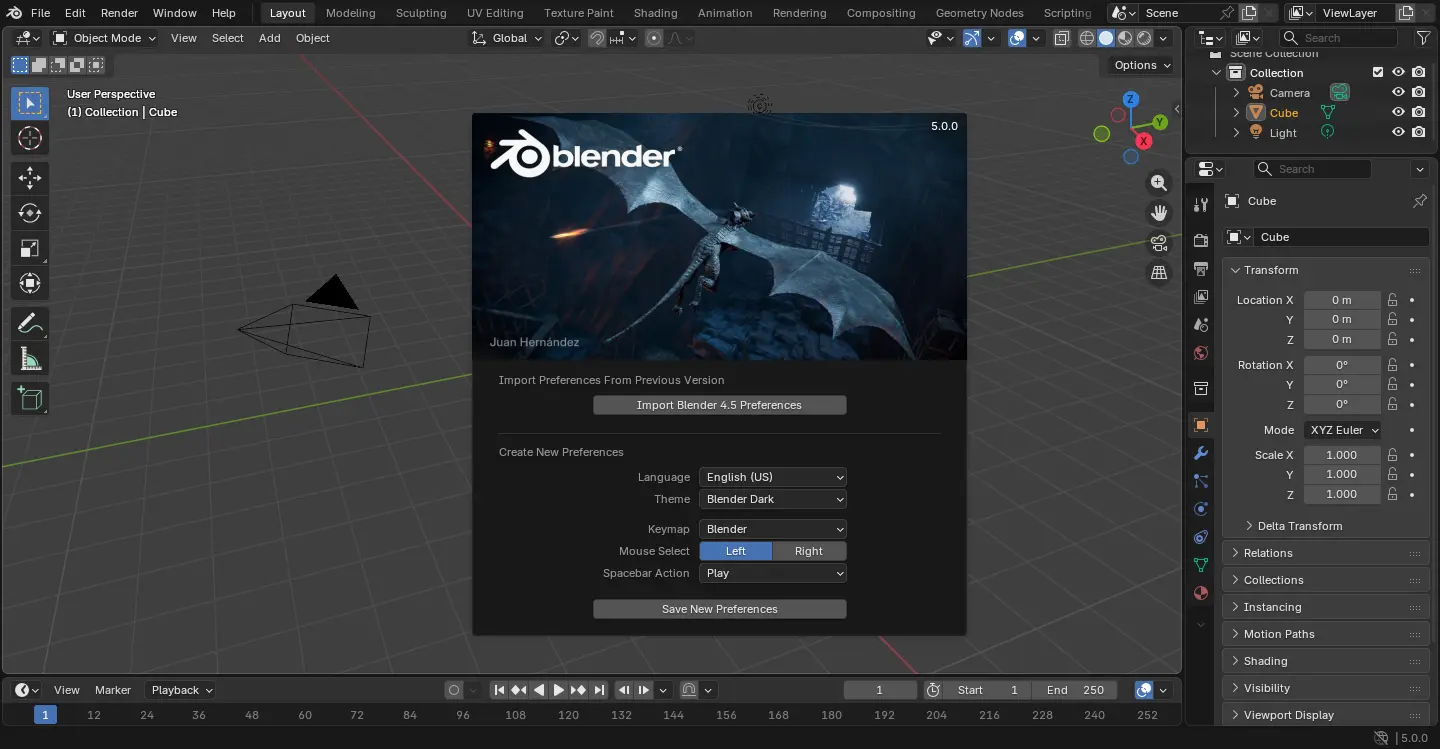
Blender, the popular 3D computer graphics software, released new major 5.0 version yesterday.

The new 5.0 release overhauled the color management pipeline with native wide-gamut and HDR color spaces support.

It can now display and export HDR and wide-gamut colors for both images and video. And, it added new ACES 1.3 and 2.0 views as alternative to AgX and Filmic, AgX HDR view, and Rec.2100-PQ and Rec.2100-HLG displays.

It’s now possible to use a wider gamut of colors for materials, lights and compositing, and to follow common ACES workflows, set a custom Working Space per file and Sequencer, and use the Convert Colorspace node in the Compositor.

The Sky Texture node now supports multiple scattering, while the old β€œNishita” model is still available as β€œSingle Scattering”. It can now generate a sunset scene instantly by animating only one parameter.

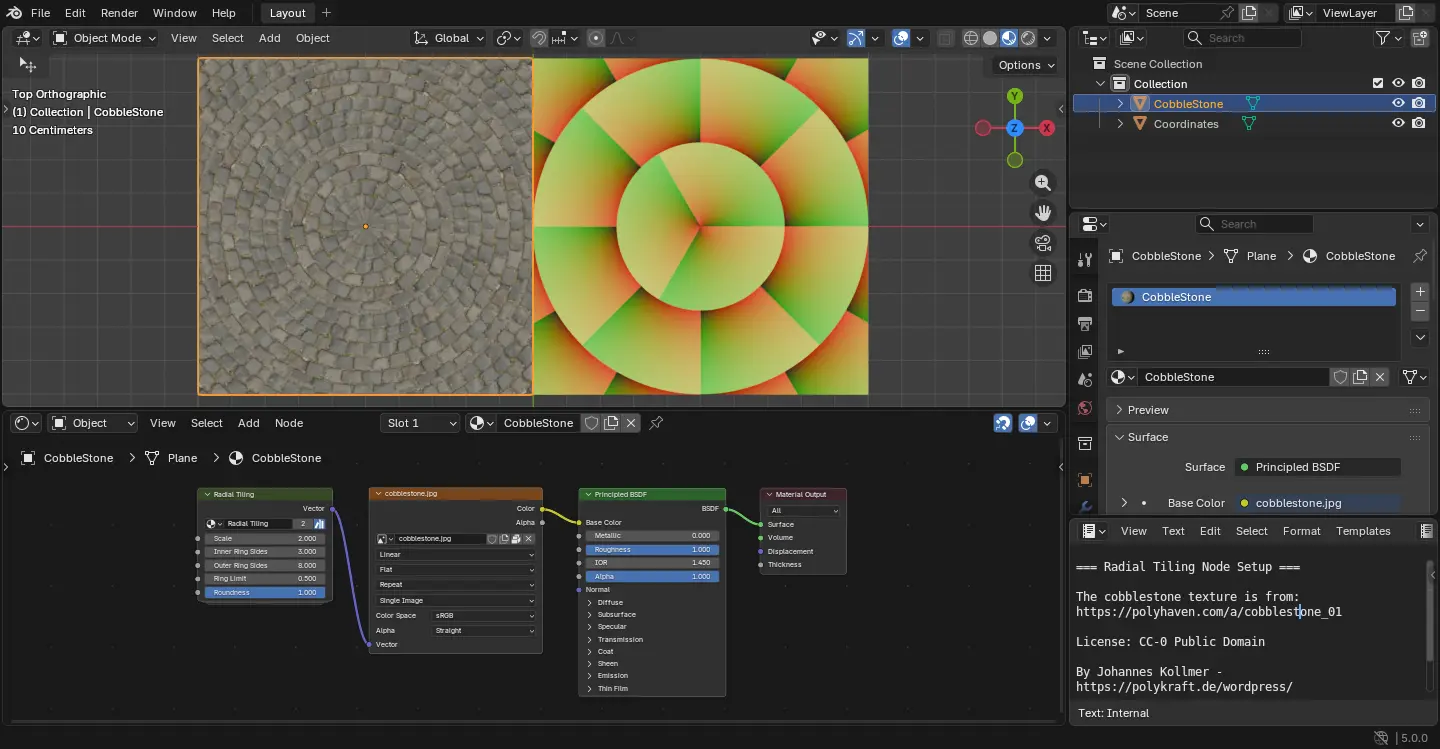
And it introduced new Radial Tiling node building block for creating shapes and tilings, including rounded corners. While, baking from meshes has been greatly improved with n-gon faces, baking Vector Displacement, as well as bake only to selected and active images etc features.

For circles, the release also introduced new unbiased null-scattering volume rendering algorithm and set it as default. There are as well a more accurate random walk subsurface scattering algorithm with multiple bounces, and the physically-based iridescense effects supported by metals.

Adaptive Subdivision is now considered stable, and, it features a new Object Space option to set edge length in object space instead of pixel size.

Other circles updates include new Linear 3D Curves, new Portal Depth light pass, new Render Time pass, better OptiX denoiser quality, new driver and hardware requirements, and more!

Material compilation is now much faster compare to the last 4.5 version though either OpenGL or Vulkan backend. Meaning that it has a faster startup and overall experience.

The Compositor in Blender 5.0 features a new asset shelf, filled with built-in effects to get from nothing to stunning in no time.

Grease Pencil objects now support motion blur, and, the number of motion blur steps can be adjusted for better quality.

Grease Pencil strokes can now have different corner types set per point: Flat, Sharp, and Round (default). And, Cyclical strokes now correctly connect start and end segments without gaps or overlaps.

Other changes in the release include:

  • New modifier: Array, Scatter on Surface, Instance on Elements, Randomize Instances, Curve to Tube, and Geometry Input
  • Overhauled UV Sync feature and enable it by default.
  • Nodes from compositor now available in the Video Sequencer.
  • Shading nodes now support Repeat Zones, just like Geometry Nodes.
  • New and updated MatCaps that include optional specular light.
  • And tons more other changes. See official release note for details.

Get Blender 5.0

The installer packages for Linux, Windows, macOS, as well as the source code are available to download at the link below:

For Ubuntu, the official snap package is available to install through either App Center or Ubuntu Software, though v5.0.0 is still in Beta channel at the moment of writing.

While Linux user may also choose the portable tarball (from download link above), decompress, then run the executable to launch the software. And, a community maintained Flatpak package. For beginners, see this step by step how to install guide.

GIMP 3.2 RC1 Released with SVG Export and New Keyboard Shortcuts

By:Ji m
18 November 2025 at 19:38

GIMP, the popular image editing software, announced the first release candidate for the next major 3.2 version yesterday.

This is the third development release for GIMP 3.2. It introduced some new keyboard shortcuts, new and improved image formats support, API changes and UI/UX improvements.

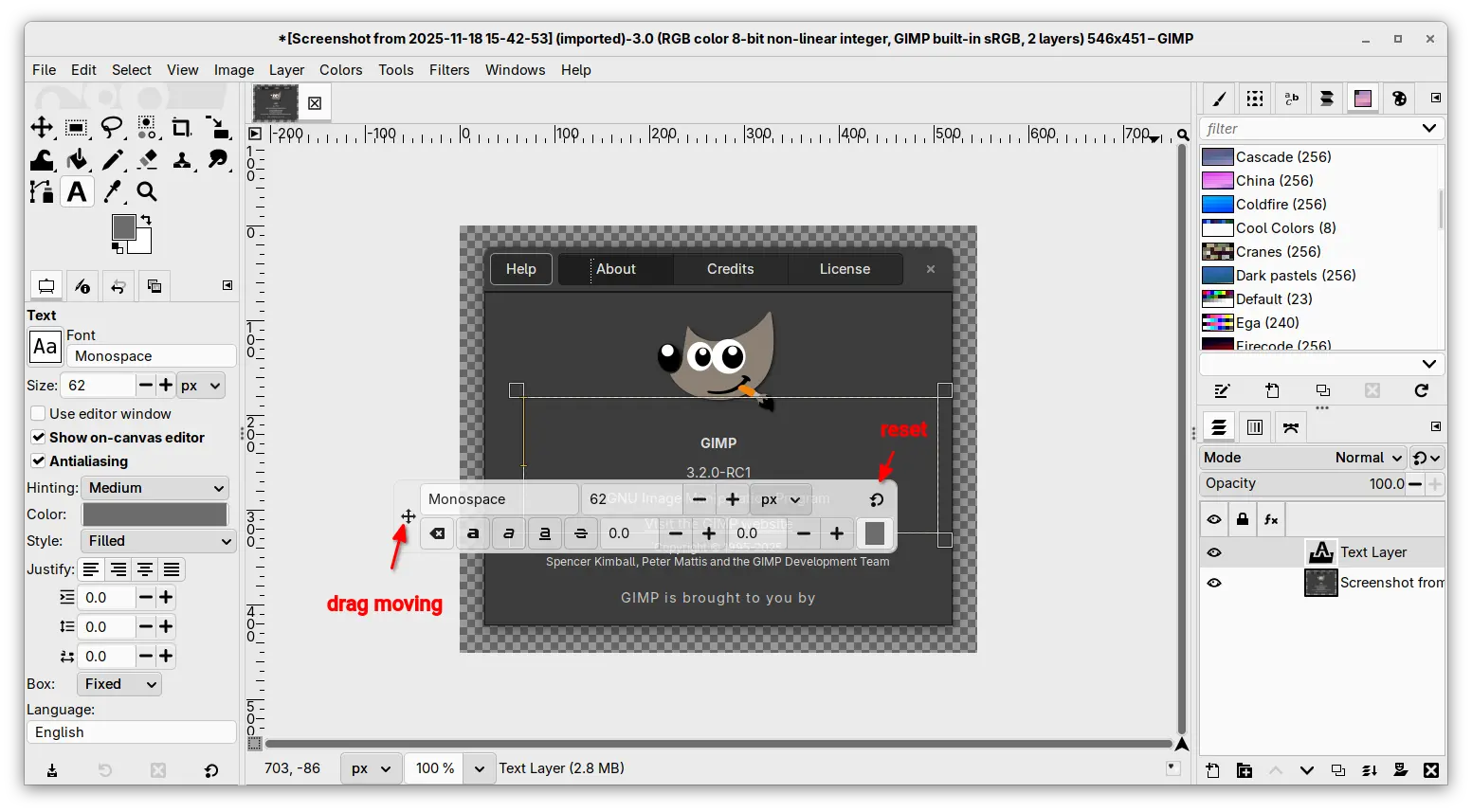
The on-canvas editor for the Text Tool now is movable. It now includes a move cursor icon in left side, allowing to drag on it to move the on-canvas editor. While, a circle arrow icon is also available to reset its position.

Besides that, this RC release added new Shift + Ctrl + V keyboard shortcut to paste unformatted text in the on-canvas editor, and new Shift+X shortcut to switch between current and last used tools, while, user has choice to change the shortcut by Edit -> Keyboard Shortcuts dialog.

The release also added support exporting SVG as actual vectors. While, the export dialog offers options to optionally embed raster layers as either PNGs or JPEG.

The PDF plug-in now exports vector layers as actual vectors, meaning that those layers can be further edited in other vector graphics software.

As well, it supports importing PowerVR (PVR) texture files, which is most commonly used for SEGA Dreamcast games and mods, and supports loading any supported image that’s compressed by GIMP standard compression algorithms.

GIMP 3.2 RC1 also improved its UI/UX experience by allowing to drag and drop image files on-to tab bar to open multiple images, drag and drop color swatches from the Color History, and hide GIMP from macOS App Menu.

It as well updated the API with new GimpImage and GimpItem widgets added to GimpProcedureDialog, and many additional public API commands for text, vector, and link layers.

Other changes include:

  • Simulate adjustment layers with layer groups.
  • Document History dockable is now multi-selection aware.
  • Update Windows Installer with automatic Dark Mode support.
  • Update color immediately after typing hex colors without hitting Enter.
  • Fixes and improvements to the link layer and vector layer features introduced in last 3.1.4.
  • various security fixes.

For more about this RC release, see the official announcement.

How to Install GIMP 3.2 RC1

GIMP provides official installer packages for Linux, Windows, and macOS, which are available to download via the link below:

For Linux, they include Snap package which can be directly installed from Ubuntu Software or App Center.

While, user may also choose non-install AppImage that can be launched directly after adding executable permission.

Or install the Flatpak package in sandbox environment for most Linux by running command after enabled flatpak support:

flatpak install --user https://flathub.org/beta-repo/appstream/org.gimp.GIMP.flatpakref

And, launch the Flatpak package via the command below in case you also has the stable version installed as Flatpak.

flatpak run org.gimp.GIMP//beta

Uninstall GIMP 3.2 Devel version

For the AppImage and Snap package, either delete the file or uninstall via App Center (or Ubuntu Software).

For the Flatpak package, use the command below to uninstall:

flatpak uninstall --delete-data org.gimp.GIMP//beta

You may then even delete the flathub-beta repository afterward by running command:

flatpak remote-delete flathub-beta

NOTE: the command will list and uninstall all apps and runtimes installed from the Beta repository. Answer NO if you want to keep any of them.

Stop Using Only cd: Learn pushd, popd, and zoxide in Linux

The post Stop Using Only cd: Learn pushd, popd, and zoxide in Linux first appeared on Tecmint: Linux Howtos, Tutorials & Guides .

In Linux, the β€˜cdβ€˜ (Change Directory) command serves as a fundamental navigation tool for both newcomers and experienced system administrators.

The post Stop Using Only cd: Learn pushd, popd, and zoxide in Linux first appeared on Tecmint: Linux Howtos, Tutorials & Guides.
❌