❌

Normal view

Wine 10.19 Released: Game Changing Support for Windows Reparse Points on Linux

Wine 10.19 Released: Game Changing Support for Windows Reparse Points on Linux

Introduction

If you use Linux and occasionally run Windows applications, whether via native Wine or through gaming layers like Proton, you’ll appreciate what just dropped in Wine 10.19. Released November 14 2025, this version brings a major enhancement: official support for Windows reparse points,Β a filesystem feature many Windows apps rely on, and a host of other compatibility upgrades.

In simpler terms: Wine now understands more of the Windows filesystem semantics, which means fewer workarounds, better application compatibility, and smoother experiences for many games and tools previously finicky under Linux.

What Are Reparse Points & Why They Matter

Understanding Reparse Points

On Windows, a reparse point is a filesystem object (file or directory) that carries additional data, often used for symbolic links, junctions, mount points, or other redirection features. When an application opens or queries a file, the OS may check the reparse tag to determine special behavior (for example β€œredirect this file open to this other path”).

Because many Windows apps, installers, games, DRM systems, file-managers, use reparse points for features like directory redirection, path abstractions, or filesystem overlays, lacking full support for them in Wine means those apps often misbehave.

What Wine 10.19 Adds

With Wine 10.19, support for these reparse point mechanisms has been implemented in key filesystem APIs: for example NtQueryDirectoryFile, GetFileInfo, file attribute tags, and DeleteFile/RemoveDirectory for reparse objects.

This means that in Wine 10.19:

  • Windows apps that create or manage symbolic links, directory junctions or mount-point style re-parsing will now function correctly in many more cases.

  • Installers or frameworks that rely on β€œwhen opening path X, redirect to path Y” will work with less tinkering.

  • Games or utilities that check for reparse tags or use directory redirections will have fewer β€œstuck” behaviors or missing files.

In effect, this is a step toward closer to native behavior for Windows file-system semantics under Linux.

Other Key Highlights in Wine 10.19

Beyond reparse points, the release brings several notable improvements:

  • Expanded support for WinRT exceptions (Windows Runtime error handling) meaning better compatibility for Universal Windows Platform (UWP) apps and newer Windows-based frameworks.

  • Refactoring of β€œCommon Controls” (COMCTL32) following the version 5 vs version 6 split, which helps GUI applications that rely on older controls or expect mixed versions.
Use AirPods Pro Features on Linux with LibrePods

21 November 2025 at 07:58

Linux mascot holds AirPods Pro against a bright purple and yellow backdropLibrePods brings AirPods Pro features to Linux desktops, including active noise cancellation, transparency mode, ear detection and accurate battery levels.

You're reading Use AirPods Pro Features on Linux with LibrePods, a blog post from OMG! Ubuntu. Do not reproduce elsewhere without permission.

How to Open and Edit Apple iWork Files on Linux

The post How to Open and Edit Apple iWork Files on Linux first appeared on Tecmint: Linux Howtos, Tutorials & Guides .

Apple iWork is Apple’s suite of office applications, similar to Microsoft Office or Google Docs, consisting of three main applications

The post How to Open and Edit Apple iWork Files on Linux first appeared on Tecmint: Linux Howtos, Tutorials & Guides.

PHP 8.5 Released with Pipe Operator, URI Extension, and Clone With Functionality

21 November 2025 at 02:48

PHP 8.5

PHP 8.5 open-source scripting language is out now with URI extension, Pipe operator, and support for modifying properties while cloning. Here's what's new!

The post PHP 8.5 Released with Pipe Operator, URI Extension, and Clone With Functionality appeared first on 9to5Linux - do not reproduce this article without permission. This RSS feed is intended for readers, not scrapers.

Wireshark 4.6.1 Released with Updated Protocol Support and Various Bug Fixes

20 November 2025 at 19:55

Wireshark 4.6.1

Wireshark 4.6.1 open-source network protocol analyzer is now available to download with various bug fixes and updated protocols. Here’s what’s changed!

The post Wireshark 4.6.1 Released with Updated Protocol Support and Various Bug Fixes appeared first on 9to5Linux - do not reproduce this article without permission. This RSS feed is intended for readers, not scrapers.

GDM Settings adding Toggles for Light Mode & Fingerprint Authentication

By:Ji m
20 November 2025 at 21:14

GDM Settings, the graphical configuration tool for GNOME Login Screen, updated recently with new toggle options!

As you know, GDM Settings is a free open-source Python written settings app for GNOME’s Login/Display Manager.

With it, you may change the login screen background image, set the fonts and themes, tweak top-bar colors, disable user list, show welcome message, and configure more about the login screen.

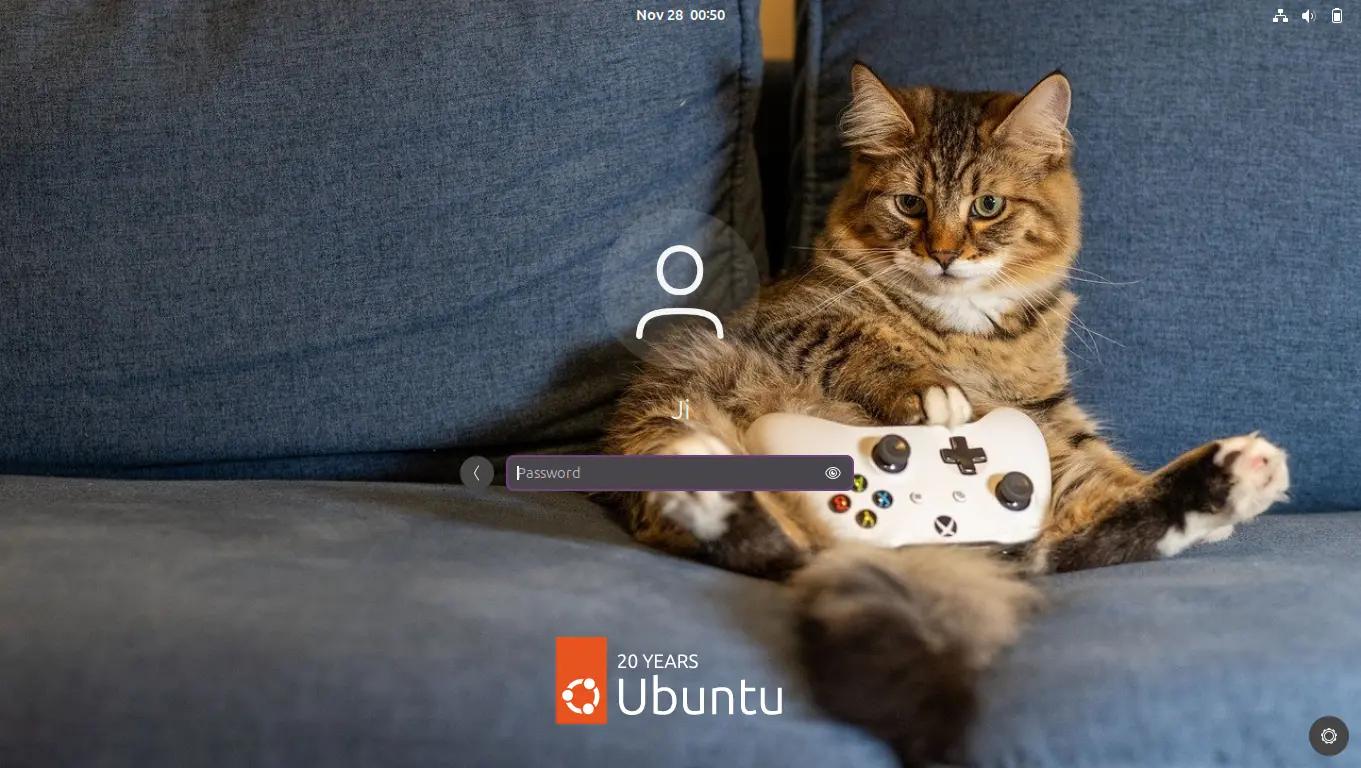
GNOME Login Screen with custom background

The latest of the app is so far at version 5.0 which was release one year ago. The development slows down however after that release.

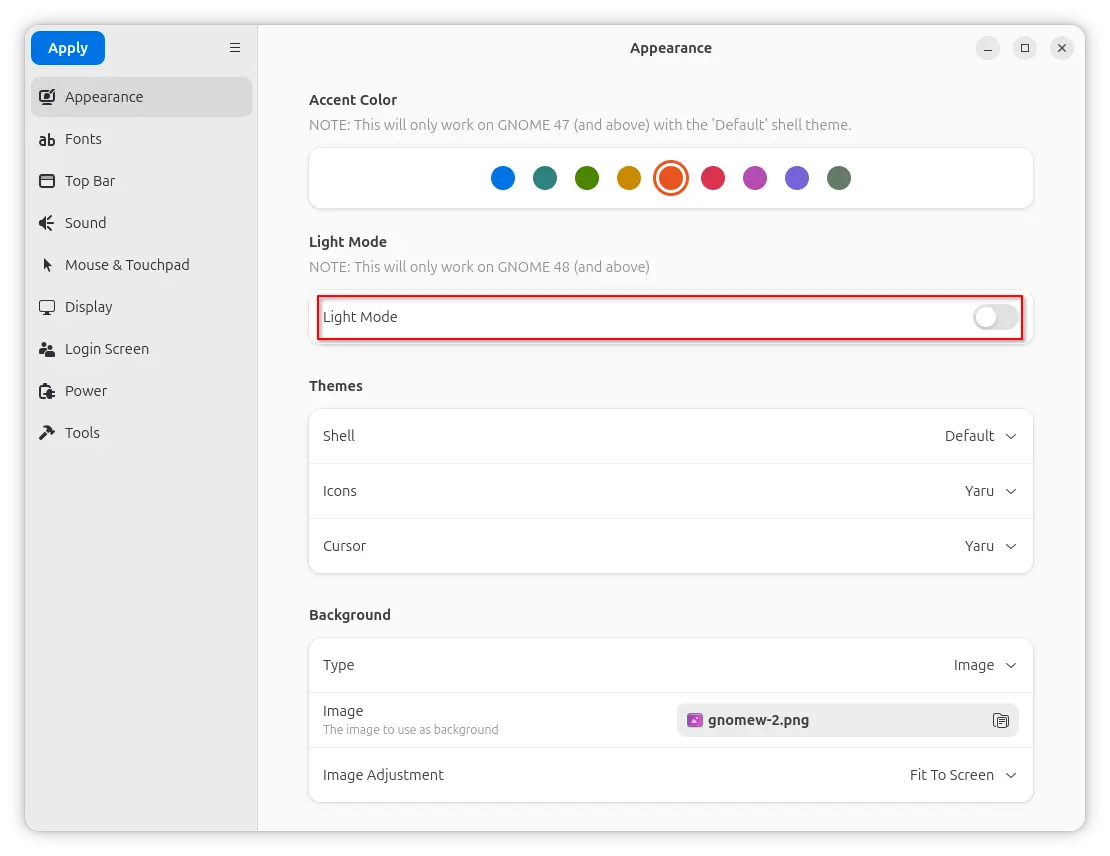
In the past 12 months, only few features were added. One is the β€œLight Mode” toggle option under Appearance tab, which works for GNOME 48 and above.

It works by setting the org/gnome/desktop/interface/color-scheme key to β€˜prefer-lightβ€˜ for GDM. Though, in vanilla Gnome both top-bar and menus are dark in either mode. And, I didn’t see anything goes light after enabled the option in my test in Ubuntu 25.10.

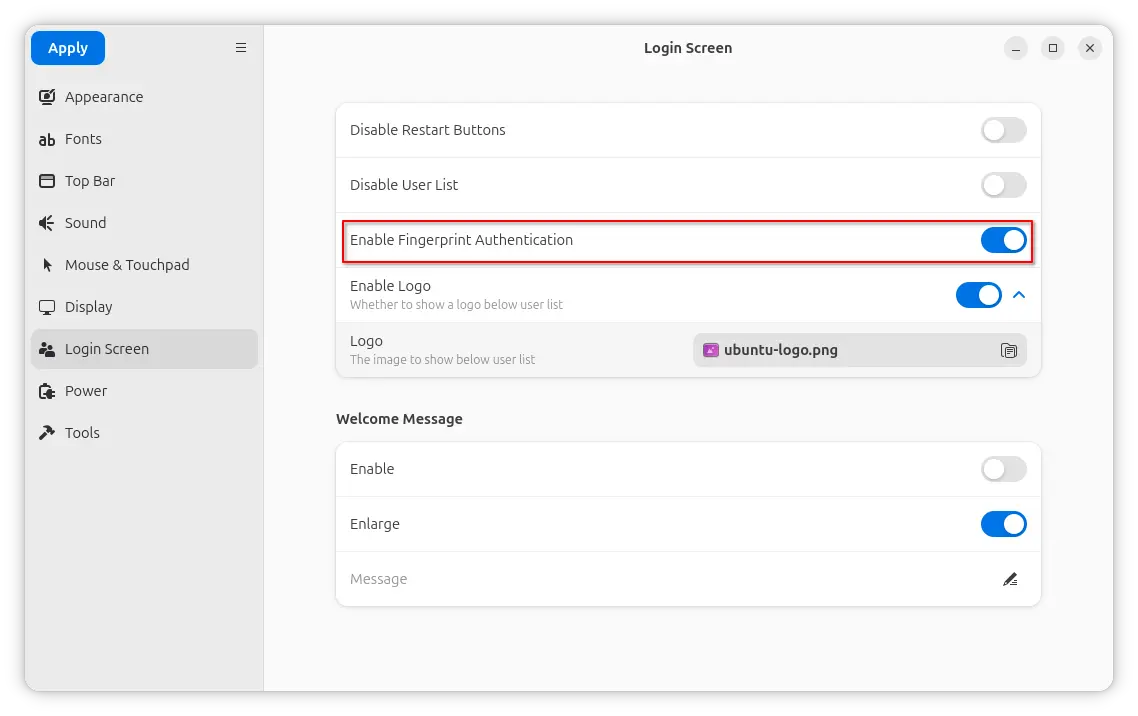
Another is a new Enable Fingerprint Authentication toggle option added to β€˜Login Screen’ page. It can be useful when you want to use fingerprint authentication for your GNOME desktop environment except the login screen, as you know log-in without password will cause unlock keyring pop-up when launching Chrome etc application though it can be skipped.

And, the function is done by setting org/gnome/login-screen/enable-fingerprint-authentication key for GDM silently in the background.

Besides that, it also updated to GNOME 49 platform for the Flatpak package. For more about the development of GDM Settings, see the commits page.

Install GDM Settings

The changes mentioned above are still in development stage. MeaningΒ you need to manually build it from source code.

NOTE: GDM Settings has the potential to break your login screen. Don’t use it on production machine!

For the 5.0 version, it’s available to install in most Linux Distributions through Flatpak package.

Just enable Flatpak support, then run the command below to install it:

flatpak install flathub io.github.realmazharhussain.GdmSettings

While, Fedora Workstation may simply search for and install it from GNOME Software, if you have 3rd party repository enabled.

GDM Settings flatpak package in Fedora GNOME Software

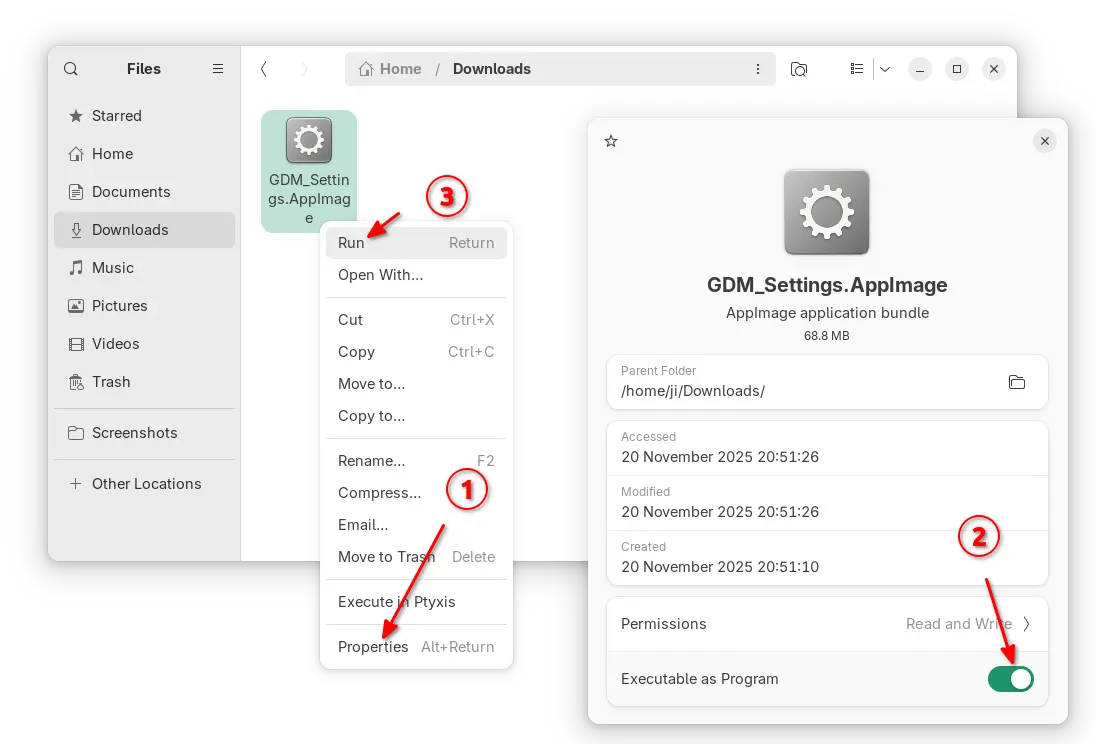
For choice, there’s also non-install AppImage available to download in the Github releases page under Assets section.

As both AppImage and Flatpak were built with most recent GNOME runtime, they may be NOT working good in old GNOME Desktops.

So, I built the app package into this unofficial PPA for Ubuntu 22.04, Ubuntu 24.04, 25.04 and 25.10.

To add the PPA and install GDM Settings, open terminal (Ctrl+Alt+T) and run commands below one by one:

sudo add-apt-repository ppa:ubuntuhandbook1/gdm-settings
sudo apt update
sudo apt install gdm-settings

Optionally, you may remove the PPA package and remove the PPA at any time by running commands:

sudo apt remove gdm-settings
sudo add-apt-repository --remove ppa:ubuntuhandbook1/gdm-settings
❌