The Federal Reserve’s newly released minutes from the October 28–29 meeting have thrown fresh uncertainty into the December policy outlook, sharpening market volatility across equities, bonds, and Bitcoin.
While the minutes reflect economic data only available at the time of the meeting, the language shift inside the document has become the latest flashpoint for analysts dissecting the Fed’s next move.
Fed Minutes Expose a Narrow Majority Against a December Rate Cut
The Fed described “many” officials as seeing a December rate cut as “likely not appropriate,” while “several” said a cut “could well be appropriate.”
In Fed-watcher parlance, the hierarchy matters. “some” > “several”, and “many” outweighs both. This indicates that a narrow majority opposed cutting rates in December at the time of the meeting.
💥BREAKING:
FOMC MINUTES:
– MANY SAW DECEMBER RATE CUT AS LIKELY NOT APPROPRIATE
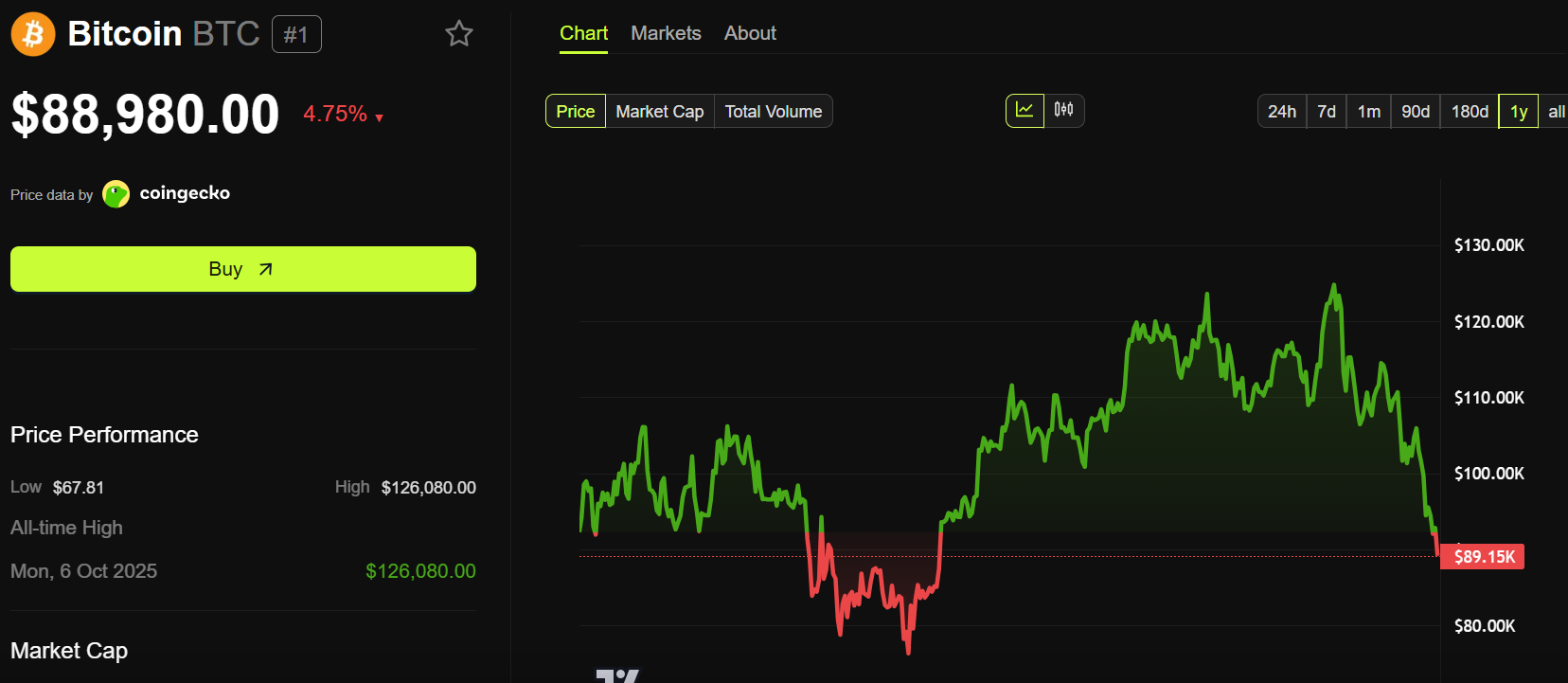
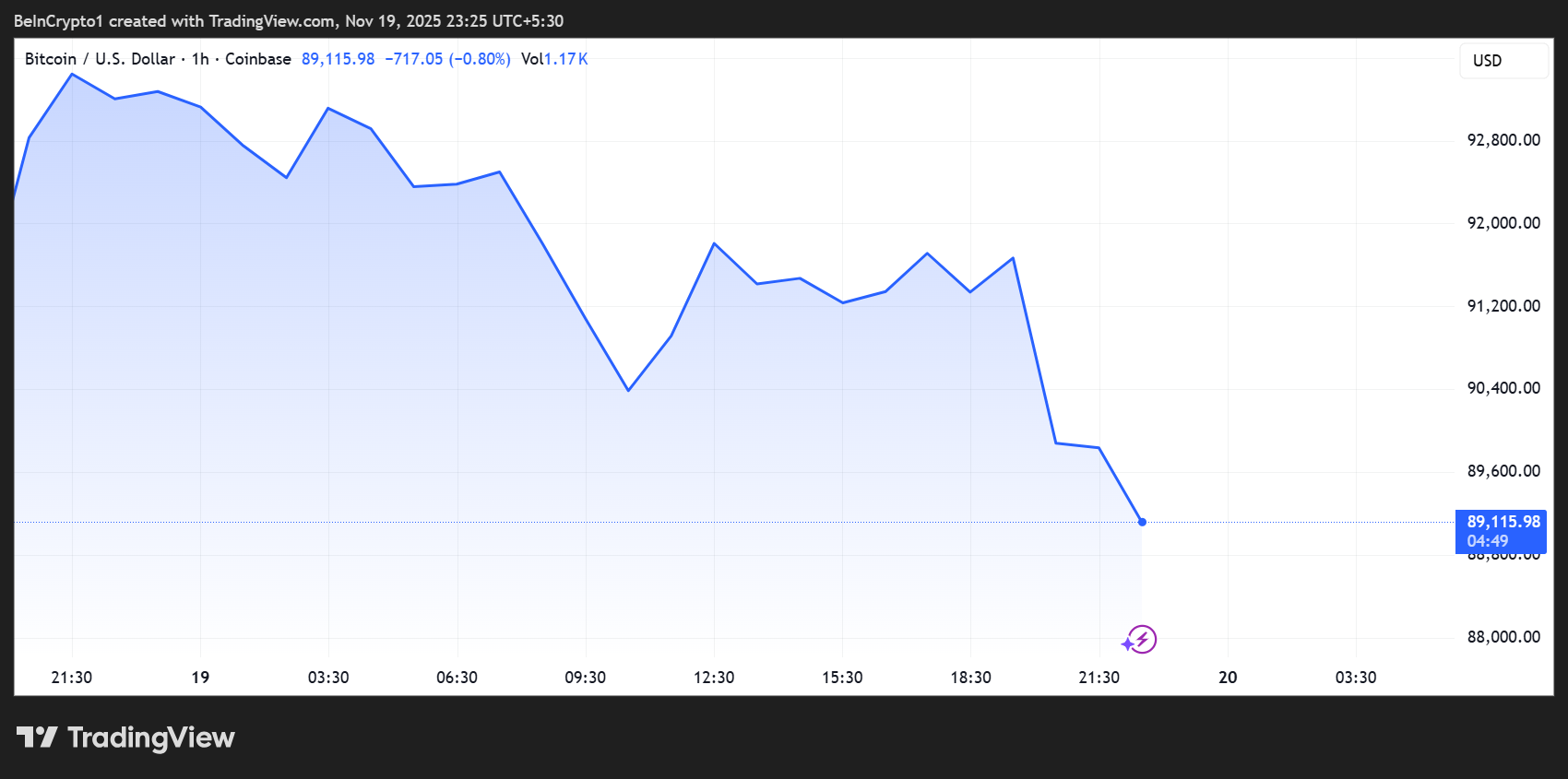
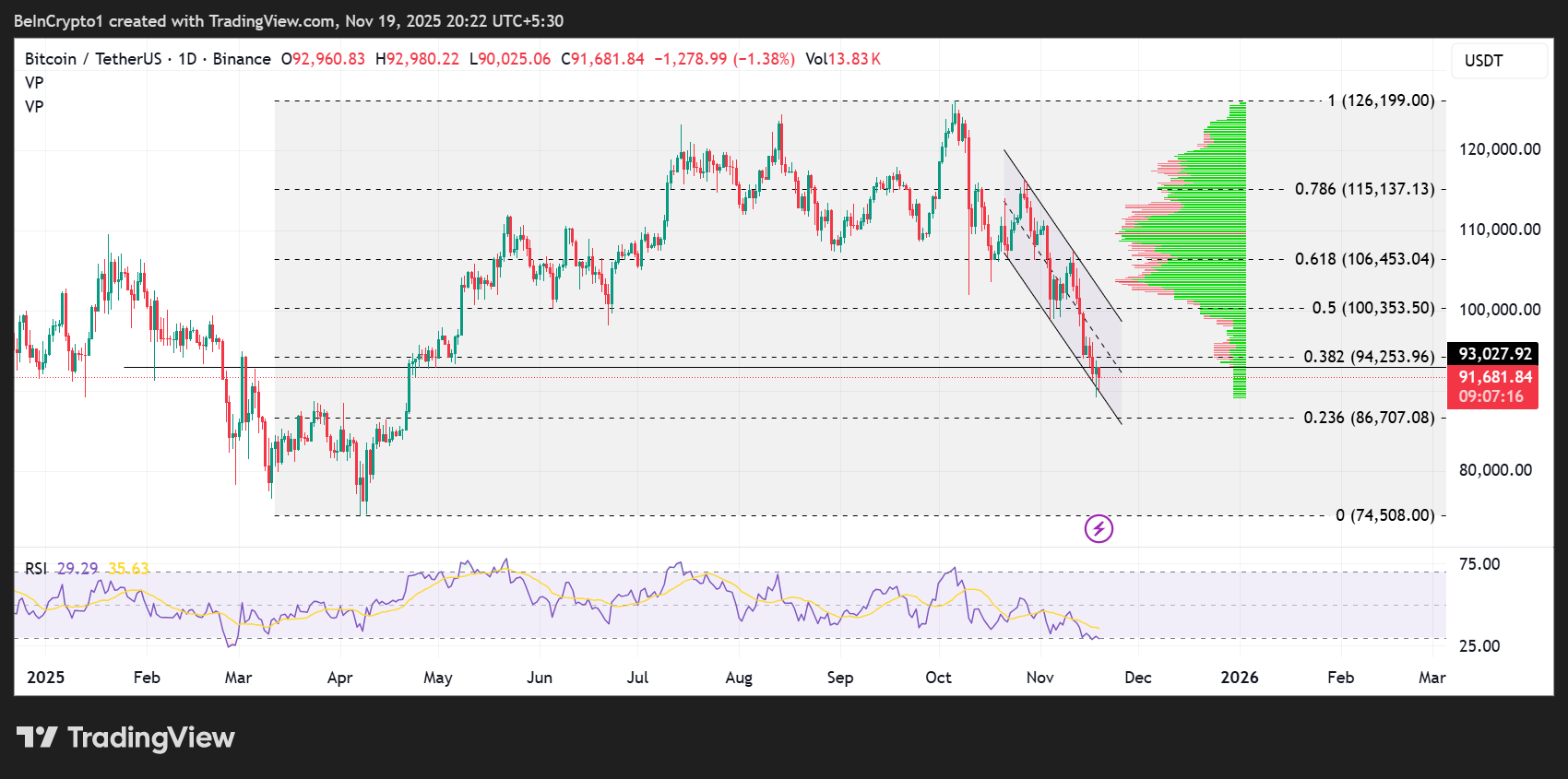
Ahead of this release, markets had already de-risked, with the Bitcoin price slipping below $89,000 to a 7-month low. The sentiment spread across crypto stocks and TradFi indices.
Macro traders say the real story is the razor-thin nature of the Fed divide. The minutes indicate no firm consensus, suggesting December is shaping up to be one of the tightest policy calls since the Fed began its inflation fight.
Some officials emphasized still-elevated inflation risks; others pointed to cooling labor conditions and fading demand. With both sides arming themselves with recent post-meeting data, including softer CPI, stable jobless claims, and cooling retail activity, December could swing on the next two data prints.
For now, the market is recalibrating to a scenario where liquidity is tightening, policy uncertainty is rising, and Bitcoin sits in a structurally vulnerable zone until buyers regain initiative.
If the Fed chooses to hold in December, markets may need to brace for a longer-than-expected plateau and more volatility ahead.
In the past 60 minutes, over $112 million longs have been liquidated as traders de-risk in anticipation of the FOMC minutes.
Bitcoin slipped below the $90,000 psychological levels, blowing millions in long positions out of the water.
$115 Million Longs Wiped Out Amid FOMC Minutes Jitters
Data on Coinglass shows that over $112 million in long positions have been liquidated over the past hour. These positions were flushed out as the Bitcoin price dipped below the $90,000 psychological level, testing a seven-month low.
This drop comes barely an hour before the October FOMC minutes release, with sentiment already reflected on social media.
Amid the anticipation, US President Trump said Fed chair Jerome Powell is “grossly incompetent,” citing too high interest rates.
Meanwhile, the Bureau of Labor Statistics has also revealed that it will not publish the October Jobs report. This gap likely steps from the recently concluded US government shutdown, which saw authorities run basically blind.
“After the September jobs report (out Thursday), there won’t be another jobs report until after the Dec. 9-10 FOMC meeting BLS: The October jobs report is cancelled. The November report won’t land until December 16. Sept JOLTS is also cancelled. October JOLTS will be published December 9,” wrote Nick Timiraos.
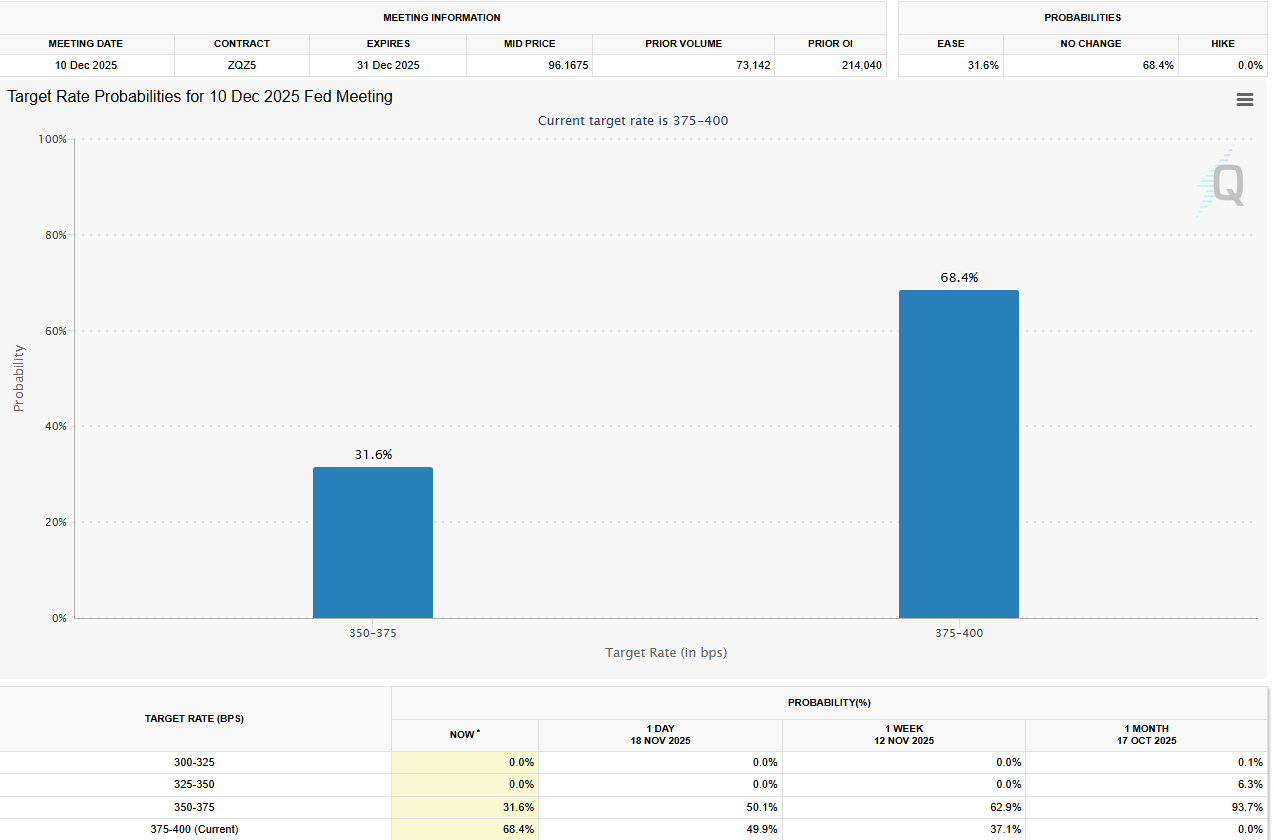
Based on this gap in the October Jobs report, December Fed rate cut bets have dwindled, with nearly 70% anticipating policymakers will hold interest rates steady.
This is seen with ETF outflows from the likes of BlackRock, which the asset manager posting record negative flows of on Tuesday.
“BlackRock Dumps Record $523M in Bitcoin as BTC Slips Further in Bear Market. They sold $523M in Bitcoin, the largest single-day outflow IBIT has EVER recorded. Wall Street entered, profited, and exited. Bitcoiners got played hard,” analyst Jacob King remarked.
Even as the Bitcoin price continues to drop, some analysts say the downside potential remains very much alive, potentially as low as $70,000 in the near term, or worse.
Below $98,650, the next key Bitcoin $BTC levels are:
Welcome to the US Crypto News Morning Briefing—your essential rundown of the most important developments in crypto for the day ahead.
Grab a coffee and settle in. This week, Bitcoin’s movements have traders talking, analysts scratching their heads, and even some familiar voices hinting that not everything is as it seems. Amid dips, recoveries, and cryptic warnings, one question lingers: who—or what—might really be pulling the strings behind the scenes?
Crypto News of the Day: Behind Bitcoin’s Strength—A Cabal? Jim Cramer Thinks So
Jim Cramer has once again sparked a wave of speculation across Crypto Twitter and trading desks, after suggesting that unseen forces may be at work to keep Bitcoin elevated despite mounting macroeconomic pressure.
“Almost feels like a cabal is trying to keep Bitcoin above $90,000. I like Bitcoin, but I do not like any of the derivatives created to play it, game it, or mine it,” he stated.
The remark landed at a sensitive moment for the market. Bitcoin dipped below $90,000 earlier in the week before recovering, prompting traders to dissect Cramer’s choice of words.
His reference to a “cabal,” even if rhetorical, was enough to spark theories ranging from ETF market makers defending key levels to institutional buyers accumulating quietly as liquidity thins.
Cramer doubled down hours later with another pointed message: “Even after all of this destruction, we are not oversold!!!”
To many traders, this sounded less like caution and more like classic Cramer timing, historically notorious for aligning with market inflection points in the opposite direction.
That instantly fed the Inverse Cramer narrative: when Cramer turns bearish or warning-heavy, some traders look for a bottom instead.
However, analysts argue that the market’s recent behavior has far more to do with macroeconomic forces than memes.
Macro Forces, Not Memes: What’s Really Driving Bitcoin’s Recent Volatility
According to QCP, Bitcoin’s brief break below the $90,000 threshold reflected the asset’s growing sensitivity to shifts in liquidity and interest-rate expectations.
“Markets have sharply repriced Fed expectations, cutting December rate cut odds from ‘near certain’ to ‘even,’” QCP noted, emphasizing how such macro adjustments disproportionately affect duration-sensitive assets like Bitcoin.
Meanwhile, equities have remained relatively resilient thanks to blockbuster earnings from AI-driven hyperscalers. Big Tech’s strength has left crypto trailing behind, amplifying volatility as liquidity thins.
Now that the US government has reopened and economic data releases are resuming, traders are bracing for a critical week.
Labor-market indicators and the Conference Board’s Leading Economic Index, updated with new vacancy metrics, are expected to shape market expectations as we enter 2026.
These data points will help define whether the Fed leans toward caution on inflation or acknowledges signs of cooling.
Fed Chair Jerome Powell’s recent reminder that a December cut is “not guaranteed” has reinforced the cautious mood.
For Bitcoin, the question is whether recent turbulence represents a standard positioning shakeout or the opening act of broader risk-off dynamics.
Cramer’s “cabal” comment may have dominated the headlines, but the real driver may still be the macro tide, and whether it turns against crypto or slowly back in its favor.
Crypto exchange Kraken has taken a concrete step toward going public by submitting a confidential draft registration statement to the US Securities and Exchange Commission (SEC) in advance of a planned initial public offering (IPO).
It completes Ark Invest’s earlier prediction that US President Trump’s administration would open a gateway for firms like Circle to go public.
Kraken Takes First Step Toward Public Listing
According to an official press release, the San Francisco–based crypto exchange has confidentially submitted a draft registration statement on Form S‑1 with the US SEC for a proposed initial public offering of its common stock.
While the number of shares and pricing have not yet been determined, the IPO is expected to proceed once the SEC completes its review, subject to market conditions.
The move marks a significant step in Kraken’s growth and reflects the increasing intersection of crypto and traditional finance, as investors await further details on the exchange’s public debut.
It comes only months after Circle’s public listing, with the latest development effectively marking the fruiting of Cathie Wood’s Ark Invest’s prediction.
In late 2024, Ark Invest stated that it viewed the then-prospective Trump administration as favorable for crypto, potentially opening up IPO opportunities for firms like Circle and Kraken. As BeInCrypto reported, Ark Invest cited pro-crypto policies and SEC reforms easing regulatory constraints for the sector.
“Among the possibilities are…the re-opening of the initial public offering (IPO) window for late-stage digital asset companies like Circle and Kraken…,” a paragraph in the newsletter read.
Consequently, this establishes a precedent demonstrating that crypto firms can transition to becoming publicly traded companies in the country.
In July, Kraken revealed plans to raise $500 million at a $15 billion valuation in its planned IPO. The plan succeeded in September, with the trading platform expanding into TradFi with xStocks platform and NinjaTrader acquisition. Hours ago, Kraken CEO Arjun Sethi revealed that the exchange had raised $800 million.
Once Kraken officially goes public, its stock, potentially ‘KRAK’ would join Coinbase’s COIN in the open market, which is already listed on stock exchanges.
Risalah baru yang dirilis oleh Federal Reserve dari pertemuan 28–29 Oktober menambah ketidakpastian baru dalam prospek kebijakan Desember, meningkatkan volatilitas pasar di ekuitas, obligasi, dan Bitcoin.
Meskipun risalah mencerminkan data ekonomi yang hanya tersedia saat pertemuan, perubahan bahasa dalam dokumen tersebut menjadi titik fokus terbaru bagi analis yang mencoba memahami langkah selanjutnya dari The Fed.
Risalah The Fed Ungkap Mayoritas Tipis Menentang Pemangkasan Suku Bunga Desember
The Fed menggambarkan bahwa “banyak” pejabat memandang pemotongan suku bunga Desember sebagai “mungkin tidak sesuai,” sementara “beberapa” mengatakan pemotongan “bisa jadi sesuai.”
Dalam istilah pengamat Fed, hierarki ini penting. “some” > “several”, dan “many” lebih besar dari keduanya. Ini menunjukkan sebagian besar kecil menolak pemotongan suku bunga Desember pada saat pertemuan.
💥BREAKING:
FOMC MINUTES:
– MANY SAW DECEMBER RATE CUT AS LIKELY NOT APPROPRIATE
Sebelum risalah ini dirilis, pasar sudah melakukan de-risking, dengan harga Bitcoin turun di bawah US$89.000 ke level terendah dalam tujuh bulan. Sentimen ini menyebar di saham kripto dan indeks TradFi.
Trader makro mengatakan cerita sebenarnya adalah tipisnya perpecahan di dalam The Fed. Risalah ini menunjukkan tidak ada konsensus yang kuat, mengindikasikan Desember akan menjadi salah satu keputusan kebijakan tersulit sejak The Fed memulai perjuangannya melawan inflasi.
Beberapa pejabat menekankan risiko inflasi yang masih tinggi; yang lain menunjuk pada kondisi tenaga kerja yang mendingin dan permintaan yang menurun. Dengan kedua pihak mempersenjatai diri dengan data terbaru setelah pertemuan, termasuk CPI yang lebih lembut, klaim pengangguran yang stabil, dan aktivitas ritel yang menurun, Desember bisa berubah berdasarkan dua cetakan data berikutnya.
Untuk saat ini, pasar mengkalibrasi ulang ke skenario di mana likuiditas semakin ketat, ketidakpastian kebijakan meningkat, dan Bitcoin berada di zona yang rentan secara struktural sampai pembeli kembali mengambil inisiatif.
Jika The Fed memilih untuk menahan pada bulan Desember, pasar mungkin perlu bersiap menghadapi dataran tinggi yang lebih lama dari yang diharapkan dan lebih banyak volatilitas di masa depan.
Dalam 60 menit terakhir, lebih dari US$112 juta panjang telah terlikuidasi karena trader mengurangi risiko menjelang rapat FOMC.
Bitcoin turun di bawah level psikologis US$90.000, menghapus jutaan posisi panjang.
US$115 Juta Longs Hangus Di Tengah Ketegangan Notulen FOMC
Data dari Coinglass menunjukkan bahwa lebih dari US$112 juta dalam posisi panjang telah terlikuidasi dalam satu jam terakhir. Itu mengikuti pergerakan harga Bitcoin, yang turun di bawah level psikologis US$90.000 seiring dengan hitungan mundur menuju rapat FOMC Oktober yang berlanjut.
Selamat datang di US Crypto News Morning Briefing—rangkuman penting Anda tentang perkembangan terpenting dalam dunia kripto untuk hari ini.
Ambil kopi dan bersantai. Minggu ini, pergerakan Bitcoin membuat trader berbicara, analis kebingungan, dan bahkan beberapa suara familiar mengisyaratkan bahwa tidak semuanya seperti yang terlihat. Di tengah penurunan, pemulihan, dan peringatan yang samar, satu pertanyaan tetap ada: siapa—atau apa—yang sebenarnya mengendalikan di balik layar?
Berita Kripto Hari Ini: Di Balik Kekuatan Bitcoin—Sebuah Kelompok? Jim Cramer Berpikir Begitu
Jim Cramer kembali memicu gelombang spekulasi di Crypto Twitter dan meja perdagangan, setelah dia menyarankan bahwa ada kekuatan tak terlihat yang mungkin bekerja untuk menjaga Bitcoin tetap tinggi meskipun ada tekanan ekonomi makro yang meningkat.
“Seperti ada sebuah kelompok yang mencoba menjaga Bitcoin di atas US$90.000. Saya suka Bitcoin, tapi saya tidak suka derivatif yang diciptakan untuk memainkannya, memanfaatkan, atau menambangnya,” dia ujar.
Pernyataan itu muncul pada saat yang sensitif bagi pasar. Bitcoin turun di bawah US$90.000 sebelumnya dalam minggu ini sebelum pulih, memicu trader untuk membedah pilihan kata-kata Cramer.
Referensinya pada “kelompok,” meskipun retorik, sudah cukup untuk memicu teori yang berkisar dari ETF market makers yang mempertahankan level kunci hingga pembeli institusional yang mengakumulasi secara diam-diam saat likuiditas menipis.
Cramer menegaskan lagi beberapa jam kemudian dengan pesan tajam lainnya: “Bahkan setelah semua kehancuran ini, kita belum oversold!!!”
Bagi banyak trader, ini terdengar bukan sebagai peringatan, melainkan waktu Cramer yang klasik, yang historis terkenal karena menyelaraskan dengan titik balik pasar ke arah sebaliknya.
Ini langsung memicu narasi Inverse Cramer: ketika Cramer menjadi bearish atau banyak memberi peringatan, beberapa trader mencari titik terendah sebagai gantinya.
Namun, analis berpendapat bahwa perilaku pasar baru-baru ini lebih banyak terkait kekuatan ekonomi makro daripada meme.
Faktor Ekonomi Makro, Bukan Meme: Apa yang Sebenarnya Menggerakkan Volatilitas Terbaru Bitcoin
Menurut QCP, penurunan singkat Bitcoin di bawah ambang US$90.000 mencerminkan meningkatnya sensitivitas aset terhadap perubahan likuiditas dan ekspektasi suku bunga.
“Pasar telah menetapkan harga ulang ekspektasi The Fed secara tajam, mengurangi kemungkinan pengurangan suku bunga Desember dari ‘hampir pasti’ menjadi ‘seimbang,’” QCP terang, menekankan bagaimana penyesuaian makro seperti itu secara tidak proporsional memengaruhi aset sensitif durasi seperti Bitcoin.
Sementara itu, ekuitas tetap relatif tangguh berkat hasil pendapatan besar dari hyperscaler berbasis AI. Kekuatan Big Tech meninggalkan kripto tertinggal, memperkuat volatilitas saat likuiditas menipis.
Sekarang setelah pemerintah AS dibuka kembali dan rilis data ekonomi dilanjutkan, trader bersiap untuk minggu kritis.
Indikator pasar tenaga kerja dan Indeks Ekonomi Terkemuka dari Conference Board, diperbarui dengan metrik kekosongan baru, diharapkan akan membentuk ekspektasi pasar saat kita memasuki 2026.
Poin data ini akan membantu menentukan apakah The Fed memilih untuk berhati-hati pada inflasi atau mengakui tanda-tanda pendinginan.
Pengingat terbaru Ketua The Fed Jerome Powell bahwa pemotongan suku bunga Desember “tidak dijamin” telah memperkuat suasana hati-hati.
Bagi Bitcoin, pertanyaannya adalah apakah gejolak baru-baru ini mewakili pengaturan ulang posisi standar atau pembukaan dinamika risiko yang lebih luas.
Komentar “kelompok” Cramer mungkin telah mendominasi berita utama, namun penggerak sebenarnya mungkin tetap adalah gelombang makro, dan apakah itu berbalik melawan kripto atau perlahan-lahan kembali mendukungnya.
Crypto exchange Kraken telah mengambil langkah nyata menuju go public dengan mengajukan pernyataan pendaftaran draf rahasia ke US Securities and Exchange Commission (SEC) sebelum rencana initial public offering (IPO).
Dua pemain korporat terbesar dalam kripto, MicroStrategy dan BitMine, baru saja memperbesar perang akumulasi mereka secara diam-diam. Yang satu memperkuat komitmennya pada Bitcoin, sementara yang lainnya memperluas cengkeramannya pada Ethereum.
Meski langkah masing-masing tampak biasa pada pandangan pertama, skala dan waktunya mengungkapkan sesuatu yang jauh lebih berarti yang sedang berkembang di bawah permukaan.
MicroStrategy Percepat Pembelian Bitcoin saat Tekanan Meningkat
MicroStrategy membeli 8.178 BTC pekan lalu seharga kira-kira US$835,6 juta dengan harga rata-rata US$102.171 per koin. Perusahaan ini sekarang memegang 649.870 BTC, yang diperoleh dengan nilai US$48,37 miliar pada basis biaya rata-rata sebesar US$74.433, menurut update yang dikonfirmasi dan dibagikan oleh Michael Saylor dan Strategy Inc.
Strategy has acquired 8,178 BTC for ~$835.6 million at ~$102,171 per bitcoin and has achieved BTC Yield of 27.8% YTD 2025. As of 11/16/2025, we hodl 649,870 $BTC acquired for ~$48.37 billion at ~$74,433 per bitcoin. $MSTR$STRC$STRD$STRE$STRF$STRKhttps://t.co/HI1TeYOvQ9
Langkah agresif ini muncul hanya beberapa hari setelah Saylor berjanji bahwa pasar akan terkejut secara menyenangkan.
“Kami membeli cukup banyak… orang-orang akan terkejut secara menyenangkan.” Ia menambahkan bahwa Strategy “selalu membeli” dan sekarang mengendalikan 3,1% dari jaringan Bitcoin.
Meskipun hasil BTC MicroStrategy untuk 2025 mencapai 27,8%, pembelian tersebut memicu gelombang komentar dan kontroversi.
Lookonchain memverifikasi bahwa perusahaan itu duduk di atas keuntungan yang belum direalisasikan sebesar US$12,88 miliar (+27%), bahkan setelah penurunan terbaru. Namun komunitas kripto tetap terpecah. Satu sisi mengatakan bahwa struktur MicroStrategy solid.
“Bahkan jika BTC turun -70%, Saylor tetap tidak akan harus menjual… Tidak ada margin call,” analis Miles Deutscher menjelaskan.
Jeff Dorman menambahkan bahwa kekhawatiran tentang penjualan paksa “bahkan tidak menjadi perhatian sedikit pun,” menyebutkan biaya bunga yang rendah, arus kas positif, serta kepemilikan Saylor sebesar 42% yang mencegah intervensi aktivis.
Di sisi lain, pengkritik seperti Peter Schiff mengeklaim bahwa strategi ini rapuh, dengan Dom Kwok, seorang pengguna populer di X, menyuarakan sentimen serupa.
“MSTR akan dipaksa menjual BTC-nya untuk membayar bunga… ini adalah menjual bitcoin atau gagal,” ia menyatakan.
Bahkan pengamat pasar mempertanyakan pengumuman tersebut. Analis AB Kuai Dong menyoroti bahwa Strategy memposting lalu menghapus pengumumannya dalam hitungan menit, menyebutnya sebagai “amatir,” dan mencatat bahwa MSTR turun 3% di pre-market meskipun ada pembelian yang optimistis.
Penangkapan Ethereum oleh BitMine Menunjukkan Persaingan Korporat untuk Dominasi Kas Perusahaan
Sementara MicroStrategy memperluas kerajaan Bitcoin-nya, Tom Lee’s BitMine sedang menjalankan strategi paralel pada Ethereum, namun dalam skala yang lebih besar. BitMine sekarang memiliki hampir 3,6 juta token ETH, yang mewakili 2,9% dari total suplai, menurut update resminya bulan November. Perusahaan ini membeli 54.156 ETH hanya dalam seminggu.
🧵 BitMine provided its latest holdings update for Nov 17th, 2025:
$11.8 billion in total crypto + "moonshots": -3,,559,879 ETH at $3,120 per ETH (Bloomberg) – 192 Bitcoin (BTC) – $37 million stake in Eightco Holdings (NASDAQ: ORBS) (“moonshots”) and – unencumbered cash of…
Pada valuasi saat ini, perusahaan memegang US$11,8 miliar dalam campuran gabungan kripto, kas, dan investasi “moonshot”, termasuk 3.559.879 ETH, 192 BTC, US$607 juta dalam bentuk kas, dan posisi ekuitas strategis.
Data Fundstrat, yang dikonfirmasi oleh dashboard StrategicETHReserve.xyz, menegaskan bahwa BitMine kini merupakan perbendaharaan Ethereum terbesar di dunia dan perbendaharaan kripto terbesar kedua secara keseluruhan, tepat di belakang MicroStrategy.
Dalam pesan Novembernya, Lee menyebutkan bahwa puncak siklus kripto masih 12–36 bulan lagi, menyimpang dari harapan empat tahun tradisional. Ia mengatakan kelemahan terbaru mencerminkan seorang market maker yang mengalami tekanan neraca, bentuk sementara dari “QT” untuk ekosistem kripto.
“Harga kripto belum pulih sejak peristiwa likuidasi pada 10 Oktober… Kelemahan yang berkepanjangan memiliki ciri-ciri market maker yang mengalami kerugian neraca,” baca kutipan dalam pengumuman tersebut, mengacu pada Lee.
Ia menambahkan bahwa tokenisasi pada Ethereum adalah “pengungkapan besar” dan membandingkan langkah-langkah regulasi saat ini, seperti GENIUS Act dan Proyek Kripto SEC, dengan akhir era Bretton Woods tahun 1971.
Saham BitMine mencerminkan meningkatnya perhatian institusional, dengan volume perdagangan mencapai US$1,4 miliar per hari, menduduki peringkat ke-48 di AS, di atas DoorDash.
Bersama, pembangunan BTC oleh MicroStrategy dan akumulasi ETH oleh BitMine menandai tren paling jelas di tahun 2025, bahwa aset kripto menjadi medan pertempuran untuk treasury korporasi.
Dengan Saylor menargetkan kontrol yang lebih dalam terhadap Bitcoin dan BitMine mendorong menuju “Alchemy of 5%,” pasar mungkin memasuki era akumulasi korporat multi-chain sejati pertama, yang digerakkan bukan oleh siklus ritel, tetapi oleh neraca, saluran likuiditas, dan keyakinan jangka panjang.
Cboe Global Markets membawa era baru untuk derivatif kripto di AS. Operator exchange ini mengumumkan hari ini bahwa Cboe Futures Exchange (CFE) akan mulai menawarkan Continuous Futures untuk Bitcoin (PBT) dan Ether (PET) pada 15 Desember 2025, dengan menunggu persetujuan akhir dari regulator.
Ini menandai pertama kalinya pasar yang diatur AS akan menjadi tuan rumah paparan kripto gaya perpetual, yang sebelumnya hanya ditawarkan di exchange luar negeri.
Cboe Membawa Perpetual-Style Crypto Futures ke Dalam Lingkup Regulasi AS
Produk baru ini dirancang untuk memberikan investor profesional paparan jangka panjang dan efisien terhadap dua aset digital terbesar, serta menghilangkan hambatan operasional dalam bergulirnya futures yang kadaluwarsa.
Setiap kontrak akan memiliki masa berlaku 10 tahun dan fitur penyesuaian kas harian, secara efektif mencerminkan mekanik dari perpetual swaps sambil tetap sepenuhnya sesuai dengan regulasi derivatif AS.
Perpetual futures, salah satu produk kripto yang paling banyak diperdagangkan secara global, secara historis berkembang di tempat-tempat luar negeri karena kendala regulasi di AS. Langkah Cboe membawa instrumen ini yang sudah dikenal namun di bawah pengawasan ketat ke meja institusi yang mencari transparansi, perlindungan kliring, dan keselarasan regulasi.
“Karena perpetual futures secara historis diperdagangkan di luar negeri, Cboe dengan antusias membantu memperluas akses ke produk-produk ini dalam lingkungan yang diatur, transparan, dan ramah perantara di AS,” ujar Rob Hocking, Global Head of Derivatives di Cboe.
Ia menambahkan bahwa struktur ini memungkinkan manajemen portofolio dan risiko yang lebih efisien, sambil memberikan investor jalur terkendali untuk paparan aset digital berleverage.
Continuous Futures akan diselesaikan dengan uang tunai, dikliring secara terpusat, dan diatur oleh standar yang diatur CFTC melalui Cboe. Persyaratan Marjin AS yang jelas akan mengikuti pengawasan derivatif standar.
Trader dapat memperoleh manfaat marjin silang dengan kontrak Financially Settled Bitcoin (FBT) dan Ether (FET) yang sudah ada di CFE.
Dirancang untuk Efisiensi Modal dan Paparan Jangka Panjang
Kontrak akan mengikuti Cboe Kaiko Real-Time Rates untuk BTC dan ETH. “Jumlah Pendanaan” harian yang mirip dengan pembayaran pendanaan yang digunakan dalam perpetual swaps akan diterapkan pada posisi terbuka untuk menjaga harga futures tetap sesuai dengan pasar spot.
“Membawa futures gaya perpetual ke pasar yang diatur AS menjawab kebutuhan nyata bagi investor institusi yang mencari paparan kripto yang efisien dan jangka panjang,” papar Anne-Claire Maurice, Managing Director of Derived Data di Kaiko.
Ia menekankan bahwa struktur ini menghilangkan risiko rolling sambil menjaga transparansi dan pengawasan.
Perdagangan akan tersedia 23 jam sehari, lima hari seminggu, dari Minggu malam hingga Jumat sore (ET), mencerminkan jadwal derivatif kripto CFE yang ada.
Edukasi dan Persiapan Pasar Dimulai
Mengenali kompleksitas dan kebaruan produk ini, Options Institute Cboe akan mengadakan dua sesi edukasi publik pada 17 Desember 2025, dan 13 Januari 2026.
Kursus ini akan membantu trader memahami spesifikasi kontrak, perhitungan pendanaan, dan penggunaan strategis mulai dari hedging dan perdagangan volatilitas hingga posisi jangka panjang sintetis.
Dengan meningkatnya permintaan institusional untuk paparan kripto yang diatur, terutama di tengah berkembangnya pasar ETF, Continuous Futures dari Cboe dapat menjadi salah satu pembaruan struktural paling signifikan bagi derivatif kripto AS dalam beberapa tahun.
Selamat datang di US Crypto News Morning Briefing—rangkuman penting Anda tentang perkembangan penting dalam dunia kripto untuk hari ini.
Seduh kopi dan bersiaplah—berita ini mungkin akan membuat Anda berpikir ulang tentang apa yang Anda ketahui tentang kripto. Dalam setahun terakhir, Bitcoin telah melonjak secara dramatis, menghasilkan pengembalian yang menyaingi aset safe-haven tradisional. Namun, sementara beberapa melihat kisah stabilitas, yang lain masih bertanya-tanya tentang risiko, imbalan, dan di mana mata uang kripto sebenarnya berada dalam portofolio.
Berita Aset Kripto Hari Ini: Pengembalian Aset Kripto Picu Debat Baru tentang ‘Store of Value’
Sejak Januari 2024, ETF Bitcoin telah melonjak sekitar 100%, mencerminkan pengembalian ETF emas fisik, sementara S&P 500 hanya mengembalikan 45%. Performa ini memicu perdebatan baru mengenai peran Bitcoin dalam portofolio investor: apakah itu aset “risk-on” seperti saham, atau “store of value” seperti emas?
Since spot btc ETFs launched in Jan 2024, they’ve returned same % as physical gold ETFs…
Approx 100%.
S&P 500 has returned nearly 45%.
So is btc a “risk on” asset like stocks or “store of value” like gold?
Nate Geraci, presiden ETF Store, menyoroti kesetaraan yang mengejutkan ini, dengan kemiripan mencolok dengan pengembalian emas yang membuat investor mengevaluasi kembali narasi tradisional Bitcoin.
Walaupun Bitcoin secara luas dianggap sebagai aset yang volatil dan berisiko tinggi, performa ETF-nya selama setahun terakhir telah sejalan dengan salah satu kendaraan investasi paling stabil dalam sejarah. Dalam konteks ini, investor mempertimbangkan apakah risiko sebanding dengan imbalannya.
“Menurut saya, pertanyaan untuk kripto adalah… terutama ETH. Apakah Anda ingin memegang aset yang sangat volatil untuk mendapatkan jenis pengembalian tersebut? ETH datar atau turun selama 4/5 tahun terakhir,” ujar seorang pengguna di X.
Pernyataan ini menyoroti tantangan bagi investor, yang melihat reli Bitcoin menawarkan keuntungan seperti emas, namun, risiko volatilitas tetap menjadi ancaman yang terus-menerus bagi kripto sebagai kelas aset. Pengembalian yang disesuaikan dengan risiko tetap menjadi faktor kunci saat mengevaluasi posisi kripto dalam portofolio yang terdiversifikasi.
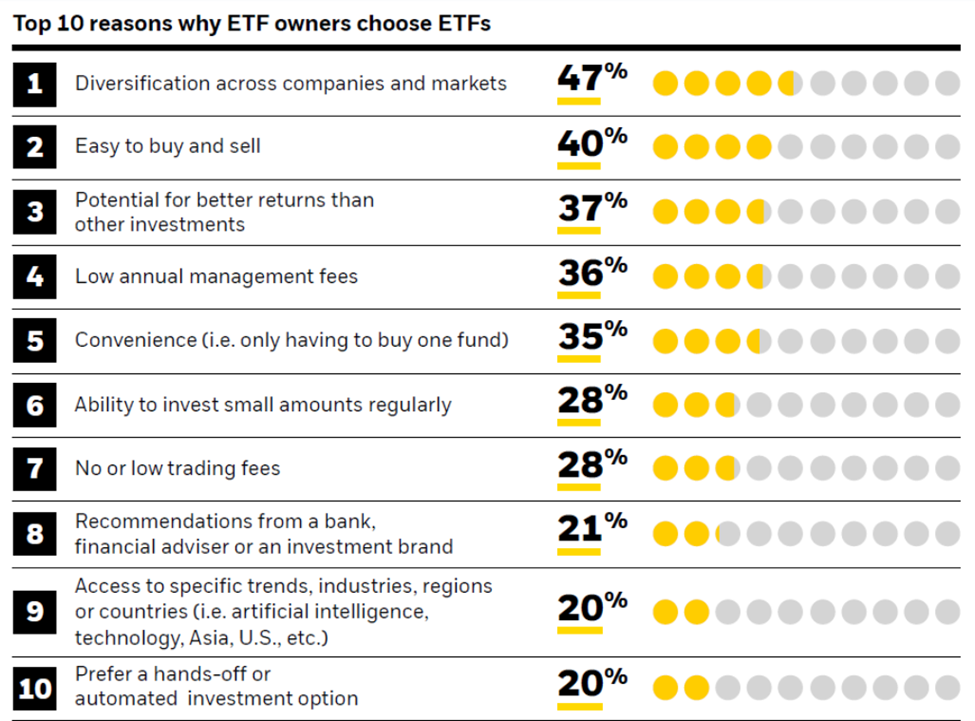
Risiko tersebut, BlackRock baru-baru ini dalam laporan People & Moneymelaporkan adanya peningkatan minat ritel terhadap ETF, terutama di kalangan investor muda. Menurut ringkasan dari Nate Geraci:
ETF adalah produk investasi ritel dengan pertumbuhan tercepat dalam lima tahun terakhir.
19 juta orang dewasa di AS kemungkinan akan membeli ETF dalam 12 bulan mendatang, dengan 44% merupakan pembeli pertama kali, 71% berusia di bawah 45 tahun.
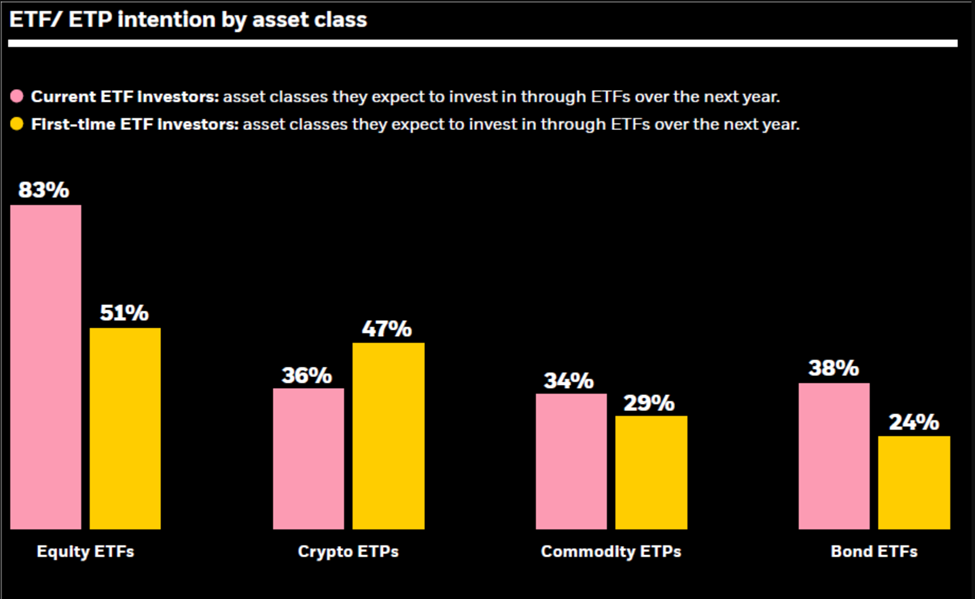
Saham dan kripto akan menjadi alokasi paling populer di antara investor baru ini, dengan 47% diperkirakan akan berinvestasi dalam ETF kripto.
Data ini menunjukkan pergeseran generasional dalam perilaku investasi. Investor muda semakin banyak memasukkan kripto ke dalam portofolio mereka bersama dengan aset tradisional. Hal ini menunjukkan bahwa pasar berkembang lebih cepat dari yang diperkirakan oleh kebijaksanaan konvensional.
Langkah BlackRock dan Sentimen Pasar
Aktivitas institusional menambahkan lapisan lain pada perdebatan ini. Laporan pelacak whale menunjukkan bahwa BlackRock baru-baru ini menyetorkan 4.880 BTC, senilai sekitar US$467 juta, dan 54.730 ETH senilai hampir US$176 juta ke dalam Coinbase exchange.
BlackRock deposits 4,880 $BTC, worth $467.19 million, and 54,730 $ETH, worth $175.93 million into Coinbase – Arkham. pic.twitter.com/Q7RSl6c6k3
Memindahkan token ke exchange sering kali menunjukkan rencana potensial untuk menjual, langkah yang bisa menjadi bearish bagi harga Bitcoin dan Ethereum.
“Terakhir kali mereka melakukan ini, pasar segera turun. Sekarang dengan Bitcoin berharga US$104 ribu… apakah akan jatuh di bawah US$100 ribu selanjutnya?” Kyle Doops bertanya di X setelah transaksi awal.
Meskipun demikian, transfer besar dari manajer dana utama ke exchange juga bisa berarti penyeimbangan ulang strategis.
Dengan kedua kemungkinan ini cenderung mempengaruhi sentimen harga jangka pendek, perlu dicatat bahwa kepemilikan institusional yang terkonsentrasi dapat memperbesar ayunan pasar, terutama dalam lingkungan yang memiliki volatilitas tinggi.
Haruskah Bitcoin diperlakukan sebagai emas digital, menawarkan stabilitas portofolio? Atau apakah itu aset berisiko tinggi, dengan imbalan tinggi seperti saham?
Ke depan, aliran ritel dan institusional, inovasi ETF, dan kondisi ekonomi makro kemungkinan akan menentukan jalur kripto pada tahun 2026. Karena investor muda semakin banyak beralih ke ETF kripto, pasar mungkin akan melihat pertumbuhan yang cepat dan peningkatan volatilitas, yang lebih menekankan pada kebutuhan strategi portofolio yang hati-hati.
Harga Bitcoin, Emas, dan Perak telah mencapai level harga utama di mana pasar bisa segera berbalik arah, karena indikator teknis awal mengisyaratkan kemungkinan pembalikan.
Pada waktu publikasi, harga BTC, XAU, dan XAG sedang menguji level support kritis, di tengah tingkat ketakutan yang tinggi di pasar serta kekhawatiran terhadap death cross mata uang kripto pertama ini.
Bitcoin Bull Muncul di Tengah Ketakutan Death Cross
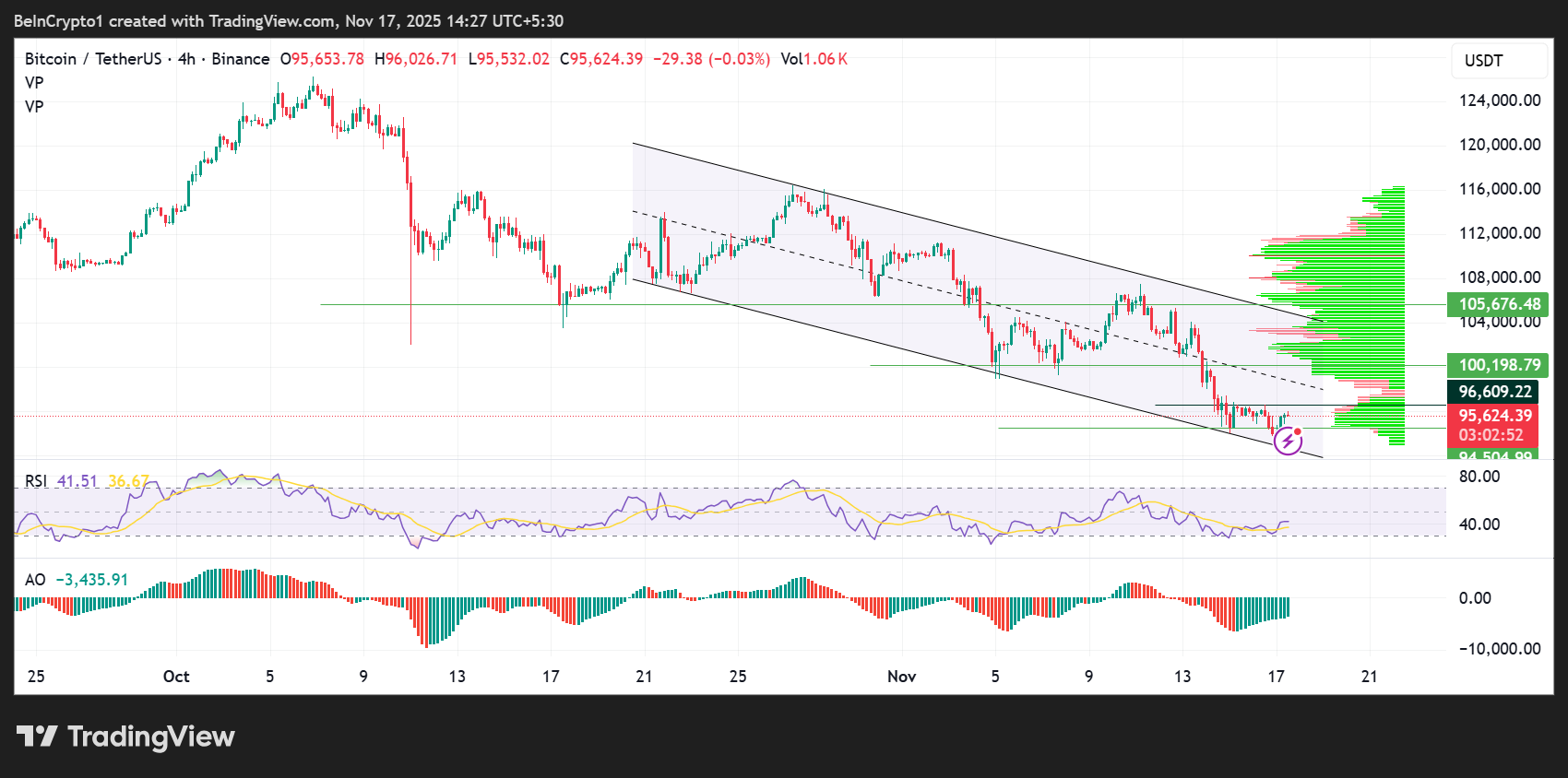
Bitcoin diperdagangkan pada US$95,624 pada waktu publikasi, melanjutkan penurunan dalam saluran menurun yang terdefinisi dengan jelas dan telah mengendalikan aksi harga sejak awal Oktober.
Setiap usaha untuk menembus batas atas gagal, dan harga kini menguji support saluran yang lebih rendah. Konsolidasi pada level saat ini menunjukkan bahwa BTC bersiap untuk pergerakan yang menentukan.
Profil Volume menunjukkan klaster likuiditas besar di US$100.000–US$105.600, yang bisa menjadi resistance di atas. Namun, dengan bar horizontal hijau yang mewakili profil volume bullish, para bull menunggu untuk berinteraksi dengan harga BTC di area ini. Dominasi bullish tersebut dapat membuat aset kripto pionir ini.
BTC berkali-kali ditolak di level US$100.200, menandakan tekanan jual yang kuat dari posisi long yang terjebak dan pemain besar yang mendistribusikan di dekat angka psikologis enam digit.
RSI (Relative Strength Index) di angka 41 menunjukkan momentum bearish, namun dengan potensi divergensi bullish yang terbentuk saat harga mendekati bagian bawah saluran. Awesome Oscillator (AO) tetap negatif tapi sedang moderat, menunjukkan melemahnya kekuatan penurunan. Ini adalah pertanda umum untuk reli pemulihan.
Performa Harga Bitcoin (BTC) | Sumber: TradingView
Support langsung berada di US$94.504, menandai batas bawah saluran. Jika ada penurunan, risiko penurunan lebih dalam menuju US$92.000–US$90.000, di mana band support VPVR (Volume Profile Visible Range) berikutnya berada.
Namun, jika para bull mempertahankan zona ini dan memaksa pemulihan, BTC bisa mengatasi resistensi langsung di US$98.000, diikuti oleh zona breakout kritis di US$100.198.
Perubahan tren besar berikutnya tergantung pada apakah Bitcoin bisa mempertahankan support saluran. Konfirmasi breakout di atas US$100.000–US$102.000 akan menandakan pergeseran tren bullish, sementara risiko penurunan akan mempercepat tren turun.
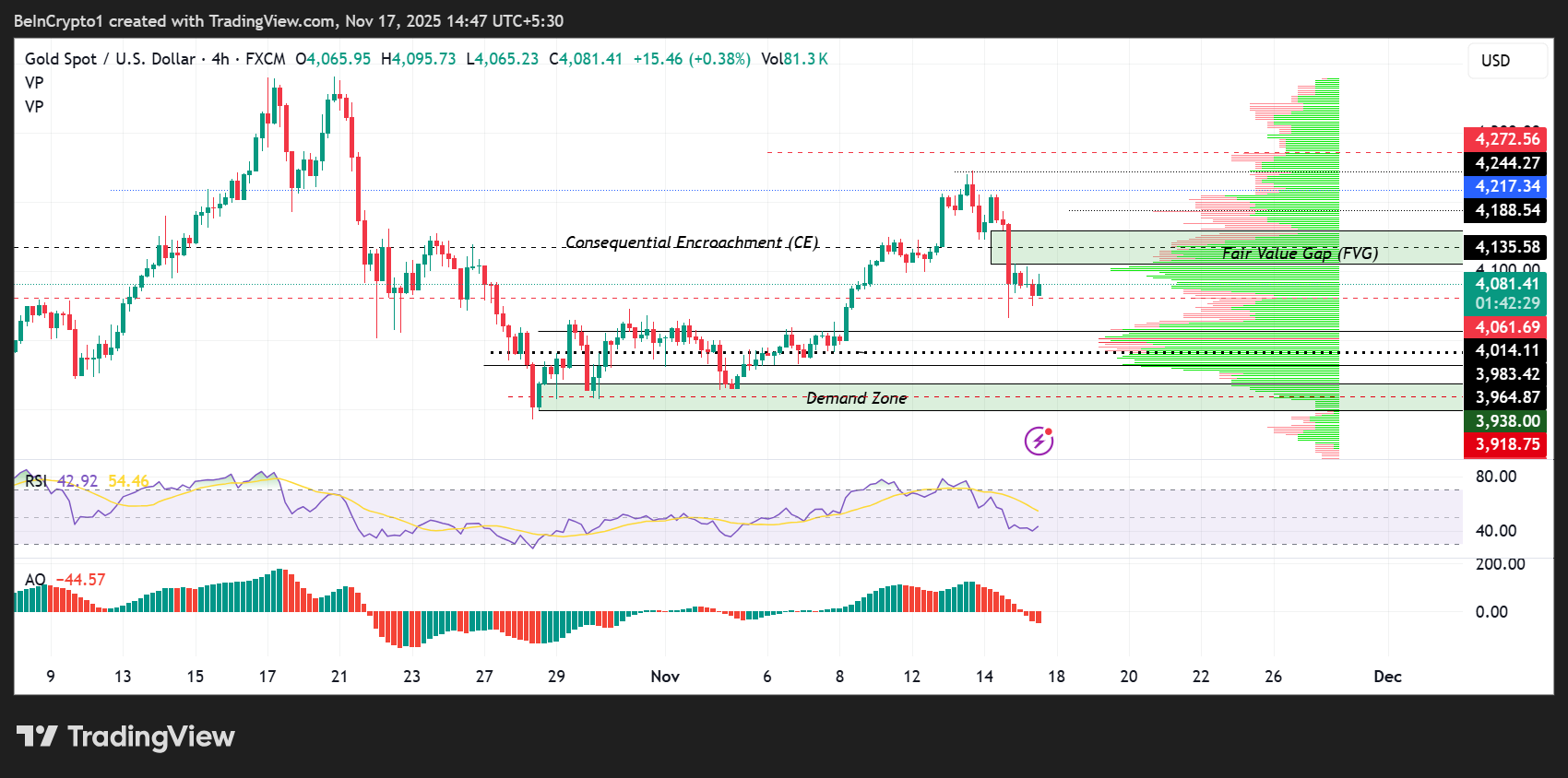
Emas Perlu Mengisi Ketidakseimbangan karena FVG
Emas diperdagangkan di dekat US$4.081, terkonsolidasi setelah penurunan harga singkat pada 14 November, yang ditandai oleh candlestick merah panjang. Penurunan ini menghasilkan Fair Value Gap (FVG) sekitar US$4.135–US$4.188, mewakili inefisiensi di pasar XAU/USD yang perlu diatasi.
Grafik menunjukkan contoh textbook dari supply overhang, di mana profil volume bearish (bar horizontal merah) tumpang tindih dengan garis tengah FVG (Consequential Encroachment atau CE) di US$4.135.
Penembusan dan penutupan di atas garis tengah ini pada timeframe 4 jam akan mengonfirmasi kelanjutan tren naik.
Harga emas kini diperdagangkan di US$4.081, dengan profil volume bullish (bar horizontal hijau) terletak di atasnya, menunjukkan XAU dikuasai para bull. Ini menambah keyakinan bahwa harga emas bisa memperpanjang reli untuk mengisi ketidakseimbangan akibat FVG.
Di bawah ini terdapat Demand Zone lebih dalam di US$3.983–US$3.938, yang secara historis menarik pembelian yang kuat. Jika harga turun ke zona ini, reaksi bullish tajam adalah kemungkinan besar.
Momentum tetap lembut. RSI pada 42 sedang mencoba pemulihan ringan namun tetap di bawah level keseimbangan, menunjukkan penjual masih mendominasi.
AO sangat negatif, mengonfirmasi momentum bearish yang sedang berlangsung, meskipun bilah histogram menyusut, menunjukkan tanda-tanda awal kelelahan.
Untuk melanjutkan ke atas, emas harus merebut kembali FVG di US$4.135. Penembusan bersih dan penutupan lilin di atas zona ini akan menandakan kelanjutan bullish menuju US$4.188 dan resistance makro di US$4.244–US$4.272. Sebaliknya, kegagalan mempertahankan US$4.061 risiko penurunan masuk ke zona permintaan sebelum pemulihan apa pun.
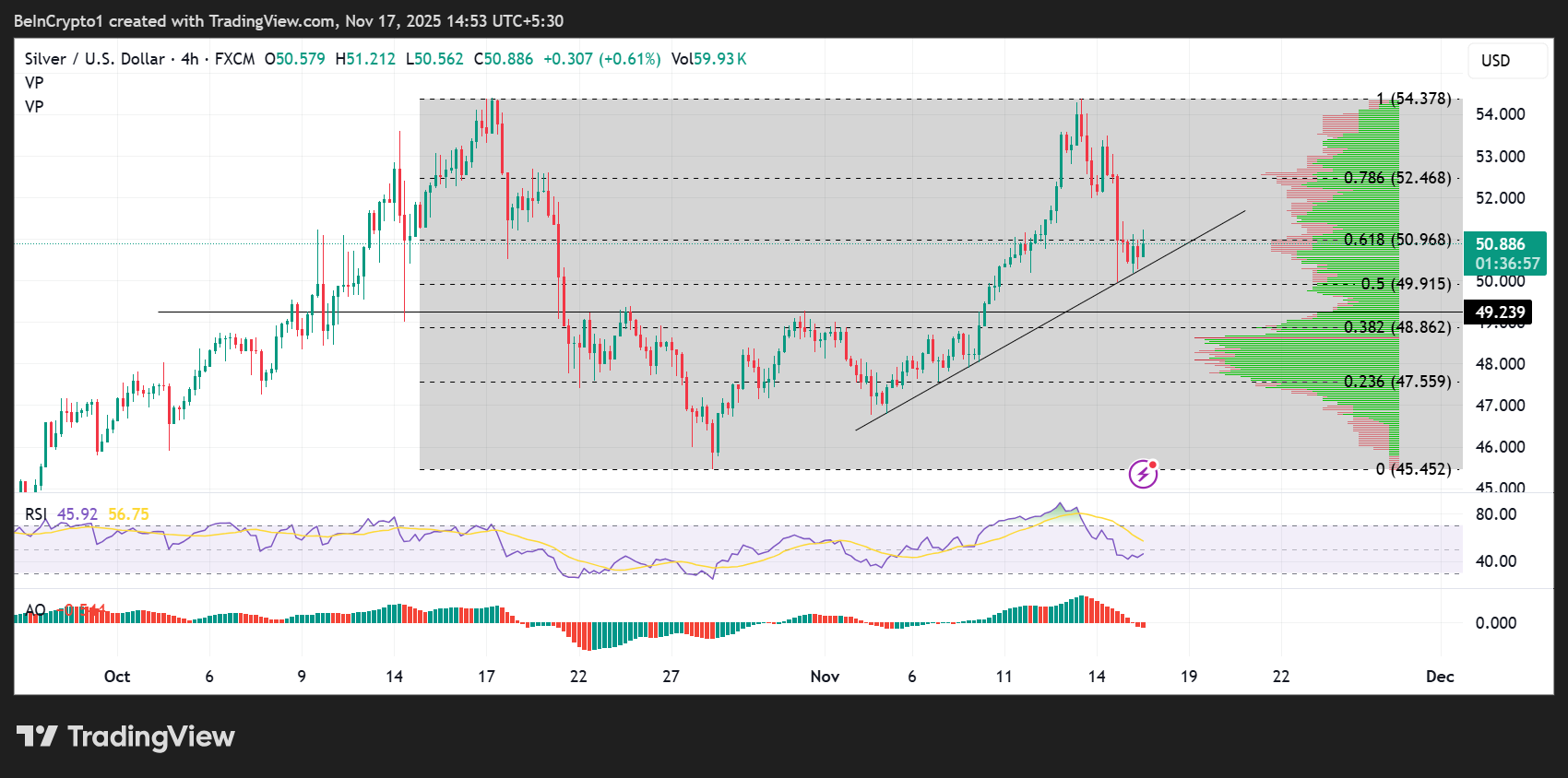
Silver Berisiko Kehilangan Support karena Trendline
Perak saat ini diperdagangkan di sekitar US$50,88, mencoba stabil setelah koreksi tajam dari puncak terbaru di US$54,37.
Koreksi menemukan support sementara di dekat retracement Fibonacci 61,8% di US$50,96, yang kini berubah menjadi resistance, sejalan dengan garis tren naik sebagai support. Ini menunjukkan pembeli dan penjual secara agresif mempertahankan zona ini.
Profil Volume menunjukkan node besar antara US$49,80–US$51,20, menunjukkan likuiditas tinggi dan minat kuat; zona ini bertindak sebagai magnet untuk harga.
Penutupan yang menentukan di atas level retracement Fibonacci 61,8% dapat membuka jalan kembali ke level Fibonacci 78,6% di US$52,46 dan akhirnya retest di US$54,37.
Namun, jika terjadi breakout di bawah garis tren ini, akan mengungkap support kunci di level 50% midrange dari indikator Fibonacci, di US$49,91, dan level retracement Fibonacci 38,2%, di US$48,86, yang keduanya berada dalam konsolidasi kuat sebelumnya.
Indikator momentum condong netral-bearish. Relative Strength Index (RSI) di angka 45 menunjukkan usaha pemulihan namun masih di bawah midline-nya, mengindikasikan keragu-raguan setelah tekanan jual baru-baru ini.
Awesome Oscillator mencetak batang merah, mengisyaratkan bahwa momentum bearish masih mengendalikan namun semakin melemah.
Sekarang, perak berada di support kritis, yang harus ditahan oleh bull pada garis tren. Pemantulan dari sini dapat memicu reli baru, sementara breakout berisiko pada koreksi lebih dalam menuju US$48–US$49.
Grayscale’s Dogecoin ETF could launch as soon as November 24, following a 20-day SEC review clock triggered after its registration filing. Bitwise also seeks automatic approval, marking a significant step in the institutionalization of meme coins.
These filings indicate a significant shift in regulatory oversight as Multiple asset managers now compete to bring Dogecoin into traditional portfolios through tax-efficient and regulated vehicles.
SEC Review Process Accelerates Approval Timeline
This faster timeline stems from Section 8(a) of the Securities Act of 1933. The provision allows registration statements to automatically become effective 20 days after filing, unless the SEC takes action.
Grayscale and Bitwise are using this to skip the more complex 19b-4 exchange rule procedure usually needed for ETF launches.
The official SEC guidance confirms that registration statements gain automatic effectiveness under Section 8(a) after 20 days. This shortcut has expedited product launches as institutional interest in cryptocurrency investment grows.
Bitwise filed its application on November 7. This could set the stage for a late November launch. Meanwhile, Balchunas predicts a November 24 launch for Grayscale, though he cautioned that confirmation depends on official exchange notice.
The SEC has acknowledged both filings, kicking off the regulatory review and public comment period.
Based on 20 day clock I believe Grayscale will be out with first Doge ETF in a week, 11/24. We'll see, won't be 100% till exchange notice, but based on SEC guidance it looks good. pic.twitter.com/mvlGsNyNVG
Grayscale launched its Dogecoin Trust on January 31, 2025, as a precursor to the ETF application. The Trust enables investors to gain Dogecoin exposure without direct ownership, addressing custody and security concerns that have deterred many institutions.
This classification helps sidestep the legal issues that have slowed Solana and XRP ETF efforts, where securities status remains disputed.
The Federal Register filing for NYSE Arca’s proposed rule change directly references Dogecoin under Rule 8.201-E, which covers “Commodity-Based Trust Shares.”
This aligns with the Commodity Exchange Act and signals that both exchanges and the SEC consider Dogecoin a commodity fit for an ETF structure.
Bloomberg analysts predict a 90% chance of Dogecoin ETF approval, versus 95% for XRP. These estimates reflect rising confidence in the SEC’s openness to altcoin ETFs, following Solana ETF decisions earlier this year.
However, the process still requires a 240-day review window after publication in the Federal Register. During this window, public input can shape the SEC’s final decision. The Commission may delay, request amendments, or issue stop orders if investor protection or market integrity is compromised.
Industry-Wide Institutional Push Gains Momentum
Meanwhile, the race for a Dogecoin ETF now extends beyond Grayscale and Bitwise. Leading asset managers, such as 21Shares, Rex Shares, and Osprey Funds, have filed similar applications, signaling an industry-wide consensus that meme coins are growing into institutional-grade investment products.
21Shares filed its Dogecoin ETF registration on April 9, 2025, detailing custody with Coinbase Custody Trust Company. Using independent, regulated custodians answers SEC demands for secure storage and institutional compliance, removing a major barrier for traditional finance.
ETFs offer clear advantages over direct crypto holdings.
In-kind creation and redemption allow tax efficiency.
Regulated frameworks boost transparency and investor protection, features that spot trading lacks.
These benefits appeal to pension funds, endowments, and registered investment advisors with fiduciary obligations.
Industry observers predict that more than 200 crypto ETF approvals will be made by mid-2026. This trend could drive massive institutional capital flows and lower volatility, moving the market away from retail-dominated activity and closer to mainstream acceptance.
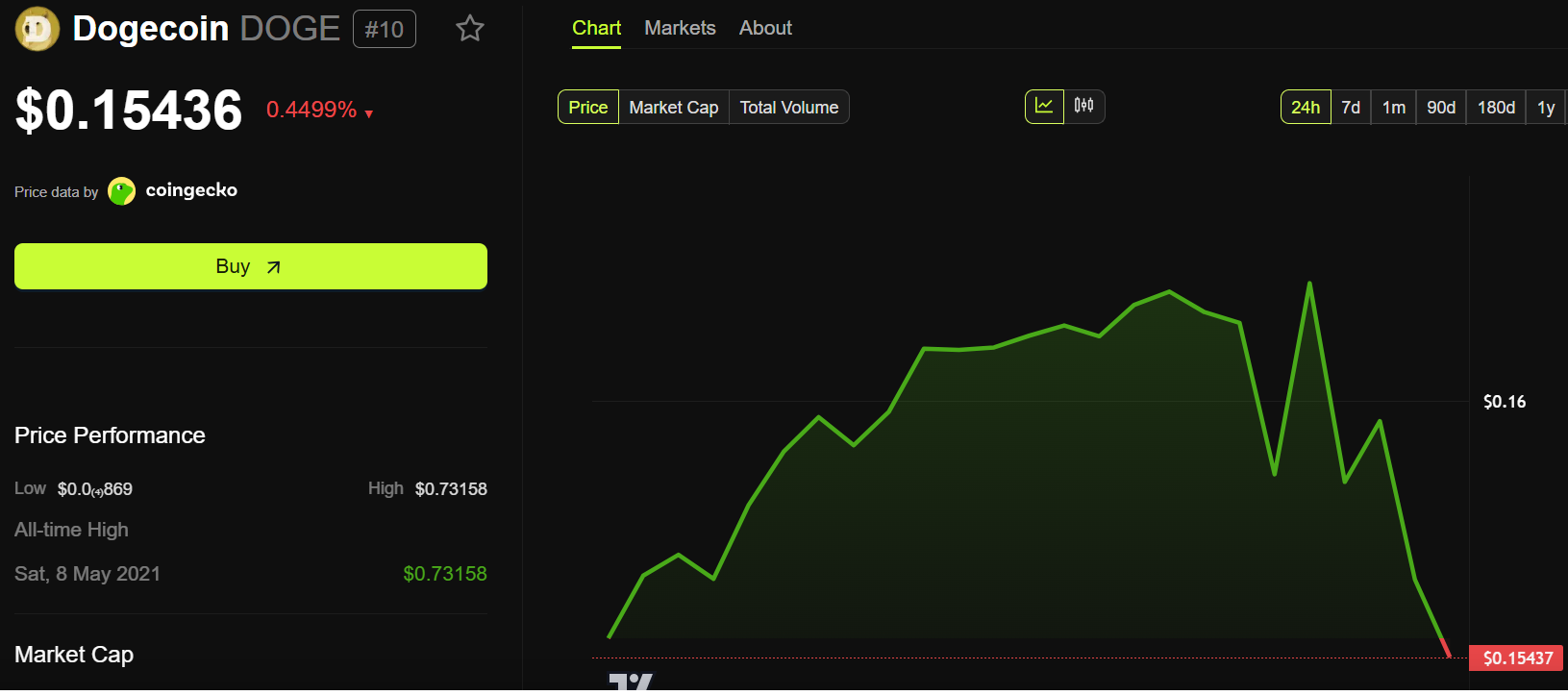
Despite this growing momentum, Dogecoin’s price has dropped, down 0.4499% in the last 24 hours. As of this writing, DOGE traded for $0.1543.
This suggests that ETF approvals may not deliver immediate gains, but steady institutional demand could eventually drive sustained growth.
The coming weeks will reveal whether regulatory timelines align with market expectations. Should Grayscale and Bitwise succeed in launching before year-end, Dogecoin would join Bitcoin, Ethereum, and Solana among the few cryptocurrencies available through US-regulated ETFs. Such a turnout would strengthen its status within the digital asset space.
Two of the largest corporate players in cryptocurrency, MicroStrategy and BitMine, have just escalated a quiet accumulation war. One is doubling down on Bitcoin, the other is expanding its grip on Ethereum.
While each move looked routine at first glance, the scale and timing reveal something far more consequential building beneath the surface.
MicroStrategy Accelerates Bitcoin Buying as Pressure Mounts
MicroStrategy snapped up 8,178 BTC last week for roughly $835.6 million at an average price of $102,171 per coin. The firm now holds 649,870 BTC, acquired for $48.37 billion at an average cost basis of $74,433, according to a confirmed update shared by Michael Saylor and Strategy Inc.
Strategy has acquired 8,178 BTC for ~$835.6 million at ~$102,171 per bitcoin and has achieved BTC Yield of 27.8% YTD 2025. As of 11/16/2025, we hodl 649,870 $BTC acquired for ~$48.37 billion at ~$74,433 per bitcoin. $MSTR$STRC$STRD$STRE$STRF$STRKhttps://t.co/HI1TeYOvQ9
The aggressive move comes just days after Saylor promised that the market would be pleasantly surprised.
“We’re buying quite a lot… people will be pleasantly surprised.” He added that Strategy is “always buying” and now controls 3.1% of the Bitcoin network.
While MicroStrategy’s BTC yield for 2025 stands at 27.8%, the purchase sparked an immediate wave of commentary and controversy.
Lookonchain verified that the company sits on $12.88 billion in unrealized profit (+27%), even after the latest dip. But the crypto community remains split. On one side, analysts argue that MicroStrategy’s structure is sound.
“Even if BTC drops -70%, Saylor still won’t have to sell… There’s no margin call,” analyst Miles Deutscher noted.
Jeff Dorman added that concerns about forced selling are “not even remotely a concern,” citing low interest expense, positive cash flow, and Saylor’s 42% ownership, which prevents activist intervention.
On the other hand, critics like goldbug Peter Schiff argue that the strategy is fragile, with Dom Kwok, a popular user on X, echoing the sentiment.
“MSTR will be forced to sell its BTC to make interest payments… it’s sell bitcoin or bust,” he claimed.
Even market watchers questioned the rollout. Analyst AB Kuai Dong highlighted that Strategy posted, then deleted, its announcement within minutes, calling it “amateurish,” and noting that MSTR fell 3% in pre-market despite the bullish purchase.
BitMine’s Ethereum Grab Signals a Corporate Race for Treasury Dominance
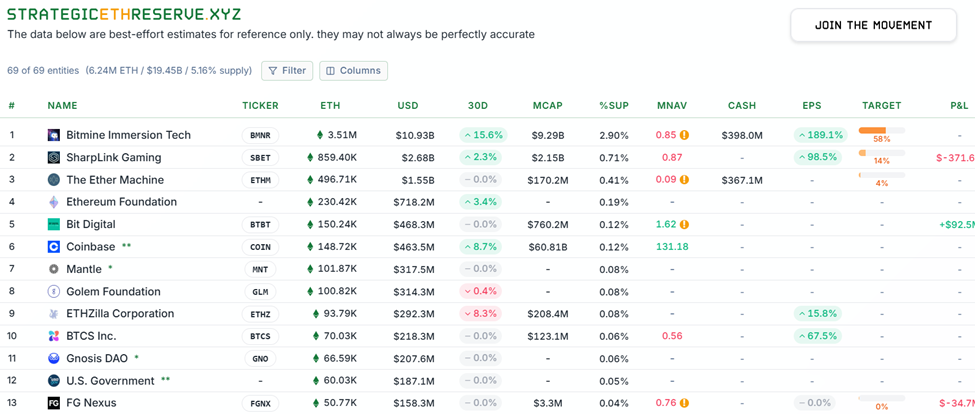
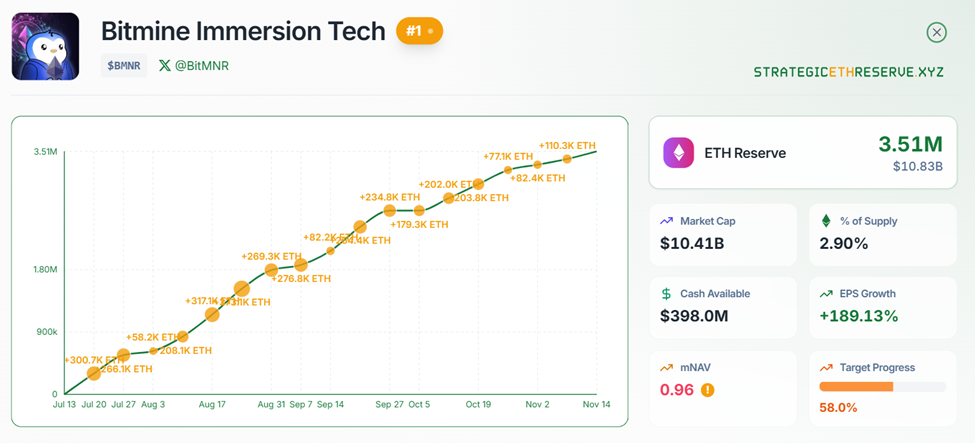
As MicroStrategy expands its Bitcoin empire, Tom Lee’s BitMine is executing a parallel strategy on Ethereum, but at an even larger scale. BitMine now holds almost 3.6 million ETH tokens, representing 2.9% of the total supply, according to its official November update. The firm purchased 54,156 ETH in a single week.
🧵 BitMine provided its latest holdings update for Nov 17th, 2025:
$11.8 billion in total crypto + "moonshots": -3,,559,879 ETH at $3,120 per ETH (Bloomberg) – 192 Bitcoin (BTC) – $37 million stake in Eightco Holdings (NASDAQ: ORBS) (“moonshots”) and – unencumbered cash of…
At current valuations, the company holds $11.8 billion in a combined mix of crypto, cash, and “moonshot” investments, including 3,559,879 ETH, 192 BTC, $607 million in cash, and strategic equity positions.
Fundstrat data, corroborated by the StrategicETHReserve.xyz dashboard, confirms BitMine is now the leading Ethereum treasury globally and the second crypto treasury overall, behind MicroStrategy.
In his November message, Lee argued that the crypto cycle peak is still 12–36 months away, breaking from traditional four-year expectations. He said the recent weakness reflects a market maker undergoing balance sheet stress, a temporary form of “QT” for the crypto ecosystem.
“Crypto prices have not recovered since the liquidation event on October 10… The lingering weakness has the hallmarks of a market maker suffering from a crippled balance sheet,” read an excerpt in the announcement, citing Lee.
He added that tokenization on Ethereum is a “major unlock” and compared current regulatory moves, such as the GENIUS Act and the SEC’s Project Crypto, to 1971’s end of the Bretton Woods era.
BitMine’s stock reflects rising institutional attention, with trading volume of $1.4 billion per day, ranking 48th in the US, ahead of DoorDash.
Together, MicroStrategy’s BTC build and BitMine’s ETH accumulation mark the clearest trend of 2025, that crypto is becoming a battlefield for corporate treasuries.
With Saylor targeting deeper Bitcoin control and BitMine pushing toward the “Alchemy of 5%,” the market may be entering its first true multi-chain corporate accumulation era, one driven not by retail cycles, but by balance sheets, liquidity channels, and long-duration conviction.
Cboe Global Markets is ushering in a new era for US crypto derivatives. The exchange operator announced today that its Cboe Futures Exchange (CFE) will begin offering Continuous Futures for Bitcoin (PBT) and Ether (PET) on December 15, 2025, pending final regulatory review.
This marks the first time that US-regulated markets will host perpetual-style crypto exposure, which has traditionally been offered only on offshore exchanges.
Cboe Brings Perpetual-Style Crypto Futures Into the US Regulatory Fold
The new products are designed to provide professional investors with long-term, capital-efficient exposure to the two largest digital assets. It eliminates the operational friction of rolling expiring futures.
Each contract will have a 10-year expiration and feature a daily cash adjustment. With this, it mirrors the mechanics of perpetual swaps while remaining fully compliant with US derivatives regulations.
Perpetual futures, one of crypto’s most traded products globally, have historically thrived on offshore venues. This is due to regulatory constraints in the US.
Cboe’s move brings a familiar, yet heavily supervised, version of this instrument to institutional desks. It seeks transparency, clear protections, and regulatory alignment.
“As perpetual futures have historically been traded offshore, Cboe is excited to help expand access to these products within a US-regulated, transparent, and intermediary-friendly environment,” said Rob Hocking, Global Head of Derivatives at Cboe.
He added that the structure enables more efficient portfolio and risk management. At the same time, it must provide investors with a controlled path to leveraged digital asset exposure.
Continuous Futures will be cash-settled, centrally cleared, and governed by CFTC-regulated standards via Cboe. Clear US Margin requirements will follow standard derivatives oversight.
Traders may gain cross-margining benefits with CFE’s existing Financially Settled Bitcoin (FBT) and Ether (FET) futures.
Designed for Capital Efficiency and Long-Term Exposure
The contracts will track Cboe Kaiko Real-Time Rates for both BTC and ETH. A daily “Funding Amount” similar to funding payments used in perpetual swaps will be applied to open positions. This will keep futures pricing aligned with spot markets.
“Bringing perpetual-style futures to US regulated markets addresses a real need for institutional investors seeking efficient, long-term crypto exposure,” said Anne-Claire Maurice, Managing Director of Derived Data at Kaiko.
She emphasized that the structure removes rolling risks while preserving transparency and oversight. This aligns with recent remarks from Youngsun Shin, Head of Product at Flipster, in an interview with BeInCrypto. According to Shin, risk management should be built into innovation itself.
Trading will be available 23 hours a day, five days a week, from Sunday evening to Friday afternoon (ET). Notably, this mirrors existing CFE crypto derivatives schedules.
Education and Market Preparation Begin
Recognizing the complexity and novelty of these products, Cboe’s Options Institute will host two public education sessions on December 17, 2025, and January 13, 2026.
These courses will help traders understand:
Contract specifications,
Funding calculations, and
Strategic use cases, ranging from hedging and volatility trading to synthetic long-term positioning.
With institutional demand for regulated crypto exposure rising, especially amid expanding ETF markets, Cboe’s Continuous Futures could become one of the most significant structural upgrades to US crypto derivatives in years.
Welcome to the US Crypto News Morning Briefing—your essential rundown of the most important developments in crypto for the day ahead.
Grab a coffee and settle in—this one might make you rethink what you thought you knew about crypto. In the past year, Bitcoin has surged dramatically, posting returns that rival traditional safe-haven assets. Yet, while some see a story of stability, others see lingering questions about risk, reward, and where cryptocurrencies really belong in a portfolio.
Crypto News of the Day: Crypto Returns Spark Fresh ‘Store of Value’ Debate
Since January 2024, Bitcoin ETFs have surged roughly 100%, mirroring the returns of physical gold ETFs, while the S&P 500 returned just 45%. This performance has sparked a fresh debate over Bitcoin’s role in investor portfolios: is it a “risk-on” asset like stocks, or a “store of value” like gold?
Since spot btc ETFs launched in Jan 2024, they’ve returned same % as physical gold ETFs…
Approx 100%.
S&P 500 has returned nearly 45%.
So is btc a “risk on” asset like stocks or “store of value” like gold?
Nate Geraci, president of the ETF Store, highlighted the surprising parity, with the striking similarity to gold returns prompting investors to reassess Bitcoin’s traditional narrative.
While Bitcoin is widely viewed as a volatile, high-risk asset, its ETF performance over the past year has aligned with one of the most stable investment vehicles in history. Against this backdrop, investors weigh whether the risk is worth the return.
“I think the question for cripto is… especially ETH. Do you want to hold a high-volatility asset for that kind of return? ETH flat or down for the past 4/5 years,” one user chimed.
This remark highlights the challenge for investors, who see Bitcoin’s rally offering gold-like gains, but but the risks due to volatility remain a persistent threat for crypto as an asset class. Risk-adjusted returns remain a key factor when evaluating crypto’s place in a diversified portfolio.
Risks notwithstanding, BlackRock’s recent People & Moneyreport reveals the growing retail appetite for ETFs, especially among younger investors. According to Nate Geraci’s summary:
ETFs are the fastest-growing retail investment product over the last five years.
19 million US adults are likely to buy ETFs in the next 12 months, with 44% being first-time buyers, 71% under 45 years old.
Equity and crypto will be the most popular allocations among these new investors, with 47% expected to invest in crypto ETFs.
This data highlights a generational shift in investing behavior. Younger investors are increasingly incorporating crypto into their portfolios alongside traditional assets. This shows that the market is growing faster than conventional wisdom suggests.
BlackRock Moves and Market Sentiment
Institutional activity adds another layer to the debate. Whale tracker reports indicate that BlackRock recently deposited 4,880 BTC, worth approximately $467 million, and 54,730 ETH valued at nearly $176 million into the Coinbase exchange.
BlackRock deposits 4,880 $BTC, worth $467.19 million, and 54,730 $ETH, worth $175.93 million into Coinbase – Arkham. pic.twitter.com/Q7RSl6c6k3
Moving tokens to exchanges often suggest possible plans to sell, a move that could be bearish for Bitcoin and Ethereum prices.
“Last time they did this, the market dipped soon after. Now with Bitcoin sitting near $104K… is sub-$100K next?” Kyle Doops posed on X after the initial transaction.
Nonetheless, large transfers from major fund managers to exchanges could also mean strategic rebalancing.
With both possibilities likely to weigh on near-term price sentiment, it is worth noting that concentrated institutional holdings could amplify market swings, particularly in high-volatility environments.
Should Bitcoin be treated like digital gold, offering portfolio stability? Or is it a high-risk, high-reward asset akin to equities?
Looking ahead, retail and institutional flows, ETF innovation, and macroeconomic conditions will likely define crypto’s trajectory in 2026. As younger investors increasingly allocate to crypto ETFs, the market may see both rapid growth and heightened volatility, reinforcing the need for careful portfolio strategy.
Welcome to the US Crypto News Morning Briefing—your essential rundown of the most important developments in crypto for the day ahead.
Grab a coffee because of how whales are splitting. Institutions are quietly loading up, and Tom Lee’s BitMine is moving faster than anyone as a major on-chain pattern breaks. With Ethereum (ETH) stuck in the $3,100 range, and volatility spiking across the market, a new battle line is forming between panic sellers and high-conviction buyers.
Crypto News of the Day: BitMine Buys 9,176 ETH From Galaxy Digital OTC
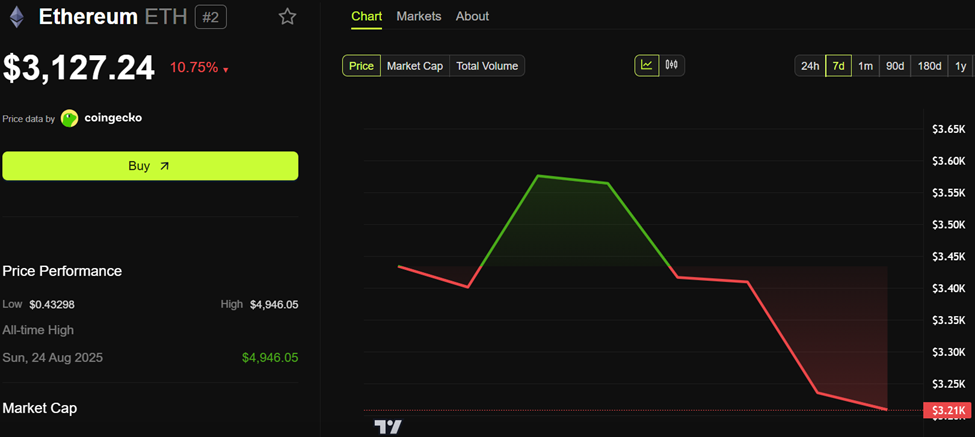
Ethereum’s biggest players are suddenly split, and Tom Lee’s BitMine is moving faster than anyone. As ETH hovers near $3,100 with mixed technical signals, whales are either panic-selling at breakeven or doubling down with record-size buys. BitMine has firmly chosen its side.
Despite a sharp market downturn, BitMine continues to accumulate at scale. On-chain data from Lookonchain shows a new BitMine-linked wallet, 0x9973, receiving 9,176 ETH, valued at $29.14 million, directly from a Galaxy Digital OTC wallet.
“Despite the market downturn, Tom Lee’s Bitmine is still buying $ETH,” Lookonchain reported, highlighting Lee’s aggressive strategy.
This follows earlier activity confirming a total accumulation of 19,500 ETH in BitMine, positioning the firm among the most active institutional buyers in November.
Whales Break Pattern: Some Sell at Breakeven, Others Buy Billions
A closer look at additional on-chain transactions suggests that broader whale activity is fragmented. A long-term holder, wallet 0x0c19, has just sold 2,404 ETH tokens, valued at $7.7 million, which they had held since August 2021. At today’s prices, the whale appears to be exiting at breakeven, signaling fading confidence after years of inactivity.
Meanwhile, a super-whale known as #66kETHBorrow is doing the opposite. They added another 16,937 ETH ($53.9 million), bringing their total to 422,175 ETH ($1.34 billion) in just a few days. Despite sitting on approximately $126 million in unrealized losses, this whale continues to accumulate with conviction.
Machi Brothers Add Leverage Even While Deep in the Red
Traders Machi Big Brother and Machi Small Brother have also doubled down. Both increased their long positions on Hyperliquid:
Machi Big Brother: 7,400.7 ETH ($23.55 million), liquidation at $3,040
Machi Small Brother: 5,000 ETH ($15.9 million), liquidation at $2,794
Lookonchain notes that both traders added margin as ETH fell to avoid liquidations, signaling confidence in a rebound despite being heavily underwater.
Tornado Cash Wallet Sparks Richard Heart Speculation
Elsewhere, a Tornado Cash-linked wallet, 0xa13C, sold 4,978 ETH ($16.29 million) at $3,273. On-chain data shows this same entity previously deposited 162,937 ETH, funds associated by analysts with Richard Heart, founder of HEX and PulseChain.
Another wallet, 0xa13C, received 4,978 $ETH ($16.29M) from https://t.co/11PfRBP2j2 and sold it at $3,273 eight hours ago.
Previously, Richard Heart(@RichardHeartWin, founder of HEX, PulseChain, and PulseX) deposited all 162,937 $ETH($619M) he bought at $3,800 last year into… https://t.co/nbrxNGoQX4
No confirmation has surfaced, but the sale adds to the narrative of whale divergence.
“Crazy accumulation happening behind the scenes,” DeFi researcher 0xNobler said.
The next major catalyst for Ethereum arrives in December, the Fusaka upgrade. Crypto Rover noted that the smaller Pectra upgrade pushed ETH up 50%, adding weight to expectations for renewed volatility.
The massive $ETH Fusaka upgrade is coming this December.
With whales deeply divided and institutions silently accumulating, Ethereum’s next move may hinge on whether BitMine and other large buyers can flip sentiment before December’s upgrade window.
Selamat datang di US Crypto News Morning Briefing—panduan penting Anda tentang perkembangan terpenting di dunia kripto untuk hari ini.
Ambil kopi Anda karena whale sedang memecah. Institusi diam-diam membeli dalam jumlah besar, dan BitMine milik Tom Lee bergerak lebih cepat dari siapa pun ketika pola besar on-chain terpecah. Dengan Ethereum (ETH) terjebak di kisaran US$3.100, dan volatilitas melonjak di seluruh pasar, garis pertempuran baru muncul antara penjual panik dan pembeli berkeyakinan tinggi.
Berita Kripto Hari Ini: BitMine Beli 9.176 ETH Dari Galaxy Digital OTC
Pemain terbesar Ethereum tiba-tiba terpecah, dan BitMine milik Tom Lee bergerak lebih cepat dari siapa pun. Saat ETH bergerak di dekat US$3.100 dengan sinyal teknikal yang beragam, whale panik menjual di titik impas atau terus membeli dalam jumlah besar. BitMine telah memilih pihaknya dengan tegas.
Meski terjadi penurunan tajam di pasar, BitMine terus mengumpulkan dalam skala besar. Data on-chain dari Lookonchain menunjukkan wallet baru yang terhubung dengan BitMine, 0x9973, menerima 9.176 ETH yang bernilai US$29,14 juta, langsung dari wallet OTC Galaxy Digital.
“Meskipun pasar menurun, Bitmine milik Tom Lee masih membeli $ETH,” laporan Lookonchain, menyoroti strategi agresif Lee.
Ini mengikuti aktivitas sebelumnya yang menegaskan akumulasi total 19.500 ETH di BitMine, menempatkan perusahaan di antara pembeli institusional paling aktif pada bulan November.
Whale Break Pattern: Beberapa Jual di Breakeven, Lainnya Beli Bernilai Miliar
Pemantauan lebih dekat terhadap transaksi on-chain lainnya menunjukkan bahwa aktivitas whale yang lebih luas terpecah. Sebuah wallet holder jangka panjang, 0x0c19, baru saja menjual 2.404 token ETH dengan nilai US$7,7 juta, yang telah mereka pegang sejak Agustus 2021. Dengan harga hari ini, whale ini sepertinya keluar pada titik impas, menandakan menurunnya kepercayaan setelah bertahun-tahun tidak aktif.
Sementara itu, super-whale yang dikenal sebagai #66kETHBorrow melakukan sebaliknya. Mereka menambahkan 16.937 ETH lagi (US$53,9 juta), menambah total mereka menjadi 422.175 ETH (US$1,34 miliar) hanya dalam beberapa hari. Meskipun memiliki sekitar US$126 juta dalam kerugian belum direalisasi, whale ini terus mengumpulkan dengan keyakinan.
Machi Brothers Tambah Leverage Meski Sedang Rugi Besar
Trader Machi Big Brother dan Machi Small Brother juga menggandakan posisinya. Keduanya meningkatkan posisi long mereka di Hyperliquid:
Machi Big Brother: 7.400,7 ETH (US$23,55 juta), likuidasi di US$3.040
Machi Small Brother: 5.000 ETH (US$15,9 juta), likuidasi di US$2.794
Lookonchain mencatat bahwa kedua trader menambahkan margin saat ETH turun untuk menghindari likuidasi, menunjukkan kepercayaan pada rebound meskipun dalam posisi yang sangat merugi.
Wallet Tornado Cash Picu Spekulasi Richard Heart
Di tempat lain, sebuah wallet terkait Tornado Cash, 0xa13C, menjual 4.978 ETH (US$16,29 juta) pada titik US$3.273. Data on-chain menunjukkan entitas yang sama sebelumnya telah menyetorkan 162.937 ETH, dana yang diasosiasikan oleh analis dengan Richard Heart, pendiri HEX dan PulseChain.
Another wallet, 0xa13C, received 4,978 $ETH ($16.29M) from https://t.co/11PfRBP2j2 and sold it at $3,273 eight hours ago.
Previously, Richard Heart(@RichardHeartWin, founder of HEX, PulseChain, and PulseX) deposited all 162,937 $ETH($619M) he bought at $3,800 last year into… https://t.co/nbrxNGoQX4
Belum ada konfirmasi yang muncul, tetapi penjualan ini menambah narasi perpecahan whale.
“Akumulasi gila terjadi di balik layar,” kata peneliti DeFi 0xNobler berujar.
Katalis besar berikutnya untuk Ethereum tiba pada bulan Desember, yaitu upgrade Fusaka. Crypto Rover menyebutkan bahwa upgrade Pectra yang lebih kecil mendorong ETH naik 50%, menambah bobot pada ekspektasi volatilitas yang diperbarui.
The massive $ETH Fusaka upgrade is coming this December.
Dengan whale yang terpecah mendalam dan institusi yang diam-diam mengumpulkan, langkah berikutnya Ethereum mungkin bergantung pada apakah BitMine dan pembeli besar lainnya dapat membalikkan sentimen sebelum jendela upgrade Desember.
Selamat datang di US Crypto News Morning Briefing—penjelasan penting tentang perkembangan terpenting di dunia kripto untuk hari ini.
Ambil secangkir kopi — tulisan ini layak untuk dibaca dengan rileks. Hubungan yang dulu tak tergoyahkan antara saham MicroStrategy dan kekayaan Bitcoinnya kini menunjukkan retak. Perusahaan ini yang mengubah neraca perusahaan menjadi brankas kripto kini menghadapi perhitungan pasar karena premi Bitcoin yang telah lama ada kini hilang. Saatnya tak bisa lebih simbolis lagi.
Berita Kripto Hari Ini: Premium Bitcoin MicroStrategy Akhirnya Jebol
Premi Bitcoin yang terkenal dari MicroStrategy, simbol kunci kepercayaan institusional pada pasar kripto, secara resmi menghilang. Ini terjadi lima bulan setelah metrik ini berada dalam tekanan, dilaporkan dalam publikasi US Crypto News pada pertengahan Mei.
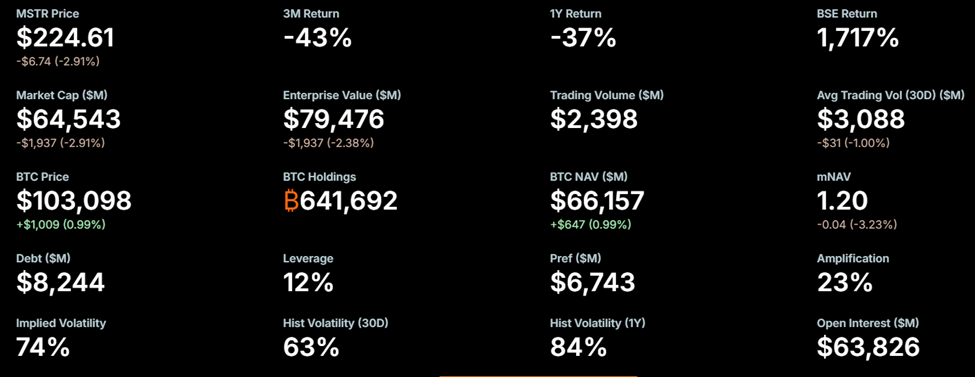
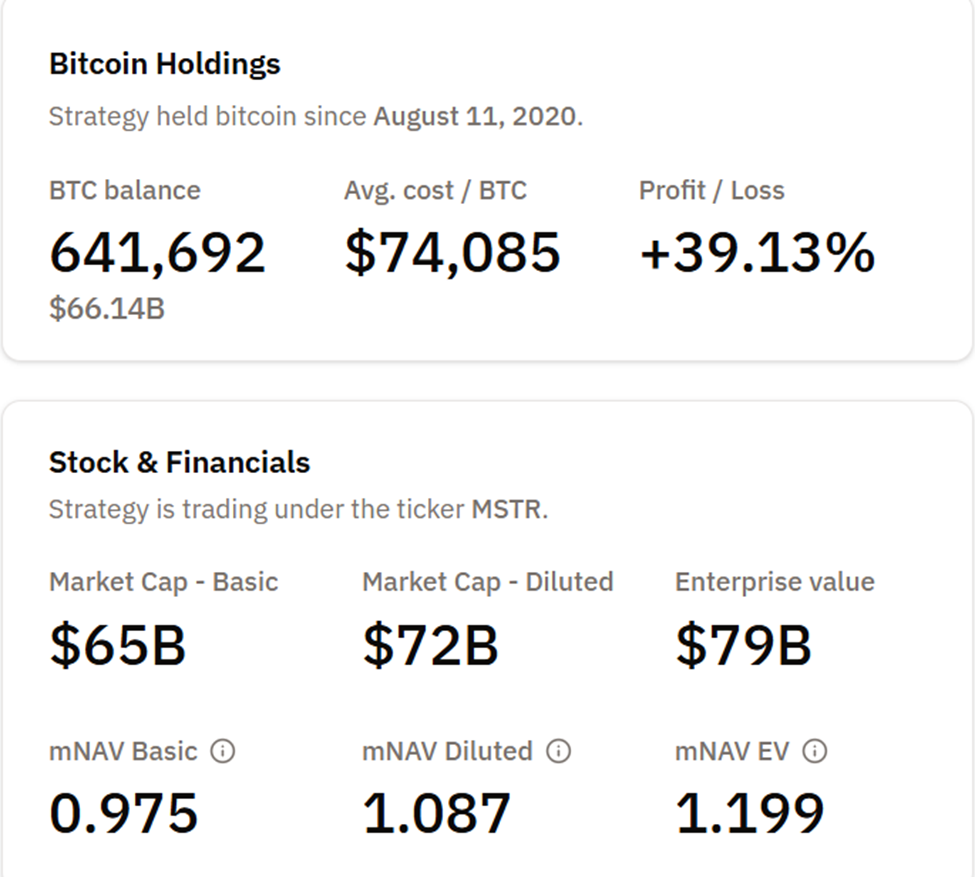
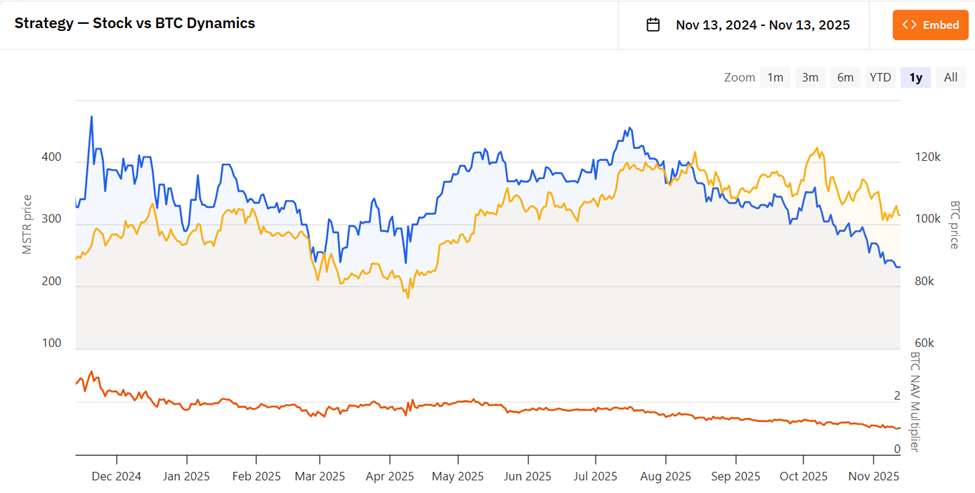
Kapitalisasi pasar perusahaan (US$64,54 miliar saat ini) turun di bawah nilai kepemilikan Bitcoinnya (US$66,15 miliar), pertama kalinya dalam beberapa tahun bagi pemegang Bitcoin korporat terbesar di dunia ini.
Kapitalisasi Pasar MicroStrategy vs Nilai Kepemilikan BTC. Sumber: Situs Web Strategy
“Tunggu, apa? Kapitalisasi pasar total MicroStrategy sudah jatuh di bawah nilai Bitcoin yang dimilikinya!? … Sekarang, pasar premi untuk MicroStrategy benar-benar berakhir,” tulis analis AB Kuai Dong.
Keuntungan Mengambang Masih Kuat Saat Ini Karena Momentum Pembiayaan Melambat
Meskipun kehilangan premi, neraca keuangan MicroStrategy tetap sangat terkait dengan kinerja Bitcoin. Perusahaan ini memiliki 641.692 BTC dengan biaya rata-rata US$74.085 per koin, artinya perusahaan ini masih menikmati keuntungan tak terealisasi sekitar 39,10% meski Bitcoin koreksi ke US$102.918, Dong terang dalam postingan lanjutan.
MicroStrategy membangun posisinya yang besar di Bitcoin melalui model pembiayaan obligasi konversi yang unik dan agresif.
Tidak seperti BitMine Immersion milik Tom Lee, yang dibahas dalam US Crypto News sebelumnya, MicroStrategy memungkinkan perusahaan untuk membeli Bitcoin tanpa mengencerkan saham pemegangnya.
Investor yang membeli obligasi ini biasanya menerima hasil yang lebih rendah sebagai gantinya dengan potensi untuk mengonversinya menjadi saham di kemudian hari. Ini adalah prospek menarik jika baik saham MicroStrategy maupun harga Bitcoin naik.
“…begitu MSTR mendapatkan uang, langsung membeli BTC. Jika BTC naik di masa depan dan harga saham naik serentak, investor akan mengkonversi obligasi menjadi saham dan mendapatkan lebih banyak uang. Dengan cara ini, utang yang diterbitkan oleh Strategy menghilang begitu saja,” Dong jelaskan.
Namun, Dong memperingatkan bahwa momentum pembiayaan MicroStrategy mulai melemah, dengan harga saham perusahaan di bawah tekanan dan pembeli obligasi semakin berhati-hati.
“Setelah harga saham berkinerja buruk, apakah masih ada yang akan membeli penerbitan obligasi baru? Jumlah Bitcoin yang mereka tambahkan setiap minggu menunjukkan tren menurun yang jelas, dengan beberapa kekurangan dalam momentum pembiayaan,” papar Dong.
Pengamat pasar juga mengonfirmasi perlambatan ini. Komentator kripto Sun Xinjin mencatat bahwa MicroStrategy belum mengeluarkan obligasi konversi baru sejak Februari 2025, beralih ke penawaran saham preferen (seri STR) dimulai pada September 2025.
Saham preferen ini menawarkan suku bunga yang jauh lebih tinggi, menandakan investor kini menuntut insentif lebih kuat di tengah kondisi pasar yang semakin ketat. Dong memastikan bahwa upaya penggalangan dana terbaru di Eropa mengikuti struktur baru ini.
Holder Bitcoin Jangka Panjang Mengambil Keuntungan
Perkembangan ini muncul saat data on-chain menunjukkan bahwa long-term holder (LTH) Bitcoin semakin mengambil keuntungan di dekat angka US$100.000.
Firma analisis Glassnode melaporkan bahwa suplai LTH menurun cepat, dengan perubahan posisi bersih jatuh tajam ke wilayah negatif, menandakan percepatan distribusi jangka panjang.
Long-term $BTC holders are accelerating their distribution, with supply declining fast and net position change falling sharply into negative territory. LTHs are booking profits as bulls defend $100k. https://t.co/yatqA1O7ndpic.twitter.com/rZ8XMSRZXR
Chris Kuiper, wakil presiden penelitian di Fidelity Digital Assets, menggemakan tren ini dengan mengatakan bahwa stagnasi harga baru-baru ini telah membuat banyak holder veteran lelah.
“Performa Bitcoin baru-baru ini tertinggal dari emas, bahkan S&P, dan orang-orang mulai bosan… Holder jangka panjang mencari untuk melakukan perubahan pajak akhir tahun dan posisi, menghentikan hari dengan keuntungan yang sudah mereka miliki,” terang Kuiper dalam keterangannya.
Bagi MicroStrategy dan CEO-nya, Michael Saylor, momen ini menjadi ujian penting. Perusahaan tersebut tetap menguntungkan secara teori, namun menghadapi opsi pembiayaan yang semakin ketat dan perubahan sentimen investor.
Saat pasar obligasi mendingin dan holder Bitcoin mengambil keuntungan, kemampuan perusahaan untuk mempertahankan strategi akumulasi mungkin bergantung pada apakah lonjakan berikutnya Bitcoin terjadi sebelum tahun 2026.
Welcome to the US Crypto News Morning Briefing—your essential rundown of the most important developments in crypto for the day ahead.
Grab a coffee — this one’s worth sitting with. The once-unshakable link between MicroStrategy’s stock and its Bitcoin fortune is showing cracks. The company that turned corporate balance sheets into crypto vaults now faces a market reckoning as its long-standing Bitcoin premium has vanished. The timing could not be more symbolic.
Crypto News of the Day: MicroStrategy’s Bitcoin Premium Finally Breaks
MicroStrategy’s famed Bitcoin premium, a key symbol of institutional faith in the crypto market, has officially evaporated. This comes five months after the metric was under stress, reported in a mid-May US Crypto News publication.
The company’s market capitalization ($64.54 billion as of this writing) fell below the value of its Bitcoin holdings ($66.15 billion), a first in years for the world’s largest corporate Bitcoin holder.
MicroStrategy Market Cap vs BTC Holdings Value. Source: Strategy Website
“Wait, what? MicroStrategy’s total market cap has already fallen below the value of the Bitcoin it holds!? … Now, the premium market for MicroStrategy has truly come to an end,” wrote analyst AB Kuai Dong.
Floating Profits Still Strong For Now As Financing Momentum Slows
Despite the loss of premium, MicroStrategy’s balance sheet remains deeply tied to Bitcoin’s performance. The firm holds 641,692 BTC at an average cost of $74,085 per coin, meaning it still enjoys roughly 39.10% in unrealized gains even if Bitcoin retraces to $102,918, Dong noted in a follow-up post.
MicroStrategy has built its massive Bitcoin position through a unique and aggressive convertible bond financing model.
Unlike Tom Lee’s BitMine Immersion, discussed in the previous US Crypto News, MicroStrategy’s allows the company to acquire Bitcoin without diluting its shareholders.
Investors purchasing these bonds typically accept lower yields in exchange for the potential to convert them into shares at a later date. This is an attractive proposition if both MicroStrategy’s stock and the Bitcoin price rise.
“…once MSTR gets the money, it will directly go buy BTC. If BTC rises in the future and the stock price rises in tandem, investors will convert the bonds into shares and earn more money. In this way, the debt issued by Strategy disappears into thin air,” Dong explained.
However, Dong warned that MicroStrategy’s financing momentum has begun to weaken, with the company’s stock price under pressure and bond buyers growing more cautious.
“After the stock price performs poorly, will anyone still buy the new bond issuances? The amount of Bitcoin they add each week has shown a clear trend of decreasing, with some insufficiency in financing momentum,” he posed.
Market observers have also confirmed this slowdown. Crypto commentator Sun Xinjin noted that MicroStrategy has not issued new convertible bonds since February 2025, shifting instead to preferred share offerings (the STR series) beginning in September 2025.
These preferred shares carry significantly higher interest rates, suggesting investors now demand stronger incentives amid tightening market conditions. Dong confirmed that the latest fundraising effort in Europe followed this newer structure.
Long-Term Bitcoin Holders Take Profits
The developments come as on-chain data shows long-term Bitcoin holders (LTHs) are increasingly taking profits near the $100,000 mark.
Analytics firm Glassnode reported that LTH supply is declining fast, with the net position change falling sharply into negative territory, signaling an acceleration in long-term distribution.
Long-term $BTC holders are accelerating their distribution, with supply declining fast and net position change falling sharply into negative territory. LTHs are booking profits as bulls defend $100k. https://t.co/yatqA1O7ndpic.twitter.com/rZ8XMSRZXR
Chris Kuiper, vice president of research at Fidelity Digital Assets, echoed this trend, saying that the recent price stagnation has left many veteran holders fatigued.
“Bitcoin’s performance has recently lagged gold’s, even the S&P, and people are getting tired…Long-term holders are looking to make year-end tax and positional changes, calling it a day with the gains they already have,” Kuiper explained.
For MicroStrategy and its CEO, Michael Saylor, this moment marks a critical test. The firm remains profitable on paper but faces tightening financing options and shifting investor sentiment.

 Login
Login