
Normal view

Received — 14 December 2025 Xiaomi News & Update

What happens if Xiaomi earbuds go missing?

14 December 2025 at 11:00

With the rapid adoption of true wireless earbuds across the continent, compact audio devices became a big part of everyday life in Europe, but at the same time, this increased the chances of losing them even more. Xiaomi’s Redmi Buds, Xiaomi Buds, and their POCO-branded equivalents-sold as Xiaomi T series globally-are among the widely used ones within the European Economic Area, where its small size and cable-free design can become a practical disadvantage.

Understanding what can and cannot be done in case of a loss will help manage expectations and take the right technical steps.

Understanding how to locate Xiaomi earbuds

Before recovery attempts, it is critical to acknowledge the technical limitations of wireless earbuds. Unlike smartphones, Xiaomi earbuds do not include any GPS modules or cellular connectivity. Location detection must therefore be indirect and depends entirely on Bluetooth signals and software ecosystems.
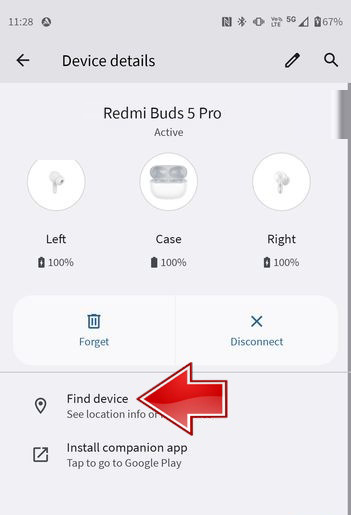
Find earbuds

Modern Xiaomi earbuds employ Bluetooth Low Energy, usually based on Bluetooth 5.2 or 5.3, or newer standards. When an earbud is outside its charging case and has some battery power, it periodically broadcasts a signal. Smartphones can estimate proximity using the signal strength values, commonly referred to as RSSI. This method will only work for short distances, typically less than ten meters, and thick walls, commonly found in European buildings, will weaken signals considerably.

This normally means that when the earbuds are inside the charging case and the lid is closed, Bluetooth transmission is usually disabled at the hardware level. In this state, digital tracking isn’t possible. Of course, once the battery is completely dead, all signal transmission stops, making the recovery a purely physical search.

Using Effective Xiaomi & Google Software Tools

Xiami, on their part, offers simple recovery capabilities via the official earbuds management application. Thus, the “Find your earphones” feature can only be helpful in quiet indoor environments like homes or offices because it allows users to initiate a loud ringing from the earbuds provided they are currently connected to the phone.

The application also logs the last known location where the Bluetooth connection was active. This is static information and does not update if, at some point afterward, the earbuds have moved. It is rather to be used as a reference point than as live data from tracking.
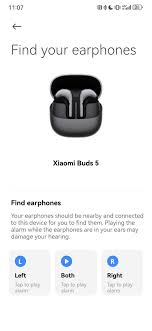
find headphones

Newer Xiaomi earbuds that support Google Fast Pair are able to integrate with Google’s “Find My Device” network. If an Android device is nearby an, in a sense, misplaced earbud, it may anonymously detect the Bluetooth signal and report an approximate location back to the owner. This can be very helpful if your earbuds go missing in a busy urban area, though the earbuds do need to have some juice left in them. A completely dead earbud cannot be found via this network.

Practical steps toward recovery in Europe

Timing is most crucial when the earbuds are lost. When the device still has power, taking action as soon as possible improves the possibility of recovering these devices.

Check the last known location of the Xiaomi Earbuds in the app or using Google Find My Device. Return to that area with Bluetooth turned on. In indoor environments, lowering background noise and activating the sound alert narrows down their location. Third-party Bluetooth scanner apps may help advanced users by showing how the signal strength changes as a person walks through a space.

If the loss took place in a public transport or shared area, contact the local lost-and-found services. European transport operators often list small electronic items only descriptively without serial number, but having the purchase documentation may help.

Replacement options and cost considerations

If recovery is unsuccessful, replacement becomes the next decision point. With the exception of very few cases, officially individual earbuds or charging cases are hardly sold as stock items in official Xiaomi channels in Europe. Some replacements may be offered for a fee by authorized service centers, with prices often approaching that of a new set, especially in the case of budget models.

IndividualIssues with Third-Party Sellers

Some third-party sellers sell single earbuds, mostly sourced from outside the EU. Although this offers cost savings for premium models, shipping times and possible warranty limitations should be carefully weighted. For more affordable Redmi Buds variants, buying a new pair is often the most convenient and pragmatic approach.

After having replaced a single earbud, users need to make a full reset and re-pair it so that the new and existing parts will be able to synchronize appropriately. Firmware updates via the official app are highly recommended for stable performance.

Future preventive measures

Sometimes, prevention is better than recovery. It’s highly recommended to enable Google Find My Device at setup. Protective cases with keyrings attached or an external Bluetooth tracker attached inside the charging case can greatly reduce most risks. Doing periodic system app updates through trusted sources such as HyperOSUpdates.com or using tools like the MemeOS Enhancer application will let one have the bleeding-edge features added into the ecosystem and all stability enhancements.

Losing European Xiaomi earbuds is a manageable situation when one understands the real technical and logistic facts. Recovery tools based on Bluetooth can work within conditions, and there are no guarantees provided. For premium segment models, the replacement of a single module might be economically reasonable; in entry-level ones, it is often more advisable to replace them completely. As in most cases, the best strategy remains one of proactive prevention, which combines software activation with physical accessories and informed habits of use.
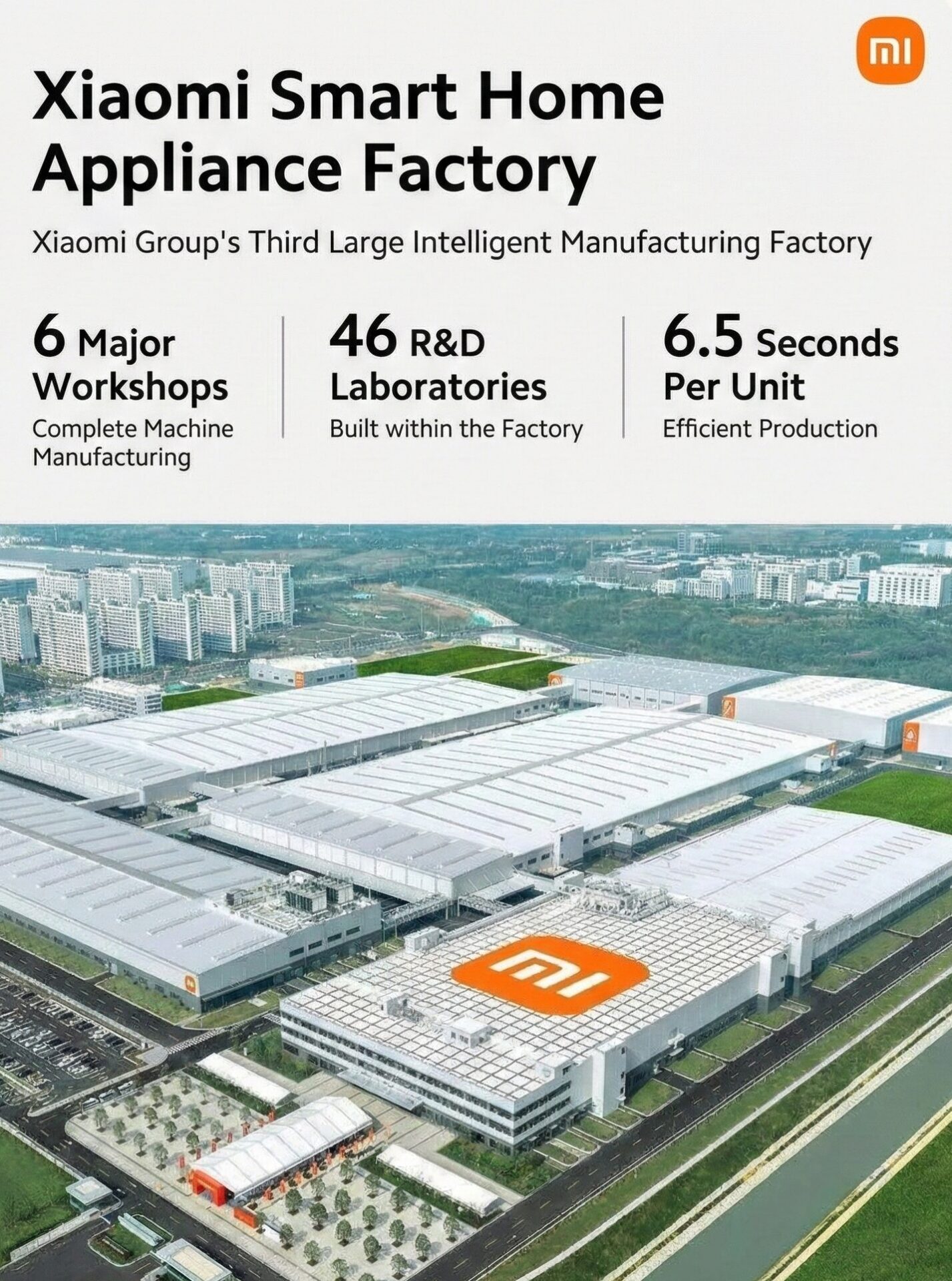
Xiaomi’s new factory can produce an air conditioner within 6.5 seconds

14 December 2025 at 07:30

Xiaomi has also stepped up the pace of its plans for home appliances globally by investing in a brand new massive production line in China, which is set to increase efficiency exponentially. Now that Xiaomi/Mijia refrigerators, air conditioners, and washing machines are rolling out from China into even more countries worldwide, Xiaomi has introduced a new generation factory that is optimized for speed, efficiency, and scalability.

The establishment of a new production base for Xiaomi home appliances

In order to cope with the increasing global demand, Xiaomi has launched a factory that is specifically used for making home appliances – Wuhan Xiaomi Smart Home Appliance Factory. This is the very first factory Xiaomi has set up that specifically focuses on producing large home appliances, as most of Xiaomi’s previous products are smartphones, televisions, etc.

In the words of Lu Weibing, Partner, and President of Xiaomi Group, as well as the CEO of the Xiaomi brand, “Phase one of our factory has been completed, and we are already operating at full capacity.” This means that the factory is currently operating at full capacity with optimized production lines for efficiency. This is a demonstration of the commitment by Xiaomi to vertical integration and intelligent manufacturing practices.

Xiaomi smart appilance factory

The Wuhan factory is significant because of the rate at which it produces its goods. It takes only 6.5 seconds to produce a unit of the Mi Home Central Air Conditioner Pro Dual Fan Wheel.

The factory now has a total of six professional production lines, which include the entire assembly process of air conditioners for residential and central air-conditioning systems. This helps Xiaomi increase production speed with minimum human labor inputs, ensuring high standards of quality control. The initial production of air conditioners from this factory is now readied for commercial launch.

Xiaomi’s Third Mega Factory & Strategic Milestone

The Wuhan Smart Home Appliance Factory is the third giant smart factory established by Xiaomi, after its state-of-the-art smartphone factory and the automotive super factory. But this particular factory holds a special strategic place because it is Xiaomi’s maiden giant factory only for home appliances.

Xiaomi is making a bold statement with a significant investment in appliance manufacturing, which means that the brand no longer considers smart home devices a secondary product line to the smartphones. This is because Xiaomi is now making smart home devices a fundamental component of the overall expansion strategy, which is linked to Xiaomi HyperConnect and the AIoT ecosystem.

Fast construction: a paradigm of efficiency established

Other than the rate of production, the construction schedule of the Wuhan plant has been of some interest. The plant is situated in the East Lake Technology Development Zone, with the foundation stone being laid on November 26 of last year. The construction started within three months of the signed contract, with the main structure completed on January 20, 2025.

The completion of a huge such industrial project within such a short period has set a certain benchmark within Xiaomi, as far as project completion is concerned. It clearly shows that Xiaomi is applying a certain efficiency technique from product development to infrastructure development.

Source

Xiaomi could jump straight to the Xiaomi 20 series, skipping 19

14 December 2025 at 03:12

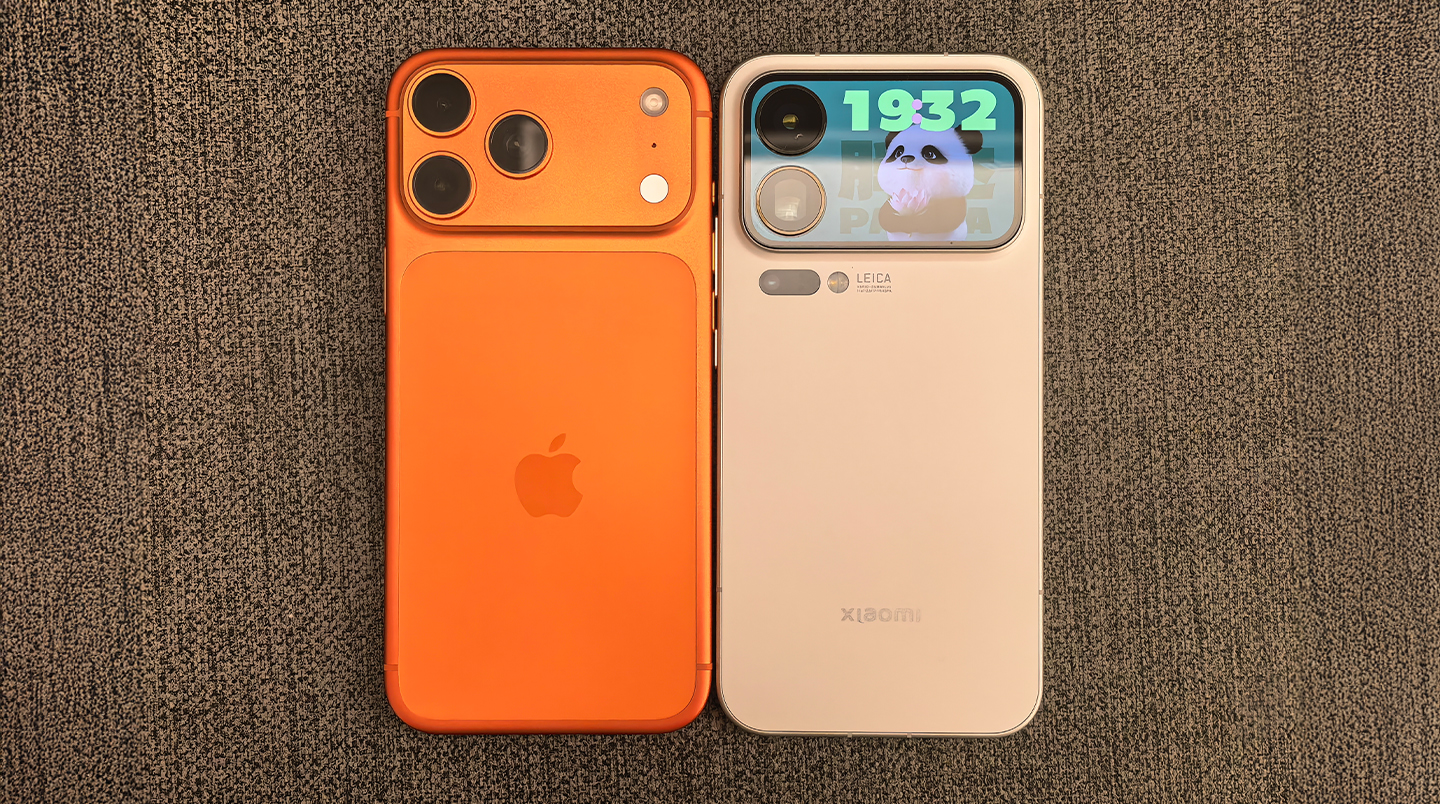
Xiaomi may make another daring naming move by bypassing the Xiaomi 19 series and going straight for the Xiaomi 20 lineup this time, as reported lately. It would echo Apple’s supposedly bypassing the iPhone 19 model to commemorate the 20th-anniversary release of iPhone with the iPhone 20 series in 2027. Xiaomi had already done a comparable naming revision with the Xiaomi 17 Pro Max with a move for apple’s “Pro Max” pattern and skipping 16 series. Xiaomi 17 Pro Max launch already indicated that Xiaomi will not hesitate to make a revision.

Why Xiaomi might bypass “19”

Skipping the naming convention of Xiaomi 19 is no cult decision. In the Chinese context, 19 has no unique cultural meaning, but skipping it may find marketing synchronism with Apple. As Apple’s 2027 series will commemorate two decades of iPhone life, Xiaomi might find a mirage of linking its flagship naming with Apple’s to validate its high-end standing in the international market.

This was also a repetition of what was seen in 2017 after Apple bypassed the iPhone 9 release and came out with the iPhone X during its 10th-anniversary celebrations. In a similar way, Xiaomi may utilize the name Xiaomi 20 to release innovative technologies like camera systems integrated with AIHyperOS 5, or Snapdragon 8 Elite 7th-generation processors.

Xiaomi 17 Pro Max and iPhone 17 Pro Max 1

It was a symbolic move for Xiaomi’s second decade.

If this rumor holds water, Xiaomi’s Xiaomi 20 series will come out somewhere around 2027, which will open a new page for the smartphone. Aligning itself numerically with its counterpart Apple, Xiaomi strengthens its identity as a world-class smartphone brand that sets trends, not emulates.

This naming convergence also benefits marketing for Xiaomi, allowing users to compare the iPhone 20 side by side with Xiaomi 20 more easily — a subtle but potent positional stroke in smartphone marketbrand rivalry.

Source

IKEA launches Donut-Shaped Qi2 charger with two unexpected functions

13 December 2025 at 19:12

IKEA has officially introduced a new Qi2 wireless charging accessory, dubbed the VASTMARKE Wireless Charger and it is already turning heads due to its peculiar donut-shaped design and practical hidden functions. Priced at $9.99 USD, the accessory aims at users who want an affordable Qi2 solution that will handle current smartphones. As this technology becomes increasingly common throughout flagship devices, accessories like this show how design and usability can be combined in a basic, cost-effective product.

A minimal design, centered around Qi2 standards.

The VASTMARKE Wireless Charger comes with the Qi2 wireless charging standard supported, ensuring compatibility with the newest smartphones using magnetic alignment to ensure effective power delivery. Qi2 support translates into stable charging performance and proper coil positioning, particularly important for newer devices.

IKEA VASTMARKE Qi2 Wireless Charger 1420x774 1

The charger includes built-in magnets that allow it to align correctly with MagSafe-compatible phones, among other magnetic systems. In this way, it will be suitable for recent models of iPhones and newer Androids that support magnetic wireless charging. The integrated USB-C cable reflects the current standard and secures broad compatibility with modern power adapters.

Although the charger up until now is available only in a variant of bright red color, the focus of IKEA here is clearly on function rather than aesthetic variety.

Chapter Two Hidden Functions That Improve Daily Use

Beyond its price and Qi2 support, what makes the VASTMARKE charger special is the fact that it contains two features, both of which are hidden in plain sight.

First, the donut-shaped top portion can be flipped back and used as a built-in phone grip; through it, one can slip his fingers behind the charger, like in a PopSocket, to hold the phone securely while operating.

The same donut structure thus serves as a cable management system: the charging cable can be wrapped neatly around the center of the charger and then hidden inside the top cover. It will help make desks and bags tidier by not making cables get in the way during transportation or storage.

These small but thoughtful design choices also fit with IKEA’s long-standing approach of marrying affordability with practical solutions for everyday living.

Availability and Market Positioning

Currently, the IKEA VASTMARKE Qi2 Wireless Charger is available for online purchase through IKEA’s website, though shipping demands a minimum order of 35 USD. It is to be noted that in-store pickups will vary by region.

While not designed with Xiaomi devices in mind because there aren’t any Xiaomi with Qi2 compatible. Qi2-compatible accessories such as this are slowly but surely becoming more relevant within the wider Android ecosystem as more and more magnetic wireless charging standards are adopted.

Source

❌