Login
Login
Samsung Mau Pakai Layar OLED China untuk Galaxy S Series?
 Samsung dikabarkan tengah mempertimbangkan langkah yang cukup mengejutkan: menggunakan layar OLED buatan China untuk lini flagship Galaxy S series.
  Samsung dikabarkan tengah mempertimbangkan langkah yang cukup mengejutkan: menggunakan layar OLED buatan China untuk lini flagship Galaxy S series.
Akhir-akhir ini, masyarakat disuguhkan perselisihan pandangan antara aktivis konservasi lingkungan yang memperjuangkan kelestarian alam dan kelompok pelaku eksploitasi alam dengan tujuan kesejahteraan. Dalam perselisihan ini, para pelaku eksploitasi alam memberikan lakab (sebutan) “Wahabi lingkungan” kepada aktivis konservasi lingkungan karena mereka dinilai sangat menentang pemanfaatan lingkungan yang dianggap dapat memberikan kesejahteraan oleh para pelaku eksploitasi. Ada […]
The post Meninjau Istilah “Wahabi Lingkungan”: Tinjauan Islam tentang Konservasi Alam (Bag. 1) appeared first on Muslim.or.id.
 BRIN melakukan uji terbang empat drone di Lanud Rumpin, Bogor. Uji ini penting untuk pengembangan teknologi penerbangan nasional, termasuk LSU-02 VTOL.
Strategy (formerly MicroStrategy) is the largest corporate holder of Bitcoin, owning 671,268 BTC, which represents over 3.2% of all Bitcoin in circulation. That makes the company a high-risk keystone in the Bitcoin ecosystem.
If it falls apart, the impact could be larger than the 2022 FTX collapse. Here’s why that threat is real, what could trigger it, and how bad the fallout could be.
MicroStrategy’s entire identity is now tied to Bitcoin. The company spent over $50 billion buying BTC, mostly using debt and stock sales. Its software business brings in just $460 million a year, which is a fraction of its exposure.
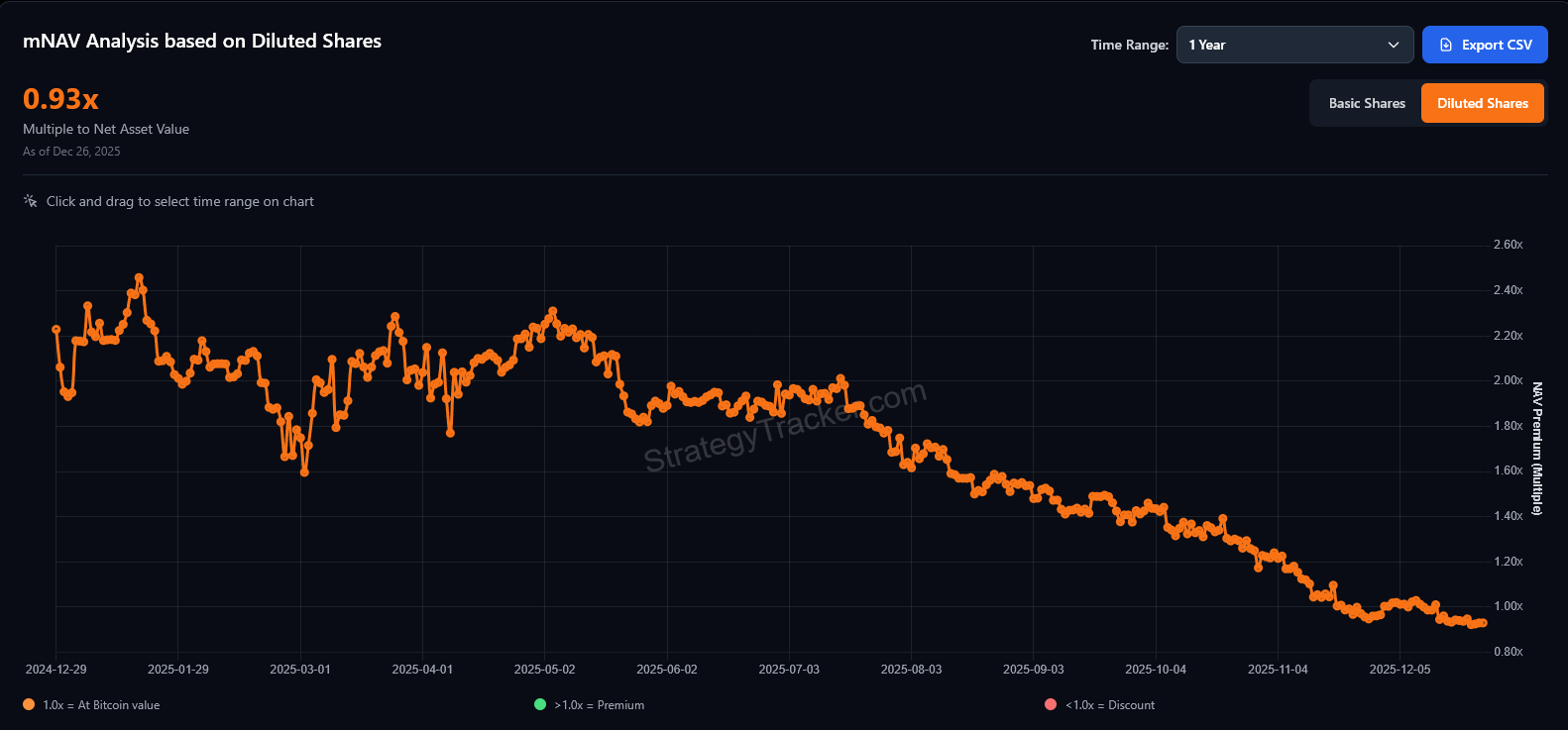
As of December 2025, its stock trades well below the value of its Bitcoin holdings. The market value is approximately $45 billion, but its BTC is worth around $59–60 billion.
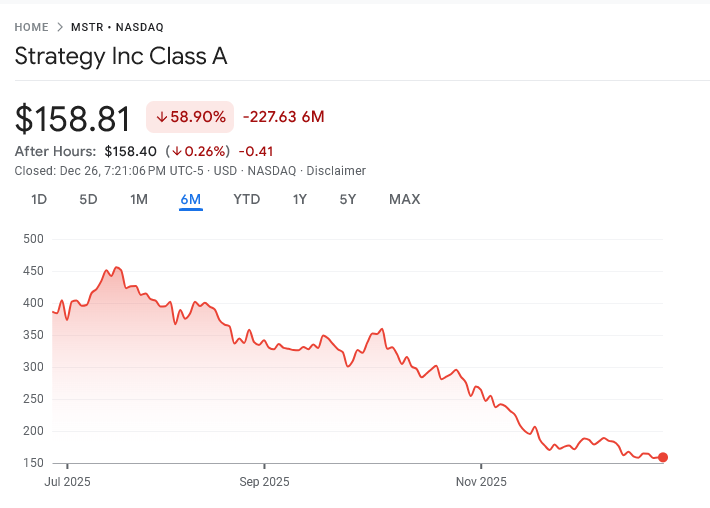
Investors are discounting its assets because of concerns about dilution, debt, and sustainability.
Its average BTC cost basis is around $74,972, and most of its recent buys were near Bitcoin’s peak in Q4 2025.
More than 95% of its valuation hinges on the price of Bitcoin.
If BTC drops sharply, the company could be trapped — holding billions in debt and preferred equity with no way out.
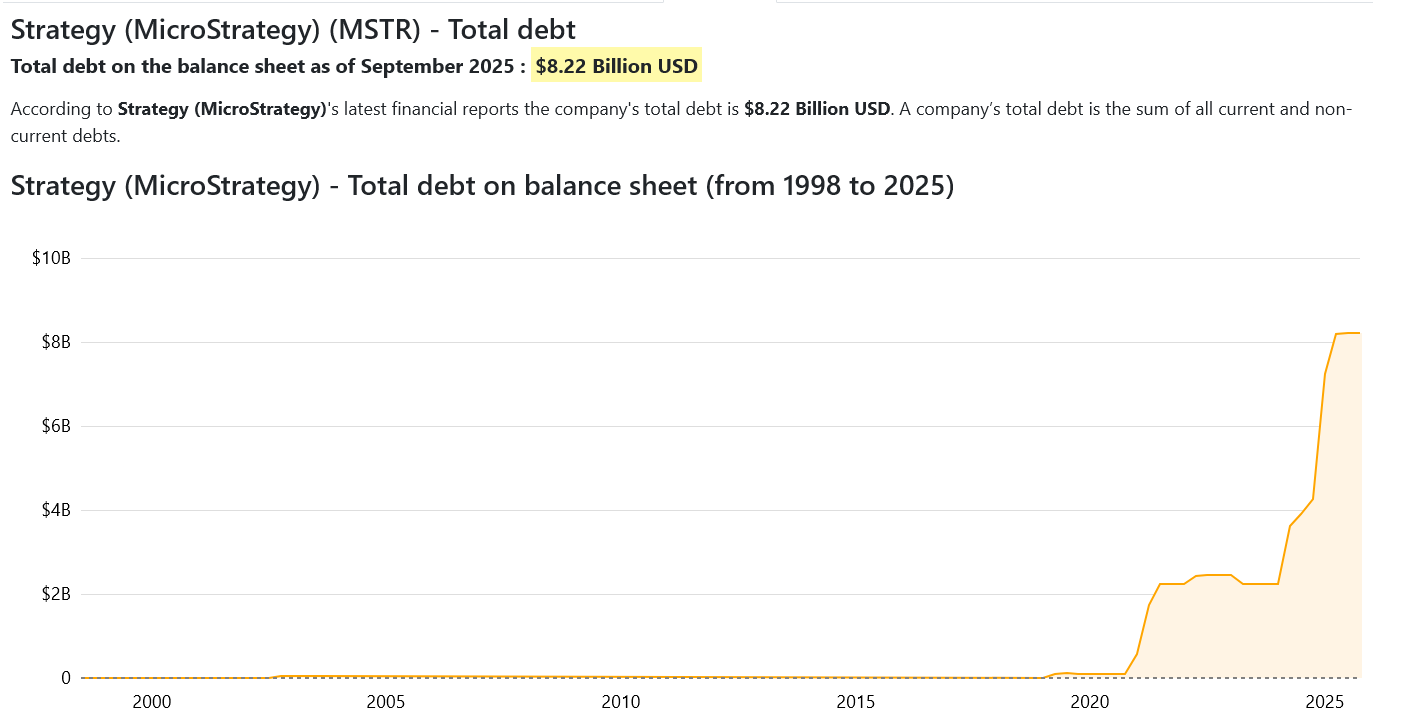
For instance, Bitcoin dropped 20% since October 10, but MSTR’s loss has been more than double in the same period.
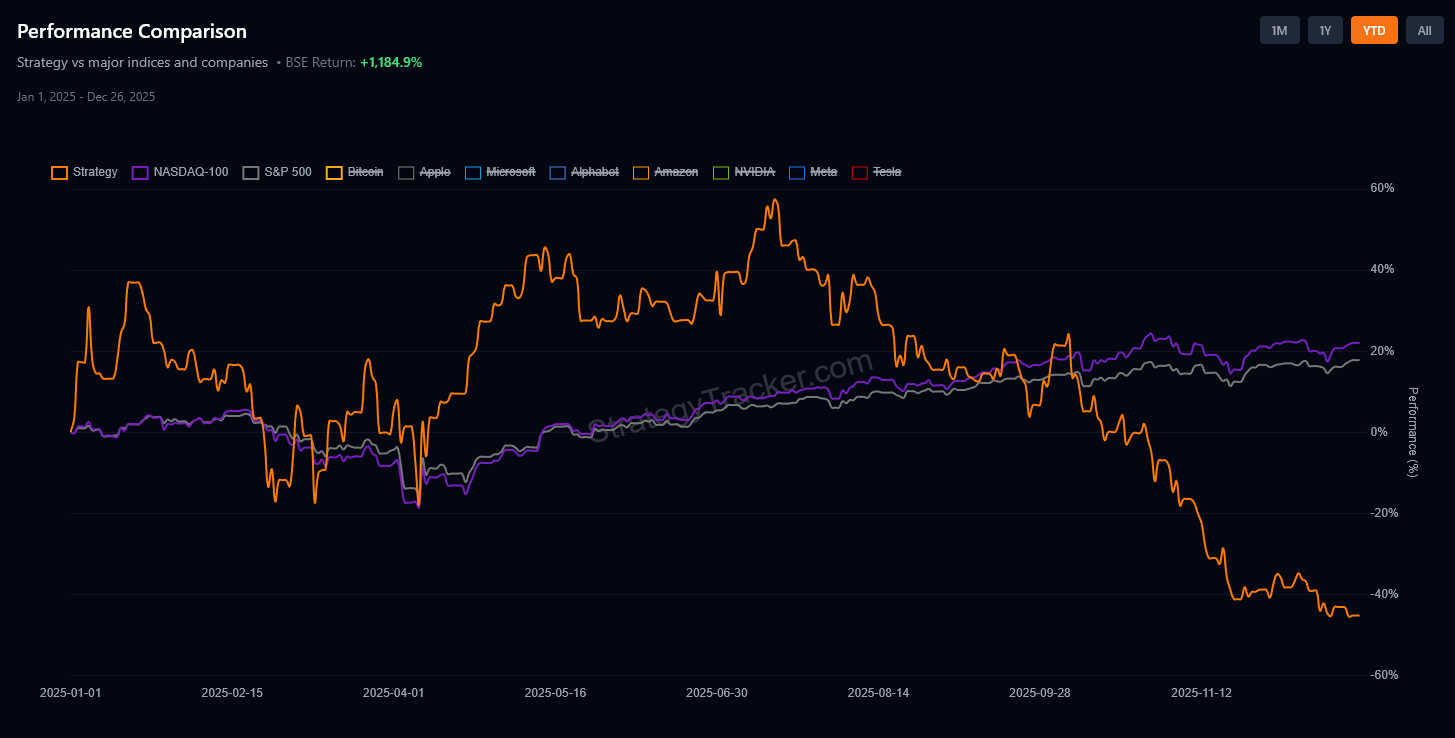
MicroStrategy used aggressive tactics to fund Bitcoin buys. It sold common stock and issued new types of preferred shares.
It now owes over $8.2 billion in convertible debt and has more than $7.5 billion in preferred stock. These financial tools require large cash outflows: $779 million annually in interest and dividends.
At the current levels, if Bitcoin crashes below $13,000, MicroStrategy could become insolvent. That’s not likely in the near term, but BTC’s history shows that 70–80% drawdowns are common.
A large crash, especially if paired with a liquidity crunch or ETF-driven volatility, could push the company into distress.
Unlike FTX, MicroStrategy is not an exchange. But the effect of its failure could be deeper. It owns more Bitcoin than any entity except a few ETFs and governments.
Forced liquidation or panic over MicroStrategy’s collapse could drive BTC’s price down sharply — creating a feedback loop across crypto markets.
MicroStrategy has promised not to sell its BTC, but that depends on its ability to raise cash.
As of late 2025, it holds $2.2 billion in reserves. This is enough to cover two years of payouts. But that buffer could vanish if BTC falls and capital markets close.
Probability isn’t binary. But the risk is rising.
MicroStrategy’s current position is fragile. Its stock has fallen 50% this year. Its mNAV is below 0.8×. Institutional investors are shifting to Bitcoin ETFs, which are cheaper and less complex.
Index funds may drop MSTR due to its structure, triggering billions in passive outflows.
If Bitcoin falls below $50,000 and stays there, the company’s market cap could fall below its debt load. At that point, its ability to raise capital could dry up — forcing painful decisions, including asset sales or restructuring.
The odds of a total collapse in 2026 are low, but not remote. A rough estimate might place the probability between 10–20%, based on current balance sheet risk, market behavior, and Bitcoin volatility.
But if it does happen, the damage could exceed FTX’s collapse. FTX was a centralized exchange. MicroStrategy is a key holder of Bitcoin’s supply.
If its holdings flood the market, Bitcoin’s price and confidence could be hit hard. This would potentially trigger a broader selloff across crypto.
The post Why MicroStrategy’s Collapse Could Be the Next Black Swan for Crypto in 2026 appeared first on BeInCrypto.
Strategy (sebelumnya MicroStrategy) adalah perusahaan pemilik Bitcoin terbesar, memegang 671.268 BTC, setara dengan lebih dari 3,2% dari semua Bitcoin yang beredar. Hal ini membuat perusahaan menjadi titik kunci berisiko tinggi dalam ekosistem Bitcoin.
Jika perusahaan ini runtuh, dampaknya bisa melebihi kejatuhan FTX pada tahun 2022. Inilah alasan ancaman tersebut benar-benar nyata, faktor pemicunya, serta seberapa parah akibat lanjutannya.
Seluruh identitas MicroStrategy kini berkaitan erat dengan Bitcoin. Perusahaan ini telah menghabiskan lebih dari US$50 miliar untuk membeli BTC, sebagian besar menggunakan utang dan penjualan saham. Bisnis perangkat lunaknya hanya menghasilkan penghasilan sekitar US$460 juta per tahun, jumlah yang jauh lebih kecil dibandingkan eksposur totalnya.
Pada Desember 2025, harga sahamnya diperdagangkan jauh di bawah nilai kepemilikan Bitcoinnya. Nilai pasar perusahaan sekitar US$45 miliar, sedangkan BTC miliknya bernilai hampir US$59–60 miliar.
Para investor mengurangi nilai asetnya karena kekhawatiran terkait dilusi, utang, dan keberlanjutan perusahaan.
Rata-rata harga beli BTC perusahaan ini sekitar US$74.972, dan sebagian besar pembelian terbarunya terjadi saat harga Bitcoin mendekati puncak pada kuartal 4 tahun 2025.
Lebih dari 95% valuasi perusahaan ini sangat bergantung pada harga Bitcoin.
Jika harga BTC anjlok drastis, perusahaan ini bisa terjebak — memegang utang dan ekuitas preferen bernilai miliaran Dolar tanpa jalan keluar.
Contohnya, Bitcoin sudah turun 20% sejak 10 Oktober, namun kerugian MSTR justru lebih dari dua kali lipat dalam periode yang sama.
MicroStrategy memakai strategi agresif untuk mendanai pembelian Bitcoin. Mereka menjual saham biasa dan menerbitkan jenis saham preferen yang baru.
Sekarang, perusahaan memiliki utang konversi lebih dari US$8,2 miliar serta lebih dari US$7,5 miliar saham preferen. Instrumen keuangan ini menuntut aliran dana keluar besar: US$779 juta per tahun untuk bunga dan dividen.
Pada kondisi saat ini, jika harga Bitcoin jatuh di bawah US$13.000, MicroStrategy bisa saja mengalami kebangkrutan. Hal ini memang tidak mungkin terjadi dalam waktu dekat, tapi sejarah BTC menunjukkan penurunan harga 70–80% sudah sering terjadi.
Kejatuhan harga besar, apalagi jika terjadi krisis likuiditas atau volatilitas akibat ETF, bisa saja mendorong perusahaan ini mengalami masalah serius.
Tidak seperti FTX, MicroStrategy memang bukan exchange. Tetapi dampak kegagalannya bisa lebih dalam. Perusahaan ini memegang lebih banyak Bitcoin daripada pihak mana pun kecuali beberapa ETF dan pemerintahan.
Likuidasi paksa atau kepanikan akibat kejatuhan MicroStrategy bisa menyebabkan harga BTC anjlok — lalu menciptakan efek domino di pasar aset kripto.
MicroStrategy berjanji tidak akan menjual BTC miliknya, namun itu bergantung pada kemampuannya memperoleh dana tunai.
Hingga akhir 2025, perusahaan memegang cadangan senilai US$2,2 miliar. Dana ini cukup untuk dua tahun pembayaran. Tapi cadangan itu bisa habis jika harga BTC anjlok dan pasar modal tertutup.
Risiko ini tidak hitam putih. Namun, risikonya makin meningkat.
Posisi MicroStrategy saat ini memang sangat rapuh. Harga sahamnya sudah turun 50% tahun ini. Nilai mNAV-nya di bawah 0,8×. Para investor institusional juga mulai beralih ke ETF Bitcoin karena lebih murah dan lebih sederhana.
Reksa dana indeks bisa saja melepas saham MSTR karena struktur perusahaannya, sehingga terjadi arus keluar dana pasif bernilai miliaran Dolar.
Jika Bitcoin turun di bawah US$50.000 dan tetap di sana, kapitalisasi pasar perusahaan bisa turun di bawah beban utangnya. Saat itu, kemampuan perusahaan untuk mengumpulkan modal bisa habis — sehingga harus mengambil keputusan sulit, termasuk penjualan aset atau restrukturisasi.
Kemungkinan terjadinya kehancuran total di tahun 2026 memang kecil, tapi bukan tidak mungkin. Perkiraan kasar menempatkan peluangnya di antara 10–20%, berdasarkan risiko neraca, perilaku pasar, dan volatilitas Bitcoin saat ini.
Tapi jika hal itu terjadi, kerugiannya bisa lebih besar dari kehancuran FTX. FTX adalah exchange terpusat. MicroStrategy adalah salah satu holder utama Bitcoin.
Jika kepemilikan mereka membanjiri pasar, harga Bitcoin dan kepercayaan bisa terpukul keras dan berpotensi memicu aksi jual yang lebih luas di seluruh aset kripto.
 Harga RAM LPDDR5X 12GB yang dipakai iPhone 17 Pro series kabarnya melonjak hingga 230% karena masalah pasokan. Apple pun dibikin kelimpungan.
 Beberapa negara berlomba membuat reaktor fusi berjuluk matahari buatan. CEO Tesla Elon Musk mengejeknya.
Few topics divide the crypto industry more than politics. Donald Trump is often referred to as “America’s first crypto president,” while the Biden administration earned a reputation for being hostile toward the sector.
But when rhetoric is stripped away and replaced with market data, the picture becomes more nuanced. The key question is not which administration spoke more favorably about crypto, but under whose leadership Bitcoin ultimately performed better.
In the 2024 United States presidential election, Trump positioned himself as a pro-crypto candidate, vowing to make the US the “crypto capital of the world.” He promised to halt anti-crypto actions, rein in SEC crackdowns, and, in his own words:
“End Joe Biden’s war on crypto and we will ensure that the future of crypto and the future of Bitcoin will be made in America.”
This fueled optimism in the market and ignited hopes for a bull run. Fast forward to near the end of 2025, and Bitcoin is down nearly 5%.
The most “pro-crypto” presidency ever.
— TrendSpider (@TrendSpider) December 23, 2025
Every major token down since inauguration. $BTC pic.twitter.com/b1sXRNlqw7
By comparison, during Biden’s first year as president, the world’s largest cryptocurrency gained roughly 65%. Performance weakened in 2022, but momentum returned in the following years.
Bitcoin rebounded strongly, rising approximately 155% in 2023 and a further 120.7% in 2024.
| Year | Bitcoin return (%) |
| 2021 | 65% |
| 2022 | 64.2% |
| 2023 | 155% |
| 2024 | 120.7% |
| 2025 (As of December 26) | -5% |
When examining Trump’s first term as president, an analyst noted that it was “the greatest crypto bull run” in history, during which the total cryptocurrency market capitalization increased by roughly 115 times from the beginning of his term to its end.
“Biden’s term returned 4.5x from beginning to end, and even at the worst moment, it never went below the annual open for his term. Trump’s 2nd term so far is below annual open, but 3 more years to go,” the pseudonymous analyst wrote.
So what actually happened this year? The pullback is not something that can be understood by looking at headline 2025 returns alone.
In January, momentum was broadly on Bitcoin’s side. Ahead of Trump’s inauguration, BTC rallied above $109,000, marking a new all-time high at the time. There were also developments on the regulatory side, with the SEC creating a task force to offer a transparent regulatory framework for digital assets.
Nonetheless, Trump’s next moves erased all these gains. After he announced tariffs on the EU and later expanded on them at Liberation Day, cryptocurrency markets declined alongside equities.
Notably, the announcement of a pause led to a modest recovery. This highlighted the market’s sensitivity to broader macroeconomic developments and pointed to increased volatility.
CRYPTO MARKETS SOAR ON 90-DAY TRUMP TARIFF PAUSE pic.twitter.com/jXXiU992XF
— Nick O’Neill (@chooserich) April 9, 2025
Meanwhile, adoption continued to rise as state-level Bitcoin reserve initiatives and institutional involvement increased. Bitcoin’s price continued to trend higher, posting positive returns for four consecutive months from April through July.
A key trend during this period was the emergence of digital asset treasuries (DATs). Public companies increasingly began adopting Bitcoin as a reserve asset, following the playbook popularized by Micro (Strategy).
Bitcoin benefited from this shift, as many experts argued institutional involvement could help reduce volatility and signal the asset’s maturation within traditional finance.
As confidence grew, so did the risk appetite and the use of leverage. High-risk, highly leveraged traders drew widespread attention. On the macroeconomic front, the Fed slashed interest rates in September. This was again bullish for risk assets.
Bitcoin went on to reach a new all-time high in October, peaking at $125,761 on October 6. Many projected further upside, with targets ranging from $185,000 to $200,000 by year-end.
This optimism was supported by favorable macroeconomic catalysts and Bitcoin’s historically strong performance during the fourth quarter.
BeInCrypto reported that on October 11, Trump’s announcement of 100% tariffs on China pulled the market lower. Over $19 billion in leveraged positions were wiped out, resulting in significant losses for many traders.
🚨 BIGGEST WIPEOUT SINCE LUNA, COVID & FTX.
— Wise Advice (@wiseadvicesumit) October 11, 2025
Heading into Trump’s 100% China tariff announcement, markets got the pullback they were waiting for.
Nearly $20 BILLION in crypto liquidations in just 24 hours, a record wipeout. 😱
Leverage was maxed out… and it showed. pic.twitter.com/YeeTE4iPxX
The broader downturn persisted in the coming months, amplified by leverage.
“It also appears to be a structural and mechanical downturn. It all began with institutional outflows in mid-to-late October. In the first week of November, crypto funds saw -$1.2 billion of outflows. The problem becomes excessive levels of leverage AMID these outflows…Excessive levels of leverage have resulted in a seemingly hypersensitive market,” The Kobeissi Letter posted in November.
Bitcoin dropped 17.67% in November and has since lost an additional 1.7% of its value this month, according to Coinglass data.
The Trump and Biden administrations differed on several key issues, one of which was crypto ETFs. Under the Biden administration, the SEC initially took a far more cautious approach to the crypto sector. This stance extended to crypto ETFs.
However, the regulatory position shifted following a ruling by the US Court of Appeals for the DC Circuit, which ordered the SEC to reconsider Grayscale Investments’ application to convert its flagship GBTC fund into a spot Bitcoin ETF.
Thus, the SEC approved spot Bitcoin ETFs in January 2024 and later greenlit spot Ethereum ETFs in July.
Notably, after Gary Gensler’s departure from the SEC, asset managers were quick to file multiple applications for altcoin ETFs. Firms including Bitwise, 21 Capital, and Canary Capital, among others, submitted filings to launch a range of crypto-based investment products.
In September, the SEC approved generic listing standards, eliminating the need for case-by-case approvals. Following this shift, ETFs linked to assets such as SOL, HBAR, XRP, LTC, LINK, and DOGE entered the market.
In November, Canary Capital’s XRP ETF saw $58.6 million in trading volume on its first day, ranking as the strongest debut among more than 900 ETFs launched in 2025. Bitwise’s Solana ETF also attracted significant interest, generating $56 million in first-day volume, while other products recorded comparatively lower activity.
From a regulatory standpoint, the ETFs have increased market access, and the ruling reduced barriers for issuers. However, early performance data suggest that the introduction of additional crypto ETFs has not yet translated into a proportional increase in aggregate market inflows.
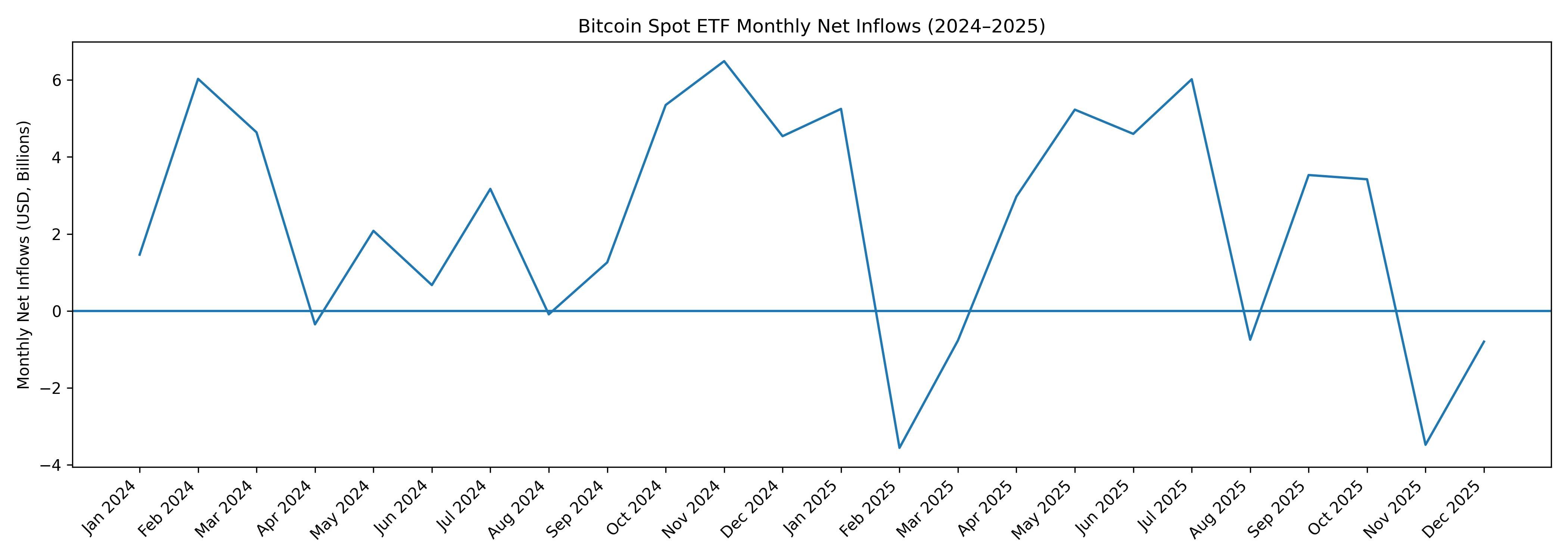
In 2024, spot Bitcoin ETFs attracted approximately $35.2 billion in net inflows. In 2025, inflows into Bitcoin ETFs slowed to $22.16 billion according to SoSoValue data. This divergence suggests that the growth in ETF offerings may have coincided with a redistribution of capital across products rather than an expansion of total crypto exposure.
Although Donald Trump’s influence on the market is clear, he has also become directly involved in the crypto space. In January, the president introduced a meme coin, soon followed by a closely resembling token launched by Melania Trump.
In March, US President Donald Trump’s sons, Eric Trump and Donald Trump Jr., partnered with Hut 8 to launch American Bitcoin Corp.
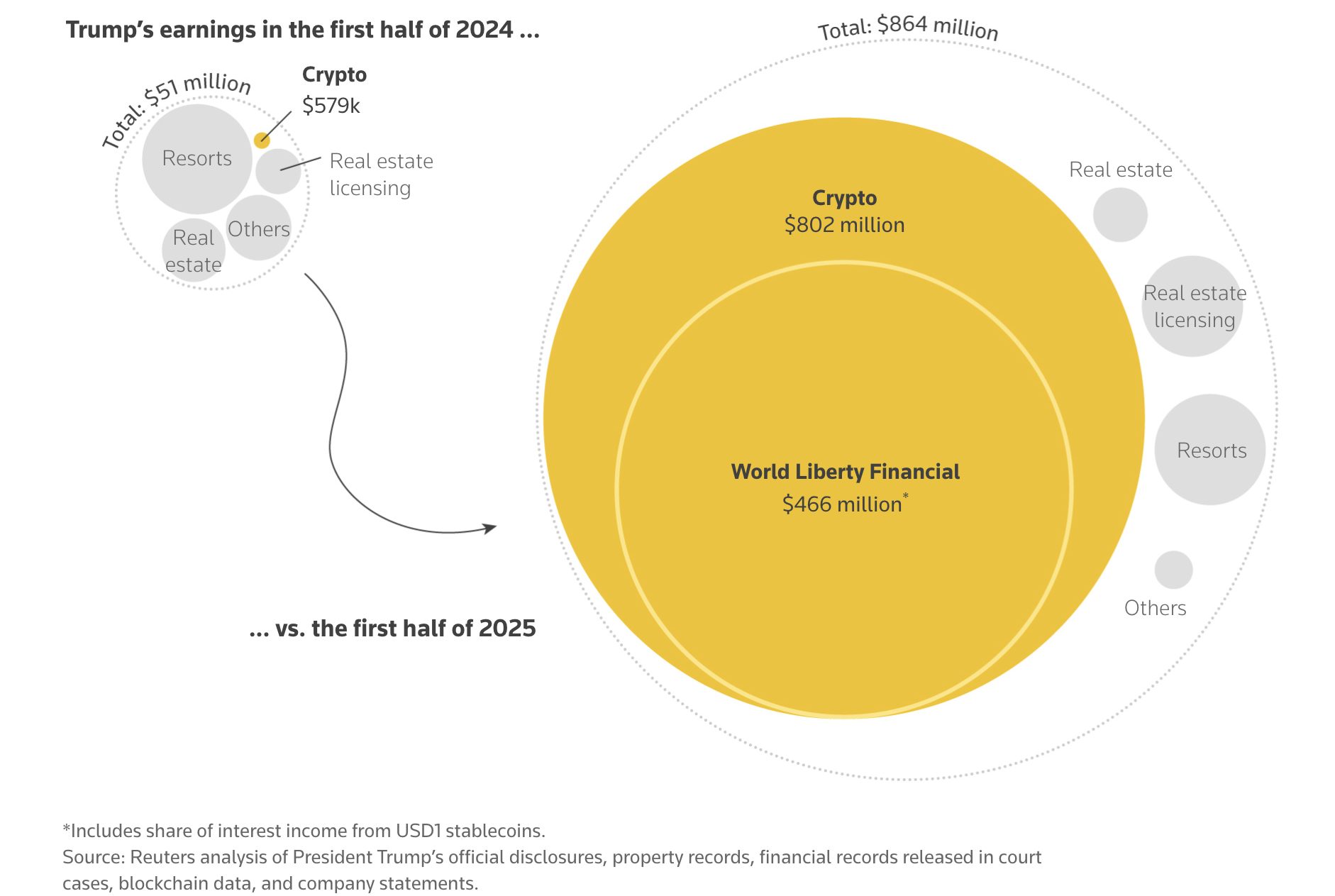
These ventures have generated significant wealth for the US president and his family. According to a Reuters analysis, they earned more than $800 million from crypto asset sales in the first half of 2025 alone,
One could argue that these moves helped legitimize the sector and accelerate adoption. Still, Trump’s direct and indirect involvement in crypto-related ventures raises concerns around optics, governance, and market integrity. While meme coins are not new to the crypto space, their association with a sitting US president is unprecedented.
These activities have also drawn sharp criticism from regulators and users alike. The Trump meme coin, WLFI, and American Bitcoin Corp have all suffered steep declines, resulting in significant losses for supporters.
$BTC is down 24% since 'The Crypto President' took office.
— Quinten | 048.eth (@QuintenFrancois) November 21, 2025
Meanwhile the Trump family reported nearly $1B in crypto profits and they're holding billions of dollars more in their own tokens.
Are they in it for the right reasons? pic.twitter.com/L6HoYbmvRh
Taken together, the data suggest that the answer to who helped crypto the most depends on how “help” is defined. Under Trump, crypto has benefited from a friendlier regulatory tone, reduced enforcement pressure, and faster approval of new investment products.
These changes lowered barriers for issuers and expanded market access.
However, market performance tells a different story. Bitcoin’s strongest gains occurred earlier, during Joe Biden’s presidency.
Meanwhile, Trump’s first year back in office has been marked by heightened volatility.
The post Bitcoin Under Trump Vs Biden: Who Actually Helped Crypto the Most? appeared first on BeInCrypto.

Tidak banyak topik yang lebih memecah belah industri aset kripto selain politik. Donald Trump sering disebut sebagai “presiden kripto pertama Amerika,” sedangkan pemerintahan Biden dianggap bersikap tidak ramah terhadap sektor ini.
Tapi, jika kita mengesampingkan retorika dan fokus pada data pasar, situasinya menjadi lebih kompleks. Pertanyaan utamanya bukan tentang pemerintahan mana yang lebih sering bicara positif soal kripto, melainkan di bawah kepemimpinan siapa Bitcoin akhirnya menunjukkan performa yang lebih baik.
Pada pemilihan presiden Amerika Serikat tahun 2024, Trump memosisikan diri sebagai kandidat yang pro-kripto, berjanji akan menjadikan AS sebagai “ibu kota kripto dunia.” Ia berjanji menghentikan aksi anti-kripto, mengekang tindakan tegas SEC, dan dalam kata-katanya sendiri:
“End Joe Biden’s war on crypto and we will ensure that the future of crypto and the future of Bitcoin will be made in America.”
Situasi ini memunculkan rasa optimistis di pasar dan membuat banyak pelaku berharap akan terjadi reli besar. Namun, mendekati akhir 2025, Bitcoin justru turun hampir 5%.
The most “pro-crypto” presidency ever.
— TrendSpider (@TrendSpider) December 23, 2025
Every major token down since inauguration. $BTC pic.twitter.com/b1sXRNlqw7
Jika dibandingkan, sepanjang tahun pertama Biden sebagai presiden, aset kripto terbesar di dunia ini justru naik sekitar 65%. Memang, performanya melemah di tahun 2022, tapi momentumnya pulih lagi di tahun-tahun setelahnya.
Bitcoin bangkit dengan sangat kuat, naik sekitar 155% pada tahun 2023 dan melonjak lagi 120,7% di 2024.
| Tahun | Return Bitcoin (%) |
| 2021 | 65% |
| 2022 | 64,2% |
| 2023 | 155% |
| 2024 | 120,7% |
| 2025 (per 26 Desember) | -5% |
Saat menelaah masa jabatan pertama Trump sebagai presiden, seorang analis memaparkan bahwa periode tersebut merupakan “reli kripto terbesar” dalam sejarah, di mana total kapitalisasi pasar aset kripto naik sekitar 115 kali lipat dari awal hingga akhir masa jabatannya.
“Biden’s term returned 4.5x from beginning to end, and even at the worst moment, it never went below the annual open for his term. Trump’s 2nd term so far is below annual open, but 3 more years to go,” tulis analis pseudonim tersebut.
Lantas, apa yang sebenarnya terjadi tahun ini? Koreksi tersebut tidak bisa kita pahami hanya dengan melihat return Bitcoin pada tahun 2025 saja.
Pada Januari, momentum memang berada di kubu Bitcoin. Menjelang pelantikan Trump, BTC menembus US$109.000, mencetak rekor tertinggi sepanjang masa pada saat itu. Perkembangan juga terjadi di sisi regulasi, dengan SEC membentuk task force untuk menawarkan kerangka regulasi yang lebih transparan bagi aset digital.
Namun, langkah Trump berikutnya menghapus seluruh kenaikan tersebut. Setelah ia mengumumkan tarif untuk Uni Eropa dan kemudian memperluasnya lagi saat Liberation Day, pasar aset kripto tertekan dan turun bersama pasar saham.
Menariknya, pengumuman jeda tarif memicu sedikit pemulihan. Hal ini pun menegaskan bahwa pasar sangat sensitif terhadap perkembangan ekonomi makro dan menunjukkan volatilitas yang makin tinggi.
CRYPTO MARKETS SOAR ON 90-DAY TRUMP TARIFF PAUSE pic.twitter.com/jXXiU992XF
— Nick O’Neill (@chooserich) April 9, 2025
Di saat yang sama, adopsi terus meningkat seiring makin banyaknya inisiatif Strategic Bitcoin Reserve tingkat negara bagian dan makin banyak institusi yang terjun ke ranah kripto. Harga Bitcoin terus bergerak naik, membukukan return positif selama empat bulan berturut-turut dari April hingga Juli.
Salah satu tren utama selama periode ini adalah kemunculan digital asset treasury (DAT). Semakin banyak perusahaan publik menggunakan Bitcoin sebagai aset cadangan, mengikuti langkah yang dipopulerkan oleh MicroStrategy.
Bitcoin diuntungkan dari pergeseran tren ini, karena banyak pakar menyebutkan bahwa keterlibatan institusi dapat mengurangi volatilitas sekaligus menandakan kedewasaan aset ini di sektor keuangan tradisional.
Semakin tinggi kepercayaan di pasar, makin besar pula minat terhadap risiko dan penggunaan leverage. Trader berisiko tinggi dan memakai leverage besar menarik banyak perhatian. Dari sisi ekonomi makro, The Fed memangkas suku bunga pada September. Situasi ini kembali membawa sentimen positif untuk aset berisiko.
Bitcoin pun melesat ke rekor tertinggi baru di bulan Oktober, menyentuh US$125.761 pada 6 Oktober. Banyak analis pun memproyeksikan kenaikan lanjutan, dengan target antara US$185.000 hingga US$200.000 di akhir tahun.
Optimisme ini didukung oleh katalis ekonomi makro yang positif dan performa historis kuat Bitcoin di kuartal keempat.
BeInCrypto melaporkan bahwa pada 11 Oktober, pengumuman Trump soal tarif 100% untuk produk dari Cina membuat pasar bergerak turun. Lebih dari US$19 miliar posisi leverage terlikuidasi, sehingga banyak trader mengalami kerugian besar.
🚨 BIGGEST WIPEOUT SINCE LUNA, COVID & FTX.
— Wise Advice (@wiseadvicesumit) October 11, 2025
Heading into Trump’s 100% China tariff announcement, markets got the pullback they were waiting for.
Nearly $20 BILLION in crypto liquidations in just 24 hours, a record wipeout. 😱
Leverage was maxed out… and it showed. pic.twitter.com/YeeTE4iPxX
Penurunan secara luas terus berlanjut dalam beberapa bulan berikutnya, bahkan semakin tajam karena leverage.
“It also appears to be a structural and mechanical downturn. It all began with institutional outflows in mid-to-late October. In the first week of November, crypto funds saw -$1.2 billion of outflows. The problem becomes excessive levels of leverage AMID these outflows…Excessive levels of leverage have resulted in a seemingly hypersensitive market,” tulis The Kobeissi Letter pada bulan November.
Bitcoin turun 17,67% sepanjang November dan sejak itu sudah kehilangan 1,7% nilai tambah di bulan ini menurut data Coinglass.
Pemerintahan Trump dan Biden berbeda pandangan dalam sejumlah isu penting, salah satunya terkait ETF kripto. Di bawah pemerintahan Biden, SEC awalnya memilih pendekatan yang jauh lebih hati-hati terhadap industri aset kripto. Sikap ini juga berlaku untuk ETF kripto.
Tapi, posisi regulasi mulai berubah setelah Pengadilan Banding Amerika Serikat untuk Sirkuit DC memerintahkan SEC untuk mempertimbangkan kembali aplikasi Grayscale Investments guna mengubah dana andalan GBTC-nya menjadi exchange-traded fund (ETF) Bitcoin spot.
Setelah itu, SEC akhirnya menyetujui exchange-traded fund (ETF) Bitcoin spot pada Januari 2024 dan selanjutnya merestui exchange-traded fund (ETF) Ethereum spot pada Juli.
Menariknya, setelah Gary Gensler meninggalkan SEC, para manajer aset langsung mengajukan berbagai permohonan untuk ETF altcoin. Beberapa perusahaan seperti Bitwise, 21 Capital, dan Canary Capital, serta yang lainnya, mendaftarkan produk investasi berbasis aset kripto.
Pada bulan September, SEC menyetujui standar listing generik, sehingga tidak perlu lagi ada persetujuan kasus per kasus. Setelah perubahan ini, ETF yang mengacu pada aset seperti SOL, HBAR, XRP, LTC, LINK, dan DOGE mulai diperdagangkan.
Pada bulan November, ETF XRP keluaran Canary Capital mencatat volume perdagangan senilai US$58,6 juta pada hari pertama, menjadi debut terkuat dari lebih dari 900 ETF yang diluncurkan pada 2025. ETF Solana milik Bitwise juga mendapat minat besar dengan volume hari pertama mencapai US$56 juta, sedangkan produk lain tampil dengan aktivitas yang lebih rendah.
Dari sisi regulasi, ETF ini memperluas akses pasar dan putusan pengadilan mengurangi batasan bagi penerbit. Meski begitu, data performa awal mengindikasikan bahwa hadirnya ETF kripto tambahan belum serta merta meningkatkan agregat arus modal masuk ke pasar sesuai ekspektasi.
Pada 2024, exchange-traded fund (ETF) Bitcoin spot menarik arus bersih sekitar US$35,2 miliar. Tahun 2025, arus masuk ke ETF Bitcoin melambat menjadi US$22,16 miliar menurut data SoSoValue. Perbedaan ini mengisyaratkan pertumbuhan penawaran ETF berjalan sejajar dengan redistribusi modal antar produk, bukan peningkatan total eksposur ke aset kripto.
Walaupun pengaruh Donald Trump di pasar sangat kentara, dia turut terjun langsung ke industri aset kripto. Pada Januari, presiden tersebut memperkenalkan meme coin, lalu tak lama kemudian Melania Trump juga meluncurkan token yang sangat mirip.
Pada bulan Maret, dua putra Presiden AS Donald Trump, Eric Trump dan Donald Trump Jr., bermitra dengan Hut 8 untuk meluncurkan American Bitcoin Corp.
Langkah-langkah ini telah menghasilkan kekayaan besar bagi presiden AS dan keluarganya. Menurut analisis Reuters, mereka sudah meraup lebih dari US$800 juta dari penjualan aset kripto hanya di paruh pertama 2025 saja,
Bisa saja orang berpendapat bahwa langkah-langkah ini membantu melegitimasi sektor aset kripto dan mempercepat adopsi. Akan tetapi, keterlibatan langsung dan tidak langsung Trump dalam bisnis terkait kripto menimbulkan kekhawatiran terhadap citra, tata kelola, dan integritas pasar. Walau meme coin bukan hal baru di ranah aset kripto, keterkaitannya dengan seorang presiden AS yang masih menjabat jelas belum pernah terjadi sebelumnya.
Kegiatan-kegiatan ini juga menuai kritik tajam dari regulator dan para pengguna. Meme coin Trump, WLFI, dan American Bitcoin Corp semuanya mengalami penurunan tajam, sehingga pendukungnya mendapat kerugian besar.
$BTC is down 24% since 'The Crypto President' took office.
— Quinten | 048.eth (@QuintenFrancois) November 21, 2025
Meanwhile the Trump family reported nearly $1B in crypto profits and they're holding billions of dollars more in their own tokens.
Are they in it for the right reasons? pic.twitter.com/L6HoYbmvRh
Jika dilihat secara keseluruhan, data menunjukkan bahwa jawaban atas siapa yang paling banyak membantu kripto sangat tergantung pada bagaimana “bantuan” itu sendiri didefinisikan. Di era Trump, industri kripto merasakan sikap regulasi yang lebih ramah, tekanan penegakan hukum yang berkurang, serta proses persetujuan produk investasi baru yang semakin cepat.
Perubahan-perubahan ini membuat hambatan bagi para penerbit produk jadi lebih rendah dan akses pasar semakin luas.
Tapi, performa pasar menunjukkan hal berbeda. Bitcoin justru membukukan kenaikan terkuat di masa awal kepresidenan Joe Biden.
Sementara itu, tahun pertama Trump kembali menjabat ditandai oleh volatilitas yang semakin tinggi.
 Berbagai tempat di dunia ini sering dikira hasil AI karena kelihatan unreal! Padahal sebenarnya benar-benar ada, loh.
 Netizen merespons foto selfie Jennifer Lopez (JLo) dan menyebutnya telah diedit kebangetan. JLo pun memberikan klarifikasi.
 Jepang bersiap memburu 'harta karun' bernilai tinggi dari dasar laut dalam. Mulai 2027, Negeri Sakura berencana mengolah lumpur laut kaya logam tanah jarang.
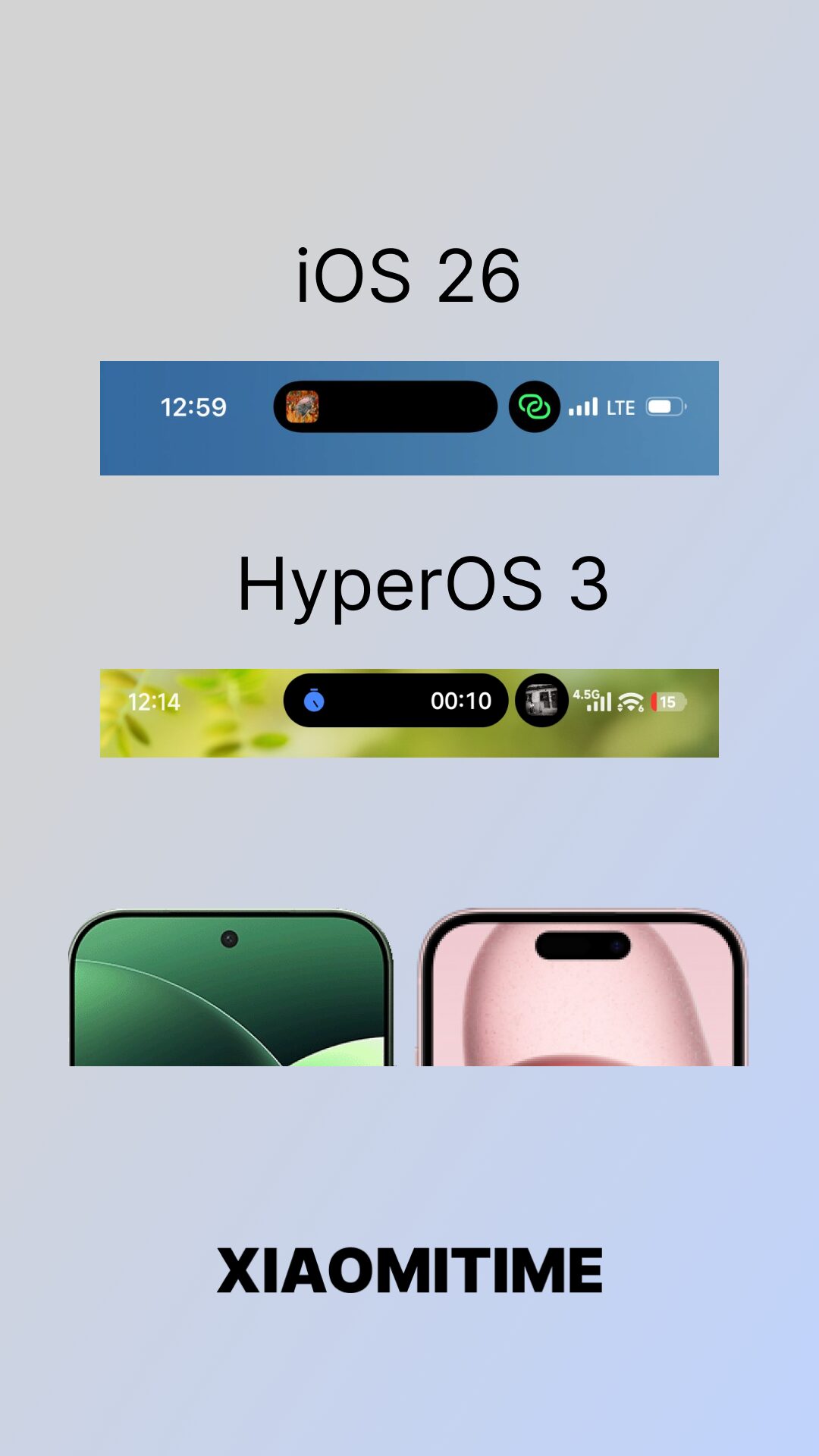
It’s an exciting time for Xiaomi fans as the company makes preparations for the global rollout of HyperOS 3, a historic upgrade that will change the smartphone experience forever. One of the most anticipated additions is HyperIsland, a feature that turns the front camera area into a fully interactive multitasking hub. Unlike Apple’s Dynamic Island, Xiaomi’s implementation focuses on practicality — allowing users to switch from notifications directly into multi-window or floating apps. This innovation highlights Xiaomi’s continuous effort to enhance both productivity and user experience across its devices.
HyperIsland is not about visual appeal or design flash; it’s truly a leap forward in the functionality of mobiles. Apple’s Dynamic Island, found on the likes of the iPhone 14 Pro, iPhone 15, and future iPhone 17, is itself a fashionable notification space, whereas the Xiaomi method offers the system integration more deeply.
Imagine receiving a message or notification — with just a tap, HyperIsland expands into a fully functional floating window, letting users respond instantly without disrupting their current activity. This seamless approach to multitasking is a hallmark of HyperOS 3, showcasing Xiaomi’s goal to not merely follow trends but to perfect them through innovation and engineering.

One of the standout aspects of HyperIsland is its usability. For users who constantly juggle between apps, Xiaomi’s new system design makes multitasking effortless. Whether you’re replying to messages while streaming a video or referencing notes during a meeting, everything happens in one fluid motion.
This feature exemplifies Xiaomi’s design philosophy — smooth transitions, reduced friction, and productivity at your fingertips.

The global release of HyperOS 3 will begin in October, and HyperIsland will be accessible for millions of people across the world. But for the time being, this feature will be available only on mid-range and flagships to ensure the best experience. A few low-end phones and some Xiaomi Pad series models may be excluded at least for now, since Xiaomi focuses on delivering the best experience on high-end hardware.
If you’re eagerly awaiting the update, get your device ready. Buyers can download the MemeOS Enhancer app from the Play Store to manually update system apps, unlock hidden capabilities, and prepare for the forthcoming HyperOS 3 launch. The tool keeps you on top of every single improvement Xiaomi releases, delivering a smoother and faster upgrade process.


PorteuX 2.5 Linux distribution is now available for download with Linux kernel 6.17, GNOME 49.1, KDE Plasma 6.5.2, LXQt 2.3, and more. Here’s what else is new!
The post PorteuX 2.5 Is Out with Flatpak Support, Cinnamon 6.6, COSMIC 1.0, and Linux 6.18 appeared first on 9to5Linux - do not reproduce this article without permission. This RSS feed is intended for readers, not scrapers.
Vitalik Buterin memperingatkan bahwa pendekatan regulasi Uni Eropa di bawah Digital Services Act berisiko melemahkan pluralisme dengan mencoba tidak memberi “ruang” bagi ucapan atau produk yang kontroversial di internet.
Dalam sebuah unggahan panjang di X, co-founder Ethereum ini berpendapat bahwa masyarakat bebas tidak seharusnya berupaya menghilangkan ide-ide yang dianggap berbahaya. Ia menuturkan, sebaiknya regulator fokus mencegah agar konten semacam itu tidak diperkuat secara algoritmik dan mendominasi perbincangan publik.
Digital Services Act berlaku untuk seluruh ekosistem online. Setiap layanan yang menjangkau pengguna Uni Eropa termasuk dalam undang-undang ini, terlepas dari ukuran atau lokasinya. Kewajiban mengikuti skala jangkauan dan risiko, tapi tidak ada platform yang ada di luar regulasi ini.
Desain peraturan ini bertujuan menutup celah hukum dan teknis yang sebelumnya memungkinkan platform menghindari tanggung jawab.
Para pengkritik menyebutnya sebagai pendekatan “tanpa ruang”, artinya tidak ada celah digital tanpa regulasi di mana konten berbahaya bisa lolos tanpa pertanggungjawaban.
This is what I worry Europe will get negatively polarized into: an ideology taking pride in a neat, sanitized online environment free of evil corporate and fascist pathogens.
— vitalik.eth (@VitalikButerin) December 26, 2025
I hope European govs do not go this way, and instead take a Pirate Party approach of user empowerment.… https://t.co/oH7Yfdg9pa
Tujuannya bukan penyensoran total. Melainkan, DSA fokus pada penilaian risiko, transparansi, dan pilihan desain platform yang memengaruhi bagaimana konten menyebar.
Buterin menyebut bahwa kegagalan nyata dari media sosial saat ini bukan karena ada pandangan ekstrem, namun karena algoritma sering mendorong penyebaran opini-opini tersebut secara luas.
Ia memperingatkan bahwa pemikiran tanpa toleransi bisa menyebabkan tindakan berlebihan, konflik, dan makin besarnya ketergantungan pada penegakan secara teknokratis.
should be solved at as local a level as possible, ideally the operator of whatever institution is using the room and organizing toddlers to come there, otherwise the municipality
— vitalik.eth (@VitalikButerin) December 26, 2025
Buterin juga memperingatkan bahwa memperlakukan ide-ide yang tidak disukai seperti patogen yang harus dihapus mencerminkan naluri anti-pluralisme. Ia menyampaikan bahwa perdebatan merupakan bagian tak terhindarkan dalam masyarakat terbuka dan upaya menghapus pandangan kontroversial secara total justru akan memperluas pengawasan serta kewenangan penegakan hukum.
Ia mendorong pemberdayaan pengguna, transparansi, serta persaingan sehat. Menurutnya, platform seharusnya mengurangi insentif yang membuat konten berbahaya menjadi menarik, bukan memaksa menghapusnya sepenuhnya.
Perdebatan ini juga menyoroti privacy coin seperti Monero dan Zcash.
Saat regulator mendorong platform untuk memantau perilaku dan mengumpulkan lebih banyak data, makin banyak pengguna yang sadar bahwa pengawasan lebih besar sering berujung pada terbukanya lebih banyak data mereka.
Hal ini memperkuat narasi untuk alat keuangan yang dirancang meminimalkan jejak transaksi.
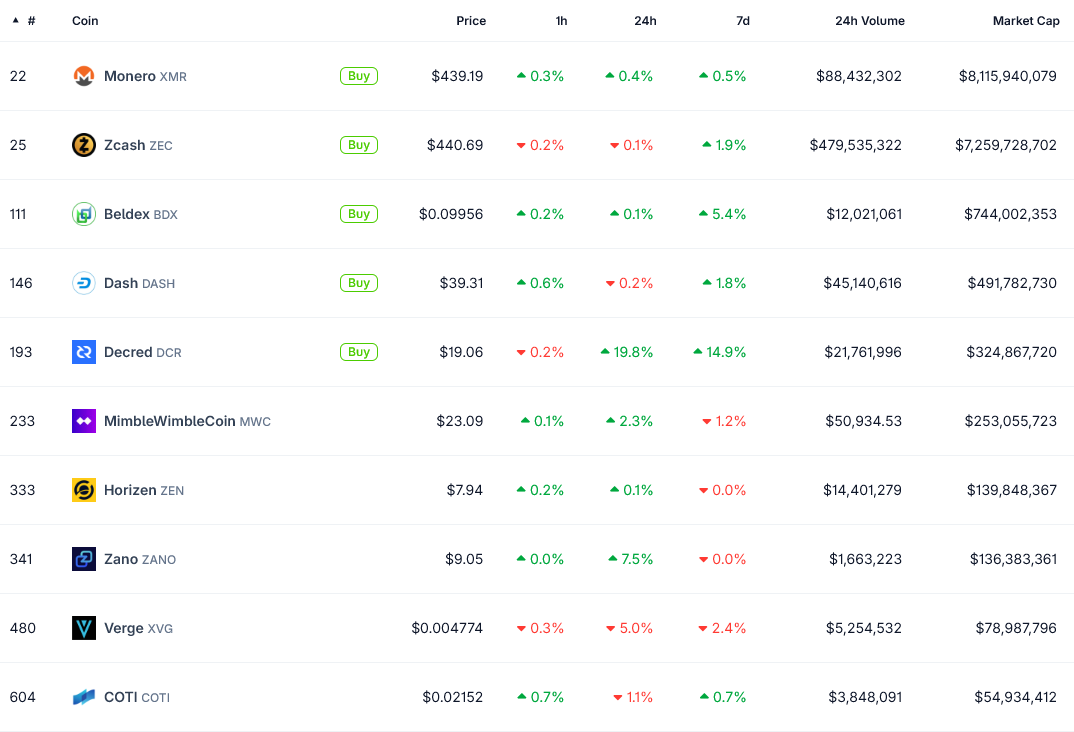
Meskipun begitu, dampaknya tidak merata. Meskipun dukungan filosofis pada privacy coin bisa bertambah, akses di pasar Uni Eropa yang teregulasi tetap terbatas. Exchange terus membatasi atau menghapus privacy coin ini karena risiko kepatuhan.
Singkatnya, pendekatan Eropa semakin menegaskan pentingnya privasi, meski membuat alat berfokus privasi menjadi semakin terbatas ruang geraknya.

Vitalik Buterin has warned that the European Union’s regulatory approach under the Digital Services Act risks undermining pluralism by trying to leave “no space” for controversial speech or products online.
In a detailed post on X, the Ethereum co-founder argued that a free society should not aim to eliminate ideas it considers harmful. Instead, he said regulators should focus on stopping such content from being algorithmically amplified and dominating public discourse.
The Digital Services Act applies to the entire online ecosystem. Any service reaching EU users falls under the law, regardless of size or location. Obligations scale with reach and risk, but no platform sits outside the regulatory framework.
This design aims to close legal and technical loopholes that previously allowed platforms to avoid responsibility.
Critics describe this as a “no-space” approach, meaning there should be no unregulated digital gaps where harmful content can escape accountability.
This is what I worry Europe will get negatively polarized into: an ideology taking pride in a neat, sanitized online environment free of evil corporate and fascist pathogens.
— vitalik.eth (@VitalikButerin) December 26, 2025
I hope European govs do not go this way, and instead take a Pirate Party approach of user empowerment.… https://t.co/oH7Yfdg9pa
The goal is not blanket censorship. Instead, the DSA focuses on risk assessments, transparency, and platform design choices that influence how content spreads.
Buterin said the real failure of modern social platforms is not that fringe views exist, but that algorithms often push them at scale.
He warned that zero-tolerance thinking can lead to overreach, conflict, and growing reliance on technocratic enforcement.
should be solved at as local a level as possible, ideally the operator of whatever institution is using the room and organizing toddlers to come there, otherwise the municipality
— vitalik.eth (@VitalikButerin) December 26, 2025
Buterin warned that treating disliked ideas as pathogens to be erased reflects an anti-pluralistic instinct. He argued that disagreement is inevitable in open societies and that trying to fully remove controversial views often expands surveillance and enforcement powers.
He advocated for user empowerment, transparency, and competition. In his view, platforms should reduce incentives that reward harmful content, rather than attempting to eliminate it entirely.
The debate has also drawn attention to privacy coins such as Monero and Zcash.
As regulators push platforms to monitor behavior and retain more data, users may grow more aware that increased oversight often leads to greater data exposure.
That strengthens the narrative appeal of financial tools designed to minimize traceability.
However, the impact is uneven. While philosophical support for privacy coins may grow, access in regulated EU markets remains constrained. Exchanges continue to limit or delist them due to compliance risk.
In short, Europe’s approach reinforces why privacy matters, even as it complicates where privacy-focused tools can operate.
The post Vitalik Buterin Slams EU’s ‘No-Space’ Digital Rules appeared first on BeInCrypto.
Pasar aset kripto akan memasuki akhir pekan terakhir tahun 2025, dan sebelum tahun baru dimulai, masih ada peluang bagi altcoin untuk tumbuh.
Dipimpin oleh Pippin (PIPPIN), tiga altcoin ini wajib dipantau dalam 48 jam ke depan saat kita mendekati pergantian tahun.
Harga LEO naik 25% dalam sepekan terakhir, dan diperdagangkan di sekitar US$8,45 pada waktu publikasi. Struktur teknikal menunjukkan support yang kuat, dengan Parabolic SAR menandakan tren naik yang masih aktif. Sinyal ini memperlihatkan bahwa pembeli masih memegang kendali seiring dengan meningkatnya momentum, walaupun ada ketidakpastian di pasar secara umum.
Jika kondisi bullish tetap bertahan, LEO bisa rebound ke US$9,10, dan menutup kerugian yang sempat tercatat di awal bulan ini. Tekanan beli yang konsisten bisa memperpanjang kenaikan menuju target US$9,80. Mencapai level ini akan mencerminkan kepercayaan baru dan memperkuat tren naik yang terjadi dalam jangka pendek.
Ingin dapat insight token seperti ini? Daftar ke Newsletter Harian Crypto dari Editor Harsh Notariya di sini.
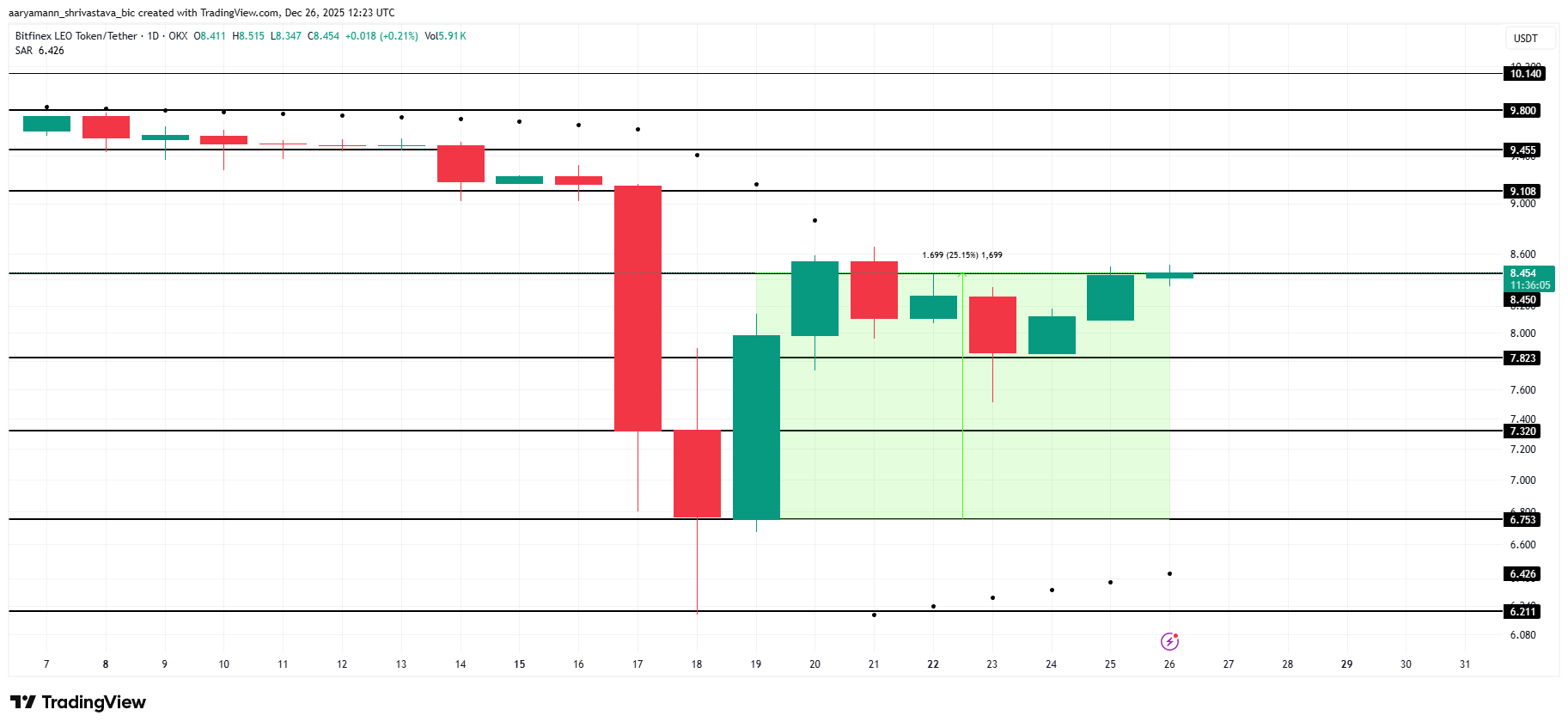
Risiko koreksi tetap ada jika investor memutuskan untuk ambil untung lebih awal. Tekanan jual bisa mendorong LEO turun di bawah support US$7,82. Jika penurunan berlanjut sampai US$7,32, struktur teknis akan menjadi lemah, skenario bullish tidak berlaku lagi, dan ini bisa menjadi sinyal perubahan momentum ke arah bearish dalam jangka pendek.
PIPPIN muncul menjadi salah satu altcoin top gainer minggu ini, dengan kenaikan sebesar 34% dalam tujuh hari terakhir. Token ini terus mencetak all-time high baru setiap minggu. Minat beli yang tinggi dan momentum yang kuat mendorong kenaikan terus-menerus pada PIPPIN.
All-time high terbaru berada di US$0,720, di mana PIPPIN membutuhkan kenaikan 45,6% lagi untuk mencapainya kembali. Untuk mencapainya, PIPPIN harus bisa menjadikan US$0,600 sebagai support kuat. Jika level ini bisa dipertahankan, maka kekuatan pembeli akan terbukti dan kemungkinan harga akan terus naik pun semakin besar.
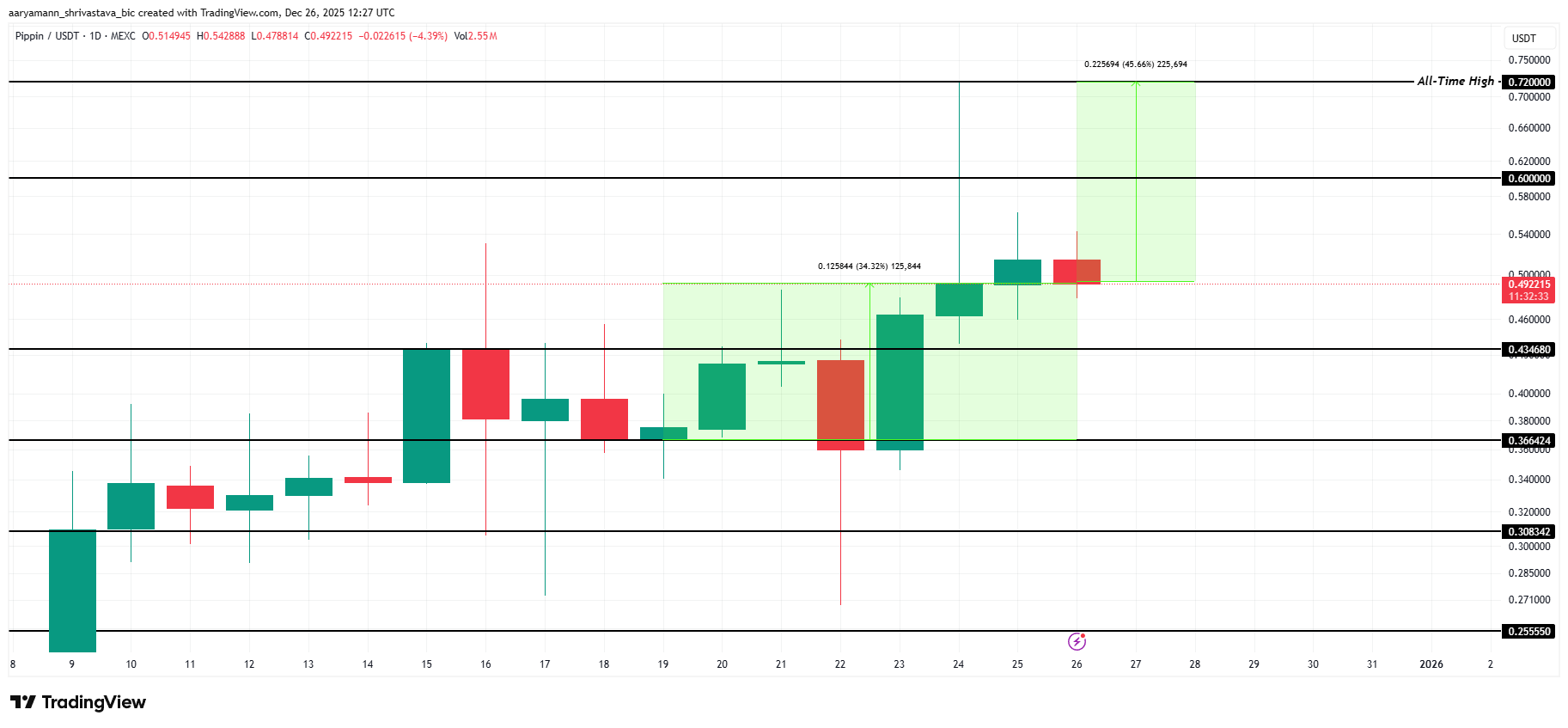
Risiko koreksi tetap mengancam jika sentimen pasar secara umum berubah menjadi bearish. Minat terhadap risiko yang melemah bisa menyeret PIPPIN turun di bawah support US$0,434. Jika breakdown terjadi, kerugian bisa terus berlanjut ke area US$0,366, menghapus kenaikan terbaru dan membatalkan outlook bullish yang sedang berjalan.
Harga MYX diperdagangkan di sekitar US$3,35 pada waktu publikasi setelah naik 15,2% dalam tujuh hari terakhir. Altcoin ini masih bertahan di atas support US$3,26. Struktur saat ini menandakan bahwa pembeli menargetkan resistance di US$3,62 seiring momentum yang perlahan terbentuk.
Indikator teknikal menguatkan bias bullish. Relative Strength Index tetap di atas level netral 50,0, menandakan tekanan beli yang berkelanjutan. Kekuatan ini dapat mendukung reli lanjutan. Breakout yang terkonfirmasi di atas US$3,62 bisa membuka jalan menuju US$3,80 dalam waktu dekat.
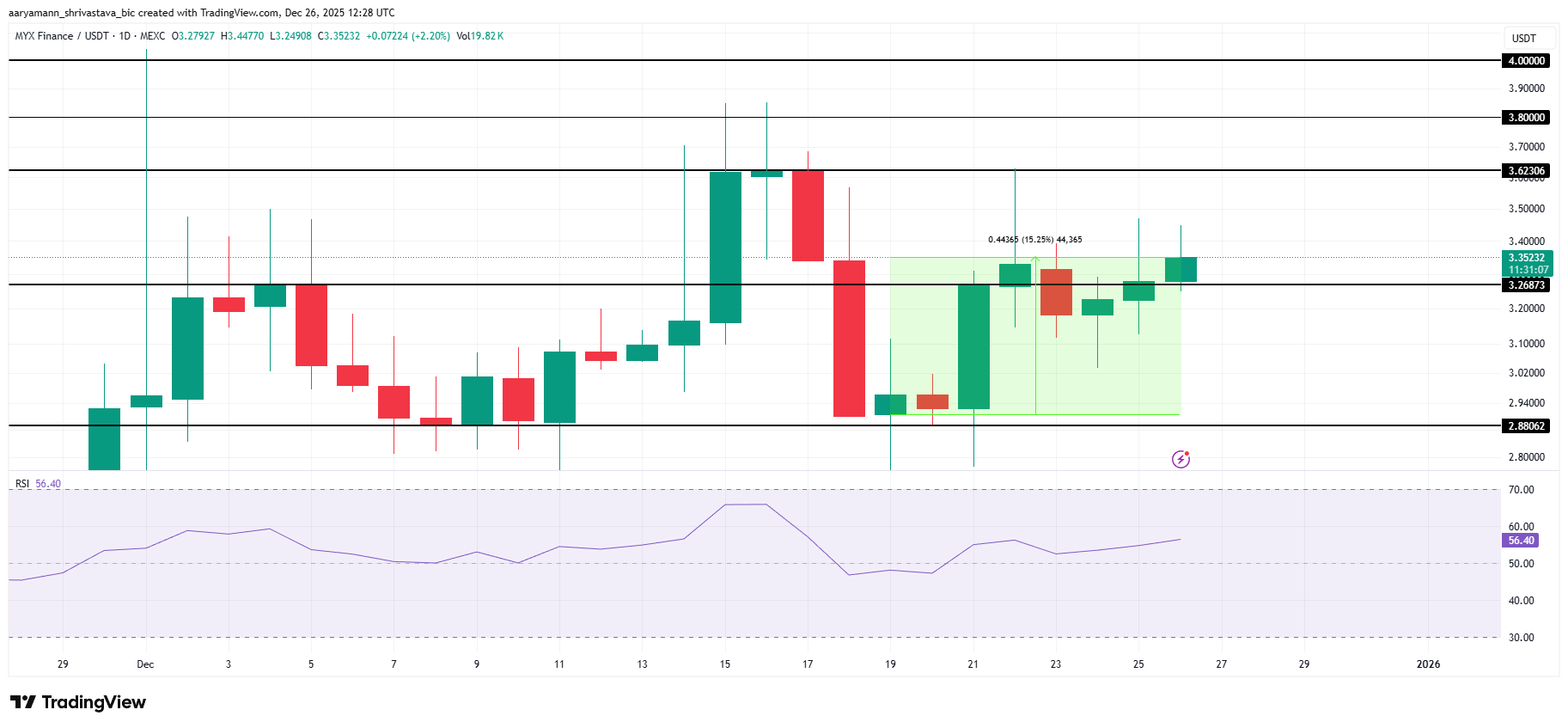
Risiko koreksi tetap ada jika kondisi pasar secara umum memburuk. Tekanan jual yang meningkat bisa menekan MYX turun di bawah support US$3,26. Jika breakdown terjadi, harga bisa menuju US$2,88, membatalkan outlook bullish dan menandai perubahan momentum ke arah bearish dalam jangka pendek.

The crypto market is heading into the final weekend of 2025, and before the new year begins, there might be some room for altcoins to record growth still.
Led by Pippin (PIPPIN), these three altcoins are must-watch in the coming 48 hours as we near the year-end.
LEO price surged 25% over the past week, trading near $8.45 at the time of writing. The technical structure shows strong support, with the Parabolic SAR confirming an active uptrend. This setup suggests buyers remain in control as momentum builds despite broader market uncertainty.
If bullish conditions persist, LEO could rebound toward $9.10, recovering losses recorded earlier this month. Sustained buying pressure may extend gains toward the $9.80 target. Achieving this level would reflect renewed confidence and reinforce the prevailing upward trend in the short term.
Want more token insights like this? Sign up for Editor Harsh Notariya’s Daily Crypto Newsletter here.
Downside risks remain if investors move to lock in profits early. Selling pressure could push LEO below the $7.82 support. A further decline toward $7.32 would weaken technical structure, invalidate the bullish thesis, and signal a potential shift back to short-term bearish momentum.
PIPPIN has emerged as one of the strongest-performing altcoins this week, gaining 34% over the past seven days. The token continues to post fresh all-time highs on a weekly basis. Persistent buying interest and strong momentum have supported its sustained upward trajectory.
The latest all-time high stands at $0.720, with PIPPIN requiring a 45.6% move to revisit that level. Achieving this depends on flipping $0.600 into firm support. A successful hold above that zone would confirm strength and increase the probability of continued price discovery.
Downside risk remains if broader market sentiment turns bearish. Weakening risk appetite could push PIPPIN below the $0.434 support. A breakdown there may extend losses toward $0.366, erasing recent gains and invalidating the prevailing bullish outlook.
MYX price traded near $3.35 at the time of writing after rising 15.2% over the past seven days. The altcoin continues to hold above the $3.26 support. The current structure suggests buyers are targeting the $3.62 resistance as momentum gradually builds.
Technical indicators reinforce the bullish bias. The Relative Strength Index remains above the neutral 50.0 level, signaling sustained buying pressure. This strength could support further recovery. A confirmed breakout above $3.62 may open the path toward $3.80 in the short term.
Downside risks persist if broader market conditions weaken. Increased selling pressure could push MYX below the $3.26 support. A breakdown there would expose the $2.88 level, invalidating the bullish outlook and signaling a shift back toward short-term bearish momentum.
The post 3 Altcoins To Watch This Weekend | December 27 – 28 appeared first on BeInCrypto.

Dampak dari insiden ekstensi Chrome Trust Wallet makin memanas pada 26 Desember, setelah Changpeng Zhao (CZ) angkat bicara di depan umum dan mengindikasikan bahwa pelanggaran ini sepertinya melibatkan orang dalam.
Pernyataan ini muncul bersamaan dengan konfirmasi dari Trust Wallet bahwa sekitar US$7 juta dana pengguna telah terdampak sejauh ini.
CZ menuturkan Trust Wallet akan mengganti penuh seluruh dana pengguna yang terdampak dan menegaskan bahwa dana pelanggan tetap aman.
Ia juga menambahkan bahwa tim investigasi masih menelusuri bagaimana pembaruan ekstensi browser yang sudah terinfeksi bisa lolos dari pengawasan distribusi, dan menyebut peran orang dalam sebagai penyebab yang “paling mungkin.”
Pernyataan ini pun semakin menyoroti kekhawatiran soal akses internal dan tata kelola update, tidak hanya soal serangan eksternal semata.
Most likely.
— CZ 🔶 BNB (@cz_binance) December 26, 2025
Trust Wallet kemudian mengonfirmasi bahwa insiden ini hanya mempengaruhi Browser Extension versi 2.68 saja, dan menegaskan lagi bahwa pengguna mobile serta versi lain tetap aman.
Pihak perusahaan mengungkapkan bahwa mereka sedang merampungkan prosedur penggantian dana dan akan memberikan instruksi yang jelas untuk pengguna yang terdampak.
Di sisi lain, pengguna harus tetap waspada dari upaya phishing yang menyamar sebagai layanan resmi.
Update on the Trust Wallet Browser Extension (v2.68) incident:
— Trust Wallet (@TrustWallet) December 26, 2025
We’ve confirmed that approximately $7M has been impacted and we will ensure all affected users are refunded.
Supporting affected users is our top priority, and we are actively finalizing the process to refund the… https://t.co/2XRx8GvZ75
Isu orang dalam ini menarik perhatian khusus di komunitas keamanan aset kripto. Karena, ekstensi browser butuh kunci penandatanganan, kredensial pengembang, serta alur persetujuan untuk bisa melakukan update.
Agar sebuah build berbahaya atau yang sudah terinfeksi dapat didistribusikan lewat Chrome Web Store resmi, penyidik biasanya mencari apakah ada kompromi kredensial atau akses internal secara langsung.
Kedua skenario itu mengarah ke lemahnya keamanan operasional, bukan pada celah software yang umum.
Risiko seperti ini memang nyata. Sepanjang tahun lalu, beberapa insiden ekstensi browser berprofil tinggi juga terjadi akibat akun pengembang yang dibajak atau pipeline rilis yang disusupi.
Reaksi pasar pun mencerminkan ketidakpastian ini. Native token Trust Wallet, TWT, langsung terjual besar-besaran setelah laporan awal pada 25 Desember.
namun, harga TWT kembali stabil dan menguat pada 26 Desember, usai ada kepastian bahwa kerugian terbatas dan ada proses penggantian dana untuk pengguna.
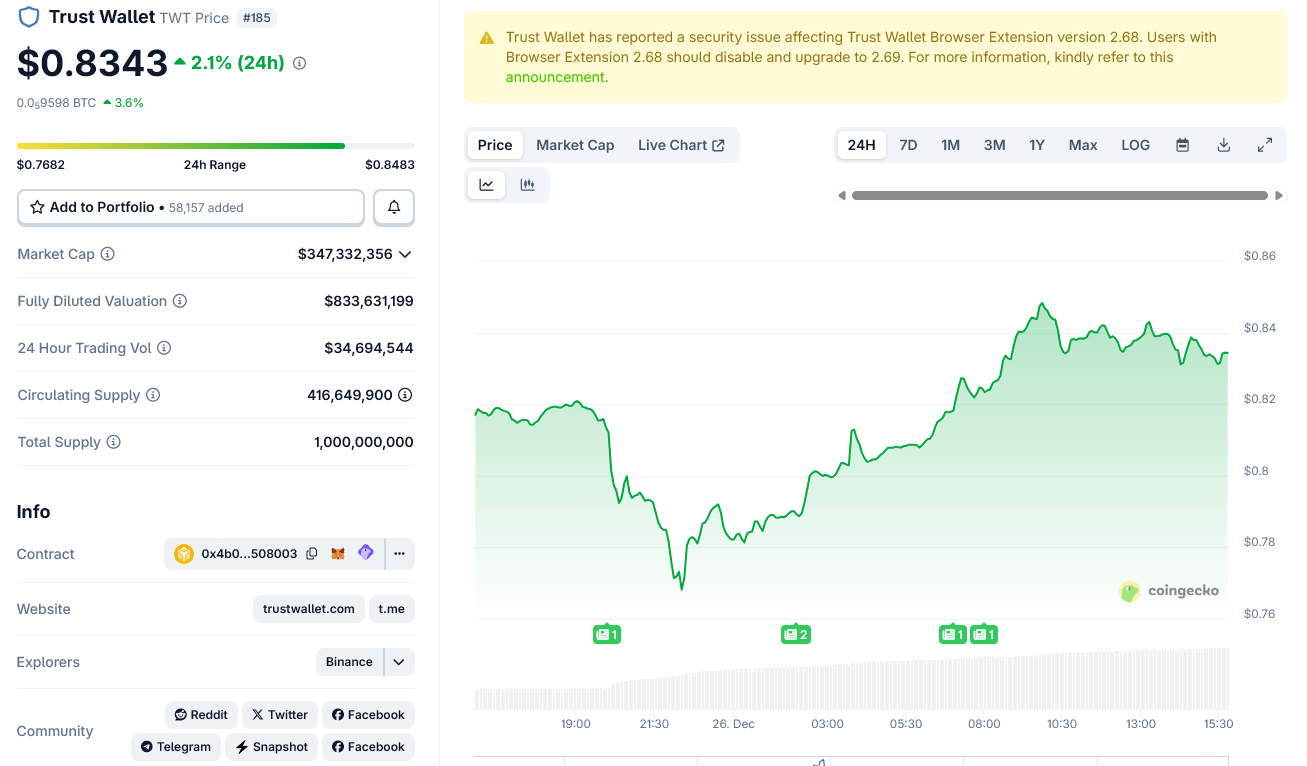
Meskipun Trust Wallet bergerak cepat dalam menangani insiden ini, kejadian ini mencerminkan tantangan yang lebih besar di industri.
Sebab, seiring makin banyak wallet aset kripto yang bergantung pada ekstensi browser, keamanan update dan pengelolaan risiko orang dalam jadi area serangan yang sangat krusial—bukan sekadar prioritas kedua.