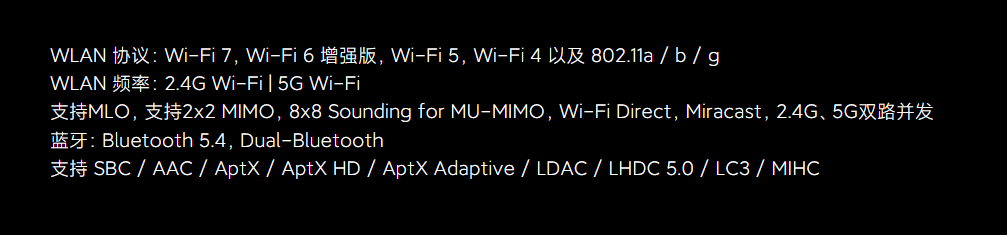
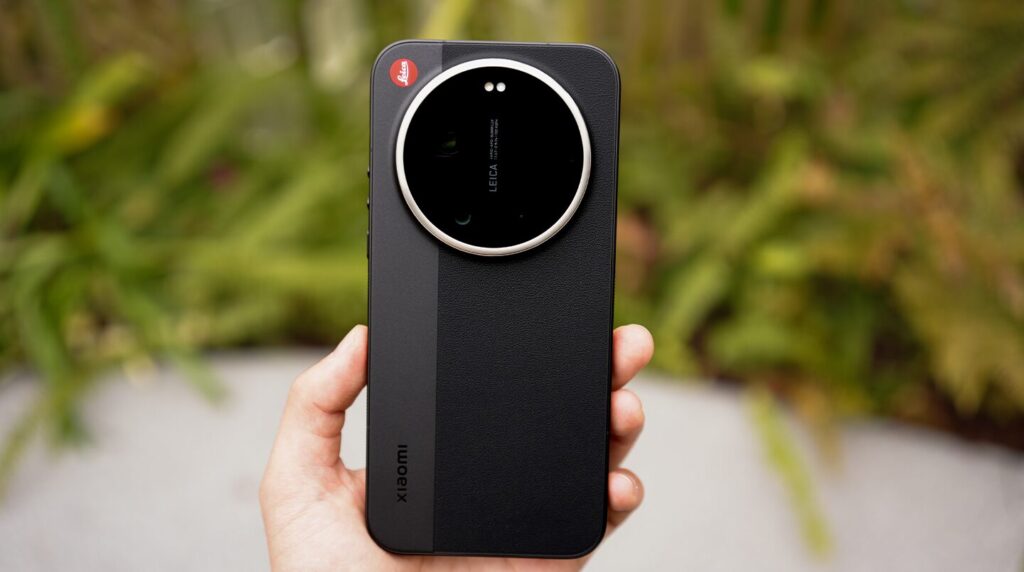
Recently, the Xiaomi 17 series launched a massive technical discussion in the mobile world regarding connectivity standards. While the global Xiaomi 17 Ultra comes with revolutionary Bluetooth 6.0 technology, the variants sold in China appear to be stuck with Bluetooth 5.4. This regional difference is not related to saving hardware costs but rather originates in complex regulatory frameworks.
The Power of Snapdragon 8 Elite
The entire Xiaomi 17 lineup comes with the latest Snapdragon 8 Elite (Gen 5) platform. This chipset features the FastConnect 7900 system, which is fully capable of supporting Bluetooth 6.0 and Ultra-Wideband UWB technologies on a hardware level.
Since the hardware is identical, this limitation is purely based on software. FastConnect 7900 comes with AI-optimized radio frequency management; it physically supports “Channel Sounding,” which is the core feature of the new Bluetooth standard. This indicates pretty clearly that Xiaomi hasn’t removed any antennas or chips from the Chinese models; they have just disabled the feature in the HyperOS software kernel for that region.
Regulatory Barriers and SRRC
Most of this difference falls between the shoulders of SRRC in China. Bluetooth 6.0 features a new feature, “Channel Sounding”, that enhances location accuracy.
Spectrum Issues: This uses a 2.4 GHz band with transmissions of a continuous wave. It is also interference, where the current Chinese regulations on “Short Range Devices” are very strict about interference avoidance.
Certification: The testing protocols for this new signal type were not ready in China at the time of the release.
This is why Xiaomi had to launch the device with Bluetooth 5.4 in China, as the certification process was not complete; to avoid more delays. But the Global version (Model 2512BPNDAG) has been certified by FCC, thus allowing these advanced features right away.
Benefits Accrued to Users Worldwide
With Bluetooth 6.0, global users will see considerable advantages. The most critical enhancement brings centimeter-level precision for digital car keys. If you happen to have a supported vehicle, the device could only unlock it when physically close to you, as compared to the relay attacks. It is pretty much safer compared to the older RSSI-based methods used in the Chinese firmware.
While Chinese users wait for a regulatory update, for the global users, all these features would be available right out of the box. Keeping system apps updated will ensure a smooth run on your device. You can easily update system components using our MemeOS Enhancer app from Play Store. This app will also help you access the hidden HyperOS features and manage advanced updates.
Terkadang tempat yang tadinya biasa saja, tapi saat menempatinya sendiri suasananya berubah. Tak lagi biasa saja, tapi terasa menyeramkan, seperti foto ini.
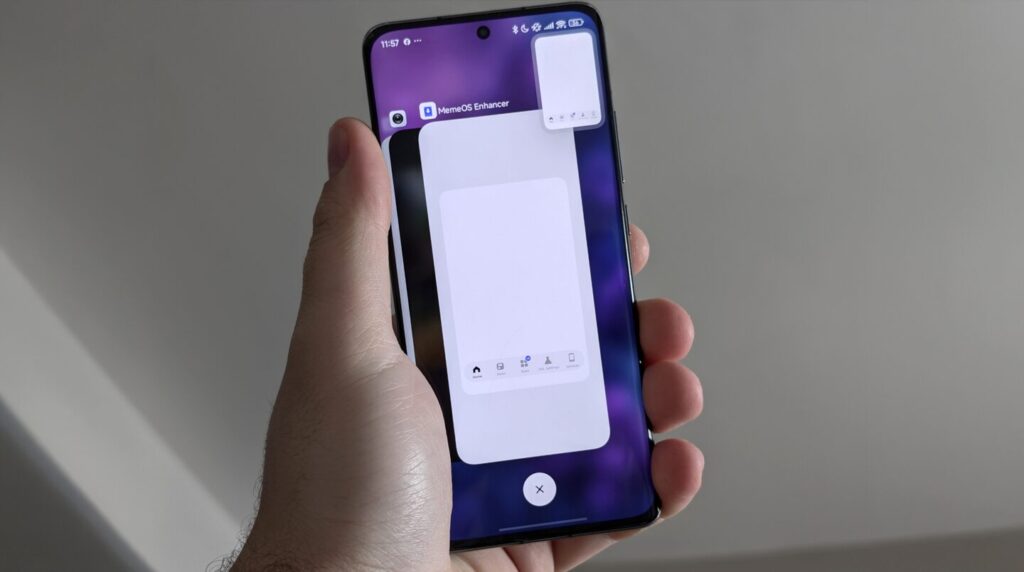
Released only three weeks ago, the recent apps interface like iOS has very quickly made a name for itself as the highlight of 2025 for Xiaomi enthusiasts. Although the new HyperIsland found in HyperOS 3 was a great addition, it seems that “card pile up” multitasking UI has won hearts absolute all over. This new development, which was expected towards the end of the year, has fulfilled a demand that was created back in a 2023 survey.
A Sleek Visual Experience
Although it has been some weeks since its launch, it has been appreciated for its fluid animations that give it an elite look similar to other competing platforms. Cards are stacked with a special blur look when scrollers scroll through them in contrast to the original grid system used by this platform in the previous version. This new look has been stable on Hyper OS 2 as well as Hyper OS 3 and has a fabulous look that perfectly fits into its design language. This is currently the most optimized multitasking system available on a Xiaomi device.
Easy Installation Guide
Although this is a pending feature in the future HyperOS 3.1 worldwide update, this was available months ago in the form of an update to the launcher. To enable this feature, you can download the latest Launcher APK from our site and installation guide for HyperOS 2 or unsupported devices, which is HyperOS Updates. To get the most out of our services, we recommend that you download the following application: MemeOS Enhancer. This will enable you to update the system components and access hidden features of your smartphone easily from the Play Store using the following link: MemeOS Enhancer.
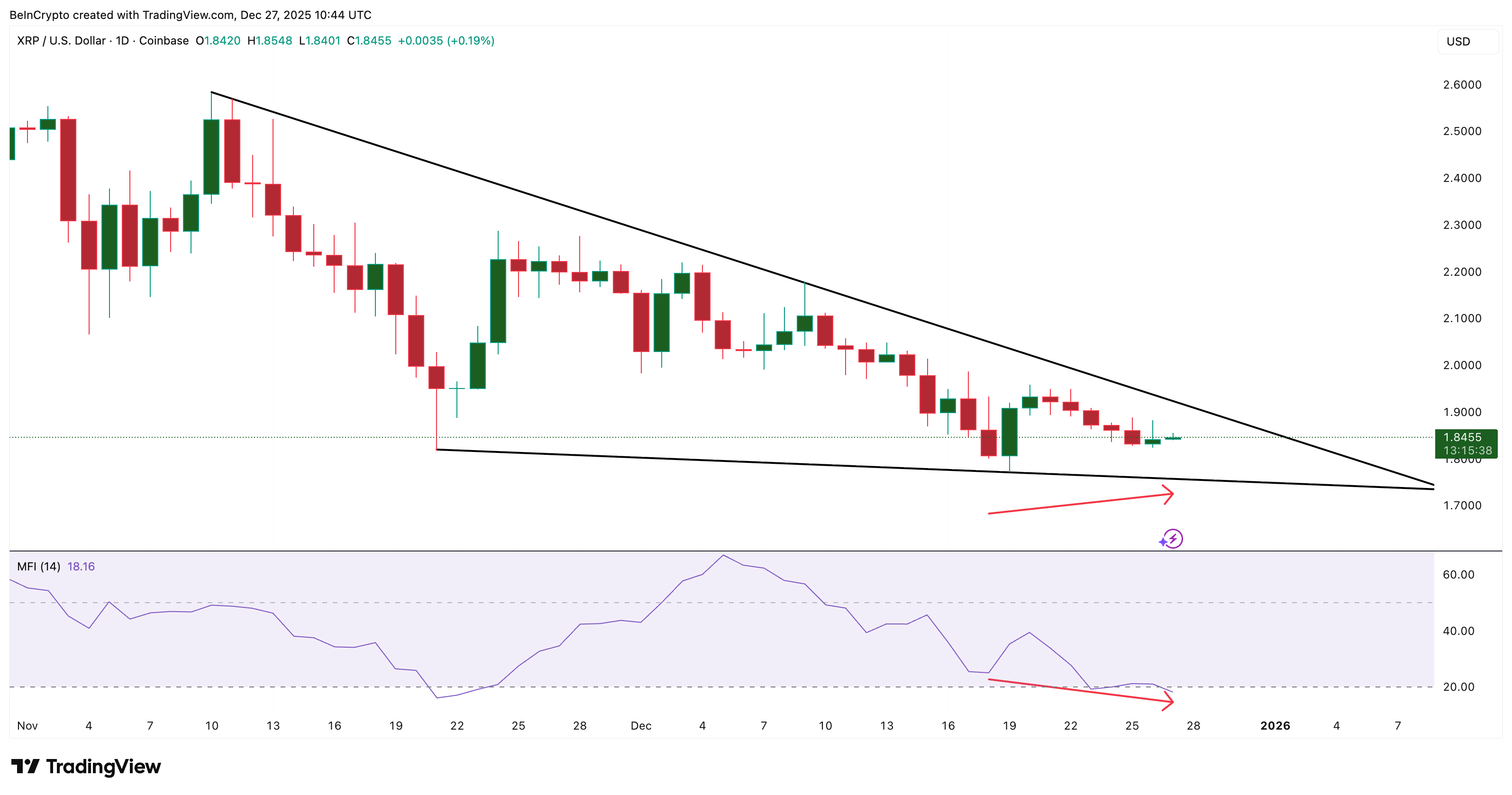
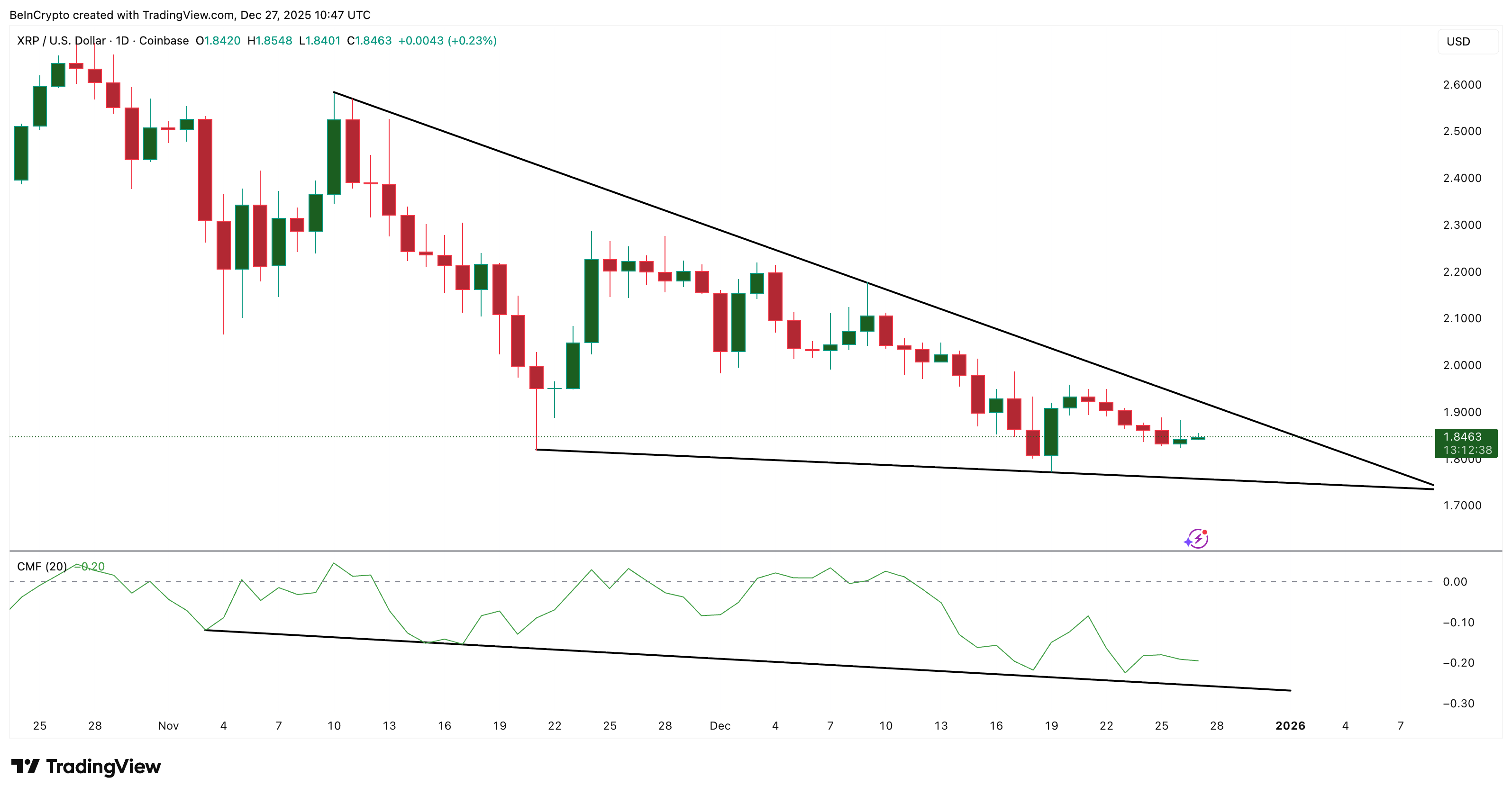
XRP turun sekitar 1,6% dalam 24 jam terakhir. Pada grafik mingguan, XRP masih menjadi salah satu pergerak large-cap yang lemah, sekarang sekitar 16% lebih rendah dibanding level bulan lalu. Sebagian besar pergerakan harga terjadi di dekat dasar pola descending triangle, sebuah pola yang sering menandakan kelanjutan arah harga.
Ini belum mengonfirmasi terjadinya breakdown, tapi ada tiga sinyal pasar yang mulai muncul dan seharusnya membuat para trader lebih waspada menjelang akhir 2025.
Investor Ritel dan Holder Jangka Panjang Bergerak ke Arah yang Sama
XRP masih terjebak di dalam pola descending triangle, bergerak sideways di dekat garis tren bawah. Harga sempat naik dari 18 Desember sampai 27 Desember, namun Money Flow Index (MFI) justru bergerak turun pada periode yang sama.
MFI melacak uang yang masuk atau keluar dari sebuah aset. Ketika MFI semakin rendah saat harga naik, itu menandakan investor ritel menjual di setiap kenaikan harga, bukan mengakumulasi.
Tekanan seperti ini membuat harga XRP tetap berada di batas bawah pola ini, bukannya mencoba ke garis atas.
Ingin insight token lain seperti ini? Daftar ke Newsletter Crypto Harian Editor Harsh Notariya di sini.
Kekhawatiran bertambah saat kita melihat ke holder jangka panjang.
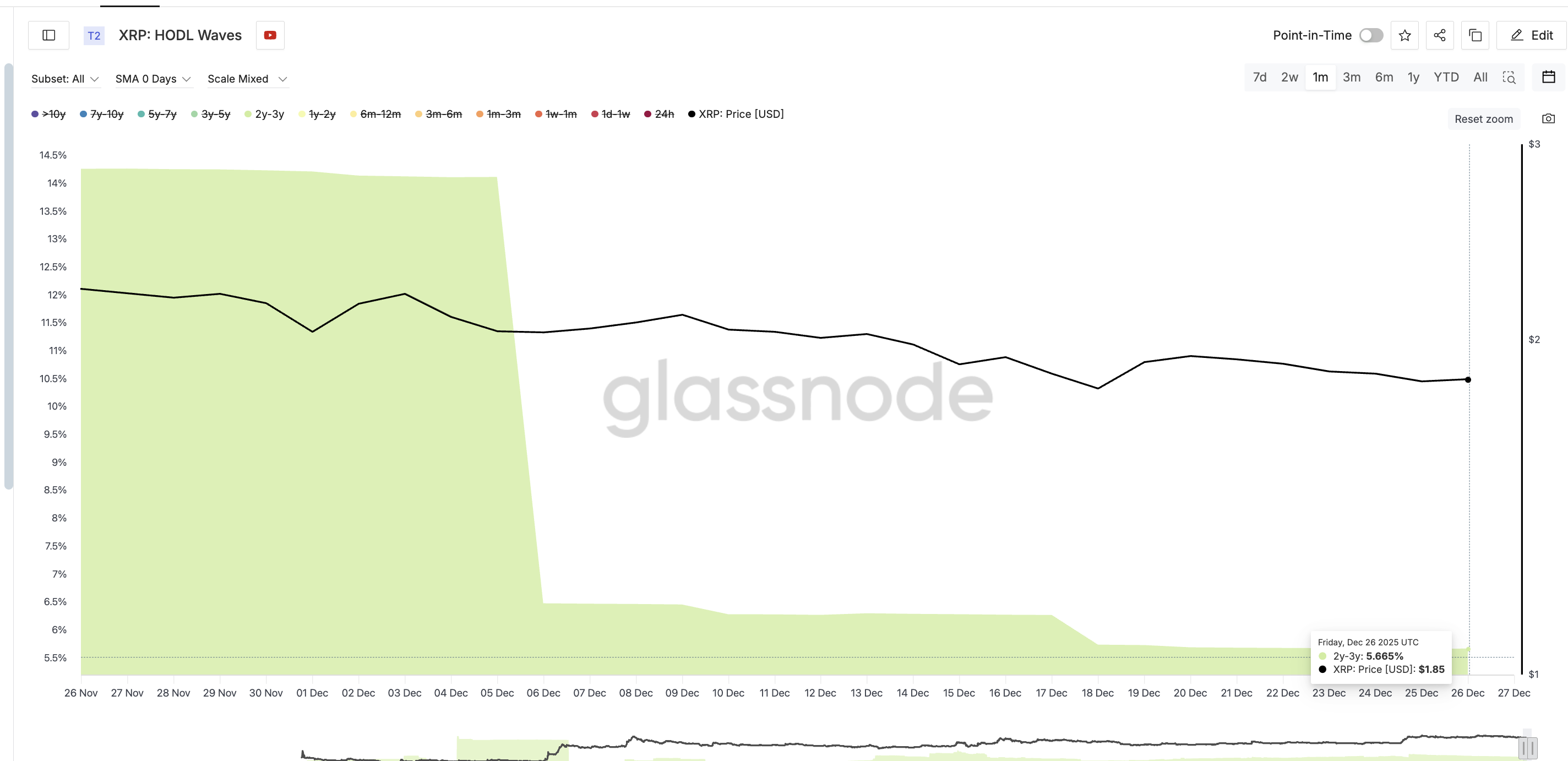
Berdasarkan data HODL Waves, yang memperlihatkan berapa banyak supply yang dipegang berdasarkan usia wallet, wallet yang menyimpan XRP selama 2–3 tahun turun dari 14,26% supply pada 26 November jadi sekitar 5,66% pada 26 Desember.
Mereka ini adalah holder yang punya keyakinan kuat jangka panjang, dan aksi jual mereka menghilangkan salah satu penopang pasar. Kelemahan ritel itu wajar, kelemahan jangka panjang di saat yang sama justru tidak wajar.
Sekarang, perilaku holder jangka pendek dan panjang sama-sama condong dalam satu arah: keluar dari XRP.
Arus Modal Menunjukkan Permintaan Mulai Menurun
Jika keyakinan ritel dan jangka panjang mulai melemah, langkah berikutnya adalah memantau arus modal, tanda utama ketiga.
Chaikin Money Flow (CMF) juga belum menunjukkan adanya perbaikan. CMF mengukur tekanan beli dan jual berdasarkan volume dan pergerakan harga. Indikator arus modal besar tetap negatif untuk XRP dan bergerak turun mengikuti garis support menurun.
Secara sederhana, walau harga bergerak datar, modal besar yang masuk ke aset ini mulai menipis, sementara pasar semakin condong ke arah supply yang mengalahkan demand. Dengan belum adanya kenaikan di CMF, pasar pun kehilangan salah satu bantalan pengaman lain.
Inilah alasan harga XRP tetap mendatar, bukan bangkit kembali.
Level Harga XRP Tentukan Apakah Breakout Benar-benar Terjadi
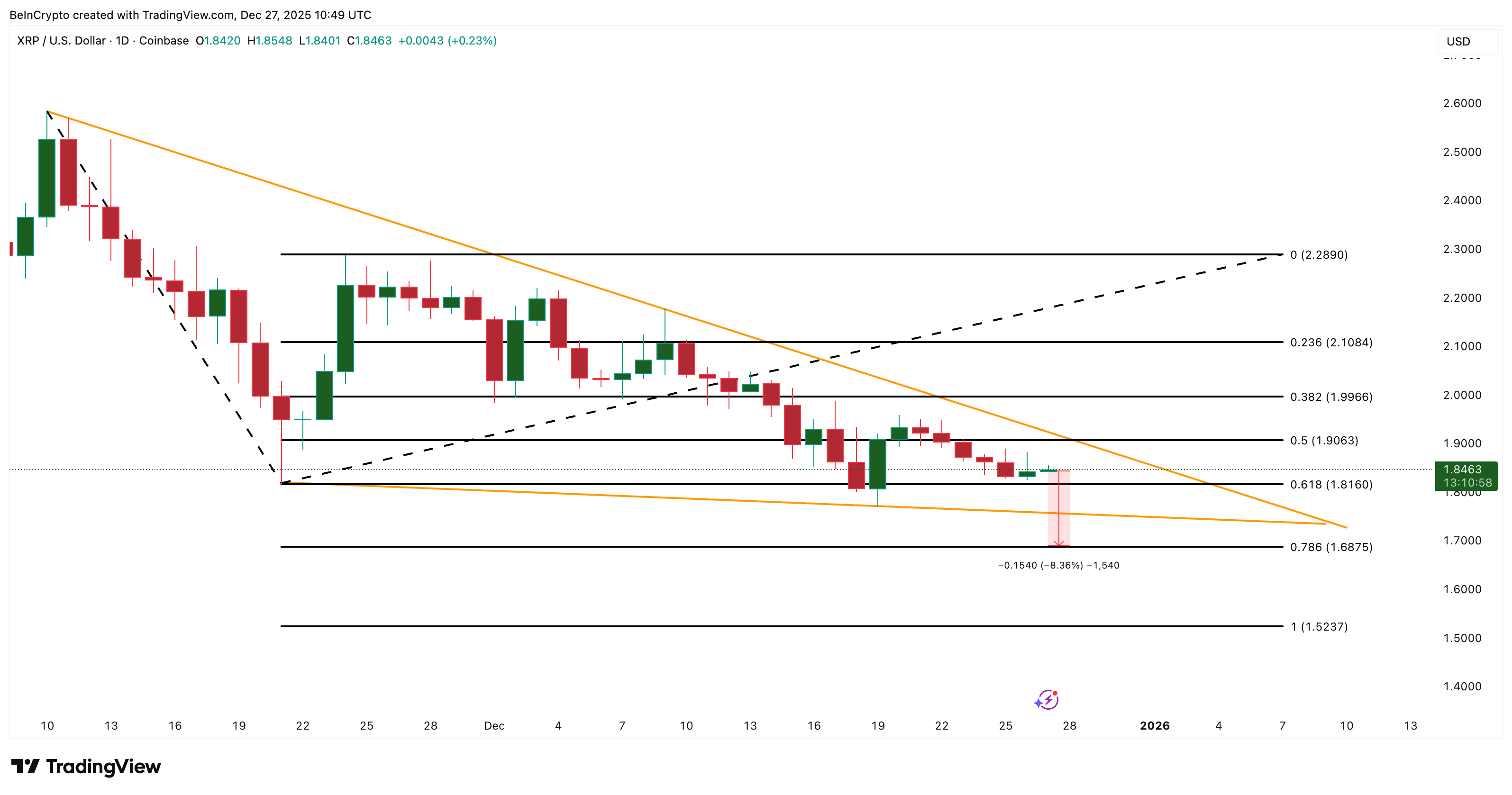
Untuk saat ini, XRP berada di antara US$1,90 dan US$1,81. XRP kehilangan level US$1,90 pada 22 Desember dan belum berhasil naik lagi ke atas level itu. Untuk melihat tanda kekuatan, XRP harus dapat merebut US$1,90 dan selanjutnya menargetkan US$1,99.
Hal ini juga akan menandai pergerakan harga ke atas batas atas triangle dan memberi peluang bagi bull untuk bergerak.
Namun, saat ini skenario bearish terlihat lebih jelas dibandingkan bullish.
Jika US$1,81 jebol, XRP bisa saja turun keluar dari pola descending triangle, yang berarti breakdown telah terkonfirmasi. Jika itu terjadi bisa membuka peluang ke US$1,68, titik di mana polanya benar-benar gagal, dan bahkan bisa ke US$1,52 jika tekanan jual semakin kencang.
Hal ini belum pasti, tapi pasar belum menunjukkan sinyal berlawanan. Selama penjualan ritel, distribusi jangka panjang, dan arus masuk modal yang melemah masih sejalan, harga XRP harus berjuang untuk tetap bertahan di kisaran ini.
XRP is down about 1.6% over the past 24 hours. On the weekly chart, it remains one of the weaker large-cap movers, sitting roughly 16% lower than last month’s levels. Most of the price action is happening near the bottom of a descending triangle pattern, a structure that often leads to continuation moves.
This does not confirm a breakdown yet, but three market signals are lining up in a way that should make traders cautious heading into the final days of 2025.
Retail And Long-Term Holders Are Moving The Same Way
XRP is still stuck inside a descending triangle, trading flat near the lower trendline. Price trended higher between December 18 and December 27, but the Money Flow Index (MFI) moved the opposite way during that same period.
MFI tracks money entering or exiting the asset. A lower low in MFI while price rises suggests retail is selling into every bounce instead of accumulating.
That pressure keeps the XRP price pinned at the lower boundary of the pattern instead of testing the upper line.
Want more token insights like this? Sign up for Editor Harsh Notariya’s Daily Crypto Newsletter here.
The concern grows when we zoom out to long-term holders.
According to HODL Waves, which visualizes how much supply is held by each age group, wallets holding XRP for 2–3 years dropped from 14.26% of supply on November 26 to about 5.66% on December 26.
These are long-term conviction holders, and their selling removes a layer of market support. Retail weakness is normal. Long-term weakness at the same time is not.
This creates a setup where both short-term and long-term behavior are leaning in the same direction: out of XRP.
Capital Flow Shows Fading Demand
If retail and long-term conviction are weakening, the next check is capital flow, the third key sign.
The Chaikin Money Flow (CMF) is not providing relief either. CMF tracks buying and selling pressure based on volume and price movement. The large money flow indicator remains negative for XRP and is sliding along a descending support trendline.
In simpler terms, even if the price is flat, big capital entering the asset is thinning out, and the market is leaning toward supply overpowering demand. With no pickup yet in CMF, the market loses another potential safety net.
This is why the XRP price has remained flat rather than rebounding.
XRP Price Levels Decide If The Breakdown Actually Happens
For now, XRP is trapped between $1.90 and $1.81. It lost the $1.90 level on December 22 and hasn’t reclaimed it since. Reclaiming $1.90 and then pushing for $1.99 would be the first sign of strength.
That would also mark a move above the triangle’s upper boundary and give bulls something to work with.
However, the bearish case is clearer than the bullish one at present.
If $1.81 breaks, XRP may fall out of the descending triangle pattern, which would constitute a confirmed breakdown. That loss could open room toward $1.68, where the structure fully fails, and even $1.52 if selling accelerates.
This isn’t a given yet, but the market has not shown a counter-signal yet. As long as retail selling, long-term distribution, and weakening capital inflow remain aligned, the XRP price must fight to hold the range.
Charles Hoskinson sedang mempromosikan usaha terbarunya, Midnight Protocol, sebagai sesuatu yang lebih dari sekadar sidechain untuk Cardano.
Pendiri Cardano tersebut memposisikan platform berfokus privasi ini sebagai lapisan infrastruktur bersama yang bisa memperluas privasi terprogram ke jaringan blockchain pesaing, termasuk Bitcoin dan XRP Ledger.
Hoskinson Bergerak Lebih Jauh dari Cardano dengan Inisiatif Privasi Lintas Chain
Pada 27 Desember, melalui sebuah postingan di X, Hoskinson menjelaskan bahwa arsitektur zero-knowledge proof dari Midnight bisa meningkatkan kemampuan ekosistem pesaing, bukan menggantikannya.
Ia menyampaikan bahwa integrasi Midnight dengan XRP Ledger akan memungkinkan jaringan tersebut menantang sistem perbankan tradisional dengan menghadirkan decentralized finance privat dan patuh regulasi. Ia juga menambahkan bahwa Midnight membawa fitur privasi terprogram yang belum ada di Bitcoin saat ini.
Hoskinson pun menggambarkan Midnight sebagai katalis untuk Cardano sendiri. Ia menyebutkan bahwa protokol ini dapat membantu meningkatkan jumlah pengguna aktif bulanan dan total value locked Cardano, karena memperluas kegunaan ekosistem ini di luar chain aslinya.
“Midnight makes what it touches better. Adding Midnight to XRP DeFi is going to blow the legacy banks out of the water. Adding Midnight to Bitcoin gives the world Satoshi imagined possible. Adding Midnight to Cardano supercharges our DeFi ecosystem and will 10x the MAUs, Transactions, and TVL as we are first to market with private DeFi at scale,” klaimnya.
Selain interoperabilitas, Hoskinson juga menyoroti besarnya peluang tokenisasi aset dunia nyata. Ia menjelaskan pasar Real-World Assets yang diperkirakan bernilai US$10 triliun akan sangat diuntungkan dengan desain privasi yang dihadirkan Midnight.
Dalam konteks itu, ia mengkritik perusahaan keuangan tradisional yang masih saja bermitra dengan Canton Network, sebuah blockchain permissioned, dengan menyatakan bahwa solusi separuh-separuh tidak cukup untuk kebutuhan adopsi institusional.
“There are no half measures or half technologies. You need an end-to-end strategy, great partners, and great communities,” terang Hoskinson .
Strategi ini menjadi perubahan arah bagi Hoskinson, yang sebelumnya selalu fokus membangun di ekosistem Cardano saja.
Dengan mempromosikan Midnight sebagai lapisan privasi yang bisa meningkatkan blockchain layer-1 lainnya, Hoskinson berusaha menjangkau likuiditas dan basis pengguna di luar jaringan Cardano yang sudah ada.
Perubahan strategi ini juga bertepatan dengan meningkatnya minat spekulatif pada native token Midnight, yaitu NIGHT.
Data dari CoinGecko menunjukkan bahwa aset ini baru-baru ini melampaui Bitcoin dan Ethereum dalam volume pencarian di daftar tren platform tersebut.
namun, token ini diperdagangkan dengan volatilitas tinggi sejak diluncurkan awal bulan ini. Berdasarkan data BeInCrypto, harga token ini turun lebih dari 80% menjadi US$0,08 pada saat artikel ini diterbitkan.
Charles Hoskinson is pitching his latest venture, Midnight Protocol, as more than a sidechain for Cardano.
Instead, the Cardano founder is positioning the privacy-focused platform as a shared infrastructure layer that could extend programmable privacy to rival blockchain networks, including Bitcoin and the XRP Ledger.
Hoskinson Moves Beyond Cardano With a Cross-Chain Privacy Play
In a December 27 post on X, Hoskinson argued that Midnight’s zero-knowledge proof architecture could enhance the capabilities of competing ecosystems rather than displace them.
He said that integrating Midnight with the XRP Ledger would allow the network to challenge legacy banking systems by enabling private, compliant decentralized finance. He extended the argument to Bitcoin, saying Midnight offers programmable privacy features that Bitcoin currently lacks.
Hoskinson also framed Midnight as a catalyst for Cardano itself. He suggested that the protocol could help lift Cardano’s monthly active users and total value locked by broadening the ecosystem’s utility beyond its native chain.
“Midnight makes what it touches better. Adding Midnight to XRP DeFi is going to blow the legacy banks out of the water. Adding Midnight to Bitcoin gives the world Satoshi imagined possible. Adding Midnight to Cardano supercharges our DeFi ecosystem and will 10x the MAUs, Transactions, and TVL as we are first to market with private DeFi at scale,” he claimed.
Beyond interoperability, Hoskinson pointed to the scale of the opportunity in real-world asset tokenization. He said the estimated $10 trillion market for Real-World Assets would benefit significantly from Midnight’s privacy-preserving design.
In that context, he criticized traditional finance firms for continuing to partner with the Canton Network, a permissioned blockchain, arguing that partial solutions fall short of what institutional adoption requires.
“There are no half measures or half technologies. You need an end-to-end strategy, great partners, and great communities,” Hoskinson said.
This strategy marks a shift for Hoskinson, who has historically focused on building within the Cardano ecosystem.
By promoting Midnight as a privacy layer that enhances other Layer-1 blockchains, Hoskinson is seeking to access liquidity and user bases beyond Cardano’s existing network.
That pivot has coincided with growing speculative interest in Midnight’s native token, NIGHT.
Data from CoinGecko showed that the asset recently surpassed Bitcoin and Ethereum in search volume on the platform’s trending list.
However, the token has traded with high volatility since its launch earlier this month. According to BeInCrypto data, the token’s price has dropped by more than 80% to $0.08 as of press time.
Akhir tahun biasanya membuat banyak posisi dipangkas di pasar aset kripto. Wallet besar dan smart money sering mengurangi eksposur agar bisa mengamankan profit, menyimpan uang tunai, lalu menunggu sampai kondisi likuiditas rendah selesai. Itu hal yang biasa untuk bulan Desember. Walaupun begitu, beberapa aset justru malah memperlihatkan hal sebaliknya. Para crypto whale kembali menambah kepemilikan mereka di beberapa frame waktu sekaligus.
Satu aset mengalami akumulasi konsisten selama 30 hari, yang lain mendapatkan dukungan whale dalam 7 hari terakhir, dan aset ketiga baru saja mendapat arus masuk segar dalam 24 jam terakhir.
Chainlink (LINK)
Token pertama dalam daftar yang dibeli oleh crypto whale adalah Chainlink. Wallet whale telah meningkatkan kepemilikan mereka sebesar 57,79% selama 30 hari terakhir. Artinya, whale menambah sekitar 680.000 LINK dalam periode tersebut.
Dengan harga LINK saat ini, jumlah tersebut hampir setara dengan akumulasi senilai US$8,5 juta.
Mau info token seperti ini? Daftar untuk Newsletter Kripto Harian Editor Harsh Notariya di sini.
Akumulasi ini terjadi saat harga Chainlink mengalami koreksi sekitar 7,5% pada periode yang sama. Wallet smart money justru mengurangi eksposur sebesar 5,2%, sehingga menunjukkan kalau para whale mulai mengambil posisi lebih awal, bukan mengincar pergerakan harga secara langsung.
This whale has further withdrawn 366,364 $LINK, worth $4.5M, from #Binance.
Now, the whale holds 695,783 $LINK, worth $8.52M, from #Binance in the past 2 days.
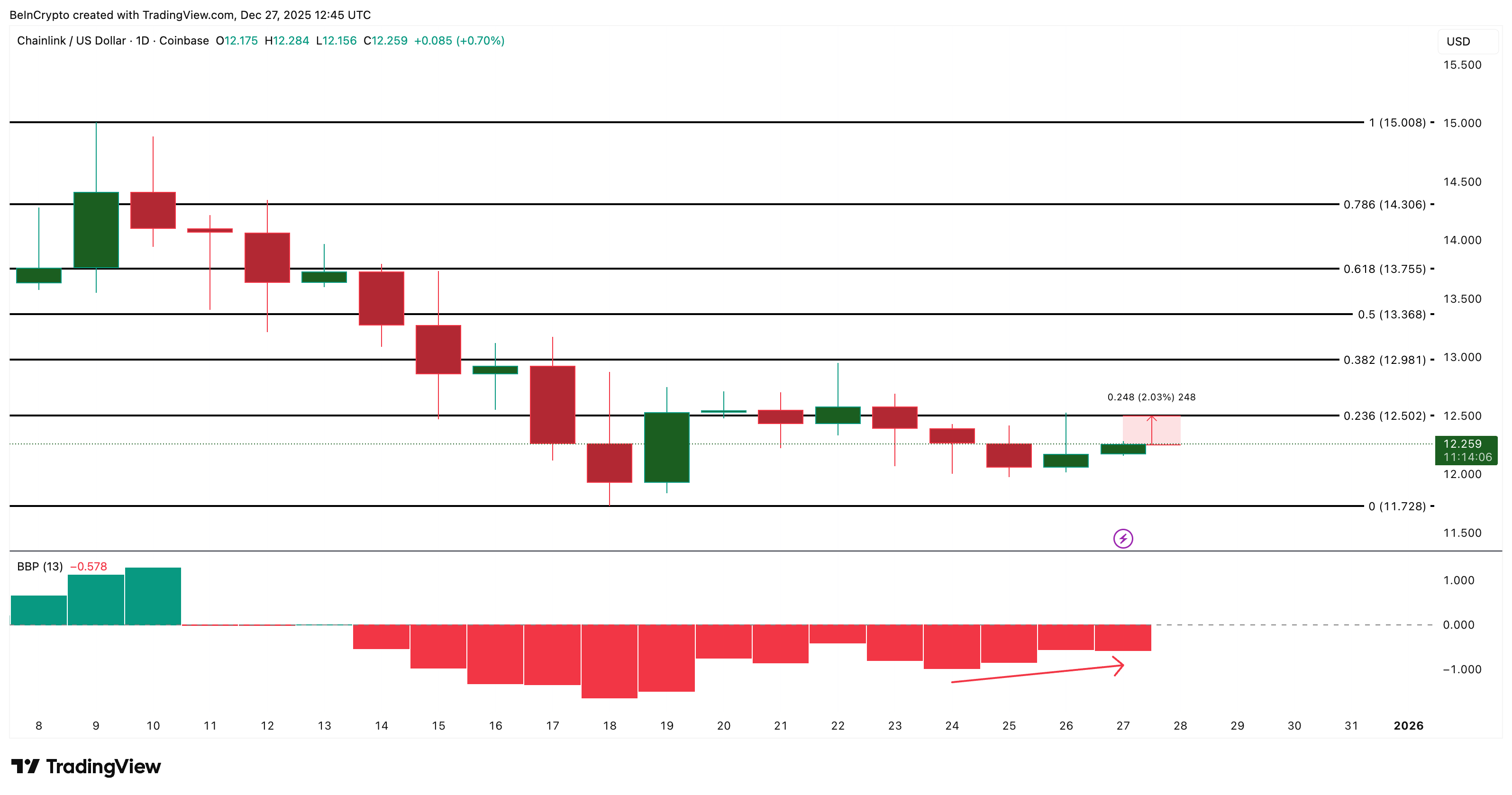
Pada grafik, indikator Bull Bear Power (BBP) menampilkan bar merah yang mulai mengecil sejak tanggal 24 Desember. BBP mengukur jarak antara harga dan moving average untuk mengetahui apakah bull atau bear yang menguasai momentum. Saat bar merah mengecil, tekanan bearish pun mulai mereda.
Pada saat yang sama, LINK sedang mencoba merebut kembali resistance jangka pendek di sekitar US$12,50. Jika penutupan harian berhasil di atas level itu, token ini bisa kembali masuk dalam pembahasan breakout jangka pendek. Di atas US$12,50, level penting selanjutnya berada di sekitar US$12,98 dan US$13,75. Jika bisa menembus US$15,00, LINK bisa kembali ke zona bullish yang jelas.
Smart money keluar saat whale masih terus menambah kepemilikan, sehingga mengindikasikan persiapan yang lebih lambat. Struktur saat ini memperlihatkan bahwa whale sedang akumulasi ketika harga melemah untuk pergerakan potensial pada awal 2026, bukan breakout dalam waktu dekat. Sampai harga menembus US$12,50, LINK kemungkinan masih bergerak sideways. Jika harga turun ke bawah US$11,72, hipotesis bullish para whale bisa batal untuk sementara waktu.
Lido DAO (LDO)
Crypto whale juga beralih ke Lido selama 7 hari terakhir. Saldo mereka naik 30,34%, sehingga total kepemilikan klaster ini menjadi 17,49 juta LDO. Dengan harga LDO saat ini, whale menambah sekitar 4,07 juta LDO, setara dengan US$2,28 juta dalam seminggu.
Ini terjadi ketika harga token naik 4,2% pada periode yang sama, sehingga memperlihatkan bahwa whale membeli saat harga menguat.
Tidak semua pembeli besar itu anonim. Salah satu peningkatan paling menonjol datang dari Arthur Hayes, yang mengakumulasi 1,85 juta LDO senilai sekitar US$1,03 juta. Hal ini juga menjelaskan kenapa klaster “Public Figure” naik bersamaan dengan aktivitas whale.
Smart money, di sisi lain, menunjukkan sikap berlawanan. Saldo mereka turun 7,75%. Saldo exchange juga turun 1,49%, memberikan indikasi bahwa trader ritel mungkin lebih memilih menarik token dari exchange dibandingkan menjualnya. Perbedaan ini berarti hipotesis whale bisa membutuhkan waktu untuk terealisasi, sehingga kemungkinan besar baru bergerak di awal 2026, bukan dalam waktu dekat.
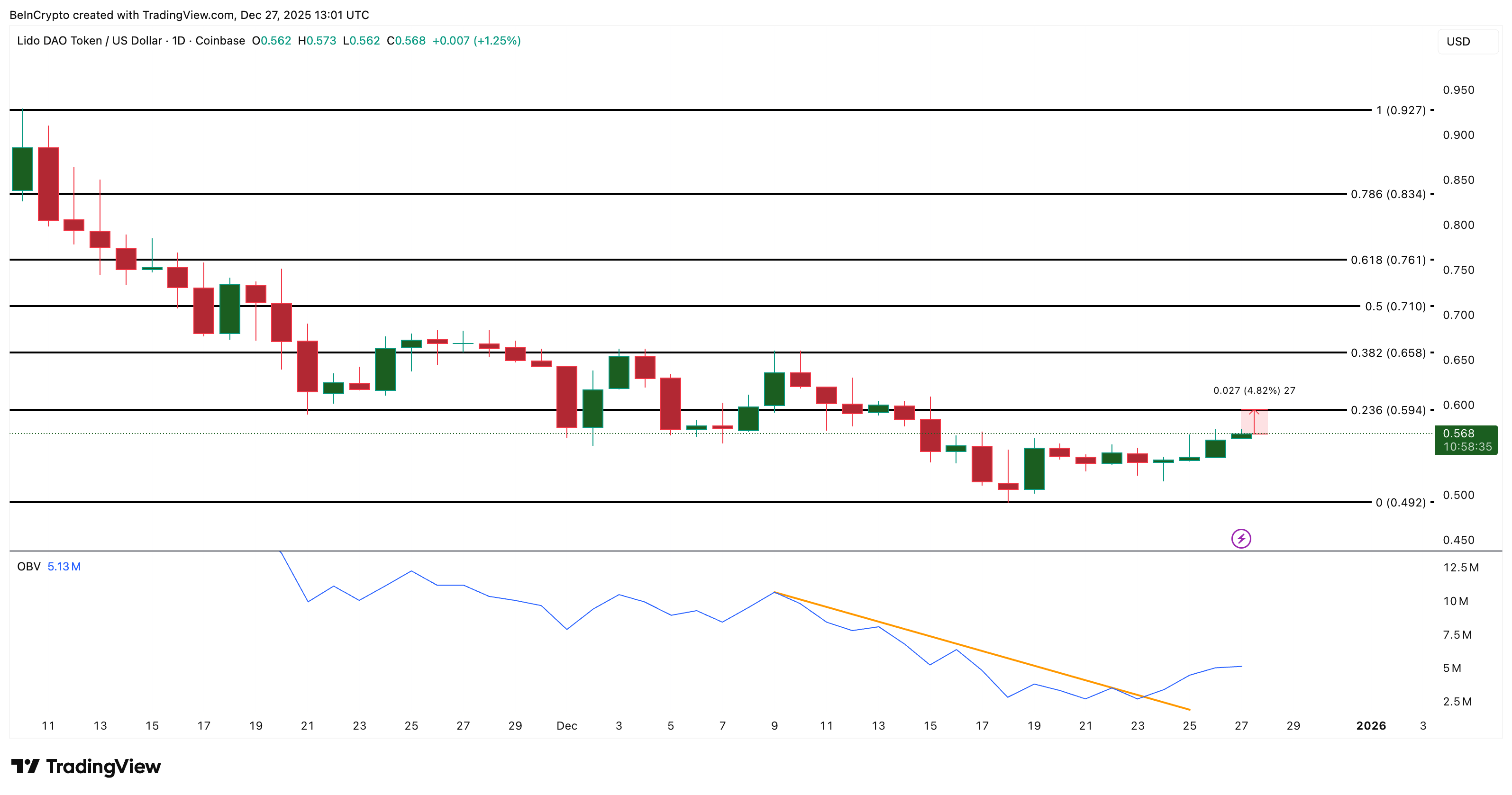
Pada grafik, Lido bergerak dalam range yang jelas antara US$0,59 dan US$0,49. Indikator On-Balance Volume (OBV), yang mengukur apakah volume mengalir masuk atau keluar, menembus tren turunnya pada 23 Desember.
Perubahan ini bersamaan dengan arus masuk whale yang mulai naik, jadi sinyal ini patut dipantau terus.
Penutupan harian di atas US$0,59 dibutuhkan untuk mengonfirmasi kekuatan baru. Level ini jebol pada 14 Desember dan belum pernah direbut kembali sejak itu. Jika pembeli bisa menembusnya dengan mantap, zona berikutnya yang perlu diperhatikan adalah US$0,76 (0,618 Fibonacci), lalu US$0,92, di mana momentum bisa berubah dari koreksi ke bullish.
Sampai saat itu, trading dalam rentang harga masih menjadi skenario utama. Jika harga turun di bawah US$0,49 maka pola harga LDO saat ini akan batal, apalagi jika smart money terus mengurangi eksposurnya di tengah volatilitas akhir tahun.
Aster (ASTER)
Token ketiga dalam daftar ini adalah Aster. Token ini justru menarik minat whale dalam 24 jam terakhir, bukan karena tren akumulasi yang panjang. Dalam sehari terakhir, whale menambah 2,37% ke jumlah kepemilikan ASTER yang mereka miliki.
Setelah kenaikan ini, total kepemilikan whale sekarang ada di sekitar 19,23 juta ASTER. Dengan harga sekitar US$0,71 maka whale telah menambah kurang lebih 455.000 ASTER, atau senilai lebih dari US$320.000.
Penambahan ini memang tidak terlalu besar. Hal ini menarik perhatian karena ASTER sempat turun lebih dari 30% dalam sebulan ini, dan aksi akumulasi ini mungkin menjadi sinyal bahwa sentimen mulai berubah dari tekanan jual besar menuju posisi yang lebih hati-hati.
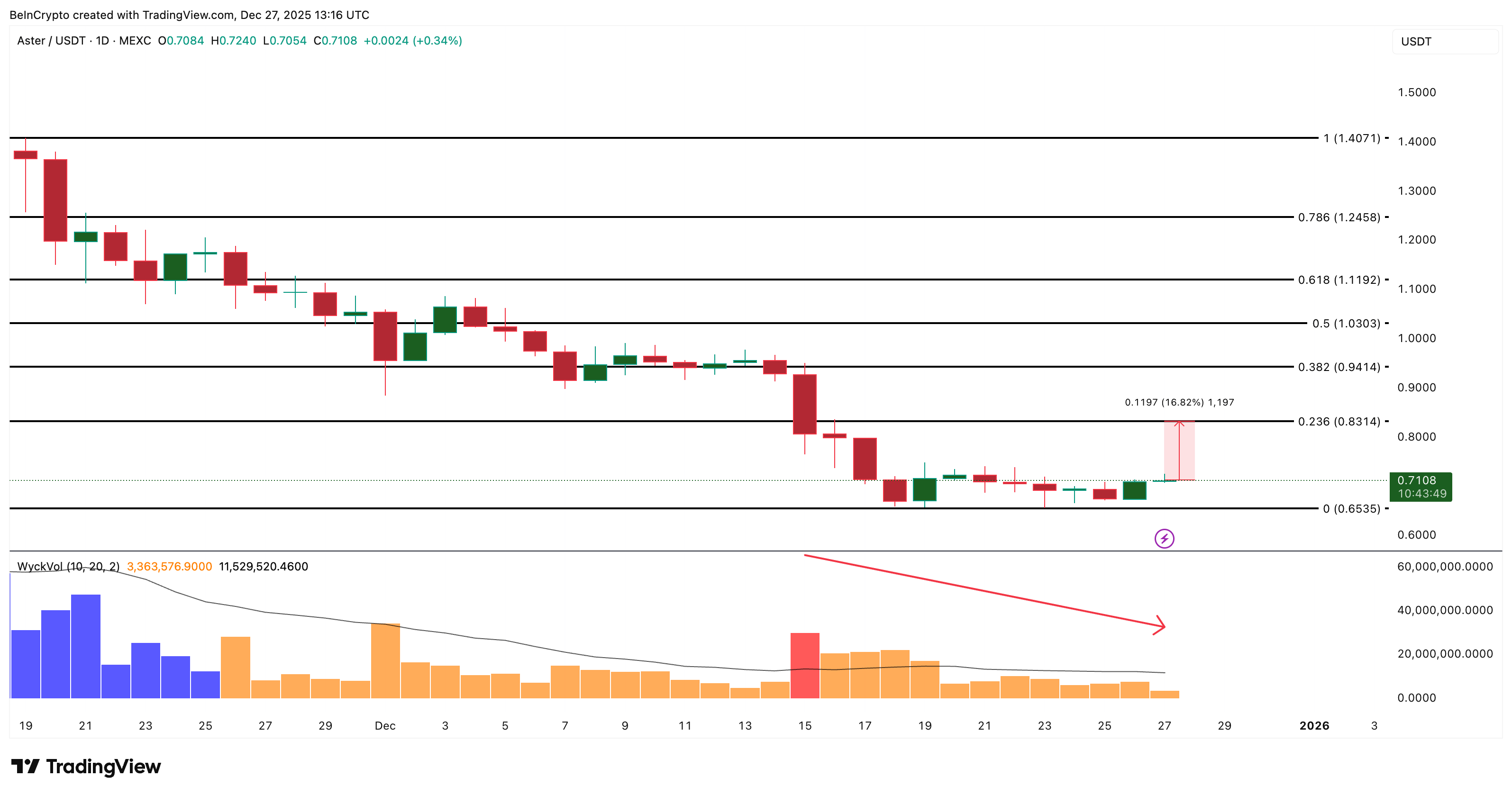
Pergerakan harga mendukung pandangan ini. ASTER turun tajam dari sekitar US$1,40 pada 19 November dan mendapat support di kisaran US$0,65, yang terus bertahan sepanjang Desember. Tekanan jual juga nampaknya mulai melemah. Pada indikator Wyckoff Volume, batang merah dan kuning (kontrol penjual) makin memudar sejak 15 Desember. Pergeseran ke batang merah/kuning yang lebih tipis ini menandakan dominasi penjual mulai turun.
Jika dugaan whale benar, upaya pemulihan dimulai dengan dorongan ke US$0,83 yang membutuhkan kenaikan sekitar 16% dari harga sekarang. Jika bisa melewati US$0,83, peluang ke US$1,03 terbuka lebar, lalu ke US$1,24 jika kondisi pasar makin membaik.
Jika harga turun di bawah US$0,65, maka skenario ini batal. Penurunan yang jelas di bawah level tersebut bisa membuat ASTER terancam turun ke level terendah baru, apalagi jika volatilitas akhir tahun meningkat.
Year-end usually brings position cuts across crypto. Big wallets and smart money often reduce exposure to secure profits, sit on cash, and wait for lower-liquidity conditions to finish. That’s normal for December. Even with that backdrop, a few assets are seeing the opposite. Crypto whales are adding again across multiple time frames.
One shows steady 30-day accumulation, another gets 7-day whale support, and a third just saw fresh 24-hour inflows.
Chainlink (LINK)
The first token on the list that crypto whales are buying is Chainlink. Whale wallets have raised their holdings by 57.79% over the last 30 days. This means whales added about 680,000 LINK in that period.
At the current LINK price, that is close to $8.5 million in accumulation.
Want more token insights like this? Sign up for Editor Harsh Notariya’s Daily Crypto Newsletter here.
This buildup occurs while Chainlink has corrected by about 7.5% over the same period. Smart money wallets have reduced exposure by 5.2%, suggesting whales are positioning early rather than expecting an immediate move.
This whale has further withdrawn 366,364 $LINK, worth $4.5M, from #Binance.
Now, the whale holds 695,783 $LINK, worth $8.52M, from #Binance in the past 2 days.
On the chart, the Bull Bear Power (BBP) indicator shows that red bars have been shrinking since December 24. BBP measures the distance between price and a moving average to highlight whether bulls or bears control momentum. When the red bars shrink, bearish pressure is fading.
At the same time, LINK is trying to reclaim a key short-term barrier near $12.50. A daily close above that level would put the token back inside the short-term breakout conversation. Above $12.50, the more critical levels sit near $12.98 and $13.75, and a move past $15.00 would return LINK to a clear bullish zone.
Smart money exiting while whales continue to add hints at a slower setup. The structure suggests whales are accumulating into weakness for a potential move in early 2026, not an immediate breakout. Until $12.50 is reclaimed, LINK may stay range-bound. Also, a dip under $11.72 can invalidate the whales’ bullish theory for now.
Lido DAO (LDO)
Crypto whales have also turned to Lido over the past 7 days. Their balances are up 30.34%, bringing the cohort’s stash to 17.49 million LDO. At the current price , whales added roughly 4.07 million LDO, worth about $2.28 million in a week.
This comes while the token has gained 4.2% during the same period, which suggests whales are buying into strength.
Not all big buyers are anonymous. One of the most notable additions came from Arthur Hayes, who accumulated 1.85 million LDO worth around $1.03 million. It also explains why the “Public Figure” cohort has climbed alongside whale activity.
Smart money, however, shows a different stance. Their balances are down 7.75%. Exchange balances are also down 1.49%, hinting that retail may be removing tokens from exchanges rather than selling. This disconnect means the whale thesis might take time to play out and could stretch into early 2026 instead of an immediate move.
On the chart, Lido trades inside a clear range between $0.59 and $0.49. The On-Balance Volume (OBV) indicator, which measures whether volume flows in or out, broke its downtrend on December 23.
That happened at the same time whale inflows picked up, so the signal is worth watching.
A daily close above $0.59 is needed to confirm strength. That level broke on December 14 and hasn’t been reclaimed since. If buyers clear it with conviction, the next zones to watch are $0.76 (0.618 Fibonacci) and then $0.92, where momentum could flip from corrective to bullish.
Until then, range-bound trading remains the base case. A loss of $0.49 would invalidate the current LDO price setup, especially if smart money keeps reducing exposure during year-end volatility.
Aster (ASTER)
The third token on the list is Aster. This one has seen whale interest on the 24-hour window rather than a longer accumulation trend. Over the past day, whales added 2.37% to their existing stash.
Following this rise, whale holdings now stand at approximately 19.23 million ASTER. At a price of about $0.71, that means whales added roughly 455,000 ASTER, worth a little over $320,000.
The addition is not massive. It stands out because ASTER has dropped more than 30% in a month, and this pickup might hint that sentiment is slowly shifting from heavy selling to cautious positioning.
Price action supports this reading. ASTER fell sharply from about $1.40 on November 19 and found support near $0.65, which has held as a floor through December. Selling pressure also looks weaker now. On the Wyckoff Volume indicator, red and yellow bars (seller control) have been fading since December 15. The recent shift toward lighter red/yellow bars suggests sellers are losing dominance.
If whales are right, the recovery attempt begins with a push to $0.83, which requires approximately a 16% move from current prices. Breaking above $0.83 opens room toward $1.03, and then $1.24 if market conditions improve.
BitMine, pemegang Ethereum korporasi terbesar, mulai melakukan staking sebagian dari treasury ETH senilai US$12 miliar miliknya.
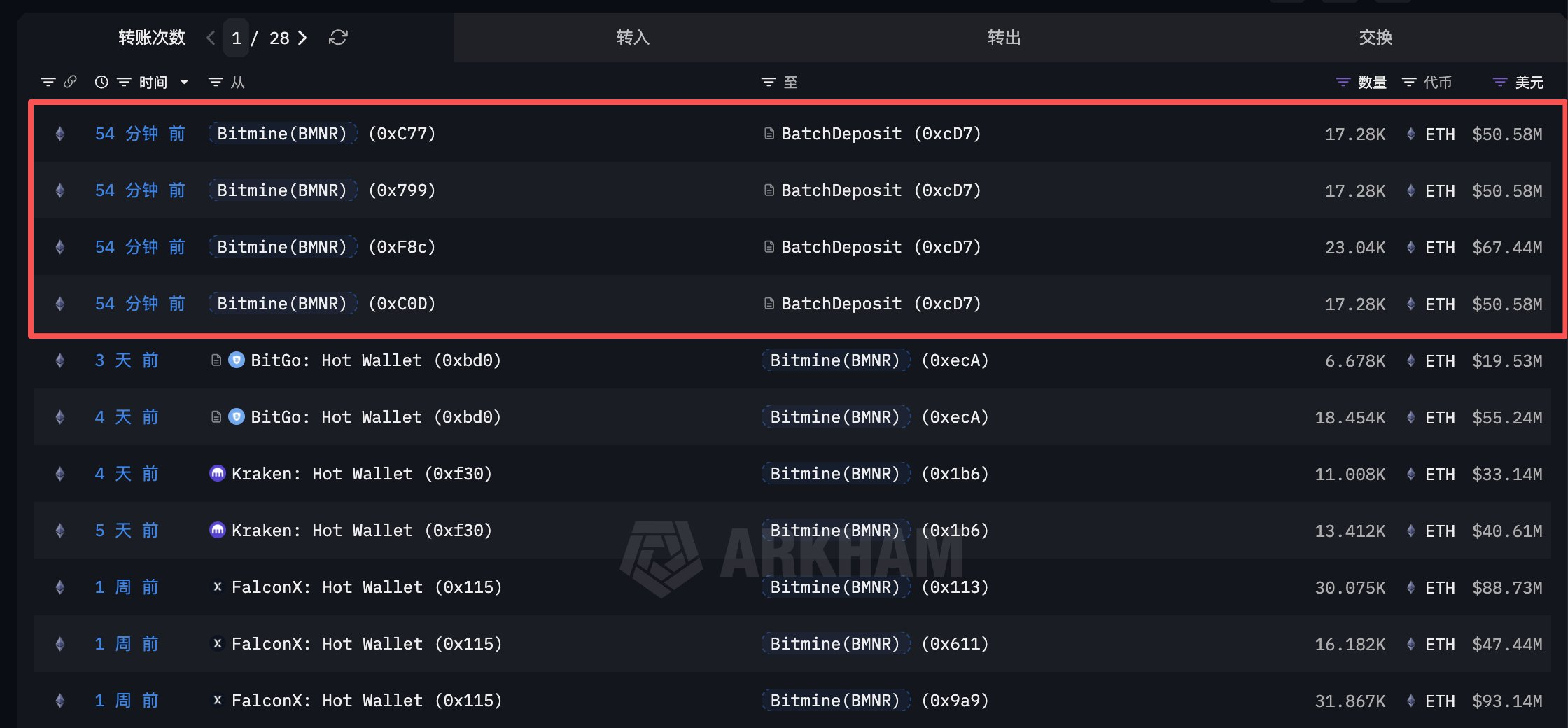
Pada 27 Desember, analis on-chain Ember CN melaporkan bahwa perusahaan tersebut telah menyetor sekitar 74.880 ETH, dengan perkiraan nilai sekitar US$219 juta, ke dalam kontrak staking Ethereum.
Kenapa BitMine melakukan staking pada kepemilikannya?
Jika perusahaan melakukan staking seluruh treasury pada estimasi annual percentage yield (APY) saat ini sebesar 3,12%, mereka akan menghasilkan sekitar 126.800 ETH setiap tahun. Dengan harga saat ini, hasilnya setara dengan pendapatan US$371 juta per tahun.
Struktur seperti ini nantinya akan membuat BitMine menjadi Public Crypto Vehicle penghasil yield yang terhubung langsung dengan consensus layer Ethereum. Itu berarti, valuasinya tidak lagi bergantung terutama pada pergerakan harga ETH secara langsung.
Tujuan dan Risiko Staking ETH
namun, strategi ini juga membawa risiko finansial serta operasional baru bagi perusahaan.
Tidak seperti Bitcoin yang disimpan di cold storage dan bisa langsung dilikuidasi saat kondisi pasar tertekan, Ether yang di-staking terikat oleh mekanisme penarikan yang diatur di level protokol.
Jika terjadi krisis likuiditas, penundaan itu bisa membuat BitMine terkena fluktuasi harga, yang mungkin bisa dihindari jika treasury tidak di-staking.
Kondisi ini menyoroti perbedaan mendasar antara sekadar memegang Ethereum sebagai aset pasif dan mempergunakannya sebagai modal produktif di jaringan.
Demi mendukung rencana tersebut, perusahaan sedang mengembangkan platform staking sendiri, yaitu Made in America Validator Network (MAVAN), yang dijadwalkan akan diluncurkan pada awal 2026.
“We continue to make progress on our staking solution known as The Made in America Validator Network (MAVAN). This will be the ‘best-in-class’ solution offering secure staking infrastructure and will be deployed in early calendar 2026,” ujar ketua BitMine, Thomas Lee dalam pernyataannya.
Di sisi lain, para pengkritik berpendapat bahwa mengonsolidasikan kepemilikan Ether sebesar ini di bawah satu framework validator berbasis AS menimbulkan risiko sentralisasi. Mereka menilai struktur tersebut bisa melemahkan jaringan yang seharusnya netral dan terdistribusi secara global.
BitMine, the largest corporate holder of Ethereum, has begun staking part of its $12 billion ETH treasury.
On December 27, on-chain analyst Ember CN reported that the firm deposited approximately 74,880 ETH, valued at about $219 million, into Ethereum staking contracts.
If the company were to stake its entire treasury at the current estimated annual percentage yield (APY) of 3.12%, it would generate approximately 126,800 ETH annually. At current prices, this equates to $371 million in yearly revenue.
Such a structure would effectively recast BitMine as a yield-bearing vehicle tied to Ethereum’s consensus layer. This means its valuation would no longer hinge primarily on the asset’s directional price movements.
ETH Staking Goals and Risks
However, the strategy introduces new financial and operational risks for the company.
Unlike Bitcoin held in cold storage, which can be liquidated immediately in stressed market conditions, staked Ether is constrained by protocol-level withdrawal mechanics.
Validators exiting the network must pass through an exit queue, which can delay access to capital during periods of heightened volatility.
In a liquidity crunch, that delay could leave BitMine exposed to price swings that a non-staking treasury might otherwise avoid.
This tradeoff underscores a structural difference between holding Ethereum as a passive asset and deploying it as productive capital within the network.
To support that vision, the firm is developing a proprietary staking platform, the Made in America Validator Network (MAVAN), scheduled for deployment in early 2026.
“We continue to make progress on our staking solution known as The Made in America Validator Network (MAVAN). This will be the ‘best-in-class’ solution offering secure staking infrastructure and will be deployed in early calendar 2026,” BitMine chair Thomas Lee said.
Meanwhile, critics argue that consolidating such a large share of Ether under a single US-domiciled validator framework introduces centralization risks. They say the structure could undermine a network designed to be neutral and globally distributed.
Harga Ethereum turun kurang dari 1% dalam 24 jam terakhir. Sekilas, grafik terlihat tenang, dan penurunan harga kecil ini berkaitan dengan lemahnya permintaan dari ritel. Tapi, sebenarnya ada hal lain yang terjadi di balik layar.
Data on-chain terbaru menunjukkan whale kembali menambah kepemilikan, sementara satu indikator penting memperlihatkan perubahan tren langka yang cenderung menguntungkan salah satu dari dua kelompok yang disebutkan di artikel ini.
Ritel melambat dan whale mulai masuk
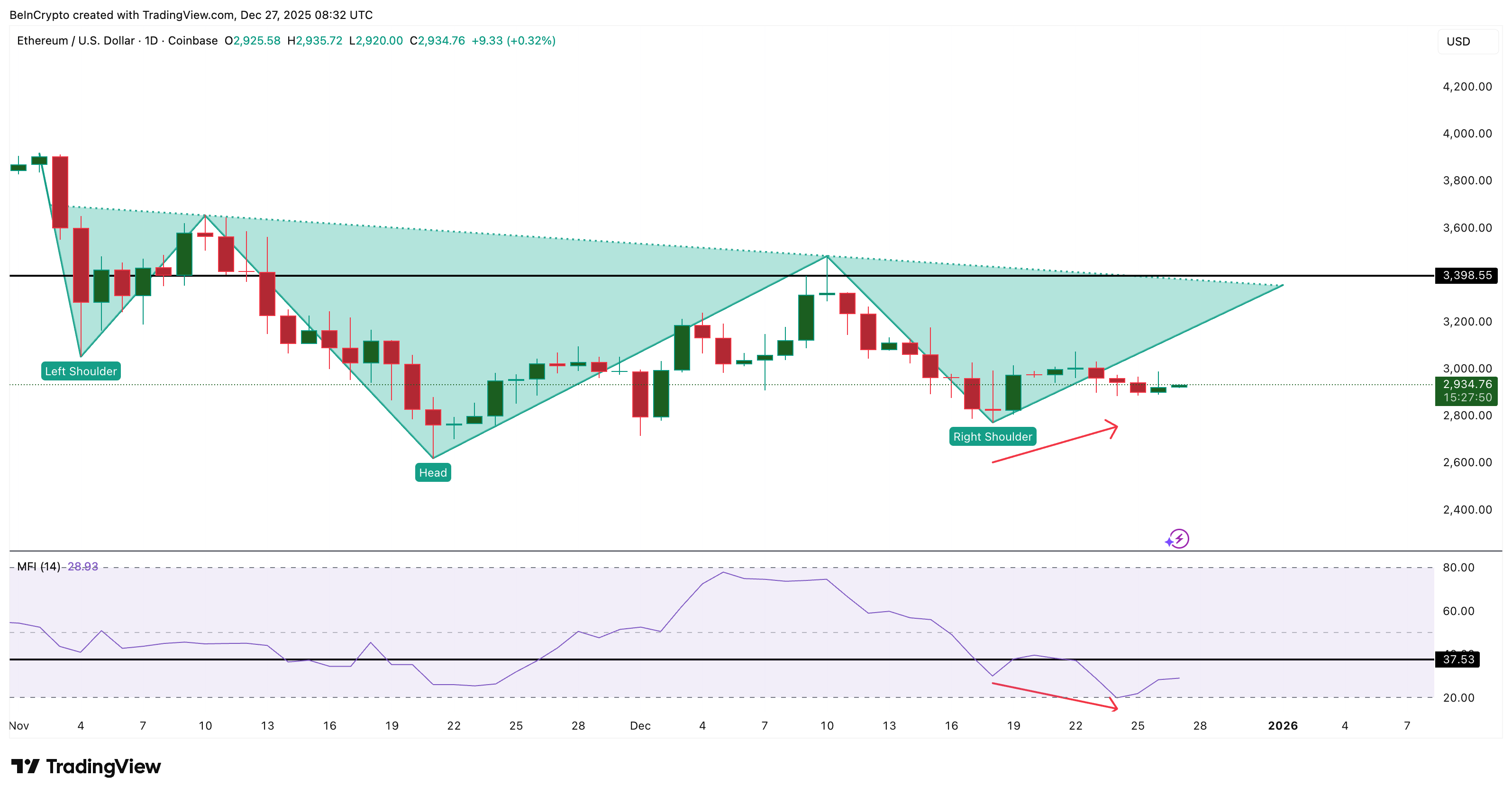
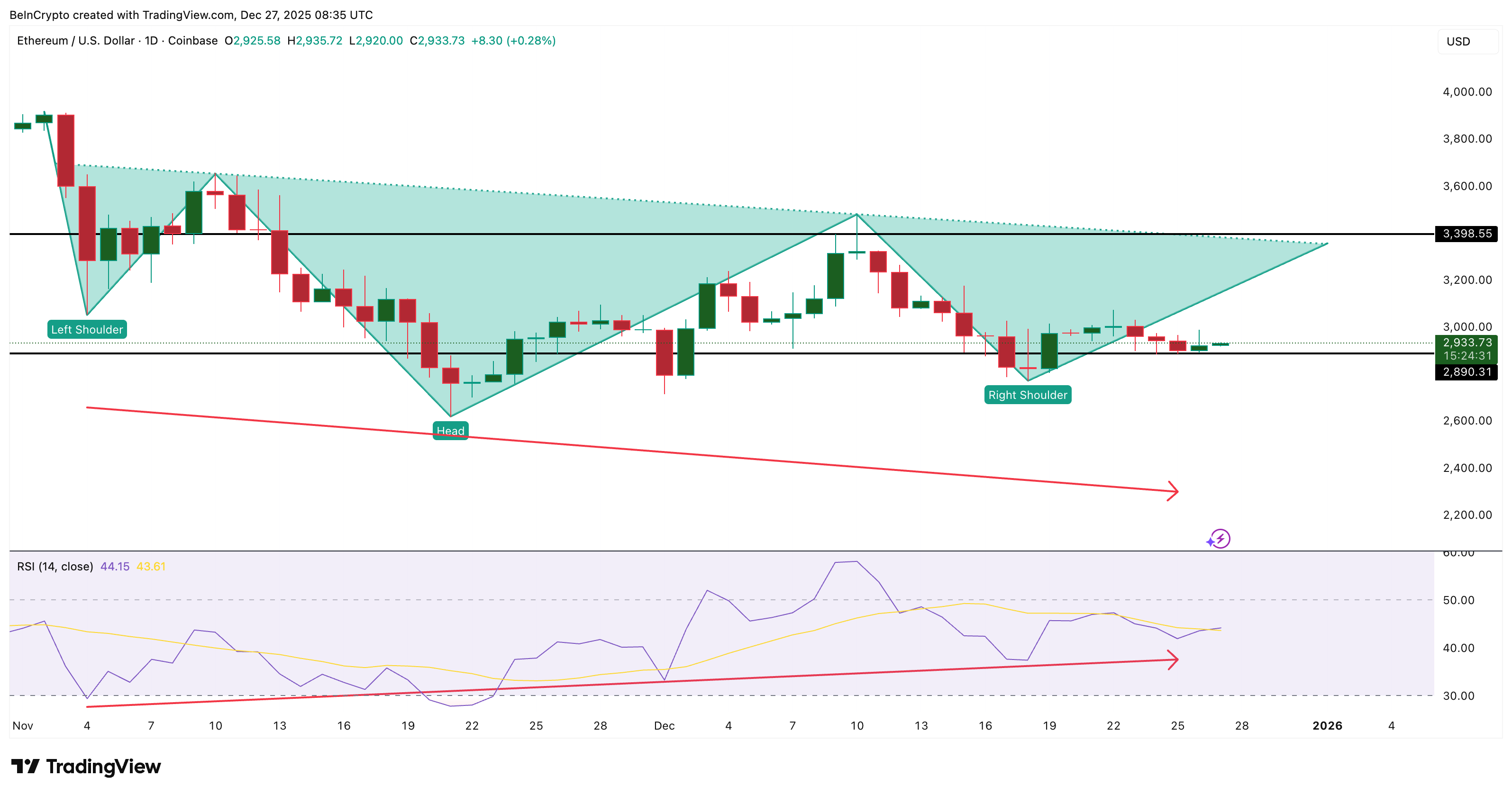
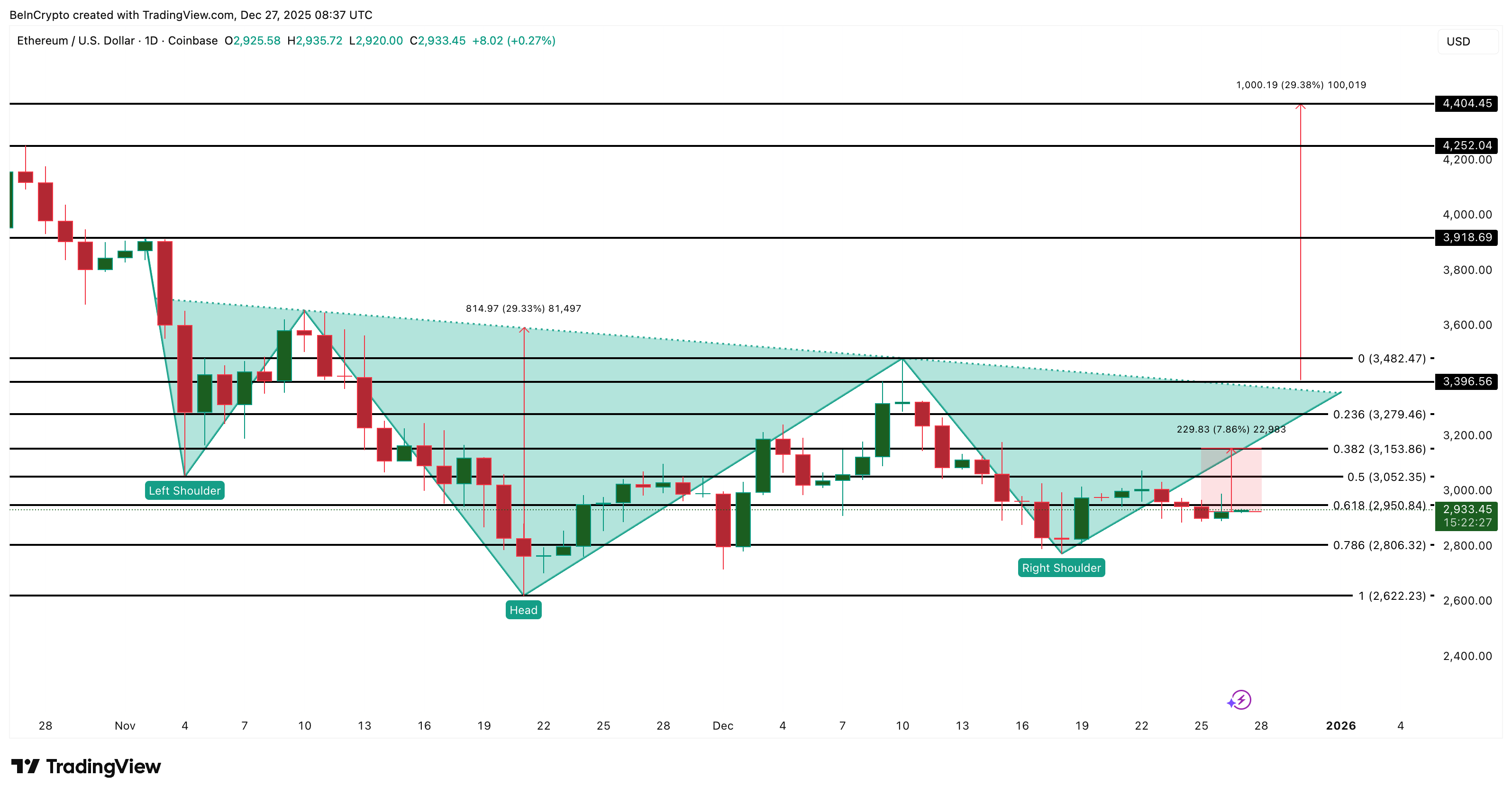
Ethereum sedang mendekati penyelesaian pola inverse head-and-shoulders. Ini adalah struktur bullish yang menandakan pembalikan tren jika harga menembus di atas US$3.390. Masalahnya muncul sebelum level breakout itu. Momentum ritel melemah pekan ini.
Antara 18 Desember dan 24 Desember, harga bergerak naik. Biasanya, ini pertanda positif. Money Flow Index (MFI), yang melacak arus masuk dan keluar uang pada suatu aset, tidak sejalan. Indikator ini malah mencetak lower low. Ini menandakan kemungkinan trader ritel tidak mendukung higher low dengan aksi beli yang nyata.
Ingin insight token seperti ini? Daftarkan diri untuk Newsletter Harian Crypto dari Editor Harsh Notariya di sini.
Sekarang, MFI perlu bergerak di atas 37 untuk membentuk higher high dan memperlihatkan permintaan yang lebih kuat.
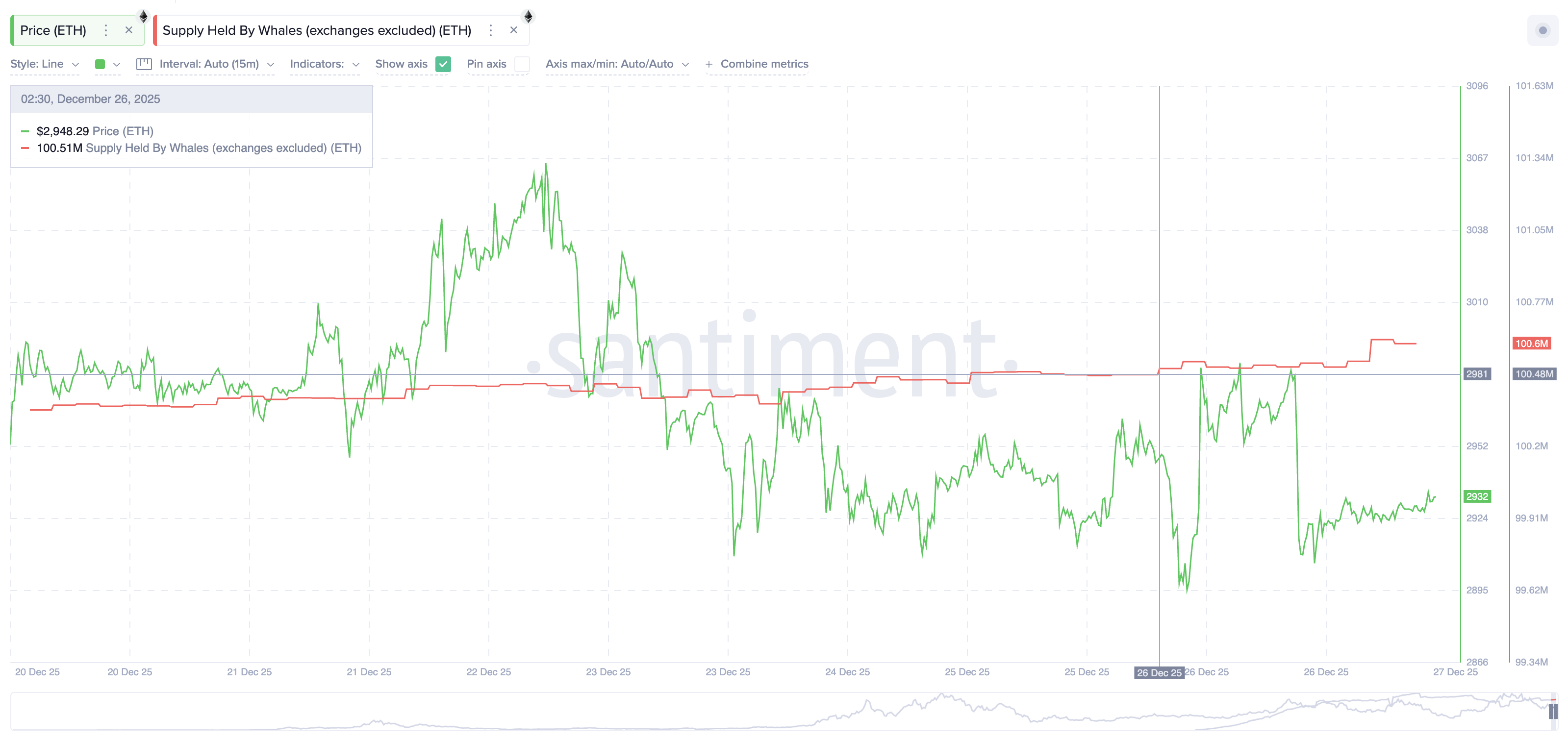
Ketika ritel mulai melambat, whale justru bertindak sebaliknya. Sejak 26 Desember, wallet yang menyimpan jumlah besar ETH bertambah dari 100,48 juta ETH menjadi 100,6 juta ETH.
Dengan harga saat ini, jumlah ini setara sekitar US$350 juta yang masuk dalam 24 jam terakhir. Whale tidak membeli untuk keuntungan jangka pendek. Mereka biasanya membeli karena melihat ada peluang di pasar.
Pembagian ini menggambarkan situasi saat ini. Ritel masih ragu, sedangkan whale mulai masuk. Arah harga ETH selanjutnya tergantung pada kelompok mana yang bertahan konsisten.
Satu indikator mengarah ke crypto whale
Relative Strength Index (RSI), indikator pengukur momentum, mendukung posisi whale.
Antara 4 November hingga 25 Desember:
Harga mencetak lower low
RSI mencetak higher low
Ini adalah bullish divergence. Sinyal ini menandakan tekanan jual mulai melemah, meski harga belum mengonfirmasi secara teknikal.
Divergence seperti ini mendukung pola pembalikan seperti inverse head-and-shoulders. Ini bukan jaminan akan terjadi breakout. Tapi, peluang breakout akan lebih besar jika harga mencapai zona pemicu. Itu sebabnya whale Ethereum mulai menambah kepemilikan saat ini.
Zona Harga Ethereum yang Menentukan Pergerakan Berikutnya
Harga Ethereum harus tembus kembali level US$3.050 terlebih dahulu. Level ini jadi penghalang psikologis dan resistance jangka pendek.
Jika harga berhasil menembus dengan kuat, ujian berikutnya adalah zona breakout neckline di US$3.390.
Breakout di atas US$3.390 bisa memicu target inverse head-and-shoulders mendekati US$4.400. Angka ini didapat dengan menambahkan tinggi pola head ke titik breakout.
Di sisi bawah, jika kehilangan level US$2.800 akan melemahkan momentum bullish. Bila tekanan jual meningkat dan whale berhenti menambah, harga Ethereum bisa turun ke US$2.620. Penurunan di bawah level ini akan membatalkan struktur pembalikan bullish.
The Ethereum price is down by under 1% in the last 24 hours. At first glance, the chart looks quiet. Also, the minor price drop links to weak retail demand. But something else is happening under the surface.
New on-chain data shows whales adding again, while one key indicator flashes a rare trend shift, favoring one of the two groups mentioned in this piece.
Retail Slows Down While Whales Move In
Ethereum is approaching completion of an inverse head-and-shoulders pattern. This is a bullish structure that signals a trend reversal if the price breaks above $3,390. The problem appears before that breakout level. Retail momentum weakened this week.
Between December 18 and December 24, the price trended higher. Normally, that is a positive sign. The Money Flow Index (MFI), which tracks money entering and exiting an asset, did not follow. It made a lower low. That shows that possibly retail traders did not support the higher low with real buying.
Want more token insights like this? Sign up for Editor Harsh Notariya’s Daily Crypto Newsletter here.
MFI now needs to move above 37 to form a higher high and show stronger demand.
While retail slowed down, the whales reacted the opposite way. Since December 26, wallets holding large amounts moved from 100.48 million ETH to 100.6 million ETH.
At the current price, this amounts to approximately $350 million injected over the past 24 hours. Whales do not buy for short-term flips. They usually buy because they think a setup exists.
This type of divergence supports reversal patterns such as the inverse head-and-shoulders. It does not guarantee the breakout. It gives the breakout attempt a higher chance of working if the price reaches the trigger zone. And that is exactly why Ethereum whales are adding now.
Ethereum Price Zones Decide The Next Leg
The Ethereum price must reclaim $3,050 first. This is a psychological barrier and short-term resistance.
If price clears it with strength, the next test is the neckline breakout zone at $3,390.
A breakout above $3,390 could activate an inverse head and shoulders target near $4,400. That comes from adding the height of the head to the breakout point.
On the downside, losing $2,800 weakens bullish momentum. If selling increases and whales stop adding, the Ethereum price can slide to $2,620. A drop below that level invalidates the bullish reversal structure.
Samsung disebut mempersiapkan fasilitas manufaktur di Austin, Texas, untuk memproduksi sensor kamera CMOS yang akan digunakan pada iPhone generasi mendatang.
Following the release of the first HyperOS 3 stable update on October 14, 2025, numerous users started speculating the real disparity between HyperOS 3 Global and HyperOS 3 China. Although the two variants run off the identical base, Xiaomi made minute changes in order to accommodate regional requirements. Although it is widely believed that there is little functional disparity between the variants—the couple of which we do notice is critical to the user interface.
What is HyperOS Global?
HyperOS Global is designed for global users in areas such as EEA, India, Turkey, Taiwan, Russia, Indonesia and the Global build. The key purpose is to offer an effortless, global user interface with multilingual support and integration with Google service. It is shipped with Google Play Store, Google Maps, and other Google applications and is easier for global users to be used without China. Xiaomi phone and messaging app exist on some global Xiaomi phones.
Moreover, region-specific preloaded applications could be slightly different with respect to the location in which the device is retailed. Xiaomi also localizes system regionalization so people in each region get a smooth and native-like experience that meets regional regulations and regional language settings.
What is HyperOS China?
Conversely, HyperOS China is specially made for the in-market audience. Since China imposes regulations on Google offerings, this variant lacks Google applications. Xiaomi implements Chinese locals in lieu of Google offerings such as Google Play, Maps, and Assistant.
HyperOS China also comes with China-specific apps and features, likeChinese platform integration with local popular social platforms, regional payment solutions, and particular government applications. They give the localized and effective usage experience in mainland China.
Key Differences Between HyperOS Global and China
The choice between HyperOS China and HyperOS Global mainly comes with service integration, rather than performance or design.
Here are the comparison’s key points:
Google Services: Available in Worldwide; missing in China.
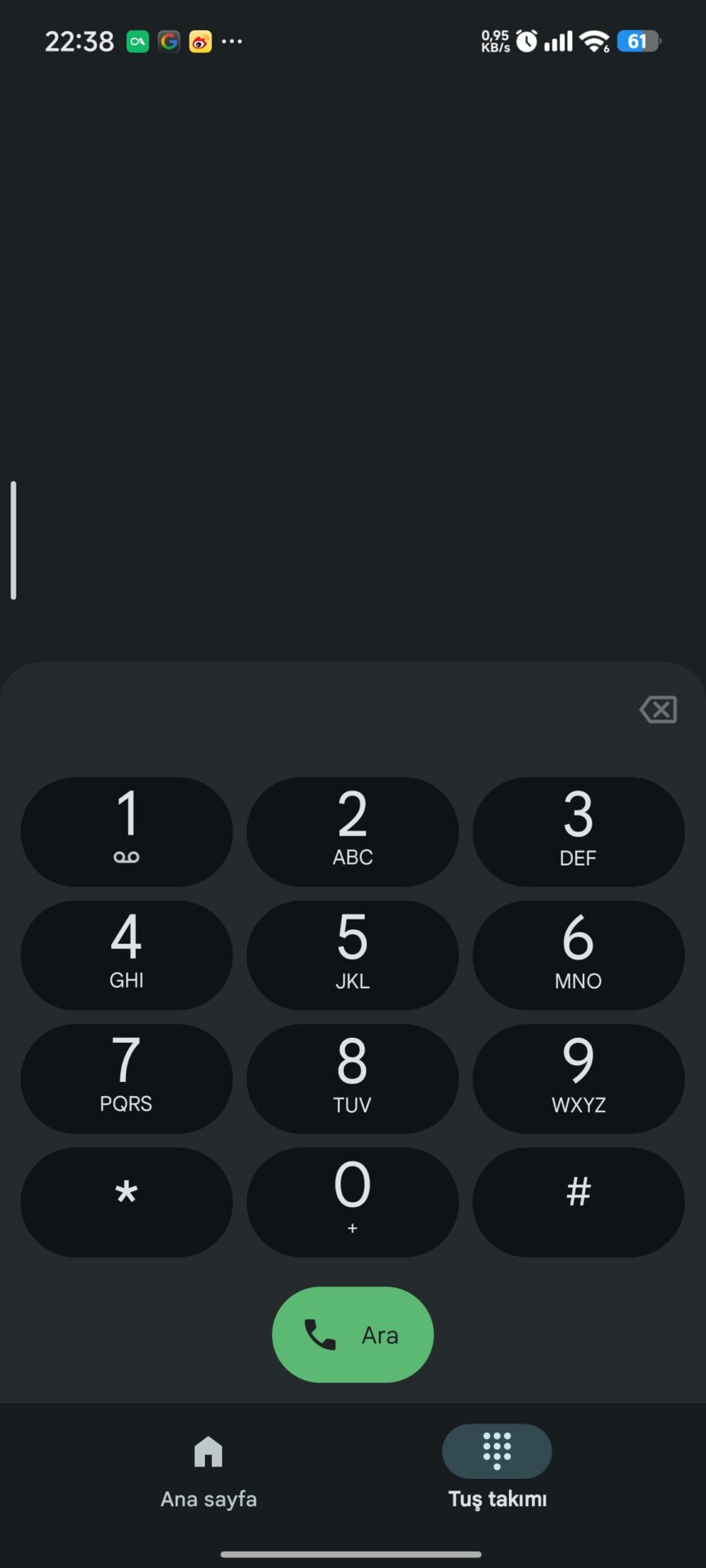
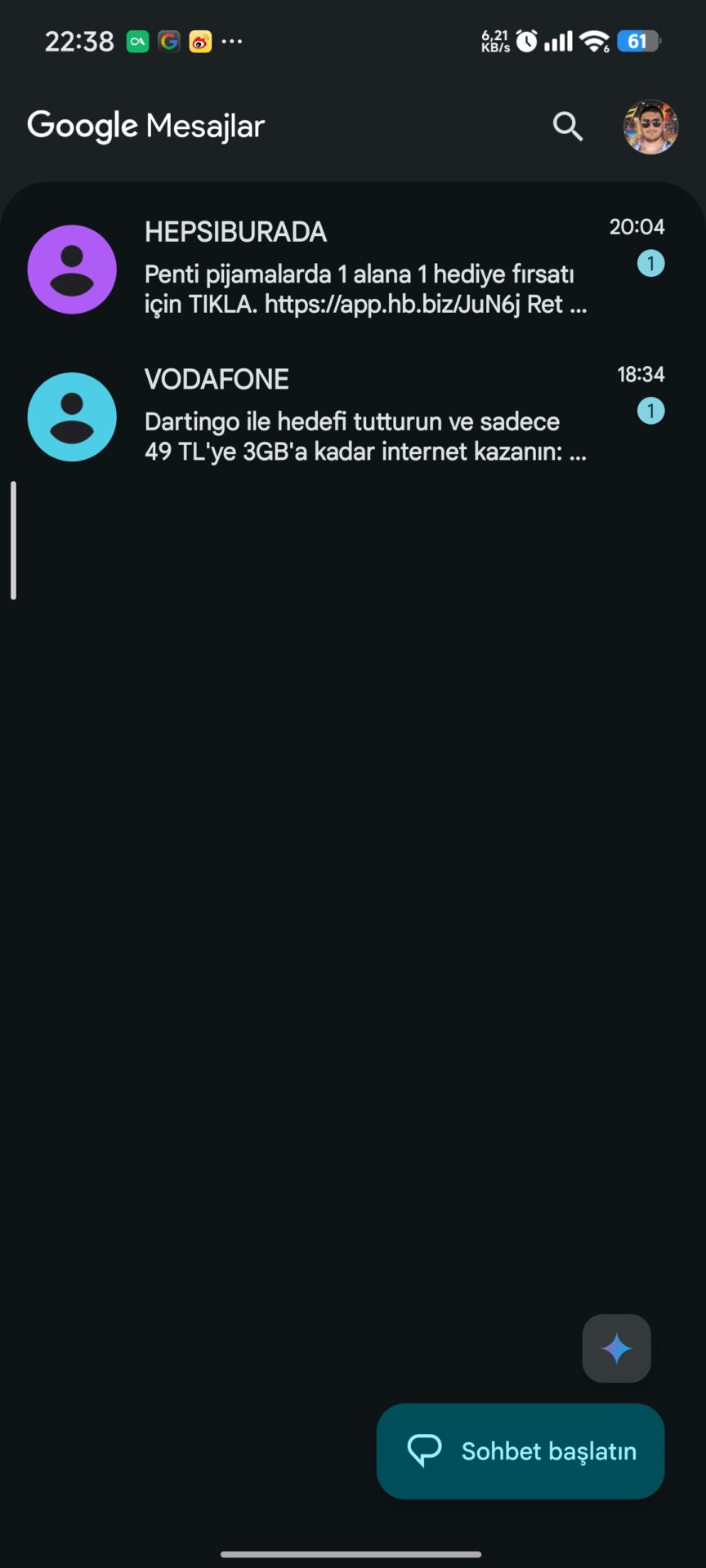
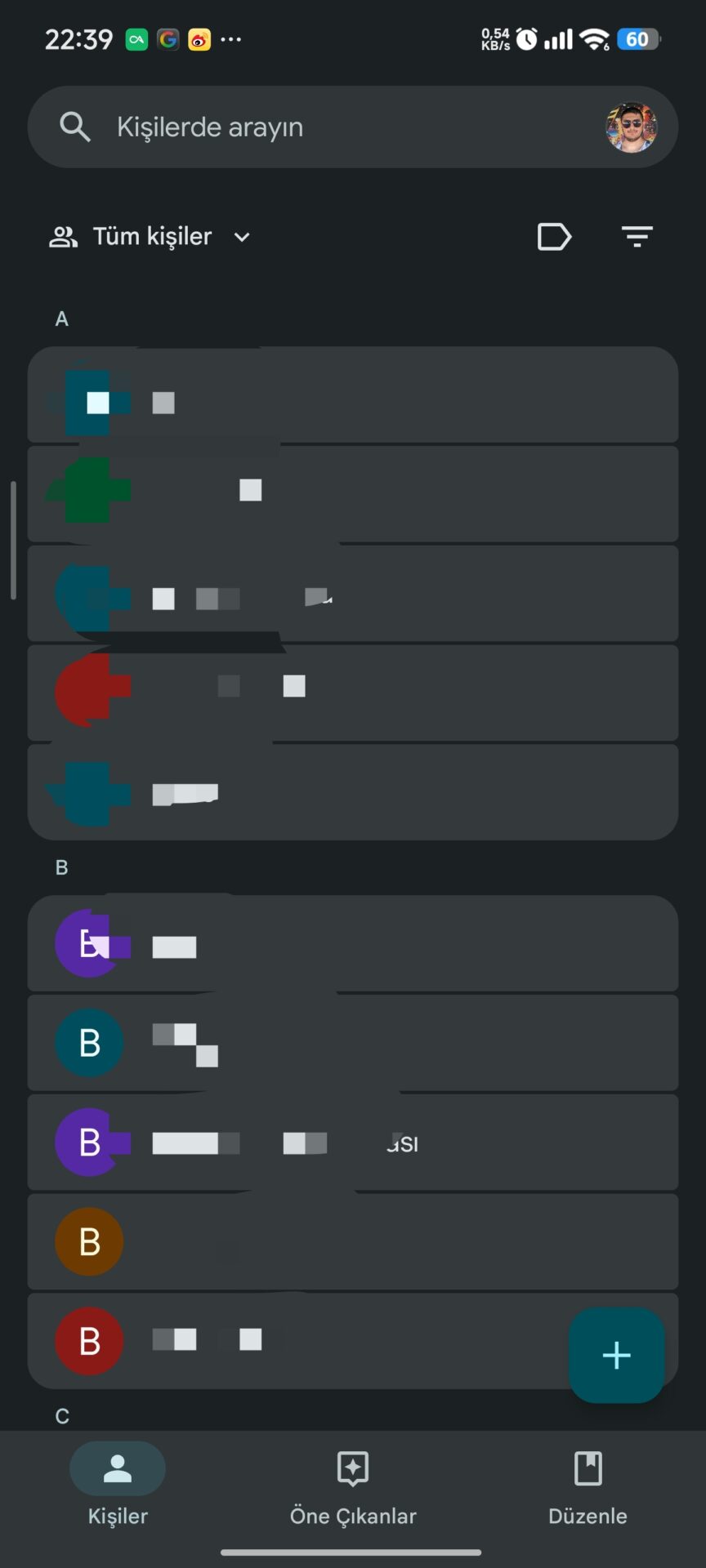
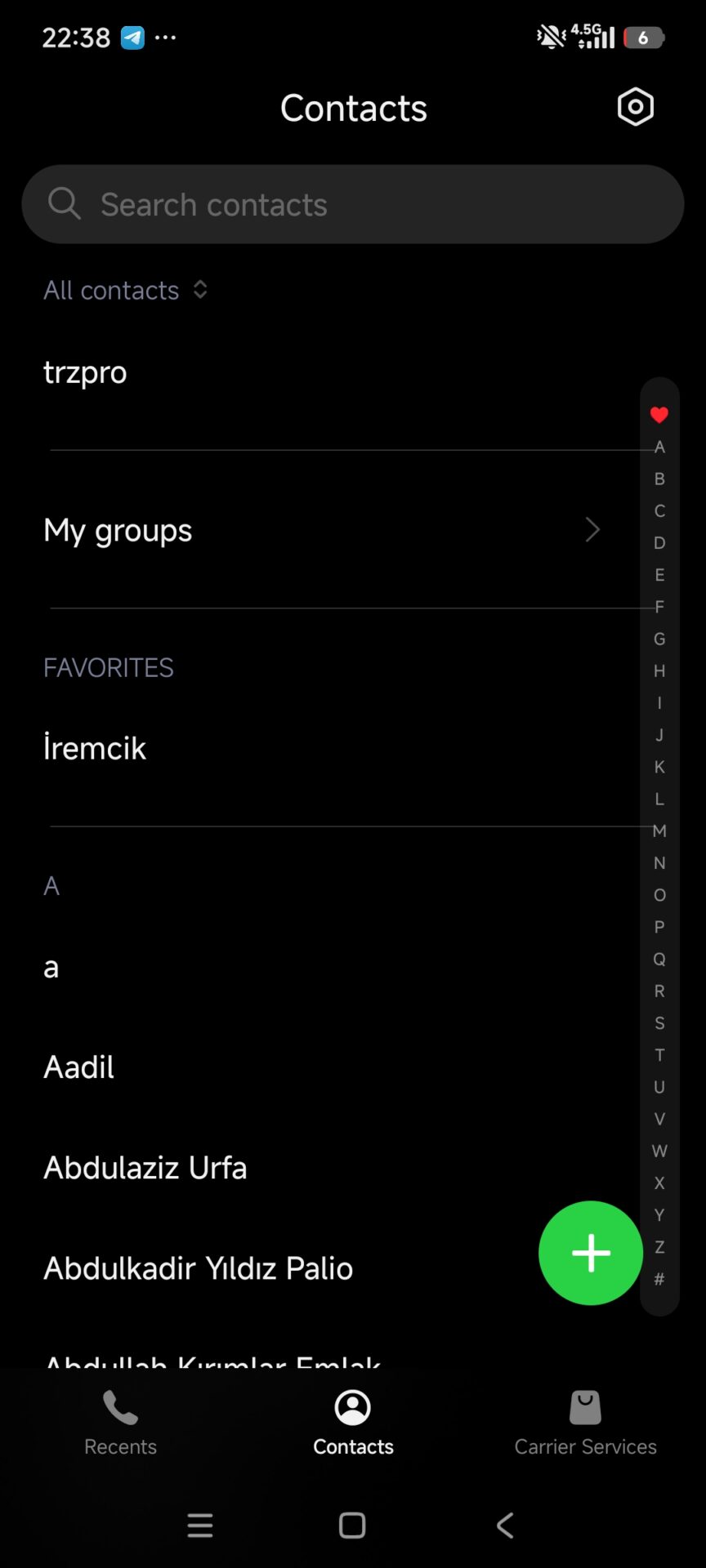
Preloaded Apps: Global ships with Google Contacts, Messages, and Dialer, but China ships with Xiaomi’s in-house apps.
Localization: The global builds accommodate more languages and regional affinities.
Visual Interface: The both versions contain the alike design, animation, and system type, with almost the same system features.
Even with such differences, the UI and animation of the system performance do not differ between the two versions because Xiaomi strives to streamline the software ecosystem under HyperOS.
Overall, HyperOS 3 Global and HyperOS 3 China hold no significant difference in appearance and motion. Differences exist mainly in terms of Google service integration and region optimizations. The users internationally will enjoy faster global app exposure, and the users in China enjoy closer integration with the local platforms.
Finally, the decision between the two rests within your region and ecosystem preferences. Either way you go with it, Xiaomi’s HyperOS provides you with a smooth, unifying experience across all devices. –

 Login
Login
 Pengguna Trust Wallet dilaporkan kehilangan lebih dari USD 7 juta setelah pembaruan terbaru ekstensi Trust Wallet untuk browser Google Chrome.
  Suatu saat nanti, durasi hari di Bumi akan berubah menjadi 25 jam, bukan lagi 24 jam yang selama ini kita kenal.
  Tim ilmuwan yang memakai Teleskop Antariksa James Webb menemukan planet unik berbentuk lemon. Bulatan planetnya memang aneh.
 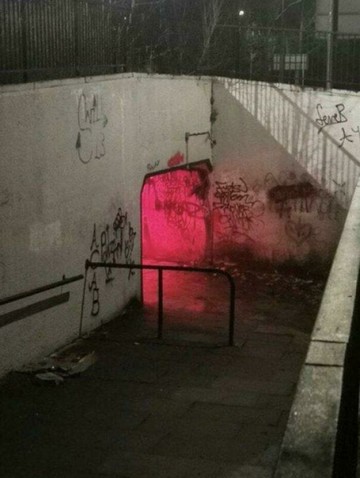 Terkadang tempat yang tadinya biasa saja, tapi saat menempatinya sendiri suasananya berubah. Tak lagi biasa saja, tapi terasa menyeramkan, seperti foto ini.
  Manusia, hewan, tumbuhan, hingga jamur yang ada di Bumi ternyata memiliki satu nenek moyang yang sama. Ilmuwan menjulukinya 'Asgardian'.

 Pinta 3.1 is available for download. The open source image editor adds axonometric grids, polygon selection tool, lower memory usage – and lots more!




 Samsung disebut mempersiapkan fasilitas manufaktur di Austin, Texas, untuk memproduksi sensor kamera CMOS yang akan digunakan pada iPhone generasi mendatang.