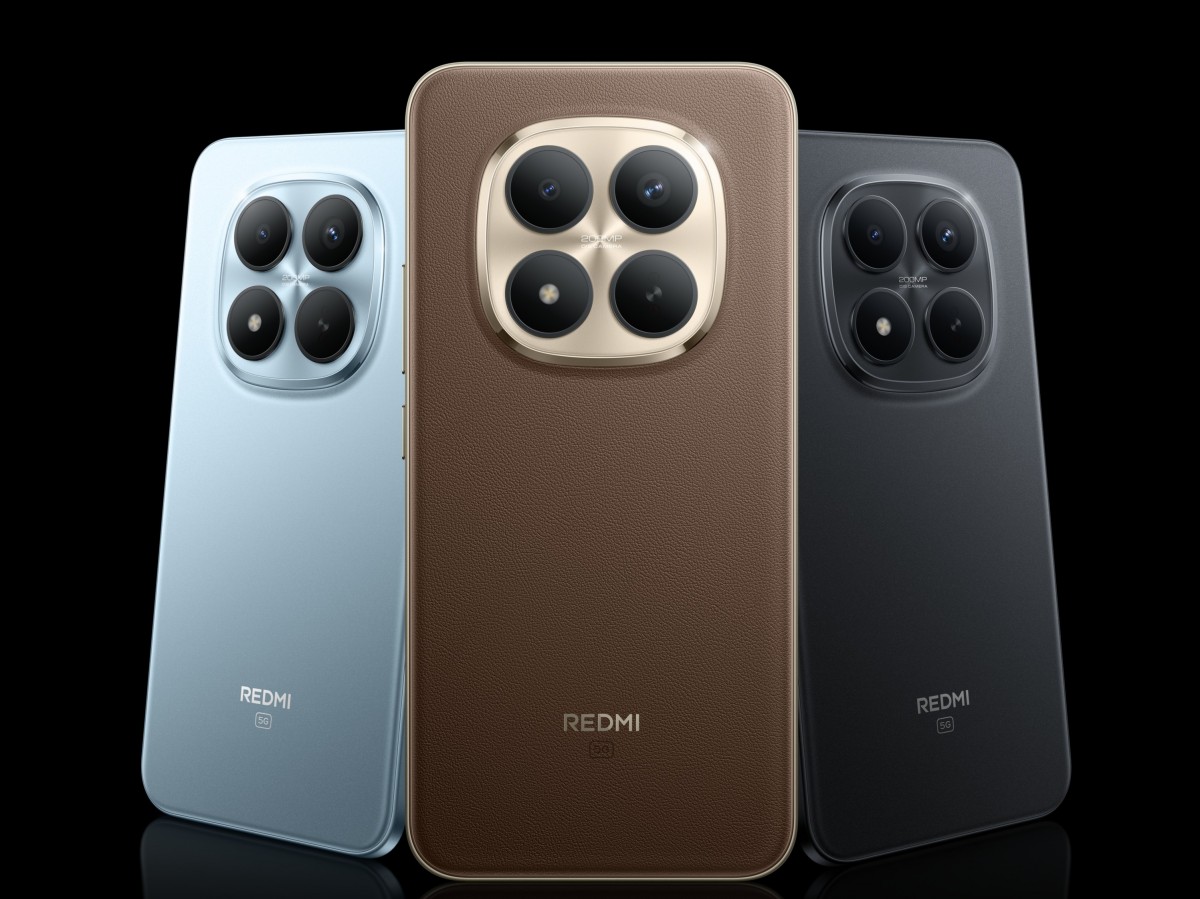
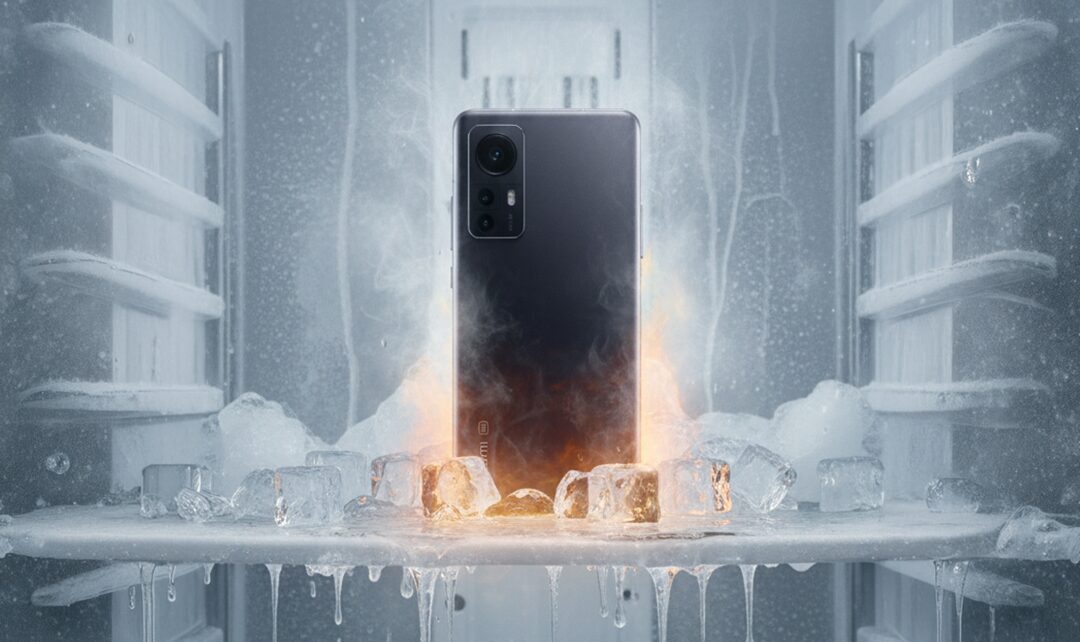
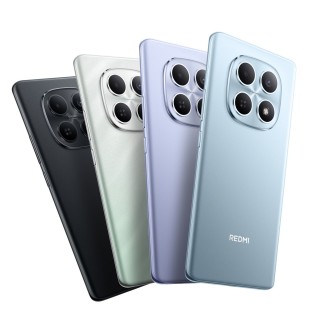
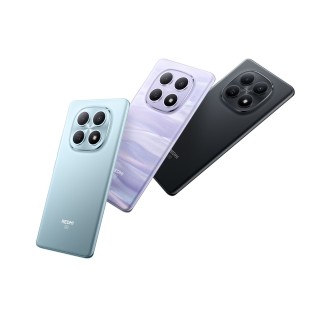
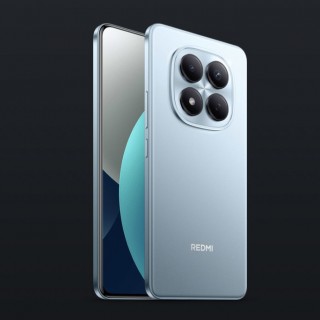
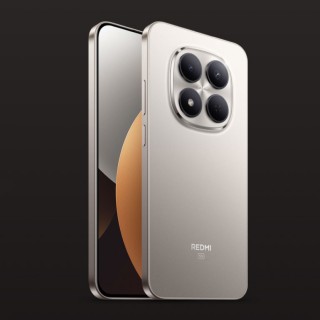
The concept of putting a fingerprint scanner on an LCD display panel itself had gained considerable attention, mainly from the mid-range smartphone sector, which could not afford the high prices for OLED panels at that time. Towards the end of 2019-2020, the Redmi brand from Xiaomi showed off this idea with the Redmi Note 8 Pro, which used an LCD in-display fingerprint solution that was made possible by Tianma.
Technological Difficulty of LCD In-Display Fingerprint Solution
In contrast to OLED screens, the LCD screen requires a backlight unit with a complex optical stack. In this optical stack, light gets blocked and scattered. This makes the process of capturing biometric information via the screen using optical fingerprint sensors highly challenging.
To resolve this, Tianma modified some of the parts of the LCD stack in order to enable the passage of infrared light more easily. For the Redmi Note 8 Pro prototype, an infrared sensor algorithm combining modified films and backlight units worked in collaboration. Advanced image processing algorithms were applied in order to smoothen noisy fingerprint data from the LCD structure.
Although it was functional in the demos, this technology caused added expense, size, and complexity relative to normal LCD modules.
Market Reality & Strategic Shift by Xiaomi
By 2020, the smartphone industry experienced a rapid evolution that was unforeseen. The price of the AMOLED screen had dropped dramatically, especially in China, enabling manufacturers such as Xiaomi or REDMI to use an AMOLED screen in many models, including low-price ones. In the meantime, the side-mounted capacitive fingerprint scanner gained popularity because of its price advantage and ease of use.
With the Redmi Note 10 lineup, Xiaomi began this pivot in their mid-range offerings toward using AMOLED screens. This helped eliminate the cost-effective rationale for developing complex LCD implementations for in-display fingerprint scanning. This means that their LCD in-display fingerprint project never made it into mass production.
What Happened to Tianma’s Technology?
Even as Tianma had to put its LCD in-display fingerprint solution on the back-burner, the company did not turn its back on research involving sensor integration. The company simply repurposed its know-how to other areas of interest to OLED technology, such as optoelectronic hybrid integration. This technology is employed for sophisticated sensing applications. The current focus of Tianma’s research and development efforts is on OLED technology display panels, as well as automotive display panels and industrial display panels.
Final Assessment
The LCD in-display fingerprint sensor, as seen on the Redmi Note 8 Pro, was a technical prototype, demonstrating the feasibility of the idea. However, due to lower prices of AMOLED screens, simpler ways, or because of Xiaomi’s preference for AMOLED screens, it could not see the light of day. It is a fact, now in 2025, that if any mobile telephone has an LCD display, its fingerprint reader is placed either on the side or on the back. If it is in-display, then it is OLED.
Xiaomi has officially listed the REDMI Note 15 Lunar New Year Edition smartphones on JD.com, confirming a festive refresh for the popular series. The special editions will go on sale in China at 10:00 AM on January 1, 2026. According to the listing, all three models focus on refined design rather than hardware changes.
Festive Design Focus for the REDMI Note 15 Series
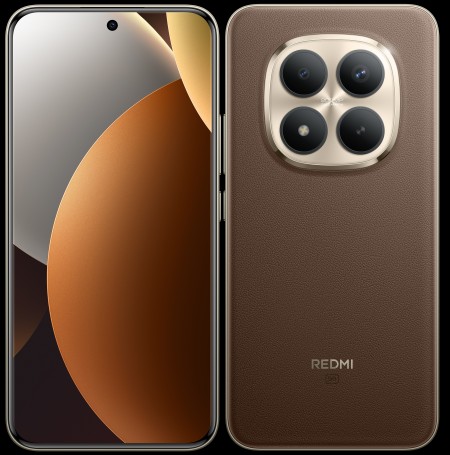
The Lunar New Year editions introduce new color themes inspired by the Spring Festival. The REDMI Note 15 and REDMI Note 15 Pro arrive in a cherry red finish, while the REDMI Note 15 Pro+ features a warmer brown-toned New Year color. Xiaomi positions these versions as seasonal alternatives, keeping specifications identical to the standard models released earlier this year.
This approach allows users to choose a festive appearance without compromising familiarity or performance. Availability is currently limited to the Chinese market.
REDMI Note 15 and Note 15 Pro Highlights
The standard REDMI Note 15 was introduced in August and focuses on slim design and balanced performance. It features a dual-curved OLED Super Sunlight display with high peak brightness, a large battery, and IP66-rated dust and splash resistance. The device emphasizes comfort in hand with a thin body profile.
The REDMI Note 15 Pro upgrades the experience with a larger 1.5K OLED flat display and a 120Hz refresh rate. It uses the Dimensity 7400 Ultra processor and shares enhanced protection features such as reinforced glass and an ultra-thin chassis. Battery capacity is increased to support extended daily use.
REDMI Note 15 Pro+ Specifications Overview
The REDMI Note 15 Pro+ stands as the top-tier option in the series. It is the first device powered by the Snapdragon 7s series fourth-generation platform. Key highlights include:
6.83-inch 1.5K Super Sunlight OLED display
Triple rear camera system with a 50MP main sensor and 50MP telephoto
Enhanced durability with improved drop and water resistance
Large battery designed for long-term endurance
Xiaomi confirms that the REDMI Note 15 Lunar New Year Edition lineup is currently available for pre-order in China and will officially launch on January 1, 2026.
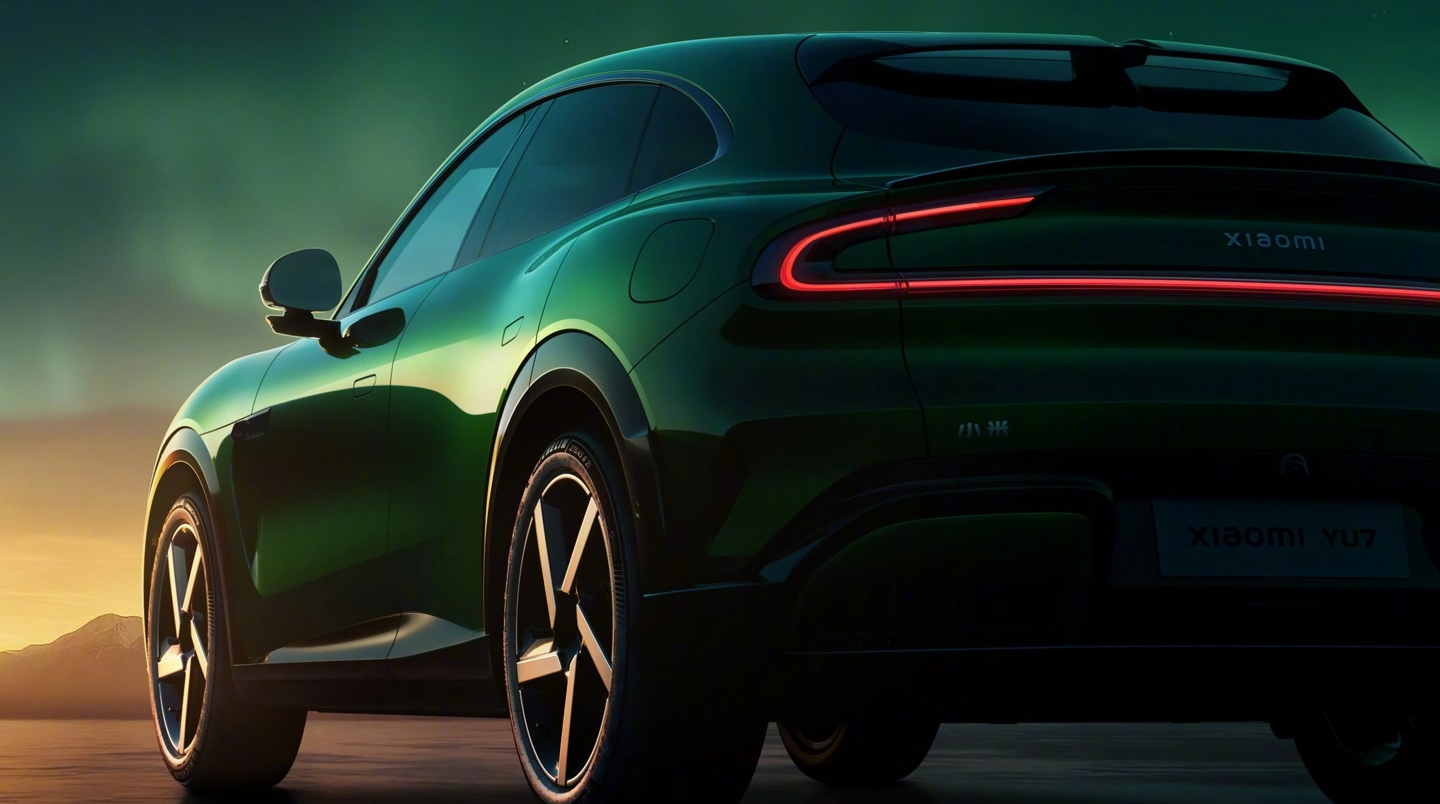
Xiaomi Auto has officially announced a large-scale dealer subsidy program in an effort to promote the development of their offline dealer channels across the whole country. According to Jiemian News, the firm has already issued more than 100 million yuan (approximately $14 million) of subsidies to car dealers, especially focused on car-integrated retail stores.
Dealer Subsidy Policy Details
According to the established subsidy policy for Xiaomi Auto, there is a clear unconditional benefit for the dealers. Stores erected in 2024 will be eligible for a subsidy of 100,000 yuan (about $14,000). Simultaneously, stores completed before December 15, 2025, will be eligible for a far more substantial subsidy amount of 500,000 yuan (about $70,000).
These payments are independent of any new sales volume or operational commitments. The new pattern of payment aims to ease the entry process for partners as well as promote a quicker expansion of physical presence for Xiaomi Auto in the major regions of China. This strategy implies that Xiaomi aims to emphasize stability and confidence building with its partners at a critical phase of expansion.
Fast Growth of Xiaomi Auto’s Sales and Stores
According to publicly available data quoted by IT Home, Xiaomi Auto sold 46,249 new energy passenger vehicles in November 2025. Of these, 33,729 units of YU7 models were sold in the wholesale market, reflecting its widespread adoption.
As far as new store openings are concerned, Xiaomi Auto opened 17 new stores in November, and the cumulative number of new stores reached 441 in 131 cities in China. The goal is to establish 36 new stores in December and cover seven new cities, including Hengyang and Mianyang, in addition to those already being served. As of November 30, Xiaomi Auto had opened 249 service outlets in 144 cities.
“Red Envelope” Incentives and Forthcoming Changes in Policies
According to sources with knowledge of the issue, some distributors have received more than 4 million yuan (approximately 560,000 USD) of subsidies handed out with so-called “red packets.” Such subsidies were perceived more as appreciation presents than the kind of compensation related to channel performance.
Going forward, Xiaomi is said to be making preparations for another round of policy adjustment. This will cover more flexible guidelines for the management of store performance and the incentive scheme. This will help create a less strenuous operating environment for dealers, given the expansion of Xiaomi Auto.
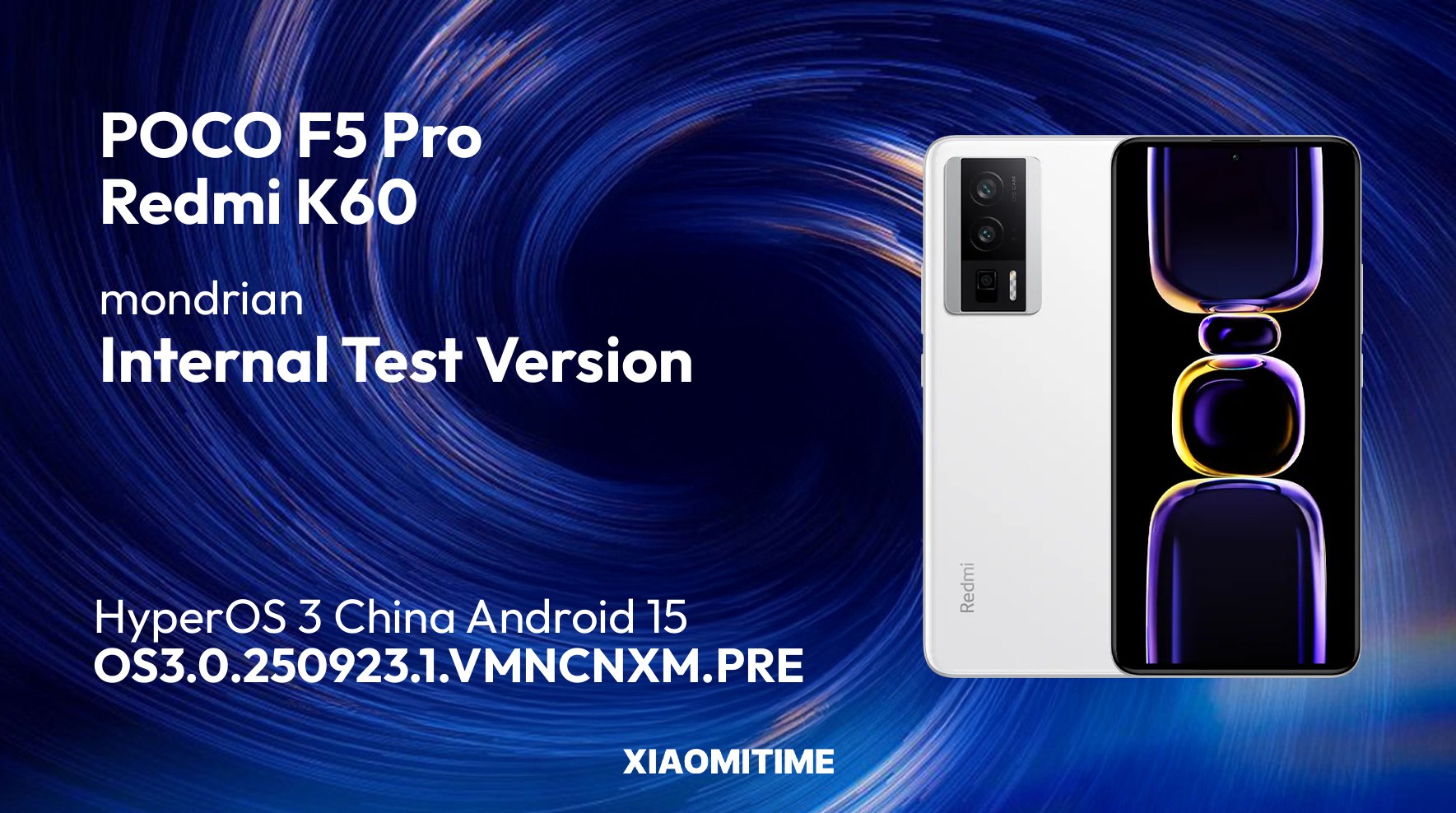
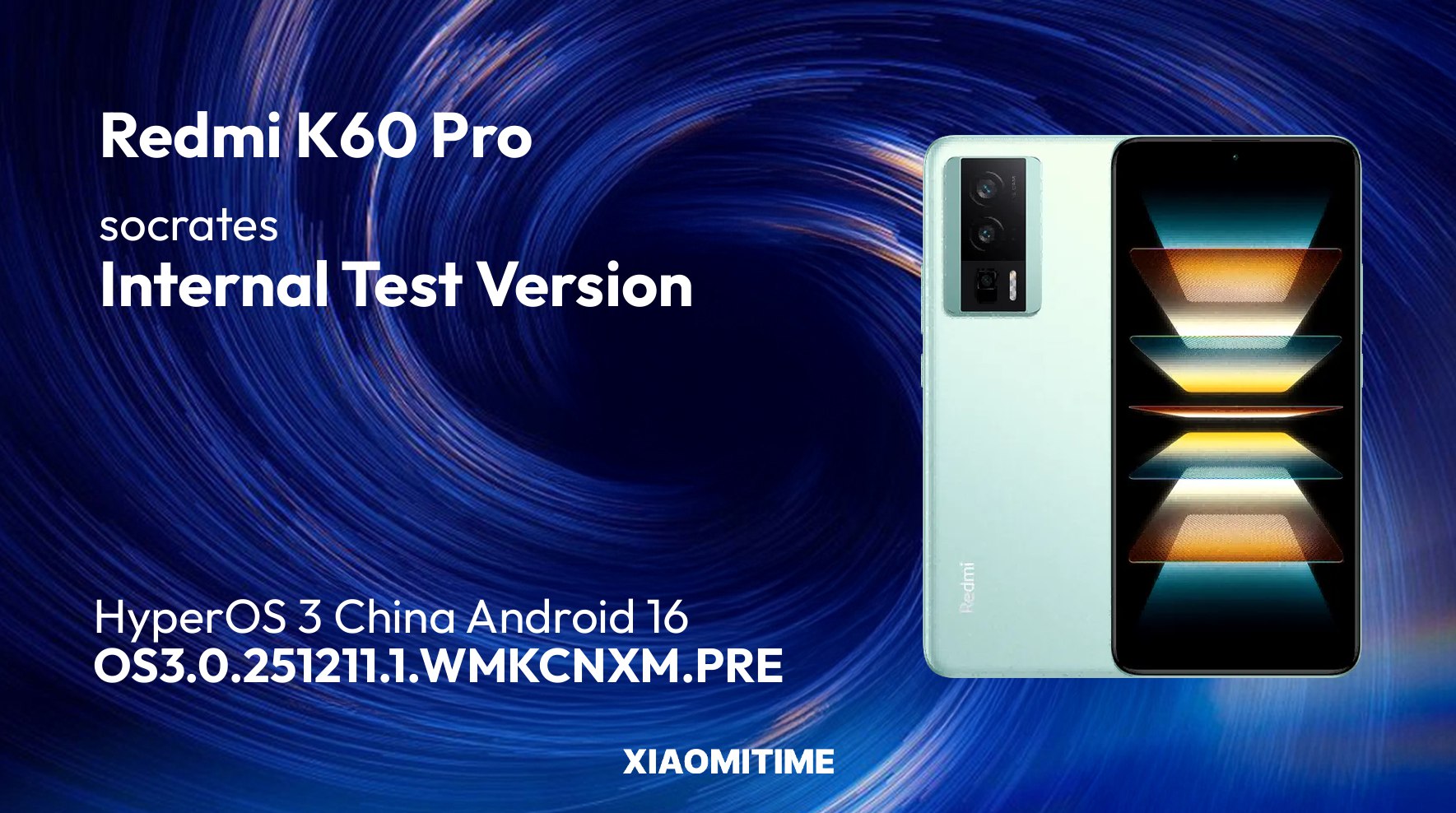
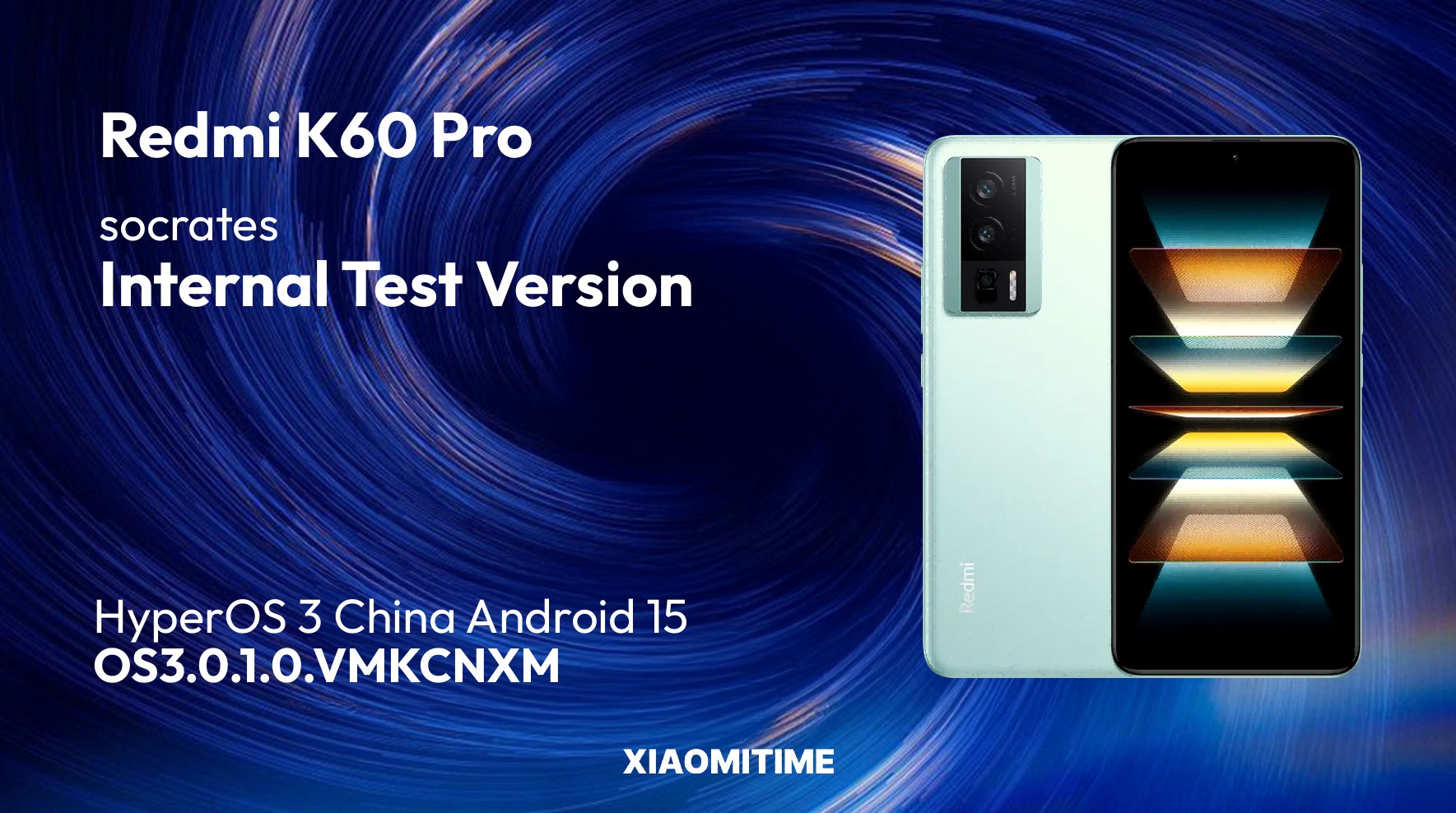
Xiaomi recently made the news for its software plans for REDMI K60 Pro, and there are questions being asked from the technical community regarding the HyperOS updates. In October, the company started the efforts for the Android 15 HyperOS 3 update for REDMI K60 Pro, and the internal Android 16 updates commenced from December 11th, 2025. There have been situations like this in the Xiaomi updates in the past as well, especially in the major HyperOS updates.
HyperOS 3 Hits Stable Release for REDMI K60 Pro
Xiaomi has now managed to compile what looks like a ready-for-launch stable version of HyperOS 3, based on Android 15, for the REDMI K60 Pro in China. Further, the OS3.0.1.0.VMKCNXM firmware indicates this will follow a public rollout phase. To sum it up, this means that consumers will experience performance enhancement, enhancements in security, as well as improvements in system stability, in comparison to previous tests.
Currently, Xiaomi has not yet revealed the exact date of its official launch, although the compiled stable version of the update usually specifies the nearing distribution of the file. A normal course of action accomplished by Xiaomi would be the gradual distribution of the update in order to avoid problems.
Why Android 15 Now If Android 16 Is in Testing?
Prior to the examination of the expectations associated with Android 16, there is a need to understand the update process employed by Xiaomi. Xiaomi can work on various versions or updates of Android simultaneously. The release of Android 15 does not imply the cancelation of the Android 16 version. On the contrary, it provides necessary updates for the current version, leaving the ensuing Android version unchanged. But we shouldn’t forget that Android 16 might also be canceled.
It gives Xiaomi the ability to maintain the continuity of the security patches and ensures that the devices from the brand stay on the HyperOS feature roadmap. From the business perspective, the continuity becomes extremely essential compared to jumping to the next version of the Android OS.
Will REDMI K60 Pro Get Android 16?
As of the current date, Xiaomi has not officially announced Android 16 support for the REDMI K60 Pro. Internal beta versions do not always mean that the OS will be officially released. Yet, previous Xiaomi models received this internal beta version of the OS several months before the official announcement of the OS support.
Based on the hardware capabilities of the REDMI K60 Pro, the recent emphasis by Xiaomi on supporting the software for a longer period, the prospect of running Android 16 appears plausible. Final confirmation can be expected near the time of the release of the stable version of Android 16.
What Users Should Expect Next
For now, one should expect the Android 15-based HyperOS 3 stable update to come to China only. Because REDMI K60 Pro is China-only device.
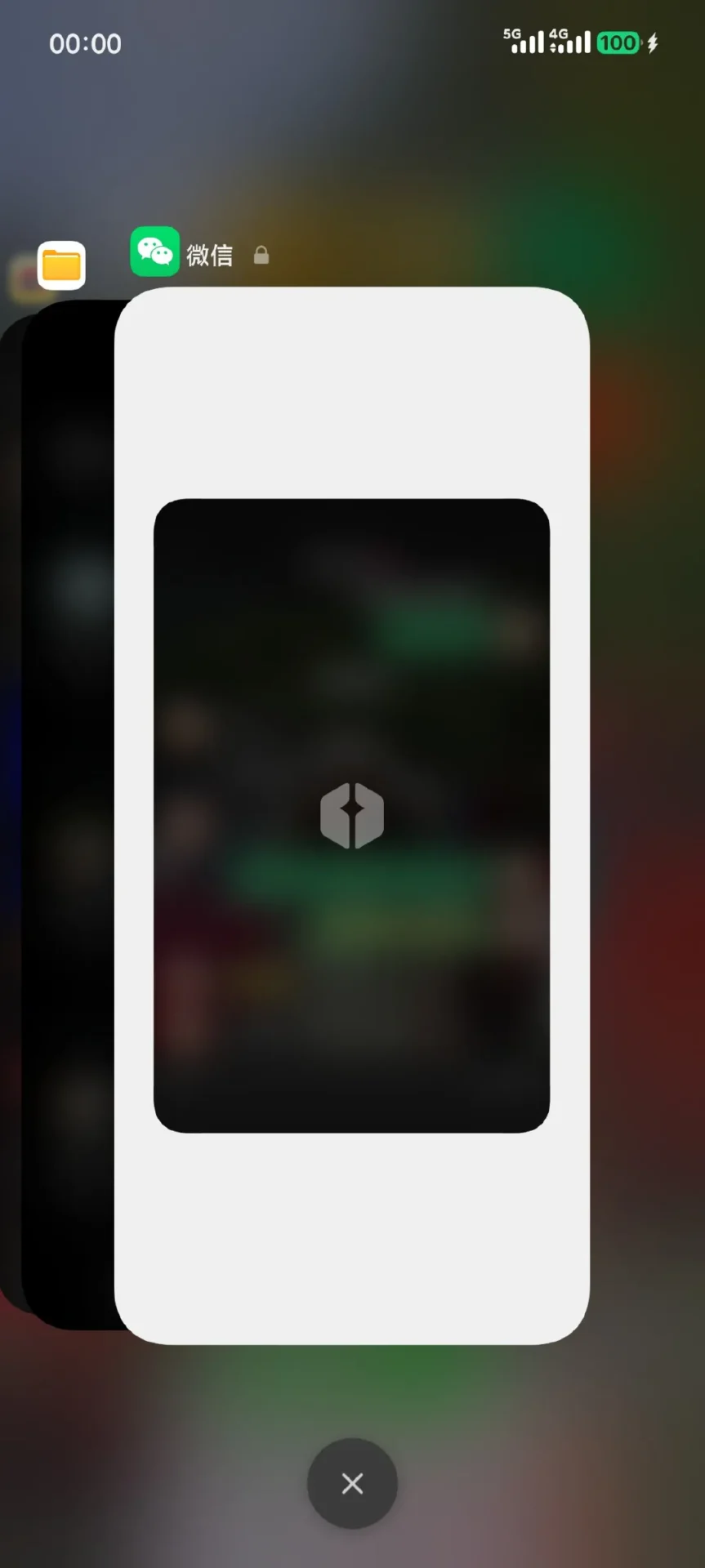
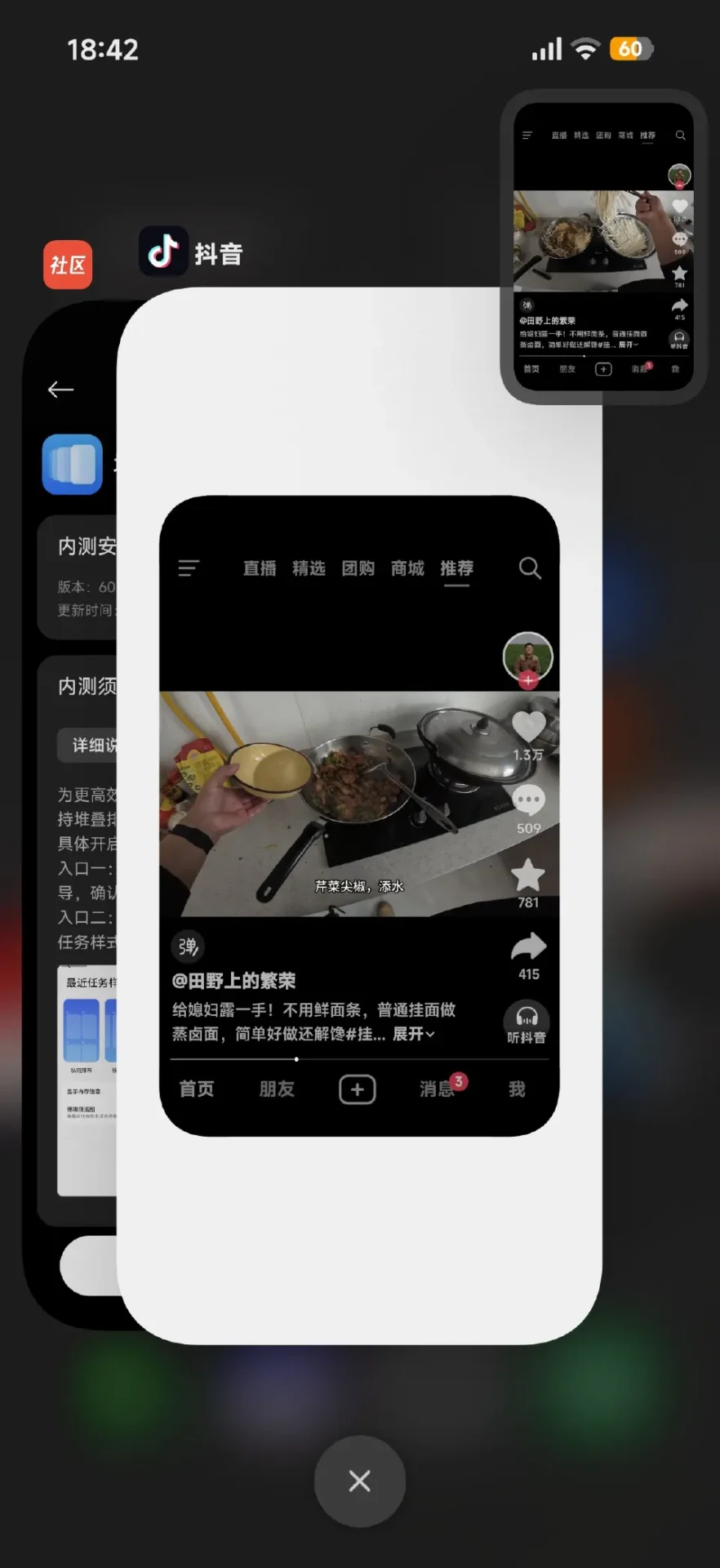
Xiaomi has officially stated that it is currently developing a software solution for the visual problem occurring on the HyperOS 3 beta launcher, specifically on the new iOS-inspired layout for the recently used apps view. The bug occurs in split-screen or small window configurations, where the display of the thumbnail of the used app cards is bug-filled. This issue has, according to feedback from the official Xiaomi community, already received the thumbs-up for being a valid software project.
HyperOS 3 launcher bug description
The bug has come to light during the desktop beta test of HyperOS 3 in December 2015. If the users enable the split-screen mode or the window mode and then try to switch to the recent apps screen, the background task cards may come into view over-zoomed, featuring a white border around the thumbnails.
This problem has also been logged by Xiaomi in Proposal Number: 52682489, confirming that it has been reviewed and entered into the development pipeline. The bug report submitted by a beta tester includes feedback on the expected outcome, and this helps in the process of discovering the cause of the problem.
Impact of the issue on daily usage
Though this bug does not lead to crashes or loss of data, this bug has a direct effect on multitasking experience, which is one of the major areas that HyperOS 3 has emphasized. The redesigned page for recent apps is designed to ensure smooth transitions and improve memory awareness. Though this feature has some flaws, such as improper scaling and white edges, background apps become difficult to identify.
As far as system design, it looks like there’s inconsistent UI scaling and rendering being performed while the foreground app changes size dynamically. It’s expected that the engineers behind Xiaomi will be able to address this issue with some launcher-level optimization, which shouldn’t be too long off, given that this is purely at the framework level.
What users can expect next
According to the company, “the expected outcome of the issue fix would be correct rendering of the background thumbnails in all multitasking modes such as split screens and floating windows.” After the fix has been tested and validated within the company, the update might be released for HyperOS 3 Launcher beta testers first.
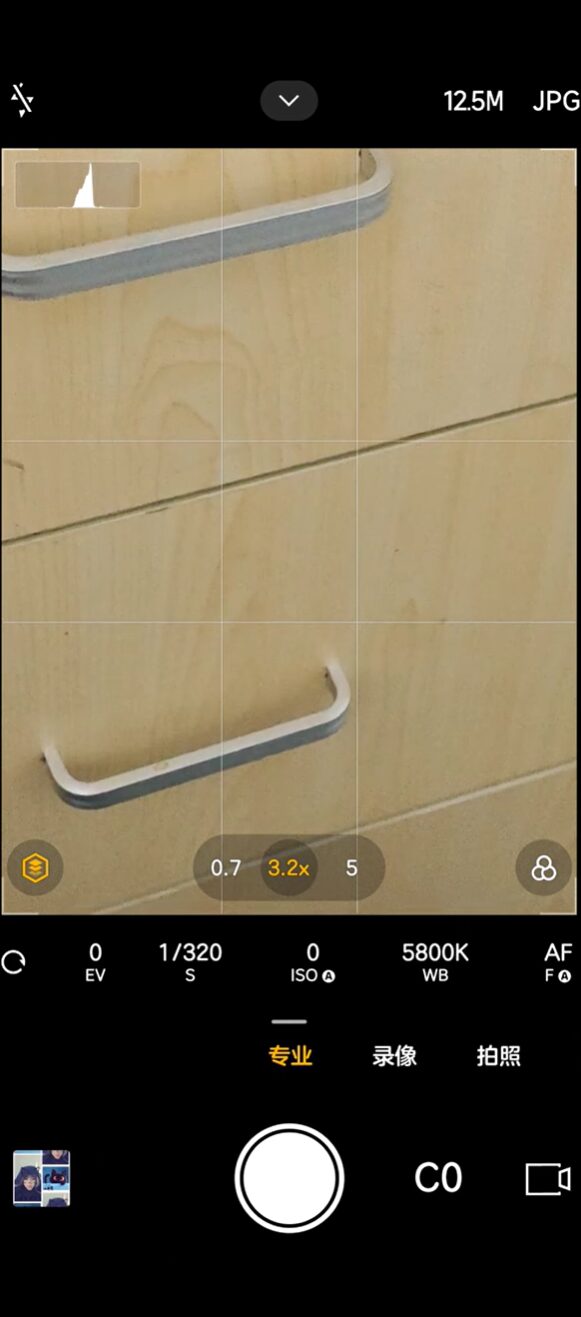
Xiaomi has just acknowledged a newly reported camera problem that affects the REDMI K90 Pro Max and confirmed that the fix is already in preparation for the upcoming updates. As shared through an official feedback channel of Xiaomi, the problem showed up after the recent beta release and specifically affects professional camera presets.
Camera Preset Crash Identified in Beta Version
A bug report says that on the REDMI K90 Pro Max running version 3.0.18.0, launching certain camera-specific professional mode presets instantly triggers a crash in the Camera app. Users mentioned that these presets worked fine on the previous software version, meaning this bug has been introduced with the new beta and is not related to hardware.
According to the official report, the crash happens right after selecting a saved pro preset; this happens in such a way that the users cannot go into any of the advanced camera settings. The standard photo and video modes do work just fine, but the instability makes use of the device’s advanced photography features-a major selling point for the series in China rather limited.
Status- Xiaomi’s Response and Fix
Xiaomi has labeled the bug as “Replied” within its internal bug tracking system, stating that the related engineers have successfully reproduced the problem. Accordingly, the proposal number 52644009 shows that the case is now under active investigation, and Xiaomi has managed to categorize it as a camera-related software regression linked to the beta build.
While Xiaomi didn’t provide an exact timeline for rollout, such fixes usually come in the next incremental beta update before merging into a stable release. This also aligns with Xiaomi’s usual HyperOS update policy, where critical app crashes are to be prioritized for maintaining system stability and user trust.
What Users Can Expect Next
Until the fix is released, users using affected builds should refrain from using saved professional presets within the Camera app. Users can update system components through official channels once the updated build is available or keep related Xiaomi apps updated via HyperOSUpdates.com or the MemeOS Enhancer app on the Play Store, which also grants access to hidden Xiaomi features and system app updates.
The K series of the REDMI devices are exclusive to China, and their counterparts usually come under the POCO brand for the rest of the world. Therefore, this particular problem affects only the Chinese beta firmware and doesn’t affect the global models at all.
Recently, Xiaomi has officially confirmed a new bug fix that is set to be released with a future system update, alongside the fixing of a visual bug spotted by customers on the new Xiaomi Civi 5 Pro. The problem, according to the customer feedback platform available on the company’s website, relates to the Dynamic Photos feature, leading to an unexpected reversal of the image from left to right during viewing. The fact that the company has continued to emphasize the stability of their software on the Xiaomi HyperOS platform, including the mid-range offerings, is an important aspect of the company’s performance at the current mid-term.
Confirmed Problem in Xiaomi Civi 5 Pro
The issue was found on the Xiaomi Civi 5 Pro with the software version of OS3.0.3.0, and the problem is that the Dynamic Photos might turn horizontally when browsing, even if the original image was taken normally. This problem is seen to occur very often without any particular trigger. Xiaomi has recognized the bug with proposal number 51733572 and stated that it is being addressed by the software team.
Such a bug will neither influence the photo quality nor will it have any effect on the integrity of data, though it may affect the user experience, particularly when users use Dynamic Photos extensively to record short moments with motion. Xiaomi’s acknowledgement of this bug indicates that it has been reproduced within the company, which is considered a system-level inconsistency rather than a hardware problem.
The Planned Solution and Update Process
Xiaomi mentioned that this bug will be solved in a future system update. Although it’s difficult to mention the time frame for the release of this update, bug fixes such as this are normally released through the incremental Xiaomi HyperOS software updates, which are usually pushed out in batches once it’s ready. The update will then be available for download through the system updater.
For those who want their system applications and components to be updated to their latest versions, some Xiaomi system apps regarding camera support as well as media service applications can also be traced through HyperOSUpdates.com or using the MemeOS Enhancer App from Google Play Store. The app enables connections to system app updates, hidden functions in Xiaomi Androids, as well as tracking updates from theandroid itself.
Xiaomi’s Software Maintenance PROCESS
This is typical of the software maintenance approach at Xiaomi, where the company focuses on the swift acknowledgment of feedback bugs. Xiaomi’s goal to provide a consistent user experience across all devices seems to include the elimination of bugs such as the inversion of the Dynamic Photo feature.
It’s likely that as the Xiaomi HyperOS finds applications on an increasing number of models and in different parts of the globe, bug fixes and optimization tweaks will continue to be rolled out to ensure that the focus on long-term software support by Xiaomi is maintained.
Just been announced by the company are bug fixes that will come with the next HyperOS update, with the aim of enhancing the stability of the camera environment and the accuracy of image processing. According to the latest update by the developers at Xiaomi, some of the awaiting bug corrections include the improvement of the problem with the Xiaomi 17 series when the resulting photos exhibit an abnormal green tinge.
Problem with the Camera Identified in the Xiaomi 17
Xiaomi revealed that the green-tinged image output issue was found in the Xiaomi 17 smartphones that use HyperOS 3.0.32.0. The bug was noticed to mainly affect image captures made through certain modes, such as the combination of white balance and High Dynamic Range imaging. Although the bug is only intermittent for certain users, internal testing conducted at Xiaomi indicated the bug could cause problems with image color accuracy, an aspect that is very important for flagship smartphones.
The good news is that the problem is only related to the software and there’s no involvement of the camera hardware. According to the clarification, users who are experiencing this issue are not required to send back their devices for any repairs or replacements. Xiaomi engineers have already made tweaks on the algorithm level to address the color calibration.
Fixes Scheduled in Future HyperOS Updates
Xiaomi has confirmed that the following correction for the issue of generating green-shot photographs will be provided as part of an upcoming HyperOS update. The update will enhance camera image processing pipelines so as to provide correct coloring without affecting the overall photography style, which was adjusted for the Xiaomi 17 models. Alongside this correction, Xiaomi is also likely going to provide some minor bug fixes based on user responses given through their respective feedback platforms.
Users are urged to update their system and camera apps. The Xiaomi system apps could also be updated individually through reliable platforms. The majority of the Xiaomi apps can be downloaded from HyperOSUpdates.com or through the MemeOS Enhancer application found in Google Play Store, which also gives users access to hidden capabilities within the Xiaomi device, as well as system application updates.
Xiaomi’s Ongoing Software Optimization Strategy
This announcement is based on Xiaomi’s overall strategy for their HyperOS, focusing on iterative improvements following major versions. Unlike other manufacturers which take a considerable amount of time for major version releases, Xiaomi keeps on churning out iterative solutions that repair issues from practical user perspectives that are often addressed by concerned users. For the Xiaomi 17, camera function remains a major concern, and such patches help the brand keep the users satisfied.
Although Xiaomi has not yet rolled out the exact timeline for the deployment of the solution, the bug is expected to be resolved in the near-term HyperOS update after final verification.
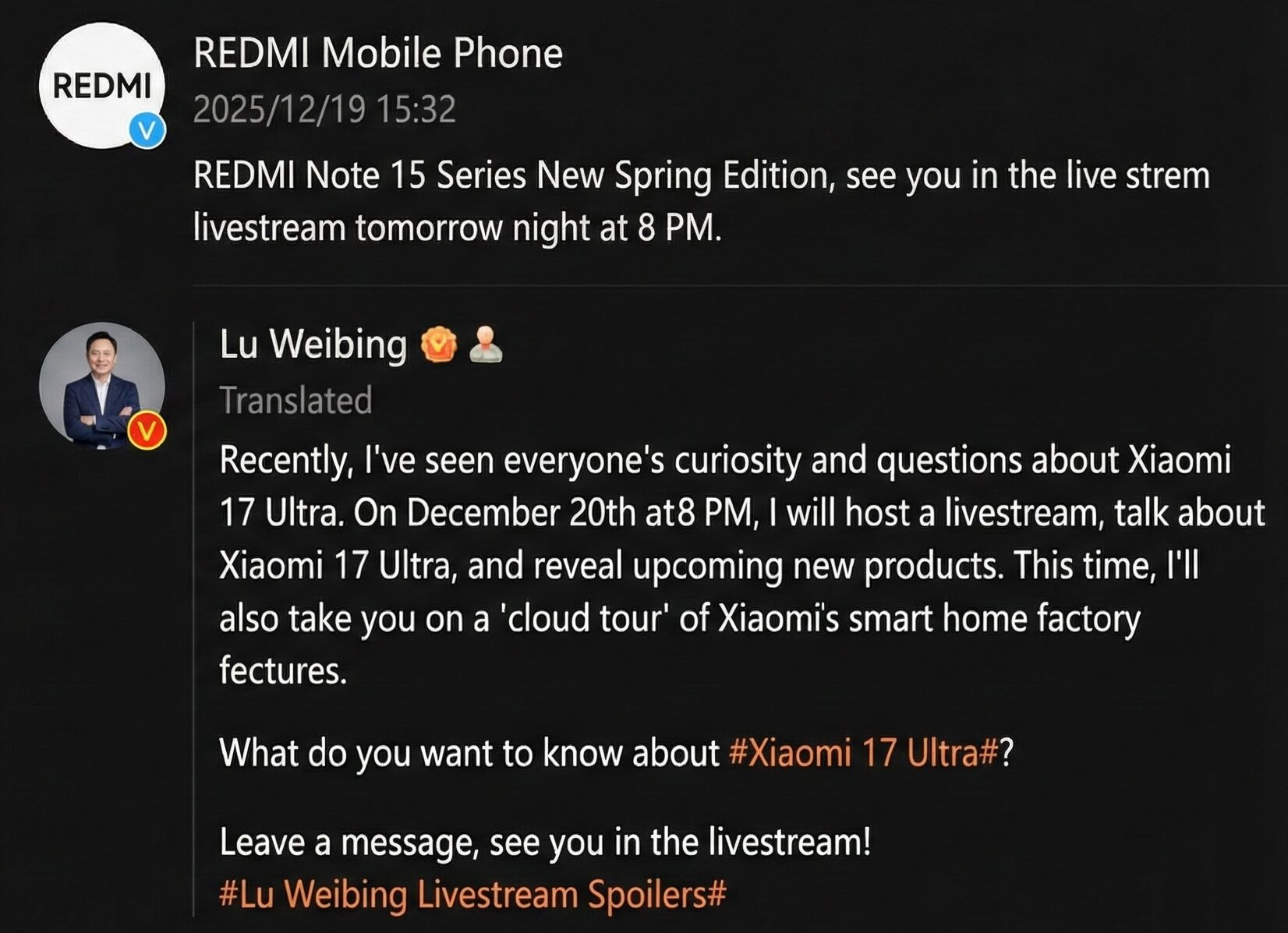
Xiaomi has announced an official live stream for the REDMI Note 15 Spring Festival Edition through its official live stream event scheduled to happen on December 20, 8:00 PM China Time. The live stream event has been announced through the official platform by none other than the Lu Weibing, the Partner and President of Xiaomi Group, and reposted by the official REDMI account. The live event will see the Xiaomi devices provider give the latest updates on the impending launch of the Xiaomi 17 Ultra.
The REDMI Note 15 Spring Festival Edition Gets the Limelight
The live streaming event is expected to focus mainly on the REDMI Note 15 Spring Festival Edition, which is a variation launched specifically due to the Chinese New Year festivities, catering only to the Chinese market. Xiaomi has not announced any details regarding this particular device, except that it is expected to be more of a design variation rather than an overhaul.
REDMI’s models for Spring Festival usually involve design elements inspired by culture and are limited in distribution. Like other models in the REDMI K and REDMI Note series special editions, this particular type will probably be confined in China, at least for now, with no information on models that can be found globally under the POCO brand name.
What to Expect From the Live Stream
Besides the REDMI Note 15 Spring Festival Edition, there are other products that Lu Weibing is expected to talk about briefly, such as the future Xiaomi 17 Ultra product line. Even though there are no technical details expected, product previews give a hint about the upcoming timelines of their launch. Users, who want to update their Xiaomi system apps, can also use HyperOSUpdates.com or download the MemeOS Enhancer app from the Play Store, which gives access to the update of system apps and more features of Xiaomi.
Xiaomi smartphones such as the Xiaomi 15,Xiaomi 15 Ultra, Xiaomi 15T, Xiaomi 15T Pro, POCO F7 Ultra, as well as theRedmi A3, have officially started receiving the update of Android 16. This upgrade is expected to provide a new user experience focused on the improvement of usability, multitasking, as well as privacy. As this rollout of the Android 16 is set to continue in the entire online community, Xiaomi smartphones supporting HyperOS based on Android 16 already enjoy new interface updates as well as optimized background processes.
What’s New in Android 16
Android 16 is primarily geared towards making the overall experience of a smartphone more intuitive, more responsive, as well as more secure. Some of the key features of this operating system include
Auto Grouping of Notifications. Predictive back gesture that allows the user a preview before navigating back to the previous screen.
Adaptive refresh rate that balances a smooth display with battery life.
Desktop windowing mode, optimized to improve productivity on a large screen, such as in the Xiaomi Pad 7 Pro.
Trade-in Mode, where device resets are ensured to be secure before disposal.
These functionalities ensure that Xiaomi customers enjoy a seamless multitasking experience as well as security control capabilities on phones as well as tablets.
How Android 16 Improves Xiaomi’s HyperOS
Xiaomi’s HyperOS, which had previously impressed as a performance optimizer with a smooth user interface, is bundled flawlessly with the under-the-hood enhancements of Android 16. This is despite the fact that the user interface of Android 16 and that of Android 15 look no different on a Xiaomi phone, as a result of the API-level differences.
This update also improves Xiaomi’s HyperConnect ecosystem in order to ensure there is a seamless connectivity between the various Xiaomi gadgets including smartphones, tablets, as well as home smart products.
Security & Accessibility Upgrade
Android 16 comes with many new privacy features that are strengthened by HyperOS, a trusted security environment offered by Xiaomi. “Identity Check” brings a new concept of having a biometric verification process in addition to trusted zones, and “Advanced Protection” consolidates anti-scam, malware, and network shields under a single umbrella called a “hub.”
Accessibility is also enhanced in this new model through functions such as LE Audio support, in which one can use the phone as a microphone for hearing aids. This is a reflection of the shared mission of inclusiveness between Google and Xiaomi.
Android 16 does not bring any radical changes to the Xiaomi HyperOS experience in particular, rather enhancing it further with optimized improvements. Beginning from multitasking functions to privacy-centric management solutions, this update will keep Xiaomi users at par with all the advanced technological innovations offered by new Android updates.
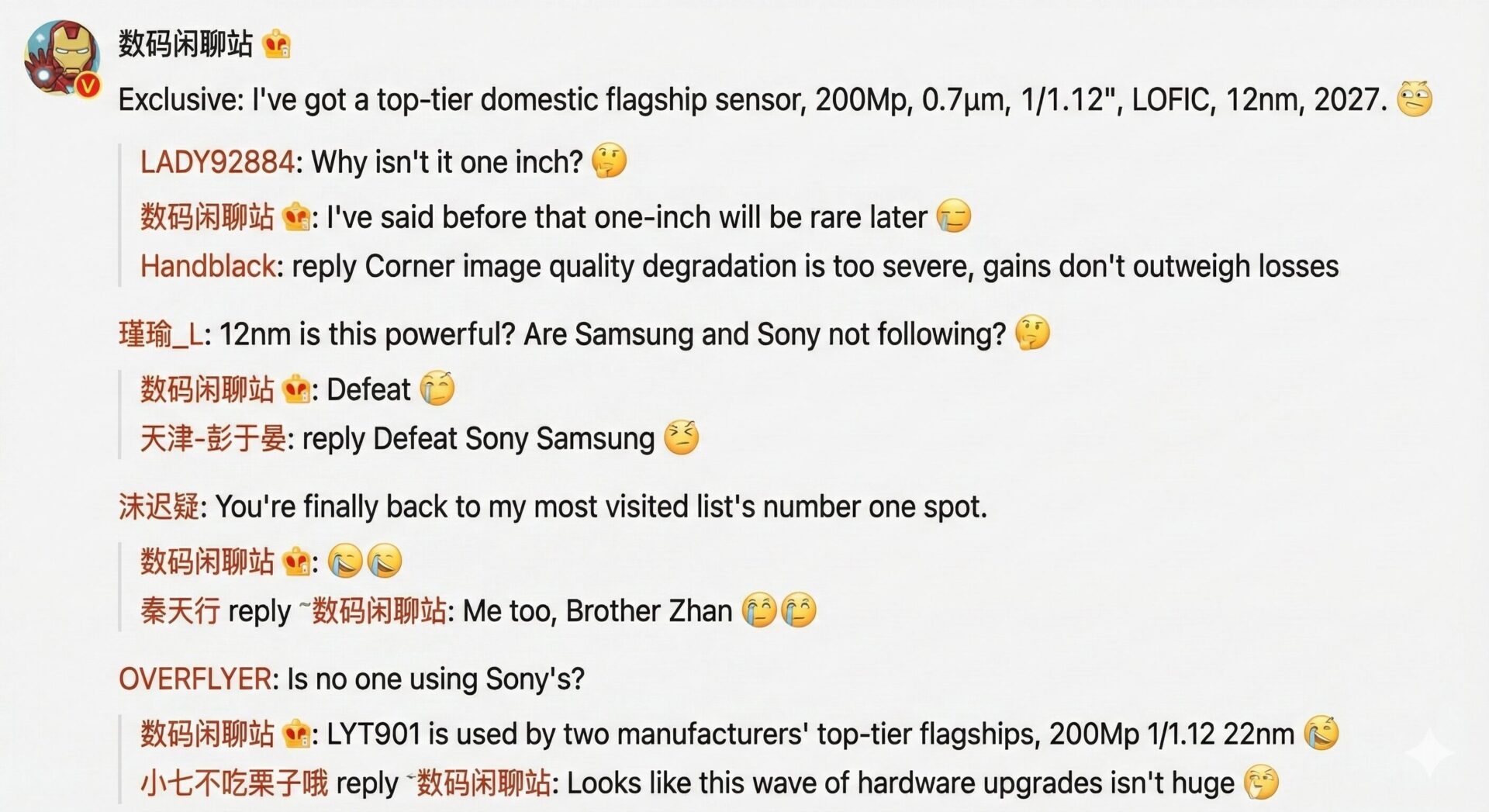
A new domestically developed camera sensor has been revealed, pointing to China’s long-term ambition in flagship mobile imaging. According to a trusted leak, the sensor combines a large 1/1.12-inch format with an ultra-high 200-megapixel resolution and is expected to mature by 2027.
Key specifications shared by the leak
The information was disclosed by well-known blogger Digital Chat Station, who described the component as a “top-tier domestically produced sensor.” While the manufacturer name was not confirmed, several technical details were highlighted, suggesting a clear focus on premium smartphones.
Resolution: 200 megapixels
Sensor size: 1/1.12-inch
Pixel size: 0.7μm
Process: 12nm
Technology: LOFIC (Lateral Overflow Integral Capacitor)
Expected timeline: Around 2027
The blogger also noted that true one-inch sensors remain relatively rare in mass production, explaining why a slightly smaller format is still considered a flagship-class solution.
What LOFIC means for real-world photography
LOFIC technology plays a central role in this sensor’s positioning. Each photodiode is paired with a high-density capacitor, allowing excess photoelectrons to be stored rather than lost when light levels are too strong. In practical terms, this approach improves highlight control and reduces overexposure in bright scenes.
For Xiaomi, which has invested heavily in camera algorithms and Leica-tuned imaging pipelines, such hardware could offer a stronger foundation for HDR processing, night photography, and consistent color reproduction. Combined with Xiaomi HyperOS optimizations, this type of sensor design fits well with the brand’s long-term imaging strategy.
Industry context and Xiaomi’s possible interest
The leak also mentions that two manufacturers are already using Sony’s LYT901 sensor, a 200MP 1/1.12-inch solution built on a 22nm process, in their high-end models. The newly revealed domestic sensor appears to target the same class, but with a more advanced manufacturing process.
While no brand has been officially linked to this component, Xiaomi is widely regarded as one of the strongest candidates to adopt advanced domestic sensors in future flagship devices, especially as the company balances performance, supply chain stability, and innovation.
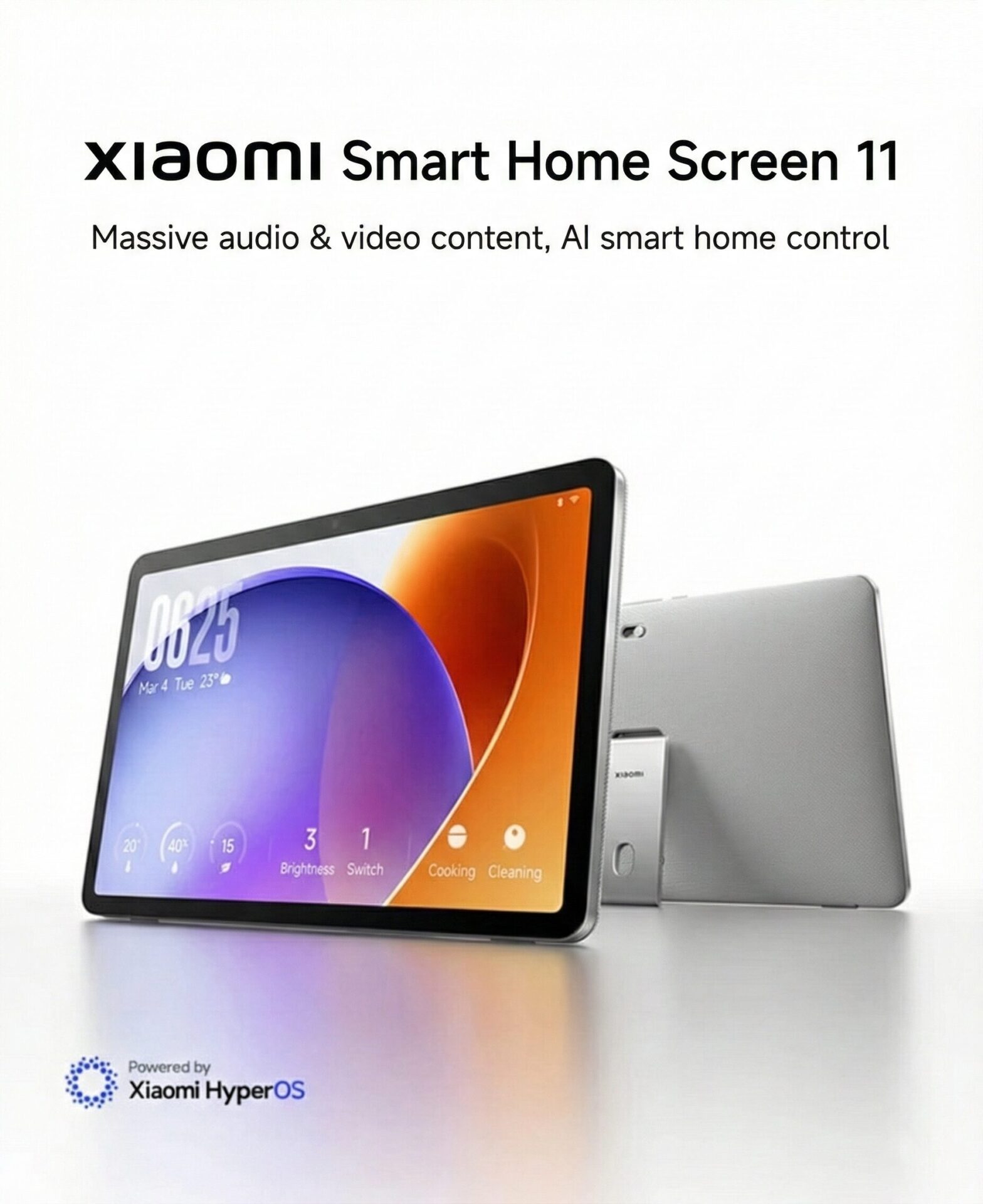
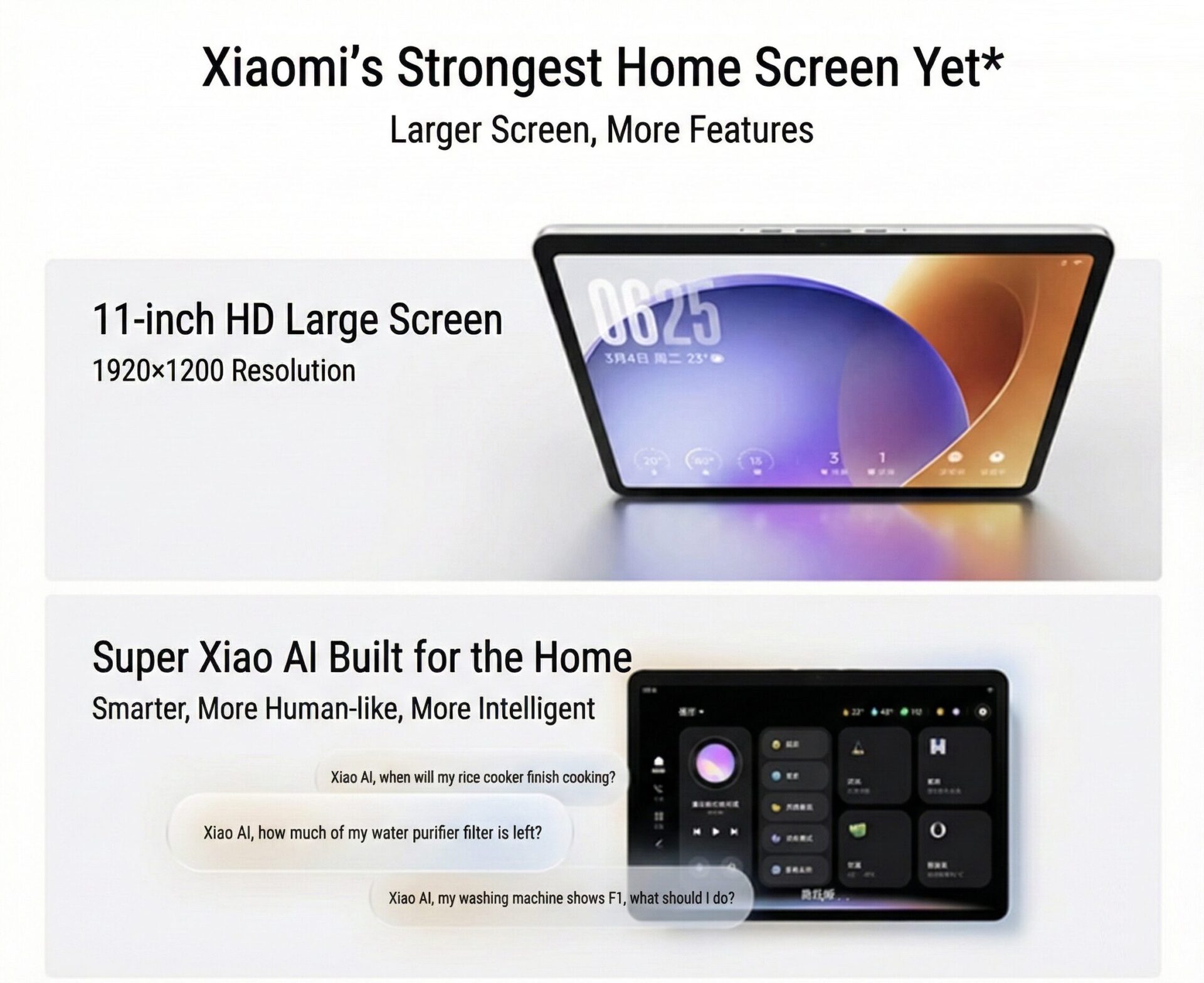
Xiaomi has now officially listed the Xiaomi Home Screen 11 on JD.com, claiming it to be the most capable smart home display from the company thus far. The device is designed to act as a central control hub for Xiaomi smart home products and is expected to make an appearance alongside upcoming flagship devices like the Xiaomi 17 Ultra. As part of Xiaomi’s expanding smart ecosystem, the Home Screen 11 places a massive emphasis on display quality, family-oriented features, and deeper integration with Xiaomi HyperConnect across supported devices. For users who have been following Xiaomi’s smart home strategy, this could be an important launch in terms of home control displays.
Design and Display Features
The design of the frame is made of metal; the accent is made on durability and a clean minimalistic look. From the front, there is an 11-inch LCD panel with the 1920×1200 (1200P) resolution for clear visual display-both at information panels and at playing multimedia content.
The screen supports up to 400 nits of brightness and a 1500:1 contrast ratio, which is right for indoor environments such as living rooms, kitchens, or home offices. Xiaomi has optimized the interface for large-screen viewing, hence making this device able to serve as a family dashboard, digital photo frame, and smart home control center all at once.
Smart Functions and Integration with XiaoAI
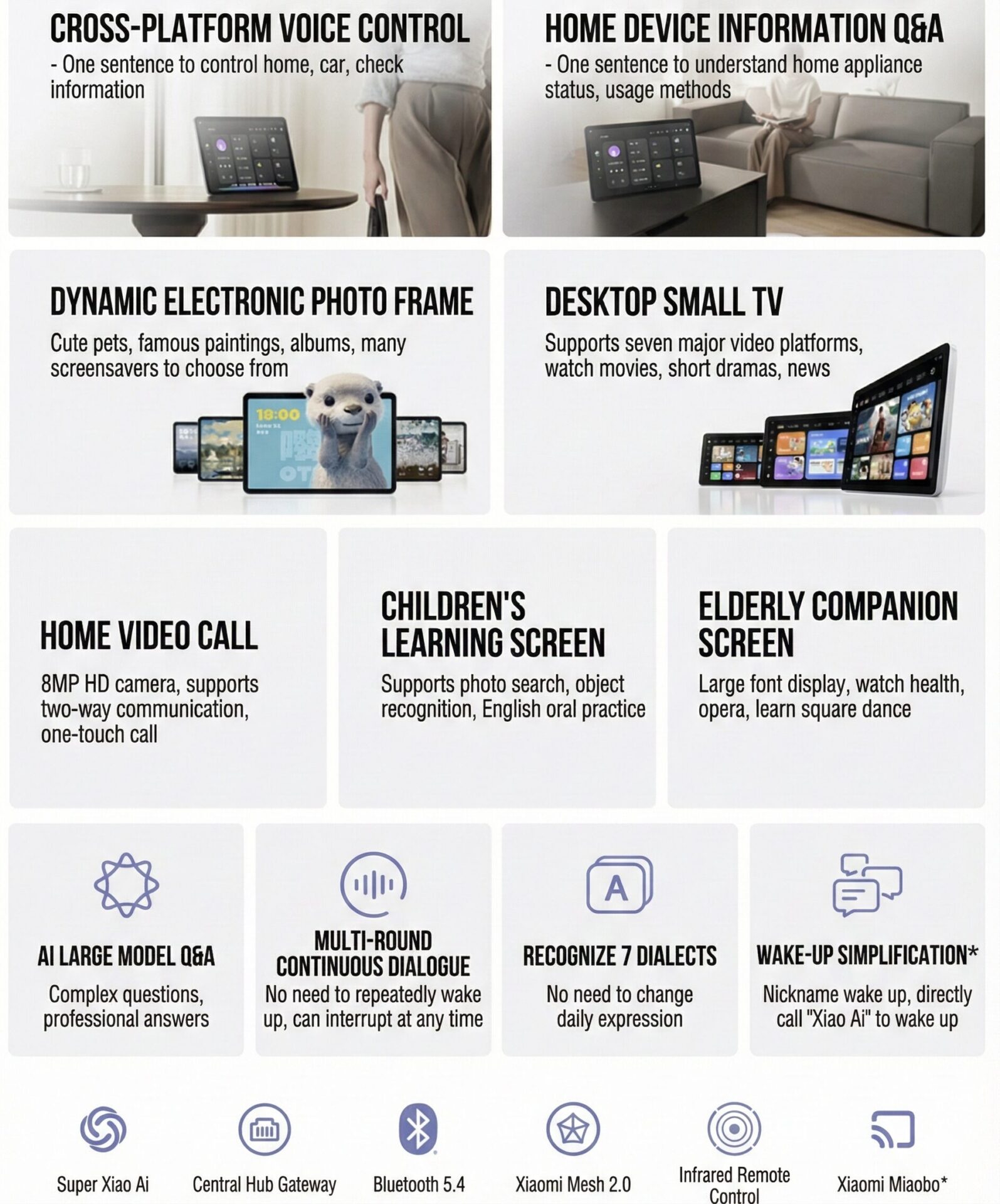
The Xiaomi Home Screen 11 comes right out of the box with several built-in content modes, including a family photo album, displays of world-famous paintings, dynamic wallpapers, and real-time family information panels. These features are all enhancements designed to bring important information into view at a glance.
An 8MP front-facing camera enables two-way video calls through supported apps such as WeChat to help the family keep up with one another. Voice interaction is handled by XiaoAI, Xiaomi’s AI assistant. It should be mentioned, though, that XiaoAI functions are only available in China due to the region-lock service not supporting global markets currently.
Hardware Specifications & Audio System
The device shall be powered by an octa-core processor having 6GB of RAM and 32GB of internal storage. This configuration is aimed at ensuring smooth daily operation, including multitasking between smart home controls, media playback, and video calls.
It houses a quad-speaker system to handle audio output from both high and mid-to-low frequencies. With this setup, the Home Screen 11 becomes capable of functioning both as a control panel and as a capable media playback device for music, videos, and voice responses.
Availability
The Xiaomi Home Screen 11 is currently released only in China, and it is listed on JD.com. Pricing details are listed locally, while there’s no announcement of a global release at this stage.
Xiaomi HyperOS has also broadened lock screen customization to a much larger extent than before. It is no longer restricted to simple wallpaper. The styles are layered and magazine-like. These offer depth effects, dynamic text handling, and intelligent object identification. If one uses a Xiaomi smartphone with HyperOS, they will notice that their lock screen is now a tangible part of the operating system and not merely a still image. In this article, We will elaborate on three HyperOS lock screen styles that are remarkable for their blending of aesthetics and technical talent.
Importance of HyperOS Lock Screen Styles
The lock screen for HyperOS is meant to make effective and efficient use of AMOLED display technology. Also, the company, namely Xiaomi, has some smart algorithms for creating a depth effect on background images, allowing the widget and clock to interact with a photograph.
These are not just aesthetics, as they also reflect Xiaomi’s attention to designing for a system level. Every design is scalable to screen size, resolution, and brightness, servicing all Xiaomi devices.
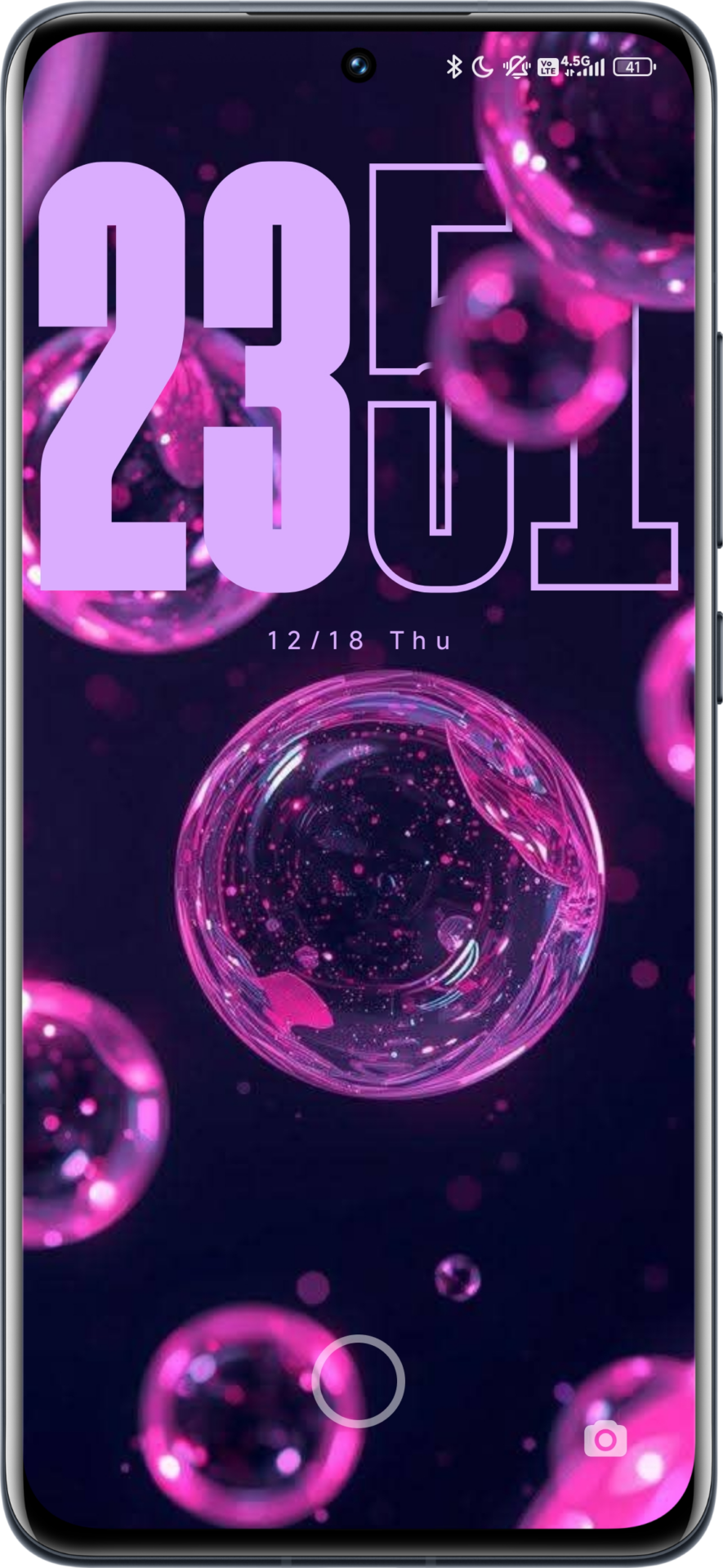
Style 1: Neon Bubbles and Depth Effect
The wallpaper comes with a dark background and abstract neon-colored bubbles, which improves the black brightness and color contrast of AMOLED screens. The clock features a bold font style, HyperOS, with a depth effect, which moves some components of the clock behind other elements displayed in the foreground. The clock features automatic color adaptation, featuring shades of purple that match the colors used in the wallpaper.
Key characteristics:
Contrast ratio for AMOLED displays
Strong depth separation
Clean and modern visual language
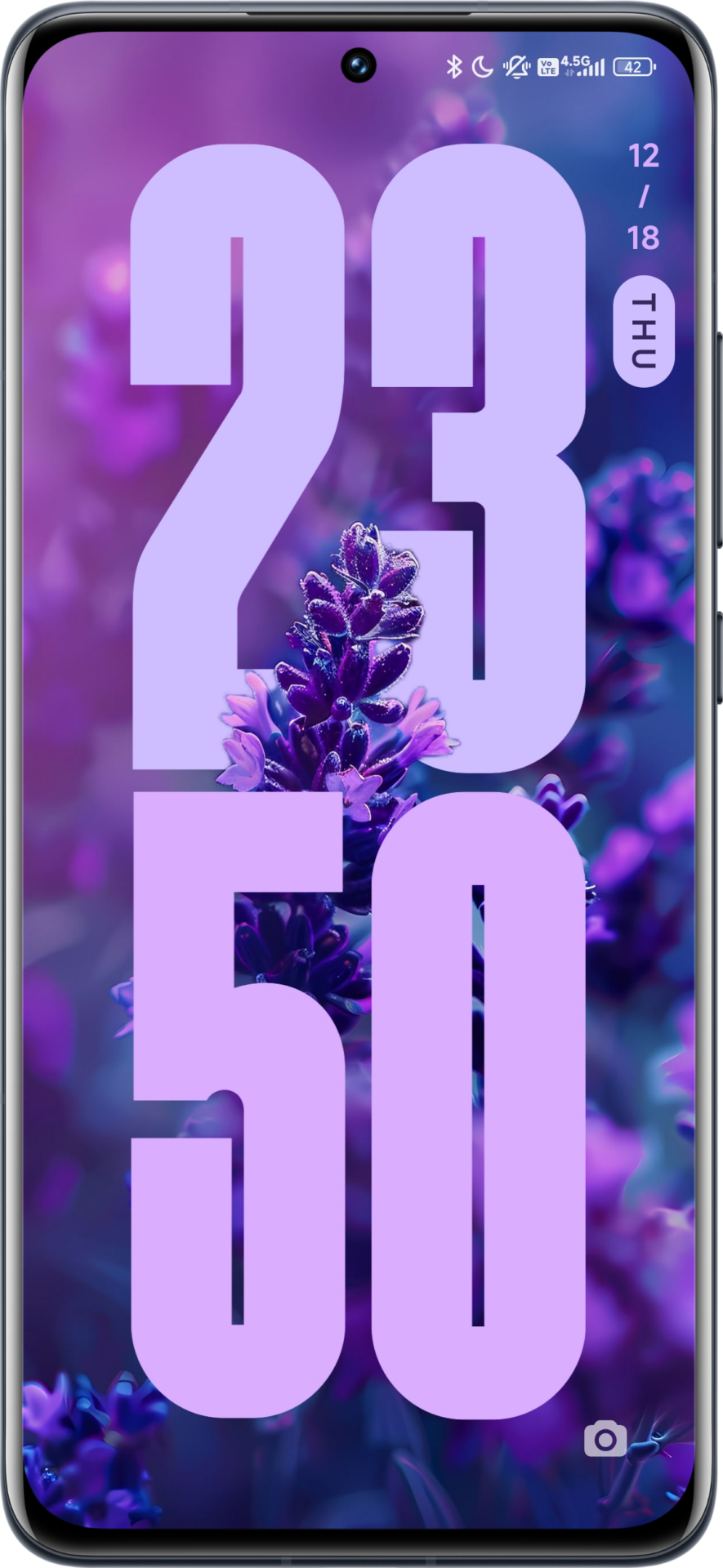
Style 2: Natural Macro with Vertical Layout
This design takes inspiration from editorial magazine covers.
A macro photograph of a lavender flower is paired with the vertical positioning of the clock. HyperOS has the capability to identify the flower stem and petals to overlap them on the clock. The vertical positioning of the time enables proper compositions and still keeps the center point blank. Less usage of colors eliminates the strain on the eyes to make this skin style usable.
Key characteristics: Vertical Clock Alignment
Vertical clock alignment
Advanced object detection
Soft, natural color balance
Style 3: East Asian Landscape with Outline Clock
This design combines traditional views with limited typography.
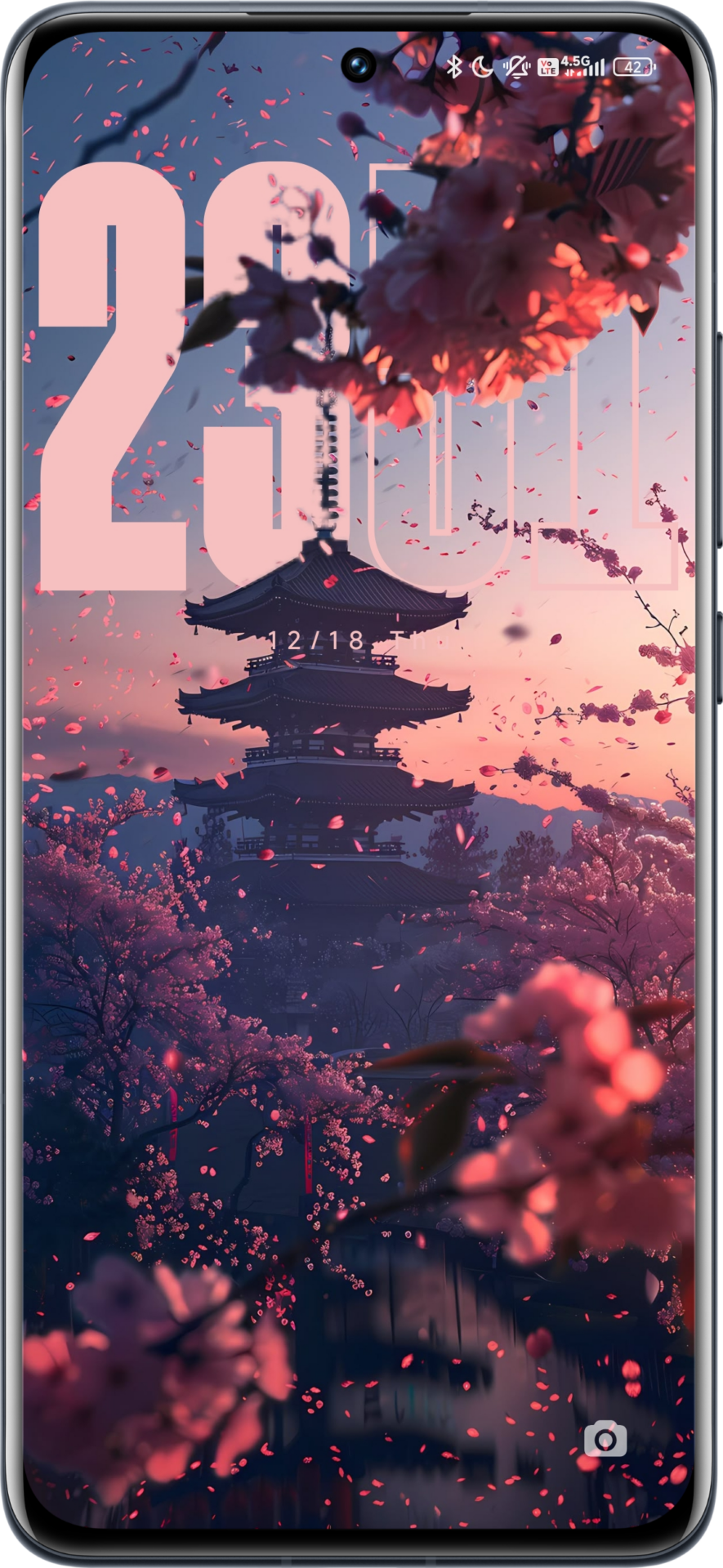
The background on the paper has a pagoda with East Asian cherry blossoms themes painted during sunset. Because the picture has a lot of details, HyperOS applies the use of an outline font on the clock instead of a fill font. This creates a better effect where the time will be visible without hiding the details. Transparency and white outlines are applied for the same effect. Key characteristics:
Outline clock design
Layered foreground elements
Balanced readability on complex images
Final Tips for Xiaomi Users
The lock screen options for each style are also managed inside the framework and do not need any additional themes. Just need wallpapers. Xiaomi system applications pertaining to themes and customization can be updated using the site HyperOSUpdates.com, while the MemeOS Enhancer app on the Google Play Store enables the access to hidden features, system app updates, and more on Xiaomi.
The world of semiconductors is on the cusp of a new cost-oriented cycle, and it also impacts the world of smartphone memory. Since the end of 2025, the prices of NAND flashes have risen dramatically. This means that many companies, including the likes of Xiaomi, have had to rethink the default memory setup of their smartphones. Today, high-end premium phones still thrive when it comes to memory performance. But the truth is, value segment and mid-range phones are also feeling the pinch of less memory space. This marks the onset of a very old debate: might the memory card slot make a comeback in the world of smartphones?
Semiconductor Supply Pressure and NAND Price Volatility
The main factor that leads to fewer internal storage choices is not the brand but the supply chain factor in the memory market. The current AI server market and enterprise-class SSDs consume a considerable amount of NAND market production. The result is less consumption for consumer products.
Consequently, prices of NAND flash went up by as much as 60% in late 2025 to early 2026. For smartphone makers, memory costs rank among the top three cost drivers, alongside display panels and chipsets. For cost-conscious segments, this typically translates to lower base storage rather than higher retail prices.
In the case of Xiaomi, as they are competing very aggressively in markets with focus on pricing offerings, it is very important for them to maintain competitive pricing as well as performance. That’s why storage options arebeing adjusted and not increased.
Why MicroSD Is Being Spoken About Again
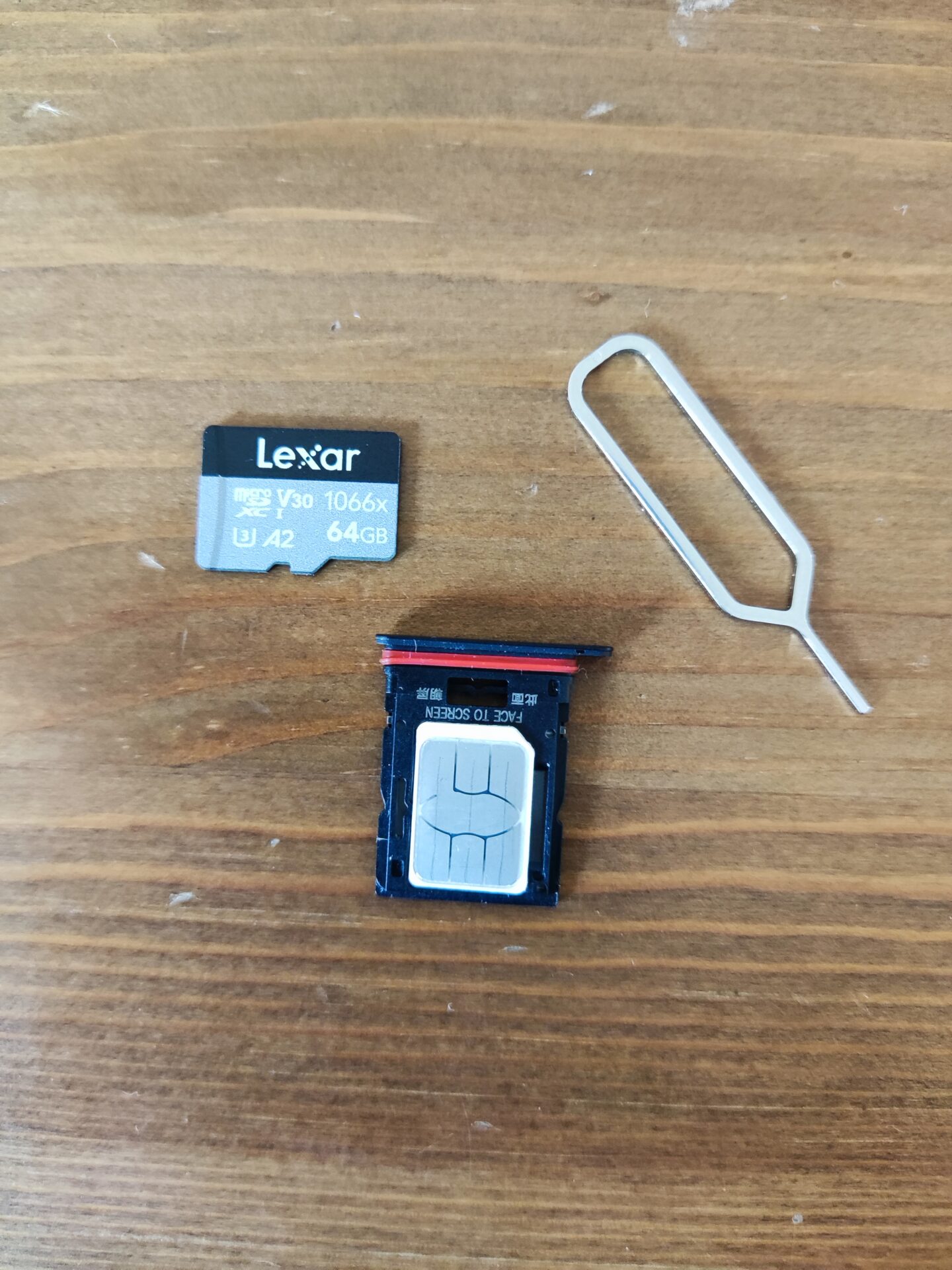
The reason for a renewed focus on microSD support is purely an economical one and lacks any elements of nostalgia. The presence of an external memory option means that companies can offer less internal memory to consumers but still give them some versatility.
Users requiring extra storage capacity are able to upgrade on their own
Entry prices are constant for competitive markets
Such methods may find use in budget offerings from Xiaomi, particularly where the storage of offline media content could continue to hold importance. The same does not necessarily lead to the full-scale return of the expandable storage facility.
Technical Limits of microSD in Modern Smartphones
However, some challenges would need to be addressed before thinking of a comeback. This will be followed by an introduction of the technology in use by today’s smartphones. Smartphones these days use UFS storage in order to enable quick app launches, smooth operation of the
More recent SD Express standards, which offer higher speeds, also bring problems to the table:
Higher power consumption
Increased heat generation
Lower random read/write performance compared to UFS
Complex motherboard integration
In the case of Xiaomi flagships and performance-centric models, such requirements are opposed to slim designs, batteries with good autonomy, and stable system response. This explains why expandable storage is no longer found in flagship models.
Software and Ecosystem Considerations
Today’s Android storage architecture is also limiting microSD card functionality. Modern versions of the operating system do not allow external storage to contain application installations or system-level functions for security and performance reasons.
The majority of today’s applications emphasize internal UFS storage, but microSD cards are only used for media storage. In user-experience terms, this diminishes the use of expandable memory in the device.
With that being said, cloud integration and cloud storage subscriptions are gaining traction. The likes of Xiaomi are aligning their software offerings with long-term value, not immediate hardware upgrades.
Market Reality: Where microSD Could Still Survive
Analyzing the latest trends, microSD card support is no longer a basic function. It exists only in the following niches:
Entry-level smartphones
Models requiring high offline usage volumes per region
Professional or specialized equipment for media workflows
For Xiaomi, this means a tactical approach rather than a full comeback. Expandable internal storage may feature in budget offerings, while mid-range as well as flagship phones will depend on faster internal storage solutions along with cloud storage.
Long-Term Forecast for 2026 and Beyond
Between 2026 and 2030, three possible future scenarios emerge:
Cloud storage becomes the primary storage choice for most people
Entry-level phones continue to use microSD in order to keep costs lower.
The latest flagships have completely done away with the option of Xiaomi will keep focusing on integrating price, performance, and ecosystem development. The rising price of memory may affect the layout, but it wonkeys reverse the trend in any way.
Xiaomi teems with a new strategy which transcends merely improved hardware technology and cameras. The comeback of the Leitz Phone brand indicates a new era in the branding strategies of both Xiaomi and Leica in the high-end line of smartphones. Observing the previous trends in the market with models such as Xiaomi 14 Ultra and Xiaomi 15 Ultra, it can be ascertained that photography lies at the foundational stages of high-range Xiaomi phones. However, with Leitz re-entering the fray, it appears as if Xiaomi plans to give importance to brand history as well. This article will observe the possible reasons behind Xiaomi’s act, earlier uses of Leitz phones, and their impact on the international market.
The Leitz Name: More than Leica Branding
Prior to examining Xiaomi’s role, it is necessary to clarify why Leitz is important. Starting with a complete history of Leica requires a description of Ernst Leitz and his founding establishment, which initially originated in Wetzlar, Germany, as a traditional optical firm. The use of “Leitz” as a brand over “Leica,” which originates as Leitz Camera, promotes its roots and history over popular awareness.
Such a distinction is very important. Leica as a brand license exists in the mobile industry in general; however, “Leitz” with greater control of philosophy and products is reserved for initiatives in which Leica is involved. In the case of Xiaomi, alignment with “Leitz” is less about visibility and more about credibility in the “luxury and professional imaging segment.”
Old Leitz Phones: Purpose and Background on Manufacturing
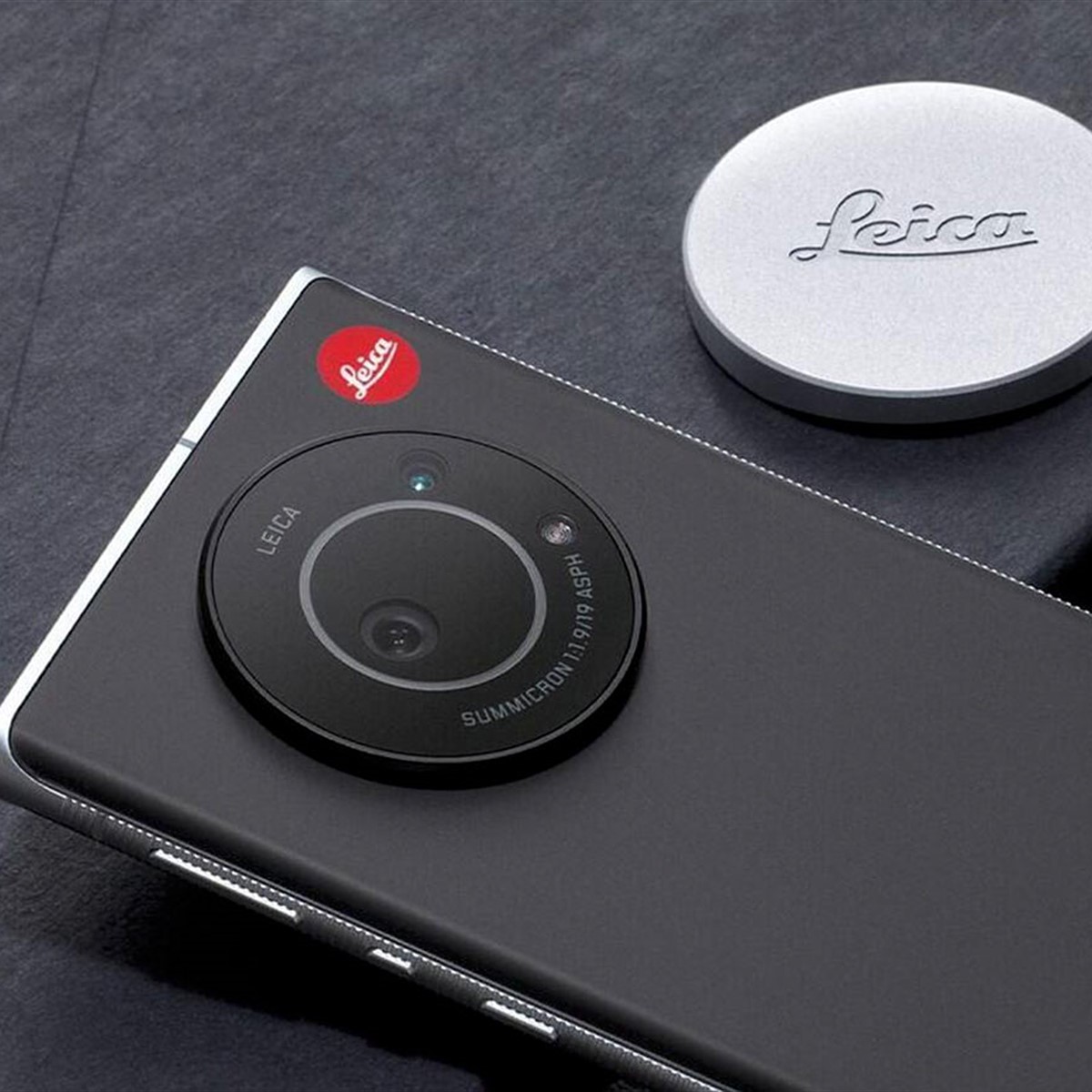
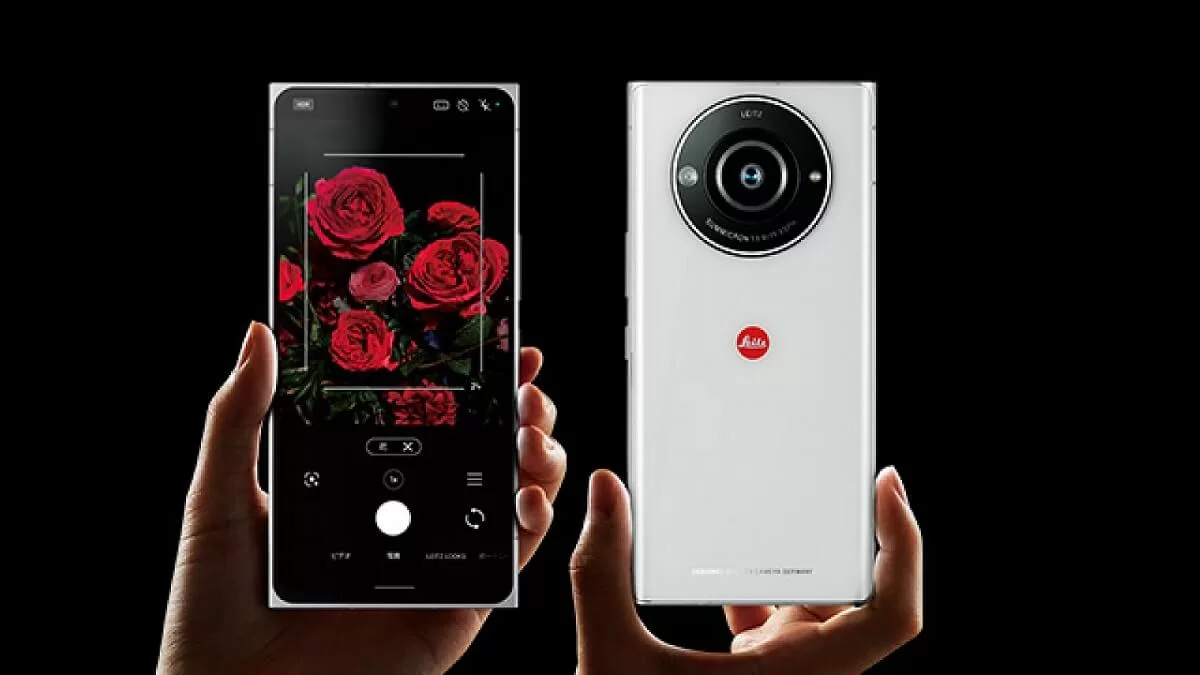
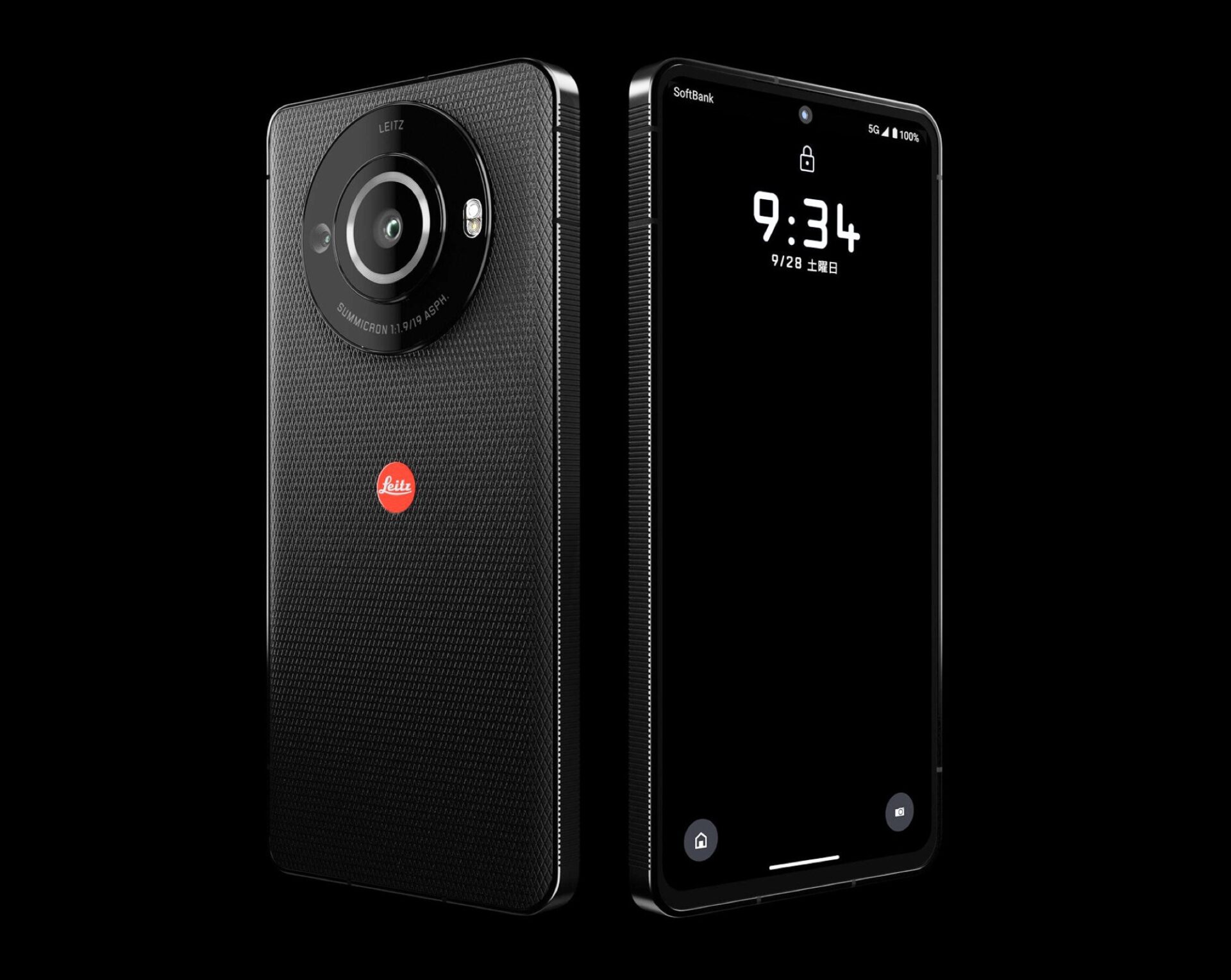
The Leitz Phone 1, Leitz Phone 2, and Leitz Phone 3 were never intended to be mass-market global products. Those phones were made purely within the Japanese market and were manufactured by Sharp, who is known to integrate advanced display and sensor technology.
Leica had partnered Sharp as its technological partner before the arrival of Xiaomi because of the following reasons:
Sharp had relevant experience with 1-inch image sensors in mobile phones.
Its IGZO OLED panels supported high refresh rates with excellent power efficiency.
The Japanese market welcomed limited and premium operator-exclusives without international pressure.
These Leitz Phones were only available at SoftBank Japan. The aim was not to gain a market share but to test the limits to which the concept of a camera could be stretched in a mobile phone body.
Why Xiaomi is Becoming the Focus of the Leitz Strategy
But after 2022, the mobile strategy of Leica changed dramatically. The collaboration with Xiaomi progressed from simplified camera adjustments to a more extensive “co-creation approach,” from the “Xiaomi 12S Ultra” series onward. This partnership gave Xiaomi the essential thing Leica needed but did not have: the global manufacturing capacity of Sharp.
For Xiaomi, the Leitz concept resolves the long-existing problem. Even with excellent hardware and cost advantages, there remains a constraint on the luxury feel for the brand in the price range above $1,000 USD. In the current segment, the story becomes almost equally important as the hardware specifications. In the current technology era, there remains the constant challenge of perfectly capturing the images. For the customers, the first impression plays the most crucial part. The initial first impression for the customers will be created based on the product box,
Strategic Rationale for Xiaomi’s Decision to Launch the Leitz Phone
Brand Elevation with Preservation of Xiaomi Brand
Instead of using the Xiaomi brand, one should expect a ‘Leitz Phone powered by Xiaomi’ format. Thus, Xiaomi gets to remain in the limelight, while Leitz gets to own the emotional and cultural associations. It is almost akin to what one finds in automobile and watch brands.
Effective Product Segmentation
“Standard Ultra” models shall continue targeting high-end mainstream consumers as before. A “Leitz” branded line fills a distinctive niche for:
Professional photographers
Collectors
Imaging-centric usage patterns compared to general performance.
It helps prevent confusion while adding more to Xiaomi’s offerings to higher categories.
Globalizing a Concept Originally Local in Scale
The Old Leitz Phones were restricted to Japan. With Xiaomi’s entry, Leitz goes from being a regional experiment to a global ultra-premium category, which could be accessible in Asia and Europe.
Expected Technical Specifications of a Xiaomi Leitz Phone
Even though there are no official specs, some industry figures suggest a device that is largely consistent with a new Ultra generation:
Processor: Snapdragon 8 Elite Gen 5
Software: Xiaomi HyperOS with Leica-optimized image processing pipeline
Camera: 1-inch main sensor featuring the latest dynamic range
Optics: Telephoto lenses APO certified by Leica to suppress chromatic aberrations
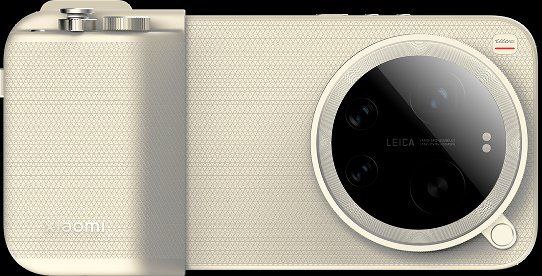
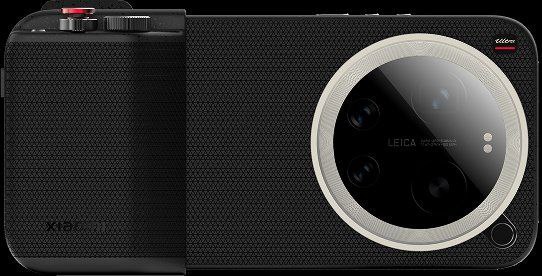
Design: Ceramic and textured finishes, possibly with physical camera accessories While the older Sharp models emphasized a single camera approach, it is likely that Xiaomi’s phone will harmonize flexibility and purity in a single camera.
Sharp-Era Leitz Phones Compared to Xiaomi-Era Leitz Phones
Market scope: Japan-only vs global
Production scale: Limited vs mass premium production
Software support: Stock Android vs long-term HyperOS updates
Imaging approach: Minimalist vs multi-camera professional system
This makes it clear that Xiaomi is not substituting the traditional thought, but extending it.
Long-Term Effect of Xiaomi on the Industry and the Company
Xiaomi’s involvement in Leitz Phones is not a temporary form of marketing. Instead, it is an embodiment of a larger goal that wants Xiaomi to also contend at a highly symbolic level when it comes to electronics. This move could go on to shape how other brands formulate strategies related to collaborations that involve heritage. As a brand, Xiaomi is focusing less on numbers with the Leitz Phone and more on perception, impact, and learning that it is possible to embody technology and history simultaneously.
Battery health has become a critical topic for active Xiaomi users in modern times, considering the trend of thin designs and extremely fast charging speeds, among others. This also extends to the wide ecosystem of devices from Xiaomi, Redmi, and POCO; poor battery health is a result of how well heat generation is contained, good charging behavior is observed, and chemical aging of cells occurs over a long period of time. These help a user understand how they can protect battery health while enjoying features such as HyperOS, HyperCharge, and high-refresh-rate screens.
Why Temperature Is the Fastest Killer for Xiaomi Phone’s Battery
The most damaging factor for lithium-ion batteries used in Xiaomi smartphones is definitely heat. Higher temperatures chemically accelerate unwanted reactions inside the battery cell, thus reducing capacity. The ideal operating range for smartphone batteries is between 10°C and 35°C. Spending too much time above this range seriously diminishes battery lifespan.
One of the common sources of heat is heavy usage during charging. Gaming or resource-intensive application usage during charging creates a “dual load” scenario. The phone is charging and discharging simultaneously, heating it up internally and causing the battery to go through micro charge cycles repeatedly. This kind of behavior, over time, eats into the limited charge-cycle lifespan of a battery considerably faster than normal daily use.
Another underestimated heat source is high screen brightness. Using the phone outdoors at maximum brightness, especially on OLED panels with high peak luminance, raises overall device temperature. This heat slowly transfers to the battery, bringing long-term degradation even if it feels only warm to the touch.
Fast Charging and HyperCharge: Convenience vs Longevity
One major invention by Xiaomi is its HyperCharge technology, which comes in variants of 120W and even 210W, and manages to reduce charging time below 20 minutes. This system is based on advanced power management chips combined with dual-cell batteries and the use of improved cooling materials. According to official data, Xiaomi reports that these batteries retain a capacity of about 80% after hundreds of cycles.
However, frequent use of ultra-fast charging still puts higher electrical and thermal stress on the battery cells. The most intense stress occurs during the first half of charging, with the highest current and peak heat generation. While HyperOS intelligently slows down charging after around 80%, daily reliance on maximum charging speeds can slowly accelerate the battery aging process more quickly.
A balanced approach is favored by many expert users. Charging overnight occurs with slower chargers like 18W or 33W, while HyperCharge comes in for urgent situations. This approach decreases the total heat exposure and can let the battery health last longer.
Silicon-Carbon Batteries: Higher Capacity, New Challenges
Newer Xiaomi phones, including recent flagships, are moving to silicon-carbon battery technology. In such a design, higher energy density is facilitated, thereby making room for larger battery capacities without needing to increase the thickness of the device. This is an absolute plus in terms of daily usage time; however, it creates new mechanical challenges.
Silicon expands much when storing lithium ions. Whereas conventional graphite anodes expand modestly, silicon can expand several times more. Xiaomi solves this by embedding silicon within a carbon structure, but some mechanical stress still accumulates over long-term use. This means that, even with careful usage, these batteries might show noticeable capacity loss after two or three years.
That does not mean the technology is unreliable; rather, temperature control, consistent charging habits, and avoiding physical stress like drops or extreme changes in temperature are important.
Software Factors: HyperOS and Background Power Use
Of course, battery life is a function not only of hardware but also of software behavior. In going from MIUI to HyperOS, Xiaomi implemented updated power management algorithms at the system level. Following major OS updates, it usually happens that users have felt battery drain increased; this has been normal and generally a consequence of background optimization processes such as app re-indexing and system compilation.
These processes take a few days to stabilize. In later stages, the intelligent app sleep feature and adaptive performance profiles make the HyperOS features not only control performance but also increase the efficiency in the long run. AI-based features might be power-consuming for the first few days but are designed in such a way that they optimize usage patterns with the passage of time.
Pre-installed system services are not an exception. Services running in the background constantly sync data or provide recommendations. Though normally lightweight, an excessive number of background activities increases overall energy consumption. Using HyperOS, it is easily possible to control permissions for background activity and to put a stop to superfluous action without influencing system stability.
Display, Connectivity, and Signal Stress
Higher refresh rate monitors, such as 120Hz or even above, show smoother visuals but force the GPU to work more often. It uses more power and heats up more while in sustained use. Adaptive refresh rate settings do mitigate the impact by reducing refresh rates with static content.
The case of connectivity is another factor. Forcing the modem to work harder when operating on 5G networks in areas of weak signal strength increases both power draw and heat output; switching to 4G can noticeably reduce battery drain and temperature.
How Xiaomi Protects Battery Health
Xiaomi has built-in a number of features to minimize the speed of battery degradation. Battery protection modes prevent charging beyond about 80%, thereby reducing voltage stress and prolonging overall cycle life. Smart charging learns user behavior and completes charging close to wake-up time, minimizing time spent at full charge.
This bypass charging is also supported on some gaming-oriented Xiaomi and POCO devices. Essentially, the power directly heads to the motherboard when one is gaming, completely bypassing the battery. This reduces heat build-up and conserves charge cycles.
These practices do not restrict daily use but minimize long-term chemical and thermal stresses on the battery significantly.
Based on technical analysis, excessive heat is the primary factor that shortens battery lifespan in Xiaomi phones. Charging under load, high ambient temperatures, and sustained high brightness contribute most to degradation. Frequent ultra-fast charging and deep discharge habits follow closely behind. Software-related drain is usually temporary and manageable through system optimization.
As Xiaomi continues to push innovation with higher charging speeds and new battery materials, user awareness becomes increasingly important. Balanced usage habits remain the most effective way to ensure stable battery performance over several years.
The Xiaomi 17 Ultra is definitely a sharp turn in developing mobile cameras and shifting the focus from heavy software processing back to optical quality. Introducing a Leica APO-certified telephoto lens coupled with a 200MP sensor, Xiaomi aims at essential image accuracy rather than fixing images through post-processing. This strategy is in line with the long-term imaging strategy and extensive partnership with Leica.
What is Leica APO technology?
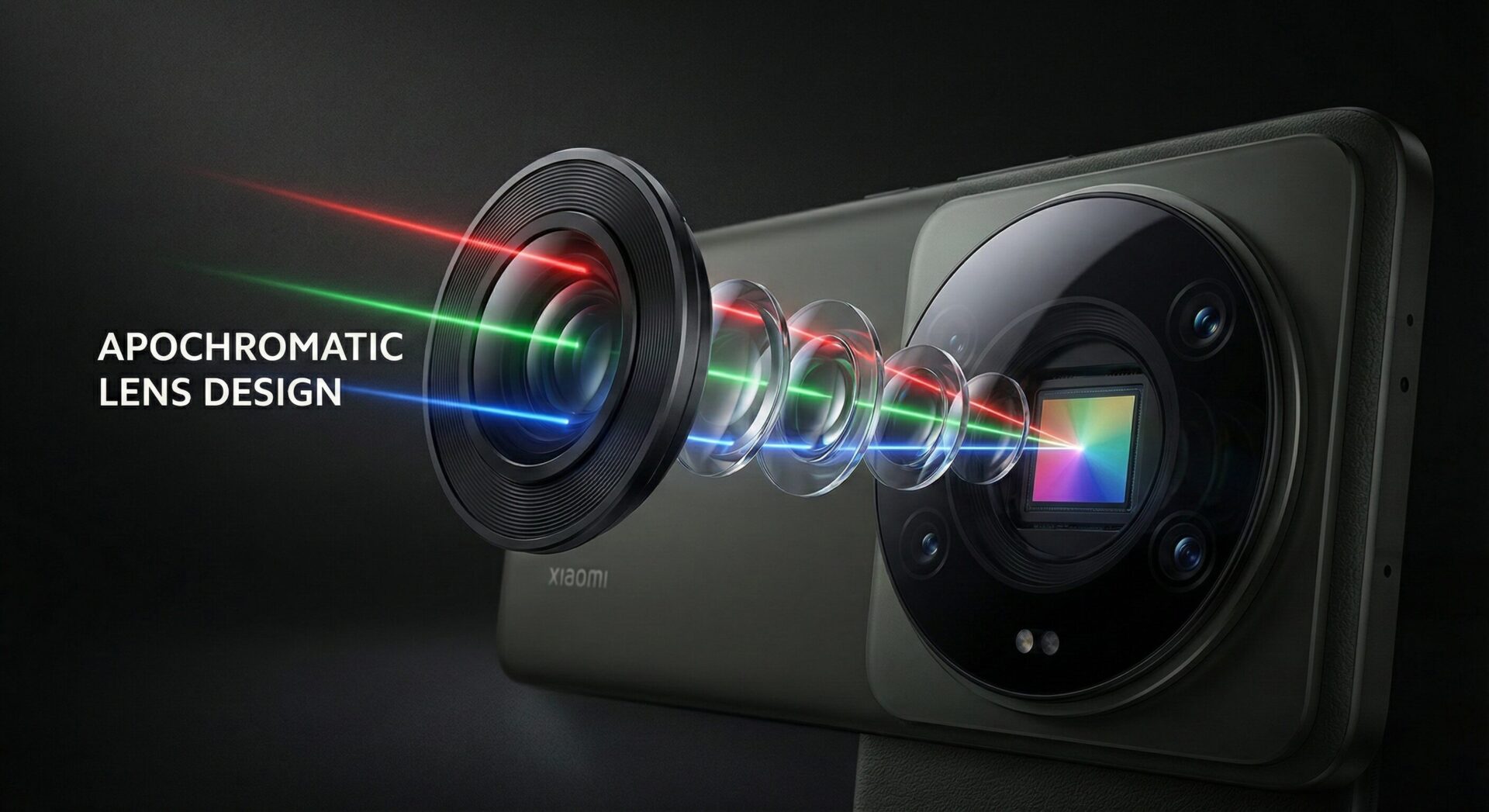
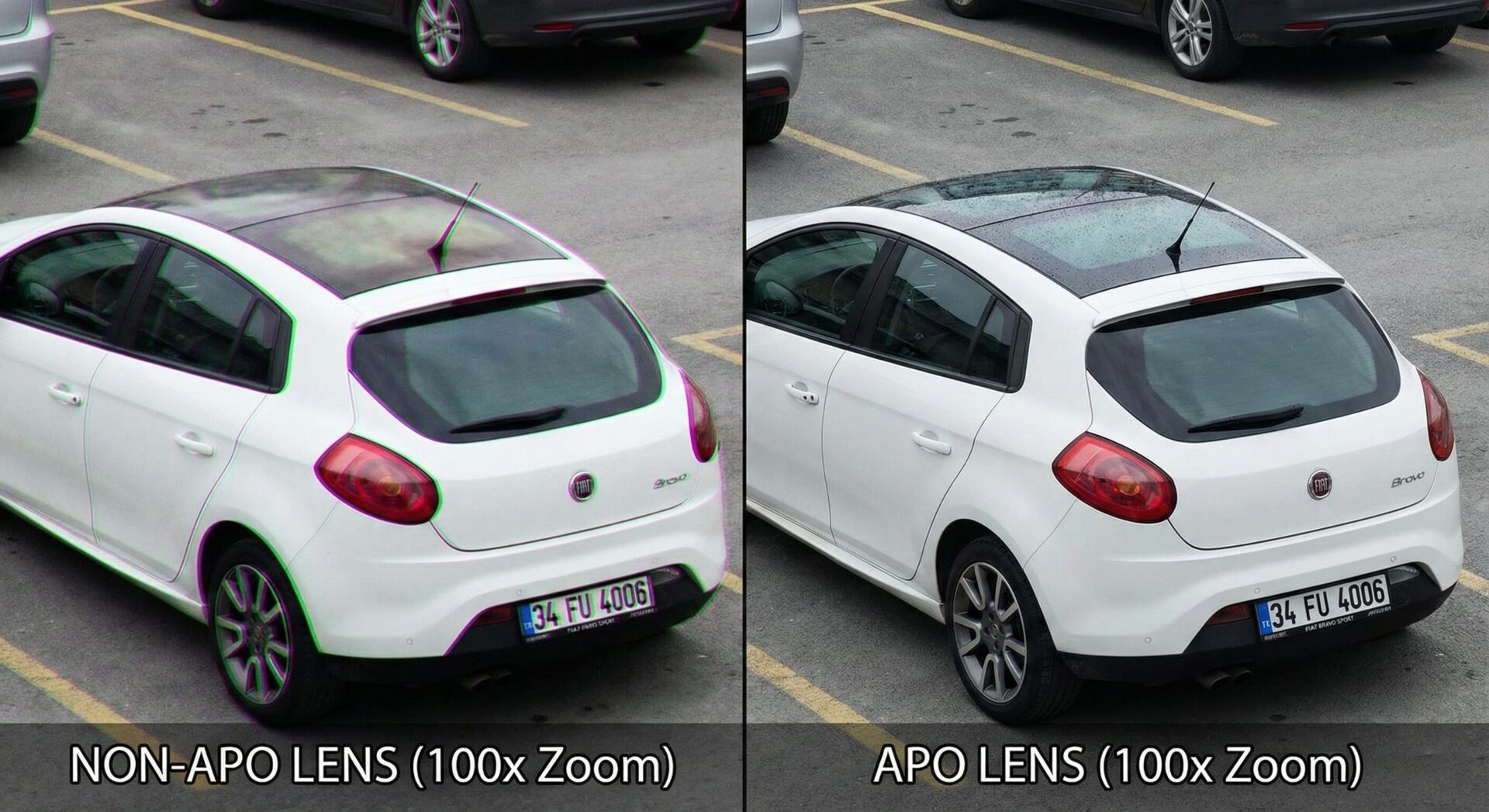
Leica APO stands for apochromatic lens design, which is a very high optical standard for a smartphone. The main goal of such a design is to correct color dispersion at the physical lens level, even before light reaches the sensor.
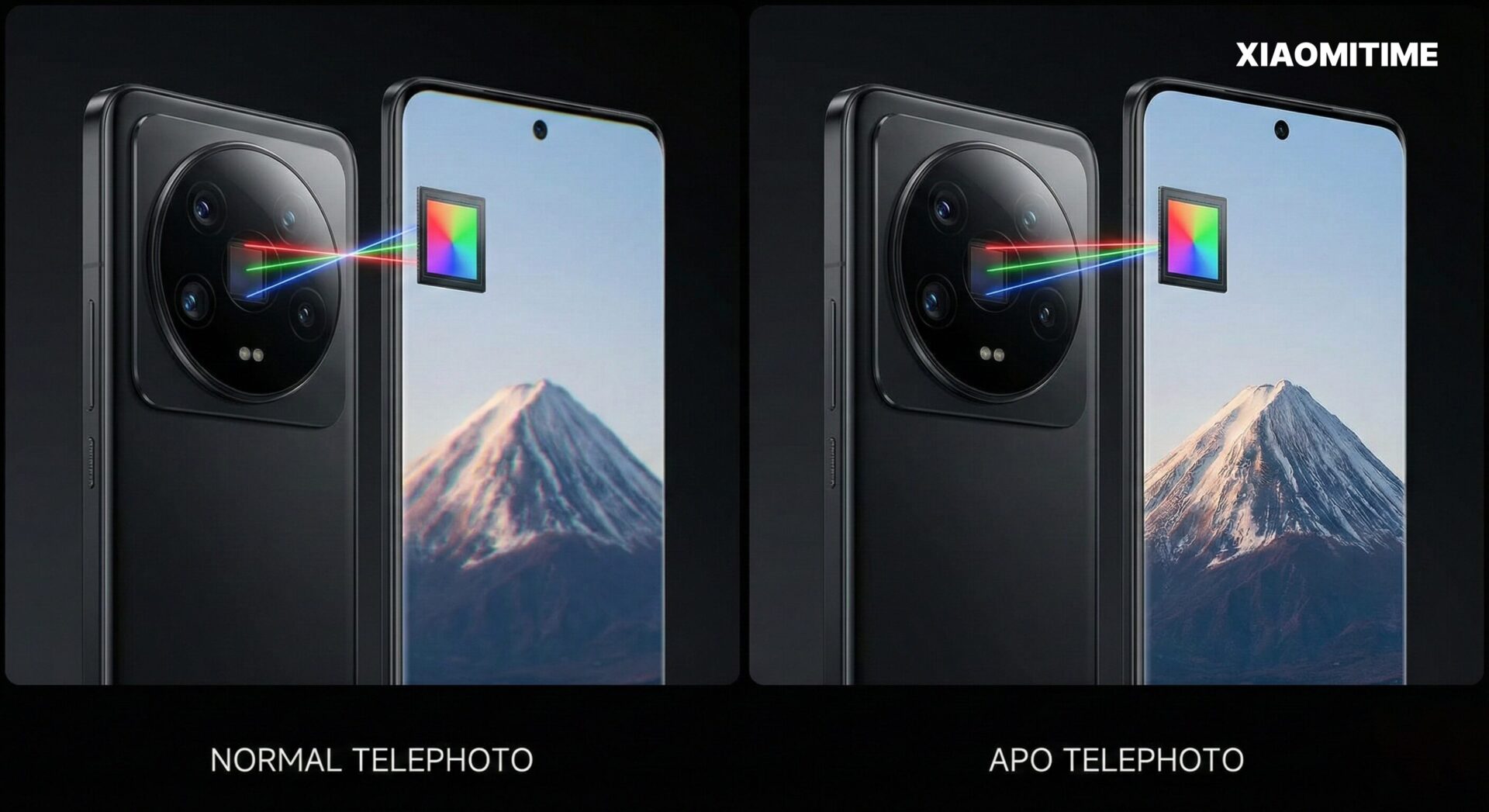
In standard lenses, different colors of light are focused at slightly different points. This results in color fringing, especially around high-contrast edges. Leica APO lenses are engineered to bring red, green, and blue light into a single focal plane. Thus, images show cleaner edges, higher micro-contrast, and more accurate color rendition without relying on software correction.
APO vs. Standard Mobile Telephoto Lenses
Standard telephoto lenses employ an achromatic design, which corrects only two colour wavelengths. The famous brand Leica aligns three principal wavelengths by APO lenses, ensuring minimal chromatic aberration.
Optical Structure-How Different is Xiaomi 17 Ultra?
And the Xiaomi 17 Ultra does not rely on older W-type or traditional L-type periscope designs alone, but introduces a floating APO telephoto structure optimised for large sensors.
First, before going into details, it should be noted that the structure of a lens directly influences light efficiency, focus range, and image consistency.
Feature
Normal Lens (Achromatic)
APO Lens (Apochromatic)
Color Focusing
Brings 2 colors (Red/Blue) to a common focus point.
Brings 3 colors (Red/Green/Blue) to a common focus point.
Edge Quality
Purple/Green fringing (Chromatic Aberration) may be visible.
Edges are clean and colorless (fringing-free).
Sharpness
Good, but can look soft at 100% zoom.
Very high, razor-sharp clarity and contrast.
Cost & Build
Cheaper and easier to manufacture.
Much more expensive, heavier, and uses complex glass elements.
Key Structural Advantages
Single optimized prism path reduces the light loss often found in older multi-reflection systems.
Floating focus mechanism enables precise focusing from long distances down to close-range macro shots.
High light transmission: To accord with consistent image quality in both day time and low-light scene scenarios.
This design will improve optical efficiency without sacrificing the compactness of the module to a factor that would not fit in a smartphone.
200MP Sensor Integration and Image Quality
Meanwhile, the APO lens of Leica in Xiaomi 17 Ultra works together with a 200MP Samsung ISOCELL HP9 sensor. This is indispensable, as the ultra-high-resolution sensor takes extremely tight optic tolerance.
For normal shooting, the sensor employs pixel binning to boost sensitivity to light. With its large resolution, it’s sensor-level cropping instead of digital enlargement when zooming is used, which preserves more detail and avoids many common zoom artifacts. Practical Benefits for Users Smaller color fringing – cleaner images
Consistent sharpness at all focal lengths
Natural color profile according to Leica’s imaging profile
Improved telephoto performance under low lighting conditions
APO Leica: Why It Matters for Mobile Photography
Equipped with Leica APO technology, the Xiaomi 17 Ultra delivers images with a more optically clean look rather than a heavy, digitally enhanced taste. The reduction of aggressive software correction can allow pictures to maintain more natural textures and color balance.
This technique does provide much better consistency between the main camera and the telephoto camera, one of the general weaknesses for many smartphones.
The Leica APO telephoto system on the Xiaomi 17 Ultra means a significant step toward mobile imaging. Not stuck between higher megapixels or stronger algorithms, Xiaomi has invested in optical precision down to the level of hardware. Combined with a 200MP sensor and advanced lens structure, this provides much clearer colors, higher detail, and more reliable zooming. Equally, the Xiaomi 17 Ultra sets a very strong reference point for users looking to understand what camera-focused smartphones are capable of in their modern iterations.
Xiaomi is working to revamp the T series, and rumors now indicate that the Xiaomi 17T Pro may feature an 185Hz display, which is a significant change for this series of smartphones. The firm launches one variant of the T series every year, but with recent models, innovation was less of a focus and instead emphasized improvements to existing models. According to rumors in the industry, Xiaomi may now react to competition by targeting high refresh rate displays in their offerings.
Display Trends Influence Xiaomi’s Decision on 185Hz Panels
Recently, a refresh rate of 120Hz was quite ideal in terms of smooth performance and power consumption. However, phone manufacturers are trying to push the boundaries further in order to attract more gamers to their offerings. Samsung is already leading this change, creating a new norm that might give a tough time to its competitors in the market.
A 185Hz display is not directed at general use as its primary purpose. Rather, it’s useful in competitive gaming environments, where the lack of motion blur and quicker touch response times may serve as a tangible advantage. In the case of Xiaomi, introducing this type of display into their offerings will have less to do with necessity and more with staying competitive within the flagship mid-range market.
According to leaks, Xiaomi will use a 165Hz display on the REDMI K90 Ultra. The Xiaomi 17T series will be a device built on top of the REDMI K90 Ultra and may also come with a 165Hz screen. However, it would be more appropriate to come with a 185Hz screen to satisfy users.
Already Competitors in Something Beyond 165Hz
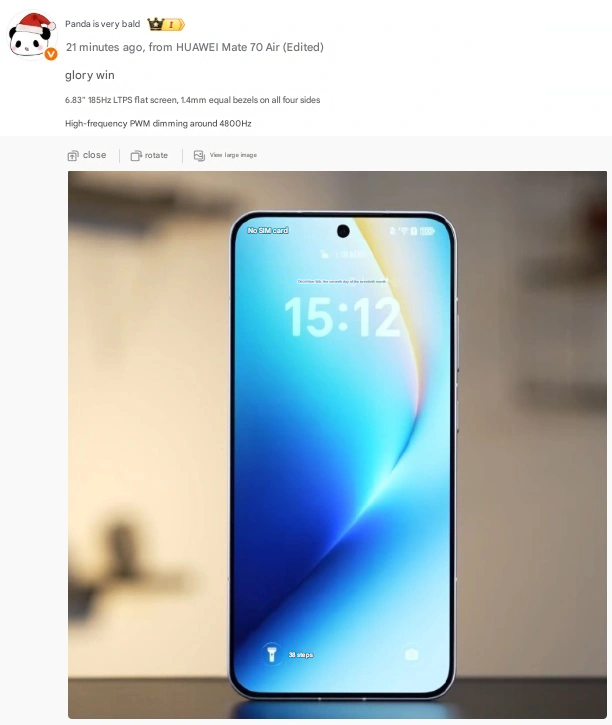
Several upcoming phones demonstrate just how rapidly this trend is maturing. Honor’s lineup of “WIN” phones promises to arrive with a flat 6.83-inch 185Hz LTPS display, with symmetrical bezels at just 1.4mm, and PWM dimming at an industry-leading 4800Hz. OnePlus has been rumored to be developing the Ace 6T phone with a screen refresh at 165Hz, slotting in just below the new norm.
Leaked information also reveals Samsung to be developing a gaming-focused mobile phone with the Snapdragon 8 Elite platform and a display rate of 185Hz. This adds even more pressure on Xiaomi to at least match or better the specifications in the forthcoming series of the T line of smartphones.
Timeline and Hardware Expectations for the Xiaomi 17T Series Launch
Contrary to past years, the Xiaomi 17T series might not hit the shelves in August. Leaks reveal that there could be a March or April release, hinting at a Xiaomi pattern shift regarding when they release their products. The series is expected to come equipped with MediaTek chips such as Dimensity 8500+ and Dimensity 9500+, following Xiaomi custom regarding their emphasis on power performance when it comes to their T series.
,
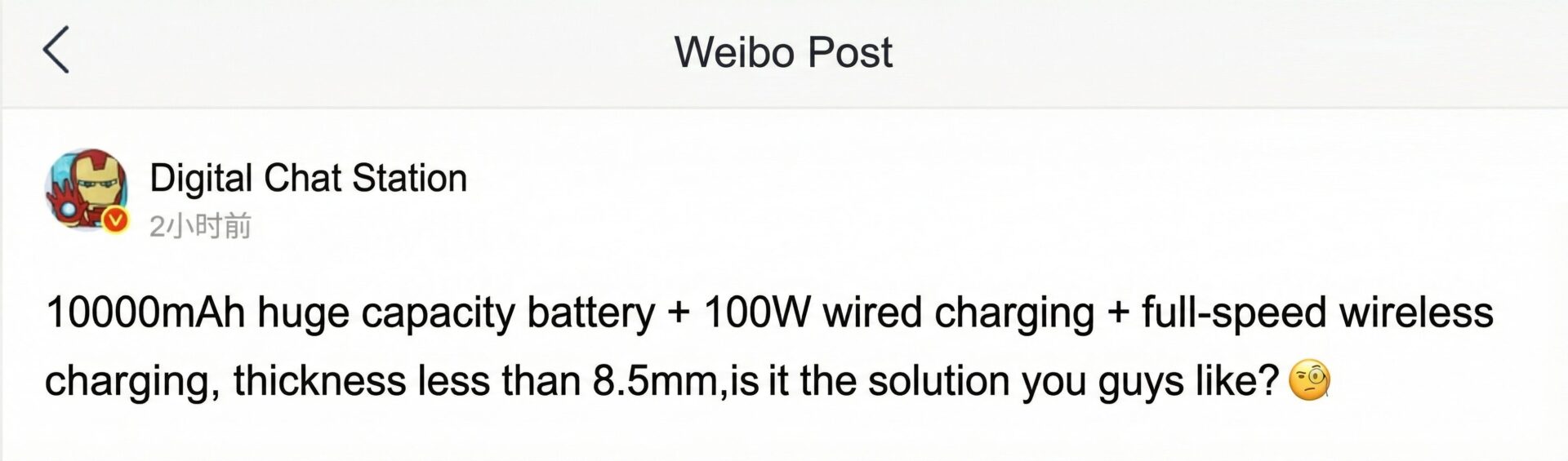
Battery capacity could also be a differentiator for the Chinese company. Speaking of earlier reports regarding the China-exclusive REDMI sibling, the specs suggest a battery capacity that goes around 10,000mAh, display has 165Hz refresh rate but we think Xiaomi will revise it all enclosed in a sleek 8.6mm slim body. The Xiaomi 17T Pro, on the other hand, will have a battery capacity ranging between 7,000mAh and 8,000mAh.
Implications for the “T Series”
The potential addition of a display that supports a frequency of up to 185Hz would indeed mark one of the most noticeable improvements observed in the “T” series lineup during the recent past. Though it’s not an absolute necessity for everyone, it’s an indication that the brand is committed to being at par with the latest display trends and gaming-oriented innovations.
Following up on the huge success of its Redmi Note series, Xiaomi has now officially introduced global variants of the new generation of phones: the Redmi Note 15 series. The phones would not only power up with Android 15 out of the box but will also be widely confirmed to receive an upgrade directly to Android 16-based HyperOS 3. Besides giving a powerful camera setup, the international variants have introduced several significant hardware changes over their Chinese brethren-specifically, in the camera arrays, battery technologies, and toughness-to offer a refined option for international users.
REDMI Note 15 Pro+ Global: What’s Different?
The key distinction with the Redmi Note 15 Pro+ Global is a major camera upgrade. While the Chinese version uses a 50MP main camera, the global model features a 200MP HPE primary sensor supporting 2x and 4x in-sensor zoom and five focal lengths ranging from 23mm to 92mm. Off goes the 50MP telephoto camera from the China model, leaving an 8MP ultra-wide as the secondary sensor.
It also differs quite a bit in terms of battery configuration. The worldwide model boasts a 6,500 mAh silicon-carbon battery with 100W fast charging and 22.5W reverse wired charging, whereas in China, this model comes with a 7,000 mAh battery with 90W charging. While having less capacity, Xiaomi focuses more on faster charging and the widest possible use.
It does keep the 6.83-inch AMOLED display, 120Hz refresh rate, and 3,200 nits peak brightness, though resolution moves to 2772 × 1280 pixels. Protection is by Corning Gorilla Glass Victus 2 instead of Dragon Crystal Glass.
Redmi Note 15 and Note 15 5G: Global Variants Overview
The standard bank of Redmi Note 15 includes both 4G and 5G versions, with an identical design and curved 6.77-inch AMOLED display with FHD+ resolution and a refresh rate of 120Hz.
Redmi Note 15 5G with Snapdragon 6 Gen 3
Redmi Note 154G powered by MediaTek Helio G100-Ultra
Both models include 108MP primary cameras with OIS, while their batteries are of different capacities, going up to 6,000 mAh and charging speeds from 33W to 45W.
REDMI Note 15 Pro and Pro 5G Updates with a Feature of Balanced Performance
The focus of the Redmi Note 15 Pro series is on efficiency rather than on radical change. Battery capacities go up to 6,500 mAh on the 4G model and 6,580 mAh silicon-carbon in the 5G version. Displays vary between FHD+ and 1.5K AMOLED, and protection levels on the 5G go as high as IP69K.
Both models launch with HyperOS 2.2, upgraded AI capabilities, dual speakers with Dolby Atmos, and refreshed MediaTek chipsets optimized for daily tasks.
Redmi Note 15 Series Global Pricing( Converted to USD)
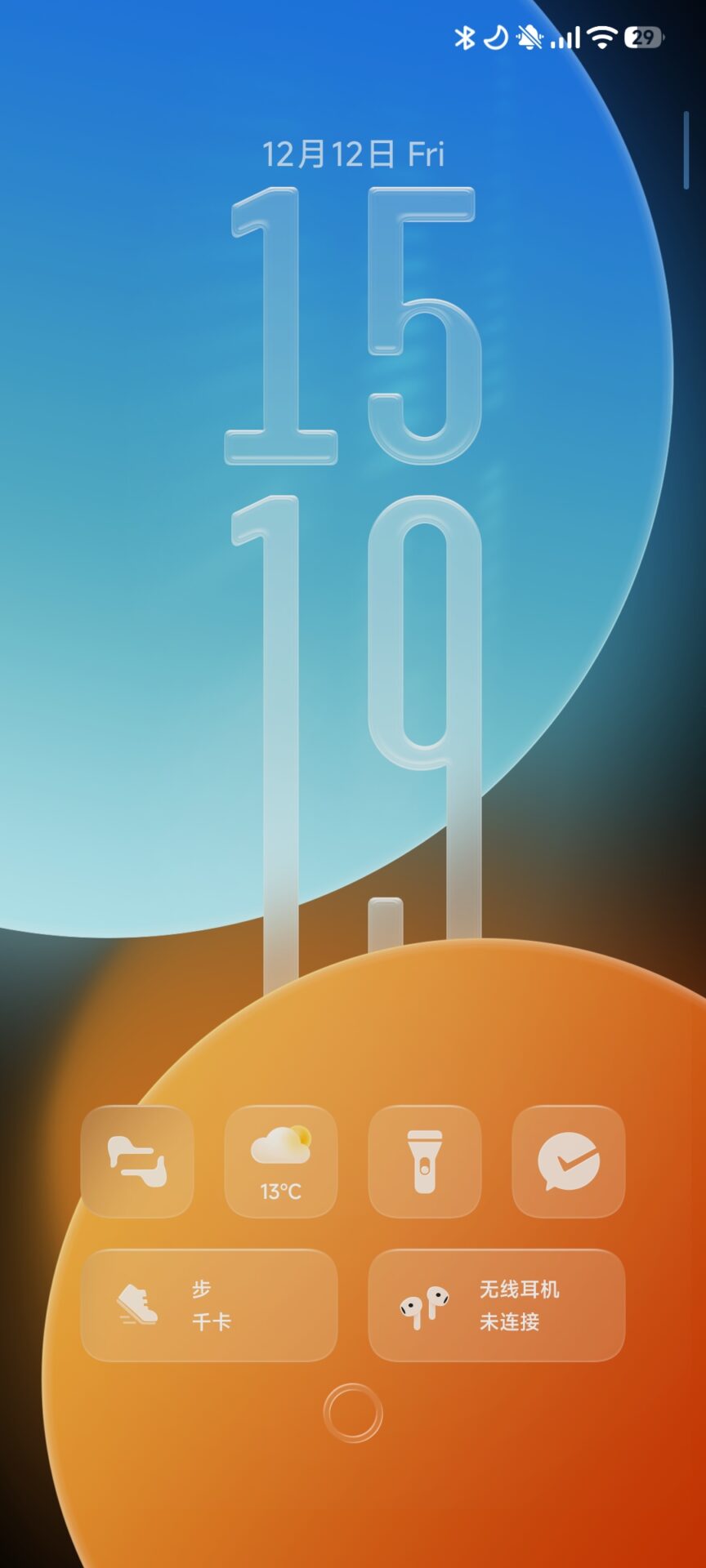
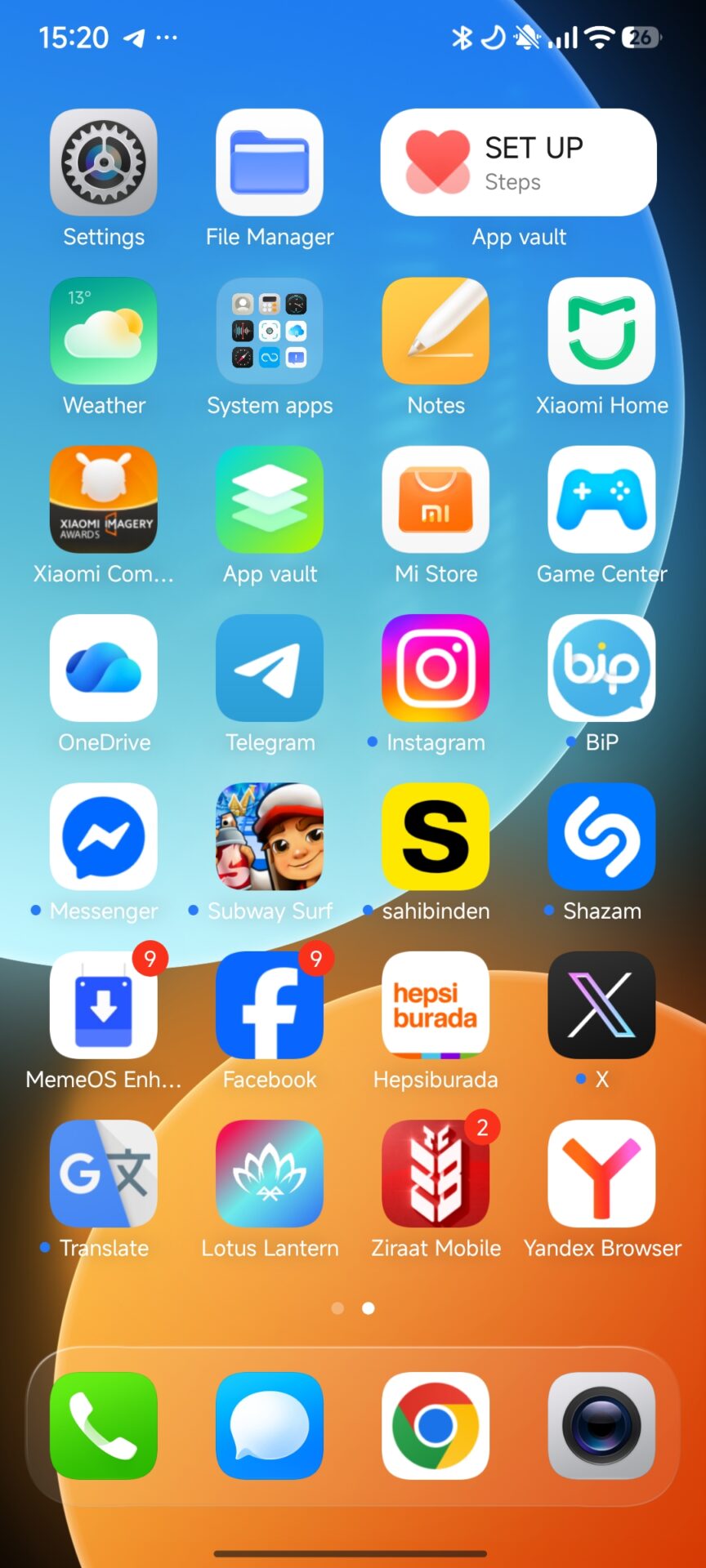
For users interested in replicating the visual sophistication of iOS 26 on Xiaomi devices running HyperOS, a range of customization strategies are now accessible. This guide presents a systematic approach to achieving an iOS-inspired interface while retaining the core functionality of HyperOS. The procedures outlined encompass the installation of modified system components, application of official wallpapers, and the configuration of specialized launchers and themes.
Installation theme
With the new theme installation feature, we can now install any theme. You can try the new iOS theme running on HyperOS 1, 2, and 3.
Authenticity in visual transformation relies on the use of high-resolution, official iOS 26 wallpapers. Curated collections are available online, optimized for a wide range of Xiaomi device screens. Installation of these wallpapers is recommended for both the home and lock screens to reinforce the consistency of the iOS aesthetic.
New official HyperOS 3 Launcher with iOS recents
The use of a new HyperOS 3 launcher is essential for replicating iOS 26’s distinctive app management interface. Such launchers introduce features including an iOS-style recent apps view and refined animation transitions. These modifications not only enhance visual fidelity but also maintain efficient system performance.
Customization of Lock Screen Clock Style
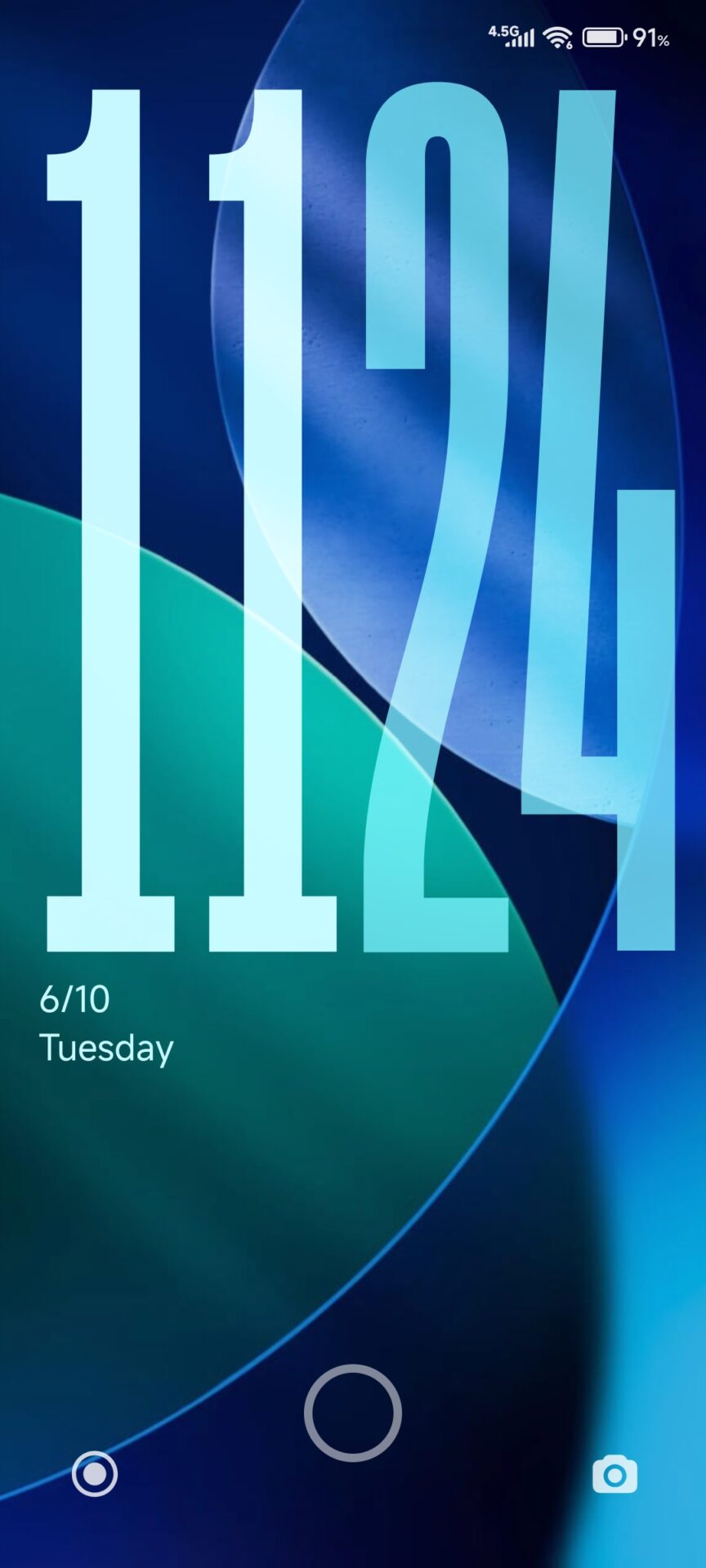
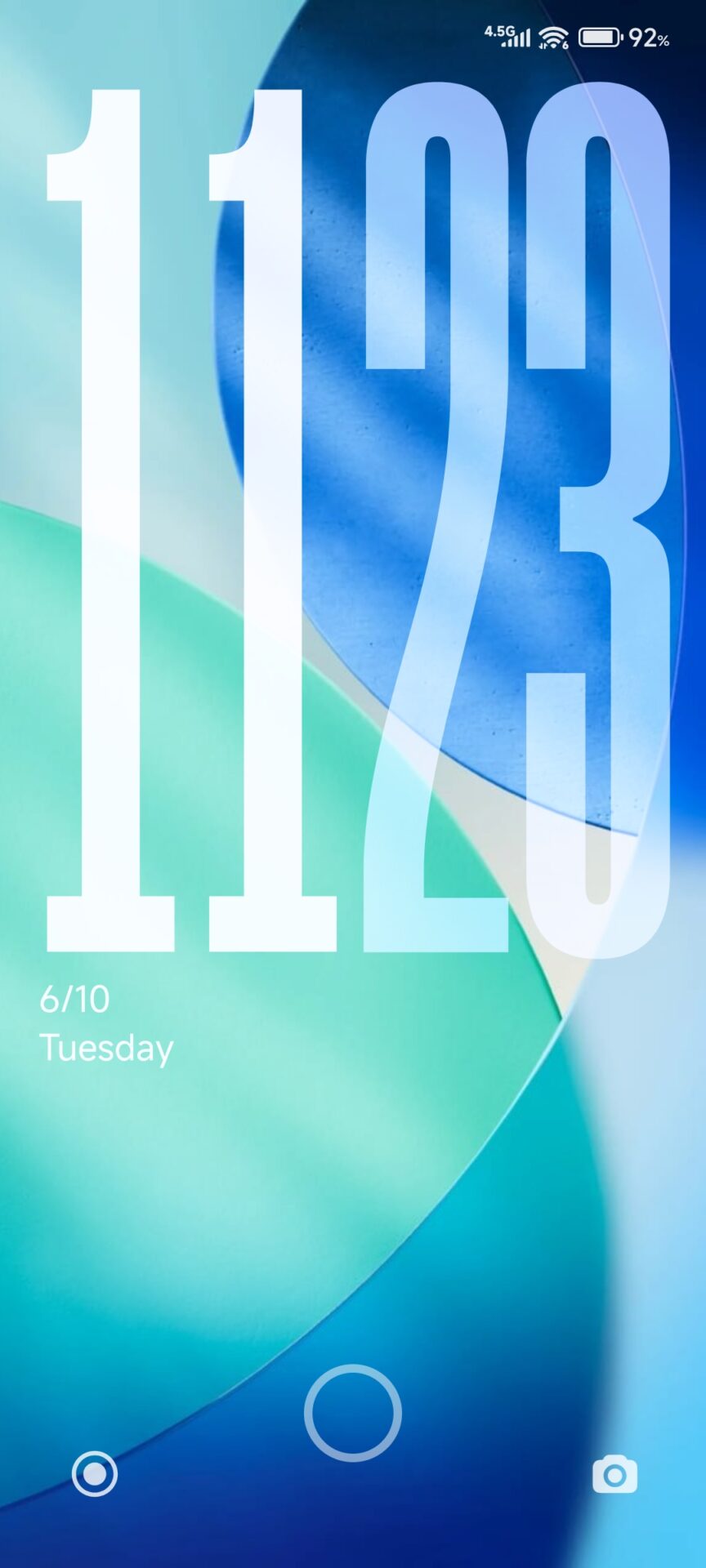
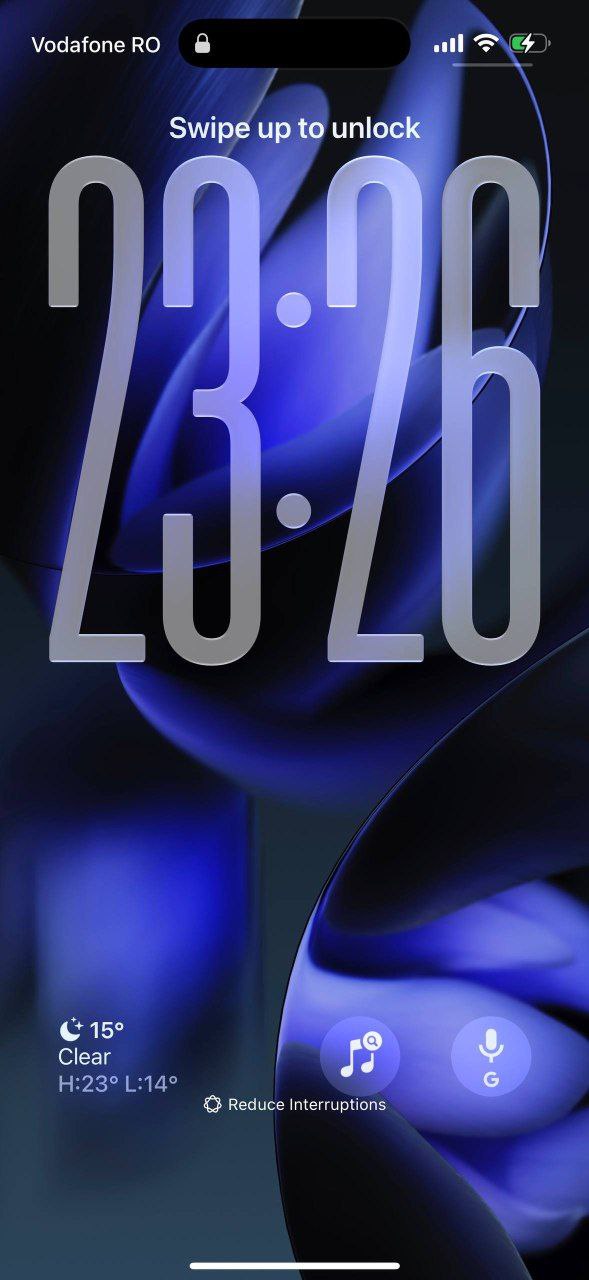
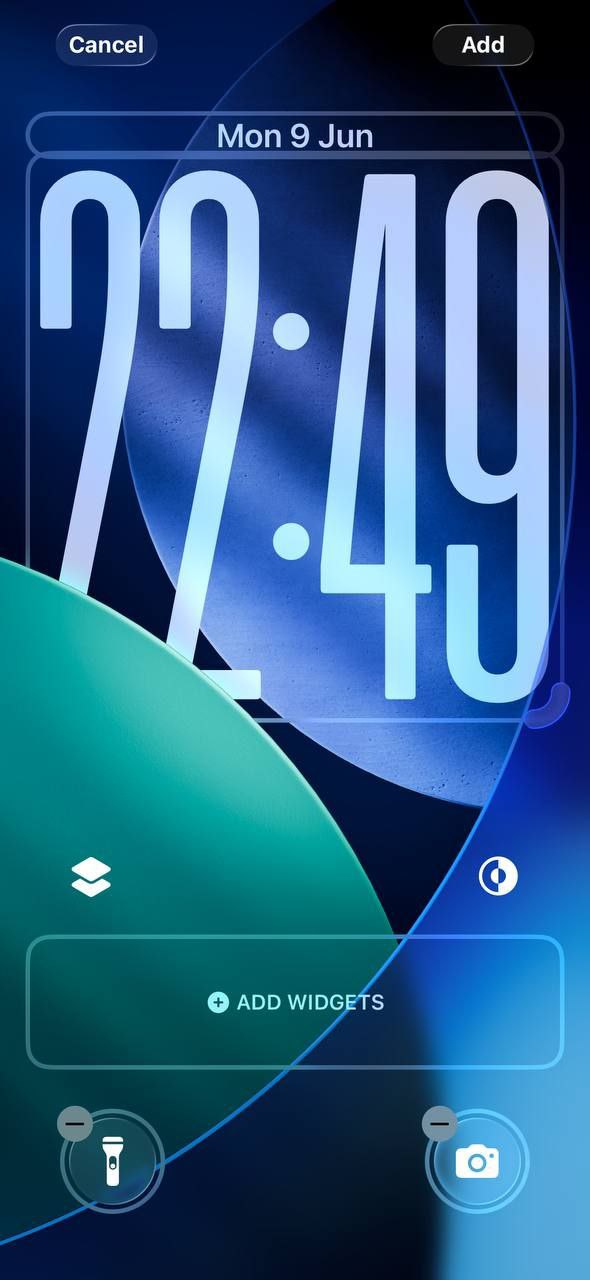
HyperOS provides a variety of clock style options, some of which closely resemble the lock screen clock introduced in iOS 26. Users can select the most appropriate style by navigating to device lock screen settings, thereby achieving greater visual alignment with Apple’s design language.
Additional Customization Tools
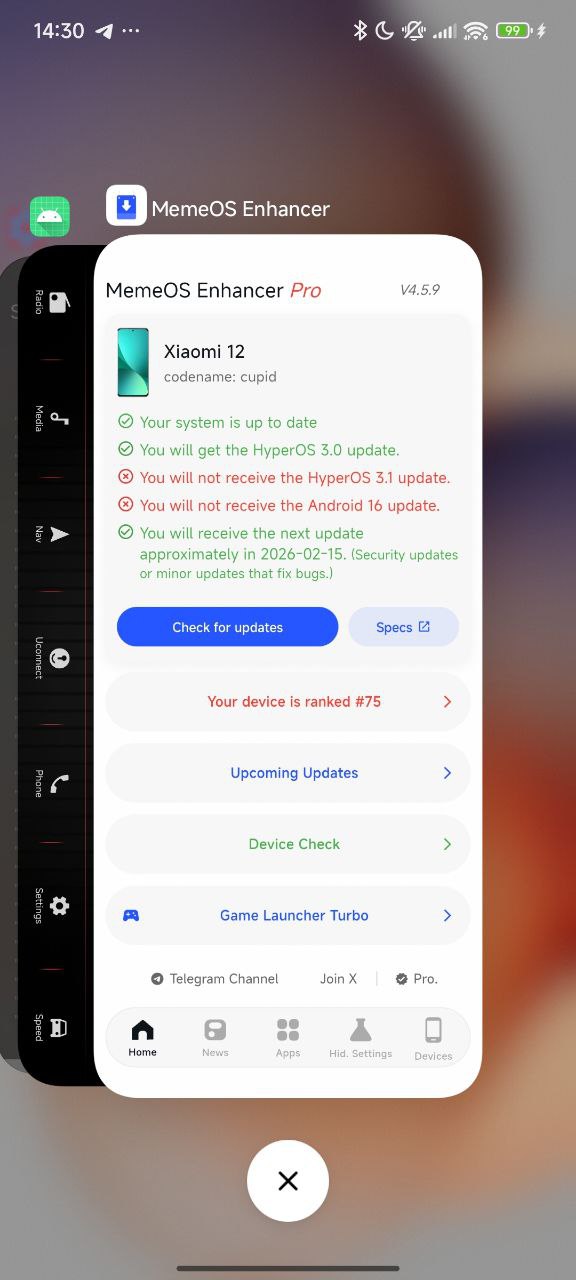
Advanced users may wish to employ utilities such as MemeOS Enhancer, available via the Play Store. This application enables access to additional hidden features, system app updates, and direct system modifications.

 Login
Login