Normal view

Samba 4.22.6 Brings Fixes for Finder, Ceph, and Active Directory

17 October 2025 at 15:20

The Samba team has announced version 4.22.6, the latest stable release in the 4.22 series, bringing key fixes for macOS compatibility, Active Directory integration, Ceph stability, and clustered Samba environments. Samba 4.22.6, released on October 16, 2025, focuses on improving system reliability and cross-platform performance. This update resolves multiple issues affecting macOS users, including DFS […]

The post Samba 4.22.6 Brings Fixes for Finder, Ceph, and Active Directory appeared first on UbuntuPIT.

AI Google Gemini Prediksi Harga XRP, SHIB, SOL di Akhir 2025

17 October 2025 at 13:45

Gemini AI memberikan prediksi terhadap pasar kripto setelah penjualan besar-besaran pada Jumat lalu. Mesin kecerdasan buatan Google tersebut memprediksi XRP, SHIB, dan SOL sebagai tiga aset digital yang paling mungkin rebound ke level tertinggi baru.

Di tengah prediksi bullish terhadap ketiga aset digital tersebut, Maxi Doge (MAXI) tampil sebagai penantang baru di industri kripto, terutama ruang koin meme. Dengan mengandalkan semangat para degen kripto dan narasi meme yang unik, $MAXI berhasil menarik perhatian penggemar mata uang kripto.

Prediksi Gemini AI Google di 2025

Secara historis, Uptober telah menjadi indikator andal bagi tren bullish kripto yang berkepanjangan. Baru pada Senin (07/10) lalu, Bitcoin meroket ke level tertinggi baru, sebelum kemudian crash pada hari Jumat setelah Trump mengumumkan tarif 100% terhadap impor China.

Kendati demikian, investor berpengalaman melihat koreksi tersebut sebagai ‘pendinginan’ yang diperlukan oleh pasar kripto. Sebab, pasar ini memang telah secara konsisten mengalami penurunan tajam sebelum fase bullish besar.

Banyak analis melihat crash terbaru itu sebagai peristiwa pembersihan yang menghilangkan posisi terlalu berlebihan dan spekulan jangka pendek.

Prediksi Harga XRP: Gemini AI Memprediksi XRP Naik ke $10

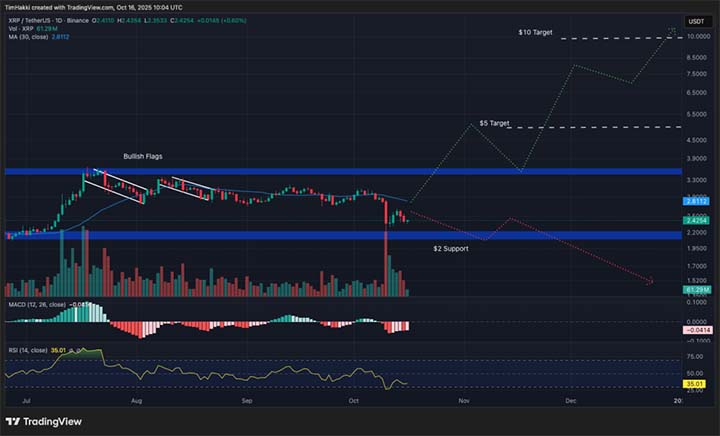
Menurut Gemini AI, token asli Ripple, XRP (XRP), berpotensi naik hingga $10 pada akhir tahun ini. Dengan demikian, ada potensi keuntungan hingga empat kali lipat dari harganya saat ini $2,43.

Gemini AI prediksi harga XRP

Ripple mencapai tonggak hukum yang signifikan pada tahun ini, mengakhiri pertarungan lima tahun dengan Komisi Sekuritas dan Bursa AS (SEC) dengan kemenangan. Kemenangan tersebut mendorong XPP meroket ke $3,65 pada 18 Juli, menjadi rekor harga tertinggi sepanjang masa baru sejak 2017.

Selama 12 bulan terakhir, XRP telah mengalami kenaikan sekitar 345%, mengungguli dua cryptocurrency terbaik, BTC dan ETH. Sebagai perbandingan, BTC hanya mencatatkan kenaikan 65%, sedangkan ETH naik 52% pada periode yang sama.

XRP USD - Prediksi Gemini AI

Indikator teknis menunjukkan tiga pola bendera bullish di sepanjang 2025, dua di antaranya muncul pada musim panas. Pola-pola ini sering mendahului lonjakan harga besar, dan pola XRP belum sepenuhnya terwujud.

Analis memperkirakan bahwa kondisi pasar pada Oktober akan menguntungkan, ditambah dengan kemungkinan persetujuan ETF, kemajuan legislasi kripto AS, dan kemitraan baru Ripple, dapat dengan mudah memicu reli besar untuk mendorong XRP ke $10 sesuai prediksi Gemini AI.

Prediksi Harga Shiba Inu (SHIB): Gemini AI Prediksi Kenaikan 10x Lipat hingga Natal

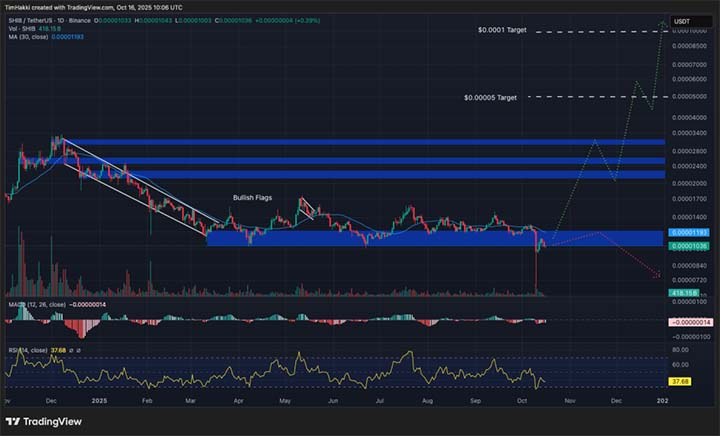
Diluncurkan pada tahun 2020, Shiba Inu (SHIB) telah menjadi pesaing kuat Dogecoin (DOGE), dengan kapitalisasi pasar di atas $6 miliar. Saat ini $SHIB diperdagangkan di sekitar $0,00001037, turun 3% dalam 24 jam terakhir, sejalan dengan penurunan 3% pasar kripto secara keseluruhan yang terjadi semalam.

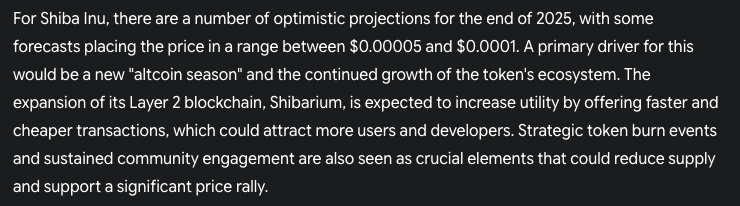
Gemini AI prediksi harga SHIB

Secara teknis, token ini masih dalam tahap konsolidasi di dalam pola bendera bullish, tanpa ada penembusan yang dikonfirmasi hingga saat ini. Apabila SHIB berhasil menembus level resistensi kunci di $0,000025 pada November, hal ini dapat membuka jalan menuju target akhir tahun Gemini AI, yaitu $0,00005 hingga $0,0001, atau naik 10x lipat dari harganya saat ini.

SHIB USD - Prediksi Gemini AI SHIB

Di luar akar memenya, Shiba Inu telah berkembang menjadi ekosistem terdesentralisasi yang lebih luas didukung oleh blockchain L2-nya, Shibarium. Shibarium menawarkan transaksi berbiaya rendah, integrasi dApps, dan privasi yang ditingkatkan, membantu SHIB tampil lebih menonjol di antara meme crypto lainnya.

Prediksi Harga Solana (SOL): Gemini AI Memprediksi SOL Bergerak Menuju $1.000

Solana (SOL) telah memperkuat posisinya sebagai blockchain kontrak pintar terkemuka. Solana kini memiliki kapitalisasi pasar di atas $103,8 miliar dan lebih dari $11,3 miliar dalam total nilai terkunci (TVL) di seluruh ekosistemnya.

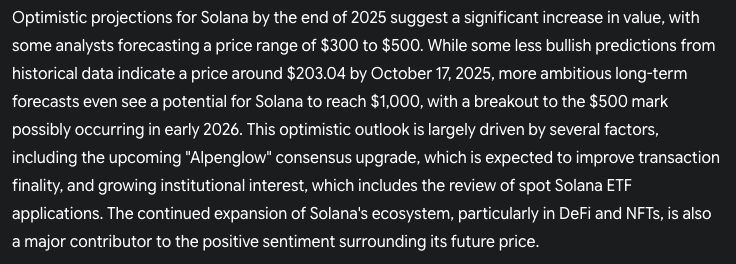
Gemini AI prediksi harga SOL

Spekulasi tentang disetujuinya ETF Solana spot pada akhir bulan ini semakin menguat. Apabila hal tersebut terealisasi, Solana berpotensi mendapatkan aliran dana institusional serupa dengan apa yang pernah terjadi saat peluncuran ETF Bitcoin dan Ethereum.

Solana juga berada dalam posisi yang baik untuk memanfaatkan tokenisasi aset dunia nyata dan sektor stablecoin yang berkembang, dua tren yang semakin menarik minat institusional. Berkat kecepatan tinggi dan biaya transaksi rendah, Solana mempertahankan keunggulan teknologi yang jelas dibanding Ethereum seiring dengan percepatan adopsi.

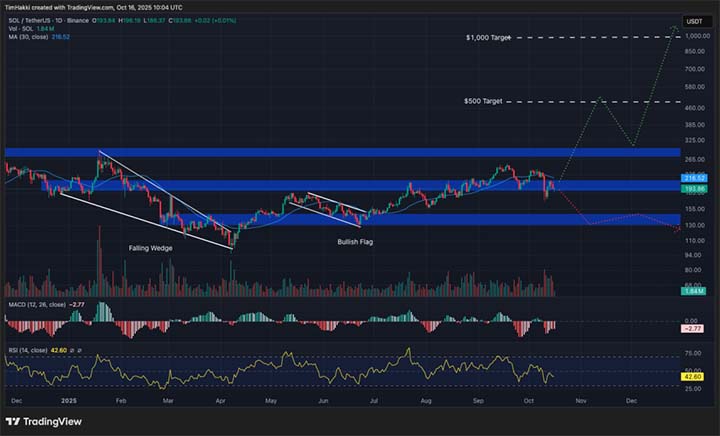
SOL USD - Prediksi SOL Gemini AI

Dari segi harga, Solana mencapai $250 pada Januari, turun menjadi $100 pada April, dan kini diperdagangkan di sekitar $194, menunjukkan kembalinya kekuatan SOL. Dengan RSI 43 dan harga di bawah rata-rata pergerakan 30 hari, aset ini undervalued pada level saat ini.

Setelah baru-baru ini keluar dari struktur bendera bullish, Gemini AI memperkirakan potensi kenaikan antara $500 dan $1.000 pada awal tahun baru atau mendekati 2026, naik jauh di atas ATH-nya saat ini $293,31.

Maxi Doge (MAXI): Koin Meme Baru yang Dipenuhi Momentum Komunitas

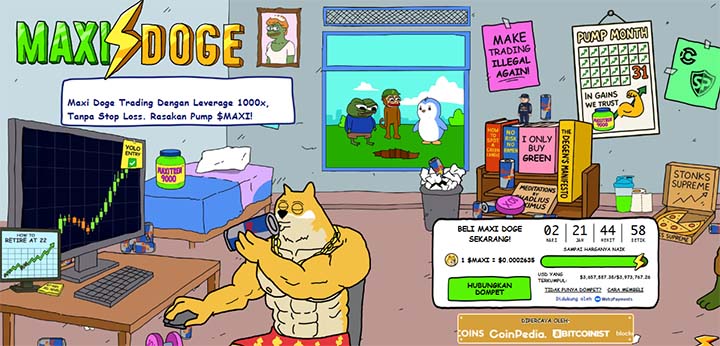
Penggemar Dogecoin merasa cemas dengan pendatang baru dari masa lalu Doge, Maxi Doge (MAXI). Para investor telah menginvestasi lebih dari $3,6 juta dalam presale token $MAXI, tertarik oleh branding viral dan upaya membangun komunitas proyek tersebut.

Maxi Doge - Gemini AI

Menurut legenda yang penuh seloroh, Maxi Doge, kerabat jauh Doge yang merasa tersingkirkan oleh ketenaran Doge, telah menghabiskan waktunya di gym dan grafik perdagangan, berusaha keras untuk muncul di panggung dan merebut kembali sorotan dunia.

Dibangun sebagai token ERC-20 di jaringan Ethereum, $MAXI memanfaatkan infrastruktur Ethereum yang lebih cepat dan ramah lingkungan dibanding rantai Dogecoin. Maxi Doge juga aktif mempromosikan keterlibatan melalui Telegram dan Discord, kontes perdagangan, dan kolaborasi merek yang direncanakan.

Kolaborasi tersebut berbentuk kemitraan dengan platform trading futures. Jika rencana tersebut berhasil, token $MAXI akan dapat diperdagangkan dengan leverage hingga 1.000x.

Jika Anda ingin mengetahui potensi pertumbuhan token $MAXI, bacalah artikel kami tentang prediksi harga Maxi. Kami juga telah menyusun panduan lengkap untuk membeli token $MAXI yang dapat Anda temukan dalam artikel cara beli Maxi Doge.

Token $MAXI saat ini ditawarkan dengan harga $0,0002635 per token (setara Rp4,37 kurs 1 USD = Rp16.585), masih sangat murah mengingat token belum listing di bursa. Jika berhasil listing di bursa, harga $MAXI kemungkinan besar akan melesat naik dengan tajam.

Kunjungi situs web presale Maxi Doge sekarang juga untuk memanfaatkan kesempatan membeli $MAXI dengan harga diskon.

Disclaimer: Pendapat dan pandangan yang diungkapkan dalam postingan ini tidak selalu mencerminkan kebijakan atau posisi resmi Cryptonews. Informasi yang disediakan dalam postingan ini hanya untuk tujuan informasi dan tidak boleh dianggap sebagai nasihat keuangan, investasi, atau profesional. Cryptonews tidak mendukung produk, layanan, atau perusahaan tertentu yang disebutkan dalam postingan ini. Pembaca disarankan untuk melakukan riset mandiri dan berkonsultasi dengan profesional yang berkualifikasi sebelum mengambil keputusan keuangan apa pun. Jangan pernah menginvestasikan lebih dari yang Anda siap kehilangan.

The post AI Google Gemini Prediksi Harga XRP, SHIB, SOL di Akhir 2025 appeared first on Cryptonews Indonesia.

Altcoin Terbaik untuk Dikoleksi Saat ETH/BTC Menyentuh Titik Support Kritis

By:Aldi
17 October 2025 at 12:42
Altcoin Terbaik untuk Dikoleksi Saat ETH/BTC Menyentuh Titik Support Kritis

Pasar crypto kembali memanas seiring perhatian investor tertuju pada pasangan ETH/BTC yang kini mendekati zona support historis. Kondisi ini kerap menjadi sinyal awal pergeseran modal dari Bitcoin menuju altcoin, membuka potensi dimulainya altcoin season. Momen seperti ini sering kali menjadi penentu arah pasar ke depan, dan bagi investor yang jeli, ini adalah waktu strategis untuk mulai mengoleksi altcoin potensial.

Dengan dominasi Bitcoin yang mulai stabil dan Ethereum menunjukkan sinyal rebound, beberapa aset mulai mencuri perhatian. Tiga altcoin unggulan—Bitcoin Hyper ($HYPER), Snorter Token ($SNORT), dan Ethereum ($ETH)—diprediksi akan memimpin lonjakan harga saat altcoin season benar-benar dimulai. Artikel ini mengulas ketiganya secara lengkap, dari analisis teknikal hingga detail presale dan proyeksi kenaikan.

Altcoin Season: Sudah Dimulai atau Masih Menunggu?

Altcoin season merupakan momen ketika kinerja altcoin secara umum mampu melampaui performa Bitcoin. Momen ini telah lama menjadi incaran utama para investor crypto yang ingin meraih cuan lebih besar di luar dominasi Bitcoin. Namun, penentuan waktunya masih menjadi teka-teki, dan bahkan definisinya pun seringkali diperdebatkan.

Namun satu hal yang pasti—saat ini kita mungkin sedang berada di ambang awal altcoin season yang sesungguhnya. Ini adalah saat yang krusial untuk mulai memburu altcoin terbaik untuk dikoleksi. Dan sejauh ini, beberapa yang paling menjanjikan termasuk Bitcoin Hyper ($HYPER), Snorter Token ($SNORT), serta Ethereum ($ETH).

Perhatian pasar saat ini sedang tertuju pada pasangan $ETH/$BTC, yang kini berada mendekati zona support historis yang dapat menentukan arah pergerakan pasar berikutnya.

Saat ini, nilai Ethereum terhadap Bitcoin berada di kisaran 0,036 BTC—turun 6,74% dalam sebulan terakhir. Kisaran ini sering menjadi titik pantul pada siklus sebelumnya. Jika pasangan ini berhasil bertahan di support dan memantul naik, maka rotasi modal menuju altcoin berpotensi dimulai. Namun jika gagal, tekanan turun bisa saja berlanjut lebih dalam.

nilai Ethereum terhadap Bitcoin berada di kisaran 0,036 BTC

Siapa yang Akan Memimpin Altcoin Season: Ethereum atau Bitcoin?

Pertanyaan besar yang masih hangat dibahas para analis adalah—siapa yang akan membuka jalan menuju altcoin season kali ini? Apakah Bitcoin yang harus mencetak rekor harga baru, atau justru Ethereum yang akan memicu pergeseran modal?

Sebagian analis meyakini bahwa Bitcoin perlu naik lebih tinggi terlebih dahulu, mendorong dominasi pasar, baru kemudian dana mulai mengalir ke altcoin. Pola ini telah terlihat berulang kali pada siklus bull run sebelumnya.

Logika ini menyatakan bahwa harga Bitcoin perlu menembus all-time high (ATH), agar investor mulai mencari peluang profit yang lebih tinggi di altcoin seperti Ethereum. Ketika itu terjadi, dominasi Bitcoin mulai turun dan altcoin season resmi dimulai.

To those that keep calling for ALT Season:

In order for ALT Season to happen, ETH needs to go to $5k+ and hold it as support.

For ETH to go to $5k *AND* hold it as support, it means BTC needs to also go to all time highs.

The process of BTC going to all time highs would make…

— Benjamin Cowen (@intocryptoverse) October 14, 2025

Namun, ada sudut pandang lain yang berbeda.

Beberapa analis lain menyatakan bahwa Ethereum (dan altcoin tertentu) justru bisa bergerak lebih dulu meskipun Bitcoin stagnan. Mereka merujuk pada momen seperti akhir 2017 dan awal 2021, ketika Ethereum memimpin reli besar tak lama setelah puncak harga Bitcoin.

Hey Ben, what about this?

2017: #BTC toped out on Dec 17 and in the following month $ETH went up by 88%

2021: #BTC topped out on Apr 14 and in the following month $ETH went up by 79%

IF we are in the final stages of the cycle and $BTC has already topped, $ETH has about a… pic.twitter.com/Y1JQMG7BOB

— CryptoBullet (@CryptoBullet1) October 14, 2025

Perdebatan ini terus berlangsung di platform seperti X (sebelumnya Twitter), dengan masing-masing kubu menyatakan bahwa baik Bitcoin, Ethereum, atau bahkan keduanya harus naik lebih tinggi sebelum altcoin season benar-benar terjadi.

The reason I said back in August that it was not ALT season was because I expected ETH to get rejected on its 1st attempt at all time highs.

ALT/BTC pairs went lower while ETH/BTC should put in a higher low.

What happens next for ALTs depends on ETH's ability to break $5k https://t.co/hsttkj9W52

— Benjamin Cowen (@intocryptoverse) October 14, 2025

Sementara itu, kapitalisasi pasar altcoin (tidak termasuk stablecoin) masih sekitar 20% di bawah puncaknya. Ini menunjukkan bahwa ruang untuk kenaikan harga masih cukup terbuka apabila kondisi pasar mendukung.

Beberapa altcoin yang paling diantisipasi saat ini—termasuk Ethereum ($ETH), Bitcoin Hyper ($HYPER), dan Snorter Token ($SNORT)—berpotensi mengalami lonjakan tajam saat altcoin season benar-benar dimulai.

Mari kita bahas lebih dalam beberapa altcoin terbaik untuk dikoleksi saat ini.

Bitcoin Hyper ($HYPER) – Proyek Infrastruktur untuk Layer-2 Bitcoin Tercepat dan Termurah

Ingin menemukan altcoin yang berpotensi besar saat ini? Perhatikan proyek-proyek yang membangun fondasi infrastruktur untuk mendorong pertumbuhan jangka panjang di ekosistem crypto.

Salah satu yang sedang menjadi perhatian utama adalah Bitcoin Hyper ($HYPER), sebuah proyek yang secara langsung menargetkan kelemahan utama Bitcoin—kecepatan transaksi yang lambat dan biaya jaringan yang tinggi akibat kemacetan.

Bitcoin Hyper menghadirkan solusi melalui integrasi Canonical Bridge ke Solana Virtual Machine (SVM). Mekanisme ini memungkinkan investor mengirimkan wrapped $BTC ke seluruh jaringan ekosistem crypto dengan biaya murah dan kecepatan tinggi.

Jadi, apa sebenarnya Bitcoin Hyper? Ini merupakan cara paling efisien untuk menjadikan transaksi Bitcoin lebih cepat dan terjangkau. Proyek ini secara aktif mengumpulkan dana melalui presale, dengan antusiasme besar dari kalangan whale investor. Hingga saat ini, lebih dari $23,938,891.88 telah berhasil dikumpulkan dari target $24,148,938.49. Harga 1 token $HYPER berada di $0.013125 atau sekitar Rp217,62 (dengan kurs Rp16.583/USD per 17 Oktober 2025).

Moving at the speed of light! ⚡

23M Raised!🔥 pic.twitter.com/5I9oDsHGag

— Bitcoin Hyper (@BTC_Hyper2) October 10, 2025

Potensi pertumbuhan harga $HYPER sangat besar. Prediksi menunjukkan bahwa harga token ini bisa naik hingga $0.32 (sekitar Rp5.306), yang berarti peningkatan sebesar 2.338% dari harga presale saat ini.

Dengan waktu yang tersisa hanya sekitar 14 jam sebelum kenaikan harga selanjutnya, ini adalah kesempatan krusial untuk masuk lebih awal. Kunjungi web resmi presale Bitcoin Hyper sekarang juga!

Bitcoin Hyper Berpotensi Naik 23x – Sudah Tahu Cara Belinya?

Presale Bitcoin Hyper akan segera naik harga dalam hitungan jam. Ini adalah salah satu proyek Layer-2 Bitcoin tercepat dan termurah yang pernah ada. Jangan lewatkan peluang besar untuk masuk lebih awal sebelum token ini mencetak kenaikan 2000% lebih. Jika Anda masih bingung bagaimana caranya membeli token ini, kami sudah siapkan panduan lengkapnya. Langkah-langkahnya sangat mudah bahkan untuk pemula. Baca selengkapnya di Cara Beli Bitcoin Hyper.

Prediksi $HYPER 2.300%? Ini Alasan Analis Optimis!

Harga $HYPER saat ini hanya Rp217, namun proyeksi analis menunjukkan potensi kenaikan hingga Rp5.000-an. Dengan dukungan teknologi Solana Virtual Machine dan Canonical Bridge, proyek ini bisa menjadi game changer di dunia Bitcoin L2. Banyak investor whale sudah masuk lebih awal karena melihat fundamental kuat proyek ini. Anda juga bisa ikut serta sebelum harga naik berikutnya. Jangan tunggu sampai FOMO melanda pasar. Cek detailnya di Prediksi Harga Bitcoin Hyper.

Bitcoin Hyper – Legit atau Scam? Temukan Jawaban Akuratnya

Banyak yang bertanya apakah proyek Bitcoin Hyper ini benar-benar terpercaya. Dengan penggalangan dana mendekati $24 juta dan transparansi roadmap yang solid, Bitcoin Hyper semakin banyak diminati komunitas crypto. Tapi apakah ini cukup untuk menjamin legitimasinya? Kami telah mengulas semua data, tim pengembang, dan mekanisme teknologinya secara objektif. Sangat penting bagi investor untuk melakukan DYOR. Simak selengkapnya di Apakah Bitcoin Hyper Legit atau Scam.

Snorter Token ($SNORT) – Sisa 3 Hari Menuju Akhir Presale Bot Trading Solana

Dunia trading meme coin sering kali dipenuhi dengan kekacauan. Ribuan token baru diluncurkan setiap hari, dan sebagian besar tidak pernah mendapatkan eksposur berarti di pasar.

Namun, di tengah hiruk-pikuk itu, terdapat peluang besar bagi investor yang mampu menemukan proyek yang tepat. Inilah ruang yang coba diisi oleh Snorter Token ($SNORT).

Snorter adalah bot trading berbasis Solana yang terintegrasi langsung dengan platform Telegram. Bot ini dirancang untuk membantu trader mendeteksi dan mengambil peluang dari meme coin yang memiliki potensi besar sebelum token tersebut menjadi mainstream.

Normies don't get it yet. Crypto is the future.

Trading bots will become 2nd nature.

Snorter bot will lead this rally. https://t.co/SbWQqQlCsZ

— Snorter (@SnorterToken) October 15, 2025

Fitur yang ditawarkan Snorter cukup lengkap, termasuk perlindungan terhadap rugpull dan MEV, kemampuan sniping otomatis, serta fitur copy trading. Semua fitur ini dapat diakses dengan biaya sangat rendah, yakni 0,85%—jauh lebih murah dibandingkan standar pasar yang biasanya di atas 1,5%. Token $SNORT menjadi kunci untuk mengakses ekosistem ini.

Presale Snorter Token hampir berakhir, menyisakan hanya 3 hari lagi sebelum ditutup. Hingga kini, proyek ini telah berhasil mengumpulkan dana sebesar $4,862,177.84. Harga token berada di angka $0.1081 atau sekitar Rp1.792 (mengacu pada kurs Rp16.583/USD per 17 Oktober 2025).

Prediksi harga Snorter Token menunjukkan potensi untuk naik hingga $0.94 (Rp15.589) pada akhir tahun ini. Artinya, investor awal bisa memperoleh imbal hasil besar apabila proyek ini berhasil memenuhi ekspektasi komunitas.

Selain membeli token, pengguna juga dapat melakukan staking dan mengunci token $SNORT untuk memperoleh imbal hasil tahunan (APY) hingga 107%.

Waktu terus berjalan. Kunjungi halaman resmi presale Snorter Token untuk mempelajari cara beli dan staking sebelum kesempatan ini berakhir.

Snorter Hanya Sisa 3 Hari! Ini Cara Cepat Beli Token $SNORT

Snorter adalah bot trading berbasis Solana yang sedang ramai dibahas di Telegram dan X. Dengan presale yang hampir habis, investor harus segera tahu cara membeli token $SNORT. Apalagi, fitur sniping dan copy trading-nya sangat dibutuhkan trader aktif. Anda tidak ingin kehilangan akses ke ekosistem bot yang bisa mendeteksi meme coin sebelum viral, bukan? Pastikan Anda sudah paham proses pembelian sebelum presale ditutup. Lihat panduannya di Cara Beli Snorter.

$SNORT Bisa Naik 9x – Ini Prediksi Harga yang Wajib Diketahui

Prediksi harga $SNORT menunjukkan lonjakan hingga 800–900% dari harga presale saat ini. Ini didukung oleh adopsi bot trading Telegram yang makin meluas dan biaya transaksi rendah. Dalam waktu dekat, peluncuran fitur staking 107% APY juga bisa jadi katalis utama. Jika ingin mengambil posisi awal sebelum hype dimulai, waktu Anda sangat terbatas. Kami telah merangkum semua analisis harga dan faktor pemicu kenaikannya. Baca prediksi lengkapnya di Prediksi Harga Snorter.

Snorter, Bot Canggih untuk Trader Meme Coin – Apa Itu Sebenarnya?

Snorter hadir sebagai solusi praktis di tengah kekacauan dunia meme coin. Integrasi dengan Telegram memudahkan siapa pun untuk melakukan sniping dan copy-trading langsung dari ponsel. Namun, apa sebenarnya Snorter dan bagaimana cara kerjanya? Apakah cocok untuk pemula atau hanya untuk trader berpengalaman? Kami telah menjelaskan semua fitur utama dan potensi jangka panjangnya. Pelajari detail lengkapnya di Apa Itu Snorter.

Snorter – Legit atau Scam? Ini Fakta dan Risiko Nyata yang Harus Diketahui

Presale hampir habis dan hype Snorter terus meningkat. Tapi apakah proyek ini bisa dipercaya, atau justru terlalu bagus untuk jadi kenyataan? Kami telah menyusun tinjauan lengkap berdasarkan data on-chain, struktur tokenomics, dan roadmap pengembang. Analisis ini penting agar Anda tidak sekadar ikut tren tanpa tahu risiko. Investor yang bijak wajib membaca ini sebelum staking atau beli token. Simak di Apakah Snorter Token Legit atau Scam? Fakta dan Analisis Lengkap untuk Investor Pemula.

Ethereum ($ETH) – Altcoin Terbesar yang Akan Menentukan Arah Altcoin Season

Jangan terjebak dalam perdebatan tentang siapa yang akan memimpin altcoin season kali ini. Baik Bitcoin maupun Ethereum sama-sama memiliki peran penting, namun hampir seluruh analis sepakat bahwa Ethereum ($ETH) tetap menjadi salah satu altcoin dengan potensi performa paling solid di pasar crypto saat ini.

Pergerakan Ethereum akan sangat dipengaruhi oleh kekuatan pasar secara umum. Saat sentimen terhadap Bitcoin menguat dan antusiasme terhadap altcoin meningkat, Ethereum cenderung akan ikut terdorong naik. Beberapa proyeksi menyebutkan bahwa harga $ETH bisa menembus $5.000, bahkan hingga $8.000 pada puncak bull market mendatang.

Daya tarik Ethereum juga diperkuat oleh minat institusi. Perusahaan seperti BitMine saat ini dilaporkan telah mengakumulasi lebih dari 3 juta unit $ETH, sebuah sinyal kuat bahwa keyakinan jangka panjang terhadap jaringan Ethereum masih sangat tinggi.

Saat ini, harga Ethereum berada di sekitar $3,920.42 atau sekitar Rp650.861 (mengacu pada kurs Rp16.583/USD). Nilai ini turun 2,26% dalam 24 jam terakhir dan mencatat penurunan 10,41% dalam sepekan. Meski demikian, koreksi ini justru memberikan peluang masuk bagi investor yang ingin mengakumulasi sebelum altcoin season benar-benar dimulai.

Nama KoinEthereum (ETH)
Ethereum Harga$3,986.54
Ethereum ATH$4,946.23 (August 24, 2025)
Ethereum Perubahan Harga dalam 24 Jam -0.1600%
Ethereum Perubahan Harga dalam 7 Hari -6.68%
Ethereum Kapitalisasi Pasar$479.31B
Sirkulasi Pasokan120.23M
eth logo
Ethereum (ETH)
24 jam7 hari30 hari1 TahunSepanjang waktu

Kondisi makroekonomi global juga memberikan katalis tambahan. Tanda-tanda bahwa Federal Reserve Amerika Serikat akan melonggarkan kebijakan suku bunga berpotensi menambah likuiditas ke dalam pasar aset berisiko seperti crypto. Ini akan menjadi faktor penting yang mendorong masuknya modal baru ke altcoin seperti Ethereum.

Untuk membeli $ETH, investor bisa menggunakan platform tepercaya seperti Binance dan berbagai exchange besar lainnya yang telah mendukung transaksi Ethereum dalam jumlah besar.

Jadi, apakah $BTC dan $ETH akan terus bergerak naik secara bersamaan? Atau justru Ethereum yang akan memimpin dan menetapkan dasar harga yang lebih tinggi ke depan? Terlepas dari siapa yang lebih dulu naik, satu hal yang jelas—altcoin season semakin dekat, dan saat ini adalah waktu yang tepat untuk memperhatikan altcoin terbaik seperti Bitcoin Hyper, Snorter Token, dan tentunya Ethereum.

Gabung Komunitas Crypto Paling Update di Indonesia – Dapatkan Info Altcoin Terbaru!

Ingin jadi yang pertama tahu saat altcoin season dimulai? Butuh info presale terbaru seperti Bitcoin Hyper atau Snorter Token? Gabung sekarang di grup Telegram resmi kami. Komunitas aktif ini dipenuhi oleh trader, analis, dan investor crypto dari seluruh Indonesia. Anda bisa bertanya, diskusi, dan dapat bocoran informasi terbaru setiap hari. Klik dan bergabung di Crypto News Indonesia Telegram sekarang juga!

Disclaimer: Pendapat dan pandangan yang diungkapkan dalam postingan ini tidak selalu mencerminkan kebijakan atau posisi resmi Cryptonews. Informasi yang disediakan dalam postingan ini hanya untuk tujuan informasi dan tidak boleh dianggap sebagai nasihat keuangan, investasi, atau profesional. Cryptonews tidak mendukung produk, layanan, atau perusahaan tertentu yang disebutkan dalam postingan ini. Pembaca disarankan untuk melakukan riset mandiri dan berkonsultasi dengan profesional yang berkualifikasi sebelum mengambil keputusan keuangan apa pun. Jangan pernah menginvestasikan lebih dari yang Anda siap kehilangan.

The post Altcoin Terbaik untuk Dikoleksi Saat ETH/BTC Menyentuh Titik Support Kritis appeared first on Cryptonews Indonesia.

Minat Mining Virtual Meningkat, PEPENODE Raup $1,8 Juta

17 October 2025 at 12:21

Penambangan Bitcoin (BTC) maupun kripto lainnya sudah jauh berbeda bagi penambang individu dibanding 12-15 tahun yang lalu akibat banyaknya pemain industri. Zaman ketika menambang kripto hanya menggunakan laptop sudah tinggal sejarah, namun hal itu akan kembali diulang oleh PEPENODE.

PEPENODE adalah platform penambang kripto virtual, di mana pengguna tidak perlu menyiapkan peralatan mahal untuk dapat menambang kripto. Bagaimana platform ini akan mengubah pasar, dan seberapa potensial token $PEPENODE akan bersaing di ruang kripto, mari kita ulas dalam artikel ini.

PEPENODE Mengubah Wajah Penambangan Kripto

Jika dahulu banyak penambang hanya mengandalkan komputer atau PC mereka untuk menambang kripto, kini hal tersebut sudah tidak bisa ditemui. Itu dapat dianalogikan seperti menyesuaikan mesin karbu di era mobil listrik yang didorong oleh kecerdasan buatan (AI).

Namun, kenyataan tersebut tidak serta merta menjadikan laptop atau PC sama sekali tidak berguna untuk menambang kripto. Arena penambangan kripto menjadi lebih adil berkat kehadiran PEPENODE, bahkan menawarkan potensi keuntungan yang lebih besar.

Alih-alih bersaing dengan tambang bernilai miliaran dolar untuk peluang kecil memenangkan blok, PEPENODE mengubah peluang menjadi lebih menguntungkan bagi pemain ritel. Pengguna mendapatkan penghasilan dengan menggabungkan node digital secara strategis, di mana masing-masing node menghasilkan imbalan yang bervariasi, tergantung pada cara mereka diimplementasikan dalam ekosistem.

Namun, PEPENODE tidak memberi imbalan dalam BTC, melainkan dalam bentuk koin meme populer seperti Pepe (PEPE), Fartcoin (FARTCOIN), dan berbagai meme crypto terbaik lainnya.

Hal paling menarik dari proyek ini adalah PEPENODE memberikan pengalaman penambangan virtual yang digamifikasi, menggabungkan DeFi dengan budaya meme. Dengan presale yang telah melampaui $1,8 juta, para investor awal dapat membeli $PEPENODE dengan harga diskon sebelum terdaftar di bursa publik.

Mengapa Penambangan Tidak Menguntungkan Pemain Ritel?

Hashrate jaringan Bitcoin saat ini berada di sekitar 1.0 ZH/s — lebih dari satu triliun terahashes bersaing untuk hanya 144 blok per hari. Bagi penambang solo, itu seperti membeli tiket lotere dari kumpulan 10-11 juta setiap 10 menit.

BTC Hashrate - PEPENODE

Sebagai gambaran, bayangkan menjalankan rig dengan 100 TH/s — konfigurasi yang layak untuk penambang skala kecil menggunakan Antminer S19j Pro. Anda akan menghabiskan sekitar $3.000 per tahun setelah memperhitungkan biaya penambang, listrik, dan pemeliharaan.

Dengan tingkat hash saat ini, peluang Anda untuk menemukan satu blok adalah sekitar 1 banding 10-11 juta. Artinya, secara statistik Anda diharapkan menang sekali setiap 180-220 tahun, dengan asumsi waktu operasional sempurna.

Bahkan, apabila keberuntungan berpihak pada Anda dan Anda berhasil mendapatkan hadiah, hadiah Anda untuk saat ini akan bernilai 3,125 BTC, atau setara dengan $346.000 (Rp5,73 miliar dengan kurs 1 USD = Rp16,586).

Mengingat hal tersebut, Anda mungkin memiliki peluang lebih baik untuk memenangkan Powerball, di mana peluang memenangkan jackpot adalah sekitar 1 banding 292 juta per undian.

Penambangan seharusnya menjadi operasi yang menguntungkan, bukan mimpi probabilistik. Kecuali Anda mengoperasikan gedung penuh dengan ASIC, peluang tersebut tetap sangat tidak menguntungkan bagi Anda.

Di situlah PEPENODE akan mengubah model tersebut, menjadikan laptop atau bahkan ponsel Anda jauh lebih berguna dengan penambangan koin meme secara virtual. Cukup dengan kombinasi node yang diintegrasikan dengan permainan, tanpa tagihan listrik atau investasi skala industri.

PEPENODE: Mengembalikan Keadilan dalam Penambangan Kripto

PEPENODE mengubah permainan dengan merancang platform penambangan virtual dan gamifikasi. Pada dasarnya, proyek ini ingin mengembalikan semangat penambangan — ketika penambangan kripto masih mudah diakses, adil, dan terbuka untuk semua orang, jauh sebelum industri mengambil alih dan memaksa penambang ritel keluar.

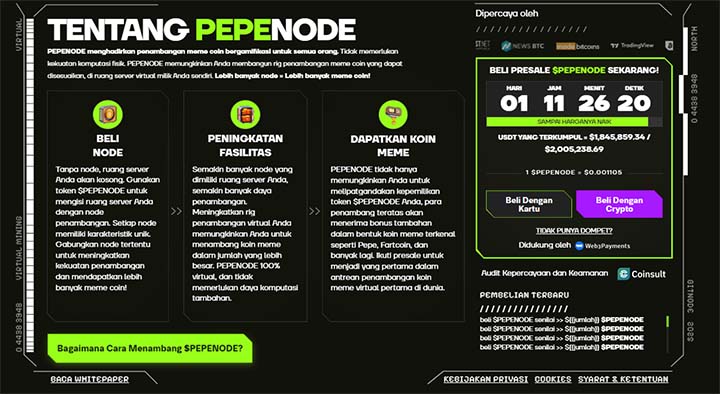
PEPENODE platform penambangan

Di dalam ekosistem, para pengguna dapat membangun ruang server virtual mereka sendiri, meningkatkan fasilitas, dan membeli node menggunakan token $PEPENODE. Semakin bersih dan teroptimasi pengaturan mereka, semakin tinggi potensi imbalan yang akan diperoleh.

Penambangan dengan PEPENODE menjadi permainan strategi, berbeda dengan lotere berisiko tinggi. Dirancang untuk lebih menguntungkan, dan jauh lebih menarik, dibanding menunggu puluhan tahun bagi penambang Bitcoin solo untuk menemukan satu blok.

Demi membuatnya tetap kompetitif, PEPENODE menyertakan papan peringkat, di mana performa penambang terbaik akan mendapatkan insentif tambahan dalam bentuk koin-koin meme populer seperti PEPE dan FARTCOIN.

Dengan koin meme yang berada di ambang siklus super baru, hadiah ini berpotensi memberikan keuntungan besar bagi para penambang PEPENODE.

Apa Peran Token $PEPENODE?

$PEPENODE saat ini sedang ditawarkan melalui presale, dan minat terhadap token ERC-20 tersebut sangat tinggi, tercermin dari perolehan sementara presale yang menembus $1,8 juta. Ada beberapa alasan yang membuat $PEPENODE diminati para investor.

Pertama, $PEPENODE berfungsi sebagai token utilitas yang menggerakkan seluruh ekosistem. Token ini diperlukan untuk meningkatkan fasilitas penambangan virtual dan membeli node penambangan.

Meskipun juga berfungsi sebagai token hadiah dalam penambangan, partisipasi itu sendiri bergantung pada kepemilikan dan penggunaan token, yang memberikan kasus penggunaan jelas sejak awal.

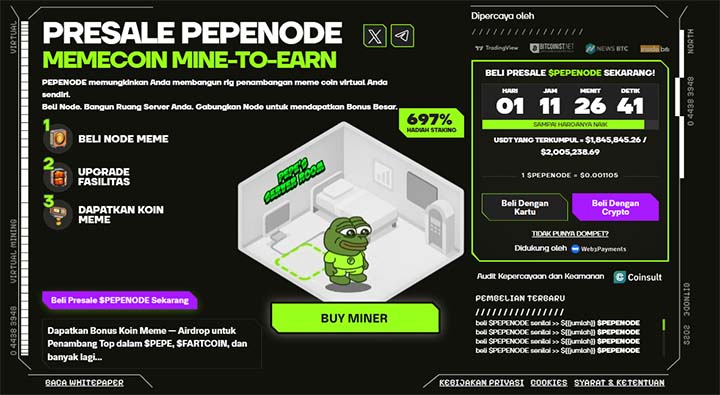
presale PEPENODE

Kedua, token ini melampaui kegunaan dalam game. $PEPENODE dapat dikunci dalam pool staking yang dapat memberi investor penghasilan pasif mencapai 697% APY. Saat ini terdapat lebih dari 1,1 miliar $PEPENODE yang di-staking, menunjukkan bahwa investor awal tidak hanya berspekulasi, tetapi mendukung proyek dalam jangka panjang.

Ketiga, hak tata kelola. Arah platform dan pembaruan fitur akan ditentukan oleh pengguna paling aktif, yaitu mereka yang benar-benar menggunakan PEPENODE, bukan investor eksternal.

Namun, faktor terbesar yang memicu antusiasme, dan mengapa presale mampu mendekati $2 juta, adalah desain deflasi token. Sebanyak 70% dari token yang digunakan pengguna untuk membeli node akan dibakar secara permanen, menghilang dari peredaran dan berpotensi mendorong harga token terus naik. Baca prediksi harga PEPENODE yang telah disiapkan oleh tim analis kami untuk mengetahui proyeksi pertumbuhannya.

Dibandingkan dengan gameplay yang menarik dan pendekatan inovatif dalam penambangan, mekanisme deflasi itu menciptakan kelangkaan dan kurva permintaan yang diyakini investor PEPENODE akan menjadikan token ini sebagai salah satu cryptocurrency terbaik.

Pandangan bullish juga diungkapkan oleh YouTuber kripto, Michael Wrubell, yang memprediksi $PEPENODE berpotensi memberikan keuntungan signifikan kepada para investor presale.

Cara Beli PEPENODE

Untuk dapat bergabung dalam presale PEPENODE, kunjungi situs resmi PEPENODE, hubungkan dompet ERC-20 atau BEP-20 seperti Best Wallet, kemudian tukarkan ETH/USDT/USDC/BNB dengan PEPENODE.

Silakan kunjungi artikel kami tentang cara beli PEPENODE untuk mendapatkan panduan komprehensif membeli token ini.

Kontrak pintar proyek PEPENODE telah diaudit oleh Coinsult, memberikan ketenangan pikiran bagi para investor awal mengenai keamanan kodenya. Ikuti proyek ini di X dan Telegram agar Anda selalu mendapatkan informasi terbaru.

Jangan lewatkan kesempatan membeli token $PEPENODE dengan harga termurah, kunjungi situs resmi PEPENODE sekarang juga!

Disclaimer: Pendapat dan pandangan yang diungkapkan dalam postingan ini tidak selalu mencerminkan kebijakan atau posisi resmi Cryptonews. Informasi yang disediakan dalam postingan ini hanya untuk tujuan informasi dan tidak boleh dianggap sebagai nasihat keuangan, investasi, atau profesional. Cryptonews tidak mendukung produk, layanan, atau perusahaan tertentu yang disebutkan dalam postingan ini. Pembaca disarankan untuk melakukan riset mandiri dan berkonsultasi dengan profesional yang berkualifikasi sebelum mengambil keputusan keuangan apa pun. Jangan pernah menginvestasikan lebih dari yang Anda siap kehilangan.

The post Minat Mining Virtual Meningkat, PEPENODE Raup $1,8 Juta appeared first on Cryptonews Indonesia.

Lima Penyakit Hati yang Paling Membinasakan

17 October 2025 at 12:00

Hati memiliki kedudukan yang sangat agung dan mulia, karena ia merupakan pusat kehidupan seseorang sekaligus sumber penggerak bagi seluruh amal seorang manusia. Hati bukan sekadar segumpal daging di dalam dada, tetapi ia adalah tempat bersemayamnya iman, niat, keikhlasan, serta dorongan yang menentukan baik buruknya setiap perbuatan. Para ulama menyebut hati sebagai malikul a‘dha (rajanya anggota […]

The post Lima Penyakit Hati yang Paling Membinasakan appeared first on Muslim.or.id.

Prediksi Harga Bitcoin Menurut Grok Turun Ke $100K: Trader Beralih ke Bitcoin Hyper

16 October 2025 at 11:58
Prediksi Bitcoin Grok

Bitcoin memasuki fase krusial setelah periode volatilitas besar, memunculkan pertanyaan apakah pasar telah melewati fase terburuk dari flash crash 10 Oktober. Kondisi harga yang belum stabil mendorong kekhawatiran baru, terutama terkait potensi penurunan menuju $100.000.

Dalam skenario tersebut, perhatian mulai beralih ke proyek alternatif seperti Bitcoin Hyper, yang dianggap mampu menawarkan momentum baru di tengah ketidakpastian pasar. Proyek ini kabarnya bisa memberikan keuntungan tinggi karena masih dalam masa presale.

Bitcoin Kembali Stabil, Namun Risiko Penurunan Masih Ada

Pasar crypto tengah mengamati langkah Bitcoin dengan lebih waspada setelah gejolak tajam yang sempat menarik perhatian global. Setelah mencetak all-time high mencapai $126.000 atau sekitar 2,101 miliar rupiah, nilai Bitcoin ($BTC) terkoreksi ke posisi rendah $106.000 pada 10 Oktober lalu.

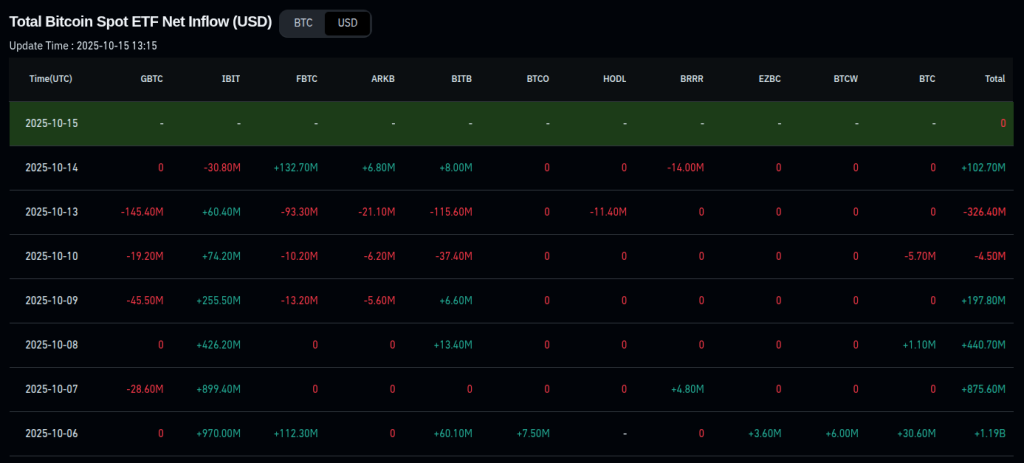
Bitcoin ETF Spot

Koreksi tersebut memicu gelombang likuidasi yang mengguncang banyak posisi leverage di pasar. Kini Bitcoin bertahan di sekitar $112.000 atau sekitar1,868 miliar rupiah, dengan volatilitas mulai mereda. Walau gejolak mereda, kekhawatiran masih tertinggal di kalangan trader yang mempertanyakan arah selanjutnya.

Dalam kondisi pasar yang penuh ketidakpastian, tim Grok diminta memproyeksikan kemungkinan pergerakan Bitcoin dalam waktu dekat, termasuk potensi penurunan menuju $100.000 atau sekitar Rp1,668 miliar.

Dua Skenario Menurut Grok: Parabola Bullish atau Penurunan Ekstrem

Grok mengemukakan dua kemungkinan besar yang dapat terjadi. Dalam skenario bullish, Bitcoin diperkirakan berpotensi memasuki reli parabola akhir siklus yang digerakkan oleh arus institusional dan adopsi pasar yang lebih luas.

Dalam kondisi tersebut, Bitcoin berpeluang naik ke rentang $160.000 hingga $200.000, atau sekitar Rp2,668 miliar hingga Rp3,336 miliar per BTC. Sebaliknya, skenario bearish memperhitungkan dampak mendalam dari flash crash terhadap minat risiko investor institusional maupun ritel.

Penurunan aliran dana ETF menjadi indikator utama melemahnya optimisme pasar. Aliran masuk ETF secara signifikan berkurang sejak 10 Oktober, menunjukkan penurunan keyakinan jangka pendek.

What are the odds Bitcoin $BTC revisits $100,000? pic.twitter.com/qGMMztoHiP

— Ali (@ali_charts) October 13, 2025

Ali Martinez melalui unggahan di X menegaskan adanya area support penting di sekitar $114.000. Menembus batas tersebut dapat membuka jalan menuju area $100.000 yang diperhitungkan Grok.

Rotasi Trader dari Bitcoin Menuju Proyek Alternatif

Kekhawatiran terhadap kemungkinan penurunan ke $100.000 membuat sebagian trader memilih melakukan rotasi sementara dari Bitcoin hingga arah pasar menjadi lebih jelas.

Ketidakpastian semakin diperbesar oleh dampak kebijakan tarif China yang diumumkan Donald Trump, yang belum sepenuhnya terukur terhadap ekonomi global maupun pasar crypto. Langkah ini menciptakan ruang bagi aset yang menawarkan narasi baru dan prospek pertumbuhan berbeda, terutama menjelang momentum “Uptober”.

Bitcoin Hyper

Meskipun keyakinan jangka panjang terhadap Bitcoin tetap kuat, pelaku pasar yang termasuk kategori smart money mulai melirik proyek yang dinilai mampu bertahan maupun tumbuh di tengah ketegangan pasar.

Pada situasi ini, Bitcoin Hyper tampil sebagai alternatif yang semakin dilirik, terutama karena proyek ini tidak hanya bergantung pada performa harga Bitcoin semata, tetapi pada utilitas inovatif yang ditawarkannya melalui ekosistem Web3.

Bitcoin Hyper: Alternatif Berbasis Solana dengan Visi Web3

Bitcoin Hyper ($HYPER) diperkenalkan sebagai solusi potensial atas berbagai tantangan yang dihadapi Bitcoin. Proyek ini hadir sebagai Layer-2 berbasis Solana yang bertujuan membawa kecepatan tinggi dan biaya lebih rendah ke dalam ekosistem Bitcoin.

Integrasi Solana Virtual Machine (SVM) memungkinkan jaringan Bitcoin memperoleh kemampuan smart contract tanpa mengubah fondasi aset utamanya. Pergerakan harga Bitcoin selama penurunan terakhir menunjukkan bahwa nilai utamanya masih terletak pada fungsi investasi.

Ketika pasar panik, Bitcoin cenderung turun secara tajam dan mengalami pemulihan lambat dibandingkan aset yang memiliki nilai utilitas, seperti Ethereum dan Solana. Bitcoin Hyper mencoba mengatasi kekurangan tersebut dengan menghadirkan kemampuan transaksi cepat yang dapat mendukung aplikasi terdesentralisasi (dApp), NFT, dan aktivitas Web3 lainnya menggunakan BTC.

Integrasi BTC ke Layer-2 dan Peran Token $HYPER dalam Ekosistem Bitcoin Hyper

Bitcoin Hyper menghadirkan mekanisme sederhana untuk membawa BTC ke ekosistem Web3 melalui Canonical Bridge. Pengguna cukup menyetorkan Bitcoin ke alamat Layer-1, lalu menerima wrapped BTC di Layer-2. Aset tersebut dapat digunakan untuk swap, dApp, atau aktivitas DeFi dengan kecepatan lebih tinggi dan biaya lebih rendah dibanding jaringan utama Bitcoin.

Bitcoin Hyper

Pendekatan ini memungkinkan Bitcoin tidak hanya berfungsi sebagai aset investasi, tetapi juga sebagai alat utilitas yang aktif. Integrasi Layer-2 berbasis Solana membuka ruang bagi Bitcoin untuk memasuki ranah Web3 secara lebih efisien tanpa mengorbankan keamanan jaringan asal.

Token $HYPER menjadi elemen kunci dalam ekosistem Bitcoin Hyper. Pemegang token memperoleh keuntungan seperti potongan biaya transaksi dan akses ke fitur kontrak pintar di jaringan Layer-2. Selain itu, $HYPER memberikan hak partisipasi dalam Bitcoin DAO, memungkinkan komunitas terlibat langsung dalam keputusan pengembangan dan arah masa depan jaringan.

Dengan kombinasi utilitas dan tata kelola, $HYPER dirancang bukan hanya sebagai aset spekulatif, tetapi sebagai fondasi fungsional yang memperkuat ekosistem Bitcoin Hyper.

Presale $HYPER, Staking, dan Prospek Jangka Panjang

Presale Bitcoin Hyper menunjukkan antusiasme kuat dari pasar, dengan perolehan lebih dari $23,8 juta atau sekitar 397 miliar rupiah. Harga token saat ini di $0.013125, masih memberi peluang bagi pembeli awal sebelum memasuki tahap kenaikan berikutnya.

Investor yang ikut presale juga berkesempatan memperoleh imbal hasil staking hingga 50% per tahun, meskipun persentase ini akan menurun seiring bertambahnya jumlah staker dan kenaikan harga di fase selanjutnya.

Apakah Bitcoin Hyper Legit atau Scam - Tokenomics Bitcoin Hyper

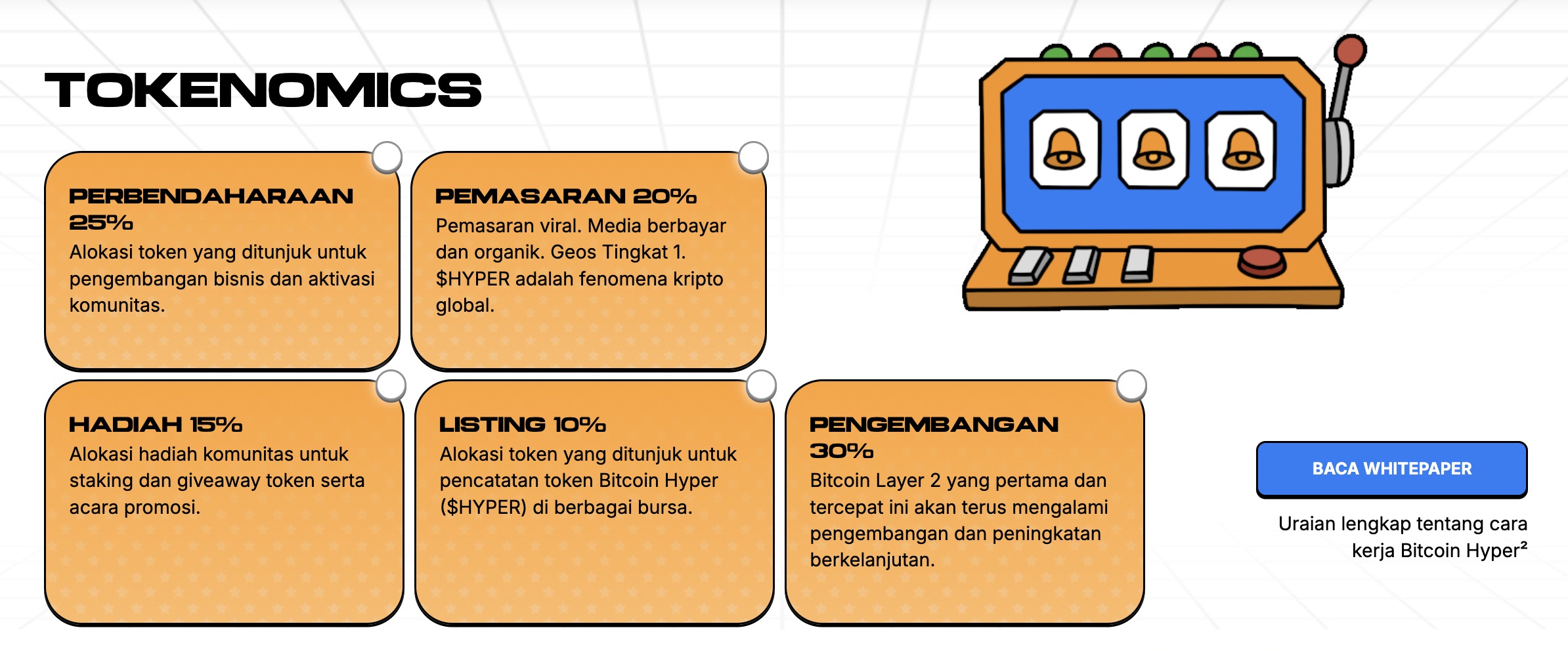
Sebanyak 30% suplai dialokasikan untuk pengembangan jangka panjang, mencerminkan komitmen terhadap ekspansi ekosistem dan integrasi teknologi Web3. Berdasarkan skenario internal, $HYPER diproyeksikan mencapai $0.20 pada akhir tahun, dan hingga $1.20 pada 2030.

Dengan harga saat ini di kisaran $0.013125, potensi ROI jangka panjang melebihi 9.000%. Namun, keberhasilan harga tetap bergantung pada implementasi teknologi dan adopsi komunitas terhadap integrasi SVM. Waktu menjadi faktor penting karena presale berlangsung bertahap dengan penurunan imbal hasil di setiap fase berikutnya.

Mereka yang mengikuti perkembangan proyek secara aktif dapat memantau prediksi harga Bitcoin Hyper untuk memahami perubahan tren pasar. Bagi yang ingin terlibat lebih awal, panduan cara beli Bitcoin Hyper tersedia melalui laman resmi, disertai instruksi penggunaan wallet yang kompatibel.

Akun resmi Bitcoin Hyper di X dan Telegram juga menjadi sumber utama untuk mengakses pembaruan roadmap, pengumuman integrasi, dan peluang staking. Mengunjungi situs resmi proyek memastikan setiap keputusan investasi dilakukan berdasarkan informasi yang valid dan terverifikasi.

Beli Bitcoin Hyper di Sini

Disclaimer: Pendapat dan pandangan yang diungkapkan dalam postingan ini tidak selalu mencerminkan kebijakan atau posisi resmi Cryptonews. Informasi yang disediakan dalam postingan ini hanya untuk tujuan informasi dan tidak boleh dianggap sebagai nasihat keuangan, investasi, atau profesional. Cryptonews tidak mendukung produk, layanan, atau perusahaan tertentu yang disebutkan dalam postingan ini. Pembaca disarankan untuk melakukan riset mandiri dan berkonsultasi dengan profesional yang berkualifikasi sebelum mengambil keputusan keuangan apa pun. Jangan pernah menginvestasikan lebih dari yang Anda siap kehilangan.

The post Prediksi Harga Bitcoin Menurut Grok Turun Ke $100K: Trader Beralih ke Bitcoin Hyper appeared first on Cryptonews Indonesia.

Avoid these 8 actions or lose your Xiaomi warranty forever

29 November 2025 at 19:53

Warranty protection is important to enable free and safe repair services for factory-related faults in your Xiaomi devices. Xiaomi offers a warranty period—typically two years—for smartphones, tablets, and smart home appliances. During the warranty period, official Xiaomi service centers repair qualifying faults free of charge, with quality and secure work. Repairing your device at unauthorized or out-of-warranty shops, however, is risky and can irretrievably lose your warranty rights.

Things You Should Avoid to Stay Under Warranty

Being under warranty is a case of precaution and vigilance. Below are eight very important actions that will automatically void your Xiaomi warranty, regardless of where you are or what device model you use.

1. Avoid Submerging Your Device in Water

Unless your Xiaomi or Redmi device carries an IP68 water-resistant certification, you should stay away from liquids. Devices that are not waterproof-rated can suffer permanent internal damage when they come into contact with water, leading to an instant loss of warranty coverage.

Redmi IP68 Breakthrough How the Note 14 Pro series handles water damage and warranty

2. Never Use Non-Genuine or Unapproved Adapters

Unauthorized charging adapter usage is also one of the most frequent reasons for warranty cancellation. Each Xiaomi model runs on a certain voltage and charging system. The battery or internal components can be affected by incompatible charging output from adapters. Always employ original Xiaomi adapters or those specified in your device model.

Xiaomi launches 100W GaN laptop adapter set

3. Never Root or Unlock the Bootloader

Rooting your phone or Bootloader unlocking could be tempting for personalization, but completely negates your warranty. Xiaomi regards such modifications as unauthorized interference with the operating system, even if you reflash the original software later. Once Bootloader is unlocked, the warranty is lost forever.

bootloader unlock

4. Do Not Install Custom ROMs

Flashing custom ROMs can improve performance or look, but Xiaomi officially discourages this. Devices flashed with non-official ROMs are not eligible for warranty service. Even if you reflash HyperOS later on, service centers can identify the modification and refuse repairs.

5. Avoid Physical Damage

Any form of self-damage, such as drops, cracks, or impacts, is a user responsibility. While Xiaomi phones are built with durable materials, physical damage repairs are chargeable, and warranty does not apply. Protective cases and screen guards maintain your warranty validity.

Xiaomi shows off Redmi Note 14 Pro with excellent drop resistance and waterproofing

6. Avoid Hardware or Software Alterations

Changing your device physically (such as replacing parts or altering components) or performing unauthorized software modifications (such as overclocking) will invalidate the warranty. Xiaomi only repairs devices that are in their original factory state.

7. Know That Normal Wear And Tear Is Not Covered

Devices can naturally experience wear and tear over time. Color fading, battery degeneration, or scratches are normal usage effects and are not warrantable. Cleaning and maintenance of your device on a regular basis extend the life of your device and prevent unnecessary service fees.

8. Damage Caused by Natural Disasters Is Not Covered

Unfortunately, damage from natural disasters—such as floods, earthquakes, or fire—is not assured. Such accidents are considered under the category of acts of nature and are not within the control of the manufacturer.

Final Thoughts

With these eight simple but essential tips, you can keep your Xiaomi device under warranty and get any manufacturing flaws corrected efficiently without charge. Xiaomi encourages customers to utilize official service centers and accessories alone for secure and long-term usage.

Source: Xiaomi Support

OnlyOffice Desktop Editors 9.1 Released with New PDF Editing Tools

By:Ji m
16 October 2025 at 23:59

OnlyOffice Desktop Editor, the free open-source offline use office suite, release new 9.1 version yesterday.

The new release updated the PDF editing support with new tools, and improved formulas in sheets. It now automatically recover unsaved documents due to app crashes.

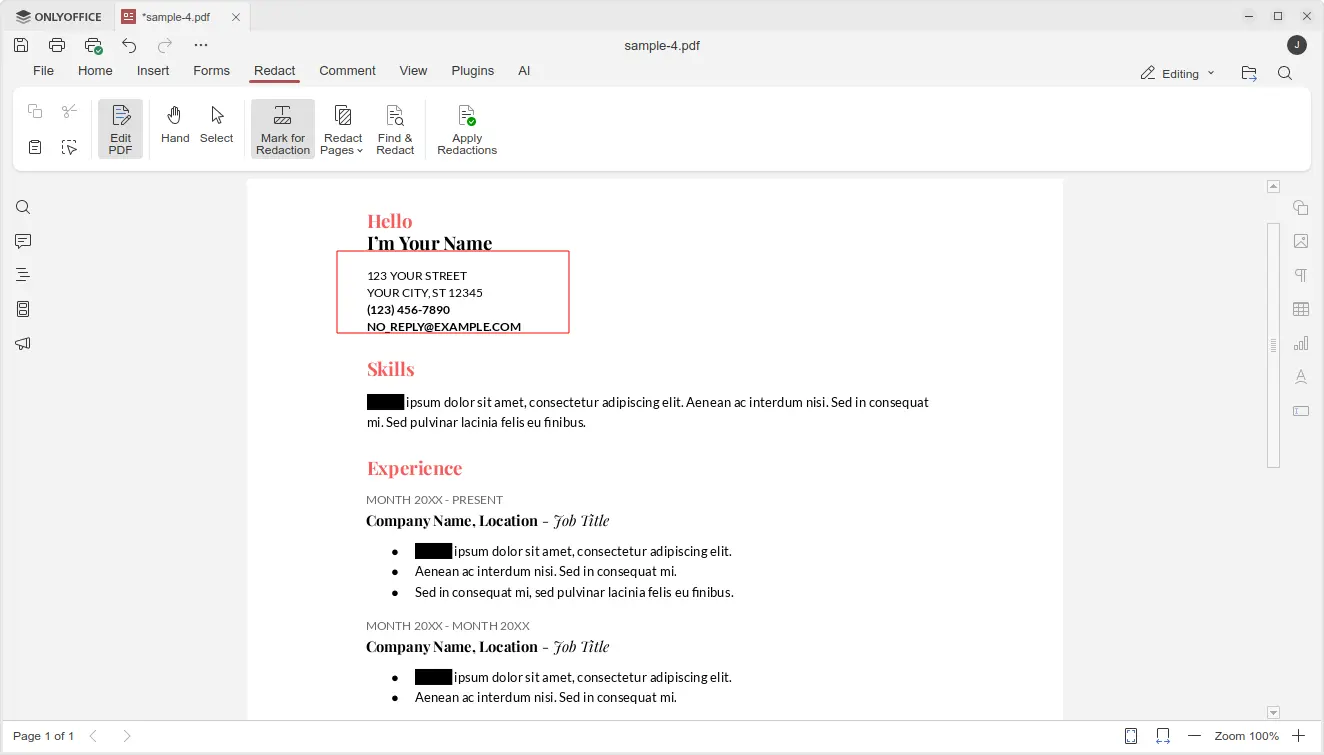
First, in PDF editing mode, it introduced new Redact feature, allowing to hide sensitive or confidential information.

The Redact tab includes “Mark for Redaction”, “Redact Pages”, and “Find & Redact” options, allowing user to select rectangle area in PDF content, choose PDF pages, or find all matched keywords, then use “Apply Redactions” option to hide them.

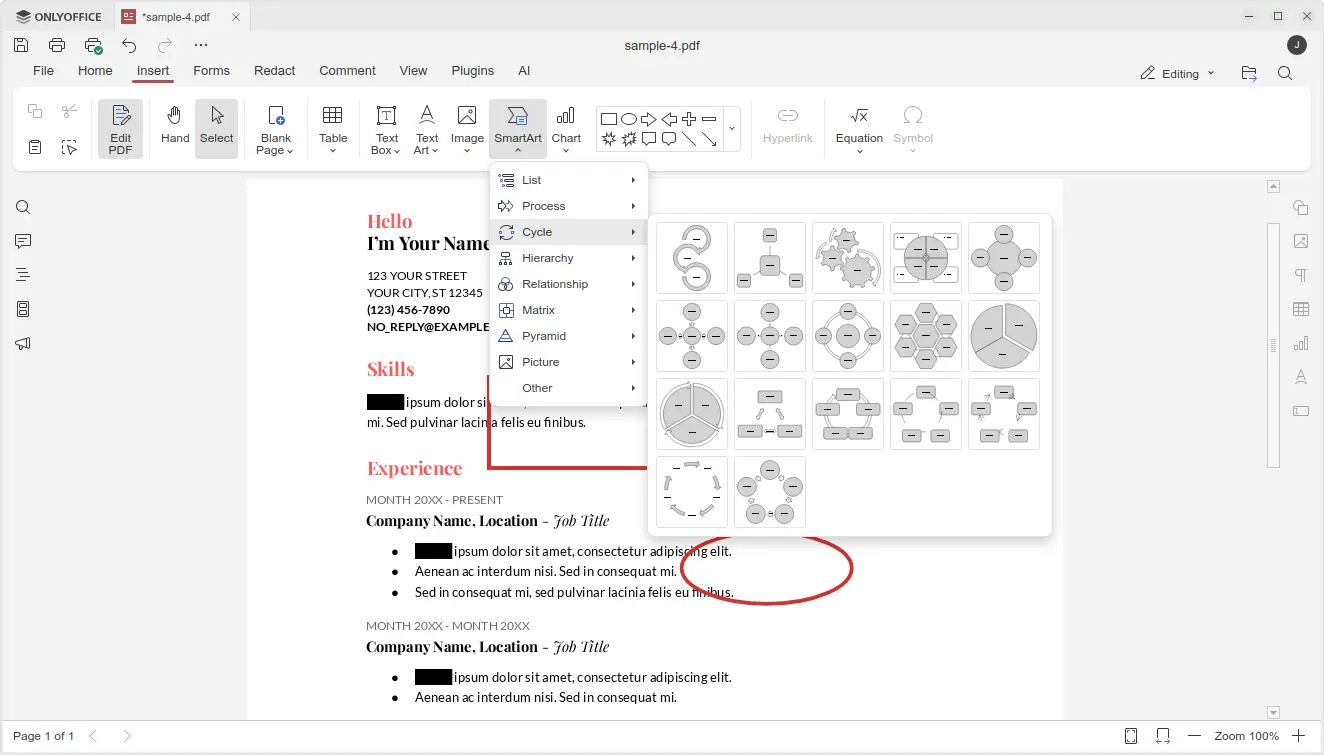
In “Comment” tab, there are new annotation tools added, allowing to draw rectangle, circle, arrow, and connected lines on your PDF, with custom color and size.

And in “Insert” tab, it added new SmartArt and Chart option, allowing to insert many new objects into your PDF.

The Spreadsheet editor now provides updated LOOKUP, VLOOKUP, HLOOKUP and XLOOKUP formulas that now deliver up to 4x faster exact and linear searches.

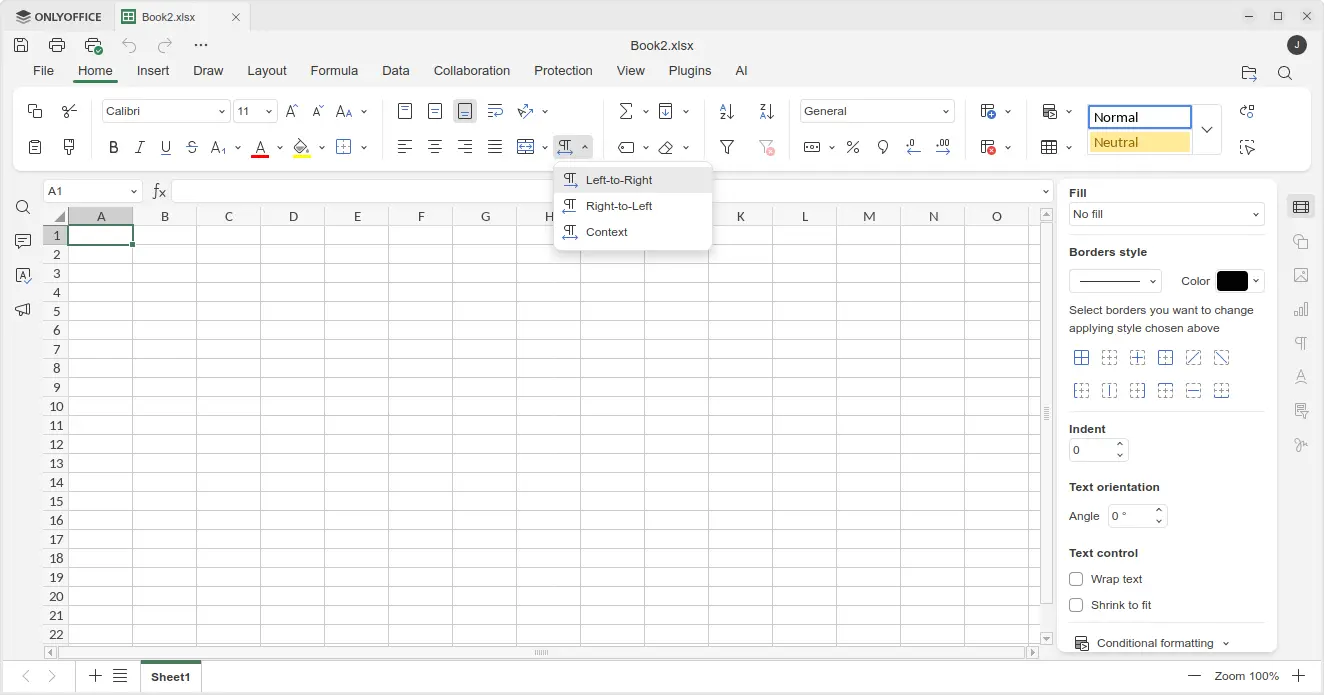
It also added support for date filters in pivot tables, dedicated “Table Design” tab with formatted table settings, and added Left-to-Right and Right-to-Left options in Home tab to easily switch text direction in cells.

The release also improved the Templates support. It now includes many templates in local computer as well as tons of templates in cloud.

Clicking on a cloud template no longer open it directly in editor, instead it shows a popup with bigger preview with description as well as file type and size, making clearer whether it’s what you want before downloading it.

For Windows 10 and higher, it now displays the notifications about file associations and updates via system toast notifications instead of modal windows.

For macOS, it finally added the new options to insert audio and video files in Presentation, as well as built-in media player to play videos in your slides.

Other changes in the release include:

  • Add HEIF images and HWPML documents support.
  • Support direct PDF to TXT and PPTX to TXT conversion.
  • Full-featured chart editor in documents and presentations.
  • Add Spelling language detection toggle for macOS.
  • Add explosion support for 2D pie and doughnut charts;

For more about OnlyOffice Desktop Editors 9.1, see the official announcement.

Get OnlyOffice Desktop Editors 9.1

For Ubuntu user, the office suite is easy to install by using App Center (or Snap Store). It’s Snap package that runs in sandbox environment. And, at the moment of writing, it’s still at version 9.0.x.

OnlyOffice in App Center

For choice you may download the app package for Windows, Linux, and macOS from its website. Where Ubuntu user may choose Download DEB, then click open with App Center to install.

GNOME 49.1 Released with Fixes across Shell, Mutter, and Core Apps

17 October 2025 at 01:35

GNOME 49.1 refines the desktop experience with major stability fixes in Shell and Mutter, improved session reliability, and updated core apps and toolkits marking a solid maintenance release for Linux users. GNOME 49.1, the latest point release in the 49 series, focuses on refinement and regression fixes across the stack. It prioritizes smoother performance, improved […]

The post GNOME 49.1 Released with Fixes across Shell, Mutter, and Core Apps appeared first on UbuntuPIT.

Ubuntu Security Roundup: Fixes for MuPDF, Redis, Samba, and More

17 October 2025 at 00:16

Canonical has released a series of Ubuntu Security Notices (USNs) addressing critical vulnerabilities across key open-source packages, including MuPDF, Redis, Samba, and Apache Subversion. The updates mitigate risks ranging from denial-of-service attacks to potential remote code execution. The latest batch of Ubuntu security advisories highlights several vulnerabilities fixed across multiple long-term support (LTS) releases, reinforcing […]

The post Ubuntu Security Roundup: Fixes for MuPDF, Redis, Samba, and More appeared first on UbuntuPIT.

Bcachefs Ousted from Mainline Kernel: The Move to DKMS and What It Means

Bcachefs Ousted from Mainline Kernel: The Move to DKMS and What It Means

Introduction

After years of debate and development, bcachefs—a modern copy-on-write filesystem once merged into the Linux kernel—is being removed from mainline. As of kernel 6.17, the in-kernel implementation has been excised, and future use is expected via an out-of-tree DKMS module. This marks a turning point for the bcachefs project, raising questions about its stability, adoption, and relationship with the kernel development community.

In this article, we’ll explore the background of bcachefs, the sequence of events leading to its removal, the technical and community dynamics involved, and implications for users, distributions, and the filesystem’s future.

What Is Bcachefs?

Before diving into the removal, let’s recap what bcachefs is and why it attracted attention.

  • Origin & goals: Developed by Kent Overstreet, bcachefs emerged from ideas in the earlier bcache project (a block-device caching layer). It aimed to build a full-featured, general-purpose filesystem combining performance, reliability, and modern features (snapshots, compression, encryption) in a coherent design.

  • Mainline inclusion: Bcachefs was merged into the mainline kernel in version 6.7 (released January 2024) after a lengthy review and incubation period.

  • “Experimental” classification: Even after being part of the kernel, bcachefs always carried disclaimers about its maturity and stability—they were not necessarily recommends for production use by all users.

Its presence in mainline gave distributions a path to ship it more casually, and users had easier access without building external modules—an important convenience for adoption.

What Led to the Removal

The excision of bcachefs from the kernel was not sudden but the culmination of tension over development practices, patch acceptance timing, and upstream policy norms.

“Externally Maintained” status in 6.17

In kernel 6.17’s preparation, maintainers marked bcachefs as “externally maintained.” Though the code remained present, the change signified that upstream would no longer accept new patches or updates within the kernel tree.

This move allowed a transitional period. The code was “frozen” inside the tree to avoid breaking existing systems immediately, while preparation was made for future removal.

Linux Mint 22.2 ‘Zara’ Released: Polished, Modern, and Built for Longevity

Linux Mint 22.2 ‘Zara’ Released: Polished, Modern, and Built for Longevity

Introduction

The Linux Mint team has officially unveiled Linux Mint 22.2, codenamed “Zara”, on September 4, 2025. As a Long-Term Support (LTS) release, Zara will receive updates through 2029, promising users stability, incremental improvements, and a comfortable desktop experience.

This version is not about flashy overhauls; rather, it’s about refinement — applying polish to existing features, smoothing rough edges, weaving in new conveniences (like fingerprint login), and improving compatibility with modern hardware. Below, we’ll delve into what’s new in Zara, what users should know before upgrading, and how it continues Mint’s philosophy of combining usability, reliability, and elegance.

What’s New in Linux Mint 22.2 “Zara”

Here’s a breakdown of key changes, refinements, and enhancements in Zara.

Base, Support & Kernel Stack
  • Ubuntu 24.04 (Noble) base: Zara continues to use Ubuntu 24.04 as its upstream base, ensuring broad package compatibility and long-term security support.

  • Kernel 6.14 (HWE): The default kernel for new installations is 6.14, bringing support for newer hardware.

  • However — for existing systems upgraded from Mint 22 or 22.1 — the older kernel (6.8 LTS) remains the default, because 6.14’s support window is shorter.

  • Zara is an LTS edition, with security updates and maintenance promised through 2029.

Major Features & Enhancements

Fingerprint Authentication via Fingwit

Zara introduces a first-party tool called Fingwit to manage fingerprint-based authentication. With compatible hardware and support via the libfprint framework, users can:

  • Enroll fingerprints

  • Use fingerprint login for the screensaver

  • Authenticate sudo commands

  • Launch administrative tools via pkexec using the fingerprint

  • In some cases, bypass password entry at login (unless home directory encryption or keyring constraints force password fallback)

It is important to note that fingerprint login on the actual login screen may be disabled or limited depending on encryption or keyring usage; in those cases, the system falls back to password entry.

UI & Theming Refinements

  • Sticky Notes app now sports rounded corners, improved Wayland compatibility, and a companion Android app named StyncyNotes (available via F-Droid) to sync notes across devices.

Ubuntu Update Backlog: How a Brief Canonical Outage Cascaded into Multi-Day Delays

Ubuntu Update Backlog: How a Brief Canonical Outage Cascaded into Multi-Day Delays

Introduction

In early September 2025, Ubuntu users globally experienced disruptive delays in installing updates and new packages. What seemed like a fleeting outage—only about 36 minutes of server downtime—triggered a cascade of effects: mirrors lagging, queued requests overflowing, and installations hanging for days. The incident exposed how fragile parts of Ubuntu’s update infrastructure can be under sudden load.

In this article, we’ll walk through what happened, why the fallout was so severe, how Canonical responded, and lessons for users and infrastructure architects alike.

What Happened: Outage & Immediate Impact

On September 5, 2025, Canonical’s archive servers—specifically archive.ubuntu.com and security.ubuntu.com—suffered an unplanned outage. The status page for Canonical showed the incident lasting roughly 36 minutes, after which operations were declared “resolved.”

However, that brief disruption set off a domino effect. Because the archives and security servers serve as the central hubs for Ubuntu’s package ecosystem, any downtime causes massive backlog among mirror servers and client requests. Mirrors found themselves out of sync, processing queues piled up, and users attempting updates or new installs encountered failed downloads, hung operations, or “404 / package not found” errors.

On Ubuntu’s community forums, Canonical acknowledged that while the server outage was short, the upload / processing queue for security and repository updates had become “obscenely” backlogged. Users were urged to be patient, as there was no immediate workaround.

Throughout September 5–7, users continued reporting incomplete or failed updates, slow mirror responses, and installations freezing mid-process. Even newly provisioning systems faced broken repos due to inconsistent mirror states.

By September 8, the situation largely stabilized: mirrors caught up, package availability resumed, and normal update flows returned. But the extended period of degraded service had already left many users frustrated.

Why a Short Outage Turned into Days of Disruption

At first blush, 36 minutes seems trivial. Why did it have such prolonged consequences? Several factors contributed:

  1. Centralized repository backplane Ubuntu’s infrastructure is architected around central canonical repositories (archive, security) which then propagate to mirrors worldwide. When the central system is unavailable, mirrors stop receiving updates and become stale.

Getting Started with Claude Code for Data Scientists

16 October 2025 at 23:39

If you've spent hours debugging a pandas KeyError, or writing the same data validation code for the hundredth time, or refactoring a messy analysis script, you know the frustration of tedious coding work. Real data science work involves analytical thinking and creative problem-solving, but it also requires a lot of mechanical coding: boilerplate writing, test generation, and documentation creation.

What if you could delegate the mechanical parts to an AI assistant that understands your codebase and handles implementation details while you focus on the analytical decisions?

That's what Claude Code does for data scientists.

What Is Claude Code?

Claude Code is Anthropic's terminal-based AI coding assistant that helps you write, refactor, debug, and document code through natural language conversations. Unlike autocomplete tools that suggest individual lines as you type, Claude Code understands project context, makes coordinated multi-file edits, and can execute workflows autonomously.

Claude Code excels at generating boilerplate code for data loading and validation, refactoring messy scripts into clean modules, debugging obscure errors in pandas or numpy operations, implementing standard patterns like preprocessing pipelines, and creating tests and documentation. However, it doesn't replace your analytical judgment, make methodological decisions about statistical approaches, or fix poorly conceived analysis strategies.

In this tutorial, you'll learn how to install Claude Code, understand its capabilities and limitations, and start using it productively for data science work. You'll see the core commands, discover tips that improve efficiency, and see concrete examples of how Claude Code handles common data science tasks.

Key Benefits for Data Scientists

Before we get into installation, let's establish what Claude Code actually does for data scientists:

  1. Eliminate boilerplate code writing for repetitive patterns that consume time without requiring creative thought. File loading with error handling, data validation checks that verify column existence and types, preprocessing pipelines with standard transformations—Claude Code generates these in seconds rather than requiring manual implementation of logic you've written dozens of times before.
  2. Generate test suites for data processing functions covering normal operation, edge cases with malformed or missing data, and validation of output characteristics. Testing data pipelines becomes straightforward rather than work you postpone.
  3. Accelerate documentation creation for data analysis workflows by generating detailed docstrings, README files explaining project setup, and inline comments that explain complex transformations.
  4. Debug obscure errors more efficiently in pandas operations, numpy array manipulations, or scikit-learn pipeline configurations. Claude Code interprets cryptic error messages, suggests likely causes based on common patterns, and proposes fixes you can evaluate immediately.
  5. Refactor exploratory code into production-quality modules with proper structure, error handling, and maintainability standards. The transition from research notebook to deployable pipeline becomes faster and less painful.

These benefits translate directly to time savings on mechanical tasks, allowing you to focus on analysis, modeling decisions, and generating insights rather than wrestling with implementation details.

Installation and Setup

Let's get Claude Code installed and configured. The process takes about 10-15 minutes, including account creation and verification.

Step 1: Obtain Your Anthropic API Key

Navigate to console.anthropic.com and create an account if you don't have one. Once logged in, access the API keys section from the navigation menu on the left, and generate a new API key by clicking on + Create Key.

Claude_Code_API_Key.png

While you can generate a new key anytime from the console, you won’t be able to retrieve any existing API keys once they have been created. For this reason, you’ll want to copy your API key immediately and store it somewhere safe—you'll need it for authentication.

Always keep your API keys secure. Treat them like passwords and never commit them to version control or share them publicly.

Step 2: Install Claude Code

Claude Code installs via npm (Node Package Manager). If you don't have Node.js installed on your system, download it from nodejs.org before proceeding.

Once Node.js is installed, open your terminal and run:

npm install -g @anthropic-ai/claude-code

The -g flag installs Claude Code globally, making it available from any directory on your system.

Common installation issues:

  • "npm: command not found": You need to install Node.js first. Download it from nodejs.org and restart your terminal after installation.
  • Permission errors on Mac/Linux: Try sudo npm install -g @anthropic-ai/claude-code to install with administrator privileges.
  • PATH issues: If Claude Code installs successfully but the claude command isn't recognized, you may need to add npm's global directory to your system PATH. Run npm config get prefix to find the location, then add [that-location]/bin to your PATH environment variable.

Step 3: Configure Authentication

Set your API key as an environment variable so Claude Code can authenticate with Anthropic's servers:

export ANTHROPIC_API_KEY=your_key_here

Replace your_key_here with the actual API key you copied earlier from the Anthropic console.

To make this permanent (so you don't need to set your API key every time you open a terminal), add the export line above to your shell configuration file:

  • For bash: Add to ~/.bashrc or ~/.bash_profile
  • For zsh: Add to ~/.zshrc
  • For fish: Add to ~/.config/fish/config.fish

You can edit your shell configuration file using nano config_file_name. After adding the line, reload your configuration by running source ~/.bashrc (or whichever file you edited), or simply open a new terminal window.

Step 4: Verify Installation

Confirm that Claude Code is properly installed and authenticated:

claude --version

You should see version information displayed. If you get an error, review the installation steps above.

Try running Claude Code for the first time:

claude

This launches the Claude Code interface. You should see a welcome message and a prompt asking you to select the text style that looks best with your terminal:

Claude_Code_Welcome_Screen.png

Use the arrow keys on your keyboard to select a text style and press Enter to continue.

Next, you’ll be asked to select a login method:

If you have an eligible subscription, select option 1. Otherwise, select option 2. For this tutorial, we will use option 2 (API usage billing).

Claude_Code_Select_Login.png

Once your account setup is complete, you’ll see a welcome message showing the email address for your account:

Claude_Code_Setup_Complete.png

To exit the setup of Claude Code at any point, press Control+C twice.

Security Note

Claude Code can read files you explicitly include and generate code that loads data from files or databases. However, it doesn't automatically access your data without your instruction. You maintain full control over what files and information Claude Code can see. When working with sensitive data, be mindful of what files you include in conversation context and review all generated code before execution, especially code that connects to databases or external systems. For more details, see Anthropic’s Security Documentation.

Understanding the Costs

Claude Code itself is free software, but using it requires an Anthropic API key that operates on usage-based pricing:

  • Free tier: Limited testing suitable for evaluation
  • Pro plan (\$20/month): Reasonable usage for individual data scientists conducting moderate development work
  • Pay-as-you-go: For heavy users working intensively on multiple projects, typically \$6-12 daily for active development

Most practitioners doing regular but not continuous development work find the \$20 Pro plan provides good balance between cost and capability. Start with the free tier to evaluate effectiveness on your actual work, then upgrade based on demonstrated value.

Your First Commands

Now that Claude Code is installed and configured, let's walk through basic usage with hands-on examples.

Starting a Claude Code Session

Navigate to a project directory in your terminal:

cd ~/projects/customer_analysis

Launch Claude Code:

claude

You'll see the Claude Code interface with a prompt where you can type natural language instructions.

Understanding Your Project

Before asking Claude Code to make changes, it needs to understand your project context. Try starting with this exploratory command:

Explain the structure of this project and identify the key files.

Claude Code will read through your directory, examine files, and provide a summary of what it found. This shows that Claude Code actively explores and comprehends codebases before acting.

Your First Refactoring Task

Let's demonstrate Claude Code's practical value with a realistic example. Create a simple file called load_data.py with some intentionally messy code:

import pandas as pd

# Load customer data
data = pd.read_csv('/Users/yourname/Desktop/customers.csv')
print(data.head())

This works but has obvious problems: hardcoded absolute path, no error handling, poor variable naming, and no documentation.

Now ask Claude Code to improve it:

Refactor load_data.py to use best practices: configurable paths, error handling, descriptive variable names, and complete docstrings.

Claude Code will analyze the file and propose improvements. Instead of the hardcoded path, you'll get configurable file paths through command-line arguments. The error handling expands to catch missing files, empty files, and CSV parsing errors. Variable names become descriptive (customer_df or customer_data instead of generic data). A complete docstring appears documenting parameters, return values, and potential exceptions. The function adds proper logging to track what's happening during execution.

Claude Code asks your permission before making these changes. Always review its proposal; if it looks good, approve it. If something seems off, ask for modifications or reject the changes entirely. This permission step ensures you stay in control while delegating the mechanical work.

What Just Happened

This demonstrates Claude Code's workflow:

  1. You describe what you want in natural language
  2. Claude Code analyzes the relevant files and context
  3. Claude Code proposes specific changes with explanations
  4. You review and approve or request modifications
  5. Claude Code applies approved changes

The entire refactoring took 90 seconds instead of 20-30 minutes of manual work. More importantly, Claude Code caught details you might have forgotten, such as adding logging, proper type hints, and handling multiple error cases. The permission-based approach ensures you maintain control while delegating implementation work.

Core Commands and Patterns

Claude Code provides several slash (/) commands that control its behavior and help you work more efficiently.

Important Slash Commands

@filename: Reference files directly in your prompts using the @ symbol. Example: @src/preprocessing.py or Explain the logic in @data_loader.py. Claude Code automatically includes the file's content in context. Use tab completion after typing @ to quickly navigate and select files.

/clear: Reset conversation context entirely, removing all history and file references. Use this when switching between different analyses, datasets, or project areas. Accumulated conversation history consumes tokens and can cause Claude Code to inappropriately reference outdated context. Think of /clear as starting a fresh conversation when you switch tasks.

/help: Display available commands and usage information. Useful when you forget command syntax or want to discover capabilities.

Context Management for Data Science Projects

Claude Code has token limits determining how much code it can consider simultaneously. For small projects with a few files, this rarely matters. For larger data science projects with dozens of notebooks and scripts, strategic context management becomes important.

Reference only files relevant to your current task using @filename syntax. If you're working on data validation, reference the validation script and related utilities (like @validation.py and @utils/data_checks.py) but exclude modeling and visualization code that won't influence the current work.

Effective Prompting Patterns

Claude Code responds best to clear, specific instructions. Compare these approaches:

  • Vague: "Make this code better"
    Specific: "Refactor this preprocessing function to handle missing values using median imputation for numerical columns and mode for categorical columns, add error handling for unexpected data types, and include detailed docstrings"
  • Vague: "Add tests"
    Specific: "Create pytest tests for the data_loader function covering successful loading, missing file errors, empty file handling, and malformed CSV detection"
  • Vague: "Fix the pandas error"
    Specific: "Debug the KeyError in line 47 of data_pipeline.py and suggest why it's failing on the 'customer_id' column"

Specific prompts produce focused, useful results. Vague prompts generate generic suggestions that may not address your actual needs.

Iteration and Refinement

Treat Claude Code's initial output as a starting point rather than expecting perfection on the first attempt. Review what it generates, identify improvements needed, and make follow-up requests:

"The validation function you created is good, but it should also check that dates are within reasonable ranges. Add validation that start_date is after 2000-01-01 and end_date is not in the future."

This iterative approach produces better results than attempting to specify every requirement in a single massive prompt.

Advanced Features

Beyond basic commands, several features improve your Claude Code experience for complex work.

  1. Activate plan mode: Press Shift+Tab before sending your prompt to enable plan mode, which creates an explicit execution plan before implementing changes. Use this for workflows with three or more distinct steps—like loading data, preprocessing, and generating outputs. The planning phase helps Claude maintain focus on the overall objective.

  2. Run commands with bash mode: Prefix prompts with an exclamation mark to execute shell commands and inject their output into Claude Code's context:

    ! python analyze_sales.py

    This runs your analysis script and adds complete output to Claude Code's context. You can then ask questions about the output or request interpretations of the results. This creates a tight feedback loop for iterative data exploration.

  3. Use extended thinking for complex problems: Include "think", "think harder", or "ultrathink" in prompts for thorough analysis:

    think harder: why does my linear regression show high R-squared but poor prediction on validation data?

    Extended thinking produces more careful analysis but takes longer (ultrathink can take several minutes). Apply this when debugging subtle statistical issues or planning sophisticated transformations.

  4. Resume previous sessions: Launch Claude Code with claude --resume to continue your most recent session with complete context preserved, including conversation history, file references, and established conventions all intact. This proves valuable for ongoing analysis where you want to continue today without re-explaining your entire analytical approach.

Optional Power User Setting

For personal projects where you trust all operations, launch with claude --dangerously-skip-permissions to bypass constant approval prompts. This carries risk if Claude Code attempts destructive operations, so use it only on projects where you maintain version control and can recover from mistakes. Never use this on production systems or shared codebases.

Configuring Claude Code for Data Science Projects

The CLAUDE.md file provides project-specific context that improves Claude Code's suggestions by explaining your conventions, requirements, and domain specifics.

Quick Setup with /init

The easiest way to create your CLAUDE.md file is using Claude Code's built-in /init command. From your project directory, launch Claude Code and run:

/init

Claude Code will analyze your project structure and ask you questions about your setup: what kind of project you're working on, your coding conventions, important files and directories, and domain-specific context. It then generates a CLAUDE.md file tailored to your project.

This interactive approach is faster than writing from scratch and ensures you don't miss important details. You can always edit the generated file later to refine it.

Understanding Your CLAUDE.md

Whether you used /init or prefer to create it manually, here's what a typical CLAUDE.md file looks like for a data science project on customer churn. In your project root directory, the file named CLAUDE.md uses markdown format and describes project information:

# Customer Churn Analysis Project

## Project Overview
Predict customer churn for a telecommunications company using historical
customer data and behavior patterns. The goal is identifying at-risk
customers for proactive retention efforts.

## Data Sources
- **Customer demographics**: data/raw/customer_info.csv
- **Usage patterns**: data/raw/usage_data.csv
- **Churn labels**: data/raw/churn_labels.csv

Expected columns documented in data/schemas/column_descriptions.md

## Directory Structure
- `data/raw/`: Original unmodified data files
- `data/processed/`: Cleaned and preprocessed data ready for modeling
- `notebooks/`: Exploratory analysis and experimentation
- `src/`: Production code for data processing and modeling
- `tests/`: Pytest tests for all src/ modules
- `outputs/`: Generated reports, visualizations, and model artifacts

## Coding Conventions
- Use pandas for data manipulation, scikit-learn for modeling
- All scripts should accept command-line arguments for file paths
- Include error handling for data quality issues
- Follow PEP 8 style guidelines
- Write pytest tests for all data processing functions

## Domain Notes
Churn is defined as customer canceling service within 30 days. We care
more about catching churners (recall) than minimizing false positives
because retention outreach is relatively low-cost.

This upfront investment takes 10-15 minutes but improves every subsequent interaction by giving Claude Code context about your project structure, conventions, and requirements.

Hierarchical Configuration for Complex Projects

CLAUDE.md files can be hierarchical. You might maintain a root-level CLAUDE.md describing overall project structure, plus subdirectory-specific files for different analysis areas.

For example, a project analyzing both customer behavior and financial performance might have:

  • Root CLAUDE.md: General project description, directory structure, and shared conventions
  • customer_analysis/CLAUDE.md: Specific details about customer data sources, relevant metrics like lifetime value and engagement scores, and analytical approaches for behavioral patterns
  • financial_analysis/CLAUDE.md: Financial data sources, accounting principles used, and approaches for revenue and cost analysis

Claude Code prioritizes the most specific configuration, so subdirectory files take precedence when working within those areas.

Custom Slash Commands

For frequently used patterns specific to your workflow, you can create custom slash commands. Create a .claude/commands directory in your project and add markdown files named for each slash command you want to define.

For example, .claude/commands/test.md:

Create pytest tests for: $ARGUMENTS

Requirements:
- Test normal operation with valid data
- Test edge cases: empty inputs, missing values, invalid types
- Test expected exceptions are raised appropriately
- Include docstrings explaining what each test validates
- Use descriptive test names that explain the scenario

Then /test my_preprocessing_function generates tests following your specified patterns.

These custom commands represent optional advanced customization. Start with basic CLAUDE.md configuration, and consider custom commands only after you've identified repetitive patterns in your prompting.

Practical Data Science Applications

Let's see Claude Code in action across some common data science tasks.

1. Data Loading and Validation

Generate robust data loading code with error handling:

Create a data loading function for customer_data.csv that:
- Accepts configurable file paths
- Validates expected columns exist with correct types
- Detects and logs missing value patterns
- Handles common errors like missing files or malformed CSV
- Returns the dataframe with a summary of loaded records

Claude Code generates a function that handles all these requirements. The code uses pathlib for cross-platform file paths, includes try-except blocks for multiple error scenarios, validates that required columns exist in the dataframe, logs detailed information about data quality issues like missing values, and provides clear exception messages when problems occur. This handles edge cases you might forget: missing files, parsing errors, column validation, and missing value detection with logging.

2. Exploratory Data Analysis Assistance

Generate EDA code:

Create an EDA script for the customer dataset that generates:
- Distribution plots for numerical features (age, income, tenure)
- Count plots for categorical features (plan_type, region)
- Correlation heatmap for numerical variables
- Summary statistics table
Save all visualizations to outputs/eda/

Claude Code produces a complete analysis script with proper plot styling, figure organization, and file saving—saving 30-45 minutes of matplotlib configuration work.

3. Data Preprocessing Pipeline

Build a preprocessing module:

Create preprocessing.py with functions to:
- Handle missing values: median for numerical, mode for categorical
- Encode categorical variables using one-hot encoding
- Scale numerical features using StandardScaler
- Include type hints, docstrings, and error handling

The generated code includes proper sklearn patterns and documentation, and it handles edge cases like unseen categories during transform.

4. Test Generation

Generate pytest tests:

Create tests for the preprocessing functions covering:
- Successful preprocessing with valid data
- Handling of various missing value patterns
- Error cases like all-missing columns
- Verification that output shapes match expectations

Claude Code generates thorough test coverage including fixtures, parametrized tests, and clear assertions—work that often gets postponed due to tedium.

5. Documentation Generation

Add docstrings and project documentation:

Add docstrings to all functions in data_pipeline.py following NumPy style
Create a README.md explaining:
- Project purpose and business context
- Setup instructions for the development environment
- How to run the preprocessing and modeling pipeline
- Description of output artifacts and their interpretation

Generated documentation captures technical details while remaining readable for collaborators.

6. Maintaining Analysis Documentation

For complex analyses, use Claude Code to maintain living documentation:

Create analysis_log.md and document our approach to handling missing income data, including:
- The statistical justification for using median imputation rather than deletion
- Why we chose median over mean given the right-skewed distribution we observed
- Validation checks we performed to ensure imputation didn't bias results

This documentation serves dual purposes. First, it provides context for Claude Code in future sessions when you resume work on this analysis, as it explains the preprocessing you applied and why those specific choices were methodologically appropriate. Second, it creates stakeholder-ready explanations communicating both technical implementation and analytical reasoning.

As your analysis progresses, continue documenting key decisions:

Add to analysis_log.md: Explain why we chose random forest over logistic regression after observing significant feature interactions in the correlation analysis, and document the cross-validation approach we used given temporal dependencies in our customer data.

This living documentation approach transforms implicit analytical reasoning into explicit written rationale, increasing both reproducibility and transparency of your data science work.

Common Pitfalls and How to Avoid Them

  • Insufficient context leads to generic suggestions that miss project-specific requirements. Claude Code doesn't automatically know your data schema, project conventions, or domain constraints. Maintain a detailed CLAUDE.md file and reference relevant files using @filename syntax in your prompts.
  • Accepting generated code without review risks introducing bugs or inappropriate patterns. Claude Code produces good starting points but isn't perfect. Treat all output as first drafts requiring validation through testing and inspection, especially for statistical computations or data transformations.
  • Attempting overly complex requests in single prompts produces confused or incomplete results. When you ask Claude Code to "build the entire analysis pipeline from scratch," it gets overwhelmed. Break large tasks into focused steps—first create data loading, then validation, then preprocessing—building incrementally toward the desired outcome.
  • Ignoring error messages when Claude Code encounters problems prevents identifying root causes. Read errors carefully and ask Claude Code for specific debugging assistance: "The preprocessing function failed with KeyError on 'customer_id'. What might cause this and how should I fix it?"

Understanding Claude Code's Limitations

Setting realistic expectations about what Claude Code cannot do well builds trust through transparency.

Domain-specific understanding requires your input. Claude Code generates code based on patterns and best practices but cannot validate whether analytical approaches are appropriate for your research questions or business problems. You must provide domain expertise and methodological judgment.

Subtle bugs can slip through. Generated code for advanced statistical methods, custom loss functions, or intricate data transformations requires careful validation. Always test generated code thoroughly against known-good examples.

Large project understanding is limited. Claude Code works best on focused tasks within individual files rather than system-wide refactoring across complex architectures with dozens of interconnected files.

Edge cases may not be handled. Preprocessing code might handle clean training data perfectly but break on production data with unexpected null patterns or outlier distributions that weren't present during development.

Expertise is not replaceable. Claude Code accelerates implementation but does not replace fundamental understanding of data science principles, statistical methods, or domain knowledge.

Security Considerations

When Claude Code accesses external data sources, malicious actors could potentially embed instructions in data that Claude Code interprets as commands. This concern is known as prompt injection.

Maintain skepticism about Claude Code suggestions when working with untrusted external sources. Never grant Claude Code access to production databases, sensitive customer information, or critical systems without careful review of proposed operations.

For most data scientists working with internal datasets and trusted sources, this risk remains theoretical, but awareness becomes important as you expand usage into more automated workflows.

Frequently Asked Questions

How much does Claude Code cost for typical data science usage?

Claude Code itself is free to install, but it requires an Anthropic API key with usage-based pricing. The free tier allows limited testing suitable for evaluation. The Pro plan at \$20/month handles moderate daily development—generating preprocessing code, debugging errors, refactoring functions. Heavy users working intensively on multiple projects may prefer pay-as-you-go pricing, typically \$6-12 daily for active development. Start with the free tier to evaluate effectiveness, then upgrade based on value.

Does Claude Code work with Jupyter notebooks?

Claude Code operates as a command-line tool and works best with Python scripts and modules. For Jupyter notebooks, use Claude Code to build utility modules that your notebooks import, creating cleaner separation between exploratory analysis and reusable logic. You can also copy code cells into Python files, improve them with Claude Code, then bring the enhanced code back to the notebook.

Can Claude Code access my data files or databases?

Claude Code reads files you explicitly include through context and generates code that loads data from files or databases. It doesn't automatically access your data without instruction. You maintain full control over what files and information Claude Code can see. When you ask Claude Code to analyze data patterns, it reads the data through code execution, not by directly accessing databases or files independently.

How does Claude Code compare to GitHub Copilot?

GitHub Copilot provides inline code suggestions as you type within an IDE, excelling at completing individual lines or functions. Claude Code offers more substantial assistance with entire file transformations, debugging sessions, and refactoring through conversational interaction. Many practitioners use both—Copilot for writing code interactively, Claude Code for larger refactoring and debugging work. They complement each other rather than compete.

Next Steps

You now have Claude Code installed, understand its capabilities and limitations, and have seen concrete examples of how it handles data science tasks.

Start by using Claude Code for low-risk tasks where mistakes are easily corrected: generating documentation for existing functions, creating test cases for well-understood code, or refactoring non-critical utility scripts. This builds confidence without risking important work. Gradually increase complexity as you become comfortable.

Maintain a personal collection of effective prompts for data science tasks you perform regularly. When you discover a prompt pattern that produces excellent results, save it for reuse. This accelerates work on similar future tasks.

For technical details and advanced features, explore Anthropic's Claude Code documentation. The official docs cover advanced topics like Model Context Protocol servers, custom hooks, and integration patterns.

To systematically learn generative AI across your entire practice, check out our Generative AI Fundamentals in Python skill path. For deeper understanding of effective prompt design, our Prompting Large Language Models in Python course teaches frameworks for crafting prompts that consistently produce useful results.

Getting Started

AI-assisted development requires practice and iteration. You'll experience some awkwardness as you learn to communicate effectively with Claude Code, but this learning curve is brief. Most practitioners feel productive within their first week of regular use.

Install Claude Code, work through the examples in this tutorial with your own projects, and discover how AI assistance fits into your workflow.


Have questions or want to share your Claude Code experience? Join the discussion in the Dataquest Community where thousands of data scientists are exploring AI-assisted development together.

Python Practice: 91 Exercises, Projects, and Tutorials

16 October 2025 at 23:26

This guide gives you 91 ways to practice Python — from quick exercises to real projects and helpful courses. Whether you’re a beginner or preparing for a job, there’s something here for you.


Table of Contents

  1. Hands-On Courses
  2. Free Exercises
  3. Projects
  4. Online Tutorials

Hands-On Courses

Some Python programming courses let you learn and code at the same time. You read a short lesson, then solve a problem in your browser. It’s a fast, hands-on way to learn.

Each course below includes at least one free lesson you can try.

Python Courses

Python Basics Courses

Data Analysis & Visualization Courses

Data Cleaning Courses

Machine Learning Courses

AI & Deep Learning Courses

Probability & Statistics Courses

Hypothesis Testing

These courses are a great way to practice Python online, and they're all free to start. If you're looking for more Python courses, you can find them on Dataquest's course page.


Free Python Exercises

Exercises are a great way to focus on a specific skill. For example, if you have a job interview coming up, practicing Python dictionaries will refresh your knowledge and boost your confidence.

Each lesson is free to start.

Coding Exercises

Beginner Python Exercises

Intermediate Python Programming

Data Handling and Manipulation with NumPy

Data Handling and Manipulation with pandas

Data Analysis

Complexity and Algorithms


Python Projects

Projects are one of the best ways to practice Python. Doing projects helps you remember syntax, apply what you’ve learned, and build a portfolio to show employers.

Here are some projects you can start with right away:

Beginner Projects

Data Analysis Projects

Data Engineering Projects

Machine Learning & AI Projects

If none of these spark your interest, there are plenty of other Python projects to try.


Online Python Tutorials

If exercises, courses, or projects aren’t your thing, blog-style tutorials are another way to learn Python. They’re great for reading on your phone or when you can’t code directly.

Core Python Concepts (Great for Beginners)

Intermediate Techniques

Data Analysis & Data Science

The web is full of thousands of beginner Python tutorials. Once you know the basics, you can find endless ways to practice Python online.


FAQs

Where can I practice Python programming online?

  1. Dataquest.io: Offers dozens of free interactive practice questions, lessons, project ideas, walkthroughs, tutorials, and more.
  2. HackerRank: A popular site for interactive coding practice and challenges.
  3. CodingGame: A fun platform that lets you practice Python through games and coding puzzles.
  4. Edabit: Provides Python challenges that are great for practice or self-testing.
  5. LeetCode: Helps you test your skills and prepare for technical interviews with Python coding problems.

How can I practice Python at home?

  1. Install Python on your machine.

You can download Python directly here, or use a program like Anaconda Individual Edition that makes the process easier. If you don’t want to install anything, you can use an interactive online platform like Dataquest and write code right in your browser.

  1. Work on projects or practice problems.

Find a good Python project or some practice problems to apply what you’re learning. Hands-on coding is one of the best ways to improve.

  1. Make a schedule.

Plan your practice sessions and stick to them. Regular, consistent practice is key to learning Python effectively.

  1. Join an online community.

It's always great to get help from a real person. Reddit has great Python communities, and Dataquest's Community is great if you're learning Python data skills.

Can I practice Python on mobile?

Yes! There are many apps that let you practice Python on both iOS and Android.

However, mobile practice shouldn’t be your main way of learning if you want to use Python professionally. It’s important to practice installing and working with Python on a desktop or laptop, since that’s how most real-world programming is done.

If you’re looking for an app to practice on the go, a great option is Mimo.

With AI advancing so quickly, should I still practice Python?

Absolutely! While AI is a powerful support tool, we can’t always rely on it blindly. AI can sometimes give incorrect answers or generate code that isn’t optimal.

Python is still essential, especially in the AI field. It’s a foundational language for developing AI technologies and is constantly updated to work with the latest AI advancements.

Popular Python libraries like TensorFlow and PyTorch make it easier to build and train complex AI models efficiently. Learning Python also helps you understand how AI tools work under the hood, making you a more skilled and knowledgeable developer.

❌